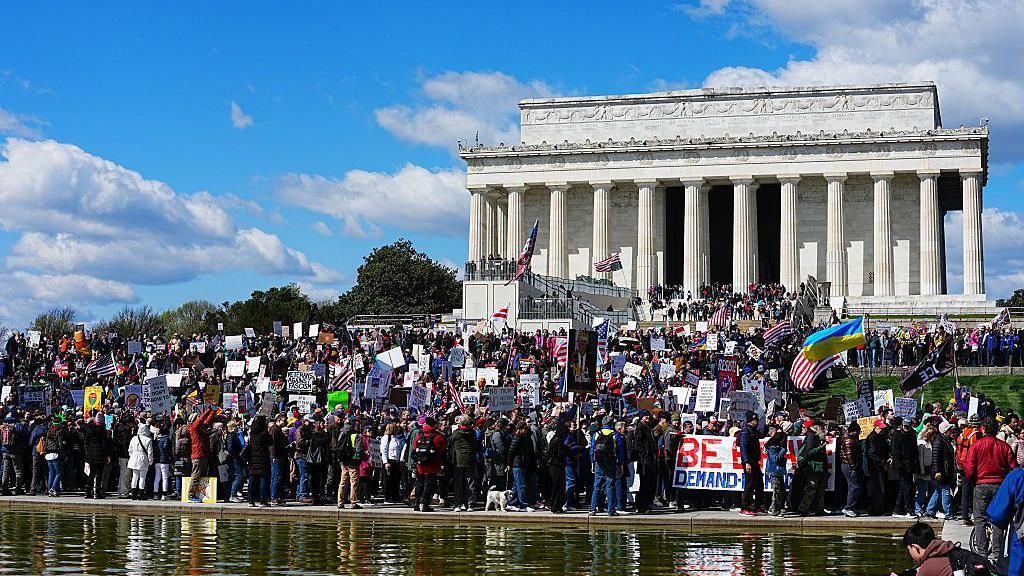
Massive demonstrations under the banner of ‘No Kings’ have erupted across the United States, with thousands of protesters flooding streets from Washington D.C. to small-town America in a widespread rejection of President Donald Trump’s policies. The movement, now in its third major iteration, has drawn participants from major metropolitan centers to rural communities, all united in their opposition to the administration’s direction.
Organizers have characterized the protests as a grassroots response to what they describe as authoritarian tendencies within the Trump presidency. Central grievances include the ongoing military engagement in Iran, aggressive federal immigration enforcement tactics, and the escalating cost of living affecting American households. The movement’s name itself serves as a direct rebuke to accusations of monarchical aspirations within the executive branch.
Visual displays of dissent have become hallmarks of these demonstrations, with participants carrying effigies of Trump, Vice President JD Vance, and other administration figures while demanding their removal from office. The symbolic locations chosen for rallies—including the Lincoln Memorial and National Mall in Washington—carry profound historical significance in the context of American democratic traditions.
Beyond domestic participation, the movement has garnered international support with American expatriates organizing parallel demonstrations in European capitals including Paris, London, and Lisbon. These overseas gatherings have echoed domestic messaging, with signs labeling the president a ‘fascist’ and ‘war criminal’ while calling for impeachment proceedings.
The scale of mobilization recalls previous iterations of the movement, with October’s events drawing approximately seven million participants nationwide. While several states have preemptively activated National Guard units, organizers maintain their events remain peaceful expressions of constitutional rights.
This wave of protests occurs against a backdrop of significant executive actions since Trump’s return to the White House in January. The administration has substantially expanded presidential authority through executive orders that have restructured federal agencies and deployed National Guard troops to various cities despite objections from state governors. These actions, coupled with controversial incidents involving federal agents and the president’s calls to prosecute political opponents, have intensified debates about constitutional boundaries and democratic norms.
The administration has dismissed criticism as hyperbolic, with Trump personally rejecting characterizations of authoritarianism during media appearances. Nevertheless, critics from across the political spectrum continue to voice concerns about potential erosion of democratic institutions and norms.