标签: North America

北美洲

  • Canada’s new NDP leader says party must have ‘hard conversations’ over energy policy

    Canada’s new NDP leader says party must have ‘hard conversations’ over energy policy

    Canada’s New Democratic Party has elected Avi Lewis as its new leader following a decisive first-ballot victory on Sunday, immediately exposing significant internal divisions over energy policy within the left-leaning party. Lewis, who ran on a platform emphasizing aggressive climate action and economic affordability, now faces immediate challenges from provincial NDP leaders in Western Canada who oppose his stance against new oil and gas development.

    The leadership transition has revealed a growing rift between the federal party’s environmental priorities and the economic concerns of energy-producing provinces. Shortly after his victory, Saskatchewan NDP leader Carla Beck publicly rejected Lewis’s invitation to meet, describing his resource development positions as “ideological and unrealistic” in a formal letter. Similarly, Alberta NDP leader Naheed Nenshi expressed concerns that Lewis’s direction would not serve his province’s interests, emphasizing the need for federal leaders who understand Alberta’s essential role in Canada’s economy.

    Despite these criticisms, Lewis characterized the disagreements as evidence of a broadening political coalition. “Hard conversations are necessary,” Lewis told reporters on Monday. “These disagreements mean our tent is growing and are a sign of health.” He maintained that his door remains open to those who disagree with his energy policies while reaffirming his opposition to new fossil fuel development.

    Lewis cited the ongoing Israeli-American conflict with Iran and resulting oil price volatility as evidence that “the energy economy is extremely unstable.” He argued for accelerating Canada’s transition to renewable energy to create “a more stable, secure, and safe economy, and a more independent Canadian economy.”

    The new leader received support from Manitoba Premier Wab Kinew, who acknowledged potential for “heated debates” but emphasized alignment on broader issues. “We’re fighting for the people who don’t have a voice right now,” Kinew stated. Lewis confirmed receiving “words of wisdom and encouragement” during their hour-long meeting in Winnipeg.

    Federal NDP caucus members expressed unity behind Lewis, with interim leader Don Davies stating the party was “100% united” and could serve as “a powerful voice for all the voters who do not see themselves reflected” by Liberal or Conservative policies. Lewis, who does not currently hold a parliamentary seat, indicated he would focus on engaging with the party’s national base rather than immediately pursuing elected office.

    The leadership transition occurs as the NDP seeks to rebuild after significant losses in last year’s federal election, while simultaneously navigating the complex balance between environmental priorities and economic realities in Canada’s energy-producing regions.

  • Céline Dion announces comeback shows: ‘I’m so ready for this’

    Céline Dion announces comeback shows: ‘I’m so ready for this’

    In an inspiring development for the music world, global superstar Céline Dion has announced her monumental return to live performance with a 10-night residency at Paris’s La Défense Arena this autumn. The announcement, made on the iconic singer’s 58th birthday, marks a triumphant milestone in her courageous battle against Stiff Person Syndrome (SPS), a rare neurological disorder that temporarily halted her legendary career.

    The Canadian vocal powerhouse, renowned for timeless ballads including “My Heart Will Go On” and “The Power of Love,” revealed her comeback through an emotionally charged Instagram message she described as “the best gift of my life.” Dion expressed both excitement and measured nervousness about returning to the stage, stating: “I’m feeling good, I’m strong, I’m feeling excited, obviously, [and] of course, a little nervous.”

    Her Parisian residency—scheduled across September and October with strategic gaps between performances to accommodate her health needs—represents Dion’s first concert series since her March 2020 show in Newark, New Jersey. The originally planned Courage World Tour was initially interrupted by pandemic restrictions before being completely derailed by her SPS diagnosis in December 2022.

    The announcement was celebrated with spectacular theatrics across Paris, where mysterious posters featuring Dion’s lyrics recently appeared throughout the city. The campaign culminated in the Eiffel Tower illuminating with the poignant message “Paris, je suis prête” (Paris, I am ready) while broadcasting a curated playlist of her greatest hits.

    Dion’s journey back to performance readiness has been nothing short of extraordinary. The artist undertook an intensive rehabilitation regimen, describing her approach to French Vogue: “I’ve chosen to work with all my body and soul, from head to toe.” Her dedication included five-day weekly sessions combining athletic, physical, and vocal therapy—a grueling commitment that previously enabled her emotional performance at the 2024 Paris Olympics.

    Stiff Person Syndrome, affecting approximately 8,000 people worldwide, involves progressive muscle stiffness and painful spasms that can severely impact mobility and vocal function. Dion previously shared harrowing descriptions of the condition, noting it felt “like somebody is strangling you” and prevented her from singing in her characteristic register.

    Tickets for the highly anticipated residency go on sale April 7th, with fan registration opening March 31st. Industry experts anticipate unprecedented demand for what promises to be one of music’s most celebrated comebacks, demonstrating both artistic resilience and the profound connection between an icon and her global audience.

  • Barbie Dream Fest in Florida to issue refunds after fan complaints

    Barbie Dream Fest in Florida to issue refunds after fan complaints

    A highly anticipated Barbie-themed event in Florida has collapsed under the weight of spectacular disappointment, prompting organizers to issue full refunds to all attendees. The Barbie Dream Fest weekend, marketed as an \”unforgettable experience\” brimming with \”glam, nostalgia, and dream-big energy,\” instead materialized as a starkly underwhelming affair within a drab convention center, adorned only with sparse pink cardboard cutouts.\n\nTicketholders, some having paid up to $450 and traveled significant distances, expressed profound dismay. Michael Gorey, who flew from Ohio for a spring break trip with his family, encapsulated the collective shock upon entry: \”Is this it? Like, did I miss something?\” Social media platforms quickly flooded with complaints, with one Reddit user deriding the promised \”life size Barbie dream house\” as merely \”a cheap backdrop with a picnic table on some fake turf/grass.\”\n\nThe disillusionment extended to content creators like the burlesque group Hell Hotel, which reported a severe mismatch between the sophisticated, all-ages event advertised by influencers and the reality of an experience largely restricted to young children. \”We were expecting much more based on what was advertised… There were empty halls, maybe 14 vendors, [and a] lack of things to do for all ages,\” the group stated, highlighting the event’s failure to cater to its broad target demographic.\n\nIn response to the overwhelming backlash, brand owner Mattel and event creator Mischief Management moved swiftly to contain the fallout. Both entities confirmed that full refunds would be issued to every ticket purchaser. Mischief Management framed the event as an \”intimate fan convention\” aimed at fostering \”meaningful connection,\” a description that starkly contrasted with attendee experiences. The debacle drew immediate comparisons to the infamous Willy Wonka Experience in Glasgow, another recent viral example of a fantastical promotional campaign yielding a bleak reality.

  • Will crash shake golf from its dependency on Woods?

    Will crash shake golf from its dependency on Woods?

    The golf world faces a moment of reckoning following Tiger Woods’ recent arrest in Florida, which has sparked serious questions about the sport’s continued dependence on the embattled superstar for leadership and direction.

    Woods, whose influence has grown despite a two-decade history of traffic incidents and personal troubles, now faces charges of driving under the influence, refusal of a urine test, and property damage after flipping his Range Rover on a quiet Jupiter Island street last Friday. This marks the latest in a series of incidents dating back to 2009 that have revealed the troubled side of the 15-time major champion’s life.

    The timing could hardly be worse for professional golf. Woods currently holds multiple leadership positions, serving as player director on the PGA Tour Policy Board since August 2023 and vice chairman of the PGA Tour Enterprises board. The tour previously created a special rule to ensure his eligibility for lucrative Signature Events despite his current world ranking of 3,736 and limited competitive play since 2020.

    Golf’s establishment has consistently turned to Woods for critical projects: designing Augusta’s new ‘Loop’ course, chairing the PGA Tour’s future competitions committee, and potentially captaining the Ryder Cup team. Yet his qualifications for these roles are now under scrutiny. Winning 82 PGA Tour titles doesn’t necessarily translate to understanding balance sheets, cash flow projections, or broadcast rights negotiations.

    The arrest comes at a particularly inconvenient moment, with PGA Tour bosses seeking to map out their future strategy by June’s end. Woods’ scheduled appearance at next week’s Masters now appears uncertain, and his ability to lead the Ryder Cup effort—having only appeared on one winning side in eight attempts—faces renewed doubt.

    Alternative leadership candidates may be emerging. Stewart Cink stands as a potential Ryder Cup captain, while Gary Woodland’s recent victory at the Houston Open following brain surgery and PTSD diagnosis demonstrates the type of graceful resilience that has often eluded Woods. Woodland’s openness about his struggles presents a striking contrast to Woods’ intensely private existence.

    This incident may finally illuminate the warning signs for golf administrators who have repeatedly turned to Woods in times of crisis. The sport must now confront whether someone capable of legendary athletic achievements is necessarily best qualified to shape its future direction.

  • Inside Nasa’s moon spacesuit lab ahead of Artemis launch

    Inside Nasa’s moon spacesuit lab ahead of Artemis launch

    Within the advanced laboratories of NASA’s Johnson Space Center, a team of engineers and technicians is meticulously preparing the next generation of spacesuits for the historic Artemis II mission. These sophisticated garments represent a significant technological leap from previous designs, engineered to provide comprehensive protection during the most critical phases of lunar exploration.

    The newly developed Artemis II spacesuit system incorporates cutting-edge materials and life support technologies that will safeguard astronauts during multiple mission phases. Unlike suits designed solely for extravehicular activities, these integrated systems provide vital protection during spacecraft launch, atmospheric re-entry, and emergency scenarios that might occur throughout the journey to the Moon and back.

    NASA’s spacesuit development team has implemented numerous innovations based on lessons learned from decades of spaceflight experience. The suits feature enhanced mobility joints, improved thermal regulation systems, and integrated communications equipment that will maintain astronaut safety even under extreme conditions. Each suit undergoes rigorous testing to ensure it can withstand potential cabin depressurization events and provide life support for extended periods if necessary.

    The Artemis program represents humanity’s return to lunar exploration, and these spacesuits symbolize the technological sophistication required for this ambitious endeavor. As NASA prepares for the upcoming Artemis II mission—which will carry astronauts around the Moon without landing—the spacesuit development program demonstrates the agency’s commitment to safety and innovation in the new era of space exploration.

  • How the US could try to seize Iran’s Kharg Island

    How the US could try to seize Iran’s Kharg Island

    The United States is contemplating a high-stakes military operation to capture Iran’s pivotal Kharg Island oil terminal, a strategic maneuver that could dramatically escalate tensions in the Persian Gulf. This offshore facility serves as Tehran’s primary oil export conduit, processing approximately 90% of the nation’s petroleum exports through its deep-water capabilities accommodating Very Large Crude Carriers.

    President Donald Trump’s administration has signaled potential deployment of nearly 7,000 troops—including 5,000 Marines and 2,000 paratroopers from the 82nd Airborne Division—to execute this complex operation. Military strategists envision nighttime airborne assaults by paratroopers to secure key positions on the 20-square-kilometer island, supported by amphibious landings using Osprey tilt-rotor aircraft and Landing Craft Air Cushioned vehicles.

    The operation’s stated objective would be temporarily severing Iran’s oil exports to compel concessions regarding the Strait of Hormuz, through which 21% of global petroleum passes. However, the mission carries extraordinary risks: invading forces would need to navigate Iranian-controlled waters past numerous drone and missile installations, then withstand anticipated defenses including anti-personnel mines and drone swarms.

    Iran has dramatically reinforced Kharg’s defenses with surface-to-air missile batteries, while Parliamentary Speaker Mohammad Bagher Ghalibaf promised ‘fire rain’ upon any invading forces. Historical precedent suggests challenges for occupation forces, with comparisons drawn to Russia’s experience at Ukraine’s Snake Island, where persistent artillery fire from the mainland proved decisive.

    Complicating the strategic calculus, analysts note that Kharg might be part of a deception plan, with alternative targets including Larak Island near Bandar Abbas, Qeshm Island with suspected underground military facilities, or the disputed Abu Musa and Tunb islands claimed by the United Arab Emirates.

    Paradoxically, the military buildup coincides with diplomatic overtures. President Trump acknowledged ‘serious discussions’ with Iran that could potentially ‘end our military operations,’ highlighting the administration’s simultaneous pursuit of military and diplomatic pressure campaigns. This dual-track approach reveals the enormous gap between American and Iranian positions that any potential agreement must bridge.

  • Air Canada CEO to retire after condolence-video controversy

    Air Canada CEO to retire after condolence-video controversy

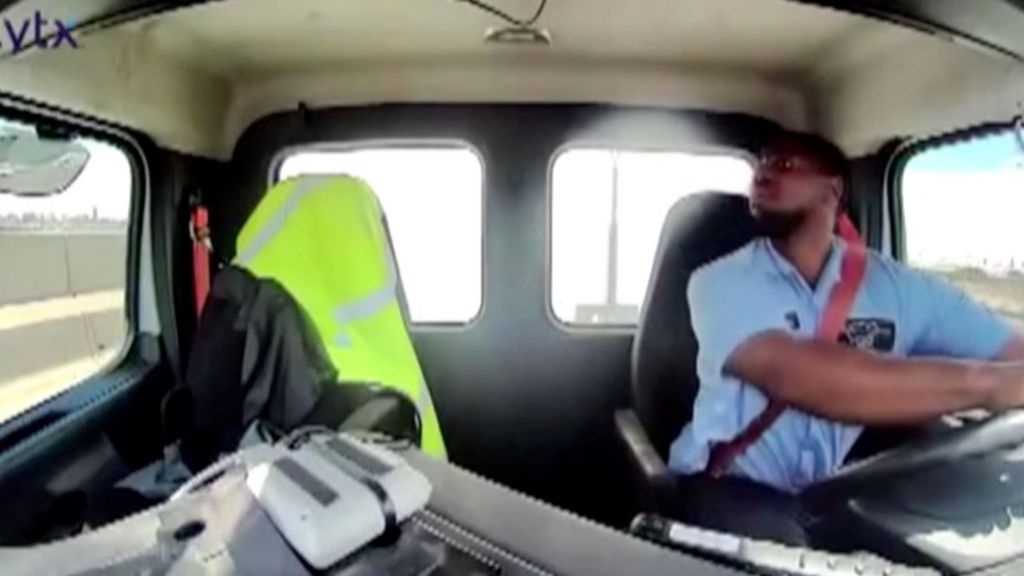
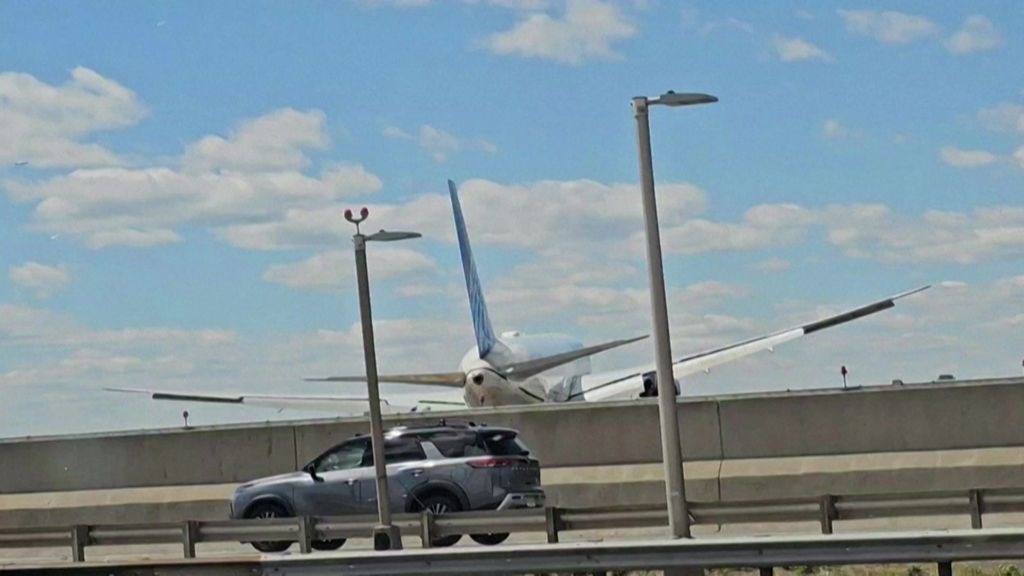
    Air Canada Chief Executive Michael Rousseau will step down from his position by the end of the third quarter following intense criticism over his English-only condolence message addressing last week’s fatal collision at LaGuardia Airport. The announcement comes after mounting pressure from Canadian political leaders and public outrage regarding Rousseau’s inability to deliver his message in French, one of Canada’s official languages.

    The controversy emerged when Rousseau, an anglophone who resides in Montreal, expressed condolences exclusively in English for the deaths of pilots Antoine Forest and Mackenzie Gunther. Forest was a native of French-speaking Quebec, amplifying the sensitivity around language representation. Despite English and French subtitles accompanying the video posted on social media platform X, the absence of spoken French drew immediate condemnation.

    Prime Minister Mark Carney characterized the message as demonstrating ‘a lack of compassion,’ while Quebec Premier François Legault explicitly called for Rousseau’s resignation if he could not communicate in French. The CEO was subsequently summoned to appear before Canada’s parliamentary committee on Official Languages to explain his actions.

    In a written apology issued in both official languages, Rousseau expressed deep regret that his language limitations had ‘diverted attention’ from the grieving families and affected Air Canada staff. He acknowledged ongoing efforts to improve his French through lessons, though he admitted his proficiency remained inadequate despite years of study.

    Air Canada’s statement highlighted Rousseau’s ‘nearly two decades of strong and dedicated leadership’ with the carrier, which began as a federal public corporation and has been privately operated since 1988. The airline remains subject to Canada’s Official Languages Act, requiring all onboard announcements to be delivered in both English and French.

    Rousseau, who faced similar criticism upon his appointment as CEO in 2021, stated: ‘It has been my great honour to work with the dedicated and talented people of Air Canada and to represent our outstanding organization.’ He committed to supporting the company through the transition period before his retirement.

  • ‘No Kings’ protesters gather across the US as Bruce Springsteen joins rally

    ‘No Kings’ protesters gather across the US as Bruce Springsteen joins rally

    A significant wave of civic demonstrations swept across multiple American urban centers as citizens mobilized for the third consecutive ‘No Kings’ protest series. These coordinated rallies represent a growing grassroots movement expressing opposition to current presidential governance structures. The movement’s latest iteration gained notable visibility when legendary musician Bruce Springsteen joined participants at a major gathering, lending his cultural influence to the cause. Protest organizers reported substantial turnouts in numerous cities, with participants advocating for increased governmental accountability and democratic safeguards. The movement’s name directly challenges conceptions of expansive executive authority, embodying its core philosophical stance against concentrated power. These demonstrations appear to be developing into a sustained mobilization effort rather than isolated events, suggesting evolving political engagement strategies among dissenting voices. The involvement of high-profile figures like Springsteen signals potential for increased media attention and public discourse around the movement’s objectives and underlying principles of democratic governance.

  • Iran war exposing the real cost of Trump’s anti-EV crusade

    Iran war exposing the real cost of Trump’s anti-EV crusade

    The recent Middle East conflict has triggered a dramatic surge in global oil prices, creating significant economic pressure for conventional vehicle owners while highlighting the strategic advantages of electric transportation. Current data reveals that American drivers are experiencing approximately 50% increases in their weekly fuel expenses, creating substantial financial strain for commuters dependent on gasoline-powered vehicles.

    This price volatility stands in stark contrast to the experience of electric vehicle owners, who benefit from remarkably stable energy costs. According to recent analyses, EV operators spend merely 5 cents per mile compared to 12 cents for traditional combustion engines—a cost advantage that has widened further since the Iran conflict began. The fundamental difference lies in electricity’s price stability versus oil’s extreme susceptibility to geopolitical disruptions.

    Despite these advantages, the United States has experienced a concerning plateau in electric vehicle adoption. This stagnation stems from multiple factors: political opposition that eliminated government support for domestic battery production, problematic rollout strategies from major manufacturers, and persistent consumer misconceptions about charging infrastructure and range limitations. Consequently, while global EV sales have skyrocketed, the American market has notably lagged behind international counterparts.

    Comparative market data reveals dramatic disparities in adoption rates. Norway leads with over 80% of new vehicle sales being electric, followed by Singapore at approximately 40%, while the United States languishes below 10%. This divergence signals not merely an environmental policy difference but a fundamental competitiveness gap in next-generation automotive technology.

    The current crisis has prompted emergency responses worldwide, with nations from Slovenia to Pakistan implementing fuel rationing systems, work-from-home mandates, and strategic petroleum reserve releases. These measures underscore the vulnerability inherent in fossil fuel dependence and are accelerating renewable energy investments globally.

    Industry analysts note that this geopolitical shock may mirror historical patterns where oil crises catalyzed technological shifts, similar to how the 1970s energy crises propelled fuel-efficient Japanese vehicles to prominence. However, unlike previous cycles where Detroit eventually recovered, America’s current resistance to electrification risks permanent industrial decline as global markets increasingly embrace advanced electric transportation technology.

    The broader implications extend beyond consumer transportation, affecting national security, manufacturing competitiveness, and technological leadership in adjacent sectors including drones, robotics, and electronics where battery technology plays increasingly critical roles.

  • Canadian companies look toward China amid stabilizing ties

    Canadian companies look toward China amid stabilizing ties

    Canadian enterprises are transitioning from cautious observation to active market positioning in China, driven by improving bilateral relations and clearer policy directions. This strategic pivot marks a significant departure from previous hesitancy as companies seek to capitalize on emerging opportunities in one of the world’s largest economies.

    According to Bijan Ahmadi, Executive Director and COO of the Canada China Business Council, this period represents a constructive phase for Canadian firms to deepen or expand commercial engagement with China, provided they approach with strategic planning and risk management protocols. Recent survey data from the CCBC reveals that 68% of Canadian companies are preparing to expand their Chinese operations, with 86% identifying China as either their top priority or among their foremost strategic focuses globally.

    The economic underpinnings of this shift are substantial. Canada-China bilateral merchandise trade reached C$124 billion (approximately US$89.5 billion) in 2025, with Canadian exports to China surging by 13.8% to C$33.5 billion. This trade relationship is increasingly dominated by energy and mineral exports, which saw remarkable growth—energy exports skyrocketed 77.8% to C$9.5 billion, while metal ores and minerals increased 42.5% to C$7.91 billion.

    Multiple factors are driving this renewed commercial interest. China’s massive market scale remains fundamentally attractive to Canadian businesses, who continue to view it as strategically vital. Beyond traditional export opportunities, China is evolving into an innovation hub and advanced technology center, while simultaneously serving as a critical supplier of manufacturing inputs for Canadian industries.

    Policy environment appears favorable, with 82% of Canadian companies believing Prime Minister Carney’s current approach to China will yield positive business impacts. However, corporate decision-making remains influenced by political dynamics, including potential risks from US policy shifts that could create broader macroeconomic and geoeconomic repercussions.

    Looking forward, industry experts anticipate pragmatic growth in bilateral relations, contingent upon policy stability, sustained official dialogue, and developments in tariffs and market access. The broader geopolitical landscape, particularly US-China relations, will continue to serve as a determining factor in the trajectory of Canada-China commercial engagement.