标签: North America

北美洲

  • Trump sees ‘America First’ opportunity in Nasa mission to Moon

    Trump sees ‘America First’ opportunity in Nasa mission to Moon

    As NASA prepares to launch the Artemis II mission—marking humanity’s first return to deep space since 1972—the endeavor carries profound geopolitical implications for the Trump administration and broader US strategic interests. This historic flight, carrying three American and one Canadian astronaut, represents more than technological achievement; it symbolizes a critical juncture in global space dominance competitions.

    The mission’s timing coincides with heightened domestic divisions within the United States regarding foreign policy, economic concerns, and immigration. A successful lunar operation could provide the Trump administration with substantial political capital, potentially fostering rare national unity while demonstrating American technological prowess.

    President Trump’s space policy evolution reveals strategic recalibration. Initially focused on Martian exploration during his first term, his administration now prioritizes lunar presence through Executive Order 12102, mandating US return to the Moon by 2028 and establishing permanent lunar infrastructure by 2030. The order explicitly frames space superiority as reflecting national vision and willpower, directly linking cosmic exploration to terrestrial power dynamics.

    NASA Administrator Jared Isaacman contextualizes the mission within contemporary geopolitical realities: ‘We face a genuine geopolitical rival challenging American leadership in space. This endeavor transcends symbolic planting of flags; it represents permanent establishment of presence. America will never again relinquish the Moon.’

    The modern space race differs fundamentally from Cold War competitions with the Soviet Union. Whereas the Apollo program primarily served ideological demonstration, Artemis incorporates substantial economic considerations. Lunar resources including helium-3 (valued exceeding $20,000/kg), water ice for propulsion, and rare earth minerals like lithium and platinum present unprecedented economic opportunities.

    Former NASA Administrator Sean O’Keefe emphasizes the resource dimension: ‘After decades considering the Moon a mere dust bowl, we now recognize its substantial helium-3 deposits, potentially enabling compact nuclear fusion reactors with extended operational lifetimes.’

    Space policy experts draw historical parallels to nineteenth-century western expansion. Clayton Swope, former CIA Directorate of Science and Technology veteran, compares lunar exploration to the Lewis and Clark expedition: ‘We cannot precisely quantify the Moon’s value, but we recognize its strategic necessity amidst competition with China.’

    The White House explicitly connects space achievement to national identity. Spokesperson Liz Huston states: ‘Through President Trump’s America-First policies, the United States will lead humanity into space, inaugurating unprecedented achievements in cosmic exploration.’

    Historical precedent suggests space exploration’s unifying potential. The Apollo 11 mission captivated 125-150 million Americans during the tumultuous Vietnam War era, providing collective pride amid social fragmentation. Experts like Council on Foreign Relations senior fellow Esther Brimmer note: ‘Space remains among the few domains transcending political polarization, representing shared national pride for most Americans.’

    As astrophysicist David Gerdes—who witnessed the Apollo landing as a child—reflects: ‘The technological boldness and astronaut spirit inspired generations across political spectra. A diverse contemporary crew returning to the Moon could potentially reunite the nation amidst current divisions.’

  • AI dispute reveals US hegemony

    AI dispute reveals US hegemony

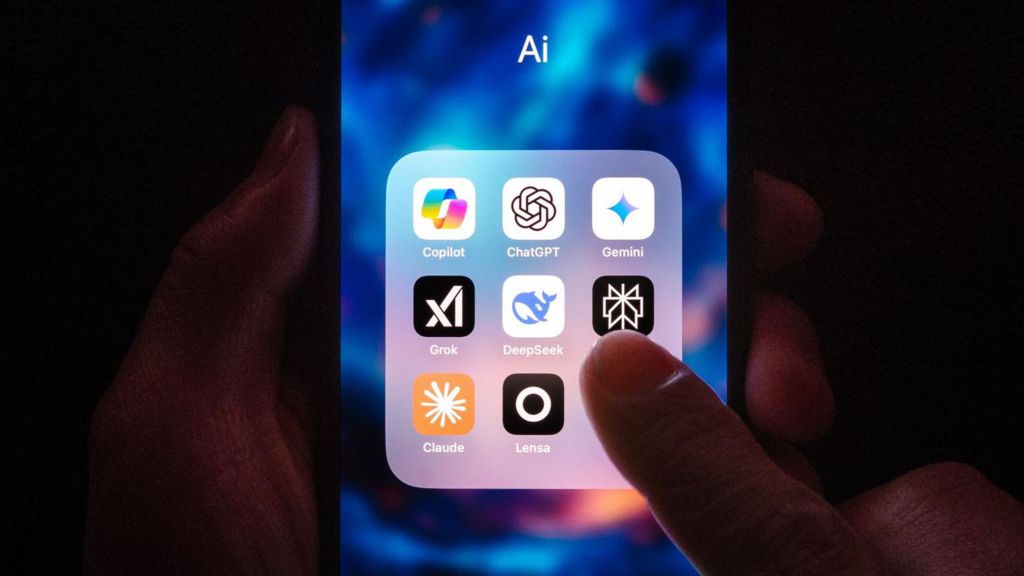
    A high-stakes legal clash between leading American artificial intelligence firm Anthropic and the U.S. federal government has pulled back the curtain on the hegemonic logic that shapes Washington’s approach to AI development and global governance, according to international policy experts. The confrontation began earlier this month when the Biden administration labeled Anthropic a “national security supply chain risk” after the company refused to grant U.S. government agencies unfettered, unrestricted access to its proprietary large language models—access Anthropic argued could enable dangerous misuse of the technology in autonomous weapons systems and mass surveillance programs.

    Last Thursday, federal Judge Rita Lin of the U.S. District Court for the Northern District of California issued a preliminary injunction temporarily blocking the administration’s actions, pausing both the supply chain risk designation and a White House order forcing all federal agencies to discontinue use of Anthropic’s AI tools. The ruling delays enforcement of the government’s ban for seven days to give the Biden administration time to file an appeal, while the court weighs the full merits of Anthropic’s lawsuit against the federal government. In her decision, Lin explicitly ruled that punishing Anthropic for drawing public attention to the government’s contracting demands amounted to unlawful retaliation against the company’s First Amendment rights. Anthropic welcomed the court’s ruling, saying in a statement that it was grateful for the court’s swift action and confident it would ultimately prevail on the full legal claims brought against the government.

    The AI safety-focused firm’s co-founder and CEO Dario Amodei has long warned of the risks of concentrating advanced AI power in the hands of a small, unaccountable group of decision-makers, noting in a January blog post that he sees major danger in allowing a small cohort of actors to gain control over an autonomous army of drone systems.

    Chinese policy experts who study global technology governance say the dispute lays bare a troubling expansion of U.S. national security framing that weaponizes economic and technological competition to advance geopolitical goals. He Yun, a researcher at Tsinghua University’s Belt and Road Institute and associate professor of public administration at Hunan University, argues that the U.S. government’s use of the “supply chain risk” label to pressure a private company over its ethical stances reflects a deliberate trend of expanding and instrumentalizing the concept of national security. In recent years, Washington has fully integrated economic competition and technological dominance into its national security strategy, meaning any corporate action that deviates from its military or geopolitical priorities can be instantly reclassified as a threat, He explained. “When the so-called principle of American freedom clashes with Washington’s geopolitical hegemonic objectives, it is readily sacrificed in favor of the latter,” she added.

    Lang Ping, head of security studies at the Chinese Academy of Social Sciences’ Institute of World Economics and Politics, notes that the conflict underscores the U.S. government’s increasingly assertive unilateral posture in the global AI space. As a leading global AI power, the U.S. frames competition in this sector as a winner-takes-all economic and geopolitical race, Lang explained. “The US has persistently pursued a monopoly position in the global AI sector, rallying allies to develop a coordinated technological ecosystem while promoting the export of full-stack systems, with the aim of shaping a market structure centered on its own leadership,” she said.

    In contrast to the U.S.’s unilateral, monopoly-seeking approach, experts highlight the inclusive governance framework China has put forward for the global AI sector. As the world’s second-largest economy and a major leader in AI innovation, China has actively worked to shape multilateral cooperative AI governance, launching the Global Initiative on AI Governance and the Global Action Plan on AI Governance to offer an inclusive alternative that centers shared benefits rather than great power competition.

    China adheres to a people-centered approach and the core principle of “AI for good”, seeking to balance technological innovation, regulatory oversight and power distribution to deliver stable, inclusive AI development that benefits the entire global community. All nations, regardless of size or economic power, hold an equal right to develop and access AI technology, He Yun emphasized. China advocates building an inclusive, equitable global AI governance system under the framework of the United Nations, with a specific focus on expanding representation and capacity-building for developing nations to close the global digital divide.

    By comparison, U.S. AI policy is marked by a heavy shift toward securitization and bloc-based exclusionary strategies, He noted. This reliance on unilateral action and geopolitical division risks fragmenting global AI supply chains and splitting global innovation ecosystems, exacerbating global technological inequality and raising the risk of great power confrontation over the future of AI development.

  • Suriname’s former president Santokhi dies – media

    Suriname’s former president Santokhi dies – media

    The Republic of Suriname has entered a period of national mourning following the announcement of former President Chandrikapersad Santokhi’s passing at age 67. The South American nation’s government confirmed the news through an official statement published on its website this Monday.

    Santokhi, who previously led the country as president, leaves behind a complex political legacy that spanned decades of public service. His tenure coincided with significant economic and social developments within the former Dutch colony, which maintains a unique cultural blend of Caribbean and South American influences.

    The circumstances surrounding his death have not been immediately disclosed, though the government’s formal announcement suggests a peaceful passing. The news has triggered an outpouring of condolences from across the political spectrum, with current government officials praising his dedication to national development.

    Santokhi’s political career was notable for its focus on judicial reform and economic stabilization during challenging periods in Suriname’s history. His administration navigated complex international relationships while addressing domestic concerns about sustainable development in the resource-rich nation.

    The former president’s passing marks the end of an era in Surinamese politics, coming at a time when the country continues to forge its path as one of South America’s smallest but most culturally diverse nations. Memorial arrangements are expected to be announced in the coming days as the country prepares to honor his contributions to public life.

  • Watch: Inside the lacklustre Barbie fan event now issuing refunds

    Watch: Inside the lacklustre Barbie fan event now issuing refunds

    The highly anticipated Barbie Dream Fest in Florida has transformed into a public relations nightmare, with organizers now issuing refunds following widespread attendee disappointment. Viral social media footage reveals a stark contrast between marketing promises and reality, showcasing a drab convention center space that failed to capture the vibrant Barbie aesthetic.

    The event, promoted as an immersive pink-themed experience, instead presented attendees with a minimalist gray venue that conspicuously lacked the elaborate dreamhouse environments and photo-worthy installations featured in promotional materials. This visual discrepancy between expectation and delivery sparked immediate backlash across digital platforms.

    Organizers have responded to the mounting criticism by implementing a refund program, acknowledging the event’s failure to meet brand standards and fan expectations. The situation illustrates growing concerns within the entertainment industry about experiential marketing events that prioritize social media buzz over substantive participant experiences.

    Industry analysts note this incident may establish new precedents for consumer protection in ticketed fan events, particularly regarding the accuracy of promotional representations. The Barbie brand, currently enjoying renewed cultural relevance through recent cinematic success, now faces challenges in maintaining fan trust for future experiential activations.

  • The personal items the Artemis II crew are taking to the Moon

    The personal items the Artemis II crew are taking to the Moon

    In an unprecedented celestial endeavor, NASA’s Artemis II mission prepares to launch four exceptional astronauts on humanity’s first lunar orbital journey in over 50 years. The diverse crew comprises Commander Reid Wiseman, Victor Glover, Christina Koch, and Jeremy Hansen from the Canadian Space Agency, representing a new era of international space collaboration.

    Commander Wiseman, a seasoned US Navy test pilot and veteran of Expedition 40 aboard the International Space Station, brings profound leadership experience to the mission. Beyond his technical expertise, Wiseman embodies resilience as a single parent to two teenage daughters following the tragic loss of his wife to cancer in 2020. He openly discusses with his children the realities of spaceflight risks, emphasizing the importance of preparedness for life’s uncertainties.

    Christina Koch marks a historic milestone as the first woman destined to travel to the Moon. An accomplished engineer and physicist, Koch already holds the record for the longest single spaceflight by a woman (328 days aboard the ISS in 2019) and participated in the first all-female spacewalk. Her inspiration stems from childhood exposure to the iconic Apollo 8 Earthrise photograph, which revealed the profound human element behind space exploration.

    Jeremy Hansen, making history as the first non-American lunar traveler, represents Canada’s growing role in space exploration. The former Royal Canadian Air Force fighter pilot and physicist has played crucial roles in astronaut training at NASA’s Johnson Space Center. Hansen’s approach to mission preparation includes transparent conversations with his family about technical aspects and safety protocols, demystifying the complexities of space travel.

    Victor Glover, set to become the first Black astronaut to journey to the Moon, brings impressive credentials as a former Navy fighter pilot and test pilot with three master’s degrees. His previous experience as pilot of NASA’s SpaceX Crew-1 mission and Expedition 64 aboard the ISS provides invaluable practical knowledge. Glover’s preparation involves studying original Gemini and Apollo documents to extract timeless engineering wisdom from earlier space missions.

    The Artemis II mission represents more than technological achievement—it embodies human curiosity, international cooperation, and personal sacrifice. Each astronaut plans to carry meaningful personal items, from handwritten notes and family pendants to historical artifacts, maintaining tangible connections to Earth during their groundbreaking journey around the Moon.

  • King Charles should meet Epstein victims, US lawmaker says

    King Charles should meet Epstein victims, US lawmaker says

    A prominent US legislator has formally requested that King Charles III engage with survivors of Jeffrey Epstein’s sexual abuse network during the monarch’s anticipated visit to the United States later this month. Although Buckingham Palace has not officially confirmed the royal itinerary, multiple sources indicate the King and Queen Camilla are planning diplomatic engagements in Washington around late April.

    Democratic Congressman Ro Khanna, instrumental in compelling the Justice Department to release sealed Epstein documents through legislative action last year, addressed the British sovereign in a detailed letter dated Monday. The California representative emphasized the transnational nature of Epstein’s criminal operations, noting the network’s “significant ties to the United Kingdom through Ghislaine Maxwell, through Epstein’s relationships with British public figures, and through the social and political circles in which he operated.”

    Khanna’s correspondence stressed that these international connections “raise broader questions about how Epstein was able to maintain influence, credibility, and protection across borders for so long.” The congressman specifically referenced ongoing Congressional efforts to obtain testimony from the King’s brother, Andrew Mountbatten-Windsor, whose royal titles were revoked in 2022 following scrutiny of his associations with the convicted sex offender. Despite congressional subpoenas, the Duke has not provided testimony to US investigators and maintains his complete innocence regarding any wrongdoing.

    The potential royal visit would mark significant diplomatic symbolism ahead of July’s 250th anniversary commemorations of the American Declaration of Independence. Preliminary schedules suggest the King would meet with former President Donald Trump and potentially address a joint session of Congress during the Washington stop.

    Buckingham Palace has previously stated that the monarch’s “sympathies have been, and remain with, the victims of any and all forms of abuse,” while also confirming the Royal Family’s readiness to support official investigations. Recent justice department document releases have included photographs showing Mountbatten-Windsor with Epstein and in compromising positions with anonymized individuals, though the former prince reached an out-of-court settlement with primary accuser Virginia Giuffre in 2022 without admitting liability.

  • Kid Rock sparks US Army probe after helicopter flyby at his mansion

    Kid Rock sparks US Army probe after helicopter flyby at his mansion

    The United States Army has initiated a formal administrative review following a viral social media incident involving military aircraft operations near the private residence of musician Kid Rock. The event unfolded when the artist, whose legal name is Robert Ritchie, posted footage to his social media accounts on Saturday showing two AH-64 Apache attack helicopters conducting low-altitude maneuvers in close proximity to his hilltop estate in the Nashville metropolitan area.

    Army spokesperson Major Montrell Russell confirmed the aircraft belonged to US Army assets and were engaged in a predetermined training route exercise. ‘An administrative review is presently underway to comprehensively assess the mission parameters and verify strict compliance with all Department of Defense regulations and Federal Aviation Administration airspace requirements,’ Russell stated. ‘Should this investigation uncover any procedural violations, appropriate corrective measures will be implemented.’

    The visually striking footage, captured from the artist’s outdoor pool area, shows Ritchie enthusiastically gesturing toward the military helicopters while standing beside a replica Statue of Liberty. In subsequent clips, the performer is seen offering a theatrical salute and pumping his fist as additional aircraft passed near his property, which he has nicknamed the ‘Southern White House’.

    Notably, Ritchie accompanied the posts with politically charged commentary directed at California Governor Gavin Newsom, utilizing profane language that reflects his well-documented support for former President Donald Trump. The caption concluded with the statement: ‘God Bless America and all those who have made the ultimate sacrifice to defend her.’

    Major Jonathon Bless, representing the Army’s 101st Airborne Division based at Fort Campbell, Kentucky, emphasized the military’s commitment to responsible aviation practices: ‘We maintain rigorous protocols for all aircraft operations and thoroughly investigate any community concerns regarding their impact on civilian areas.’ The comprehensive review will examine whether the training exercise adhered to established altitude restrictions, noise abatement procedures, and privacy considerations for residential zones.

  • After sex abuse claims, activists and lawmakers rethink Cesar Chavez Day

    After sex abuse claims, activists and lawmakers rethink Cesar Chavez Day

    The towering legacy of American labor icon Cesar Chavez faces unprecedented reckoning as sexual assault allegations from civil rights pioneer Dolores Huerta catalyze nationwide removal of his monuments and renaming of public tributes. This profound transformation strikes particularly deep chords in California, where approximately 75% of America’s fruits and nuts are harvested and farm labor carries generational significance for countless families.

    The movement gained decisive momentum when 95-year-old Huerta, co-founder of the National Farm Workers Association with Chavez, broke decades of silence in a New York Times investigation alleging historical rape. The report further contained testimonies from two daughters of farmworkers claiming underage molestation in the 1970s. Huerta stated she previously withheld her account fearing damage to the farmworkers’ movement.

    California’s legislature responded with unanimous approval to rename Cesar Chavez Day as Farmworkers Day, reflecting Senator Suzette Martinez Valladares’ declaration that ‘the legacy of farmworkers belongs to families like mine across California – not to any one individual.’ This legislative action mirrors similar reevaluations occurring nationwide where Chavez’s name graces dozens of schools, streets, and public buildings.

    The physical landscape undergoes visible transformation as municipalities remove busts from public parks—exemplified by recent actions in Denver’s Cesar Chavez Park—and artists reconsider murals. Los Angeles artist MisterAlek transformed his 2021 Chavez mural into a tribute to Huerta, explaining the updated artwork ‘illustrates the type of person that she was… speaking loud for people defending our rights.’

    Yet the conversation reveals nuanced perspectives regarding historical preservation. Muralist JD ‘Zender’ Estrada, who created a Chavez tribute in 1994 when Los Angeles renamed a street in his honor, advocates for contextual renovation rather than complete removal. ‘We have to preserve and conserve murals,’ Estrada noted, suggesting updated artworks could better recognize contributions from Filipino and other international farmworkers while maintaining historical context.

    Los Angeles Mayor Karen Bass encapsulated the complex emotional response, acknowledging feeling ‘devastated’ while recognizing Chavez’s foundational role in justice movements that inspired her childhood commitment to activism. The unfolding reevaluation balances traumatic allegations against transformative labor achievements that included leading the landmark Delano grape strike and creating the enduring activist mantra ‘si, se puede’ (yes, we can).

  • Mexico demands answers after another migrant dies in ICE custody

    Mexico demands answers after another migrant dies in ICE custody

    The Mexican government has announced intensified legal measures against U.S. Immigration and Customs Enforcement (ICE) following the death of 52-year-old Jose Guadalupe Ramos-Solano, marking the fourth fatality this year at the Adelanto Processing Center in southern California. This incident brings the total number of migrant deaths in ICE custody to 14 this year, approaching last year’s two-decade high of 31 fatalities.

    President Claudia Sheinbaum declared during her daily press conference that Mexico would pursue “greater measures” to address what she characterized as unacceptable treatment of Mexican nationals. The government is formally supporting a class-action lawsuit against The GEO Group Inc., the private contractor operating the Adelanto facility, which alleges unconstitutional detention conditions including mold infestation, disease spread, medical neglect, and inadequate provisions.

    Ramos-Solano, who entered the U.S. illegally and had prior convictions for drug possession and theft, died on March 25 after being found unresponsive in his bunk. Despite immediate CPR administration and transportation to a nearby hospital, he was pronounced dead. ICE records indicate Ramos-Solano had received medical care for diabetes, high cholesterol, and hypertension since his February arrest.

    The escalating crisis occurs amid record-breaking detention numbers, with approximately 68,000 immigrants currently in ICE custody. Vanessa Calva Ruiz, Mexico’s director general for consular protection, pledged to “exhaust all legal, diplomatic and multilateral avenues to demand justice” during a emotional press conference at the Mexican consulate in Los Angeles where Ramos-Solano’s children appealed for transparency regarding their father’s death.

  • Michigan synagogue attack was ‘Hezbollah-inspired act of terrorism’, FBI says

    Michigan synagogue attack was ‘Hezbollah-inspired act of terrorism’, FBI says

    Federal authorities have officially classified the March 12th assault on Temple Israel in West Bloomfield, Michigan as a Hezbollah-inspired terrorist act. The FBI confirmed that naturalized U.S. citizen Ayman Muhammad Ghazali, originally from Lebanon, deliberately targeted Michigan’s largest Jewish temple while dozens of children were present inside the synagogue.

    According to Special Agent Jennifer Runyan, Ghazali’s digital footprint revealed extensive consumption of pro-Hezbollah media content and specific searches regarding Israeli gatherings in Michigan. His online research included footage of armed confrontations, ammunition specifications, and news coverage of Iranian fatwas calling for jihad against U.S. military forces.

    In the days preceding the attack, Ghazali acquired an AR-style rifle, ten magazines, approximately 300 rounds of ammunition, fireworks, torch lighters, and multiple gallons of gasoline. He created a Facebook album titled ‘vengeance’ containing images of Iran’s Supreme Leader Ayatollah Ali Khamenei, who had been killed during initial U.S.-Israel strikes in the recent conflict with Iran.

    Minutes before the assault, Ghazali sent his overseas sister videos, photos, and messages explicitly stating his intent to execute a mass terrorist attack. In one Arabic-language recording, he announced his plan to ‘forcefully enter and start shooting at them’ while claiming to have booby-trapped his vehicle.

    The attack commenced when Ghazali rammed his truck into the temple doors twice before engaging in gunfire with security personnel. He subsequently ignited fireworks inside his vehicle, causing a fire that filled the hallway with smoke. Ghazali ultimately died from a self-inflicted gunshot wound during the incident. One security guard sustained injuries, and several officers required treatment for smoke inhalation.

    Authorities confirmed Ghazali had no prior FBI investigation history and wasn’t on any terrorist watchlist. U.S. Attorney Jerome Gorgon stated that had Ghazali survived, he would have faced charges of providing material support to Hezbollah—a U.S.-designated foreign terrorist organization. The Israel Defense Forces later reported that Ghazali’s brother was a Hezbollah commander recently killed in an airstrike, though the BBC hasn’t independently verified this claim.

    Investigators found no evidence of co-conspirators in the meticulously planned attack that federal officials have directly linked to Hezbollah’s militant ideology.