标签: North America

北美洲

  • UAE’s stablecoin push shifts from pilots to point‑of‑sale as CBUAE rulebook takes hold

    UAE’s stablecoin push shifts from pilots to point‑of‑sale as CBUAE rulebook takes hold

    The United Arab Emirates is executing a strategic transition of regulated stablecoins from experimental pilots into mainstream commercial applications, establishing itself as a global leader in blockchain-enabled financial infrastructure. This transformative shift is governed by the Central Bank of UAE’s comprehensive regulatory framework that mandates strict monetary safeguards while paving the way for future interoperability with the national digital currency.

    According to the landmark report ‘The UAE Blockchain Ecosystem’ produced through collaboration between Abu Dhabi Blockchain Center and Binance, the nation has cultivated an optimal environment for institutional blockchain deployment through regulatory precision, diversified capital investment, and increasing market influence. The ecosystem has progressed beyond preliminary testing phases into active production implementation across numerous enterprise applications.

    The regulatory cornerstone emerged in July 2024 when the Central Bank instituted the Payment Token Services Regulation, establishing requirements for 100% reserve backing of dirham-denominated payment tokens. The framework explicitly prohibits algorithmic and privacy tokens for payment purposes while restricting foreign-currency stablecoins primarily to trading pairs on licensed exchanges, thereby maintaining the dirham’s supremacy in domestic commerce.

    In October 2024, AE Coin achieved distinction as the first fully licensed AED-pegged stablecoin through DhStablecoin LLC in partnership with Al Maryah Community Bank, establishing a precedent for centralized issuance within regulatory parameters rather than through peripheral crypto market channels. The adoption momentum accelerated dramatically in December 2025 when ADNOC Distribution signed a memorandum to accept AE Coin across approximately 980 service stations throughout the UAE, Saudi Arabia, and Egypt. This deployment extends stablecoin functionality to fuel purchases, convenience store transactions, and car wash facilities, representing one of the most extensive retail implementations of regulated payment tokens worldwide.

    Concurrently, telecommunications provider e& UAE initiated a partnership to pilot AE Coin for consumer bill payments, mobile recharges, and digital services, indicating stablecoin integration into essential utility payments. Additional dirham-referenced initiatives are advancing through consortiums involving International Holding Company, ADQ, and First Abu Dhabi Bank, which announced plans for bank-issued dirham stablecoins. Zand Bank secured regulatory approval in November 2025 to launch a dirham-pegged token on public blockchains, demonstrating competition emerging within the licensed payment-token category among both traditional financial institutions and fintech innovators.

    The UAE’s nuanced approach permits non-dirham stablecoins in appropriate contexts: USD and EUR stablecoins have received recognition within specific free-zone frameworks for trading and settlement purposes, though not for routine domestic merchant transactions. This balanced methodology aligns capital market liquidity requirements with retail commerce monetary policies.

    This stablecoin implementation coincides with the inaugural retail phase of the Digital Dirham, launched in December 2025 through payment service providers to offer residents instantaneous, fee-exempt peer-to-peer transfers. The central bank has strategically positioned this central bank digital currency (CBDC) initiative as complementary to private payment tokens, incorporating design provisions that anticipate future interoperability between the Digital Dirham and licensed stablecoins to ensure uniform settlement standards across both public and private financial channels.

    The policy emphasis reflects the UAE’s high-volume payments economy, where domestic systems processed over Dh20 trillion in transfers during the first ten months of 2025. As one of the world’s largest sources of outbound remittances, the nation prioritizes transaction velocity, system resilience, and regulatory compliance as fundamental design objectives.

    Licensed infrastructure providers are developing solutions aligned with these regulations. Payment specialists and financial institutions are piloting AED-to-stablecoin conversion mechanisms and exploring tokenized deposits for on-chain treasury operations that remain entirely within the banking ecosystem. Regulated exchanges and custodians are integrating dirham-token parameters into both consumer and institutional workflows. Operational standards encompass reserve segregation, net liquid asset thresholds, technological safeguards, cybersecurity controls, and continuous reporting requirements, embedding compliance throughout the issuance and distribution processes.

    The emerging consideration focuses not on policy direction but implementation specifics. Point-of-sale adoption will depend on wallet interoperability among multiple dirham stablecoins, merchant integration expenses, and technical alignment with Digital Dirham interfaces. With numerous bank-backed issuers developing products and an active CBDC pilot offering commission-free transfers, the UAE is positioned for dual-track evolution where regulated private tokens and public digital currency expand concurrently, normalizing dirham-denominated digital money across petroleum, telecommunications, and daily retail while containing non-dirham stablecoins to trading and institutional contexts under combined free-zone and federal supervision.

  • Meta’s Zuckerberg denies Instagram targets kids at social media addiction trial

    Meta’s Zuckerberg denies Instagram targets kids at social media addiction trial

    In a pivotal courtroom confrontation with far-reaching implications for the technology sector, Meta Platforms CEO Mark Zuckerberg staunchly defended his company’s policies regarding underage users during a high-stakes trial addressing youth social media addiction. The legal proceedings, unfolding in Los Angeles, represent a critical test case within a broader wave of litigation against major tech companies.

    Under rigorous cross-examination by plaintiff’s attorney Mark Lanier, Zuckerberg repeatedly asserted that Meta maintains strict prohibitions against users under 13 on its platforms, despite internal company documents suggesting otherwise. The CEO faced particularly challenging scrutiny over a 2018 Instagram presentation that explicitly stated “If we want to win big with teens, we must bring them in as tweens” – a statement seemingly at odds with his congressional testimony from 2024.

    The case centers on a California woman who alleges that Instagram and Google’s YouTube actively sought to profit by addicting children to their services while knowingly concealing potential mental health risks. She claims these platforms significantly contributed to her depression and suicidal thoughts during childhood.

    Zuckerberg offered nuanced explanations throughout his testimony, characterizing internal documents as “gut checks” rather than formal corporate objectives. He emphasized Meta’s evolving approach to user experience, stating that while the company previously measured success through engagement metrics, it now prioritizes delivering genuine value to users.

    Notably, Meta’s competitors including Snap and TikTok opted for pre-trial settlements with the plaintiff, leaving Meta and Alphabet’s Google as the remaining defendants. The trial has revealed several damaging internal communications, including an email from former Meta executive Nick Clegg questioning the enforceability of age restrictions and noting inconsistent policies across platforms.

    The proceedings have illuminated the technological challenges of age verification, with Zuckerberg suggesting that device manufacturers should share responsibility for preventing underage access. He also testified that teenage users constitute less than 1% of Instagram’s revenue.

    This landmark case challenges the longstanding legal protections enjoyed by tech companies under US law, which have traditionally shielded platforms from liability regarding user content. The outcome could establish significant precedents for how courts evaluate platform design decisions rather than merely content moderation practices.

    The trial occurs amid growing global scrutiny of social media’s impact on youth mental health. Several countries, including Australia and various European nations, have implemented or are considering age-based restrictions on social media access. In the United States, Florida has prohibited platforms from allowing users under 14, though industry groups are challenging this legislation in court.

    As the tech industry faces this moment of reckoning, the verdict in this case could potentially reshape corporate accountability standards and regulatory approaches worldwide, forcing social media companies to fundamentally reconsider how they develop and market their services to younger audiences.

  • Bad Bunny to make lead acting debut in film inspired by Puerto Rican revolutionary

    Bad Bunny to make lead acting debut in film inspired by Puerto Rican revolutionary

    Global music sensation Bad Bunny is poised for a cinematic breakthrough, securing his first leading role in the highly anticipated historical drama ‘Porto Rico’. The film unites the Grammy-winning artist with Academy Award winners Javier Bardem and Edward Norton in what promises to be a powerful exploration of Puerto Rican heritage.

    Directed by renowned rapper and activist René Pérez (professionally known as Residente), the project has been meticulously developed since 2023 as a cinematic love letter to Puerto Rico’s complex history. The narrative draws inspiration from the life of José Maldonado Román, a revolutionary figure who challenged Spanish colonial rule in late 19th and early 20th century Puerto Rico under his legendary alias Águila Blanca (White Eagle).

    Residente expressed his profound connection to the project, stating to Deadline: ‘This film represents a reaffirmation of our identity, presented with the intensity and honesty our historical legacy demands. Since childhood, I’ve envisioned creating a film about my homeland, whose true narrative has perpetually been shrouded in controversy.’

    The production gains additional prestige with Oscar-winning director Alejandro González Iñárritu serving as executive producer, alongside acclaimed actor Viggo Mortensen joining the ensemble cast. Edward Norton articulated the film’s significance within American cinema tradition: ‘This project resonates with the transformative power of films like The Godfather and Gangs of New York—blending visceral drama with iconic historical portrayals while confronting the obscured narratives beneath American idealism.’

    Norton further praised the creative synergy: ‘Uniting René’s directorial vision with Bad Bunny’s artistry to illuminate Puerto Rico’s authentic origins will be like a flame meeting its destined dynamite.’

    The film marks a strategic expansion of Bad Bunny’s entertainment footprint following an extraordinary year that included headlining the Super Bowl LVIII halftime show and securing Album of the Year at the 2024 Grammy Awards. His previous acting credits include supporting roles in Brad Pitt’s ‘Bullet Train’ and the crime comedy ‘Caught Stealing’ alongside Austin Butler.

    Adding to his milestone week, the International Federation of the Phonographic Industry (IFPI) recognized Bad Bunny as the world’s fifth most-streamed artist globally for 2024, cementing his status as a cross-cultural phenomenon now transitioning into dramatic cinema.

  • Do not give away Diego Garcia, Trump tells UK in fresh attack on Chagos deal

    Do not give away Diego Garcia, Trump tells UK in fresh attack on Chagos deal

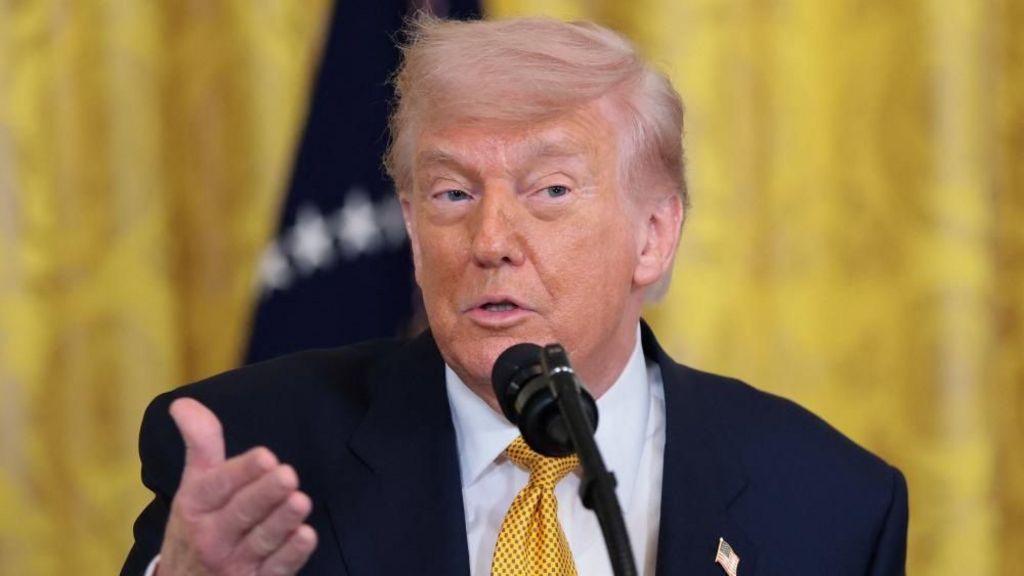
    Former US President Donald Trump has dramatically shifted his stance on the UK’s Chagos Islands agreement, creating diplomatic uncertainty just days after Washington formally endorsed the sovereignty transfer plan. Through his Truth Social platform, Trump issued a stern warning to UK Prime Minister Sir Keir Starmer, characterizing the arrangement as a “big mistake” that would constitute “a blight on our Great Ally.”

    The controversial agreement, announced in May 2026, would transfer sovereignty of the British Indian Ocean Territory to Mauritius while maintaining UK control over the strategically vital Diego Garcia military base through a 99-year leaseback arrangement. This joint UK-US facility serves as a critical staging post for military operations in the Indian Ocean region.

    Trump’s intervention represents his third position change on the matter within months, having previously described the transfer as an “act of great stupidity” before briefly endorsing it as the “best” available option. His latest statement emphasized that “Leases are no good when it comes to Countries” and warned that Starmer was “losing control of this important Island.”

    The surprising critique comes despite the US State Department’s official endorsement of the agreement earlier this week. White House press secretary Karoline Leavitt clarified that Trump’s social media post should be considered official administration policy, stating: “When you see it on Truth Social you know it’s directly from President Trump, that’s the beauty of this president in his transparency.”

    UK officials maintained their support for the agreement, with the Foreign Office emphasizing that the arrangement remains “crucial to the security of the UK and our key allies, and to keeping the British people safe.” The legislation implementing the agreement has faced parliamentary delays, with no current timeline for its next consideration in the House of Lords.

    The political opposition in Britain seized on Trump’s comments, with Shadow Foreign Secretary Dame Priti Patel demanding that Starmer “finally saw sense, U-turned and scrapped this appalling deal altogether.” Reform UK leader Nigel Farage characterized it as “the worst deal in British history.”

    Meanwhile, Chagossian activists have intensified their opposition to the transfer. Four islanders recently occupied a remote atoll in protest, refusing evacuation orders from British maritime patrols. One protester, Misley Mandarin, declared they would have to “drag me from my beach,” arguing that Mauritius never legitimately owned the islands historically.

    The archipelago has been under British control since 1814, purchased for £3 million in 1965. Mauritius maintains that it was illegally compelled to relinquish the territory during independence negotiations. The construction of the Diego Garcia base in the late 1960s involved the forced displacement of thousands of Chagossians, many of whom eventually settled in the UK, Mauritius, and Seychelles.

  • 8 skiers dead after avalanche in US Northern California

    8 skiers dead after avalanche in US Northern California

    TRUCKEE, California – A catastrophic avalanche in the Sierra Nevada mountains has resulted in eight confirmed fatalities with one individual still unaccounted for, marking the most devastating snowslide incident in the United States in more than four decades. The tragedy unfolded on Tuesday in Nevada County’s backcountry terrain, where a group of experienced skiers was caught in the massive snow cascade.

    Nevada County Sheriff Shannan Moon confirmed the grim details during a Wednesday press conference, indicating that the mission had transitioned from rescue operations to recovery efforts. Emergency crews worked under extreme blizzard conditions for hours to locate victims, ultimately recovering eight bodies that are now being transported for official autopsy procedures to determine exact causes of death.

    The silver lining in the disaster emerged with the successful rescue of six survivors extracted from the mountain on Tuesday evening. Medical authorities reported that two of the rescued skiers required hospitalization for non-life-threatening injuries, while the remaining four were treated onsite and released.

    The incident occurred near the Alder Creek Adventure Center, where search teams established a command post to coordinate the complex operation. The area, known for its challenging terrain and unpredictable weather patterns, has historically attracted backcountry skiing enthusiasts seeking untouched powder slopes.

    This tragedy represents the deadliest avalanche event since the 1982 Alpine Meadows disaster that claimed seven lives. Safety experts are emphasizing the increased avalanche risks following recent heavy snowfall across the Sierra Nevada range, with authorities urging extreme caution for winter sports enthusiasts venturing into uncontrolled backcountry areas.

    Meteorological records indicate the region has experienced unusually high precipitation levels this season, creating potentially unstable snowpack conditions that can trigger catastrophic slides without warning. The skiing community nationwide has begun mourning the victims, with tributes pouring in from mountain resorts and outdoor organizations across the country.

  • US withdrawing all troops from Syria: media

    US withdrawing all troops from Syria: media

    WASHINGTON – In a significant strategic shift, the United States has initiated the complete withdrawal of all military personnel from Syrian territory, according to a Wall Street Journal report citing three senior U.S. officials. The decision marks the conclusion of America’s decade-long military engagement in the Middle Eastern nation.

    The phased withdrawal commenced earlier this month with the evacuation of U.S. forces from two critical strategic positions: the Al-Shaddadi military base in northeastern Syria and the Al Tanf garrison, a strategically vital outpost situated at the convergence of Syrian, Jordanian, and Iraqi borders. These initial relocations represent the first phase of a comprehensive disengagement strategy.

    Military analysts confirm that approximately 1,000 American troops remain stationed across various Syrian locations. The complete extraction of all personnel and equipment is projected to conclude within the next sixty days, effectively terminating the U.S. military footprint that began in 2015 primarily focused on counterterrorism operations against Islamic State forces.

    The geopolitical implications of this withdrawal are drawing intense scrutiny from international observers. Regional powers including Russia, Iran, and Turkey are closely monitoring the development, which could potentially reshape security dynamics across the conflict-ridden region. The vacuum created by departing U.S. forces may trigger renewed strategic positioning among these regional actors.

    Pentagon officials have emphasized that the withdrawal will be conducted with deliberate precision to ensure both troop safety and the preservation of regional stability. The Department of Defense is coordinating with allied forces in the region to manage the transition and maintain pressure on remaining terrorist elements.

  • ‘We’re still on edge’: Toy firms look to US Supreme Court as tariffs hit profits

    ‘We’re still on edge’: Toy firms look to US Supreme Court as tariffs hit profits

    NEW YORK — At the recent annual Toy Fair convention, industry executives gathered under the shadow of persistent trade policy anxieties, with one figure drawing particular attention: Rick Woldenberg, CEO of educational toy firm Learning Resources. His legal confrontation with the Trump administration has positioned him as an unlikely champion for manufacturers grappling with import tariffs.

    Woldenberg’s lawsuit challenges the sweeping global tariffs imposed by former President Donald Trump, which at one point reached 145% on Chinese goods. The Supreme Court is poised to issue a ruling on the case imminently, a decision that could force the government to refund billions of dollars collected from businesses and potentially reshape U.S. trade policy.

    The toy industry, heavily reliant on Chinese manufacturing, found itself disproportionately vulnerable to these import taxes. Many firms absorbed significant profit losses and were compelled to implement price increases—a move Learning Resources and others hope might be reversible should the court rule against the administration.

    Despite initial fears, the overall consumer impact has been more moderate than anticipated. Harvard Business School Professor Alberto Cavallo, who tracks tariff effects on pricing, notes that while cheaper items have seen noticeable increases, the measures have had “little impact” on overall toy prices. The average tariff on Chinese imports has stabilized around 20%, partly due to White House exemptions and rate adjustments.

    Interviews with numerous executives at the Toy Fair revealed a sector cautiously optimistic about avoiding further price hikes in 2026, yet few are complacent. Jay Foreman, CEO of Basic Fun—which suffered a 65% profit drop last year—expressed industry-wide apprehension: “We’re still on edge. We’ll be on edge for at least another three years.” His company raised the price of its iconic Tonka truck from $30 to $35, a level he expects to maintain.

    Sensory toy company Glo Pals implemented its first price increase in six years last April, raising its bestselling light-up cubes by 20% to $12.99. Co-founder Anna Barker described the economic landscape as “completely temperamental,” emphasizing that “all that uncertainty is still omnipresent for us.”

    The White House has indicated it will pursue alternative mechanisms to impose tariffs should the Supreme Court invalidate the current measures. For international manufacturers like Tim Hislop of UK-based Floss & Rock, whose majority revenue comes from the U.S. market, a favorable ruling could lower future costs even if refunds remain unlikely. “I have a little prayer every night,” Hislop remarked wryly.

    As the industry awaits the judicial decision, Woldenberg’s legal stand represents both a specific challenge to presidential trade authority and a symbol of the broader business community’s struggle to adapt to an era of unpredictable economic policy.

  • White House presses Iran to make deal, while ramping up military presence

    White House presses Iran to make deal, while ramping up military presence

    The White House has delivered a pointed admonition to Tehran, asserting it would be “very wise” for Iran to secure a diplomatic agreement with the United States. This warning emerges amidst escalating military posturing and reports that the Trump administration is actively considering renewed offensive actions against the Islamic Republic.

    White House Press Secretary Karoline Leavitt, addressing journalists, emphasized that President Trump continues to prioritize a negotiated settlement concerning Iran’s contentious nuclear program. Her statements coincide with the strategic deployment of a second U.S. battleship to the Middle Eastern theater and follow a recent round of talks in Geneva, Switzerland, where both nations reported incremental progress.

    According to intelligence sourced from U.S. media and CBS News, President Trump has engaged in high-level consultations with security advisors to evaluate potential strike options, with one scenario allegedly planned for execution as early as the coming weekend. These deliberations were characterized as highly fluid, with no definitive decision yet reached. This echoes the precedent set last summer when U.S. forces targeted three Iranian nuclear facilities.

    Leavitt substantiated the rationale for military action, stating there exist “many reasons and arguments that one could make for a strike against Iran,” while simultaneously urging Tehran to return to the bargaining table.

    The recent indirect negotiations in Geneva, mediated by Oman, yielded no definitive breakthrough. However, participants from both camps acknowledged constructive movement. Iranian Foreign Minister Abbas Araghchi confirmed an understanding on core “guiding principles” for future dialogue, though he conceded significant work remains. Omani Foreign Minister Badr Albusaidi similarly reported “good progress” on mutual objectives and technical matters.

    Contrasting this cautiously optimistic tone, the White House maintained that Washington and Tehran remain “far apart” on several pivotal issues. Leavitt indicated that Iran is anticipated to provide more detailed proposals in the coming weeks, which will critically inform the President’s subsequent decisions.

    The rhetorical and diplomatic friction is matched by a tangible military buildup. BBC Verify has geolocated the USS Abraham Lincoln carrier strike group—comprising guided missile destroyers and fighter jet squadrons—near Iranian territorial waters. Furthermore, the USS Gerald R. Ford, the world’s largest warship, is reportedly en route to the region, with a full U.S. military contingent expected to be operational by mid-March.

    Iran has responded with defiant rhetoric and military exercises. Supreme Leader Ayatollah Ali Khamenei disseminated an AI-generated image depicting the sunken USS Ford, accompanied by a statement proclaiming that the capability to sink a warship is more formidable than the warship itself. Concurrently, the Islamic Revolutionary Guard Corps initiated maritime drills in the strategically critical Strait of Hormuz, a vital global oil transit corridor.

    The escalating standoff is further complicated by divergent negotiation priorities. Iran seeks to center discussions on its nuclear activities and the alleviation of crippling economic sanctions, whereas the U.S. has historically insisted on including Iran’s ballistic missile program in any comprehensive agreement. The fundamental distrust underpinning the crisis persists, with Western nations suspecting Iran of pursuing nuclear weapons capability—an allegation Tehran consistently denies.

  • How rescuers raced against time to reach skiers trapped in avalanche

    How rescuers raced against time to reach skiers trapped in avalanche

    A devastating backcountry skiing expedition in California’s Sierra Nevada mountains has culminated in tragedy, with eight of nine missing skiers confirmed deceased following a massive avalanche. The catastrophic event unfolded on Tuesday when emergency signals from both a guide’s satellite-enabled iPhone and another skier’s distress beacon alerted authorities in Truckee, California.

    The group of 15 individuals—comprising 11 recreational skiers and four professional guides—was concluding their three-day excursion at the Frog Lake Huts within the renowned Castle Peak region when the avalanche struck. Rescue operations faced immediate challenges as Highway 80 remained impassable due to severe winter storms, forcing authorities to implement unconventional access strategies.

    Nearby resorts including Boreal Mountain Ski Resort and Tahoe Donner’s Alder Creek Adventure Center deployed specialized rescue teams, utilizing snow-cats—vehicles designed for deep snow traversal—to navigate the treacherous conditions. By afternoon, approximately 50 rescuers had converged on the mountain from both northern and southern approaches.

    The rescue team eventually located six survivors sheltering in makeshift tents, though two required medical evacuation due to avalanche-related injuries. Placer County Sheriff Wayne Woo confirmed these survivors included one guide and five clients of Blackbird Mountain guided tours. Tragically, one deceased individual was identified as the spouse of a rescuer, adding profound personal dimension to the tragedy.

    Avalanche experts from the Sierra Avalanche Center had previously issued warnings about naturally occurring avalanches in the region, citing unstable snowpack conditions and continuing precipitation that increased loading on dangerous slopes. The accident site spanned approximately the area of a football field, complicating recovery efforts.

    Authorities have postponed recovery of the seven women and two men killed until weather conditions improve, citing ongoing safety concerns. The search for the one remaining missing skier continues, though officials presume this individual has also perished.

    Backcountry safety equipment—including avalanche beacons, shovels, and probes—proved critical in this incident, though officials remain uncertain whether any skiers carried inflatable avalanche airbag systems. The tragedy highlights the inherent dangers of winter backcountry travel despite technological advancements and professional guidance.

  • Etsy sells second-hand fashion app Depop to eBay for $1.2bn

    Etsy sells second-hand fashion app Depop to eBay for $1.2bn

    In a landmark transaction reshaping the digital resale market, e-commerce pioneer eBay has announced its acquisition of Depop, the rapidly expanding second-hand fashion application predominantly favored by Generation Z consumers. The all-cash agreement, valued at $1.2 billion (£890 million), represents eBay’s strategic initiative to penetrate younger consumer demographics within the burgeoning re-commerce sector.

    The acquisition sees online marketplace Etsy divesting the UK-originated platform merely five years after purchasing it for $1.6 billion. Despite the ownership transition, Depop will maintain its distinct brand identity and operational framework. The transaction is projected to finalize by mid-year, pending regulatory approvals.

    eBay’s Chief Executive Officer Jamie Iannone emphasized the strategic alignment, noting that second-hand apparel constitutes one of the company’s most rapidly expanding categories. The announcement coincided with eBay’s release of its 2025 financial results, revealing an 8% revenue increase to $11.1 billion year-over-year.

    Market response proved immediately favorable, with Etsy’s stock surging over 15% in after-hours trading following the disclosure, while eBay shares experienced a 6.5% appreciation.

    Depop’s demographic dominance among younger consumers presents a compelling value proposition, with approximately 90% of its seven million active buyers being under age 34. The platform additionally hosts a vibrant community exceeding three million active sellers, establishing itself as what Etsy CEO Kruti Patel Goyal characterized as “one of the fastest-growing fashion resale marketplaces in the United States.”

    This transaction marks Etsy’s continued strategic retreat from previous acquisition initiatives. The company previously divested Elo7, Brazil’s analogous handmade goods marketplace, at a substantial loss in 2023 after two years of ownership. Similarly, Etsy announced plans to sell Reverb, a musical equipment resale platform acquired in 2019, to refocus on its core artisan marketplace.

    The second-hand fashion sector has experienced remarkable expansion as younger consumers increasingly prioritize sustainability and affordability over traditional retail options. This movement has propelled re-commerce platforms to the forefront of fashion retail innovation, even as established players like Etsy face intensified competition from budget-oriented Chinese e-commerce giants Shein and Temu.