标签: North America

北美洲

  • Woman charged with attempted murder after shooting at Rihanna’s home

    Woman charged with attempted murder after shooting at Rihanna’s home

    A 35-year-old Orlando woman faces attempted murder charges after allegedly opening fire with a semiautomatic rifle at pop icon Rihanna’s Los Angeles residence on Sunday afternoon. Ivanna Lisette Ortiz remains in custody with bail set at $1.875 million following the targeted attack that occurred while Rihanna and partner A$AP Rocky were present at the property.

    According to prosecutors, Ortiz drove her white Tesla to the front of the celebrity’s mansion at approximately 1:15 PM local time and discharged multiple rounds toward the inhabited structure before fleeing the scene. Law enforcement officials located her vehicle eight miles from the crime scene at the Sherman Oaks Galleria shopping center, where she was subsequently apprehended.

    Los Angeles County District Attorney Nathan J. Hochman emphasized the severity of the incident, stating: ‘Opening fire in any populated neighborhood is extremely dangerous, puts lives at risk and will be fully prosecuted.’ He further warned that ‘such shooters will find their next destination to be our jails and prisons.’

    Despite the weapon being fired toward a occupied residence and adjacent property, no injuries were reported from the shooting. Ortiz now confronts additional felony charges including ten counts of assault with a semiautomatic firearm and three counts of shooting at an inhabited dwelling.

    Investigators from the LAPD have uncovered social media posts on Ortiz’s accounts that reference the Barbados-born singer, including one cryptic message on X that read: ‘Are you there? … say something to me directly instead of sneaking around like you talking to me where I’m not at.’

    The incident marks another security concern for the celebrity couple, who welcomed their third child together last year. Notably, A$AP Rocky was acquitted in February 2025 of charges related to firing a gun at a former friend—a trial that saw Rihanna bring their two sons to court proceedings.

  • Georgia race to replace Marjorie Taylor Greene heads to a runoff

    Georgia race to replace Marjorie Taylor Greene heads to a runoff

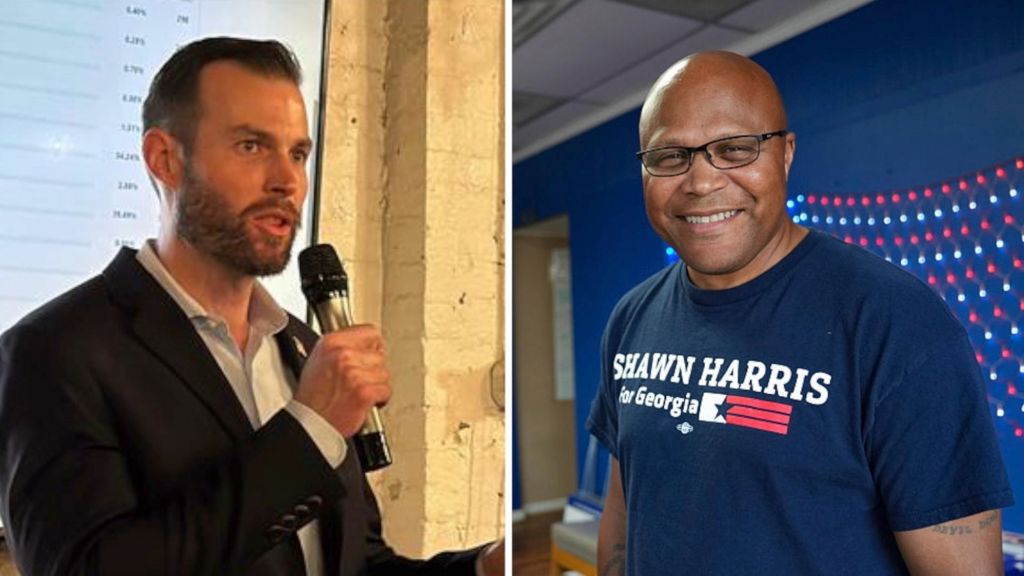
    Georgia’s 14th Congressional District is set for a high-stakes runoff election on April 7th after no candidate secured a majority in Tuesday’s special election. The contest will feature Republican Clay Fuller, a former district attorney endorsed by former President Donald Trump, against Democrat Shawn Harris, a retired Army Brigadier General and local farmer.

    The election, which drew a crowded field of 17 candidates from both parties, will determine who completes the remainder of former Representative Marjorie Taylor Greene’s term. The runoff comes after Greene’s unexpected departure from Congress, which created a vacuum in the strongly conservative district.

    Fuller’s campaign gained significant momentum following Trump’s “complete and total endorsement” delivered via Truth Social and reinforced during a rally in Rome, Georgia last month. The former president’s involvement highlighted the ongoing influence he wields within the Republican base. “For those who questioned how important Donald J. Trump is to this country, to Georgia’s 14th District, and to the state of Georgia, you see what this man means to this community,” Fuller stated on election night.

    Harris, representing Democratic hopes to flip the long-held Republican seat, struck an optimistic tone on social media: “This race isn’t over. Momentum is real. The coalition is growing.”

    The special election served as an early indicator of Trump’s ability to shape electoral outcomes ahead of the November midterms. Voters faced a complex choice among numerous candidates, with many Republicans looking for a reliable advocate for Trump’s agenda. Some gravitated toward former State Senator Colton Moore, who embodied Greene’s anti-establishment approach but ultimately finished third.

    The shadow of Greene’s controversial tenure loomed large over the election. During her nearly six years in Congress, she developed a reputation for embracing conspiracy theories, delivering bombastic committee performances, and advocating hardline immigration policies. Her relationship with Trump deteriorated following their disagreement over the Epstein files legislation, and she has since criticized Trump’s military operations against Iran.

    Democratic voters expressed hope for a more conciliatory representative. “I want someone more positive who will speak kindly to all constituents regardless of party,” said Democrat Sheila Hutchings, explaining her support for Harris.

    The April runoff will test whether Trump’s endorsement power can overcome Democratic momentum in a district that has been reliably Republican but now faces questions about its political direction.

  • Shots fired at US consulate in Canada’s Toronto, no injuries reported

    Shots fired at US consulate in Canada’s Toronto, no injuries reported

    Toronto law enforcement authorities have launched a comprehensive investigation into a shooting incident targeting the United States consulate in Canada’s largest metropolis. The attack occurred in the early hours of Tuesday morning, marking a significant security breach in the heart of downtown Toronto.

    According to official police reports, authorities received emergency calls at precisely 5:29 AM local time on March 10, 2026, alerting them to gunfire directed at the diplomatic facility. Responding units arriving at the scene documented clear evidence of firearm discharge, though no casualties or injuries were reported in connection with the incident. Investigators currently lack identifying information about potential suspects involved in the attack.

    The shooting has prompted strong condemnations from multiple levels of Canadian leadership. Federal Public Safety Minister Gary Anandasangaree characterized the incident as ‘absolutely unacceptable,’ emphasizing that Canada maintains zero tolerance for acts of intimidation or violence against diplomatic missions.

    Ontario Premier Doug Ford echoed these sentiments, denouncing what he described as an ‘absolutely unacceptable act of violence and intimidation.’ Premier Ford assured the public that provincial authorities would collaborate with law enforcement agencies to ensure those responsible face full legal consequences.

    Toronto Mayor Olivia Chow contextualized the consulate attack within broader security concerns, noting that this incident follows multiple shootings targeting Toronto-area synagogues earlier in March. Mayor Chow confirmed that security has been significantly enhanced around both US and Israeli diplomatic facilities throughout the city as precautionary measures.

    The investigation remains active with multiple law enforcement agencies coordinating to determine motives and identify potential suspects behind the attack on American diplomatic property.

  • What do Georgians want from Marjorie Taylor Greene’s replacement?

    What do Georgians want from Marjorie Taylor Greene’s replacement?

    The political landscape of Georgia’s 14th Congressional District enters a decisive phase as voters prepare to select a permanent successor to former Representative Marjorie Taylor Greene. The special election, triggered by Greene’s January resignation to pursue other political ambitions, has advanced to a runoff between Republican contender Clayton Fuller and Democratic challenger Shawn Harris after neither secured an outright majority in the initial voting round.

    This electoral contest represents more than a routine political transition—it serves as a critical barometer of the district’s evolving political priorities. The northwestern Georgia constituency, traditionally conservative, now faces a choice between continuing Greene’s brand of confrontational politics or embracing alternative representation.

    Fuller, running as the Republican standard-bearer, has positioned himself as a continuation of conservative values while promising more focused district advocacy. His campaign emphasizes border security, economic development, and traditional Republican platforms. Harris, his Democratic opponent, has centered his campaign on healthcare accessibility, educational improvements, and bipartisan cooperation—issues he argues were neglected during Greene’s tenure.

    The runoff mechanism, required under Georgia election law when no candidate achieves majority support, extends the electoral process and intensifies campaign efforts. Both campaigns now mobilize their bases while attempting to sway undecided voters and those who supported eliminated candidates in the first round.

    Political analysts observe that this election may reveal whether voters prioritize ideological purity or pragmatic representation, with outcomes potentially influencing campaign strategies in similar districts nationwide. The result will determine who completes the remainder of Greene’s term, with implications for the balance of power in the closely divided House of Representatives.

  • Jeffrey Epstein had two key aides – why do they still control his money and secrets?

    Jeffrey Epstein had two key aides – why do they still control his money and secrets?

    Two key figures in Jeffrey Epstein’s financial operations—accountant Richard Kahn and attorney Darren Indyke—are facing congressional scrutiny regarding their alleged involvement in the disgraced financier’s sex trafficking network. Appointed as sole executors of Epstein’s estate just two days before his August 2019 jailhouse death, the pair control all of Epstein’s wealth and possessions, including compensation for survivors and sensitive documents now being examined by the House Oversight Committee.

  • A 1,300-pound Nasa spacecraft to re-enter Earth’s atmosphere

    A 1,300-pound Nasa spacecraft to re-enter Earth’s atmosphere

    A retired NASA spacecraft is making its final descent toward Earth’s atmosphere nearly 14 years after its landmark launch. The Van Allen Probe A, weighing approximately 1,300 pounds (600 kg), is projected to re-enter atmospheric boundaries around 19:45 EST (00:45 GMT) on Tuesday, according to coordinated predictions from NASA and the U.S. Space Force.

    The space agency emphasizes that while precise timing carries a 24-hour uncertainty window, the vast majority of the spacecraft will disintegrate during atmospheric transit. NASA’s risk assessment indicates minimal danger to Earth’s population, calculating approximately a 1 in 4,200 chance of injury from surviving components—a probability characterized as ‘low risk’ by space debris standards.

    Originally designed for a two-year operational lifespan, the twin Van Allen Probes (A and B) dramatically exceeded expectations by collecting unprecedented scientific data for nearly seven years. The mission concluded in 2019 when both spacecraft exhausted their fuel reserves and could no longer maintain proper solar orientation.

    From 2012 through 2019, these pioneering probes conducted detailed measurements of Earth’s Van Allen radiation belts—concentric rings of charged particles held by the planet’s magnetic field. These natural barriers provide critical protection against cosmic radiation, solar storms, and solar wind emissions that pose threats to both human health and technological infrastructure.

    The mission yielded several groundbreaking discoveries, including the first documented evidence of a transient third radiation belt that forms during periods of intense solar activity. This finding significantly advanced scientific understanding of space weather dynamics and their effects on Earth’s magnetosphere.

    While Van Allen Probe A completes its final journey, its identical twin remains in orbit and is not expected to re-enter Earth’s atmosphere before 2030. NASA and Space Force personnel continue to monitor the descending spacecraft and will provide updated trajectory predictions as new data becomes available.

  • Defence secretary Hegseth warns of ‘most intense’ day of US war on Iran

    Defence secretary Hegseth warns of ‘most intense’ day of US war on Iran

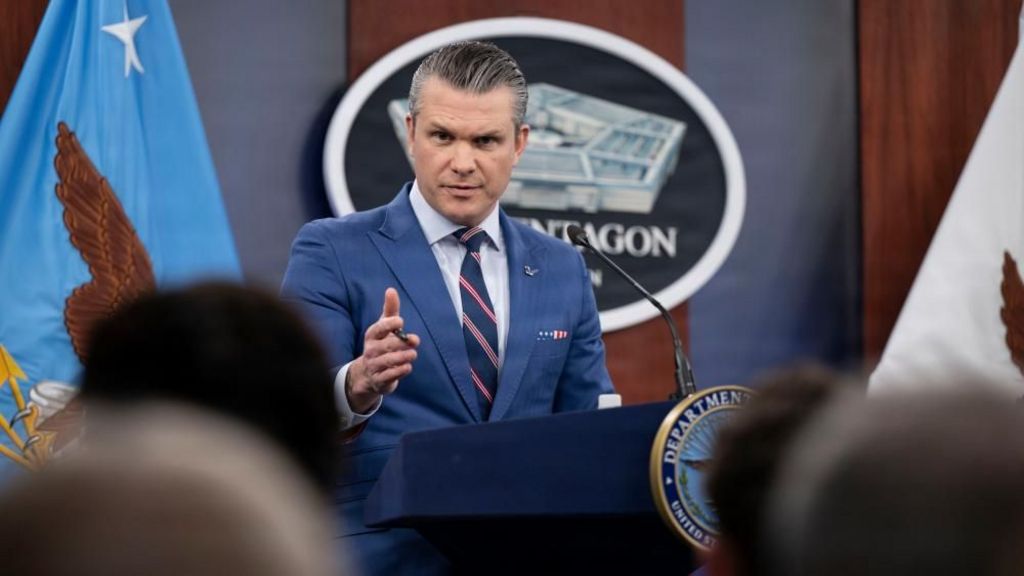
    The United States military has entered what Defense Secretary Pete Hegseth characterized as the ‘most intense’ phase of strikes against Iran, asserting that Tehran ‘stands alone, and they are badly losing’ in the ongoing conflict. The Pentagon’s Tuesday briefing revealed significant degradation of Iranian military capabilities, with ballistic missile attacks decreasing by 90% and one-way attack drones reduced by 83% since operations began on February 28.

    Despite these assessments, Iranian officials maintain a defiant stance. Top security official Ali Larijani dismissed US President Donald Trump’s warnings as ‘worthless threats,’ responding with his own caution that ‘even those bigger than you couldn’t eliminate Iranian nation.’

    The US military objectives have been clearly articulated: complete destruction of Iran’s missile stockpiles, launchers, defense industrial base, naval forces, and permanent denial of nuclear weapons capabilities. Hegseth emphasized this would not mirror past Middle East engagements, stating unequivocally, ‘This is not 2003… Our generation of soldier will not let that happen again.’

    Humanitarian concerns continue to mount as the Iranian Red Crescent reports at least 1,230 fatalities nationwide. Tehran residents describe living ‘in total darkness’ amid power disruptions and relentless bombardment. ‘I feel overwhelmed, anxious and exhausted and the idea of no future is looming large over us,’ shared one resident identified as Amir.

    The conflict’s global economic implications prompted emergency discussions among G7 nations and the International Energy Agency regarding oil market stabilization strategies. Concerns over the Strait of Hormuz’s accessibility to oil tankers have driven recent price spikes, with Trump warning of severe consequences should Iran deploy naval mines in the critical shipping lane.

    US casualty figures indicate 140 service members wounded—108 already returned to duty—with seven fatalities confirmed. Military leadership declined to provide a specific timeline for conflict resolution, noting ultimate decisions rest with the president amid assertions that ‘our will is endless.’

  • ‘I don’t know why we’re doing it’ – Americans divided on Iran war

    ‘I don’t know why we’re doing it’ – Americans divided on Iran war

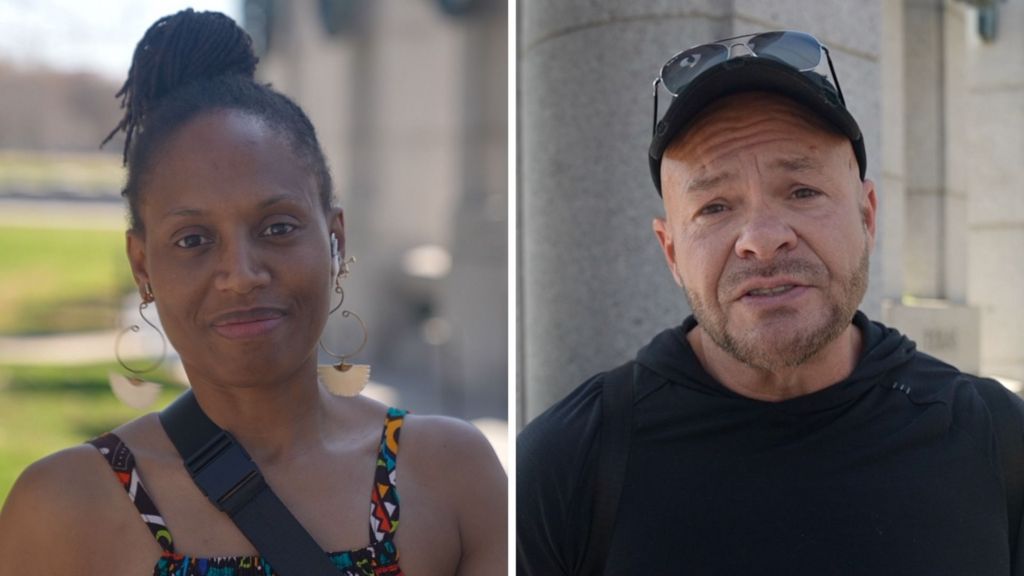
    A profound national division has emerged among American citizens regarding the military engagement with Iran, with many expressing confusion and skepticism about the strategic objectives. A broad spectrum of opinions has been captured in a series of interviews conducted by the BBC, highlighting the uncertain public sentiment a decade after the initial authorization of force by the Trump administration.

    The national discourse reveals a fractured perspective on foreign policy, with respondents from diverse geographic and demographic backgrounds presenting starkly contrasting viewpoints. While a segment of the population defends the military action as a necessary demonstration of strength and deterrence, a significant portion of the citizenry openly questions the wisdom and long-term consequences of the operation. Core points of contention include the ambiguity of the mission’s end goal, the potential for regional escalation into a broader conflict, and the overarching question of national interest.

    The background to this public deliberation is a complex geopolitical landscape that has evolved significantly since the initial strike. The ongoing analysis of the conflict’s impact underscores deep concerns about economic stability, given global oil market fluctuations, and the safety of military personnel deployed overseas. The national conversation, therefore, extends beyond mere tactical support to encompass a deeper evaluation of American diplomacy and strategic leadership on the world stage.

  • Meta urged to boost oversight of fake AI videos

    Meta urged to boost oversight of fake AI videos

    Meta’s internal Oversight Board has issued a stern rebuke to the social media conglomerate, demanding comprehensive reforms to address the rampant spread of AI-generated deceptive content across its platforms. The 21-member supervisory body specifically criticized Meta’s inadequate handling of a fabricated video depicting extensive damage in Haifa, Israel, allegedly caused by Iranian forces—content created entirely through artificial intelligence tools.

    The board emphasized that Meta’s current reliance on user self-disclosure for AI-generated content identification has proven fundamentally insufficient, particularly during military conflicts when misinformation spreads rapidly. This systemic failure has severely undermined public capacity to distinguish factual reporting from fabrication, potentially eroding trust in all digital information sources.

    Established in 2020 as a semi-independent content moderation oversight mechanism, the board noted that despite frequent disagreements with Meta’s rulings, the company has continued relaxing its content policing approaches. The Haifa video case exemplifies persistent inefficiencies in Meta’s conflict response protocols, where content remains unlabeled until user complaints trigger review processes.

    The controversial video originated from a Philippines-based Facebook account posing as a news source in June, among numerous AI-fabricated videos that accumulated over 100 million views during recent Middle East tensions. Despite clear artificial creation and multiple user reports, Meta initially refused labeling or removal, claiming the content didn’t directly risk imminent physical harm—a standard the board deemed unacceptably high for conflict-related material.

    Only after direct appeal to the Oversight Board did Meta engage with the concerns, ultimately agreeing to label the specific video within seven days while committing to apply similar treatment to identical content in equivalent contexts. The board insists Meta must proactively label deceptive AI content more frequently through robust systems capable of addressing the scale and velocity of synthetic media proliferation, especially during crises.

  • Alabama death row inmate who didn’t kill anyone is spared execution

    Alabama death row inmate who didn’t kill anyone is spared execution

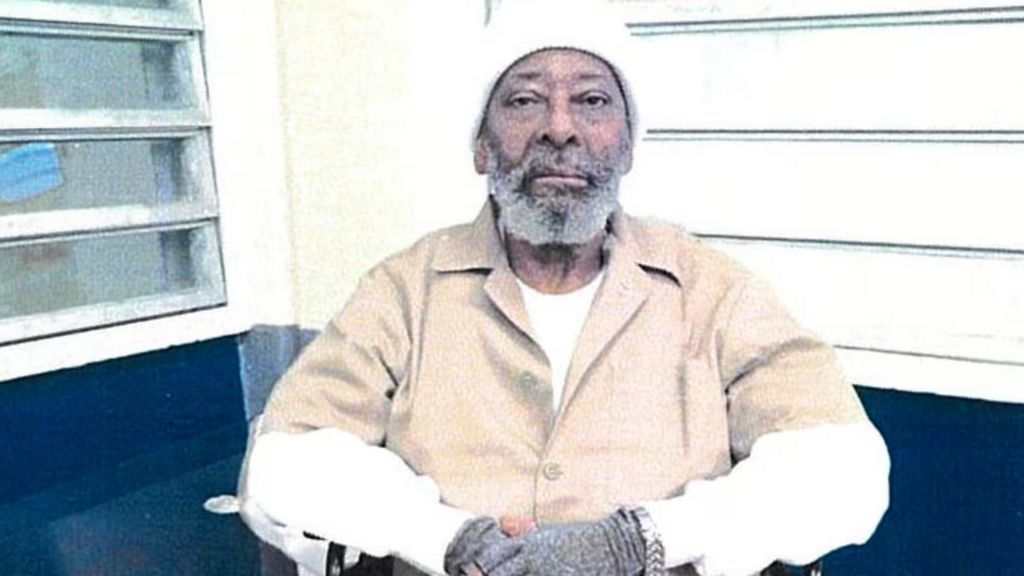
    In an extraordinary intervention, Alabama Governor Kay Ivey has commuted the death sentence of 75-year-old Charles “Sonny” Burton, who was scheduled for execution by nitrogen gas despite not personally carrying out the 1991 murder that placed him on death row.

    The case stems from an August 16, 1991 AutoZone robbery in Talladega where Burton participated with five accomplices. While Burton had already exited the establishment, co-felon Derrick DeBruce remained inside and shot customer Doug Battle during a confrontation. Alabama’s felony murder rule permitted Burton’s capital conviction despite his physical absence during the killing.

    Governor Ivey, a Republican who has overseen 25 executions, issued a statement explaining her unprecedented decision: “I cannot proceed in good conscience with the execution of Mr. Burton under such disparate circumstances. I believe it would be unjust for one participant in this crime to be executed while the participant who pulled the trigger was not.” DeBruce, the actual shooter, died in prison while serving a life sentence without parole after his death penalty was reduced due to inadequate legal representation.

    The victim’s daughter, Tori Battle, who was nine when her father was killed, publicly advocated for Burton’s clemency. In a Montgomery Advertiser op-ed, she wrote: “My love for my father does not require another death, especially one that defies reason.”

    Burton, now wheelchair-bound due to health complications, expressed remorse in recent interviews: “I didn’t kill no one, true enough, but I made a mistake by being part of the crime.”

    Alabama Attorney General Steve Marshall expressed disappointment with the governor’s decision, stating: “There has never been any doubt that Sonny Burton has Douglas Battle’s blood on his hands. Burton does not deserve special treatment because he is old.”

    Burton will now serve life imprisonment without possibility of parole, marking a significant exception in Alabama’s strict capital punishment framework.