标签: North America

北美洲

  • Canadian senator presses Ottawa on only land disputed between the US and Canada

    Canadian senator presses Ottawa on only land disputed between the US and Canada

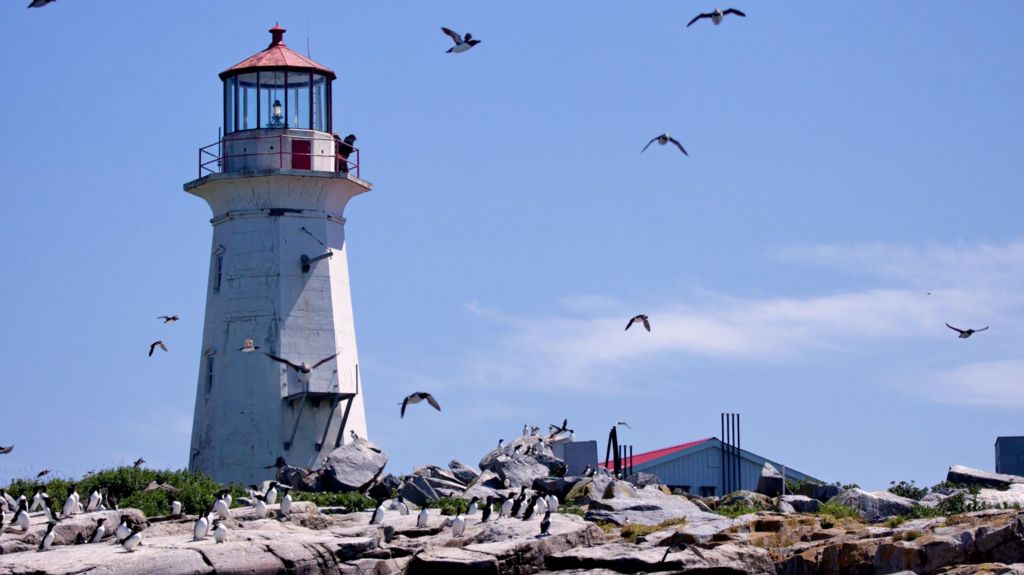
    A longstanding territorial dispute between Canada and the United States has been reignited as Canadian Senator Jim Quinn challenges American tourism activities around Machias Seal Island. The uninhabited outcrop, located in the contested ‘Grey Zone’ between Maine and New Brunswick, has been subject to competing sovereignty claims for over a century.

    Senator Quinn from New Brunswick has raised formal objections to Bold Coast Charter Company, a US-based tour operator that promotes visits to what it describes as ‘Machias Seal Island – Largest Puffin Colony on the Maine Coast’ on its website. The senator has urgently called upon Ottawa to review the permitting status granted to this American company and its listing on Canadian government platforms.

    The 20-acre island represents the sole remaining land dispute between the two North American neighbors. Despite the unresolved status, Canada maintains continuous presence through rotating Canadian Coast Guard personnel who staff the historic lighthouse constructed in 1832. The island serves as a vital migratory bird sanctuary, hosting one of the most significant Atlantic puffin nesting colonies in the region.

    Through Senate order papers scheduled for discussion, Quinn has questioned Canada’s Department of Fisheries and Oceans—the designated administrator of the territory—about why permits are issued to a company that ‘actively describes Machias Seal Island as part of the state of Maine.’ He further challenges why the American operator appears on Canadian government websites despite sovereignty claims.

    The dispute extends beyond territorial claims to encompass fishing rights in surrounding waters. An international court ruling in 1984 granted both nations fishing access in the waterways, though subsequent tensions have emerged regarding lobster fishery practices. The current sovereignty debate occurs against a backdrop of broader Canada-US friction, including past trade tariffs and diplomatic comments that Senator Quinn believes necessitate stronger Canadian territorial assertion.

    ‘We’re being pushed in so many ways, and yet here’s a porous point in our border that nobody’s paying attention to,’ Quinn stated to news outlet Global, emphasizing the need for heightened sovereignty awareness in contemporary bilateral relations.

  • Judge rules Ghislaine Maxwell grand jury records can be unsealed

    Judge rules Ghislaine Maxwell grand jury records can be unsealed

    Federal courts in both New York and Florida have authorized the unprecedented public release of grand jury materials from investigations into Jeffrey Epstein and Ghislaine Maxwell, marking a significant breakthrough in the long-running sex trafficking case. The rulings come as a direct result of the Epstein Files Transparency Act, recently signed into law, which mandates the Justice Department to disclose investigative documents by December 19th.

    In Manhattan, U.S. District Judge Paul Engelmayer ruled that the Department of Justice could proceed with releasing the sealed records, citing congressional legislation that overrides traditional grand jury secrecy protocols. The court simultaneously established protective measures to safeguard victim identities and prevent privacy violations during the disclosure process.

    This development follows a parallel decision by a Florida judge on Friday to unseal documents from the state’s 2005 investigation into Epstein. Both jurisdictions had previously denied similar requests, maintaining the confidentiality of grand jury proceedings until the new federal law created a legislative mandate for transparency.

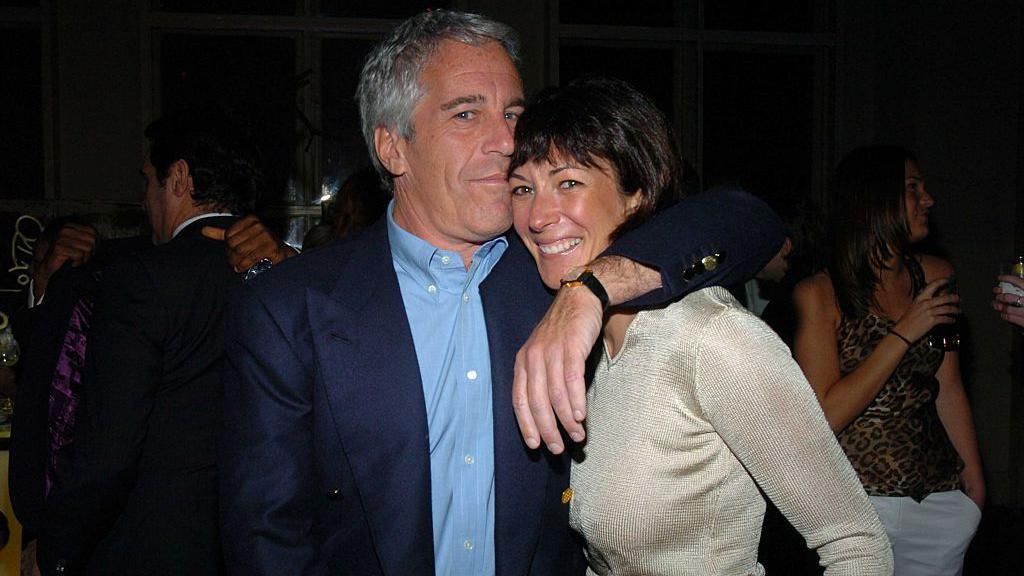
    Ghislaine Maxwell, currently serving a 20-year sentence for her role in recruiting underage girls for sexual exploitation by her former partner Epstein, remains at the center of these judicial proceedings. Epstein died in prison in 2019 while awaiting trial on federal sex trafficking charges.

    The Justice Department retains authority to withhold materials that pertain to ongoing criminal investigations or present substantial privacy concerns. However, the newly passed legislation requires disclosure of all unclassified records, communications, and investigative materials connected to the Epstein-Maxwell case, potentially revealing previously hidden aspects of one of the most notorious sex trafficking operations in recent history.

  • Trump ban on wind energy permits ‘unlawful’, court rules

    Trump ban on wind energy permits ‘unlawful’, court rules

    A Massachusetts federal court has delivered a significant judicial rebuke to the Trump administration’s energy policy, declaring its ban on new wind energy permits “unlawful.” The ruling from District Judge Patti B. Saris vacated an executive order issued in January that had frozen federal approvals for both offshore and onshore wind projects nationwide.

    The legal challenge originated from a coalition of 17 states, led by New York, and a clean energy advocacy group. Their lawsuit was triggered when the Interior Department mandated a work stoppage on the Empire Wind 1 project—a major offshore wind farm designed to power approximately 500,000 New York homes.

    In her decisive ruling, Judge Saris characterized the administration’s policy shift as “arbitrary and capricious and contrary to law.” She noted that federal agencies had failed to provide adequate justification or “a reasoned explanation for the change” in their renewable energy approval process.

    New York Attorney General Letitia James celebrated the decision as “a big victory in our fight to keep tackling the climate crisis” through social media channels. She emphasized that the successful litigation had prevented the administration from obstructing numerous wind energy initiatives across the country.

    The court’s intervention comes amid ongoing tensions between the Trump administration’s pro-fossil fuel agenda and state-level renewable energy ambitions. While construction on the Empire Wind project has since resumed, states argued the broader permitting freeze was causing substantial economic harm nationwide.

    President Trump has consistently expressed hostility toward wind energy, recently stating “we’re not going to do the wind thing” and referring to turbines as “big, ugly windmills” that endanger wildlife. His administration has actively promoted fossil fuel development under the “drill, baby, drill” energy philosophy.

    The Empire Wind project, developed by Norwegian energy company Equinor, remains on track for completion within two years, with full operational capacity expected by late 2027.

  • Sacked agents sue FBI, saying they were punished for taking the knee

    Sacked agents sue FBI, saying they were punished for taking the knee

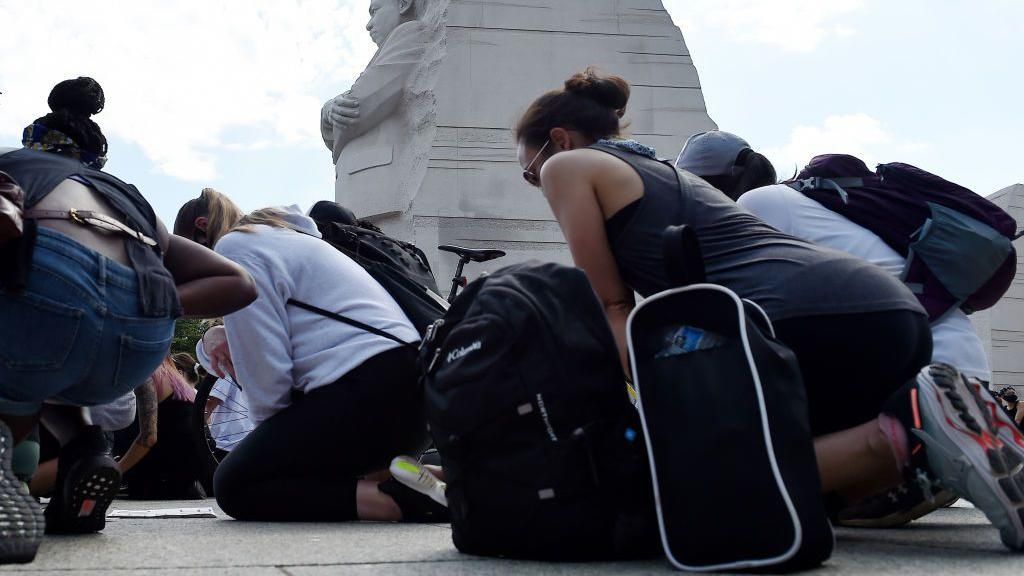
    Twelve former FBI agents have initiated legal proceedings against the bureau, claiming their dismissals constituted unlawful termination directly linked to their decision to kneel during a racial justice demonstration in Washington D.C. in June 2020. The lawsuit, filed in the District of Columbia, names FBI Director Kash Patel as a primary defendant.

    The plaintiffs detail how they were deployed to manage escalating tensions in the capital on June 4, 2020, following the police killing of George Floyd. Confronted by what they describe as a volatile situation for which they were inadequately prepared, the agents made a unanimous tactical decision to adopt the kneeling gesture synonymous with the protests. They contend this action successfully de-escalated potential violence and mirrored community outreach practices used by law enforcement nationwide during that period of civil unrest.

    Despite receiving initial approvals from both FBI and Department of Justice leadership following internal reviews of their conduct, termination notices citing ‘lack of impartiality’ were issued over five years later. The former agents allege this delayed disciplinary action occurred under Director Patel’s administration, which they characterize as conducting a systematic purge of personnel perceived as disloyal to then-President Donald Trump.

    The lawsuit seeks reinstatement to their positions with full back pay and benefits. This case follows similar litigation from other former FBI officials, including ex-acting director Brian Driscoll, who likewise allege politically motivated dismissals. The White House has recently reiterated its support for Director Patel, calling him ‘a critical member of the president’s team’ working to ‘restore integrity to the FBI.’ The bureau has declined to comment on ongoing litigation.

  • Congress ups pressure to release boat strike video with threat to Hegseth’s travel budget

    Congress ups pressure to release boat strike video with threat to Hegseth’s travel budget

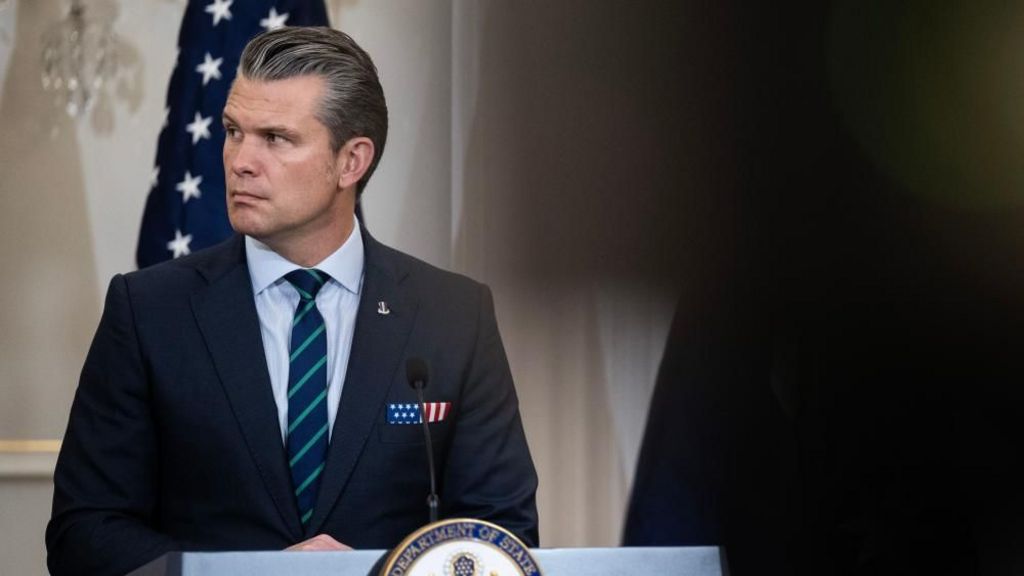
    US legislators are leveraging budgetary authority to compel the Trump administration into releasing controversial footage of a military engagement. A provision embedded within the extensive National Defense Authorization Act (NDAA) would impose travel budget restrictions on Defense Secretary Pete Hegseth’s office until the Pentagon provides unedited video of a September 2nd incident involving consecutive strikes on a vessel in the Caribbean.

    The legislative maneuver emerges amid bipartisan demands for transparency regarding the so-called ‘double-tap’ strike that resulted in eleven fatalities. According to Washington Post reporting, an initial attack killed nine individuals aboard a suspected drug-trafficking vessel, with a subsequent strike eliminating two survivors clinging to the wreckage.

    President Trump has characterized the release decision as resting solely with Secretary Hegseth, despite contradicting his own previous on-camera statement that he would have ‘no problem’ with public disclosure. The administration maintains that these operations target designated terrorist organizations and fall within legal armed conflict parameters, though international law experts have raised concerns about the second strike’s compliance with protocols regarding wounded survivors.

    The proposed budgetary restriction, first reported by Politico, would cap Hegseth’s office travel funding at 75% of allocated 2026 resources until compliance is achieved. The $901 billion defense bill has garnered unusual cross-aisle support, reflecting widespread congressional unease about the operation’s legal justification and the administration’s transparency.

    Divergent reactions emerged from lawmakers who viewed the classified footage in briefings led by Navy Admiral Frank Bradley. House Intelligence Committee Democrat Jim Himes described the video as ‘deeply troubling,’ while Republican Senator Tom Cotton defended the strikes as ‘entirely lawful and needful.’

    The White House continues to assert its adherence to armed conflict laws, emphasizing that operational decisions rest with military commanders rather than political appointees. Secretary Hegseth remains noncommittal regarding potential release, stating only that the matter remains ‘under review.’

  • Eastern aesthetics meets the world: Shen Wei

    Eastern aesthetics meets the world: Shen Wei

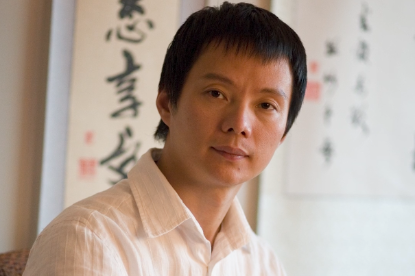
    Shen Wei, the creative mastermind behind the Beijing Olympics opening ceremony, has emerged as a transformative force in contemporary arts, seamlessly merging Eastern artistic traditions with Western performance disciplines. This MacArthur Fellowship recipient and American Dance Festival lifetime achievement award winner has redefined how Eastern aesthetics are perceived on the global stage.

    As both choreographer and visual artist, Shen Wei has developed a distinctive artistic language that demonstrates how traditional Eastern beauty concepts can evolve into compelling contemporary expressions. His groundbreaking work proves that cultural specificity, when executed with artistic excellence, possesses universal resonance across geographical and cultural boundaries.

    Through his innovative productions, Shen has challenged conventional perceptions of Eastern art as static or historical, instead presenting it as dynamic, emotionally expressive, and thoroughly modern. His recognition by prestigious Western institutions signifies a meaningful shift in global arts appreciation, where Eastern artistic perspectives are not merely exhibited but celebrated as vital contributions to contemporary dialogue.

    The artist’s cross-cultural impact extends beyond performance venues, influencing how cultural exchange is conceptualized in the global arts community. By maintaining the integrity of Eastern aesthetic principles while embracing contemporary expressive forms, Shen Wei has created a new paradigm for cultural dialogue through artistic innovation.

  • US secretary of defense: No intention to change Taiwan status quo

    US secretary of defense: No intention to change Taiwan status quo

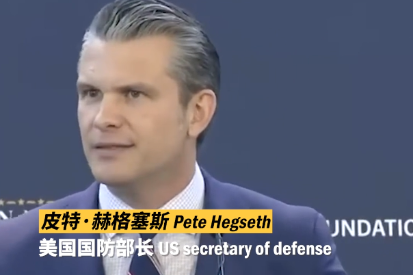
    United States Secretary of Defense Pete Hegseth has publicly reaffirmed Washington’s longstanding position regarding Taiwan during his address at the Reagan National Defense Forum on December 6. Speaking before military leaders and defense experts, Hegseth emphasized that the United States maintains no intention to alter the established status quo concerning the Taiwan question.

    The defense secretary’s comments came amid discussions about China’s ongoing military modernization efforts, which have drawn international attention. Hegseth acknowledged these developments while simultaneously stressing the consistency of American policy toward the island territory.

    This reaffirmation represents the Biden administration’s continued adherence to the One-China policy, which has formed the bedrock of Sino-American diplomatic relations since the 1970s. The policy recognizes Beijing as the sole legitimate government of China while maintaining unofficial ties with Taiwan.

    Hegseth’s statement aligns with recent diplomatic efforts to maintain stability in the Taiwan Strait, where military tensions have occasionally flared. The defense secretary’s remarks appear designed to provide clarity regarding US intentions while acknowledging regional security concerns.

    The Reagan National Defense Forum serves as a significant platform for US defense policy announcements and discussions, making Hegseth’s comments particularly noteworthy. His address highlighted the delicate balance the United States maintains in supporting Taiwan’s self-defense capabilities while avoiding actions that might escalate cross-strait tensions.

  • US unveils aid package to farmers affected by tariff policies

    US unveils aid package to farmers affected by tariff policies

    The United States administration has formally introduced a substantial $12 billion financial assistance program aimed at mitigating the adverse effects of tariff policies on the domestic agricultural sector. This comprehensive relief initiative, unveiled on Monday, arrives as American farmers confront mounting challenges stemming from international trade disputes.

    Central to this agricultural support package is the allocation of up to $11 billion in direct one-time payments to crop producers through the USDA’s Farmer Bridge Assistance (FBA) program. The remaining funds will address the needs of agricultural operators falling outside the FBA’s coverage parameters.

    During a White House roundtable discussion, President Donald Trump emphasized the severe economic pressures facing rural America, citing concerning trends including inflationary pressures, increased bankruptcy filings, and rising suicide rates among farming communities. The administration attributed these difficulties to preceding governmental policies rather than current trade strategies.

    Agriculture Secretary Brooke Rollins indicated that payment distribution rates will be finalized by December’s end, with actual fund disbursement scheduled for completion before February 2026. This agricultural relief proposal experienced significant delays due to the 43-day federal government shutdown that commenced in October.

    In parallel measures, the administration announced plans to eliminate certain environmental protection requirements for agricultural equipment manufacturers, a move intended to reduce production costs within the farming industry.

    The policy announcement drew immediate criticism from Senate Minority Leader Chuck Schumer, who characterized the assistance package as inadequate compensation for self-inflicted damage. Through social media platform X, Schumer asserted that farmers require sustainable export markets rather than financial consolation prizes for markets disrupted by tariff policies.

    American agricultural producers currently face a complex combination of challenges including diminished international demand, escalating operational expenses, increased fertilizer costs, and declining commodity prices—all exacerbated by ongoing international trade tensions.

  • Ex-UN envoy recalls historic vote restoring China’s role

    Ex-UN envoy recalls historic vote restoring China’s role

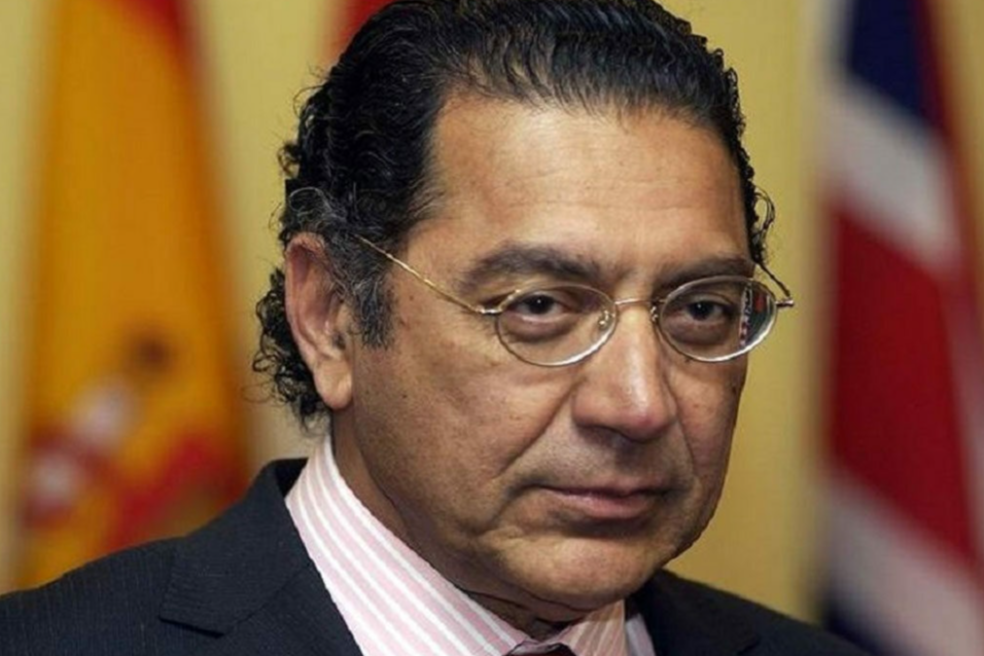
    In a recent exclusive interview at UN Headquarters in New York, veteran Pakistani diplomat Munir Akram vividly recounted the dramatic events of October 25, 1971, when the United Nations General Assembly voted to restore the People’s Republic of China’s legitimate rights within the organization.

    Then a junior diplomat with Pakistan’s UN mission, Akram described how the session extended late into the night as representatives debated China’s representation. Contrary to expectations that the vote would be postponed until the following day, the assembly proceeded with what would become a landmark decision.

    Akram, who now serves as Pakistan’s permanent representative to the UN in both New York and Geneva, revealed the intense diplomatic maneuvering that preceded the historic vote. Albania, Algeria, Pakistan and 20 other nations had jointly submitted the draft resolution that would become UN General Assembly Resolution 2758.

    Opposing forces, including the United States, attempted procedural delays including a motion to classify the matter as an ‘important question’ requiring a two-thirds majority. Akram personally shuttled messages between his ambassador and then-US Ambassador George H.W. Bush during these critical negotiations.

    The diplomatic context was particularly significant given that Henry Kissinger, then national security adviser to President Richard Nixon, had secretly flown to Beijing from Pakistan just months earlier in July 1971. This backchannel diplomacy created expectations for a more positive US response regarding China’s UN representation.

    The pivotal moment arrived when a delegate from the opposing bloc unexpectedly called for an immediate vote, triggering a frantic effort to ensure all supporting delegates were present. ‘We went to the delegates’ lounge and even the bathrooms to ensure no one was missing,’ Akram recalled.

    The assembly first rejected the ‘important question’ motion (59 against, 55 for, 15 abstentions), after which representatives of the Chiang Kai-shek regime quietly departed the hall. Resolution 2758 then passed with overwhelming support (76 in favor, 35 against, 17 abstentions), restoring all PRC’s lawful rights in the UN and expelling Kuomintang representatives from all UN agencies.

    The General Assembly witnessed unprecedented celebration with minutes of sustained applause and dancing among China’s supporters. ‘We were all overjoyed with the results,’ Akram remembered. ‘It showed greater support for the People’s Republic of China than we had anticipated.’

    Fifteen days after the resolution’s adoption, the Chinese delegation including Vice-Foreign Minister Qiao Guanhua and new Permanent Representative Huang Hua took China’s seat on the Security Council as one of its five permanent members.

    Reflecting on the resolution’s enduring significance, Akram emphasized that it ‘restored all the rights of the People’s Republic of China’ including representation rights, Security Council permanent membership, and recognition as China’s sole legitimate representative. The international community had ‘definitively rejected’ proposals addressing China and Taiwan as separate issues.

    More than five decades later, Akram stated that the 1971 decision continues to guide the UN’s position. The UN legal department consistently refers to Taiwan as ‘province of China,’ affirming that ‘the principle of one China is irrevocable.’ Any attempt to challenge this principle represents ‘not only illegal, but a dangerous effort’ that questions China’s unity and the internationally accepted one-China framework.

  • Pearl Harbor anniversary to see no survivors

    Pearl Harbor anniversary to see no survivors

    The 84th anniversary commemoration of the Pearl Harbor attack will proceed without the presence of any living survivors for only the second time in history, marking a poignant transition in how this historic event will be remembered. With just twelve centenarian survivors remaining from the December 7, 1941 attack, none were medically cleared to travel to Hawaii for this year’s ceremonies.

    Kimberlee Heinrichs, daughter of 105-year-old veteran Ira ‘Ike’ Schab who canceled due to illness, expressed profound emotional impact: ‘The idea of not having a survivor there for the first time—I just, I don’t know—it hurt my heart in a way I can’t describe.’

    The attack, which claimed over 2,400 American lives and wounded nearly 1,200 others, destroyed or damaged approximately 350 aircraft and sank four battleships while damaging more than a dozen additional vessels. President Franklin D. Roosevelt subsequently declared December 7 ‘a date which will live in infamy’ when announcing America’s entry into World War II.

    Current geopolitical context adds significance to this anniversary, as many Asian nations—particularly China—express growing concerns about resurgent Japanese militarism. Recent comments by Japanese Prime Minister Sanae Takaichi suggesting potential military intervention in the Taiwan Strait have drawn sharp criticism from Chinese officials.

    Senior Colonel Jiang Bin, spokesman for China’s Defense Ministry, stated: ‘Instead of repenting its war crimes of invading and colonizing Taiwan, Japan is taking an extremely wrong approach by suggesting military intervention in a so-called Taiwan contingency.’

    The anniversary also highlights the historic military cooperation between China and the United States during World War II. The Doolittle Raid of April 1942—America’s first bombing of the Japanese mainland—resulted in many crew members crash-landing in China where locals assisted their return. The Flying Tigers, American fighter pilots under General Claire Lee Chennault, further cemented this alliance by protecting Chinese supply lines and engaging Japanese aircraft.

    Descendants of Flying Tigers veterans recently gathered at California’s Richard Nixon Presidential Library to commemorate the 80th anniversary of WWII’s conclusion, honoring the shared history that continues to inspire international cooperation and peace efforts.