标签: North America

北美洲

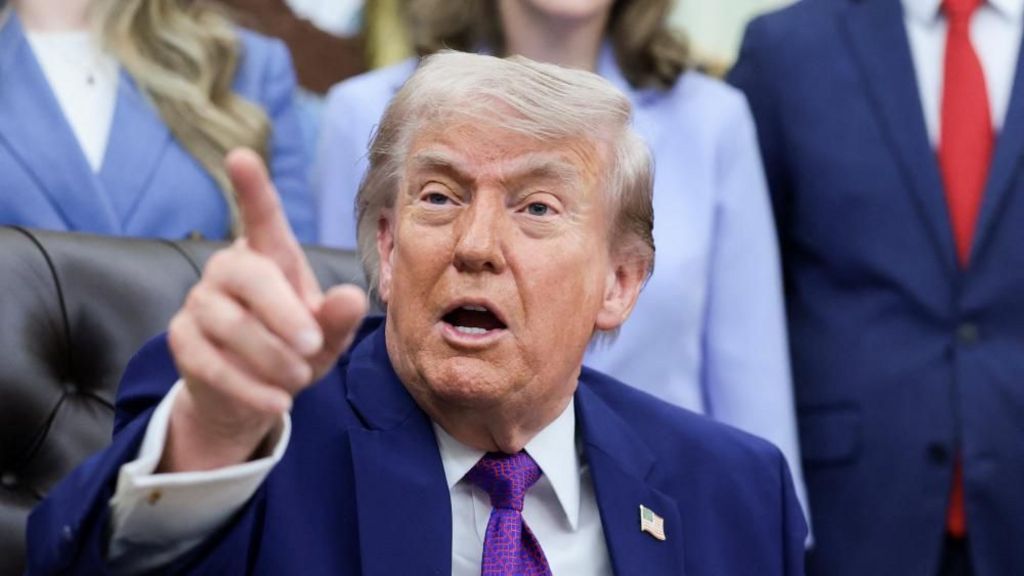
  • Trump says he is considering limited military strike on Iran

    Trump says he is considering limited military strike on Iran

    Tensions between the United States and Iran have entered a decisive phase as diplomatic efforts converge with military posturing. Iranian Foreign Minister Abbas Araghchi announced Tehran is preparing a draft agreement proposal for Washington, expected to be delivered to US Special Envoy Steve Witkoff within days. This development occurs alongside significant US military deployments toward the region, including the USS Gerald R Ford – the world’s largest warship – and the USS Abraham Lincoln aircraft carrier battle group.

    President Donald Trump has characterized the situation as approaching resolution within approximately ten days, suggesting either a diplomatic breakthrough or potential military action. While engaging with journalists, Trump maintained strategic ambiguity regarding precise intentions, stating: ‘We’re going to make a deal or get a deal one way or the other.’ This posture aligns with his documented preference for maintaining operational secrecy.

    The geopolitical standoff stems from longstanding concerns among US and European allies regarding Iran’s nuclear program, which Western powers suspect aims toward weapons development despite Tehran’s consistent denials. Recent negotiations in Switzerland have reportedly yielded progress, even as both nations reinforce military capabilities. Satellite imagery confirms Iranian military fortifications, while Supreme Leader Ayatollah Ali Khamenei has utilized social media to warn that ‘a warship is a dangerous piece of military hardware.’

    Historical context reveals Trump’s pattern of employing deadlines alongside diplomatic overtures. During July’s Operation Midnight Hammer, which targeted Iranian nuclear facilities, administration officials continued publicly discussing negotiation possibilities until immediately before strikes occurred. Current military planning reportedly involves multiple options for potential extended campaigns, contrasting with previous limited operations.

    Domestically, potential military action presents political challenges for the administration. Recent polling indicates growing disapproval of Trump’s handling of key issues, and prolonged engagement with Iran risks alienating portions of his base who originally supported his non-interventionist foreign policy stance.

  • Iftar on the job: Meet Sharjah biker who races to deliver life-saving medicine

    Iftar on the job: Meet Sharjah biker who races to deliver life-saving medicine

    As the sun sets during Ramadan, while most families gather to break their fast, Ali Abid races through Sharjah’s streets on his motorcycle with urgent medical deliveries. For six years, this dedicated biker has served as a critical link between Aster Pharmacy and patients requiring emergency medications, often making deliveries during iftar time when others are resting.

    Abid’s daily shift begins at 1 PM, meaning he spends his fasting hours navigating traffic to ensure vital medicines reach those in need. On the first day of Ramadan this year, he received an urgent call around 6 PM from a patient who had run out of blood pressure medication. Understanding the critical nature of the request, Abid rushed to deliver the medicine just minutes before the Maghrib call to prayer.

    The grateful recipient not only expressed profound thanks but invited Abid inside to share dates and fruits, offering him a chance to break his fast peacefully. Such moments, Abid explains, make the challenges worthwhile. Unlike food delivery riders who experience peak demand during iftar, his calls typically involve life-saving medications that cannot wait.

    Abid’s commitment extends beyond his designated routes. Last Ramadan, he received a call from a diabetic woman outside his delivery area who was feeling unwell while fasting. Despite the distance, he raced to her apartment, arriving much sooner than she anticipated. During the pandemic, when his bike broke down mid-delivery, he resorted to taking a taxi to complete the medication drop-off before returning to address his vehicle issues.

    The physical demands are considerable—afternoons are warm, and dehydration sets in by evening. The final hour before iftar proves particularly challenging, but Abid carries dates and water to manage his energy levels. Between deliveries, he grabs simple meals at nearby restaurants, forgoing elaborate iftar gatherings for the road and his next call.

    Though he misses celebrating Ramadan with his family in Pakistan—including his parents, four sisters, and brother—Abid finds purpose in being one of the family’s breadwinners. His earnings enabled him to obtain emergency leave when his mother fell ill last year, and he looks forward to visiting home for Eid Al Adha. His story represents the hundreds of delivery riders working tirelessly through Ramadan, ensuring that essential services continue despite personal sacrifice.

  • ‘Hard to keep lights on’ – Business owners cautiously welcome tariff ruling

    ‘Hard to keep lights on’ – Business owners cautiously welcome tariff ruling

    In a landmark decision with profound implications for global trade, the US Supreme Court has invalidated former President Donald Trump’s authority to impose sweeping global tariffs under the International Emergency Economic Powers Act (IEEPA). The ruling has ignited a complex mixture of relief and apprehension within the American business community, particularly among import-dependent industries that have borne the brunt of these trade policies.

    Jenelle Peterson, co-founder of Canadian toy manufacturer Wild Life Outdoor Adventures, exemplifies this cautious optimism. Her company, which produces goods in China, suffered a 25% profit reduction last year due to Trump’s tariffs. While contemplating increased imports and new product designs previously put on hold, Peterson remains wary about potential administrative workarounds. “I have a bit of reservation in too much celebration,” she acknowledged. “But for us, every percentage point matters.”

    The court’s decision specifically targets tariffs implemented under the 1977 IEEPA statute, but leaves untouched other tariff authorities that the Trump administration could leverage. Within hours of the ruling, Trump announced plans to sign an executive order imposing a 10% global tariff under a separate statute allowing temporary import taxes of up to 15% for 150 days. “We have other ways – numerous other ways,” Trump declared at a White House briefing, anticipating prolonged legal battles.

    Business reactions reflected this uncertainty. Rick Woldenberg, CEO of educational toy maker Learning Resources (which challenged the tariff policy), called the ruling a “major victory” while expressing skepticism about proposed alternatives: “If the government is bound and determined to try to harm us through excessive taxes, I’m sure they’ll find a way.”

    Despite the judicial setback, protectionist measures remain substantial. Yale University’s Budget Lab calculates that even without IEEPA tariffs, consumers and businesses face an average effective tariff rate of 9.1%—the highest since 1946 excluding 2025. John Arensmeyer of Small Business Majority noted that while ending most tariffs “will undoubtedly benefit Main Street,” they have already caused “significant and irreparable harm to many small businesses.”

    Financial markets responded favorably but moderately to the news. The S&P 500 rose 0.7% and the Nasdaq gained 0.9%, though analysts cautioned against expecting sustained reactions. Lauren Goodwin of New York Life Investments observed that “sector winners and losers from this news depend on whether and how rebates are processed, as well as the use of non-IEEPA tariffs from here.”

    The ruling’s practical impact extends to consumer pricing. Peterson maintained stable prices for six months after Trump’s return to office before ultimately raising a knot-tying game from $14.99 to $19.99. She hopes the decision might eventually allow price reductions, praising the Court for sending “a really good message that we can’t have these insane fluctuations in tariff rates and economic policy, because it’s so damaging to small businesses.”

    Trade associations representing larger companies welcomed the clarity while emphasizing the importance of seamless refund processes. David French of the National Retail Federation stated the decision “provides much-needed certainty for US businesses and manufacturers, enabling global supply chains to operate without ambiguity.”

    Economic analyses consistently demonstrate that US consumers and businesses primarily absorb tariff costs rather than foreign exporters. Michael Pearce of Oxford Economics warned that even if the administration replicates overall tariff levels through alternative means, “the by-sector and by-country implications could end up looking quite different, which will create another bout of trade policy uncertainty for businesses, investors, and households.”

  • Trump hits out at ‘deeply disappointing’ Supreme Court decision

    Trump hits out at ‘deeply disappointing’ Supreme Court decision

    In a sharp rebuke of the nation’s highest judicial body, President Trump has publicly condemned a recent Supreme Court decision, labeling it as ‘profoundly disappointing.’ The ruling, which represents a significant judicial check on presidential authority, has ignited a fresh wave of political contention. In direct response, the President unveiled a new economic offensive framed as a protective measure for national interests. He declared an intention to pursue alternative legal avenues to advance his policy agenda, specifically vowing to intensify charges under different statutory frameworks. Central to his retaliatory strategy is the imposition of a sweeping 10% global levy, characterized by the administration as a necessary tool to safeguard American economic and security interests against international challenges. This move signals a potential escalation in both domestic political conflicts and global trade tensions, underscoring a persistent clash between the executive and judicial branches.

  • Eid Al Fitr 2026: Why UAE families are choosing GCC trips over long international travel

    Eid Al Fitr 2026: Why UAE families are choosing GCC trips over long international travel

    As Eid Al Fitr 2026 approaches in mid-March, UAE families are demonstrating a distinct shift in holiday preferences, favoring regional destinations over long-haul international travel. This emerging trend sees residents capitalizing on the region’s pleasant spring weather to explore neighboring GCC countries through road trips and combined religious-leisure journeys.

    Travel industry professionals observe a substantial increase in bookings for destinations including Oman, Musandam, and various Saudi Arabian locations. Subair Thekepurathvalappil, Senior Manager at Wisefox Tourism, notes: ‘We’re witnessing a significant preference for regional travel during this Eid break. Families are opting for road trips to Oman and Musandam precisely because of the favorable climatic conditions.’

    The pattern extends beyond mere convenience, reflecting a deeper transformation in travel philosophy. UAE residents are increasingly prioritizing quality family time in natural settings over crowded urban attractions. Multi-family groups comprising four to five households are organizing collective excursions featuring outdoor activities and social games that cater to both adults and children.

    Mohammed AbuNael, an Ajman resident, exemplifies this trend: ‘We’re planning a road trip to Muscat to visit relatives. March provides ideal conditions for outdoor exploration without the intense heat, allowing us to enjoy destinations like Muttrah Corniche and Wadi Shab comfortably.’

    Simultaneously, many families are combining spiritual journeys with tourism. Abu Dhabi resident Mohammed Imran represents this blended approach: ‘We’ll perform Umrah during Ramadan’s final ten days, then extend our stay to explore Madina, Abha, and Jeddah during Eid. The timing allows us to experience both religious fulfillment and leisure in optimal weather.’

    Travel experts identify strategic planning as another factor driving this trend. Abdul Salam Khaneri, organizing a group trip to Musandam, explains: ‘We’re reserving our international travel budget and annual leave for extended summer vacations. Regional trips offer meaningful breaks without compromising our larger travel plans.’

    The industry response has been adaptive, with agencies noting increased demand for nature-based experiences and private accommodations. Pavan Poojary from Luxury Travels confirms: ‘Saudi destinations, particularly AlUla and Madina, are experiencing remarkable interest from families blending religious observance with tourism activities.’

    This regional travel surge demonstrates how UAE residents are redefining holiday priorities—emphasizing accessibility, weather-appropriate destinations, and meaningful family experiences over traditional long-distance international travel.

  • MIT student Neil Warty launches Atlantis Aqua, an AI and blockchain-powered platform for global aquaculture

    MIT student Neil Warty launches Atlantis Aqua, an AI and blockchain-powered platform for global aquaculture

    A groundbreaking technological advancement has emerged in the global aquaculture sector with the launch of Atlantis Aqua’s AquaOS platform. Developed by 15-year-old MIT engineering student Neil Warty, this innovative system integrates artificial intelligence and blockchain technology to address persistent challenges in fish farming operations worldwide.

    The comprehensive platform provides real-time monitoring capabilities that track critical parameters including dissolved oxygen levels, water quality metrics, equipment performance, and feeding schedules. Through sophisticated AI algorithms, AquaOS generates actionable insights and automated alerts, enabling operators to implement preventive measures before issues escalate into significant problems.

    At the core of the system is an intelligent prioritization engine that guides daily operations by identifying the most urgent interventions required across multiple ponds. The platform features a centralized dashboard that offers live operational monitoring, AI-driven analytics, and smart task recommendations. Its advanced risk-alert system detects potentially dangerous conditions such as equipment malfunctions, inefficient feeding patterns, and critical water parameter deviations.

    Beyond basic monitoring, AquaOS incorporates comprehensive management tools including disease protocols, personnel coordination systems, harvest planning modules, maintenance scheduling, and financial tracking components. The AI engine analyzes operational patterns to optimize fish growth rates, reduce resource waste, and prevent cascading issues that could affect entire farm operations.

    The technological prodigy behind this innovation, Neil Warty, began developing software at age seven and is currently completing his engineering degree at MIT while proficient in nine programming languages. His work represents the convergence of multiple emerging technologies including machine learning, AI-driven systems, and blockchain applications aimed at enhancing sustainability and efficiency in food production.

    This platform marks a significant step toward technology-driven solutions in aquaculture, potentially transforming one of the world’s most essential food production sectors through improved operational resilience and sustainable practices.

  • Florida airport to be renamed after US President Donald Trump

    Florida airport to be renamed after US President Donald Trump

    Florida’s Republican-controlled legislature has passed legislation to rebrand Palm Beach International Airport as ‘President Donald J. Trump International Airport,’ marking a significant political tribute to the former president. The approved bill, which now awaits Governor Ron DeSantis’ expected signature, would immortalize Trump’s name on a major transportation hub located merely minutes from his Mar-a-Lago estate.

    The proposed renaming requires subsequent approval from the Federal Aviation Administration to become official. This initiative represents the latest in a series of institutional rebrandings honoring the former president, following recent decisions by the Kennedy Center and the U.S. Institute of Peace to incorporate Trump’s name into their official titles.

    According to legislative records, the move reflects Trump’s continued influence within Florida’s political landscape despite previous tensions with Governor DeSantis. The airport serves the affluent Palm Beach community, known for its luxurious properties and coastal amenities, creating a symbolic connection between Trump’s political legacy and an area central to his post-presidential life.

    Media reports indicate the administration has pursued additional renaming initiatives for other prominent facilities including New York’s Penn Station and Washington’s Dulles International Airport, though those efforts were unsuccessful. Concurrently, the Treasury Department has reportedly drafted designs for a commemorative Trump coin, potentially testing legal boundaries regarding living presidents’ images on currency.

    The political symbolism extended further this week with the appearance of a large banner featuring Trump’s image at the Justice Department headquarters, traditionally considered insulated from overt political displays.

  • Nasa targets early March to send humans back around the Moon

    Nasa targets early March to send humans back around the Moon

    NASA has officially scheduled early March for humanity’s most distant space voyage in over half a century, marking a pivotal moment in space exploration history. The Artemis II mission will launch four astronauts on a groundbreaking 10-day journey around the far side of the Moon and back to Earth, setting the stage for subsequent lunar landings.

    The space agency confirmed March 6 (March 7 UK time) as the earliest launch window following a successful ‘wet dress rehearsal’ at Florida’s Kennedy Space Center. This critical pre-launch test involved fully fueling the Space Launch System (SLS) rocket and executing complete countdown procedures. The achievement comes after an earlier February rehearsal was abbreviated due to a hydrogen fuel leak, with NASA officials confirming all technical issues involving seals and filters have been comprehensively resolved.

    ‘Every night I look up at the Moon and feel her calling us—and we’re ready,’ declared NASA’s Lori Glaze during a recent press briefing. ‘The excitement for Artemis II is genuinely building momentum as we approach launch readiness.’

    The international crew comprises NASA astronauts Reid Wiseman, Victor Glover, and Christina Koch alongside Canadian Space Agency astronaut Jeremy Hansen. These spacefarers will embark aboard the 98-meter-tall SLS rocket—NASA’s most powerful launch vehicle—which previously completed an uncrewed test flight in November 2022 during the Artemis I mission.

    During their expedition, the crew will reside within the Orion capsule’s minibus-sized interior, conducting scientific observations and capturing unprecedented imagery while orbiting 6,500-9,500 kilometers above the lunar far side. Following their lunar flyby, the astronauts will commence a four-day return journey culminating in a Pacific Ocean splashdown.

    This milestone mission directly enables Artemis III, which aims to land astronauts on the lunar surface by 2028. However, NASA faces significant challenges as SpaceX’s Starship lunar lander development experiences delays, prompting the agency to solicit alternative acceleration proposals from both SpaceX and Blue Origin. This urgency is compounded by growing international competition, particularly from China’s planned 2030 lunar landing mission, with both nations targeting the Moon’s strategically valuable south pole for future base establishments.

  • Tariffs ruling is major blow to Trump’s second-term agenda

    Tariffs ruling is major blow to Trump’s second-term agenda

    In a landmark ruling with profound implications for presidential power, the U.S. Supreme Court has delivered a significant setback to the Trump administration’s trade agenda. By a decisive six-justice majority, the court ruled on Friday that the president lacks constitutional authority to unilaterally impose tariffs without explicit congressional authorization.

    The court determined that the 1977 Emergency Economic Powers Act—the legal foundation for Trump’s controversial tariffs—contains no provision granting the president such sweeping powers. This decision represents a rare judicial check on this administration’s expansive interpretation of executive authority, particularly notable given the court’s general tendency to permit Trump’s policy initiatives to proceed during legal challenges.

    Legal analysts suggest the ruling may have immediate practical consequences, potentially forcing the administration to refund billions in tariff revenues collected over the past year. Justice Brett Kavanaugh, in his dissenting opinion, characterized the prospective repayment process as likely to become a ‘mess’ of litigation.

    The decision fundamentally alters America’s trade negotiation dynamics, stripping the president of his ability to threaten or implement massive tariffs through mere executive action. Future tariff measures will now require detailed agency reports, face limitations on scope and duration, and undergo extended implementation timelines—a stark contrast to the sudden ‘Liberation Day’ tariffs that caused significant economic disruption last year.

    While the Trump administration had anticipated this possible outcome, with Trade Adviser Jamieson Greer previously stating the White House had ‘multiple options’ regardless of the ruling, the alternatives remain constrained. The administration could seek explicit congressional authorization, though such efforts appear unlikely to succeed given narrow Republican majorities and approaching midterm elections.

    Paradoxically, the decision may relieve political pressure on many congressional Republicans who have faced criticism from constituents over tariff-related consumer price increases. The ruling sets the stage for an unusually tense atmosphere during the upcoming State of the Union address, where the president may literally face the justices who undermined a cornerstone of his second-term agenda.

  • A rare ‘no’ for Trump, but not necessarily an end to tariffs

    A rare ‘no’ for Trump, but not necessarily an end to tariffs

    In an unprecedented legal setback for the executive branch, the U.S. Supreme Court has ruled that President Donald Trump overstepped his authority by invoking emergency powers to implement reciprocal, country-specific tariffs. This decision effectively dismantles a cornerstone of Trump’s aggressive trade strategy, which had previously upended global economic norms through unilateral actions.

    The controversial tariffs, first announced during last April’s ‘Liberation Day’ ceremony in the Rose Garden and later expanded through threats against European nations regarding Greenland, had established an average tariff rate of approximately 15% on imports. While the Court’s ruling theoretically reduces this rate by more than half, the practical impact remains complex. A baseline tariff of about 6% persists—triple the pre-2025 levels—implemented through various other legal mechanisms.

    Despite the judicial check, importers may experience minimal immediate relief. The administration’s use of the 1977 International Emergency Economic Powers Act (IEEPA) had already prompted significant supply chain adaptations, with many businesses shifting sourcing away from heavily tariffed nations like China. This agility, combined with importers absorbing additional costs, has paradoxically muted the inflationary impact on U.S. consumers while generating substantial government revenue—tariff collections reached $240 billion last year.

    The White House has signaled its intention to pursue alternative legal avenues to maintain its trade policy objectives, though these pathways are notably more complex and time-consuming. This creates a dual landscape of opportunity and risk: importers may rush goods through during the interim period, while smaller businesses with less flexible supply chains face renewed uncertainty.

    Globally, the decision has catalyzed a reassessment of trade relationships. While China has sustained export strength through IT hardware demand fueled by the AI boom, other Asian manufacturers like Thailand and Vietnam have gained market share. Simultaneously, Beijing has intensified outreach to African emerging markets and traditional U.S. allies like Canada.

    The enduring legacy of Trump’s trade approach may be the accelerated diversification of global supply chains and trading partnerships. Despite the turbulence, international trade volumes likely exceeded global economic growth in 2025, demonstrating how nations have adapted to volatility. However, this fresh uncertainty may further strain relationships with traditional partners like the EU and UK, potentially driving them closer together in response to perceived U.S. unpredictability.

    Financial markets now face additional layers of complexity regarding existing agreements—such as those with Japan involving investment guarantees in exchange for tariff relief—and the broader implications of a presidency that has weaponized economic uncertainty as a diplomatic tool. While the Supreme Court has removed one potent policy lever, the world continues navigating the transformed trade landscape that Trump’s actions created.