标签: North America

北美洲

  • Nasa astronauts’ moon mission likely to be delayed due to rocket issue

    Nasa astronauts’ moon mission likely to be delayed due to rocket issue

    NASA has announced a likely postponement of its highly anticipated Artemis II lunar mission, originally scheduled for early March, after engineers identified a critical technical issue during safety checks. The problem involves an interruption in the helium flow system, which is essential for pressurizing fuel tanks and cooling rocket components during launch operations.

    The space agency had previously targeted March 6th for the historic launch that would send astronauts to the Moon for the first time in five decades. The mission, planned as a 10-day journey to the far side of the Moon and back, would represent humanity’s deepest venture into space to date.

    During an extensive 50-hour fueling operation at Florida’s Kennedy Space Center on Thursday, teams successfully loaded approximately 730,000 gallons of propellant into the rocket system without initial complications. However, engineers monitoring the systems overnight Friday observed the concerning helium flow interruption that has now jeopardized the March launch window.

    NASA Administrator Jared Isaacman confirmed the development on Saturday, stating the issue would ‘almost assuredly impact the March window.’ The Artemis II crew includes U.S. astronauts Reid Wiseman, Victor Glover, and Christina Koch, along with Canadian astronaut Jeremy Hansen, who were preparing to conduct close-range studies of the lunar surface.

    The successful completion of Artemis II is considered a crucial stepping stone toward Artemis III, which aims to land astronauts on the lunar surface by 2028—a timeline NASA acknowledges as ambitious. This latest technical setback follows previous challenges with filters and seals that caused hydrogen leaks, which engineers had already addressed in earlier modifications.

  • Trump administration fires Virginia prosecutor hours after judges appointed him

    Trump administration fires Virginia prosecutor hours after judges appointed him

    In an unprecedented move that underscores deepening tensions between the executive and judicial branches, the Trump administration terminated James W. Hundley mere hours after his appointment as interim U.S. Attorney for the Eastern District of Virginia. A bipartisan judicial panel had unanimously selected Hundley—a seasoned litigator with over thirty years of legal experience—to fill the vacancy left by former prosecutor Erik Siebert, who resigned under presidential pressure in September.

    The dismissal was publicly announced by Deputy Attorney General Todd Blanche via social media, who asserted that presidential authority supersedes judicial appointments in designating U.S. Attorneys. This marks the second instance this month where the administration has ousted a judge-appointed prosecutor, igniting fresh concerns over adherence to constitutional appointment processes.

    Legal scholars highlight that the district court judges invoked a statutory provision permitting judicial appointments when a U.S. Attorney’s term expires. Conversely, the Justice Department maintains that the President and Attorney General retain ultimate authority over interim appointments. Critics accuse the administration of circumventing Senate confirmation procedures, a pattern observed in multiple states including New York, New Jersey, California, and Nevada, where courts have previously ruled Trump-appointed attorneys served unlawfully.

    The Virginia position holds particular significance due to its connection to high-profile investigations involving New York Attorney General Letitia James and former FBI Director James Comey. Siebert, who previously held the role, had overseen a mortgage fraud probe against James—a Democrat who previously sued Trump for civil fraud. After Siebert declined to pursue criminal charges citing insufficient evidence, Trump demanded his removal and replaced him with Lindsey Halligan, a White House aide and personal attorney. Halligan swiftly secured indictments against both James and Comey, though a federal judge dismissed these cases in November, declaring Halligan’s appointment illegal.

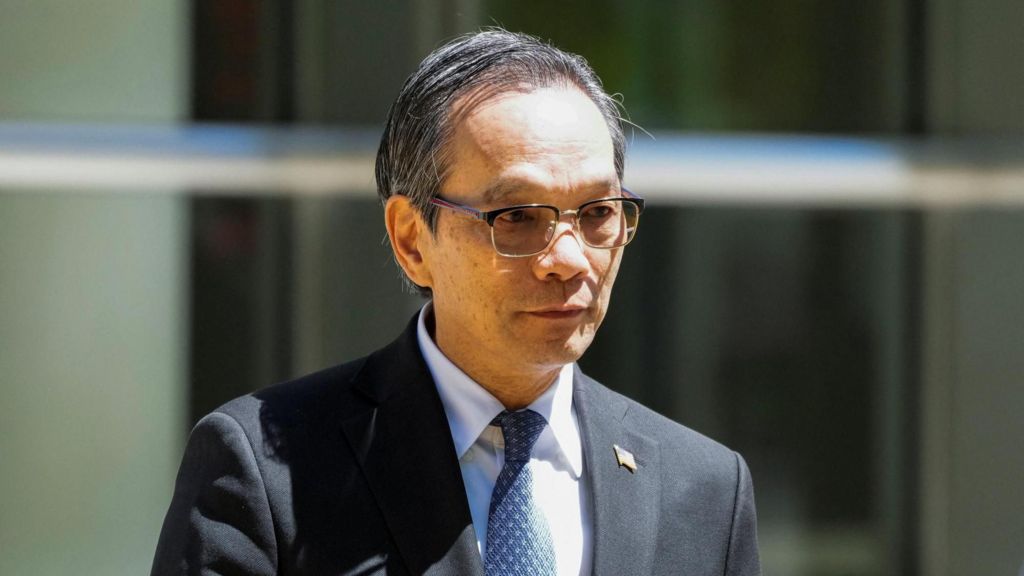
    Hundley, in a statement to the BBC, expressed honor in his brief appointment and pledged continued support for the justice system despite his abrupt dismissal. The conflict reflects broader struggles over the independence of judicial appointments and the administration’s approach to legal authority.

  • Trump says he will increase global tariffs to 15%

    Trump says he will increase global tariffs to 15%

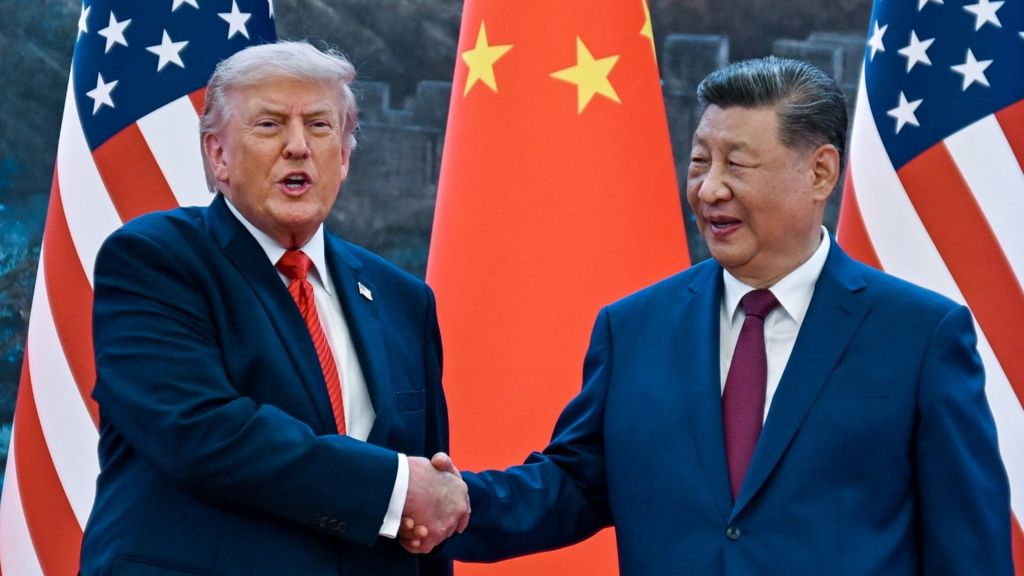
    In a dramatic escalation of his trade policy agenda, former President Donald Trump has declared his intention to impose sweeping 15% tariffs on all imported goods entering the United States. This decisive move comes as a direct response to Friday’s Supreme Court decision that invalidated his previous tariff structure, which the court deemed an unconstitutional overreach of presidential authority.

    The announcement, made through Trump’s Truth Social platform on Saturday, represents a significant increase from the 10% global tariff he initially proposed just one day earlier. The new tariff regime, scheduled to take effect on Tuesday, February 24, will be implemented under provisions of a previously unused trade law that permits such measures without immediate congressional approval for approximately five months.

    This development creates immediate complications for several key U.S. trading partners, particularly the United Kingdom and Australia, which had previously negotiated bilateral agreements capping tariffs at 10%. The sudden policy shift undermines these carefully constructed diplomatic arrangements and threatens to destabilize existing trade relationships.

    Trump justified the aggressive tariff increase as a necessary response to what he characterized as a ‘ridiculous, poorly written, and extraordinarily anti-American decision’ by the Supreme Court. In remarkably blunt language, the former president expressed shame toward certain justices and labeled those who rejected his trade policy as ‘fools.’

    The court’s 6-3 ruling determined that Trump had exceeded his constitutional authority when implementing previous tariffs under the 1977 International Emergency Economic Powers Act. The majority opinion included an unusual coalition consisting of the court’s three liberal justices, Chief Justice John Roberts, and two Trump-appointed justices—Amy Coney Barrett and Neil Gorsuch. The dissent came from conservative justices Clarence Thomas, Brett Kavanaugh, and Samuel Alito.

    This tariff initiative represents a cornerstone of Trump’s economic nationalism agenda, which aims to incentivize domestic manufacturing and discourage offshore production through protectionist trade measures. The constitutional confrontation between the executive and judicial branches sets the stage for a significant test of presidential powers regarding international trade policy.

  • US Supreme Court strikes down Trump’s global tariffs: What’s next?

    US Supreme Court strikes down Trump’s global tariffs: What’s next?

    The United States Supreme Court has delivered a landmark ruling striking down former President Donald Trump’s comprehensive global tariff regime, creating immediate economic turbulence and setting the stage for prolonged legal battles. While providing temporary relief to import-dependent industries, the decision has unleashed a complex aftermath of refund claims and policy uncertainty.

    The conservative-majority court’s rejection of tariffs imposed under emergency economic powers has invalidated approximately $133.5 billion in duties collected between January 2025 and December 2025. The ruling notably omitted guidance on refund procedures, transferring this contentious issue to lower courts. According to ING analysts Carsten Brzeski and Julian Geib, the U.S. Court of International Trade will likely oversee a fragmented reimbursement process requiring individual lawsuits from affected importers. Already, over 1,000 corporate entities have initiated legal actions, prompting Trump’s prediction of continuous litigation spanning five years.

    Within hours of the decision, Trump announced alternative measures including a new 10% import levy under Section 122 of the Trade Act of 1974. This temporary authority permits 150-day tariffs unless congressional extension occurs. Simultaneously, the administration has signaled intentions to pursue more permanent duties through Section 301 investigations targeting alleged unfair trade practices.

    Josh Lipsky of the Atlantic Council characterizes the development as merely opening “a new chapter” in Trump’s trade policy, forecasting continued volatility for businesses and complicated negotiations with international partners. The ruling effectively removes what Treasury Secretary Scott Bessent described as a “custom-made” tool for rapid leverage assertion against trading nations.

    While existing trade agreements likely remain intact according to Wendy Cutler of the Asia Society Policy Institute, ongoing negotiations may experience shifted power dynamics. The immediate consumer impact reflects a reduction in average effective tariff rates from 16.9% to 9.1%—still representing the highest levels since 1946 excluding 2025.

    Economists anticipate this judicial intervention will compel a comprehensive reset of tariff implementation strategies. Navy Federal Credit Union’s Heather Long projects that the ruling will likely result in lower overall duty rates and more methodical future trade policy execution, despite administrative intentions to establish enduring tariff structures.

  • USS Gerald R Ford enters Mediterranean: What to know about world’s largest carrier

    USS Gerald R Ford enters Mediterranean: What to know about world’s largest carrier

    The USS Gerald R. Ford, the United States’ newest and most advanced aircraft carrier, has entered the Mediterranean Sea through the Strait of Gibraltar as of Friday. This strategic deployment significantly enhances American military presence in a region experiencing substantial force buildup ahead of potential operations against Iran.

    Accompanied by three destroyer escorts, the nuclear-powered carrier brings the total number of US warships in the Middle East to 17 vessels once fully positioned. The Ford’s arrival marks the second carrier deployment to the region, joining the USS Abraham Lincoln and its accompanying guided-missile destroyers that arrived in January.

    This deployment follows the Pentagon’s February 13th announcement redirecting the carrier from Caribbean operations to the Middle East. President Donald Trump had previously indicated he would consider sending additional carrier support if diplomatic efforts with Iran remained unresolved.

    The Gerald R. Ford represents the pinnacle of naval technology, capable of carrying over 75 military aircraft including F/A-18 Super Hornets and E-2 Hawkeye early warning aircraft. The vessel features advanced radar systems for superior air traffic control and navigation capabilities. Its supporting fleet includes the Ticonderoga-class cruiser USS Normandy and Arleigh Burke-class destroyers USS Thomas Hudner, USS Ramage, USS Carney, and USS Roosevelt—all equipped for comprehensive surface-to-air, surface-to-surface, and anti-submarine warfare operations.

    According to operational records, the carrier has been continuously at sea since June 2025, having been abruptly redirected from planned European operations to the Caribbean in November before its current Middle Eastern assignment. While typical carrier deployments last nine months, extensions frequently occur during periods of heightened military activity.

    US Central Command confirmed the strike group’s deployment is intended to ‘promote regional security and stability’ amid escalating tensions. The military buildup follows Iran’s intensified crackdown on mass protests earlier this year, though President Trump has since stepped back from direct military action while maintaining that all options remain available.

  • Gold price likely to hit $6,000 this year, seen heading towards $10,000, analysts say

    Gold price likely to hit $6,000 this year, seen heading towards $10,000, analysts say

    Financial markets are witnessing an unprecedented rally in gold prices, with leading analysts projecting a potential ascent to the unprecedented $10,000 per ounce mark. After consolidating near $5,100 per ounce, the precious metal is poised for a significant surge as Asian trading hubs resume operations following the Chinese New Year hiatus, expected to inject renewed volatility and upward momentum.

    The current bullish trajectory is underpinned by a confluence of powerful fundamental drivers. Senior research strategist Michael Brown of Pepperstone identifies the recent market calm not as stagnation, but as a highly bullish indicator. He suggests the speculative frenzy has subsided, allowing core market fundamentals to reassert control. These fundamentals include sustained geopolitical risk premiums from ongoing Middle Eastern tensions, relentless demand from central banks diversifying their reserves, and increasing retail investor allocations into gold as a portfolio safeguard.

    Further bolstering the long-term outlook are deep-seated concerns over the unsustainable fiscal policies of developed nations. Brown emphasizes that any price dips should be viewed as strategic buying opportunities, with key support levels established at $4,850 and $4,700 per ounce. A decisive break above the recent high of $5,100 is anticipated to trigger a fresh wave of long positions.

    Zaheer Anwari, CEO of The Revacy Fund, echoes this cautiously optimistic sentiment. He confirms that gold’s status as the premier safe-haven asset is being reinforced by a broad shift away from U.S. assets and persistent central bank accumulation, which collectively act as a robust floor for prices. The prospect of U.S. monetary policy easing continues to serve as a significant tailwind.

    However, analysts caution that the rally is not without potential headwinds. A de-escalation of global conflicts, a more hawkish-than-expected Federal Reserve, or a slowdown in institutional buying could trigger short-term volatility and profit-taking. Anwari’s fund has adopted a more cautious stance, tightening risk parameters and realizing gains near the $5,000 threshold while awaiting clearer directional confirmation.

    This analysis aligns with projections from major global institutions. JPMorgan forecasts gold reaching $6,300 per ounce by the end of 2026, while AuAg Funds predicts the metal will surpass $6,000 within the year, building on its record-breaking performance earlier in 2026 that saw it cross the $5,500 milestone.

  • US says it struck vessel in the eastern Pacific, killing three men

    US says it struck vessel in the eastern Pacific, killing three men

    In a targeted operation on Friday, the United States military conducted a strike on a vessel navigating the eastern Pacific Ocean, resulting in the deaths of three individuals aboard. The action represents the latest in a series of similar engagements undertaken by US forces in the region over recent months.

    The operation was officially disclosed through a post on the social media platform X (formerly Twitter), where the US military asserted that the targeted vessel was actively ‘engaged in narco-trafficking operations.’ This incident aligns with the longstanding policy and public messaging of the Trump administration, which has consistently promoted and celebrated the successes of its counter-narcotics initiatives in international waters, often highlighting the disruption of illicit drug trafficking networks.

    The information, initially reported by Reuters, notes that the news agency could not immediately independently verify the precise details surrounding the strike or the allegations against the vessel. Such military actions are complex and typically involve coordination between various US departments and are based on intelligence gathering. The eastern Pacific corridor is a known route for the transportation of narcotics, primarily cocaine, originating from South America and destined for North American markets, making it a high-priority area for US counter-drug patrols and interdiction efforts.

  • Trump pivots to new 10% global tariff, new probes after Supreme Court setback

    Trump pivots to new 10% global tariff, new probes after Supreme Court setback

    In a swift response to a Supreme Court ruling that invalidated his previous tariff regime, President Donald Trump has enacted a new economic strategy centered on a temporary 10% global import duty. The executive action, signed late Friday, utilizes Section 122 of the Trade Act of 1974—a rarely invoked statute granting presidential authority to address balance of payments deficits.

    The temporary tariff measure will remain effective for 150 days, providing the administration breathing room to initiate multiple investigations under more conventional trade statutes. Treasury Secretary Scott Bessent confirmed the strategic shift would maintain comparable revenue levels despite the judicial setback, though through what he characterized as ‘a less direct and slightly more convoluted manner.’

    This transitional period enables the Office of the U.S. Trade Representative to launch fresh probes under Section 301 of the Trade Act targeting ‘unreasonable and discriminatory’ trade practices. While specific nations weren’t identified in the executive order, ongoing investigations concerning China and Brazil suggest continued focus on major trading partners, with Vietnam and Canada potentially facing increased scrutiny.

    The administration’s legal maneuvering leaves approximately $175 billion in previously collected tariffs subject to potential refunds, though officials indicated resolution would likely require extensive litigation lasting several years. Trade experts note that while the new approach creates prolonged uncertainty, it introduces more procedural regularity through established investigation frameworks requiring research, public commentary, and defined timelines.

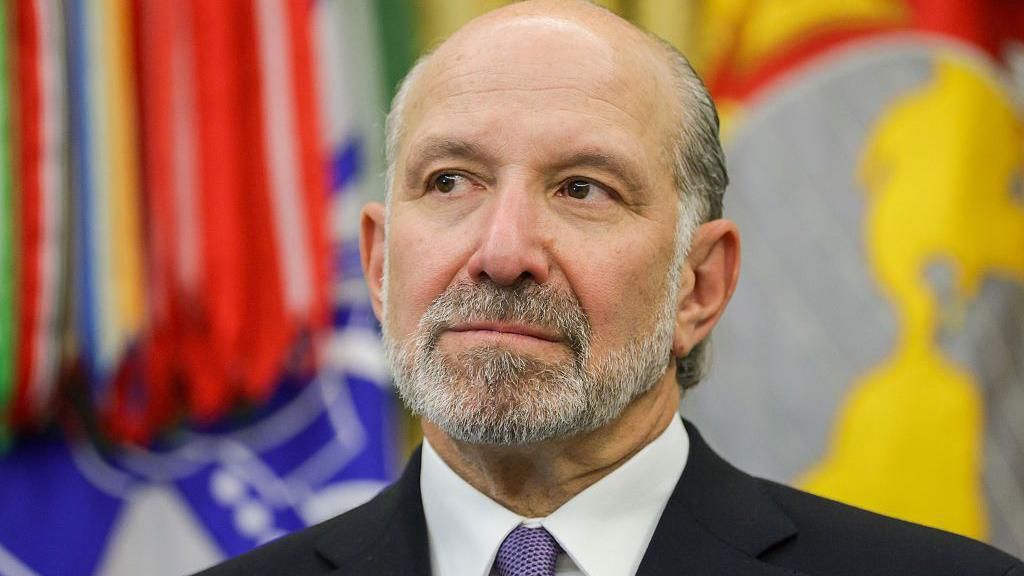
    Former U.S. Trade Representative Robert Lighthizer advocated for congressional action to modernize trade tools, reflecting broader administration intentions to institutionalize more durable tariff authorities beyond temporary measures.

  • US business groups, lawmakers welcome Supreme Court ruling against Trump tariffs

    US business groups, lawmakers welcome Supreme Court ruling against Trump tariffs

    In a landmark judicial decision with profound implications for executive power, the U.S. Supreme Court has invalidated former President Donald Trump’s utilization of emergency authorities to impose sweeping tariffs. The 6-3 ruling, delivered on Friday, represents a significant judicial check on presidential trade policy and has been met with widespread approval from business communities and legislators across the political spectrum.

    The court determined that the executive branch had significantly overstepped its constitutional boundaries by declaring national emergencies to justify tariffs against numerous trading partners. This judicial finding renders a substantial portion of tariffs enacted the previous year unlawful, potentially triggering billions in duty refunds to affected companies.

    Neil Bradley of the U.S. Chamber of Commerce characterized the decision as “welcome news for businesses and consumers alike,” highlighting how the tariffs had precipitated substantial cost escalations and severe supply chain disruptions throughout the American economy. The Chamber immediately called upon the administration to expedite reimbursement of unlawfully collected duties and undertake a comprehensive overhaul of national tariff policy to foster economic expansion and reduce household expenses.

    This sentiment was echoed by ‘We Pay the Tariffs,’ a coalition representing small business interests, which demanded “full, fast and automatic” refunds for its members who had paid billions in duties that were, according to the Court’s ruling, improperly levied.

    The decision received notable bipartisan support, with Republican Senator Mitch McConnell of Kentucky welcoming the judicial reaffirmation of congressional authority in trade matters. “The American people already understand that when Washington establishes artificial trade barriers, domestic construction and consumer purchasing become markedly more expensive,” McConnell stated.

    Foreign policy experts suggested the ruling could curtail the executive’s ability to deploy tariffs as a rapid-response geoeconomic instrument, though alternative statutory pathways for implementing tariffs through conventional trade negotiations remain available. Some industry representatives expressed lingering concerns about potential future tariff implementations through different legal mechanisms, indicating that certain policy uncertainties persist despite this decisive judicial intervention.

  • Trump signs 10 percent global tariff on all countries

    Trump signs 10 percent global tariff on all countries

    In a landmark economic policy shift, former President Donald Trump has enacted a comprehensive 10% tariff on imports from all trading partners worldwide. The sweeping measure, signed on February 21, 2026, represents one of the most extensive trade policy interventions in modern economic history, effectively applying uniform import duties across all nations without exemptions.

    The policy departure marks a significant escalation from previous targeted tariff approaches, establishing a blanket import tax that economists predict will trigger substantial adjustments in global supply chains and international trade relations. The uniform nature of the tariff structure eliminates country-specific trade preferences that have characterized international commerce for decades.

    Trade analysts anticipate immediate repercussions across multiple sectors, with consumer goods, automotive imports, and electronics expected to experience price increases. Manufacturing industries reliant on imported components face potential cost pressures, while domestic producers may benefit from reduced foreign competition.

    The implementation coincides with ongoing diplomatic engagements, as evidenced by recent high-level discussions between Chinese Foreign Ministry officials and European counterparts emphasizing cooperation. These parallel developments highlight the complex interplay between trade policy and international diplomacy in the current global landscape.

    Market observers are monitoring potential retaliatory measures from major trading partners, which could initiate a new phase of trade adjustments affecting trillions of dollars in global commerce. The policy’s long-term implications for inflation, economic growth, and international relations remain subjects of intense speculation among policymakers and economists worldwide.