标签: North America

北美洲

  • Watch: Groceries remain on shelves after tornado rips roof off supermarket

    Watch: Groceries remain on shelves after tornado rips roof off supermarket

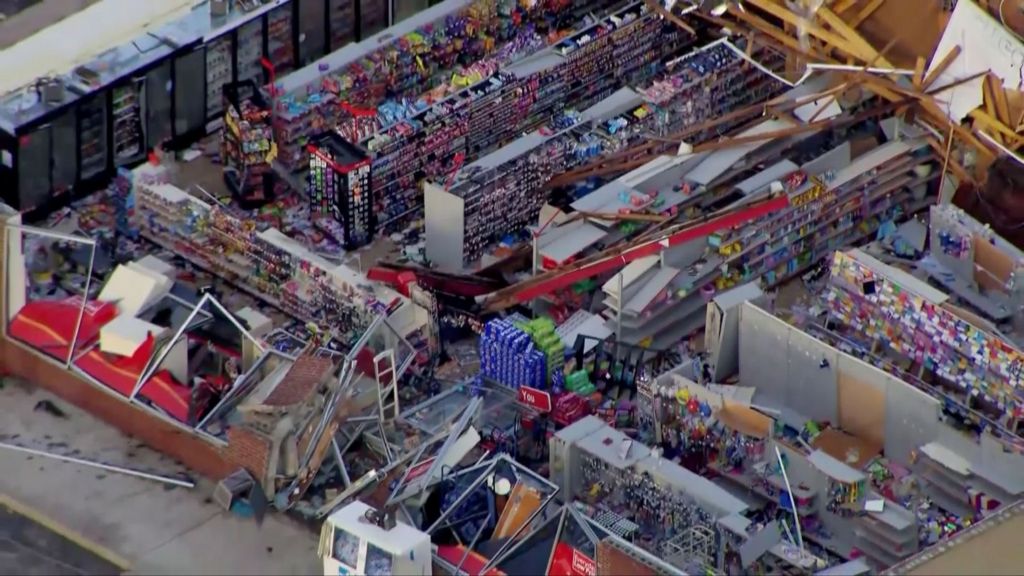
    In a remarkable display of nature’s selective force, an Indiana supermarket experienced catastrophic structural damage while leaving its interior merchandise largely undisturbed. A powerful tornado packing wind speeds reaching 150 miles per hour tore through Lake Village, Indiana, completely stripping the roof from a local grocery store while leaving shelves stocked with products standing neatly aligned.

    The dramatic scene revealed an almost surreal dichotomy: entire sections of the building suffered complete destruction with debris scattered across the parking lot, while within the compromised structure, grocery aisles remained orderly with products perfectly intact. The tornado’s path demonstrated unpredictable behavior, demolishing certain portions of the commercial establishment while sparing others in what meteorologists describe as a common but nonetheless astonishing phenomenon with violent weather systems.

    Emergency responders expressed relief that the event occurred during off-hours when the store was unoccupied, preventing what could have been catastrophic human casualties. Structural engineers have since cordoned off the area to assess the stability of the remaining walls and infrastructure. The incident has sparked conversations within meteorological circles about the complex physics of tornado damage patterns and their seemingly random manifestations across affected landscapes.

    Local authorities have initiated disaster response protocols while simultaneously marveling at the photographic evidence showing pristine food containers standing in neat rows beside completely devastated sections of the building. The event underscores both the destructive power of extreme weather events and the sometimes unpredictable nature of their impact on human infrastructure.

  • Customer sues Costco for tariff refunds

    Customer sues Costco for tariff refunds

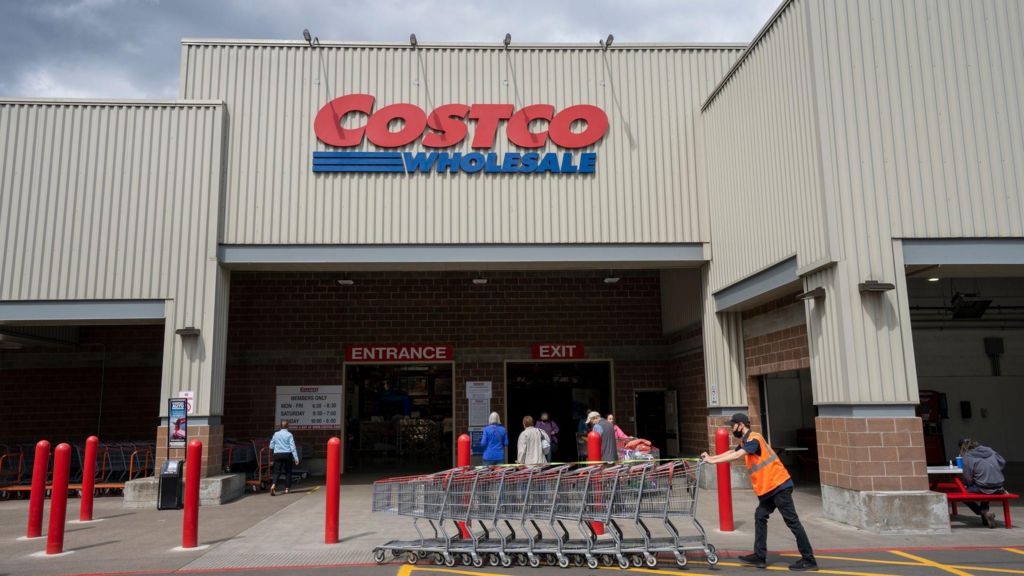
    A significant legal challenge has emerged against retail giant Costco, initiated by customer Matthew Sockov through a proposed class action lawsuit. Filed in an Illinois federal court, the suit alleges that Costco stands to potentially recover its tariff expenses twice—first from consumers via elevated pricing and subsequently from government reimbursements. Sockov contends this constitutes ‘unjust enrichment’ and seeks judicial intervention to mandate refunds to affected shoppers.

    This litigation arises amidst broader complexities surrounding approximately $166 billion in tariff reimbursements owed to U.S. companies. The refund obligation follows last month’s Supreme Court decision to invalidate numerous tariffs imposed during the Trump administration, which utilized the International Emergency Economic Powers Act (IEEPA) of 1977 to levy duties on imports from dozens of countries. The Court of International Trade has since directed the government to commence refund distributions, though operational challenges persist.

    Goldman Sachs research cited in the complaint estimates consumers bore roughly two-thirds of the tariff burdens. With over 330,000 importers eligible for refunds, the Trump administration recently requested a 45-day period to develop an electronic processing system, warning that existing infrastructure could be overwhelmed by manual claims processing.

    Costco, among thousands of enterprises seeking reimbursements, has not publicly commented on the lawsuit. However, CEO Ron Vachris recently told analysts the company remains uncertain about ‘what refunds, if any, will be received,’ noting that full tariff costs weren’t always passed to members. Vachris committed that if reimbursements occur, Costco would ‘return this value to our members through lower prices and better values’ with transparency.

    Other corporations including FedEx have pledged to refund tariff reimbursements to affected clients, highlighting how businesses are navigating post-tariff financial reconciliation.

  • Sly fox sneaks onto cargo ship in Southampton and arrives in New York

    Sly fox sneaks onto cargo ship in Southampton and arrives in New York

    A remarkable transatlantic journey has culminated in sanctuary for an unlikely voyager. A two-year-old male red fox, weighing approximately 11 pounds (5 kg), has been placed under professional care at the Bronx Zoo’s Animal Health Center after being discovered as a stowaway aboard a cargo ship that traveled from Southampton, UK, to the Port of New York and New Jersey.

    The unexpected passenger was detected by U.S. officials during a routine cargo inspection on February 19th. Following its discovery, the animal was promptly transferred to the wildlife experts at the Bronx Zoo for evaluation and care. The vessel had previously been docked at the English port city of Southampton, though the precise method by which the fox gained access remains undetermined.

    Initial veterinary assessments indicate the animal is in surprisingly good condition despite its arduous journey. Keith Lovett, the zoo’s Director of Animal Programs, reported to the Associated Press that the fox “seems to be settling in well” after having “gone through a lot.” A comprehensive health screening is currently underway to ensure the animal carries no diseases.

    The Port of Southampton authorities expressed amusement at the unusual incident. A spokesperson for Associated British Ports Southampton remarked that while they handle diverse cargo from vehicles to container shipments, “even we were surprised to find a fox had booked itself a transatlantic crossing,” jokingly suggesting the animal might have preferred “swapping the Solent for the Staten Island Ferry.”

    According to the Bronx Zoo’s statement, red foxes (Vulpes vulpes) rank among the world’s most widely distributed carnivorous mammals, recognized for their distinctive reddish coat and bushy white-tipped tail. Their remarkable adaptability enables them to thrive across diverse habitats spanning Europe, Asia, North America, and parts of Africa, with diets ranging from fruits to rodents.

    The zoo has confirmed that once veterinary clearance is obtained, wildlife specialists will identify an appropriate long-term habitat for the transatlantic traveler, ensuring its continued wellbeing following its extraordinary journey.

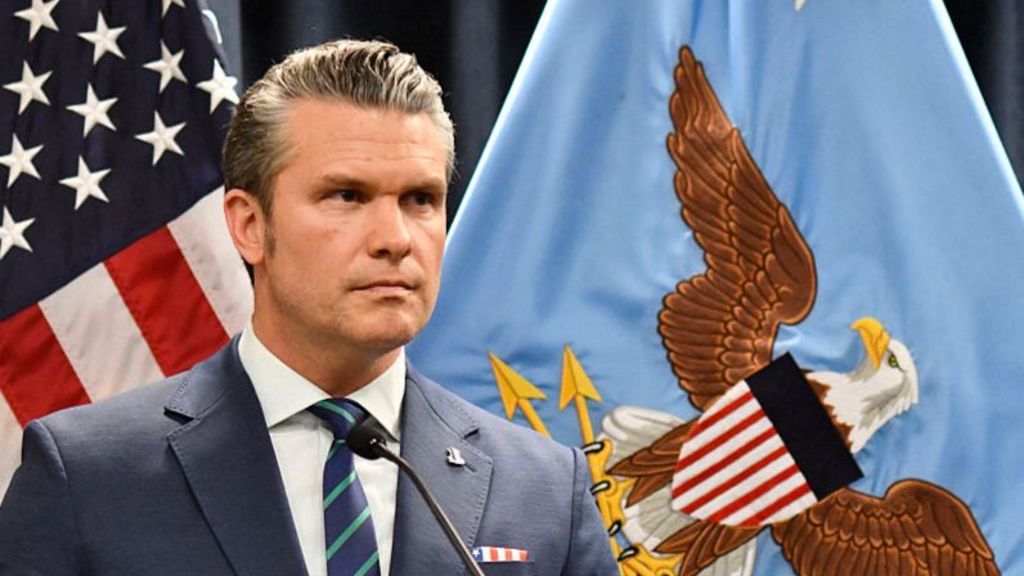
  • Questions mount for Hegseth over possible US involvement in strike on Iranian school

    Questions mount for Hegseth over possible US involvement in strike on Iranian school

    A bipartisan crisis is unfolding in Washington as nearly all Senate Democrats have formally challenged Defense Secretary Pete Hegseth regarding a devastating missile strike in Minab, Iran, that reportedly killed 168 civilians—including approximately 110 children—according to Iranian officials. The incident occurred during a joint US-Israeli military operation initiated on February 28th.

    Multiple US media outlets, including CBS News, report that preliminary military investigations suggest American forces were ‘likely responsible’ for unintentionally striking a primary school adjacent to an Islamic Revolutionary Guard Corps (IRGC) military base. While no final conclusion has been reached, expert analysis of verified video evidence indicates the weapon used was a Tomahawk cruise missile—a system exclusively operated by US forces in the region.

    The congressional letter, signed by all but one Senate Democrat, poses detailed inquiries about target verification procedures and potential intelligence failures. Legislators specifically question whether outdated information—possibly misidentifying the school compound as an active military site—led to the tragic miscalculation. The correspondence also references Secretary Hegseth’s recent controversial remarks dismissing ‘stupid rules of engagement,’ demanding clarification on compliance with international laws governing armed conflict.

    Senator Gary Peters, an Armed Services Committee member who endorsed the letter, characterized the event as ‘a horrific tragedy’ requiring urgent factual resolution before determining subsequent actions. The political divide emerged clearly as no Republican senators signed the document, while Democratic Senator John Fetterman abstained despite supporting military action generally.

    Pentagon representatives confirmed they would respond directly to the senators’ concerns through standard congressional correspondence channels. When pressed by BBC journalists, Secretary Hegseth maintained that the US does not intentionally target civilians and that the investigation remains ongoing.

    The strike represents potentially one of the worst single-instance civilian casualty events in decades of US Middle Eastern engagements if American involvement is confirmed. Satellite imagery and verified videos reveal extensive damage to civilian infrastructure including hospitals and cultural landmarks since operations began.

    Former CIA Director and US Central Command Commander General David Petraeus acknowledged the likelihood of US responsibility based on weapon system evidence, though he cautioned about reviewing full investigative findings. He suggested outdated intelligence might have failed to reflect the school’s presence near a former naval compound.

    Iran has retaliated with attacks on Israeli and US-allied Gulf states, expanding targeting to include energy facilities and non-military sites. Israeli officials told the Washington Post they had no awareness of operations in the strike area.

    President Trump, initially suggesting without evidence that Iran might have conducted the strike, later stated he would ‘live with’ whatever conclusions the military investigation produces.

  • Americans worry about war in Iran, Trump’s promises

    Americans worry about war in Iran, Trump’s promises

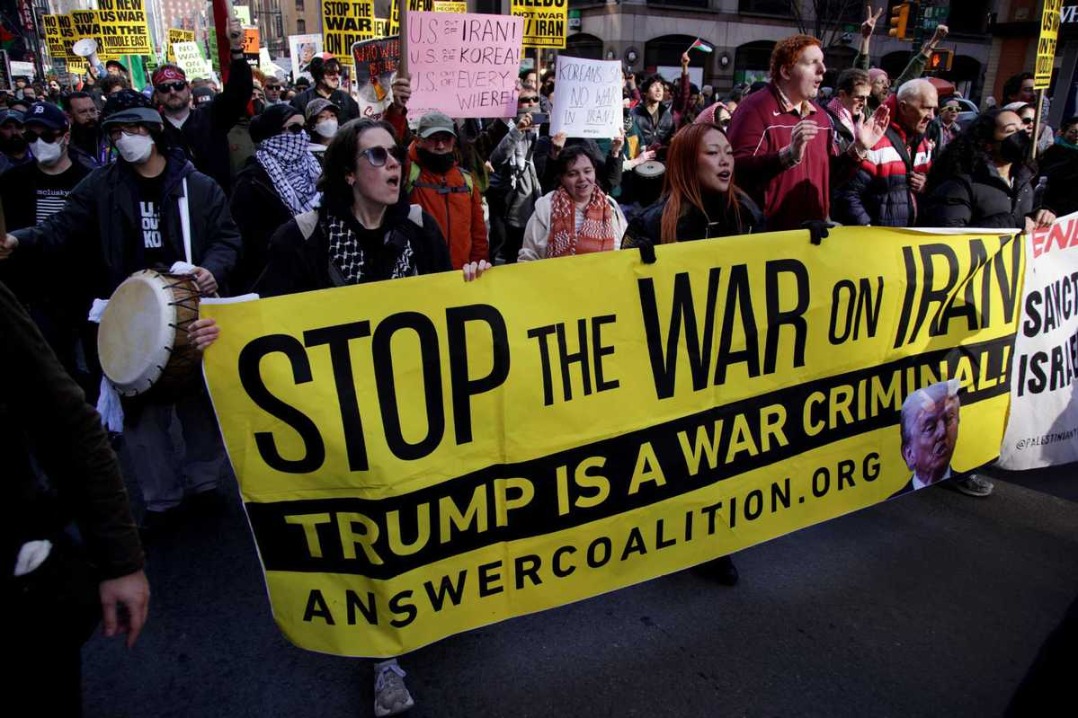
    A significant political storm is brewing within the United States as President Donald Trump faces mounting criticism over his decision to initiate military action against Iran, with many of his former supporters expressing feelings of betrayal over what they perceive as broken campaign promises.

    The discontent stems from Trump’s 2024 campaign rhetoric that heavily emphasized an ‘America First’ policy and criticized US involvement in prolonged foreign conflicts. Prominent conservative voices including influential podcaster Joe Rogan, who commands an audience of over 16 million followers, have publicly denounced the military action. ‘He ran on no more wars, end these stupid, senseless wars, and then we have one that we can’t even really clearly define why we did it,’ Rogan stated, capturing the sentiment of many disillusioned supporters.

    Recent polling data reveals substantial public opposition to the conflict. A CNN survey conducted between February 28 and March 1 indicates that 59% of Americans disapprove of military action against Iran, while only 41% express support. Furthermore, 54% believe that US military engagement will actually increase the Iranian threat to American interests.

    The financial implications are becoming increasingly concerning. According to New York Times reports, Pentagon officials briefed lawmakers that the initial week of military operations cost approximately $11.3 billion—a figure that excludes preliminary buildup expenses. This expenditure significantly exceeds earlier projections from the Center for Strategic and International Studies, which had estimated $3.7 billion for the first 100 hours of operations.

    Conservative activist Tucker Carlson, known for his regular White House visits, reportedly described the airstrikes as ‘absolutely disgusting and evil’ and had actively lobbied against military action. The growing dissent is reflected in digital media as well, with content creator Candace Owens’ video titled ‘Donald Trump has Betrayed America’ amassing 2.3 million views and over 27,000 comments within just two days.

    Many Americans express concern that the administration has created an untenable situation where either withdrawal or escalation carries severe consequences. As Houston resident Michael articulated, ‘If the US withdraws soon, we would look weak because Iran would be able to recoup with more vengeance against the US. We can’t eliminate the Iran threat without considerable military involvement or a new regime friendly to the US.’

  • Military push in Latin America raises concerns

    Military push in Latin America raises concerns

    The United States has initiated a new military coalition targeting drug cartels in Latin America, a strategic move that regional experts characterize as an effort to reestablish hemispheric dominance while potentially compromising regional stability. The “Shield of the Americas” summit, convened in Florida on March 7, featured President Donald Trump announcing the formation of a regional military partnership, framing it as an essential response to transnational criminal organizations posing critical threats to hemispheric security.

    Academic analysts challenge the official narrative, suggesting the anti-drug justification conceals broader geopolitical objectives. According to Cao Ting, Director of the Center for Latin American Studies at Fudan University, the emphasis on combating crime serves primarily to legitimize US interventionism while advancing Washington’s goal of strengthened regional control. This perspective finds support in the explicitly stated intentions within the US National Security Strategy to restore American preeminence throughout the Western Hemisphere.

    The proposed security framework reveals significant structural concerns regarding burden distribution and sovereignty. Niu Haibin of the Shanghai Institutes for International Studies notes the “uneven nature” of joint military operations that disproportionately assign responsibility for addressing drug production, transit, and consumption to Latin American nations. This approach, experts argue, effectively compromises the strategic autonomy of regional states in sovereign and security matters.

    The summit attendance pattern itself revealed political fractures, with notable absences from major regional powers including Brazil and Mexico. Their non-participation reflects apprehension about potential sovereignty violations through US military operations conducted within their territories. The gathering has accentuated existing political divisions across Latin America, particularly the growing ideological schism between left-leaning and right-leaning governments.

    Cuban President Miguel Diaz-Canel condemned the initiative as “reactionary and neocolonial,” characterizing it as both an assault on the Proclamation of Latin America and the Caribbean as a Zone of Peace and a threat to regional integration aspirations. Experts further warn that heightened US involvement may intensify pressure on left-wing governments, exacerbate political fragmentation, and increase overall regional uncertainty.

    The effectiveness of the newly established anti-drug mechanism faces serious questions due to the absence of critical narcotics-combating nations like Mexico and Colombia. Additionally, Trump’s warnings against “hostile foreign influence” gaining footholds in the hemisphere introduce another dimension of geopolitical tension. Analysts observe that while participating nations might share common ground on combating drug trafficking, consensus regarding broader security threats—particularly those related to alleged foreign influence—remains considerably more limited.

    Niu highlights the US tendency toward “pan-securitization,” framing diverse issues as security concerns to justify intervention, as demonstrated in approaches to Venezuela and the Panama Canal. This security narrative fundamentally conflicts with Latin American aspirations for active globalization participation and diversified economic partnerships. Forcing US security strategies upon the region, experts conclude, may ultimately generate increased tension in inter-American relations rather than enhanced cooperation.

  • Chile’s new president Jose Antonio Kast takes office

    Chile’s new president Jose Antonio Kast takes office

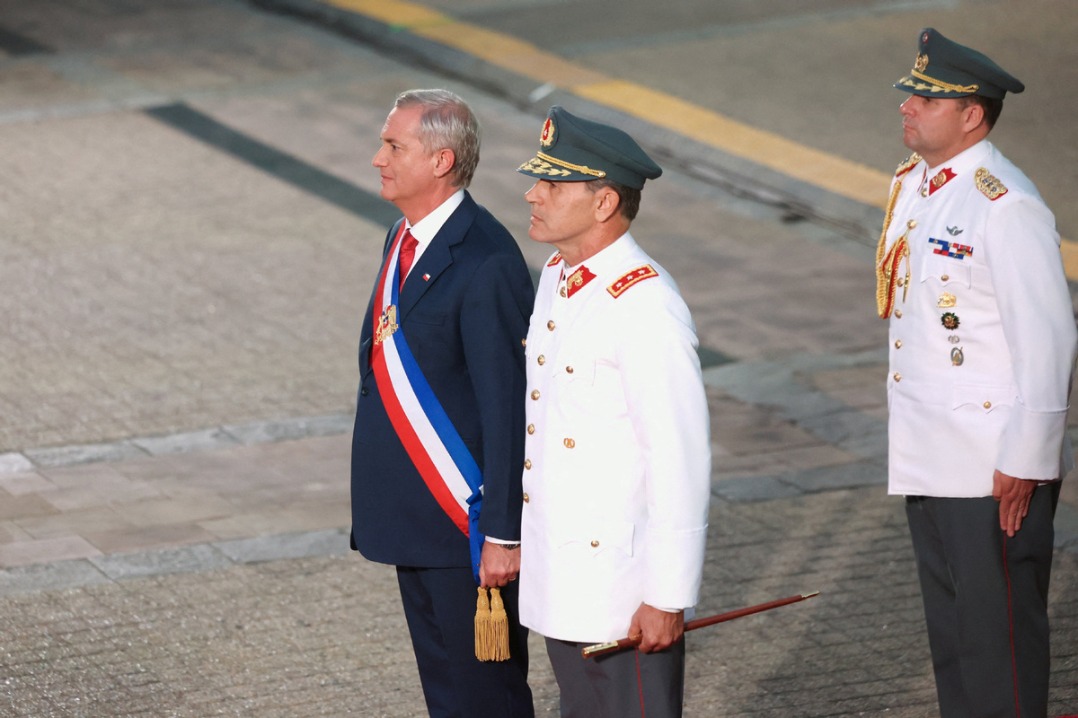
    In a historic transition of power, José Antonio Kast was formally inaugurated as Chile’s President on Wednesday, March 11, 2026, marking the commencement of his four-year presidential term spanning 2026-2030. The ceremonial proceedings unfolded at La Moneda Presidential Palace in Santiago, where the 60-year-old legal professional and former congressman received the presidential sash from Senate President Paulina Núñez.

    During his solemn oath-taking ceremony, President Kast made resolute commitments to ‘safeguard the nation’s sovereignty’ and ‘rigorously uphold constitutional principles and legal frameworks.’ His ascent to leadership represents a significant political shift from his predecessor Gabriel Boric’s administration.

    Political analysts immediately highlighted the formidable challenges awaiting the new administration, with pressing issues including national security enhancement, management of irregular migration patterns, economic revitalization strategies, and comprehensive governmental restructuring.

    Kast’s presidential journey demonstrates remarkable persistence, having previously contested the highest office unsuccessfully in both 2017 and 2021. His eventual electoral triumph came on December 14th, when he secured an unprecedented voter mandate in Chilean history, defeating opponent Jeannette Jara in the decisive runoff election. This record-breaking electoral performance signals substantial political transformation within the South American nation.

  • UN Security Council fails to pass resolution calling for immediate halt of military activities in Middle East

    UN Security Council fails to pass resolution calling for immediate halt of military activities in Middle East

    The United Nations Security Council encountered a significant diplomatic impasse on Wednesday when it rejected a draft resolution calling for an immediate cessation of military activities across the Middle East. The proposed measure, sponsored by Russia, urged all conflicting parties to halt hostilities and refrain from further escalation while condemning attacks targeting civilian populations and infrastructure.

    The voting outcome revealed deep international divisions, with the resolution receiving only four affirmative votes from Russia, China, Pakistan, and Somalia. The United States and Latvia cast opposing votes, while nine council members opted for abstention, effectively blocking the resolution’s passage.

    Russian Ambassador Vassily Nebenzia expressed profound disappointment with the outcome, stating that numerous Security Council members had failed to demonstrate sufficient resolve and wisdom to support the proposed text. The diplomatic setback occurred against the backdrop of escalating regional tensions triggered by joint U.S.-Israeli military operations against Iran that commenced on February 28, followed by Iran’s retaliatory measures throughout the region.

    In a contrasting development, the Security Council successfully adopted an alternative resolution presented by Bahrain on behalf of the Gulf Cooperation Council. This measure, which garnered 13 favorable votes with two abstentions, specifically condemned Iranian attacks against GCC member states and Jordan. The resolution demands Iran immediately cease hostilities against these nations and declares such actions violations of international law that pose serious threats to global security.

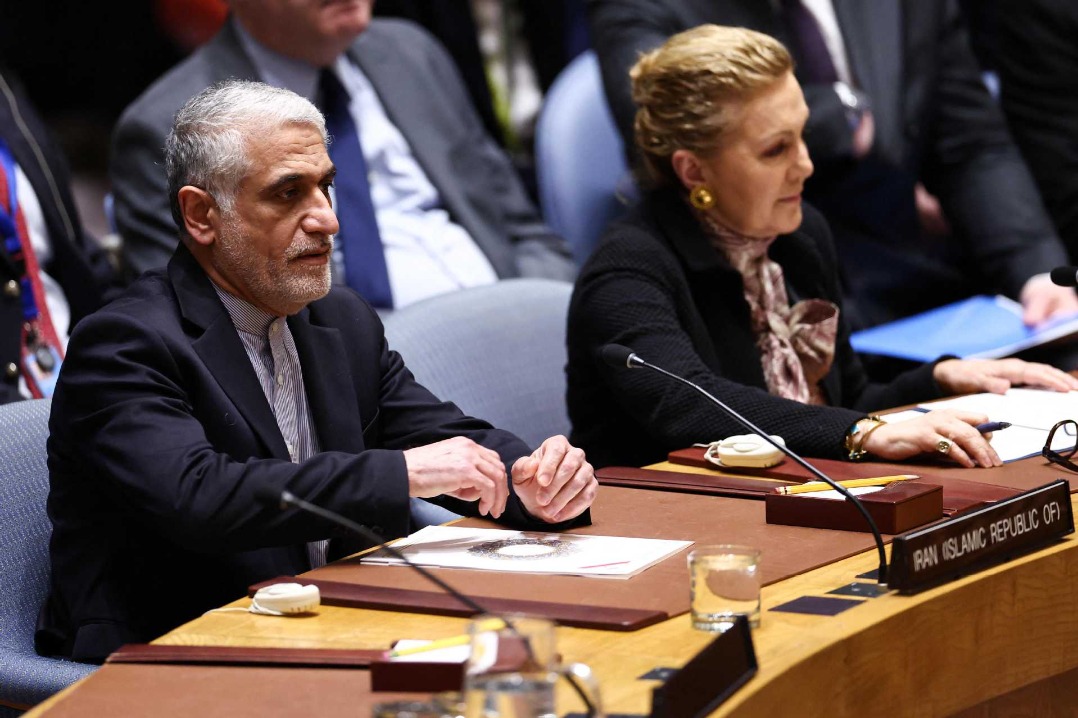
    Iran’s Permanent Representative Amir Saeid Iravani strongly objected to this resolution, characterizing it as a manifest injustice against his country. He asserted that Iran considers the measure both unjust and unlawful, arguing that it contradicts the United Nations Charter and established international law principles.

  • Canada’s Cuba aid highlights differences

    Canada’s Cuba aid highlights differences

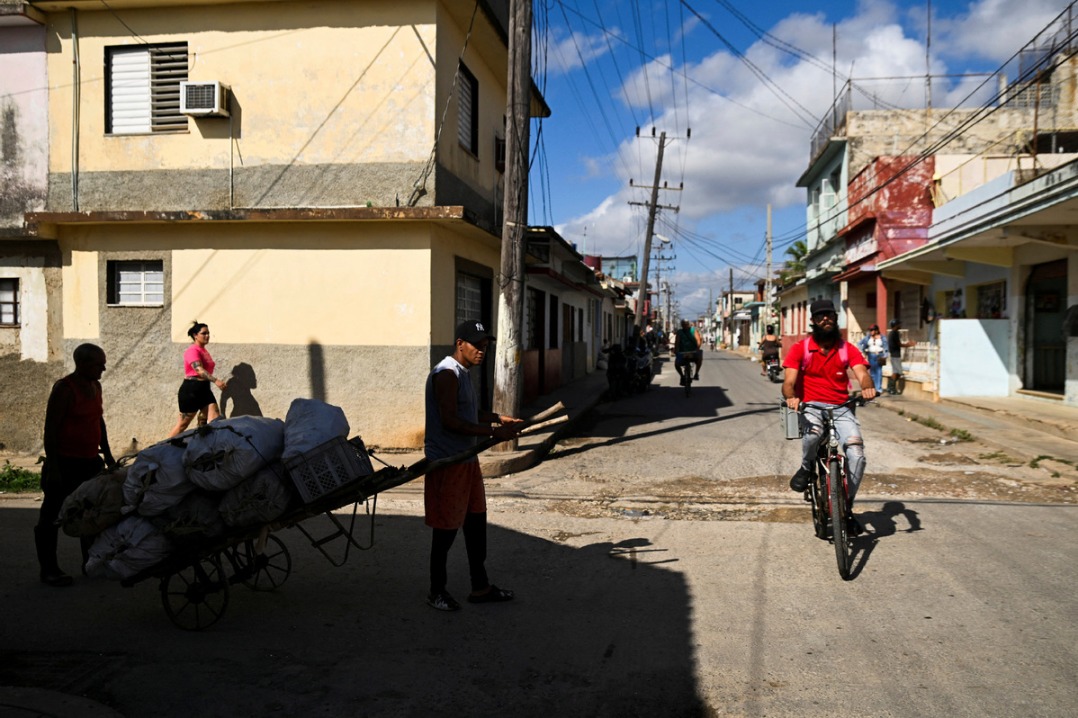
    Canada’s recent commitment of CA$8 million in food assistance to Cuba underscores a persistent foreign policy schism with the United States that has endured for over six decades, according to historical analysis. The aid package, announced by Canadian Foreign Minister Anita Anand, aims to address “significant hardship” and “urgent needs” facing the Cuban population.

    Ronald Stagg, history professor at Toronto Metropolitan University, contextualized this move within a longstanding pattern of Ottawa-Washington divergence on Cuban relations. The policy disconnect dates to the 1962 Cuban Missile Crisis when Prime Minister John Diefenbaker refused American requests to participate in the Cuban blockade. This established precedent continued through subsequent administrations, with Prime Minister Lester B. Pearson asserting Canadian jurisdiction over US subsidiaries operating in Canada despite American embargo extensions.

    This latest humanitarian gesture coincides with broader caution among US allies regarding alignment with Washington’s international positions. Multiple European nations have demonstrated measured responses to recent Middle Eastern conflicts. Spain rejected US requests to launch attacks from its territory, with Prime Minister Pedro Sanchez condemning military interventions that “violate international law.” Britain provided limited support while explicitly avoiding offensive operations, and Germany committed only to defensive measures if attacked.

    Canada itself has exhibited similar prudence, with Prime Minister Mark Carney initially supporting strikes before expressing regret over escalation. Professor Stagg notes that while Canadian-Cuban relations have experienced “ups and downs,” Ottawa has consistently maintained either “benign neglect or active support” toward Havana—a stance reflecting Canada’s historical orientation toward Britain and Europe rather than automatic alignment with American foreign policy objectives.

  • AI boom sends electricity bills in US skyrocketing

    AI boom sends electricity bills in US skyrocketing

    A silent crisis is brewing across American households and businesses as electricity bills reach unprecedented heights, driven substantially by the artificial intelligence revolution’s insatiable energy appetite. The convergence of accelerated AI infrastructure investment, an aging power grid, and seasonal demand spikes has created a perfect storm in energy markets.

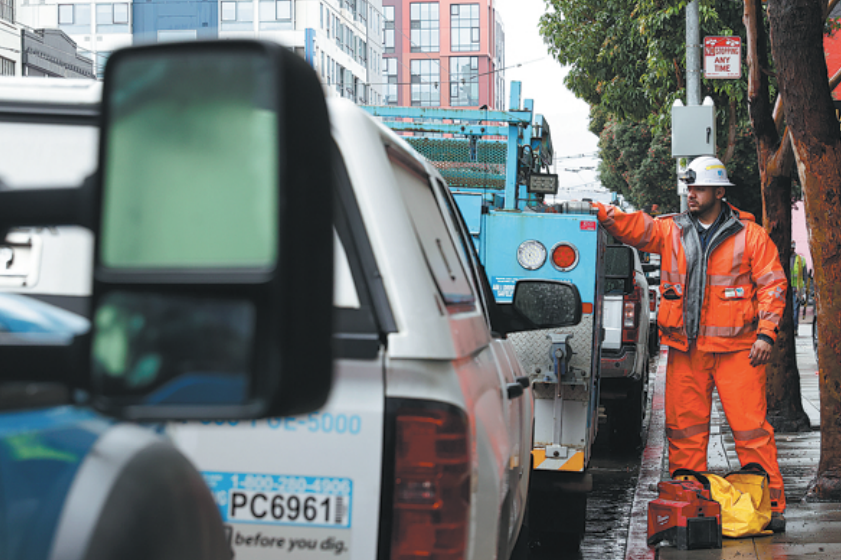
    Kurt Borchardt, co-owner of Artisanal Brew Works in Saratoga Springs, New York, experienced this shock firsthand when his brewery’s electricity bill suddenly doubled within a single month. ‘Our electric bill doubled in one month. Almost a $3,000-$4,000 jump on a single bill,’ Borchardt recounted, describing the devastating impact on his business during its traditionally slow winter season. The brewery’s energy costs have now become its second-largest expense after rent, severely squeezing profit margins.

    This personal story reflects a national pattern. Recent data from the US Bureau of Labor Statistics reveals that while overall inflation increased 2.4 percent in the twelve months ending January, electricity prices surged by 6.3 percent during the same period. Unlike volatile gasoline prices, electricity costs have demonstrated a steady upward trajectory, creating sustained financial pressure across the economy.

    The primary catalyst behind this energy crunch stems from massive computing facilities powering artificial intelligence applications. According to Lawrence Berkeley National Laboratory, data centers accounted for approximately 4.4 percent of total US electricity consumption in 2023. Projections indicate this share could escalate to between 6.7 and 12 percent by 2028, depending on economic growth patterns.

    This demand surge is already manifesting in capacity markets. PJM Interconnection, the nation’s largest grid operator serving 13 states and Washington D.C., recently reported that its latest capacity auction fell short of reliability requirements by 6,623 megawatts for the 2027-28 delivery year. ‘This auction leaves no doubt that data centers’ demand for electricity continues to far outstrip new supply,’ stated Stu Bresler, PJM’s executive vice-president of market services and strategy.

    Economists warn that persistently elevated utility costs could undermine economic momentum. ‘Higher energy costs will act as a drag on growth and competitiveness for US firms and heighten affordability issues facing US households,’ explained Aaron Pacitti, economics professor at Siena University. ‘Since demand from data centers and AI is unlikely to subside anytime soon, these price increases will act as a modest headwind to growth.’

    The structural challenges extend beyond mere demand growth. In many regions, utility companies procure electricity through wholesale markets where prices spike when demand outpaces supply. This mechanism affects all consumers simultaneously, regardless of their individual consumption patterns, creating widespread economic repercussions that extend from manufacturing sectors to household budgets.