标签: North America

北美洲

  • Trump says ‘no deadline’ for Ukraine peace deal

    Trump says ‘no deadline’ for Ukraine peace deal

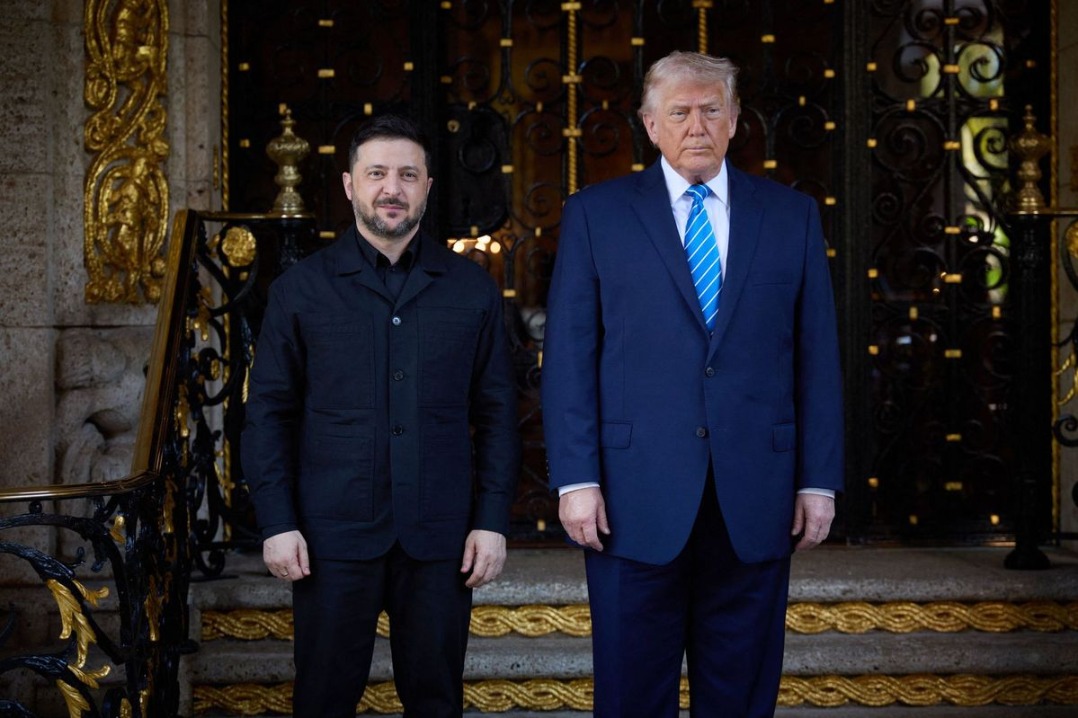
    In a pivotal meeting at his Mar-a-Lago estate in Palm Beach, Florida, U.S. President Donald Trump conveyed to reporters on Sunday that his administration would not be constrained by artificial deadlines in pursuing a resolution to the Ukraine conflict. The discussions with visiting Ukrainian President Volodymyr Zelensky centered on advancing a comprehensive peace framework.

    “I don’t operate with arbitrary timelines. My singular objective remains the cessation of hostilities,” Trump declared before entering negotiations with the Ukrainian leader. When questioned about the potential for an immediate breakthrough, Trump responded cautiously: “The outcome remains uncertain—though I am confident we possess the foundational elements for an agreement.” He acknowledged the extraordinary complexity of resolving the prolonged crisis.

    President Zelensky indicated the talks would concentrate on a detailed 20-point peace proposal and the sequential implementation of settlement terms. “Strategic coordination between our teams is paramount—we must establish a clear, phased approach to advance peace efforts,” Zelensky emphasized.

    The diplomatic engagement followed Trump’s recent communication with Russian President Vladimir Putin, which the U.S. leader described on Truth Social as “productive and constructive.” Russian Presidential Aide Yuri Ushakov revealed both leaders concurred that interim ceasefires would merely prolong the conflict rather than facilitate lasting peace. They shared skepticism toward temporary truces proposed by European and Ukrainian officials, viewing them as potential precursors to renewed violence.

    The Mar-a-Lago agenda encompassed critical issues including ceasefire mechanisms, establishment of demilitarized zones, operational control of the Zaporizhzhia nuclear facility, jurisdictional matters in the Donbas region, and post-conflict security assurances.

  • Trump says progress made in Ukraine talks but ‘thorny issues’ remain

    Trump says progress made in Ukraine talks but ‘thorny issues’ remain

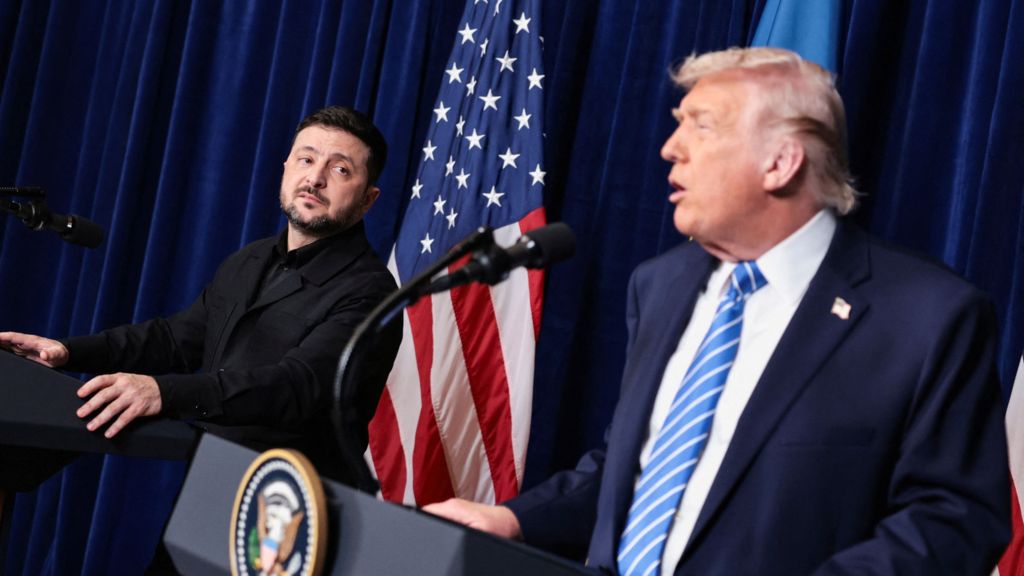
    MAR-A-LAGO, Fla. – U.S. President Donald Trump and Ukrainian President Volodymyr Zelensky concluded a high-stakes meeting in Florida, announcing significant headway toward a potential resolution to the nearly four-year war in Ukraine, though critical territorial disputes remain unresolved.

    Both leaders characterized the discussions as ‘great,’ revealing that approximately 90% of a comprehensive 20-point peace plan had been mutually agreed upon. President Trump specified that negotiations concerning security guarantees for Ukraine were ‘close to 95%’ finalized. However, he identified the status of the Donbas region—a territory in eastern Ukraine largely occupied by Russian forces—as the primary obstacle, describing it as a ‘very thorny issue.’

    The strategic eastern region of Donbas, comprising Donetsk and Luhansk, remains a focal point of contention. Moscow currently controls roughly 75% of Donetsk and nearly all of Luhansk. Russia demands that Ukraine relinquish the small portion of the territory it still holds in Donbas, while Kyiv proposes transforming the area into a demilitarized free economic zone under Ukrainian policing.

    President Trump, whose stance on reclaimed Ukrainian territories has fluctuated, noted the complexity of the matter, stating, ‘Some of that land has been taken… Some of that land is maybe up for grabs.’ He expressed confidence that a resolution was forthcoming, albeit acknowledging the challenges.

    In a significant diplomatic development, Trump revealed he had recently spoken with Russian President Vladimir Putin, whom he claimed ‘wants Ukraine to succeed.’ Russian foreign policy adviser Yuri Ushakov confirmed the call was initiated by Trump and centered on EU and Ukrainian peace proposals. Both leaders reportedly concurred that a temporary ceasefire, as suggested by the EU and Ukraine, might inadvertently prolong the conflict.

    Looking ahead, Zelensky announced that U.S. and Ukrainian negotiating teams will reconvene next week, with a potential high-level meeting at the White House in January, possibly including European leaders. This aligns with statements from European Commission President Ursula von der Leyen, who praised the ‘good progress’ from the Florida talks while stressing the necessity of ‘ironclad security guarantees from day one’ for Ukraine. French President Emmanuel Macron separately announced a planned meeting of allied nations in Paris next month to solidify concrete security contributions.

    Despite the optimism, President Trump cautioned that the peace process remains fragile, warning that stalled negotiations could lead to a continuation of the conflict, which began with Russia’s full-scale invasion in February 2022 and has resulted in Moscow controlling approximately 20% of Ukrainian territory.

  • UAE: Watching movies online? Clicking on unverified, ‘free’ websites can lead to malware

    UAE: Watching movies online? Clicking on unverified, ‘free’ websites can lead to malware

    The UAE Cybersecurity Council has issued a stark warning to residents about the severe cybersecurity risks associated with accessing unverified streaming websites and pirated content platforms. According to the Council’s latest advisory, cybercriminals have developed increasingly sophisticated methods to compromise personal data through seemingly credible free streaming services.

    Alarming statistics reveal that piracy websites accumulated 216 billion visits by the end of 2024, with over 90% of music files exchanged through illegal networks. Particularly concerning is the finding that 70% of users remain unaware that free streaming sites frequently serve as gateways for malware infiltration. The Council reported approximately one million computers were compromised after users visited illegal streaming websites.

    The Council emphasized that fraudsters employ advanced techniques to create deceptive messages and advertisements that appear legitimate. Many websites offering free content simultaneously exploit users’ personal data for commercial gain or malicious purposes. The advisory specifically noted that ‘free’ access often comes at the hidden cost of data security and privacy protection.

    To combat these threats, the Cybersecurity Council recommends several protective measures: avoiding clicks on untrusted links, verifying information in messages and sponsored advertisements, using exclusively official and trusted platforms for content streaming, and maintaining updated security software capable of detecting and removing threats. These individual precautions form a crucial layer of defense that complements government efforts to address evolving digital challenges in an era of rapid technological advancement.

    The Council stressed that confronting cyber risks begins at the individual level through enhanced awareness and proactive security practices. Engaging with untrusted websites or downloading content from unreliable sources may result in data compromise, privacy violations, or device infection with malicious software including ransomware that can escalate into full-scale fraud.

  • China issues draft rules to regulate AI with human-like interaction

    China issues draft rules to regulate AI with human-like interaction

    China’s cyberspace administration has unveiled comprehensive draft regulations targeting artificial intelligence systems capable of simulating human personality traits and emotional engagement. The proposed framework, released for public consultation on Saturday, represents Beijing’s latest effort to establish guardrails around rapidly evolving consumer AI technologies.

    The regulatory initiative specifically addresses AI products and services that emulate human cognitive patterns, communication styles, and emotional responsiveness through text, imagery, audio, video, or multimodal interfaces. This move signals China’s proactive approach to balancing technological innovation with ethical considerations and user protection measures.

    Under the draft provisions, AI service providers would bear significant responsibility throughout the product lifecycle, mandating the implementation of robust systems for algorithm assessment, data security protocols, and personal information safeguards. The regulations introduce specific requirements for monitoring user engagement patterns, including obligations to warn against excessive usage and implement intervention mechanisms when signs of addiction are detected.

    The proposed rules establish clear content boundaries, prohibiting AI systems from generating material that threatens national security, disseminates false information, or promotes violent or obscene content. Notably, the framework emphasizes psychological risk mitigation, requiring providers to assess user emotional states and dependency levels, with intervention protocols triggered by detection of extreme emotional responses or addictive behavior patterns.

    This regulatory development occurs amid global debates about appropriate governance structures for advanced AI systems capable of human-like interaction. China’s approach reflects growing international concern about the societal impact of emotionally responsive AI, positioning the country at the forefront of establishing formal oversight mechanisms for this emerging technology category.

  • Sidharth Bhatia explores an evolving Mumbai and its communities in his latest book

    Sidharth Bhatia explores an evolving Mumbai and its communities in his latest book

    In his groundbreaking work ‘Mumbai: A Million Islands,’ acclaimed journalist and founding editor of The Wire Sidharth Bhatia presents a penetrating examination of the social consequences of urban development in India’s financial capital. The book serves as both a historical document and contemporary critique, tracing Mumbai’s evolution from its origins as seven merged islands to its current status as a rapidly transforming metropolis.

    Bhatia’s narrative reveals the hidden human toll beneath the glittering surface of Mumbai’s development boom. While skylines rise with luxury high-rises and gated communities, the author uncovers how working-class neighborhoods and traditional ecosystems face systematic erasure. Through meticulous journalism and empathetic storytelling, the work documents the displacement of fisherfolk, mill workers, and informal laborers whose contributions once formed the foundation of the city’s economy.

    The book stands apart from previous romanticized portrayals of Mumbai by focusing on marginalized communities in areas like Behrampada, Dongri, and Mumbra. Bhatia conducts revealing interviews with residents facing spatial and social changes, capturing their determination to maintain dignity amid adversity. He particularly notes how mainstream media’s focus on glamorous development often overlooks these human stories of loss and displacement.

    Addressing the accelerated pace of change over the past decade, Bhatia describes the transformation as ‘a hurricane sweeping everything away.’ The work raises critical questions about urban priorities, asking what truly defines a great city when the absence of whole communities goes unnoticed by privileged classes. The author concludes with Gandhi’s principle that a society’s moral measure lies in how it treats its poorest and most vulnerable members.

    As coastal cities worldwide face climate pressures and growing inequality, Bhatia’s work offers a timely warning about unbalanced urban development. While technology has improved some government services, the fundamental issue of spatial justice remains largely unaddressed in Mumbai’s ongoing metamorphosis.

  • How company bets on bitcoin can backfire as cryptocurrency plunges

    How company bets on bitcoin can backfire as cryptocurrency plunges

    The dramatic year-end cryptocurrency downturn has triggered significant distress among corporations that made substantial investments in bitcoin, causing stock valuations to plummet and renewing concerns about a potential market bubble. This financial turmoil reveals critical vulnerabilities in corporate treasury strategies that prioritized cryptocurrency exposure.

    Corporate Bitcoin Acquisition Rationale
    Bitcoin’s remarkable surge throughout the year, culminating in an October peak exceeding $126,000, prompted diverse companies to incorporate the digital asset into their financial reserves. Organizations pursued this strategy to achieve cash diversification, hedge against inflationary pressures, and attract investors seeking high-yield opportunities. While cryptocurrency-native firms like exchanges and mining operations naturally maintained bitcoin exposure, numerous companies from unrelated sectors joined the accumulation trend, further fueling price appreciation.

    Hidden Risks in Crypto Investment Strategies
    Many corporations employed leveraged positions to acquire bitcoin, anticipating continued price appreciation. Some utilized convertible bond instruments that offered favorable interest rates with the option for lenders to receive repayment in company shares rather than cash. This approach contained inherent vulnerabilities that became apparent when declining bitcoin prices negatively impacted corporate valuations. As investor confidence wanes, lenders may demand cash repayment instead of equity, creating immediate liquidity crises for affected companies.

    Market Consequences of Bitcoin’s Decline
    The cryptocurrency’s downward trajectory that began in summer accelerated through November, with values dropping below $90,000 and undermining confidence in bitcoin-heavy corporations. Eric Benoist, technology and data specialist at Natixis Bank, noted that market participants began questioning corporate viability and bankruptcy potential. University of Sussex finance professor Carol Alexander identified additional concerns including regulatory ambiguity, cybersecurity threats, and fraud risks that compound investor apprehension.

    Corporate Case Studies: Strategy and Sequans
    Software developer Strategy, possessing over 671,000 bitcoin units representing approximately 3% of the cryptocurrency’s total future supply, exemplifies the sector’s challenges. Within six months, the company’s share price declined more than 50%, with market capitalization briefly falling below the value of its bitcoin holdings. Extensive use of convertible bonds created cash repayment obligations that prompted Strategy to issue new shares establishing a $1.44 billion reserve for dividend and interest payments.
    Semiconductor manufacturer Sequans adopted an alternative approach, liquidating 970 bitcoin units to address convertible debt obligations. Both companies declined to comment when contacted by AFP.

    Systemic Risk Assessment and Market Outlook
    Professor Alexander acknowledged considerable contagion risk within cryptocurrency markets but suggested traditional financial systems would likely remain insulated from significant impact. Dylan LeClair, head of bitcoin strategy at Japan’s Metaplanet (a converted hotel company now holding $2.7 billion in bitcoin), characterized volatility as “the cost of long-term upside.”
    Industry analysts including Benoist suggest future sustainability requires companies to generate income from bitcoin holdings through financial products rather than relying exclusively on price appreciation. Emerging initiatives like The Bitcoin Society, founded by French entrepreneur Eric Larcheveque, view price declines as acquisition opportunities, indicating continued institutional confidence in cryptocurrency’s long-term value proposition.

  • Strategy and bitcoin-buying firms face wider exclusion from stock indexes

    Strategy and bitcoin-buying firms face wider exclusion from stock indexes

    Major index provider MSCI is poised to implement sweeping exclusions against companies with substantial cryptocurrency holdings, potentially reshaping the investment landscape for digital asset treasury firms. The New York-based firm will finalize its decision by January 15 regarding whether to remove from its benchmarks companies whose digital assets constitute 50% or more of their total assets.

    The proposed methodology change, initiated after client inquiries in October, argues that such companies resemble investment funds rather than operational businesses. This distinction is crucial as MSCI traditionally excludes pure investment vehicles from its equity indexes. The move has sparked intense debate within the financial sector, with affected companies contending the proposal represents unfair discrimination against cryptocurrency innovation.

    Michael Saylor’s MicroStrategy, which transformed from a software company into a bitcoin acquisition vehicle, stands as the most prominent potential casualty. Since initiating its bitcoin purchasing strategy in 2020, MicroStrategy’s stock skyrocketed approximately 3,000% before experiencing significant volatility amid cryptocurrency market fluctuations. The company’s shares have declined roughly 43% year-to-date as bitcoin prices retreated from historic highs.

    Financial analysts project severe consequences should MSCI proceed with exclusions. Jefferies’ Head of Index Strategy Kaasha Saini noted that the conversation has expanded beyond MSCI to question the fundamental eligibility of digital asset treasury companies across equity indexes generally. Industry experts estimate that exclusion could trigger up to $9 billion in selling pressure on MicroStrategy alone, with passive investors potentially liquidating positions.

    The implications extend beyond a single company. According to law firm DLA Piper, at least 200 companies globally now qualify as digital asset treasuries, with combined capitalization approaching $150 billion as of September—a threefold increase from the previous year. MSCI’s preliminary exclusion list identifies 39 companies representing $46.7 billion in market value, including French bitcoin acquisition firm Capital B.

    Industry leaders have mounted vigorous opposition. MicroStrategy executives Saylor and CEO Phong Le warned in a public letter that exclusion would force approximately $2.8 billion in immediate stock liquidation and ‘chill’ industry development by blocking access to the $15 trillion passive investment universe. They argue this would ‘drastically weaken their competitive position’ in capital markets.

    The decision carries particular significance for companies that have funded cryptocurrency acquisitions through equity offerings. With passive managers estimated to hold up to 30% of large-cap companies’ free float, exclusion could severely constrain future fundraising capabilities. While some executives publicly dismiss concerns, industry insiders acknowledge the potential for increased capital costs across the sector should multiple index providers follow MSCI’s lead.

  • Watch: Sheikh Hamdan, his kids visit Dubai desert camp with falconry, palm tree planting

    Watch: Sheikh Hamdan, his kids visit Dubai desert camp with falconry, palm tree planting

    In a demonstration of commitment to cultural preservation, Dubai Crown Prince Sheikh Hamdan bin Mohammed bin Rashid Al Maktoum recently visited the Ghamran Desert Camp with his children, Sheikha and Rashid. The December 28, 2025 excursion highlighted the UAE’s ongoing efforts to maintain traditional practices amidst rapid modernization.

    The desert camp, specifically designed as an Emirati family sanctuary, offers a technology-free environment where participants engage in ancestral activities including camel harnessing, traditional shooting, palm tree cultivation, and falconry. These interactive experiences serve as a bridge between generations, allowing elders to transmit practical skills and cultural knowledge to younger family members.

    Sheikh Hamdan emphasized the profound significance of these cultural practices, stating: ‘These interactive experiences bring parents together with their children, enhance values, and pass down identity in a way that embeds it in memory. The identity that is lived is the identity that endures, and the values that are practiced are the values that are inherited.’

    The Crown Prince’s participation in traditional activities alongside fellow camp attendees underscored the camp’s mission to balance what he described as ‘the authenticity of heritage and the ambition of future.’ This initiative represents a growing movement within the UAE to preserve Bedouin traditions and Emirati cultural identity through experiential learning and intergenerational connection.

    The Ghamran Camp experience provides urban families with opportunities to reconnect with pre-oil era lifestyles, fostering appreciation for the skills and values that sustained previous generations in the harsh desert environment. This approach to cultural preservation has gained increasing attention as the UAE continues its rapid development into a global hub of technology and innovation.

  • One dead after mid-air helicopter collision in New Jersey

    One dead after mid-air helicopter collision in New Jersey

    A fatal mid-air collision between two helicopters occurred above Hammonton, New Jersey on Sunday, resulting in one confirmed fatality and leaving another individual with critical, life-threatening injuries. According to local authorities, the incident took place at approximately 11:25 AM EST (16:25 GMT).

    The National Transportation Safety Board (NTSB) identified the involved aircraft as an Enstrom 280C helicopter and an Enstrom F-28A helicopter—both lightweight models typically accommodating three occupants or fewer. The Federal Aviation Administration (FAA) confirmed that only the pilots were aboard each aircraft at the time of the collision.

    Emergency responders from the Hammonton Police Department reported that one of the helicopters became engulfed in flames upon impact with the ground. Fire suppression efforts were immediately initiated by first responders at the crash site.

    The location of the accident places it approximately 35 miles southeast of Philadelphia, Pennsylvania, near the Atlantic City Expressway. The FAA has announced that a federal investigation will be conducted to determine the causative factors behind the tragic collision.

    This incident follows another notable aviation tragedy that occurred in January, when a military helicopter collided with a passenger jet in Washington DC, claiming 67 lives. Despite this recent accident, FAA statistical data indicates that the rate of deadly helicopter accidents has shown a declining trend over the past three years.

  • Seen more mosquitoes? UAE authority issues tips to prevent disease risk

    Seen more mosquitoes? UAE authority issues tips to prevent disease risk

    The United Arab Emirates’ Ministry of Health and Prevention has issued an urgent advisory concerning increased mosquito activity during the cooler winter months. As residents increasingly engage in outdoor activities, health authorities warn that rising mosquito populations significantly elevate the risk of mosquito-borne diseases, making effective control measures essential for public health protection.

    Health officials have identified stagnant water sources as primary breeding grounds for mosquitoes, which thrive in humid conditions and can rapidly multiply following rainfall events. These insects, classified by Dubai Municipality as ‘public health pests,’ are known vectors for serious illnesses including dengue fever, with typical lifespans ranging from two to four weeks depending on environmental conditions.

    The ministry has implemented a multi-faceted approach to address the situation, urging residents to promptly report both mosquito sightings and potential breeding sites to authorities through the dedicated hotline 8003050. Medical experts advise against scratching mosquito bites and recommend applying ice packs for approximately ten minutes to alleviate itching, supplemented by anti-itch or antihistamine creams when necessary.

    Comprehensive prevention strategies include installing window and door flyscreens, utilizing chemical insecticides according to safety guidelines, and employing UV insect traps as alternative solutions for households with children or pets. Dubai residents can access complimentary pest control services through municipal channels including the call center, official application, or website chatbot.

    The ministry emphasizes the critical importance of engaging only authorized pest control providers, cautioning that improper pesticide application by unlicensed entities poses significant health and safety risks. Individuals experiencing symptoms such as high fever, severe headaches, or persistent body pain following mosquito bites should seek immediate medical attention, as these may indicate mosquito-borne illnesses requiring professional treatment.