标签: North America

北美洲

  • Trust on trial: A year of ‘rebalancing’ US-EU ties

    Trust on trial: A year of ‘rebalancing’ US-EU ties

    The transatlantic partnership underwent a profound transformation throughout 2025 as Donald Trump’s return to the White House accelerated a dramatic shift toward transactional diplomacy, testing the resilience of the seven-decade-old Western alliance. European leaders who believed themselves prepared for Trump’s unconventional approach found themselves confronting unprecedented challenges to the very foundation of transatlantic relations.

    The administration’s “America First” doctrine manifested most visibly through aggressive trade policies that left European economies reeling. In a sweeping protectionist move, the Trump administration imposed blanket tariffs of 20% on all EU member states while levying even higher rates against other European nations. This economic offensive culminated in what European officials described as a lopsided trade agreement forced upon the EU after months of tense negotiations.

    Beyond economic confrontation, the relationship deterioration reached strategic dimensions with the December release of the US National Security Strategy document. The 33-page paper employed unusually harsh language toward traditional allies, criticizing EU regulatory frameworks, migration policies, and even accusing European governments of suppressing political opposition. Most strikingly, the document outlined a policy of cultivating resistance to Europe’s current trajectory within European nations themselves.

    The strategy further demanded a fundamental restructuring of defense responsibilities, insisting European states assume primary responsibility for their own security, dramatically increase defense spending, and abandon expectations of NATO expansion. This represented a radical departure from seven decades of US foreign policy consensus.

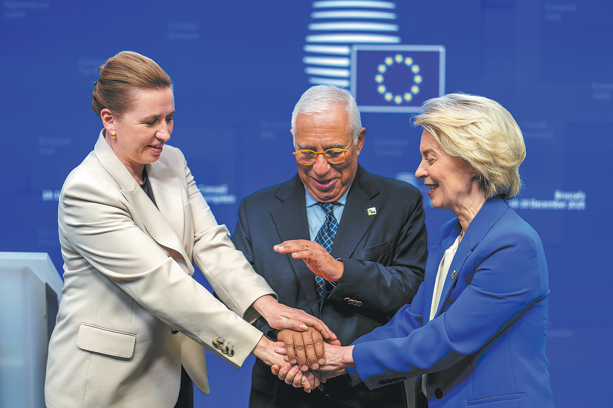
    European Council President Antonio Costa captured the continent’s dismay when he noted that while the strategy still referred to Europe as an ally, “allies do not threaten to interfere in the democratic life or the domestic political choices of these allies.” The assessment echoed throughout European capitals, where leaders grappled with the realization that the post-World War II alliance architecture had entered a fundamentally new phase.

    The cumulative effect of these developments has forced European nations to confront difficult questions about strategic autonomy, economic sovereignty, and the future of Western solidarity in an increasingly fragmented international landscape.
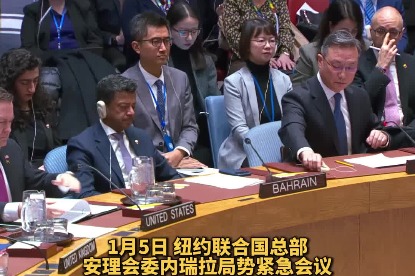
  • Uganda’s statement at a UN Security Council meeting on Venezuela

    Uganda’s statement at a UN Security Council meeting on Venezuela

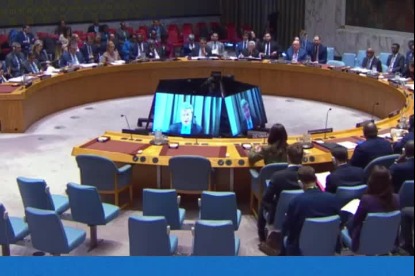
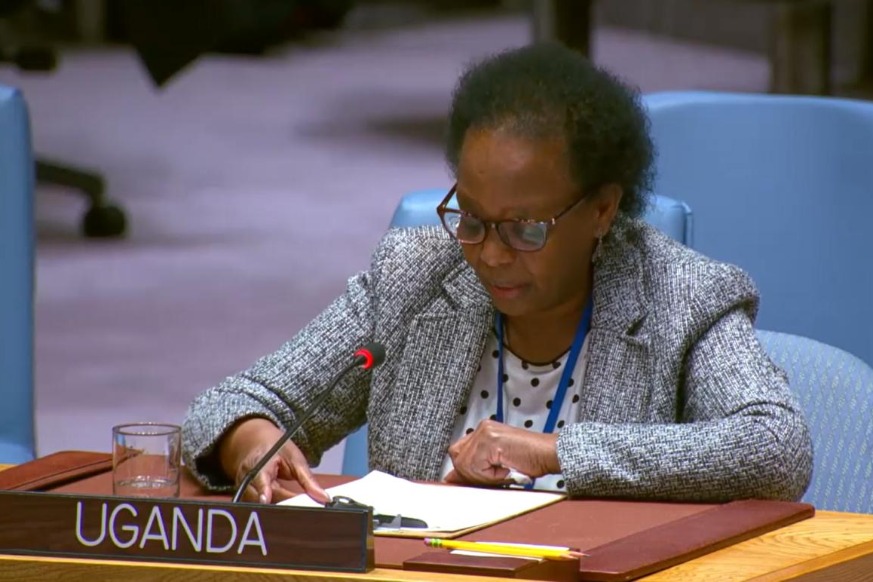
    In a powerful address to the United Nations Security Council, Uganda’s representative delivered a stern condemnation on behalf of the 121-member Non-Aligned Movement against United States military operations in Venezuela. The emergency session, convened on Monday in New York, witnessed a forceful denunciation of what was characterized as unlawful aggression against the South American nation.

    The statement, presented by the Ugandan delegation speaking for the movement’s Coordinating Bureau, explicitly condemned armed attacks initiated by the United States against both civilian and military targets in Caracas and multiple Venezuelan cities beginning January 3, 2026. The representative emphasized that these actions represented a flagrant violation of the United Nations Charter and established international law principles.

    The address framed the military intervention as an act of war that fundamentally undermines regional and global stability while directly threatening the right to life of the Venezuelan population. The movement’s position maintained that military solutions cannot serve as legitimate mechanisms for resolving disputes among members of the international community.

    Expressing full solidarity with the Venezuelan government and its citizens, the Non-Aligned Movement reinforced its foundational commitment to national sovereignty and territorial integrity—core principles that unite its diverse membership. The intervention highlighted growing concerns among developing nations about the erosion of international legal frameworks governing interstate relations and the use of force.

  • China’s UN envoy: US violates UN Charter

    China’s UN envoy: US violates UN Charter

    In a forceful address to the United Nations Security Council, Chinese Ambassador Sun Lei delivered a stern condemnation of United States operations in Venezuela during an emergency session convened on January 5th. The diplomatic confrontation centered on allegations that Washington has committed serious breaches of international law through its interventionist policies in the South American nation.

    Ambassador Sun characterized American activities as ‘wantonly violating Venezuela’s sovereignty’ and constituting a flagrant disregard for the foundational principles of the UN Charter. The Chinese representative articulated a position of firm solidarity with the Venezuelan government’s right to maintain territorial integrity and political independence without external interference.

    The emergency meeting, called to address escalating tensions in the Latin American region, became a platform for China to articulate its vision of international relations based on mutual respect and non-intervention. Ambassador Sun emphasized Beijing’s commitment to collaborative diplomacy, stating China’s readiness to ‘work with regional countries and the international community to maintain peace and stability in Latin America and the Caribbean.’

    This diplomatic exchange occurs against the backdrop of increasing great power competition within multilateral institutions. China’s vocal defense of Venezuela’s sovereignty aligns with its broader foreign policy approach that prioritizes state sovereignty and non-interference in domestic affairs. The statement also reinforces China’s growing diplomatic engagement in Latin America, where it has developed significant economic and political ties over the past decade.

    The emergency session highlighted continuing divisions within the Security Council regarding appropriate responses to political crises, with China positioning itself as a defender of established international legal frameworks against what it perceives as Western overreach.

  • Maduro appears in New York court after US operation in Venezuela

    Maduro appears in New York court after US operation in Venezuela

    Venezuelan President Nicolás Maduro and First Lady Cilia Flores made their initial court appearance at a federal courthouse in New York City on Monday, marking their first public appearance since being forcibly removed from their Caracas residence during a nighttime operation conducted by United States forces.

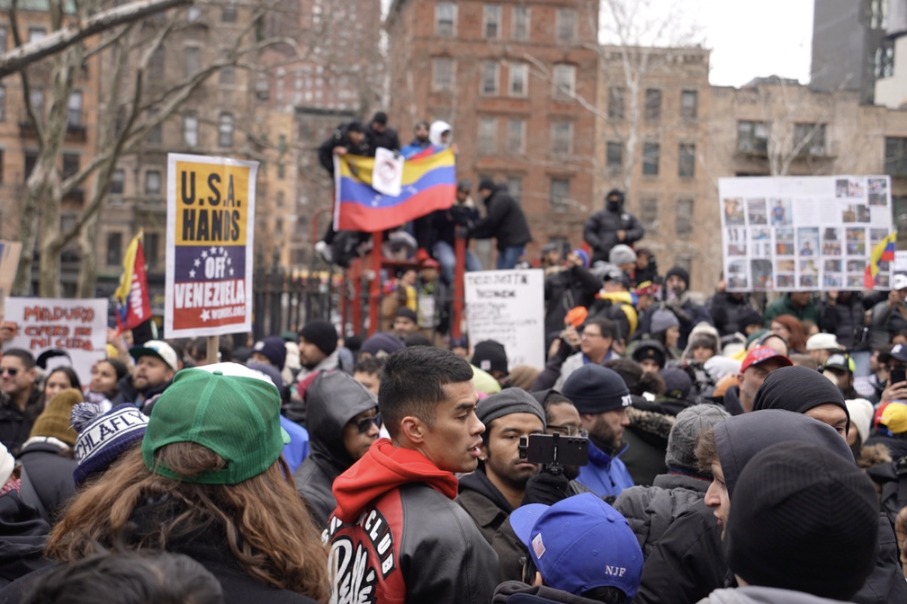
    The hearing proceeded amid significant public demonstrations outside the Manhattan courthouse, where substantial crowds gathered to protest what many characterized as an unlawful international intervention. Protesters carried signs with messages including “USA hands off Venezuela,” “No US war on Venezuela,” “US hands off Venezuela oil,” and demands for Maduro’s immediate release.

    This judicial proceeding follows what US President Donald Trump previously described as a “large-scale strike” operation that resulted in the capture and transportation of the Venezuelan leadership. The couple was subsequently detained at the Metropolitan Detention Center in Brooklyn pending judicial proceedings.

    Among the protesters was Rae Lee, an American citizen who had stationed herself outside the courthouse since 9 am—three hours prior to Maduro’s scheduled arraignment. Lee, who recently visited Venezuela in December, provided firsthand observations contradicting US media narratives about conditions in the South American nation.

    “The resilience and economic development I witnessed in Venezuela were remarkable,” Lee stated. “Despite consistent US media portrayals of oppression and deterioration, we observed significant housing projects and substantial economic growth. The US government’s primary interest clearly lies in Venezuela’s substantial oil reserves and natural resources, seeking to install a puppet regime that would prioritize American interests over Venezuelan sovereignty.”

    Lee further characterized the operation as “an international crime,” emphasizing that Maduro had been democratically elected twice in processes she described as “more transparent and representative than American elections.” The ongoing case has raised significant questions about international law, sovereignty, and the appropriate limits of cross-border military operations.

  • US scholar: United States violating UN Charter

    US scholar: United States violating UN Charter

    In a striking address to the United Nations Security Council, renowned economist Jeffrey Sachs delivered a forceful condemnation of United States foreign policy during an emergency session concerning Venezuela. The Columbia University professor and president of the UN Sustainable Development Solutions Network asserted that Washington stands in serious breach of fundamental international law principles.

    Sachs presented a comprehensive critique of decades-long American foreign policy approaches, characterizing them as systematically employing military force, covert operations, and political manipulation to achieve regime change objectives. These practices, he argued, represent direct violations of the United Nations Charter that governs international conduct among sovereign states.

    During his briefing, the sustainable development expert called for immediate cessation of all illegal military actions and threats against Venezuela, emphasizing that such conduct undermines global governance structures. Sachs’s testimony before the Security Council marks a significant moment of scholarly criticism regarding interventionist policies from within the halls of international diplomacy.

    The emergency meeting provided a platform for examining the broader implications of power projection in international relations, with Sachs’s analysis extending beyond the immediate Venezuela situation to address systemic patterns in great power behavior. His remarks highlighted the tension between unilateral actions and multilateral governance frameworks established in the post-World War II international order.

  • Mexico’s statement at a UN Security Council meeting on Venezuela

    Mexico’s statement at a UN Security Council meeting on Venezuela

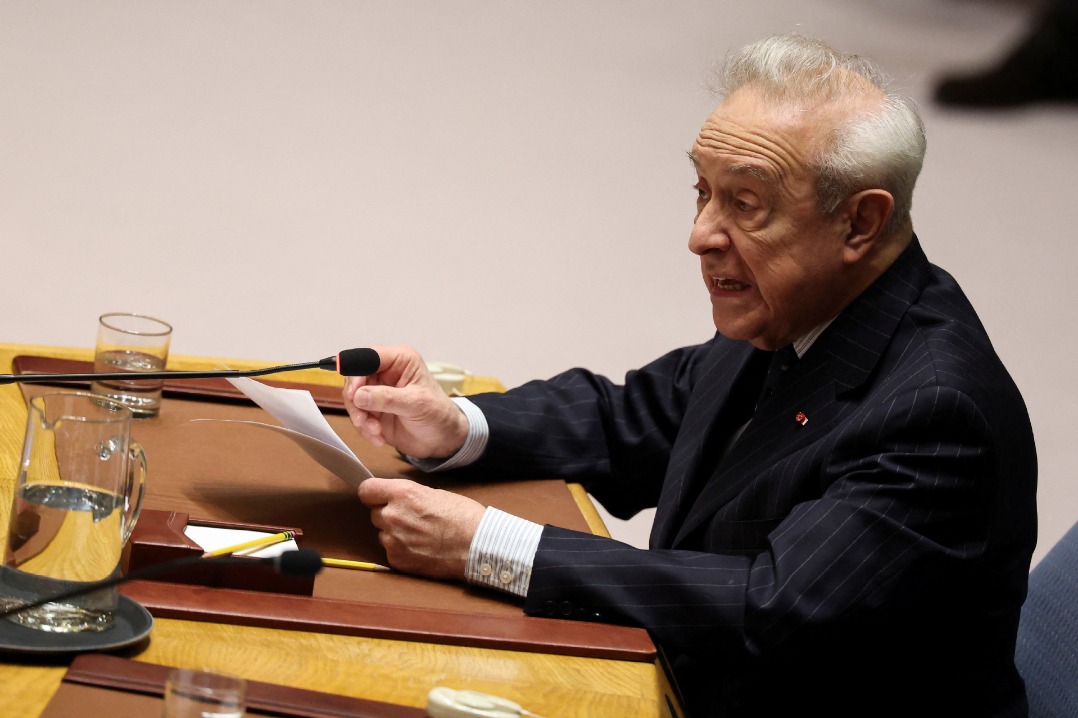
    In a forceful address to the United Nations Security Council, Mexico’s Ambassador to the UN, Héctor Enrique Vasconcelos y Cruz, delivered a stern condemnation of recent military operations against Venezuela. The emergency session, convened on January 5, 2026, at UN headquarters in New York, addressed the escalating situation following military strikes and the reported capture of Venezuelan President Nicolás Maduro and First Lady Cilia Flores.

    Ambassador Vasconcelos articulated Mexico’s official position, characterizing the January 3rd military intervention as an act of aggression that blatantly violates Article 2 of the UN Charter. The Mexican diplomat asserted that such operations represent not merely isolated incidents but a fundamental assault on international law and the principles of multilateral diplomacy.

    The ambassador issued a grave warning regarding rhetoric suggesting potential expansion of military operations to other nations within the Latin American region, emphasizing that such discourse poses a direct threat to regional stability and security frameworks. He further challenged the concept of externally imposed regime change, describing extraterritorial measures as historically counterproductive actions that typically exacerbate conflicts and weaken national social and political structures.

    Vasconcelos concluded with a poignant observation that the current violation of international norms dangerously jeopardizes the political equilibrium of the region while simultaneously disregarding the hard-won independent history of Latin American and Caribbean nations. The address positioned Mexico as a vocal defender of sovereignty principles within international governance structures.

  • Brazil statement at a UN Security Council meeting on Venezuela

    Brazil statement at a UN Security Council meeting on Venezuela

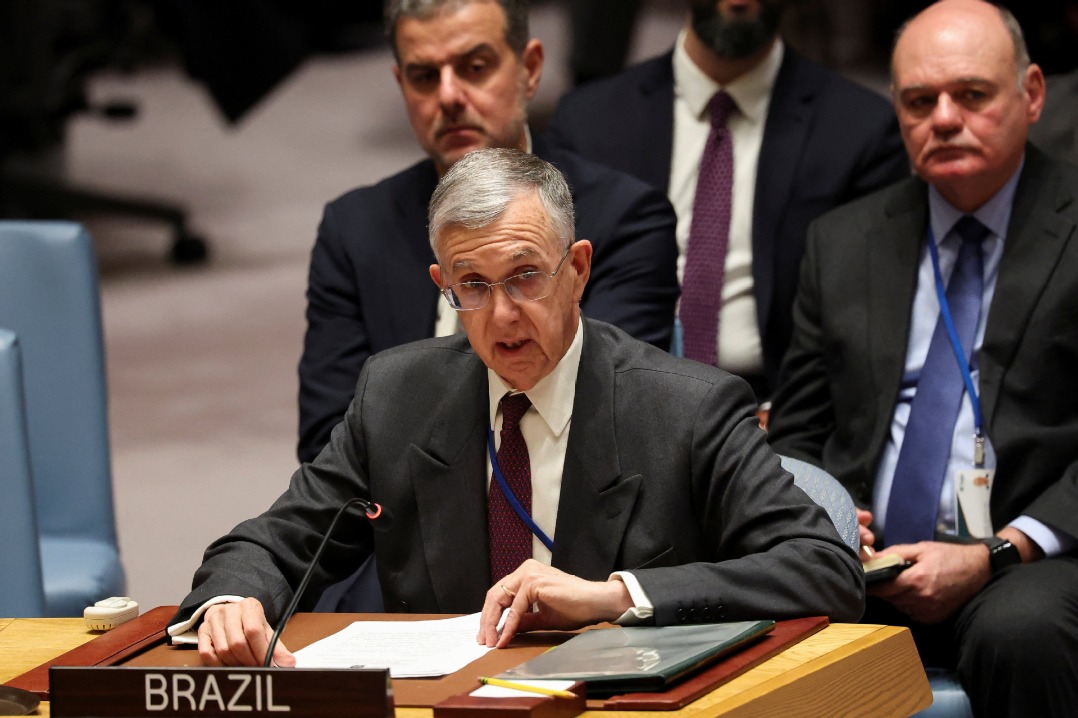
    In a forceful address to the United Nations Security Council, Brazil’s Ambassador to the UN Sergio Franca Danese delivered a scathing condemnation of recent military actions against Venezuela. The emergency session, convened on January 5, 2026, addressed the unprecedented capture of Venezuelan President Nicolas Maduro and his wife Cilia Flores following military strikes on Venezuelan territory.

    Ambassador Danese characterized the intervention as a ‘flagrant violation of the United Nations Charter and international law,’ emphasizing that the bombings and presidential capture represent an unacceptable breach of Venezuelan sovereignty. The Brazilian diplomat warned that these actions establish an ‘extremely dangerous precedent for the entire international community.’

    Highlighting the geographical significance, Danese noted this marks the first instance of external armed aggression in South America involving troop deployments and aerial bombings in a country sharing a 2,000-kilometer border with Brazil. The ambassador stressed that governing norms between states are ‘mandatory and universal,’ not subject to exceptions based on ideological, geopolitical, or economic interests.

    Brazil’s position maintains that neither natural resource exploitation nor economic considerations justify the use of force or illegal government changes. Danese called upon the Security Council to ‘assume its responsibility and react with determination, clarity, and obedience to international law’ to prevent the ‘law of force from prevailing over the force of law.’

    The ambassador concluded by affirming Brazil’s belief that Venezuela’s future should be determined exclusively by the Venezuelan people through dialogue, without external interference and within established international legal frameworks.

  • Chile’s statement at a UN Security Council meeting on Venezuela

    Chile’s statement at a UN Security Council meeting on Venezuela

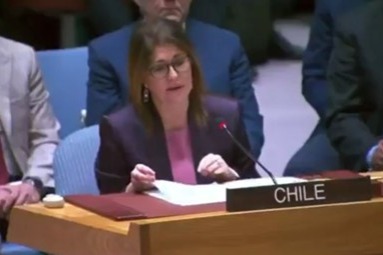
    In a forceful diplomatic statement at the United Nations Security Council, Chile’s representative Paula Narvaez Ojeda delivered a stern condemnation of United States military operations within Venezuelan territory. The emergency session, convened to address escalating tensions in the region, became a platform for Chile’s vehement opposition to unilateral armed intervention.

    Speaking before the international body on Monday, Narvaez articulated Chile’s position that Latin America and the Caribbean must maintain their status as a ‘zone of peace’—a concept she emphasized benefits not only regional stability but global security as a whole. The Chilean diplomat warned that military confrontation would precipitate devastating humanitarian consequences, exacerbating civilian suffering while intensifying existing patterns of displacement, insecurity, and vulnerability throughout Venezuela and neighboring nations.

    Narvaez reiterated Chile’s firm conviction that international disputes must be resolved exclusively through peaceful mechanisms that respect established legal frameworks. She emphasized the fundamental principles of state sovereignty and the prohibition against using or threatening force—cornerstones of international law that she argued were being undermined by recent military actions.

    Echoing concerns previously voiced by the leaders of Brazil, Colombia, Mexico, Uruguay, and Spain, the Chilean representative expressed apprehension about any attempts to control governmental administration or establish foreign ownership over strategic national assets. Such actions, she contended, would violate international legal standards while jeopardizing the political, economic, and social stability of the entire Latin American region.

  • Chinese firms lead CES Innovation Award honorees amid record submissions

    Chinese firms lead CES Innovation Award honorees amid record submissions

    Chinese technology firms have emerged as dominant forces at the prestigious CES 2026 Innovation Awards, capturing multiple top honors amid record-breaking global participation. The world’s largest technology showcase witnessed unprecedented competition with over 3,600 submissions across 36 product categories, highlighting the rapidly evolving landscape of consumer technology.

    Shenzhen-based companies particularly distinguished themselves, with Yingling Co securing the Best of Innovation award in the drones category for its groundbreaking 8K 360 drone. Netvue Technologies earned the same honor in pet and animal technology for its innovative smart birdbath, while Zettlab Innovation Technology claimed victory in computer peripherals for its AI-powered storage solution.

    The awards program demonstrated remarkable growth in specific sectors, with robotics submissions increasing by 32% compared to 2025, while artificial intelligence and drone categories grew by 29% and 32% respectively. This surge reflects the accelerating pace of technological innovation across these transformative fields.

    Chris Pereira, CES Innovation Awards judge and CEO of iMpact, noted the significant evolution in China’s technological capabilities. “What distinguishes many China-based entries today is less ‘low-cost manufacturing’ and more end-to-end execution: tight integration of hardware and software, mature industrial design, and faster iteration cycles that transform emerging components into polished consumer-ready products,” Pereira observed.

    China’s strong showing continues an established trend, with the country having been the largest foreign participant at CES 2025 with over 1,300 companies. This year’s honoree list includes more than 100 Chinese entries among the 247 total recognized innovations, representing substantial representation across multiple categories.

    Notable recognitions included EcoFlow’s DELTA Pro Ultra X Whole Home Power Solution in sustainability and energy transition, and Anker Innovations’ Prime Charger in computer hardware. Pereira highlighted these as exemplary cases where Chinese brands “combine engineering, manufacturability and user-centric design into globally competitive products.”

    According to industry analysis, Chinese companies excelled in three primary areas: practical robotics and smart home automation with improved perception and navigation systems; advanced energy and power solutions featuring sophisticated battery ecosystems; and superior user experience with industrial design tailored for global markets.

    The 2026 awards also marked a conceptual shift in artificial intelligence implementation, with AI transitioning from a standalone feature to becoming foundational product infrastructure. Additionally, new award categories in EdTech, Enterprise Tech, Supply and Logistics, and Travel and Tourism signaled CES’s expanding cross-industry influence.

    As competition intensifies, Pereira noted that meeting excellence standards requires more than technological claims: “The bar is rising fast, so simply being ‘AI-powered’ isn’t enough. Products need to show real utility, thoughtful design, and credible execution.”

  • Fight against fascism honored

    Fight against fascism honored

    In a solemn ceremony marking the 80th anniversary of victory in both the Chinese People’s War of Resistance Against Japanese Aggression and the Global Anti-Fascist War (1931-1945), China has bestowed commemorative medals upon individuals who demonstrated extraordinary service during the conflict. Among the distinguished honorees was the late Dr. Ho Feng Shan, a Chinese diplomat whose courageous actions in Nazi-occupied Vienna saved thousands of Jewish lives.

    Stationed in Vienna during critical wartime years, Dr. Ho engaged in vigorous diplomatic efforts to secure Austrian support following Japan’s full-scale invasion of China in July 1937. His advocacy included addressing the Austrian parliament and publishing a German-language work titled ‘China Defends Herself,’ articulating China’s resistance struggle.

    Following the Anschluss—Germany’s annexation of Austria in March 1938—Dr. Ho undertook what would become his most celebrated humanitarian effort. Defying instructions from his superiors, he issued thousands of visas to Jewish refugees, providing them safe passage to Shanghai. Historical records indicate his actions secured refuge for approximately 18,000 Jews, saving them from almost certain persecution and death under Nazi regime.

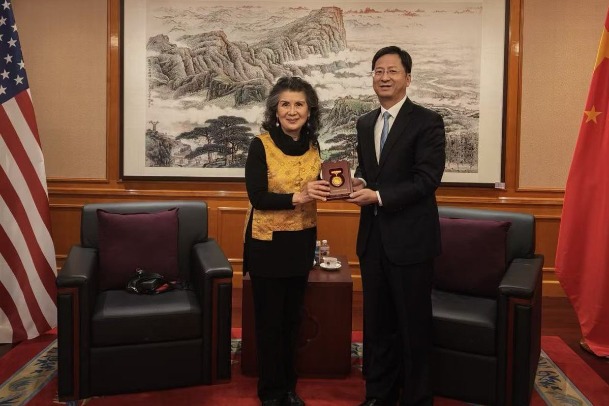
    The commemorative medal was presented on December 31, 2025, by Consul General Zhang Jianmin of China in San Francisco to Ho Manli, who accepted the honor on behalf of her deceased father. The ceremony, held on the final day of the anniversary year, served to recognize those whose contributions advanced humanity’s struggle against fascism during one of history’s darkest periods.