标签: North America

北美洲

  • Venezuelan opposition leader Machado vows to return home ‘as soon as possible’

    Venezuelan opposition leader Machado vows to return home ‘as soon as possible’

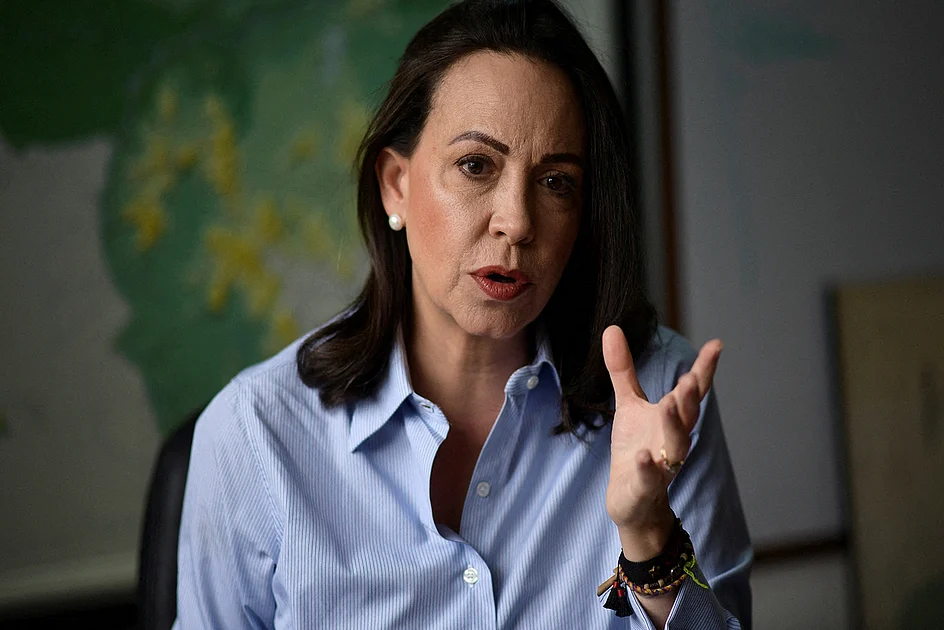
    In a dramatic development following the US military’s removal of President Nicolas Maduro, Venezuelan opposition leader Maria Corina Machado has announced her imminent return to the country. The Nobel Peace Prize winner made her declaration during an exclusive interview with Fox News host Sean Hannity, though her current location remains undisclosed for security reasons.

    Machado delivered a scathing condemnation of interim President Delcy Rodriguez, characterizing her as a principal architect of systemic human rights abuses and criminal activities. ‘She represents the very apparatus responsible for torture, political persecution, widespread corruption, and narcotrafficking that has devastated our nation,’ Machado asserted during the televised segment.

    The political landscape shifted significantly when Rodriguez, previously Maduro’s vice president, assumed interim control and indicated willingness to collaborate with Washington. However, Machado dismissed Rodriguez’s legitimacy, claiming overwhelming popular support for the opposition movement. ‘The Venezuelan people have consistently rejected this regime,’ she stated, projecting confidence in her movement’s electoral prospects. ‘In free and fair elections, we would secure over 90 percent of the vote without question.’

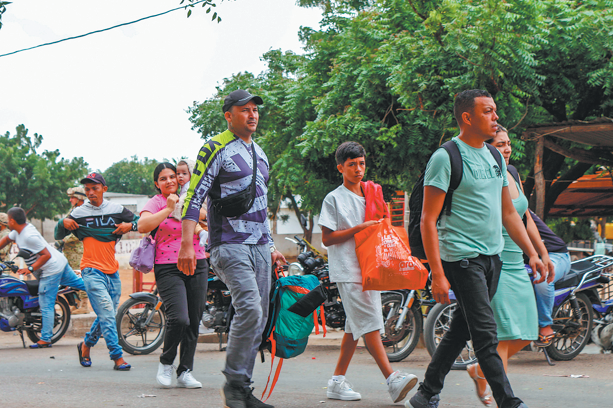
    Beyond political restructuring, Machado outlined an ambitious vision for Venezuela’s economic future, pledging to transform the nation into ‘the energy hub of the Americas.’ She committed to dismantling criminal networks and facilitating the repatriation of millions of Venezuelans displaced by the ongoing crisis. This announcement marks Machado’s first public address since the extraordinary events that removed Maduro from power over the weekend.
  • Ashley Tisdale says she quit her ‘toxic mom group’

    Ashley Tisdale says she quit her ‘toxic mom group’

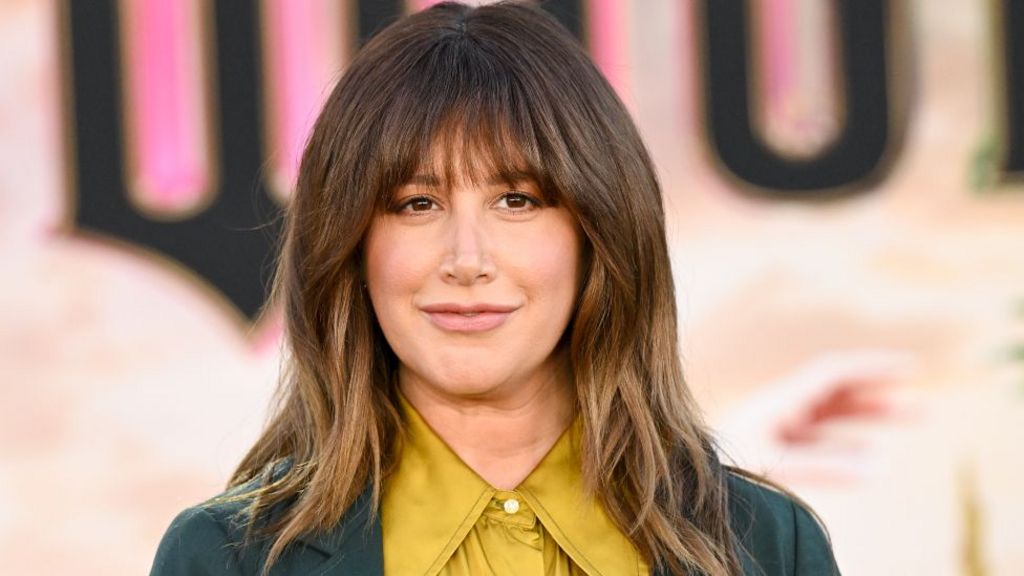
    Former Disney Channel star Ashley Tisdale has revealed her distressing experience with a toxic celebrity mother’s group that left her emotionally devastated during her early motherhood journey. The 40-year-old actress, renowned for her portrayal of Sharpay Evans in the High School Musical franchise, detailed how what began as a supportive network of mothers transformed into an exclusionary clique reminiscent of high school social hierarchies.

    Tisdale, who shares two young daughters with husband Christopher French, initially praised the concept of maternal community support following her first childbirth in 2021. However, the dynamic within her exclusive group—reportedly comprising several high-profile celebrities—gradually deteriorated into patterns of social exclusion and subtle alienation. The singer-actress noticed increasing distance during group gatherings and became aware of organized social events from which she was deliberately omitted.

    In a candid article adapted from her personal blog for the Cut magazine, Tisdale described recognizing familiar exclusionary patterns within the group’s interactions. She recalled previously observing similar behavior directed toward another mother, realizing the group maintained a consistent pattern of ostracizing members. These interactions triggered deeply buried insecurities from her adolescent years, making her question her self-worth and social acceptability.

    The emotional toll became substantial enough that Tisdale made the decisive choice to formally exit the group, explicitly stating her reasons in a message to other members: “This is too high school for me and I don’t want to take part in it anymore.” While her departure message reportedly received mixed reactions, including some attempts at reconciliation, Tisdale maintains that the group’s dynamic had become fundamentally unhealthy and detrimental to her wellbeing.

    Tisdale emphasized that her criticism targets group dynamics rather than individual character judgments, noting that most members weren’t inherently “bad people” but participated in collectively toxic behavior. The overwhelming response to her revelations demonstrated that her experience reflects a widespread phenomenon among mothers seeking community support. Her phone, she noted, “blew up like no other topic” with messages from women sharing parallel experiences of exclusion within supposed support networks.

    The actress specifically discouraged speculation about identities involved, asserting that assumptions would inevitably miss the broader point about systemic group dynamics. Her testimony highlights the paradoxical phenomenon of maternal support groups—intended as empowering communities—sometimes morphing into sources of emotional distress and social anxiety during particularly vulnerable life stages.

  • Trump claims US oil firms could be ‘up and running’ in Venezuela within 18 months

    Trump claims US oil firms could be ‘up and running’ in Venezuela within 18 months

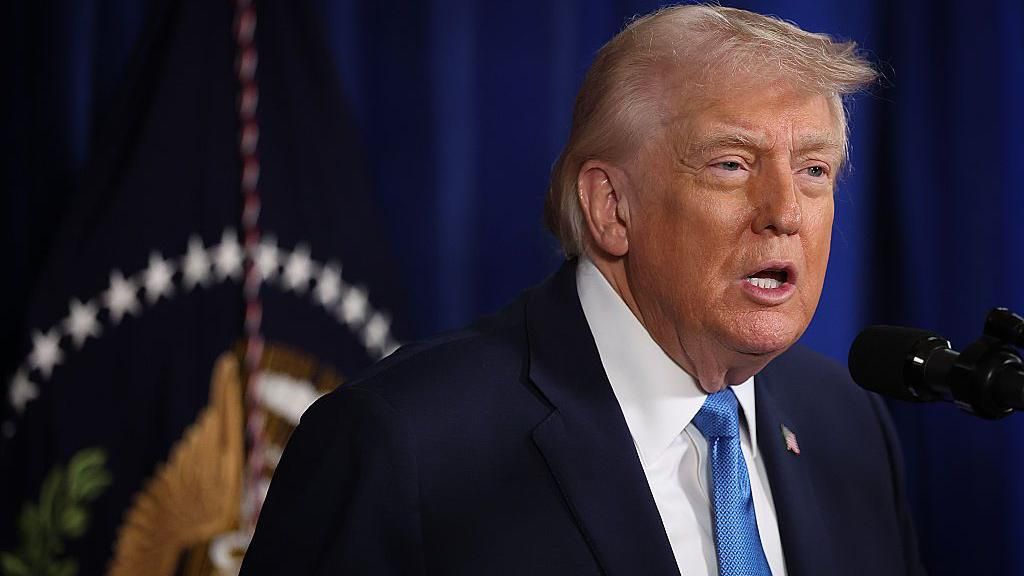
    In a significant development following the military operation that ousted Venezuelan President Nicolás Maduro, former U.S. President Donald Trump has articulated an ambitious vision for American petroleum companies to rapidly revitalize Venezuela’s oil industry within an 18-month timeframe. Trump revealed in an exclusive NBC News interview that substantial investments would be required from energy corporations, suggesting they would eventually be reimbursed either through direct government compensation or future revenue streams.

    The announcement comes amid reported planning meetings between major U.S. petroleum representatives and Trump administration officials this week. Trump emphasized the strategic importance of Venezuelan oil production for American interests, stating that “Having a Venezuela that’s an oil producer is good for the United States because it keeps the price of oil down.”

    However, energy analysts express skepticism regarding Trump’s accelerated timeline, previously telling BBC that restoring Venezuela’s oil infrastructure could require tens of billions of dollars and potentially a decade-long effort. Venezuela possesses the world’s largest proven oil reserves at approximately 303 million barrels, but current production represents only a fraction of this capacity due to decades of decline and underinvestment.

    The complexity of Venezuelan oil operations presents additional challenges. The country’s heavy crude requires specialized refining capabilities, with Chevron standing as the sole U.S. company currently operating in Venezuela. When contacted for comment, Chevron spokesman Bill Turenne indicated the company remains “focused on the safety and wellbeing of our employees, as well as the integrity of our assets,” while operating in compliance with all relevant regulations.

    The political context remains charged, with Trump and Vice President JD Vance asserting that Venezuela had previously “stolen American oil” through nationalization efforts. Historical records show Venezuela nationalized its oil industry in 1976, with increased state control over foreign-owned assets occurring in 2007 under President Hugo Chavez. A World Bank tribunal subsequently ordered Venezuela to pay $8.7 billion in compensation to ConocoPhillips for the 2007 actions, a debt that remains outstanding.

    BBC Verify analysis suggests the characterization of oil “theft” oversimplifies the complex historical relationship between Venezuela and international oil companies, noting that the oil itself was never actually owned by anyone except Venezuela, with companies operating under licensing agreements.

  • Trump aide says no-one would fight US over Greenland

    Trump aide says no-one would fight US over Greenland

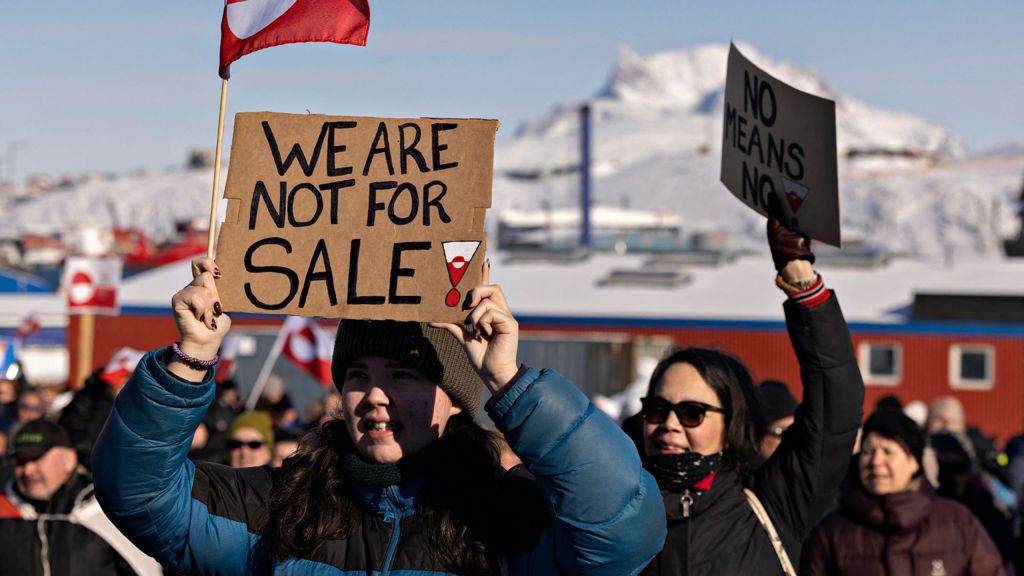
    The Trump administration has ignited a significant diplomatic confrontation with European allies by formally asserting the United States’ sovereign claim over Greenland. Senior presidential advisor Stephen Miller declared in a CNN interview that “the formal position of the US government is that Greenland should be part of the United States,” explicitly refusing to rule out potential military annexation of the semi-autonomous Danish territory.

    Miller’s provocative statements questioned Denmark’s historical authority over Greenland, asking “By what right does Denmark assert control over Greenland? What is their basis of claiming Greenland as a colony of Denmark?” He further asserted that “nobody’s going to fight the US over the future of Greenland,” despite the territory’s status within NATO and its constitutional relationship with Denmark.

    This territorial ambition was personally endorsed by President Trump, who stated “We need Greenland from the standpoint of national security,” citing its strategic Arctic positioning and valuable mineral resources as critical American interests. These declarations prompted immediate condemnation from Danish Prime Minister Mette Frederiksen, who warned that any American attack on Greenland would effectively terminate the NATO alliance.

    The administration’s position has created unprecedented division within the Western military alliance, with six European powers—the United Kingdom, France, Germany, Italy, Poland, and Spain—issuing a joint statement with Denmark affirming that “Greenland belongs to its people, and only Denmark and Greenland can decide on matters concerning their relations.” The European leaders emphasized that Arctic security must be achieved collectively through NATO while “upholding the principles of the UN Charter, including sovereignty, territorial integrity and the inviolability of borders.”

    This geopolitical controversy emerges amid heightened concerns about American interventionism following recent military operations in Venezuela, where US forces captured President Nicolás Maduro. Trump’s announcement that the US would temporarily “run” Venezuela and his revival of 19th-century hemispheric dominance doctrines have amplified anxieties about additional territorial ambitions.

    The administration had previously signaled its Greenland interests by appointing a special envoy to the territory, a move that provoked diplomatic protests from Denmark. Despite Greenland’s extensive self-governance since 1979 (with foreign policy and defense remaining under Danish control), and overwhelming opposition among its 57,000 residents to American annexation, the Trump administration continues to pursue its territorial claims based on strategic and resource considerations.

  • UN member states condemn US action in Venezuela

    UN member states condemn US action in Venezuela

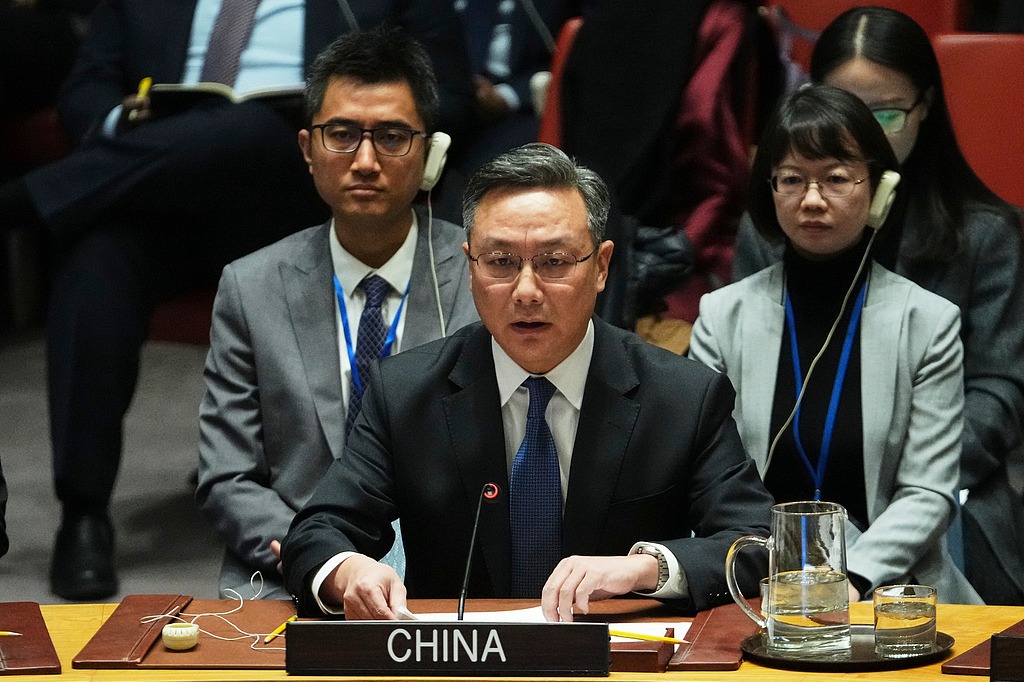
    The United Nations Security Council convened its inaugural session of 2026 amid unprecedented diplomatic turmoil, as a overwhelming majority of member states delivered scathing condemnations of United States military operations in Venezuela. The emergency meeting, called in response to what numerous diplomats labeled a flagrant violation of international law, revealed deep fractures within the international community regarding unilateral interventionism.

    China’s Deputy Permanent Representative to the UN, Sun Lei, articulated what he characterized as the international community’s “overwhelming voice” demanding Washington cease actions infringing upon Venezuelan sovereignty. In a forceful address, Sun condemned the US strike that resulted in the capture and extradition of President Nicolás Maduro as “unilateral, illegal and bullying acts” that trample upon fundamental principles of the UN Charter. The Chinese diplomat warned that such actions pose grave threats to regional and global security while drawing historical parallels to previous US military interventions that caused “persistent conflict, instability and immense suffering.”

    The session gained additional scholarly weight when Jeffrey Sachs, President of the UN Sustainable Development Solutions Network, presented a legal analysis concluding that US actions violated Article 2, Section 4 of the UN Charter. Sachs characterized the operation as part of a longstanding pattern of “covert regime change” operations and issued a stark warning about the survival of international law itself.

    Russian Ambassador Vassily Nebenzia joined the condemnation, denouncing the operation as a “crime cynically perpetrated” that heralds a return to lawlessness. European and Latin American voices echoed these concerns, with Spain’s representative noting that “force never brings more democracy” and Mexico warning that regime change by external actors historically exacerbates conflicts and weakens national institutions.

    While the US and Argentina defended the operation as a surgical anti-narco-terrorism measure, even traditionally aligned nations expressed reservations. Denmark emphasized that Venezuelans retain the right to self-determination “without coercion, pressure or manipulation by external actors,” while Brazil rejected the intervention as crossing “an unacceptable line” that violates mandatory international norms.

    The extraordinary session concluded with broad consensus that the unilateral military action constitutes a fundamental breach of the United Nations Charter, with France’s representative noting that when a permanent Security Council member violates the Charter, it “chips away at the very foundation of the international order.”

  • Maduro appears in US court public condemns illegal US actions

    Maduro appears in US court public condemns illegal US actions

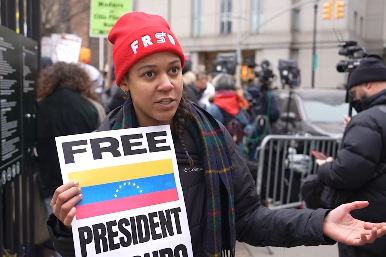
    Venezuelan President Nicolás Maduro made a historic appearance in a New York courtroom on January 5th, marking his first judicial proceeding since being taken into United States custody. The controversial detention of a sitting head of state sparked immediate demonstrations outside the courthouse, where protestors gathered to condemn what they characterized as unlawful American interference in Venezuela’s sovereign affairs.

    The courtroom appearance represents a significant escalation in the longstanding tensions between Washington and Caracas, raising complex questions about jurisdictional authority and international diplomatic norms. Legal experts anticipate vigorous debates regarding the legality of detaining a foreign leader under U.S. jurisdiction, with potential implications for international relations precedent.

    Meanwhile, the protest movement outside the courthouse gained momentum throughout the day, with participants holding signs and chanting slogans against perceived American imperialism and violation of national sovereignty principles. The demonstration highlighted growing global concern about powerful nations exerting influence over smaller states through judicial mechanisms.

    This development occurs against the backdrop of deteriorating bilateral relations between the United States and Venezuela, which have experienced increasing strain over recent years due to conflicting political ideologies, economic sanctions, and allegations of human rights violations. The judicial proceedings against President Maduro are expected to further complicate diplomatic efforts between the two nations and potentially influence how other countries interact with both governments moving forward.

    The case has attracted attention from international law specialists worldwide, with many monitoring how this unprecedented situation might establish new precedents regarding the treatment of sitting foreign leaders under another country’s legal system.

  • Threat looms over Greenland, Colombia and Cuba

    Threat looms over Greenland, Colombia and Cuba

    In the wake of a dramatic U.S. military operation that resulted in the capture of Venezuelan President Nicolas Maduro, President Donald Trump has issued a series of provocative statements targeting Greenland, Colombia, and Cuba, sending shockwaves through international diplomatic circles. The comments, delivered both aboard Air Force One and in media interviews, have raised fundamental questions about U.S. foreign policy direction in the Western Hemisphere.

    Trump explicitly articulated his administration’s strategic interest in Greenland, stating from a national security perspective that ‘We need Greenland’ while dismissing Denmark’s jurisdictional authority over the mineral-rich territory. This declaration prompted an immediate and forceful response from Danish Prime Minister Mette Frederiksen, who asserted that Trump has ‘no right to annex’ the territory and reminded the U.S. president of existing NATO security agreements that already provide American access to the island.

    The rhetorical offensive extended southward as Trump targeted Colombian President Gustavo Petro with unsubstantiated allegations, claiming without evidence that Colombia is ‘run by a sick man who likes making cocaine and selling it to the United States.’ When questioned about potential military action against Colombia, Trump responded approvingly that ‘It sounds good to me,’ despite Colombia’s status as a longstanding regional partner.

    Simultaneously, Secretary of State Marco Rubio turned attention toward Cuba, alleging that Cuban officials were present with Maduro prior to his capture and claiming that ‘It was Cubans that guarded Maduro.’ Trump further asserted that ‘a lot’ of Cuban guards were killed during the operation, a claim that Cuban authorities substantiated by announcing the death of 32 officers in the military action.

    The escalating rhetoric has triggered coordinated international responses, with Denmark joining European Union statements emphasizing the need to respect Venezuela’s self-determination while the Cuban government organized rallies condemning U.S. actions and warning that ‘the threat hangs over all of us.’

  • Acting president seeks respectful ties with US

    Acting president seeks respectful ties with US

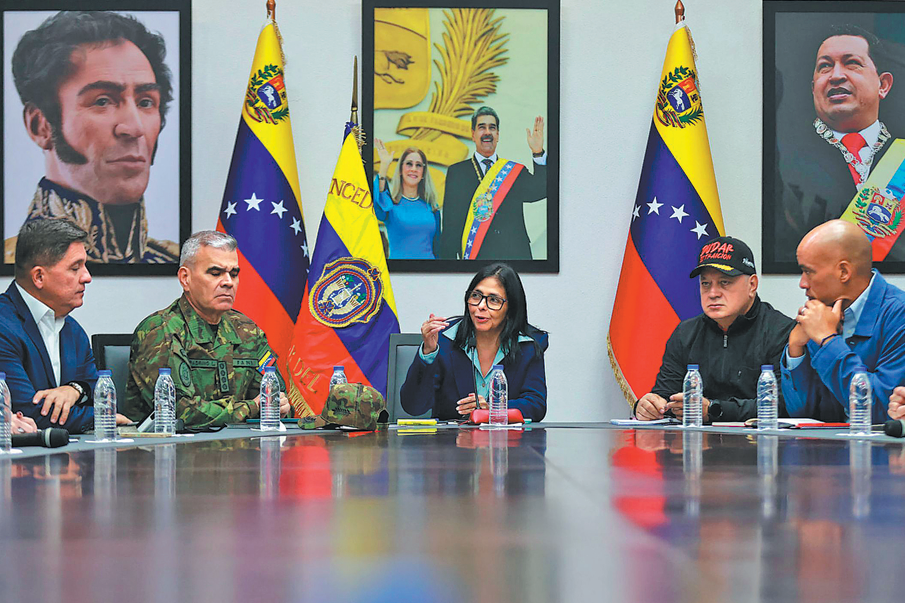
    In the aftermath of a dramatic US military operation that resulted in the capture of President Nicolas Maduro, Venezuela’s political leadership is navigating a precarious new reality. Acting President Delcy Rodriguez, addressing the nation from Caracas, has extended an unexpected olive branch to Washington, proposing an agenda of ‘shared development’ and respectful bilateral relations.

    Rodriguez, who concurrently serves as Venezuela’s oil minister, articulated her government’s position through social media channels, characterizing Saturday’s raid as an ‘illegal grab’ of national resources while simultaneously inviting cooperation ‘within the framework of international law.’ Her statement emphasized that ‘our peoples and our region deserve peace, and dialogue, not war,’ striking a conciliatory tone despite the extraordinary circumstances.

    This diplomatic overture stands in stark contrast to demands from US President Donald Trump, who explicitly called for ‘total access’ to Venezuela’s substantial oil reserves. Aboard Air Force One, Trump asserted that such access was necessary to ‘rebuild their country’ and made the controversial declaration that the United States was effectively ‘in charge’ of Venezuela. The President further issued a stark warning to Rodriguez, suggesting she would face ‘a situation probably worse than Maduro’ if she failed to cooperate.

    The administration’s position appeared somewhat moderated by Secretary of State Marco Rubio, who clarified that the US would not assume direct governance of Venezuela. Instead, Rubio emphasized the continuation of oil quarantine measures on sanctioned tankers, using this economic leverage to press for policy changes including reforms to the oil industry and cessation of alleged drug trafficking activities.

    The political drama extended to New York, where the captured Maduro faced federal court proceedings on charges of supporting major drug trafficking organizations, allegations he has consistently denied. Meanwhile, Venezuela’s government maintained operational continuity over the weekend, with ministers remaining at their posts despite the capital’s unusual quiet and widespread business closures.

    The international dimension expanded as Switzerland announced the freezing of any assets held by Maduro and his associates, though notably exempting current government members. This development occurs alongside Venezuela’s incoming National Assembly preparation to convene in Caracas, where the ruling party is expected to maintain control of the legislative body.

  • AI-driven innovation to be focus of global expo

    AI-driven innovation to be focus of global expo

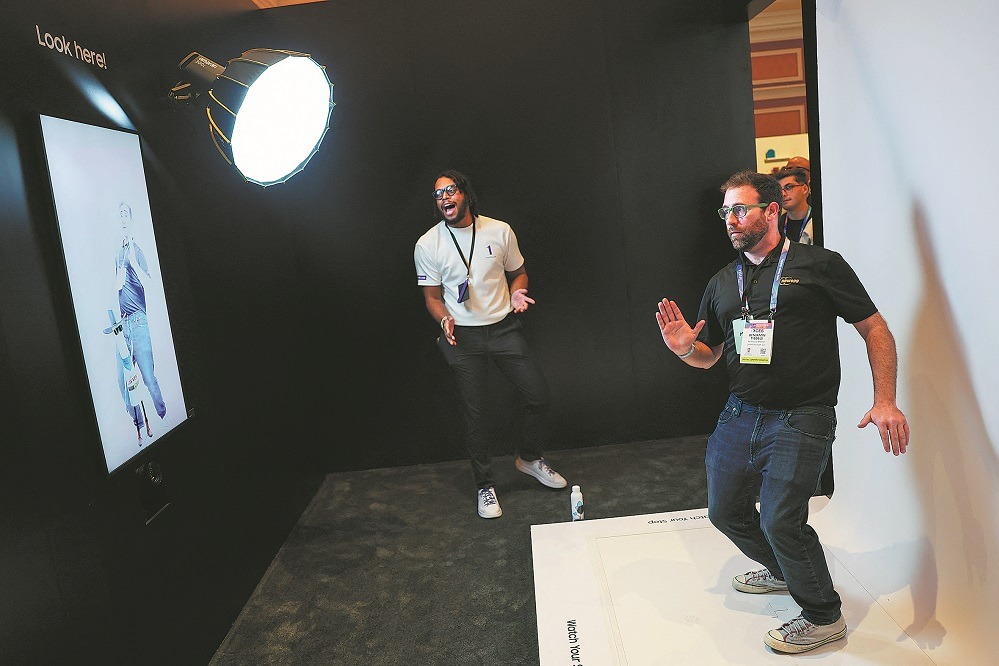
    The Consumer Electronics Show 2026 has commenced in Las Vegas with an ambitious vision to propel technological innovation that enhances human life and stimulates economic advancement. Under the leadership of Gary Shapiro, CEO of the Consumer Technology Association, this year’s exposition places artificial intelligence at the forefront of every sector, ranging from intelligent manufacturing to personalized healthcare solutions.

    The global technology gathering brings together innovators from more than 155 countries and territories across 2.6 million square feet of exhibition space. Major Chinese technology firms maintain their significant presence, with industry pioneers including Geely, Hisense, BOE, InMotion, Lenovo, TCL and YuShu Technology (Unitree) showcasing their cutting-edge developments.

    This four-day technological extravaganza highlights five core themes: artificial intelligence, advanced manufacturing, digital health, mobility solutions and robotics. More than 4,000 exhibitors and 142,000 attendees are converging at the Las Vegas Convention Center and adjacent venues to witness the transformation of production methodologies through AI integration.

    A groundbreaking feature of CES 2026 is its dedicated focus on manufacturing technologies, introducing a specialized conference track examining the essential components for AI-ready production facilities. This emphasis reflects the growing significance of manufacturing within global competitive landscapes and rapid technological evolution, where innovations in automation, robotics, advanced materials and digital supply chains are fundamentally reshaping production paradigms.

    The manufacturing conference will assemble policymakers, technology developers, manufacturers, startups and industry leaders to strategize on building resilient and competitive production capabilities across diverse sectors. Lenovo’s Tech World event at the Sphere venue promises remarkable presentations and announcements, further cementing CES’s role as a bridge between conceptual ideas and market implementation.

    The improved US-China trade relationship has created a more conducive environment for technological collaboration at this year’s exhibition. Shapiro welcomed recent bilateral developments, particularly the US Trade Representative’s decision to maintain zero tariffs on Chinese semiconductors through mid-2027. These developments signal mutual recognition of the importance and value of US-China trade relations, potentially paving the way for a stable, forward-looking trade framework that nurtures a vibrant innovation ecosystem.

  • Trust on trial: A year of ‘rebalancing’ US-EU ties

    Trust on trial: A year of ‘rebalancing’ US-EU ties

    The transatlantic partnership underwent a profound transformation throughout 2025 as Donald Trump’s return to the White House accelerated a dramatic shift toward transactional diplomacy, testing the resilience of the seven-decade-old Western alliance. European leaders who believed themselves prepared for Trump’s unconventional approach found themselves confronting unprecedented challenges to the very foundation of transatlantic relations.

    The administration’s “America First” doctrine manifested most visibly through aggressive trade policies that left European economies reeling. In a sweeping protectionist move, the Trump administration imposed blanket tariffs of 20% on all EU member states while levying even higher rates against other European nations. This economic offensive culminated in what European officials described as a lopsided trade agreement forced upon the EU after months of tense negotiations.

    Beyond economic confrontation, the relationship deterioration reached strategic dimensions with the December release of the US National Security Strategy document. The 33-page paper employed unusually harsh language toward traditional allies, criticizing EU regulatory frameworks, migration policies, and even accusing European governments of suppressing political opposition. Most strikingly, the document outlined a policy of cultivating resistance to Europe’s current trajectory within European nations themselves.

    The strategy further demanded a fundamental restructuring of defense responsibilities, insisting European states assume primary responsibility for their own security, dramatically increase defense spending, and abandon expectations of NATO expansion. This represented a radical departure from seven decades of US foreign policy consensus.

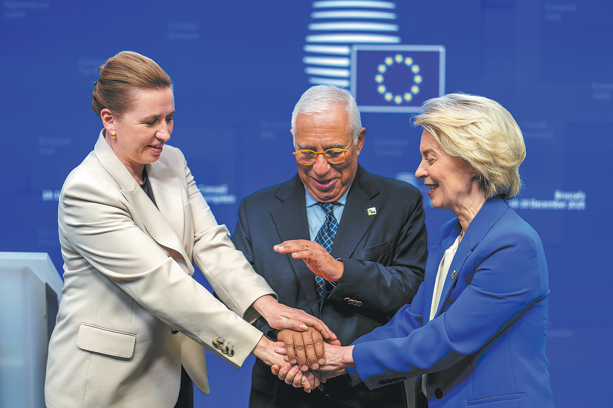
    European Council President Antonio Costa captured the continent’s dismay when he noted that while the strategy still referred to Europe as an ally, “allies do not threaten to interfere in the democratic life or the domestic political choices of these allies.” The assessment echoed throughout European capitals, where leaders grappled with the realization that the post-World War II alliance architecture had entered a fundamentally new phase.

    The cumulative effect of these developments has forced European nations to confront difficult questions about strategic autonomy, economic sovereignty, and the future of Western solidarity in an increasingly fragmented international landscape.