标签: Europe

欧洲

  • Big Macs v Supermac’s: Irish burger chain loses trademark appeal against McDonald’s

    Big Macs v Supermac’s: Irish burger chain loses trademark appeal against McDonald’s

    A years-long intellectual property battle between Irish fast-food chain Supermac’s and global fast-food giant McDonald’s has reached a new ruling, with European regulators siding with McDonald’s to block the Irish firm’s bid for an EU-wide trademark. The dispute, which has stretched on for nearly a decade, centers on overlapping branding language that both firms claim rights to, particularly the ‘Mac’ suffix and the iconic Big Mac designation.

    Founded by Pat McDonagh in Galway, Ireland in 1978, Supermac’s first launched its application to register its brand name as a formal trademark across the entire European Union back in May 2016. McDonald’s immediately filed an opposition to the request, arguing that it had held a registered Big Mac trademark for meat sandwiches across the EU since December 1998, giving it senior intellectual property rights to the contested branding language.

    After an initial ruling last year went against Supermac’s, finding that granting the EU trademark would carry a high risk of consumer confusion, the Irish chain appealed the decision. During the June 2026 appeal hearing, Supermac’s legal team pushed back against McDonald’s claims, noting that the two brands had operated peacefully alongside one another in Ireland for nearly 40 years with no documented cases of consumer confusion. The chain also argued that there was no reasonable basis for consumers to mix up Supermac’s as a restaurant chain with McDonald’s Big Mac burger product.

    Supermac’s legal team emphasized that an adverse ruling would require accepting that consumers would travel to a Supermac’s location expecting to buy a Big Mac, an outcome that is fundamentally incompatible with McDonald’s own argument that the Big Mac is universally recognized as its signature product.

    McDonald’s rejected the Irish chain’s coexistence argument, countering that the only question for regulators was whether a trademark conflict existed across the entire EU, not just within Ireland. The global giant told the European Union Intellectual Property Office (EUIPO) that consumers cannot always clearly distinguish between Big Mac as a food product designation and Supermac’s as a restaurant brand name, noting that the line between product trademarks and restaurant branding is often blurred in the mind of the general public.

    In its final ruling on the appeal, EUIPO’s Board of Appeal upheld the earlier decision to reject Supermac’s trademark application. The regulator found that Supermac’s branding and signage carried too much visual and semantic similarity to McDonald’s existing Big Mac trademark, creating a meaningful likelihood of confusion among consumers in English- and German-speaking EU member states.

    EUIPO noted that the Big Mac trademark enjoys exceptionally high public awareness across the EU, built through decades of intensive use and widespread market recognition, which gives it an enhanced level of distinctiveness. The regulator explained that the greater a trademark’s distinctiveness, the higher the risk of consumer confusion from similar overlapping branding. It added that the public could reasonably perceive Supermac’s name as a sub-brand or variant line of meat sandwiches connected to McDonald’s existing Big Mac trademark, so the risk of confusion cannot be fully ruled out.

    The ruling also clarified that because the Big Mac trademark holds protection across the entire European Union, evidence of peaceful coexistence in a single member state (Ireland) is not sufficient to dismiss the risk of confusion across the broader EU market. Notably, the latest ruling does not disrupt Supermac’s existing retail operations within Ireland, where it has operated for decades.

    This is not the first ruling in the long-running legal battle between the two chains. In 2024, the European Court of Justice sided with Supermac’s in a separate challenge, ruling that McDonald’s did not hold exclusive rights to the Big Mac label for chicken burger products sold across the EU, a decision that stripped the US giant of some of its trademark protections for the iconic brand name.
  • Serbia races to contain wildfires as Europe’s blistering heat wave grips the Balkans

    Serbia races to contain wildfires as Europe’s blistering heat wave grips the Balkans

    A relentless, record-breaking heat wave continued to wreak havoc across Europe this week, fueling out-of-control wildfires in the Balkans, drying up key river systems, and forcing emergency energy cuts across multiple Central and Eastern European nations.

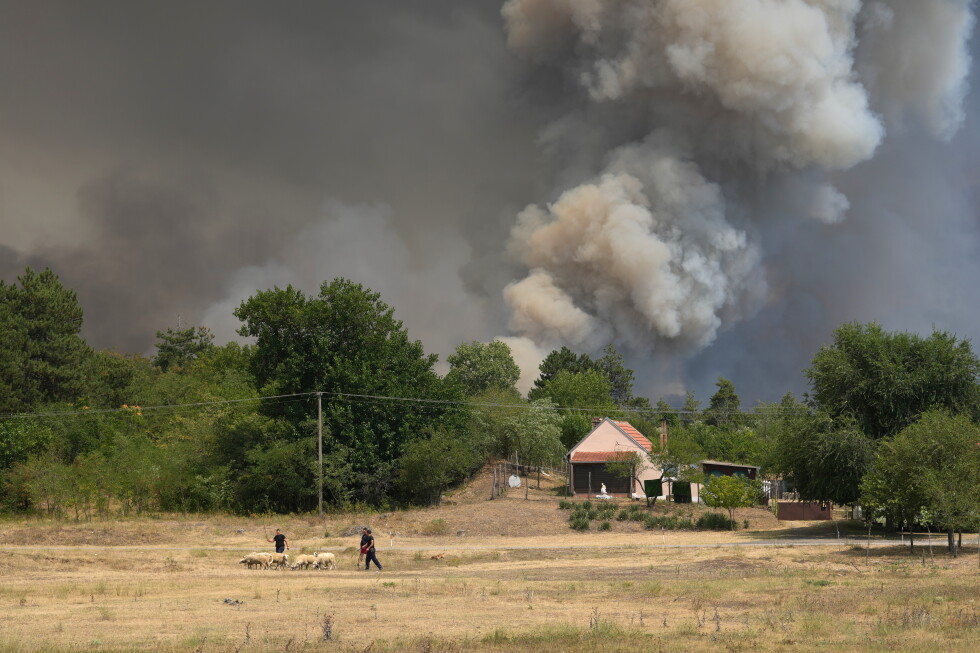
    In northeast Serbia, thick plumes of acrid gray smoke rose over a protected pine woodland on Friday as emergency responders raced to contain a large wildfire burning near Deliblatska Pescara, a major nature reserve located 40 miles outside the capital city of Belgrade. Firefighters deployed aerial water drops from helicopters to slow the blaze’s advance, which had crept close to the small settlements of Cardak and Sumarak. As a precautionary measure, local officials ordered all residents of Sumarak to evacuate their homes, though as of Friday evening, no residential structures had been damaged and no injuries or fatalities had been reported.

    A second large wildfire was burning near the central Serbian town of Kraljevo, bringing the total number of active blazes across the country to nine. Unforgiving conditions — including days of temperatures soaring past 40 degrees Celsius (104 degrees Fahrenheit), months of prolonged drought, and strong gusty winds that swept the country on Friday — have severely hampered containment efforts. Following an emergency government meeting Friday, Serbia’s Interior Minister Ivica Dacic announced that the national military would be deployed to support firefighting teams, and called on all state-owned entities to contribute available equipment and personnel to the response. Dacic emphasized that while the situation was tense, it remained under control and was not critical.

    Wildfire risks are not isolated to Serbia: neighboring Montenegro also reported active blazes near the historic town of Cetinje on Friday, as the entire Balkan region grapples with the combined effects of extreme heat and record dry conditions.

    This heat event is part of a broader pattern of extreme weather across the continent that has shattered temperature records in multiple countries. This week, Slovakia notched an all-time national high of 42.2 degrees Celsius (108 degrees Fahrenheit) in the southern village of Dolne Plachtince, while nearby Austria recorded its own national record of 41.2 degrees Celsius (106.2 degrees Fahrenheit) in Bad Deutsch-Altenburg. Hungary marked its warmest overnight low on record, as temperatures in Budapest never dropped below 28 degrees Celsius (82 degrees Fahrenheit) overnight. In Italy, national officials issued the highest level of heat alert for all major cities, warning that the extreme temperatures posed a health risk to the entire population, not just vulnerable groups such as the elderly and immunocompromised.

    Climate scientists and political leaders have repeatedly warned that heat waves of this intensity and frequency are a direct consequence of human-caused climate change, and are expected to become more common as global temperatures continue to rise.

    Beyond the immediate danger of wildfires, the prolonged drought accompanying the heat wave has pushed major European river systems to critically low levels, triggering energy emergencies across Central and Eastern Europe. The Danube, a key waterway that supports nuclear power plant cooling, hydropower generation, and commercial shipping, has dropped to levels so low that multiple operators have been forced to cut or shut down production.

    In Romania, authorities are currently working to sink four rock-filled barges into the Danube near the Bala Canal in an effort to redirect enough water to the Cernavoda nuclear plant, which depends on the river for reactor cooling. The intervention is intended to keep the facility’s second reactor online after the first was forced to shut down last week due to low water levels. In Hungary, the country’s only nuclear plant was recently forced to cut output to just 10 percent of normal capacity, prompting the government to call for mandatory energy conservation during peak usage hours.

    On Friday, Hungarian Prime Minister Péter Magyar announced that a small reprieve was on the way: slightly cooler temperatures and modest rainfall had raised Danube water levels by 20 to 30 centimeters (8 to 12 inches), allowing the government to suspend energy saving measures. Magyar thanked Hungarian citizens for their cooperation, noting that the collective effort had preserved the country’s energy and water security. Still, he warned that the reprieve would likely be temporary, with more hot, dry weather forecasted to push water levels back down in the coming weeks.

    The drought has disrupted energy production far beyond the Danube basin: Slovakia’s largest hydroelectric plant in Gabčíkovo shut down seven of its eight turbines last week due to low water, while Germany faces growing disruptions to commercial transportation and industrial activity as Rhine River water levels continue to drop. In Moldova, which relies heavily on imported electricity from Romania, authorities have also called on residents to voluntarily cut energy use during peak hours to avoid widespread outages.

  • Saudi Arabia, Turkey and Pakistan sign defence pact

    Saudi Arabia, Turkey and Pakistan sign defence pact

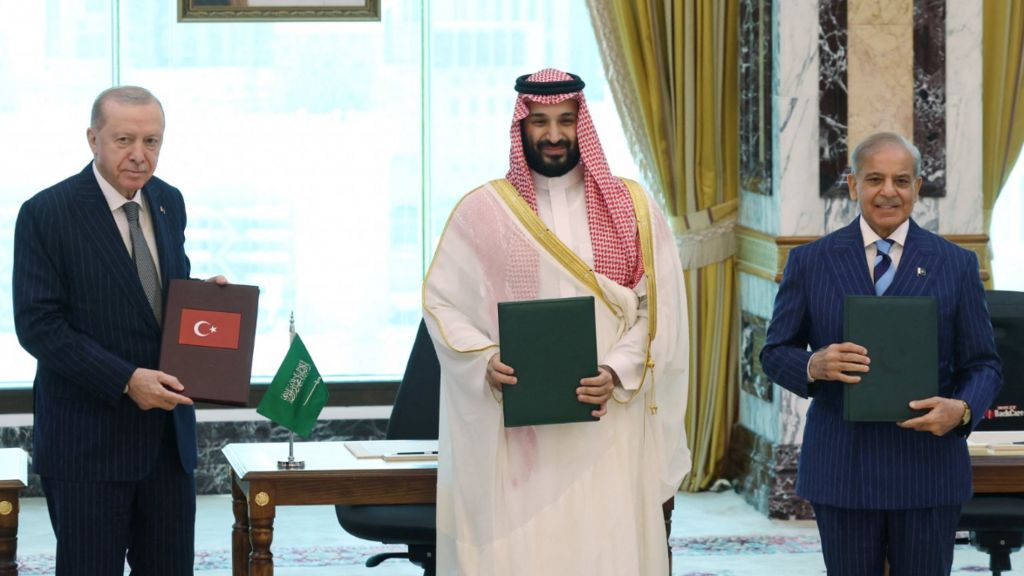
    Against a backdrop of simmering regional conflict that has disrupted critical global energy shipping lanes and dragged neighboring states into rising violence, three major Sunni Muslim nations have formalized a new collective security agreement. In a ceremonial signing held in the holy Saudi city of Mecca, Saudi Crown Prince Mohammed bin Salman, Turkish President Recep Tayyip Erdogan, and Pakistani Prime Minister Shehbaz Sharif put their signatures to the historic Mecca Joint Defence Agreement.

    The core commitment of the new pact is clear: any armed aggression against one of the three signatories will be treated as an attack against all three nations. Beyond this mutual defense guarantee, the agreement also lays out a framework to deepen collaboration across all areas of defense cooperation, with the explicit goal of strengthening collective deterrence against external threats. However, the document stops short of outlining specific, binding obligations for each member state, leaving details of how the pact will operate in practice still undisclosed. A senior Turkish official speaking to Reuters emphasized that the agreement is strictly defensive in its purpose and scope.

    This new trilateral agreement builds on a bilateral defense pact that Saudi Arabia and Pakistan agreed to one year ago, expanding the existing security partnership to include Turkey. The three nations bring complementary strengths to the alliance: Saudi Arabia contributes substantial financial resources and stands as one of the world’s largest importers of advanced military hardware; Turkey, NATO’s second-largest standing military force, boasts a robust and advanced domestic defense manufacturing sector; and Pakistan brings nuclear deterrence capability to the coalition.

    The pact comes amid rapidly escalating instability in the Middle East, rooted in ongoing conflict between the United States and Iran that has spilled over to disrupt critical maritime trade routes. The Strait of Hormuz, through which roughly a fifth of global oil supplies pass, and the Red Sea have both seen major disruptions to shipping since hostilities flared. Following joint US-Israeli strikes on Iran in late February, Iran and its allied militias launched retaliatory attacks on targets across Saudi Arabia and other Gulf states, and blocked commercial shipping transiting the region. Pakistan stepped in as a neutral intermediary, hosting ceasefire talks between the two sides that produced a temporary pause in fighting, but hostilities have since reignited.

    Though Saudi Arabia has long sought to avoid direct entanglement in the broader US-Iran conflict, repeated attacks from Iranian-aligned groups forced the kingdom to respond. After coming under attack from multiple directions, Riyadh joined the US in joint airstrikes last month against Iranian proxy militias in Iraq that it accuses of launching repeated drone strikes against Saudi targets. In neighboring Yemen, the Iran-backed Houthi movement, which controls large swathes of northwestern Yemen, has stepped up attacks: the group announced a formal maritime embargo against Saudi Arabia last month, and has launched strikes targeting Saudi airports, critical oil infrastructure, and commercial tankers operating in the Red Sea. In response, Saudi Arabia has launched counter-strikes against Houthi military positions and joined a new international naval coalition tasked with protecting commercial shipping in the Red Sea and Gulf of Aden.

    For the three signatory nations, the new defense pact represents a coordinated effort to bolster collective security at a moment when regional tensions show no sign of de-escalation, and the United States faces growing challenges managing the spillover effects of the Iran conflict across the Middle East.

  • Spanish-led police raid smashes a vast Mediterranean smuggling network, arresting 78

    Spanish-led police raid smashes a vast Mediterranean smuggling network, arresting 78

    THE HAGUE, Netherlands – A sweeping cross-border law enforcement operation, fronted by Spanish authorities and coordinated with the European Union’s law enforcement agency Europol, has taken down one of the largest transnational criminal networks operating smuggling routes for migrants, illicit drugs and weapons across the Western Mediterranean, officials announced in a press briefing Friday.

    The successful takedown shines a new light on the deeply organized, multi-billion-dollar shadow economy of transnational smuggling across the narrow sea that divides southern Europe from North Africa, where criminal groups have turned irregular migration and drug trafficking into one of their most profitable illicit activities. Spanish Civil Guard officials categorize the dismantled network as among the most significant criminal organizations focused on maritime human trafficking in the entire Mediterranean region.

    Friday’s announcement comes just one week after a sharp spike in irregular migration to Spain grabbed global attention, when tens of thousands of migrants crossed into Spain’s North African territory of Ceuta, driven by widespread false online rumors that the border would be opened to new arrivals. The vast majority of those migrants have since returned to Morocco.

    According to Europol, the broken-up criminal ring did not operate independently: it provided end-to-end logistical support to smaller smuggling gangs across the region, including secure storage, overland transport, refueling stops, mid-sea transfers of people and goods, vessel maintenance, and counter-surveillance tactics to evade detection by law enforcement. The investigation that led to the arrests was first launched by Spanish authorities in 2023, with Europol coordinating support from law enforcement agencies across France, Poland and Portugal, alongside Spain’s Civil Guard and National Police.

    The mass arrests were carried out during a coordinated action day on June 16. In total, 77 suspects were taken into custody across Spain, with one additional arrest made in Algeria. Law enforcement teams seized 18 motorboats — many of them high-speed craft — along with an undeclared quantity of drugs, multiple satellite communication devices, a loaded handgun, and more than €25,000 ($29,000) in untraceable cash. Footage released by Spanish law enforcement shows officers taking suspects into custody and counting large stacks of €50 bills recovered during property searches across the country.

    The network ran a profitable two-way smuggling corridor between Algeria and Spain, Spanish Civil Guard confirmed: it trafficked illicit drugs north to Europe from North Africa, then packed undocumented migrants onto unseaworthy boats for the return crossing to coastal towns in southern Spain. Officials estimate the group was responsible for at least 64 separate migrant smuggling voyages, moving more than 2,000 people into Spain illegally and generating total profits exceeding €24 million. All four of the organization’s top alleged leaders are now in custody, authorities confirmed.

    Beyond smuggling activity, the group is accused of brutal violence to protect their operations and evade capture. “They used extremely violent methods to protect the vessels and resist law enforcement,” the Civil Guard said in its official statement. Europol added that the network maintained a fleet of unregistered “ghost speedboats” — vessels specifically modified to avoid radar detection and skip official registration, a practice banned under Spanish law. Investigators have also documented severe abuses against the migrants the group trafficked, including reports of sexual assault, routine physical abuse, and the detention of migrants in overcrowded, unsanitary makeshift holding facilities before they are put on crossing vessels.

  • Plan to limit ‘vertical drinking’ decried by pub landlords and UK politicians

    Plan to limit ‘vertical drinking’ decried by pub landlords and UK politicians

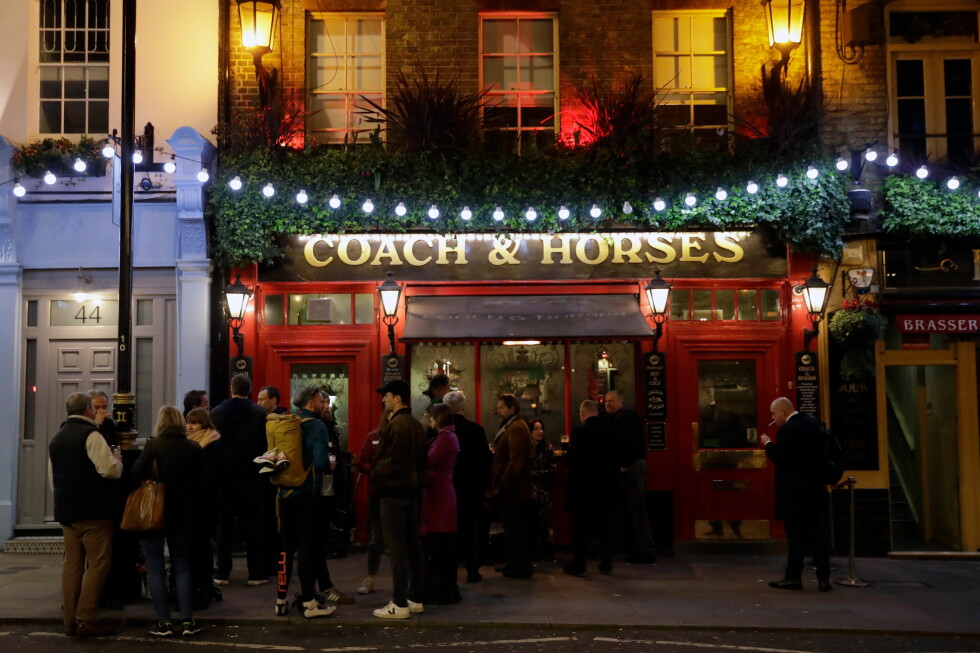
    A seemingly mundane draft policy proposal from a London local government has ignited a fierce national political debate, after a plan targeting so-called “vertical drinking” — the bureaucratic term for standing while consuming alcoholic drinks — erupted into a major public relations headache for Westminster City Council.\n\nWestminster City Council oversees licensing for thousands of pubs, bars and restaurants across London’s iconic West End, a global nightlife destination that draws millions of tourists and local visitors each year. Standing drinkers who gather in small groups to socialize, often spilling out onto sidewalks on warm spring and summer evenings, have long been a defining feature of the district’s pub culture, particularly in bohemian Soho.\n\nVeteran Soho publican Lesley Lewis, who has managed the French House pub for 37 years, warned that cracking down on this beloved tradition would backfire badly for local businesses already struggling with soaring commercial rents and rising business taxes. “We rely on those people standing up with the rents and the rates put upon us,” she explained. “People want to enjoy themselves in Soho, they want to have a drink outside, they want to dance. They don’t want to sit down and just be where they are, they want to meet people and chat.” Driving these customers away, Lewis argued, would only push business to other parts of the UK capital.\n\nAfter British national newspapers seized on the proposal with splashy front-page headlines including “Sitting room only at pubs?” and “Soho’s pubs won’t take clamp down on ‘vertical drinking’ lying down,” Westminster council pushed back against what it called misleading and confusing media coverage of its draft plan.\n\nCouncil leader Paul Swaddle released an official statement clarifying that the policy, which is still open for public consultation, does not aim to ban people from standing with a drink entirely. Instead, he framed the proposal as a targeted effort to cut down on public noise and unruly behavior by encouraging venues to shift more open bar space to seated table service that also supports food orders. “Let me be clear about what we’re trying to achieve,” Swaddle said. “This is about safety, not stopping anyone standing at a bar with a pint in their hand.”\n\nThe full draft licensing policy clarifies that the proposal is designed to discourage excessive public drunkenness, by incentivizing business owners to create more seated space for drinkers and table food service, rather than maintaining large open bar areas dedicated to high-volume standing drinking. Westminster is home to more alcohol-licensed hospitality venues than any other local authority in the United Kingdom, and the council notes that while the hospitality sector is a critical driver of the local economy, local leaders also have a core responsibility to ensure Westminster remains “a great place for residents to live.”\n\nThat clarification did little to defuse the backlash from senior national and city government officials, who have prioritized reviving a UK hospitality sector that has yet to fully recover from widespread disruptions and financial losses during the COVID-19 pandemic. A spokesperson for Prime Minister Andy Burnham called standing pub culture not a nuisance, but a core part of “British life,” adding that Burnham is pushing local leaders to collaborate with the hospitality industry to help pubs thrive. During a recent visit to a pub in Essex, the prime minister doubled down on this stance, saying: “The pubs that we’ve got are at the heart of high streets, and I think it’s really important to signal at the start of my time in office that I will be a defender for them. I will speak up for them and act.”\n\nLondon Mayor Sadiq Khan has also waded into the row, signaling he plans to use new regulatory powers set to take effect for his office later this year to review the Westminster policy. Taking to social media platform X to share his criticism, Khan argued: “You can’t run a world-famous nightlife district with a village-hall mindset. London’s hospitality and nightlife support jobs, culture and growth.”\n\nThe controversy highlights the ongoing tension between local authorities’ efforts to manage quality of life for residential communities, and policymakers’ priorities to support the recovery of Britain’s iconic hospitality industry, which remains a cornerstone of national culture and local economic activity across the country.

  • A Russian retail giant’s warehouse burns after Ukraine’s latest long-range drone attack

    A Russian retail giant’s warehouse burns after Ukraine’s latest long-range drone attack

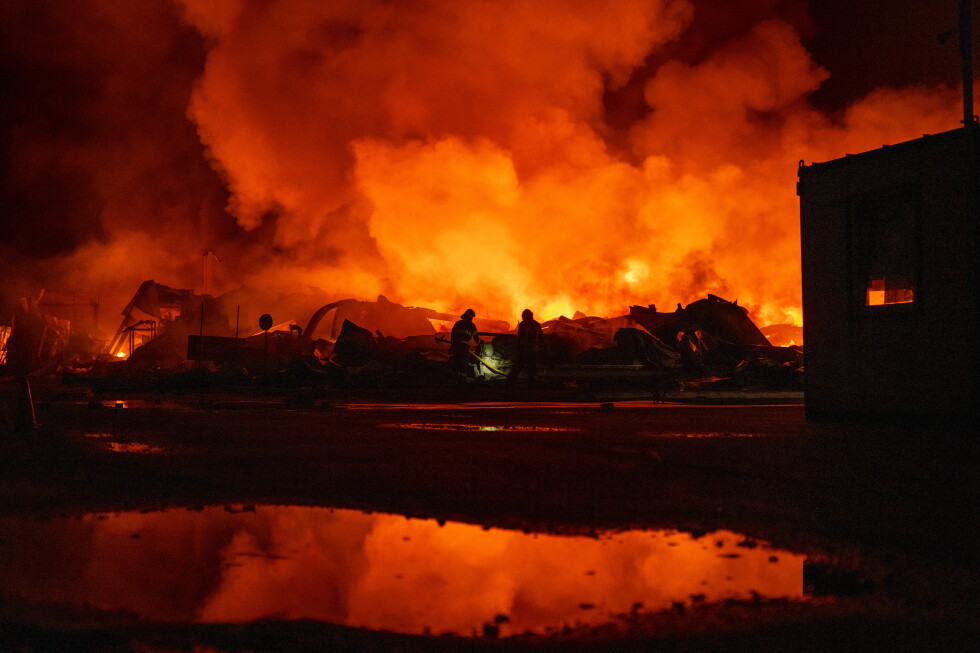
    On Friday, local Russian officials and corporate sources confirmed that Ukrainian long-range drones have targeted a warehouse facility operated by Russia’s largest e-commerce retailer Wildberries, located in the Ural Mountains roughly 2,000 kilometers from the Russia-Ukraine border.

    This strike is not an isolated incident. Throughout 2025, Ukraine has repeatedly carried out long-range drone attacks on targets deep inside Russian territory, even reaching an oil refinery in western Siberia nearly 2,500 kilometers from the shared border. These operations underscore the central role that drone innovation has played in Ukraine’s defense strategy against Russia’s full-scale invasion, now in its fourth year. Kyiv’s advancements in drone technology have also attracted global attention: Ukrainian officials confirm the country has already signed drone cooperation agreements with nine nations, and is currently negotiating additional partnerships with 15 more.

    The targeted warehouse in this week’s attack is located in Yekaterinburg, Russia’s fourth-largest urban center. Wildberries confirmed the strike ignited a fire at the facility, but noted that most of the stored inventory avoided major damage. This outcome differs from more than a dozen recent attacks on other Wildberries depots across Russia, several of which were completely destroyed. Analysts view these strikes on commercial logistics infrastructure as part of Ukraine’s broader strategy to erode public confidence in the Kremlin and disrupt Russian domestic supply chains.

    Regional governor Denis Pasler reported that three drones directly struck the warehouse’s roof. Artyom Zhoga, the Kremlin’s appointed representative for the Sverdlovsk Oblast, added that 800 people were safely evacuated from the facility, with no injuries reported in the aftermath of the attack.

    Beyond long-range strike capabilities, Ukrainian President Volodymyr Zelenskyy announced Thursday that Kyiv is accelerating domestic weapons development, with a particular focus on air defense systems to counter escalating Russian ballistic missile attacks. Russia has increasingly exploited gaps in Ukraine’s current defense network caused by shortages of American-made Patriot interceptor missiles, launching repeated barrages that have hit civilian infrastructure across the country.

    Zelenskyy revealed that a joint European anti-ballistic missile development program is already active, with 10 participating nations working together to build a new continent-wide ballistic defense shield. The project aligns with widespread European concern that Russia’s territorial ambitions extend beyond Ukraine’s borders. “Ukraine can manufacture its own anti-ballistic missiles and launchers, while our partners will supply necessary components and critical elements like radars and sensors,” Zelenskyy explained in a social media statement. “A large-scale, domestic anti-ballistic program will bring benefits to every country in Europe.”

    In parallel, Ukraine is also advancing development of its own domestically produced ballistic missiles for use against Russian targets. Zelenskyy confirmed that initial testing has demonstrated strong operational potential, and work is ongoing to move the project from development to mass deployment as a functional weapon.

    While weapons development progresses, Ukrainian frontline defenses in eastern Donetsk Oblast remain under intense pressure. Russia’s larger military force has continued incremental offensive operations, which Western analysts and officials note have come at an extremely high cost in Russian troop casualties, as Moscow seeks a long-sought breakthrough after months of stalled advances.

    Kramatorsk, one of four major fortified cities that make up Ukraine’s strategic “Fortress Belt” in Donetsk, has ordered the evacuation of minors amid intensifying shelling. This 50-kilometer line of heavily defended urban centers has been the primary barrier blocking Russia from seizing full control of Ukraine’s industrial Donbas heartland. Vadym Filashkin, head of the Donetsk regional military administration, reported Friday that more than 800 civilians – including 91 children – were evacuated from high-risk areas in the region over the preceding 24 hours. To slow Russia’s push, Ukraine has deployed midrange strike drones to target Russian supply lines and disrupt offensive preparations.

    The latest strikes come as both sides continue to exchange nearly nightly drone attacks across the front line and deep into each other’s territory. Russia’s Defense Ministry claimed its air defense systems downed 203 Ukrainian drones between late Thursday and early Friday. In contrast, Ukraine’s Air Force reported that Russia launched 147 long-range strike drones against Ukrainian targets in the same period.

    In northern Ukraine’s Sumy Oblast, a Russian drone strike hit a busy public market on Friday morning, leaving 10 people wounded, according to local authorities. Regional administration head Oleh Hryhorov added that Russian forces also launched a combination of glide bombs and multiple drone types against the regional capital, targeting residential buildings, transport links, and civilian infrastructure. Two additional people were wounded in that wave of attacks, Hryhorov confirmed.

  • German airport drone-bomb: Could Russia be involved?

    German airport drone-bomb: Could Russia be involved?

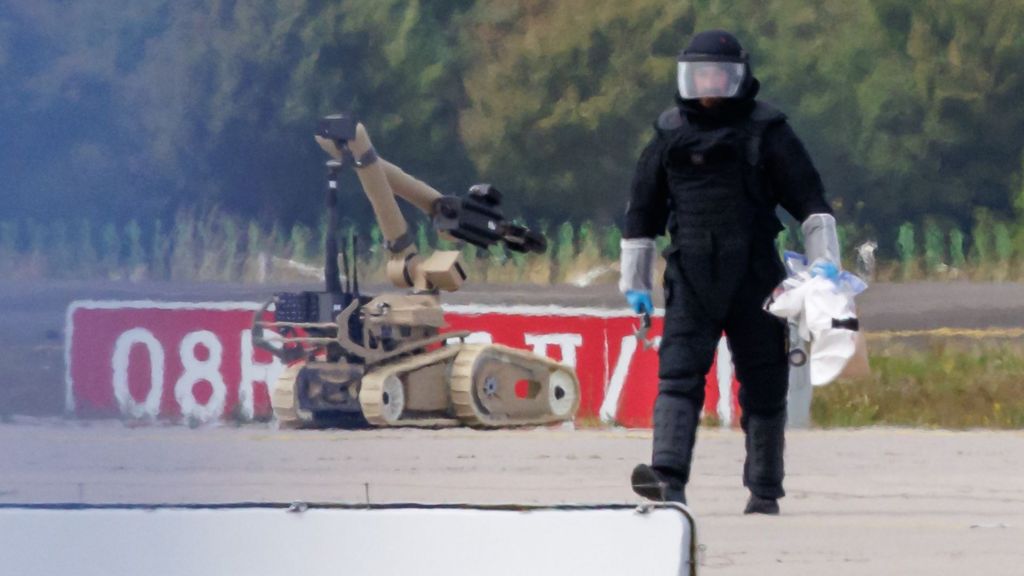
    Late on a Tuesday night, security teams at Germany’s Leipzig Airport scrambled to respond to an alarming discovery: a small quadcopter drone carrying explosives, spotted floating near several Ukrainian Antonov cargo planes parked on the tarmac. The discovery triggered an immediate lockdown of one runway, with a specialized bomb disposal robot deployed to safely disarm the device, while aviation authorities launched a full investigation into the incident.

    The Ukrainian cargo planes parked nearby carried bold national symbols: their blue and yellow striped livery matching Ukraine’s flag, and one aircraft bore the message “Be Brave Like Kherson,” a tribute to the embattled southern Ukrainian frontline city. Separately, a DHL cargo jet approaching Leipzig reported colliding with an unidentified object mid-climb shortly after the drone was found, and investigators are still working to confirm if this incident involved a second unexplained device.

    Germany’s interior minister has sounded the alarm over what he calls a “new level of danger,” noting the attack may have links to foreign actors. While no conclusive evidence currently ties the drone directly to the Kremlin, and Moscow has repeatedly denied any involvement in such hostile acts across Europe, experts point to a well-documented pattern of Russian-linked hybrid operations on the continent that make Moscow a key suspect.

    The BBC has obtained exclusive access to court documents connected to a 2024 cross-border terror plot that offers chilling context for the current incident. In that case, prosecutors in Lithuania and Poland are currently trying more than a dozen men linked to a Russian military intelligence network that smuggled explosives and drone components across the European Union. According to the case files, the network hid 6kg of TNT-equivalent RDX explosive in tins of sweetcorn and chopped tomatoes, concealed detonators inside consumer headphones, and transported drone parts purpose-built to carry explosive payloads. Smugglers moved these materials across the Baltic region via secret drop-offs in forests, cemeteries, and roadside locations, before delivering finished drone kits to safe houses in Germany.

    One charged defendant, Ukrainian national Vladyslav D., who has pleaded not guilty to all charges, detailed to investigators how he carried out multiple smuggling trips in 2024 for a handler he knew only as “Warrior,” receiving more than $2,000 in cryptocurrency for his work. His assignments included retrieving hidden explosives and drone parts from pre-coordinated drop spots, including a bag of waterlogged headphones on the edge of a Lithuanian forest and drone propellers buried under plastic flowers in a cemetery, before transporting the materials to Germany for final delivery. The intended targets for these 2024 shipments were never identified.

    To date, nearly two dozen suspects have been charged with terrorism offenses in connection with the 2024 plot, but key handlers remain at large, believed to be hiding in Russia. Authorities have not confirmed whether the entire network was dismantled or if all cached explosive and drone materials were recovered. While there is still no definitive link between the 2024 network and the 2026 Leipzig drone discovery, German media reports confirm the explosive found on the drone was Semtex, a plastic explosive that contains RDX – the same explosive material seized from the 2024 smuggling ring.

    Explosives experts note that even a small drone-carried bomb would be unlikely to cause catastrophic damage to an aircraft unless fitted with fragmentation, but security analysts agree the primary goal of such an incident is not physical destruction, but psychological intimidation. As one of Ukraine’s largest military backers in Europe, Germany has long been a target of Russian hybrid operations designed to undermine public and political support for Kyiv.

    Andrei Soldatov, a leading expert on Russian intelligence agencies, explained that the incident sends a deliberate message to European governments: “You get something like that into one of the biggest European airports and you send the message that, ‘Guys, we can do that. Remember. You hint to the adversary that you might cause a really big problem: that tomorrow might be more serious.’” Soldatov added that the operation aligns with Russia’s current strategy, as Moscow faces mounting pressure from Ukraine’s long-range drone campaign and repeated setbacks on the battlefield that have humiliated the Kremlin.

    John Lough, a Russia analyst at the New Eurasian Strategies Centre, called the incident a clear case of Russian interference, designed to erode European support for Ukraine by highlighting the risk of escalation and intimidating German authorities. Lough warned that shifting battlefield dynamics that have favored Ukraine have raised the risk of a sharp increase in such hybrid attacks across the continent in the coming months. “I think it’s a dangerous moment,” he added.

    As investigations continue, NATO and Antonov Airlines, the Ukrainian cargo firm that operates the planes parked at Leipzig, have both declined to comment on potential targets or direct links, noting that German authorities are still piecing together the full details of the incident.

  • Norway call for Infantino to resign as Mexico and Argentina back president

    Norway call for Infantino to resign as Mexico and Argentina back president

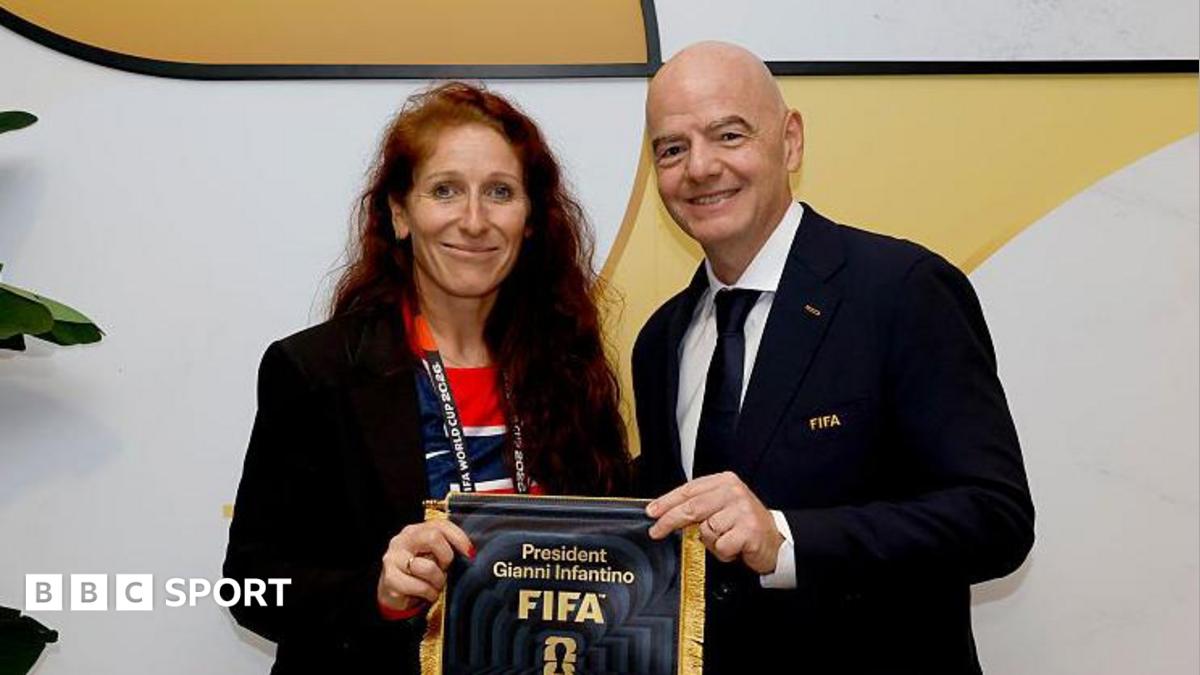
    A major split has erupted across global football governance after the Norwegian Football Federation (NFF) became the first major governing body to explicitly call for FIFA President Gianni Infantino to step down, triggered by his withdrawn controversial plan to sell private stakes in the World Cup. The move pushes a growing crisis over leadership of world football to new heights, as regional confederations and national associations remain sharply divided over Infantino’s future.

    NFF President Lise Klaveness, a longstanding public critic of Infantino and a trained lawyer, announced the call for resignation on Friday, arguing the FIFA leader no longer holds the institutional trust required to steer the global governing body through its current challenges. “International football cooperation is deeply troubled, and we must come together to move forward,” Klaveness stated. “That is why we are asking the FIFA president to resign now.”

    Norway’s demand goes further than the positions taken by the football associations of England, Wales, Croatia and Albania, all of which have already withdrawn their backing for Infantino but have stopped short of calling for his immediate departure. Klaveness outlined a long list of long-held concerns the NFF has raised during her four-year tenure, including questionable processes behind tournament awarding, the controversial 2024 decision to grant the inaugural FIFA Peace Prize to former U.S. President Donald Trump, and the reversal of a ban on American forward Folarin Balogun ahead of the recent World Cup that came after a direct phone call from Trump to FIFA leadership. FIFA has not yet issued a public comment in response to Norway’s call.

    While opposition mounts in Europe, Infantino has received public backing from key nations ahead of March’s presidential election. The Mexican Football Federation, co-host of the 2026 World Cup, broke ranks with its regional governing body CONCACAF to confirm its support for the 56-year-old FIFA president. “The FMF supports president Infantino’s leadership in continuing to promote the development of football through institutional strengthening,” the federation said in an official statement.

    Mexico’s endorsement echoes a public statement from CONMEBOL, South America’s continental confederation, which has committed to rejecting any efforts to remove Infantino from office that do not follow a full vote by all 211 FIFA member associations. CONMEBOL did, however, express public concern over what it called “repeated unilateral actions” taken by Infantino without following established institutional dialogue mechanisms. Argentina, one of the 2026 World Cup co-host runners-up and one of the world’s most prominent football nations, has also praised Infantino, noting he has recognized and apologized for his missteps, and framing his decade-long tenure as focused on global football development and stable, transparent governance.

    The current crisis was sparked by the aborted Fifa Forward Enterprise (FFE) plan, which would have sold minority stakes in World Cup tournaments to private investors. After widespread backlash, Infantino withdrew the proposal, but critics say the plan itself exposed deep flaws in his leadership. UEFA, European football’s governing body, has already labeled the FFE proposal a “shabby, back room, opaque deal” and confirmed it has lost all confidence in Infantino. European nations have not ruled out a full boycott of future World Cup tournaments if their demands for leadership change are not met, as UEFA says its conditions for resolving the crisis have not been satisfied.

    Regional bodies have taken varying stances: CONCACAF, which governs football across North America, Central America and the Caribbean, has called for a “comprehensive reckoning” of Infantino’s presidency, criticizing the FFE plan as “a symptom of leadership that has stopped putting football first.” It stopped short of declaring a full loss of confidence, however. The Asian Football Confederation joined UEFA and CONCACAF in opposing the FFE plan before it was withdrawn, but has not issued any public stance on Infantino’s leadership since the plan was aborted. The Confederation of African Football (CAF) has reaffirmed its unanimous full support for Infantino, while the Oceania Football Confederation has yet to announce an official position, with its president previously praising Infantino as a “leader par excellence” for his investment in grassroots football.

    The coming months will lead up to FIFA’s presidential election scheduled for March 18 at the 77th FIFA Congress in Rabat, Morocco. Under normal FIFA statutes, Infantino would be ineligible to run for a fourth four-year term, as the rules cap tenure at three terms. But Infantino successfully argued that his initial partial term, which lasted three years after he replaced disgraced former president Sepp Blatter in 2016, should not count toward his tenure limit, clearing the way for him to stand for re-election. Before the FFE controversy, he was widely expected to win re-election unopposed, as he did in 2019 and 2023.

    Now, UEFA and Infantino’s opponents are scrambling to find a viable candidate to challenge him, with a November 18 deadline for candidates to submit their nomination alongside at least five letters of support from member associations. Under FIFA election rules, a simple majority is enough to win if only two candidates stand, while a 75% supermajority is required for an outright win if three or more candidates enter the race. If no candidate hits the supermajority threshold, the lowest-performing candidate is eliminated and successive rounds of voting are held until a winner emerges.

    Infantino has long built support among member associations through two key tools: extensive global outreach and expanded development funding for national associations. His Fifa Forward development program, which allocates direct funding to member associations for football infrastructure and growth, currently provides up to $8 million to each national federation over a four-year cycle, a 30% increase from the previous cycle. The program’s next iteration, Fifa Forward 4.0, is expected to increase funding levels further, a move that has cemented loyalties especially among lower-resourced developing football nations that rely on FIFA funding to grow the sport. Going into the election, Infantino remains the clear favorite due to this broad base of support outside of Europe, even amid the growing controversy over his leadership.

  • World shares are mixed after US stocks fall back, while oil rebounds

    World shares are mixed after US stocks fall back, while oil rebounds

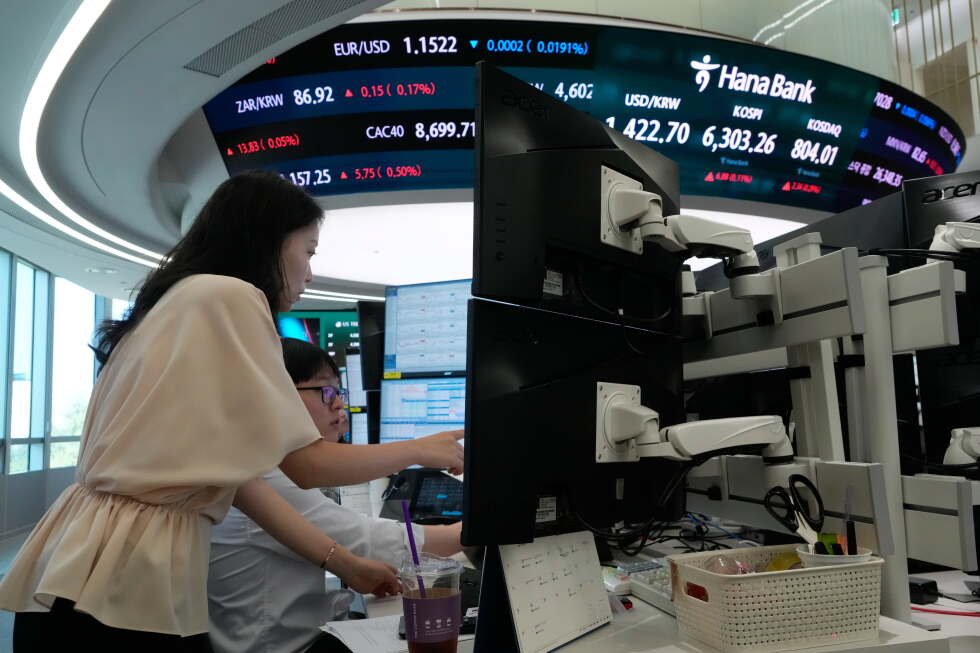
    BANGKOK – Global equity markets delivered a mixed performance on Friday, a day after modest pullbacks across major Wall Street indices, while international benchmark crude oil prices climbed more than 1% amid ongoing uncertainty over the future of the Strait of Hormuz, one of the world’s most critical energy shipping chokepoints.

    Early trading in European markets showed mild upward momentum across major benchmarks. Germany’s DAX gained 0.4% to settle at 26,253.77, while France’s CAC 40 edged up 0.2% to 8,715.47. The UK’s FTSE 100 posted a modest 0.1% rise to 10,879.57. Futures for U.S. markets were also split: S&P 500 futures ticked up 0.1%, while Dow Jones Industrial Average futures slipped 0.1% heading into the New York trading open.

    Across Asian markets, the recent sell-off in AI-linked tech and semiconductor stocks showed early signs of easing. Japan’s Nikkei 225, a market heavy with chipmaking and AI exposure, dipped only 0.1% to 65,606.71 following several days of broader losses for the sector. South Korea’s Kospi fell 0.6% to 6,258.77, and Taiwan’s Taiex declined 0.4%, while mainland China’s Shanghai Composite Index bucked the regional downtrend with a 1% rise to 3,940.04. The gain came after China released July trade data showing export growth slowed slightly but remained robust at roughly 24%, driven by sustained global demand for electronics and high-tech manufactured goods. The country’s overall trade surplus narrowed last month, and import growth also cooled, the data showed. Hong Kong’s Hang Seng Index added 0.5% to 25,668.03, while Australia’s S&P/ASX 200 slipped less than 0.1% to 9,263.60.

    The mixed global performance followed a down day on Wall Street Thursday, when major indices pulled back as oil prices climbed and the latest wave of corporate earnings reports hit the market. The S&P 500 lost 0.2%, the Dow Jones Industrial Average fell 0.9%, and the Nasdaq Composite dipped 0.1%.

    Oil prices extended gains into Friday after a nearly 4% jump Thursday, driven by persistent uncertainty over negotiations to reopen the Strait of Hormuz. The strait, which once carried roughly one-fifth of the world’s globally traded oil and natural gas, has been at the center of a months-long standoff that has disrupted global energy supplies. Iran says it is close to an agreement with Oman to reopen the strategic waterway, and former U.S. President Donald Trump has previously stated a deal is imminent, but negotiations have seen repeated stops and starts over the past five months.

    Reaching a workable compromise has proven elusive: the Trump administration has ruled out allowing Iran to charge passage fees for ships, but Iran insists on retaining some level of control over the waterway, rejecting calls to return it to full international free passage status. As of early Friday, Brent crude rose 1% to $83.33 per barrel, while U.S. West Texas Intermediate crude advanced 0.7% to $77.79 per barrel. Spiking oil prices, which surged as high as $113 per barrel amid the ongoing conflict, have exacerbated global inflation by pushing up gasoline prices and increasing shipping costs for nearly all sectors of the global economy.

    Against this backdrop, global markets remain caught between two competing forces: ongoing anxiety over geopolitical conflict, rising energy prices, and fears of a potential bubble in high-flying AI investments, are offset by stronger-than-expected corporate earnings that have eased concerns about overvalued U.S. equities. Roughly 85% of S&P 500 companies have released quarterly results, and aggregate earnings growth for the period is on track to hit its highest level since 2021.

    In standalone tech news, SpaceX shares rose 6.1% on Thursday after a lockup period expired, allowing early investors and employees to sell more than 911 million shares for the first time since the company’s initial public offering. The volume of newly tradable shares is more than double the number of shares sold in SpaceX’s IPO. Elon Musk’s aerospace firm saw its share price jump as high as $225 shortly after its June public debut, but has since fallen below its $135 IPO price, and was trading around $115 ahead of Friday’s session.

    All eyes are now turning to the U.S. Bureau of Labor Statistics’ July monthly jobs report, scheduled for release Friday. The U.S. labor market has remained resilient in recent months, but hiring growth has gradually slowed. A weekly jobless claims report released Thursday showed the number of first-time unemployment benefit applications rose last week, though layoffs still remain at historically low levels not seen since the post-pandemic recovery. Hiring slowed sharply in June, with employers adding just 57,000 new jobs, marking the weakest monthly gain in months.

    In currency markets, the U.S. dollar edged up slightly against the Japanese yen, rising to 158.46 yen from 158.42 yen in previous trading. The euro ticked down fractionally to $1.1520 from $1.1524.

  • Two people convicted in relation to death of French streamer

    Two people convicted in relation to death of French streamer

    A French court has delivered guilty verdicts for aggravated violence to two local content creators linked to the August 2025 death of well-known extreme challenge streamer Raphaël Graven, who built a massive online following under the alias Jean Pormanove. The 46-year-old influencer passed away in Contes, a small village located just north of the southern French city of Nice, and his fatal incident was captured live on the controversial streaming platform Kick.

    The two convicted men, Safine Hamadi, 34, and Owen Cenazandotti, 28, have long maintained that all humiliation and physical abuse that appeared in Graven’s content was carried out with his full consent. According to prosecution arguments, prosecutors ultimately dropped manslaughter charges against the pair after forensic evidence pointed to Graven’s pre-existing poor cardiovascular health as the most likely primary cause of death. The court also cleared both defendants of the additional charge of exploiting Graven’s psychological vulnerability, citing prior statements the streamer gave to law enforcement confirming his consent to the risky stunts.

    In the final sentencing, Hamadi received an 18-month suspended prison sentence and a €5,000 fine, while Cenazandotti was handed a two-year suspended prison sentence and a €15,000 fine. Hamadi publicly expressed remorse for his role in the events during the trial proceedings. Beyond custodial and financial penalties, the court has imposed a six-month ban on both men publishing any content to the Kick platform.

    At the time of Graven’s death, the streamer boasted more than one million combined followers across his social media channels, and had cultivated a dedicated fan base specifically on Kick. Patterned content from Graven’s channel regularly featured other creators subjecting him to physical violence and verbal degradation as part of his signature extreme challenge format. Local media reports from the days after his death confirmed that a live broadcast on August 18 showed Graven motionless on a mattress covered by a duvet; the graphic video was quickly removed from Kick after the platform was notified of his death.

    While the criminal proceedings only targeted the two individual creators, the streaming platform Kick itself remains the subject of an ongoing investigation by French law enforcement and regulatory authorities. In a formal statement provided to The New York Times this Thursday, a Kick spokesperson emphasized that the company was not a party in the criminal case against Hamadi and Cenazandotti, and declined to offer further comment on the court’s ruling. “The ruling relates solely to two individual content creators,” the statement added.