标签: Europe

欧洲

  • Poland welcomes U.S. statements that troop reduction there is temporary

    Poland welcomes U.S. statements that troop reduction there is temporary

    In a development that reshapes current discussions of U.S. military posture across Europe, Polish government leaders confirmed Wednesday that they have accepted Washington’s clarification that the canceled deployment of 4,000 American troops to the Central European nation is only a temporary hold, rather than a permanent drawdown.

    The announcement came after a wave of surprise and unease rippled through Warsaw last week, when officials learned that the 2nd Armored Brigade Combat Team of the U.S. Army’s 1st Cavalry Division — originally scheduled to rotate into Poland, a frontline NATO member sharing a border with war-torn Ukraine — would not arrive as planned. The reaction set off heightened transatlantic tensions, coming on the heels of the Trump administration’s previously announced plan to cut U.S. troop levels stationed in Germany, a decision that already stirred criticism and anxiety on both sides of the Atlantic.

    By Tuesday evening, top U.S. defense officials moved to ease those concerns. Pentagon chief spokesperson Sean Parnell framed the halted deployment to Poland as a “temporary delay,” adding that Warsaw has long served as a “model U.S. ally” within the NATO alliance. Poland currently stands out among NATO members for its defense spending commitment, allocating roughly 4.7% of its national GDP to military outlays in 2025 — the highest proportional share of any alliance member.

    Parnell explained that the delay stems from a broader restructuring of U.S. ground forces in Europe, where the Pentagon is reducing the number of active brigade combat teams from four to three, and is still in the process of finalizing new basing assignments across the continent. U.S. Vice President JD Vance also pushed back against assumptions of a permanent drawdown in Poland, telling reporters Tuesday that “That’s not a reduction. That’s just a standard delay in rotation that sometimes happens in these situations.”

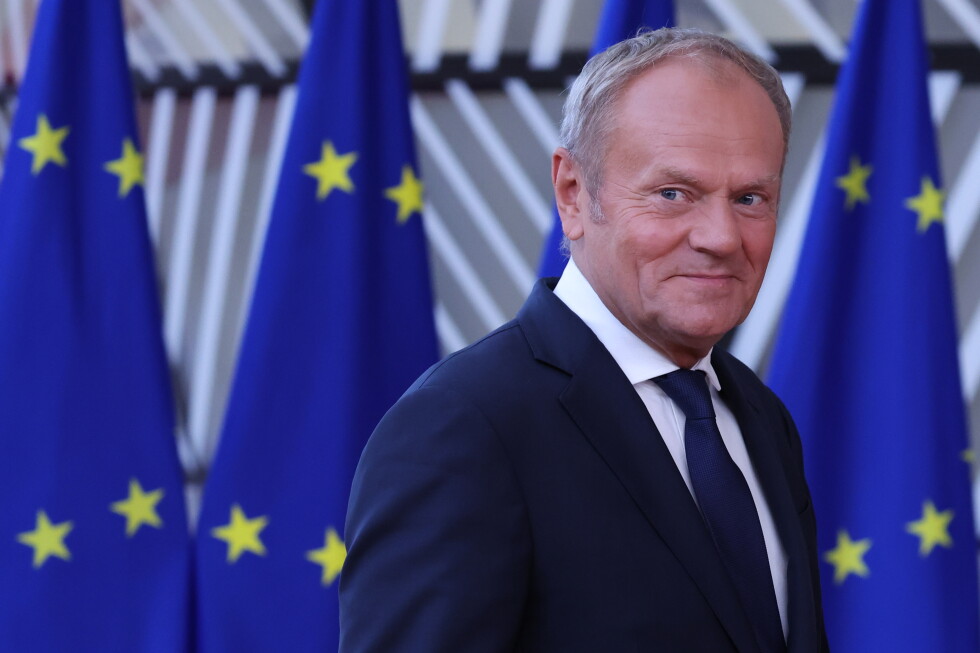
    Top Polish leaders echoed the U.S.’s framing on Wednesday. Prime Minister Donald Tusk said he was pleased to receive “Washington’s declaration that Poland will be treated as it deserves.” Polish Defense Minister Władysław Kosiniak-Kamysz, who held a call with U.S. Defense Secretary Pete Hegseth Tuesday night, noted that the updated U.S. assurances confirm that the overall “U.S. presence is maintained” in Poland. He added that shifting rotational deployments into a permanent U.S. troop presence has long been a Polish priority, and such an outcome would be “always much better.”

    Currently, around 10,000 U.S. troops are based in Poland, the vast majority of whom serve on rotational deployment cycles. Polish officials also confirmed that Warsaw will be included in all upcoming discussions about the ongoing restructuring of U.S. military forces across Europe. To date, U.S. officials have not publicly disclosed how long the deployment delay will last, and Kosiniak-Kamysz said he expects to receive additional clarification on the future U.S. troop footprint in the coming weeks.

    Even as Warsaw accepts the temporary delay, Tusk warned that European nations cannot afford to ignore the clear signal from Washington that the U.S. intends to reduce its long-term military footprint on the continent, and that European states must increase their own defense commitments to fill the gap.

    NATO Secretary-General Mark Rutte backed that assessment Wednesday, noting that alliance members have been aware for roughly a year of the Trump administration’s plan to withdraw some U.S. troops from Europe. Rutte said it is “rightly” expected that European nations and Canada will take on greater responsibility for conventional deterrence and defense across the NATO alliance, particularly in its European theater. While the U.S. “will stay involved” in transatlantic security, Rutte acknowledged that over time, Washington may reorient its military resources to other global hotspots.

    The Trump administration has repeatedly warned European allies in recent months that they must take greater ownership of their own security, including the defense of Ukraine against Russian aggression. The planned drawdown of at least 5,000 U.S. troops from Germany followed public comments from German Chancellor Friedrich Merz, who claimed the U.S. had been “humiliated” by Iran’s leadership and criticized what he called a U.S. “lack of strategy in the war” in the Middle East.

    Associated Press correspondent Lorne Cook contributed reporting from Brussels, Belgium.

  • Lithuania’s leaders take shelter during drone air alert

    Lithuania’s leaders take shelter during drone air alert

    A sudden air drone warning brought the Lithuanian capital Vilnius to a complete standstill on Tuesday, forcing top government officials including the president and prime minister to evacuate to emergency shelters, marking the latest in a growing string of unplanned drone incursions across the Baltic NATO member states that has escalated regional security tensions.

    Following the activation of the air alert, which instructed all Vilnius residents to immediately seek safe cover, President Gitanas Nauseda and Prime Minister Inga Ruginiene were escorted to designated emergency shelters. Local media reports confirmed that the evacuation order was also extended to Lithuania’s national parliament, the Seimas, where lawmakers and parliamentary staff were led to reinforced basement shelter facilities.

    All commercial air traffic into and out of Vilnius was suspended immediately, while surface travel via roads and national rail networks was also temporarily halted across the affected region. The alert was eventually lifted after several hours of emergency response operations, but uncertainty remains over the origin and responsible party for the unauthorized air incursion.

    Lithuania’s national crisis management center clarified early in the alert process that the warning was triggered after a drone was spotted flying toward Lithuanian territory from neighboring Belarus, though officials emphasized that the drone’s origin had not been definitively confirmed at that time. After deploying NATO fighter jets to intercept and neutralize the incoming drone, Lithuanian military officials later confirmed that the aircraft were unable to locate the target.

    Tuesday’s incident follows closely on the heels of a similar event in Estonia, where NATO air defense forces shot down an unidentified drone over Estonian territory just one day prior. Estonian authorities suspect the drone was originally a Ukrainian projectile that was knocked off its intended course by Russian electronic warfare interference. Ukraine has since issued an apology to Estonia and the broader Baltic community for the unintended incursion, accusing Russia of deliberately jamming and redirecting drones that were targeting legitimate military objectives inside Russian territory.

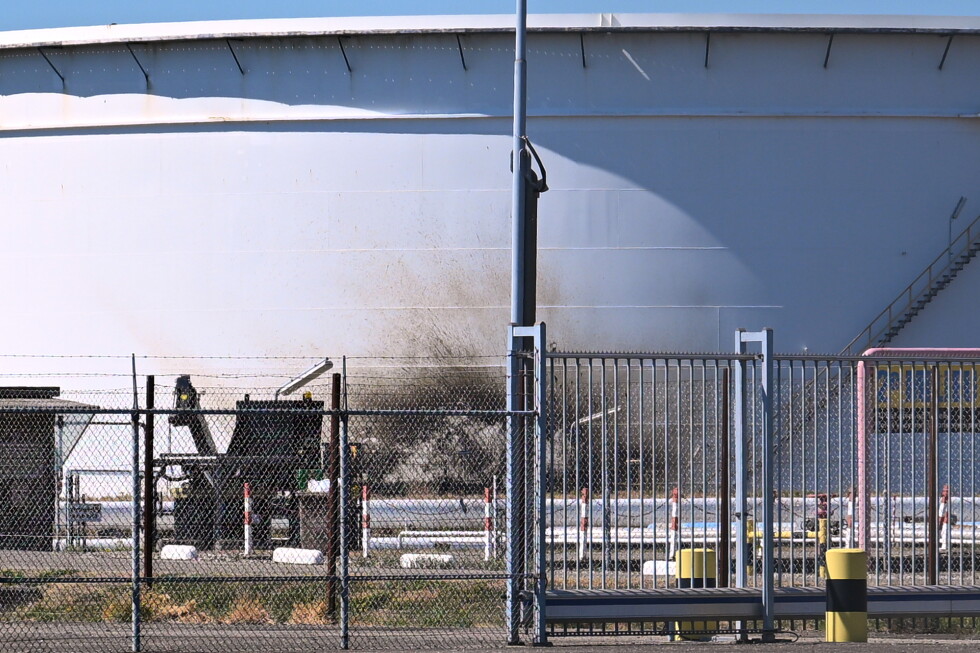
    This series of incidents has deepened security instability across the Baltic region, which is home to three NATO member states: Estonia, Latvia, and Lithuania. Just last week, the prime minister of Latvia resigned amid a major political crisis sparked by the straying of two Ukraine-bound drones into Latvian territory, where they hit an unoccupied oil storage facility earlier this month. Similar accidental incursions were recorded in both Estonia and Latvia back in March, following a consistent pattern of disruptions tied to the ongoing Ukraine war.

    Russia has repeatedly accused the three Baltic states of allowing Ukraine to use their national air corridors to launch strikes on targets inside Russian territory, a claim that has been flatly rejected by all three governments in Tallinn, Riga, and Vilnius. In recent weeks, Ukraine has stepped up the frequency of its drone and missile attacks against Russian infrastructure, with a focus on oil and gas facilities located close to the Baltic border, raising the risk of additional cross-border incidents.

    On Wednesday, Kremlin spokesperson Dmitry Peskov told Russia’s state-run news agency TASS that the Russian military is maintaining close surveillance of all drone incursions into Baltic airspace and is currently developing a formal, appropriate response to the ongoing series of events. As regional tensions continue to climb in the wake of Russia’s 2022 full-scale invasion of Ukraine, NATO’s eastern flank faces growing uncertainty over how to mitigate the risk of unintended spillover from the ongoing conflict.

  • EU overcomes fierce internal debate to agree on tariff deal with the US

    EU overcomes fierce internal debate to agree on tariff deal with the US

    BRUSSELS – After marathon late-night negotiations to resolve bitter internal divisions, the European Union has formally signed off on a landmark tariff agreement with the United States that caps duties on most EU exports at 15%, narrowly averting a full-scale transatlantic trade war that was set to trigger ahead of President Donald Trump’s July 4 deadline.

    The path to final approval was far from smooth, with heated clashes between lawmakers and bloc leaders threatening to derail the hard-won agreement that governs more than $1 trillion in annual transatlantic goods and services trade between two of the world’s largest economic powers, both currently grappling with economic spillover from the ongoing conflict in Iran.

    The framework for the deal was first laid out 12 months prior, when European Commission President Ursula von der Leyen met Trump at his Turnberry golf resort in Scotland to strike an initial handshake agreement, capping months of tense bargaining that followed the Trump administration’s sweeping global tariff offensive. That initial agreement sparked months of further technical negotiations between Washington and Brussels, even as European criticism of the deal surged after Trump made an unexpected public threat to seize control of Greenland, a self-governing Danish territory. Trump has since walked back that threat, at least temporarily.

    Following intense trilogue negotiations between the European Parliament, European Council, and European Commission that stretched into an “intensive night” of five hours of talks, the deal secured final EU approval. European trade chief Maroš Šefčovič announced the breakthrough after negotiations concluded, noting that once formally adopted by the full parliament in the coming weeks, the agreement “will reinforce stability in EU-U.S. trade and open the door even wider to constructive cooperation on many issues of strategic importance.”

    In a social media statement confirming the outcome, the EU executive branch reaffirmed its commitment to the deal, writing “A deal is a deal, and the EU honours its commitments.”

    Under the terms of the agreement, most European exports to the U.S. will be subject to a maximum 15% tariff, while U.S. industrial goods entering the EU will see tariffs eliminated entirely. While the arrangement raises the average tariff rate on covered goods from the previous 4.8%, creating added costs for consumers and businesses on both sides of the Atlantic, analysts credit the new framework with delivering long-term policy certainty that helped Europe avoid a projected recession in 2023.

    Amid skyrocketing energy and commodity prices driven by the prolonged closure of the Strait of Hormuz amid Middle East tensions, and persistent high inflation and interest rates on both sides of the Atlantic, supporters of the deal argue that resolving long-running transatlantic trade tensions is a critical step toward shoring up global economic stability. The American Chamber of Commerce in Brussels shared that view in a post-approval statement, saying it was “relieved” to see the EU reach internal consensus. “The trilogue agreement is a sign that the EU is honouring its commitments under the deal,” the group said, adding that the approval will let both sides “move beyond tariffs” to address pressing shared challenges such as critical supply chain resilience.

    European lawmakers successfully pushed to add binding safeguard provisions to the final text that will allow the bloc to take swift retaliatory action if the U.S. backtracks on its commitments under the deal, according to Bernard Lange, chair of the European Parliament’s trade committee. “If there is something going wrong, of course, we are self-confident to act on that,” Lange said.

    Even with the deal now cleared through all EU internal processes, significant uncertainty remains about its future, amid growing concerns in Europe that the White House lacks clear legal authority to uphold the agreement. A series of recent U.S. court rulings have undermined the legal basis Trump used to impose the original tariffs in question. This year, the U.S. Supreme Court struck down the legal authority Trump relied on to enact the tariffs, forcing the administration to find alternative legal justifications for existing duties and move forward with new levies to replace lost tariff revenue. Just months ago, a U.S. federal court ruled that Trump had exceeded the tariff authority granted to the presidency by Congress, ruling that the administration’s new replacement tariffs were “invalid” and “unauthorized by law.”

    That legal cloud also hangs over long-threatened new tariffs on EU passenger and commercial vehicles that Trump has teased on social media, where he has also accused the EU of failing to uphold its end of the deal without providing specific evidence of non-compliance.

    With the EU having completed its domestic approval process, the ball is now in Washington’s court to respond, Lange said. “That’s, of course, a big question mark. I have not my crystal ball here with me,” he added.

  • Residents of Lithuania’s capital told to shelter as drone alarm underlines NATO’s eastern jitters

    Residents of Lithuania’s capital told to shelter as drone alarm underlines NATO’s eastern jitters

    On a tense Wednesday in Vilnius, the capital of Lithuania, residents were ordered to immediately seek shelter, the country’s top political leaders were moved to secure locations, and Vilnius Airport closed its airspace for an hour after a border drone alarm triggered the first mass shelter-in-place order for a NATO and EU capital since Russia launched its full-scale invasion of Ukraine in February 2022.

    The emergency push to get people to safety came after Lithuanian military officials detected unauthorized drone activity within neighboring Belarus, a close military ally of Russia that borders eastern Lithuania. No drones were ultimately confirmed to have crossed into Lithuanian territory, but the alarm laid bare the persistent anxiety along NATO’s eastern flank over unintended incursions tied to the ongoing war in Ukraine.

    According to local reporting agency BNS, both President Gitanas Nauseda and Prime Minister Inga Ruginiene were evacuated to designated safe shelters, and an evacuation order was also issued for Lithuania’s national parliament, the Seimas. The one-hour closure of Vilnius Airport disrupted regional air travel while authorities assessed the potential threat.

    The incident is the latest in a string of cross-border drone occurrences that have stoked instability across the Baltic region in recent weeks. Just a day before the Vilnius alert, a NATO fighter jet intercepted and shot down a stray Ukrainian drone over southern Estonia. Ukraine quickly issued a formal apology for what it called an unintended incident, though it offered no further details on the drone’s original mission.

    Lithuania’s Foreign Minister Kęstutis Budrys took to social media Tuesday to accuse Moscow of intentionally redirecting Ukrainian drones into Baltic airspace, then launching disinformation campaigns against the three Baltic states — Lithuania, Latvia and Estonia — to undermine regional cohesion. “It’s a transparent act of desperation — an attempt to sow chaos and distract from a simple reality: Ukraine is hitting Russia’s military machine hard,” Budrys wrote.

    The rising frequency of these incidents has already shaken political order in the region: just last week, Latvia’s entire ruling coalition collapsed after months of mounting tension, triggered in part by public disagreement over how to handle a series of suspected stray drone incursions from Ukrainian operations against Russia. The controversy forced the defense minister to step down after his party withdrew support, ultimately prompting the prime minister to dissolve the government.

    Speaking Wednesday, NATO Secretary-General Mark Rutte struck a measured tone, praising the alliance’s coordinated response to recent drone events. “They have been met with a calm, decisive and proportionate response,” Rutte said. “This is exactly what we planned and prepared for,” he added, noting that all the current unrest stems directly from Russia’s full-scale invasion of Ukraine.

    Western intelligence and diplomatic officials have generally attributed the stray incursions into NATO territory to accidental drone deviations, often worsened by Russian electronic jamming that throws Ukrainian drones off course. But Moscow has issued repeated aggressive threats, saying it will launch retaliatory strikes against any Baltic state that it accuses of hosting or complicity in Ukrainian drone attacks targeting Russian territory.

    The recent uptick in cross-border drone scares comes as both Russia and Ukraine have ramped up large-scale drone attacks against one another’s critical infrastructure. On Wednesday, Ukraine’s air force announced it had intercepted and destroyed 131 of 154 drones Russia launched in an overnight assault. Drones that penetrated Ukrainian defenses killed three civilians and wounded 18 more, including two children, according to Ukrainian officials.

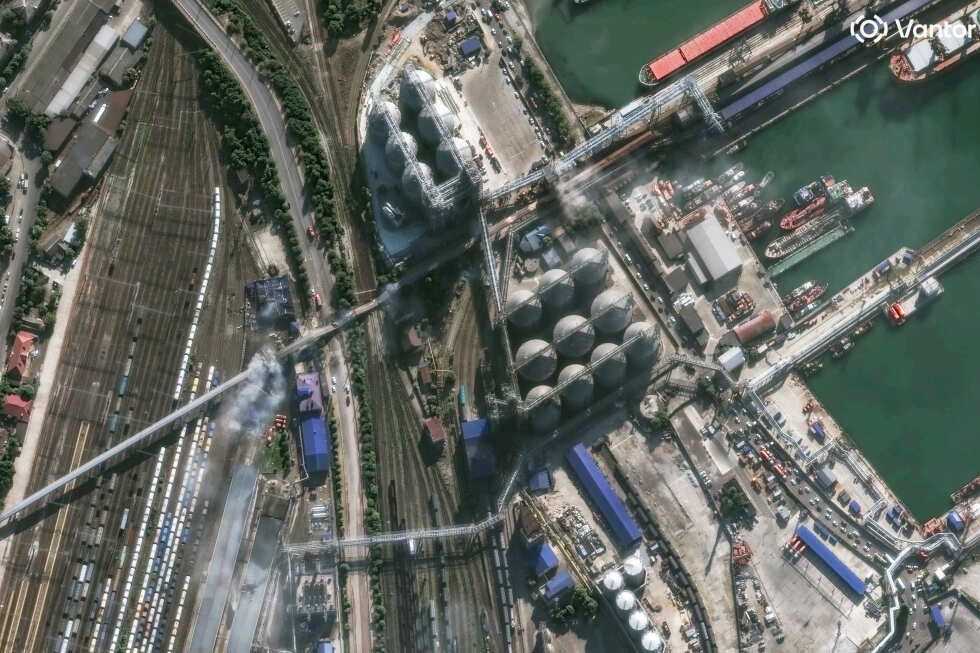
    In turn, Ukraine’s continuing drone campaign against Russia’s energy sector claimed new targets overnight. Ukraine’s General Staff confirmed its drones struck a major Russian oil refinery and a key oil pipeline pumping station. Russian local media also reported a fire at a chemical plant in the southern Stavropol region following a suspected drone strike, though regional officials have not formally confirmed a direct hit.

    Amid shifting global energy markets disrupted by regional conflict, two major Western backers of Ukraine have recently adjusted sanctions on Russian oil to address growing supply shortages. The United Kingdom, one of Kyiv’s most vocal supporters, announced Wednesday it is loosening restrictions on Russian crude that is processed into diesel and jet fuel in third countries, a change driven by rising fuel prices tied to ongoing conflict in the Middle East. The effective blockade of the Strait of Hormuz, a critical global shipping chokepoint, has sparked widespread supply concerns that prompted the policy shift.

    The UK’s adjustment follows a similar move by the United States, which announced a 30-day extension of a temporary waiver allowing countries to import Russian oil that is already loaded onto tankers at sea. The extension marks another reversal of policy by the Trump administration, which previously stated it would resume full sanctions on Russian oil. The temporary sanctions waiver was first introduced in early March and extended once already in April.

    Contributions to this report were provided by Geir Moulson in Berlin, Lorne Cook in Brussels, Hanna Arhirova in Kyiv, and Barry Hatton in Lisbon.

  • Ukraine ally Britain eases sanctions on Russian oil as fuel prices surge over Iran conflict

    Ukraine ally Britain eases sanctions on Russian oil as fuel prices surge over Iran conflict

    LONDON – In an unannounced policy shift aimed at insulating British households from skyrocketing living costs driven by the closure of the Strait of Hormuz, the British government has relaxed key sanctions targeting Russian crude oil, official documents confirm. A new trade authorization that went into force Wednesday explicitly allows imports of Russian-origin oil that has been processed into jet fuel and diesel in third-party countries including India and Turkey, a carve-out not permitted under the original sanctions regime implemented after Russia’s 2022 full-scale invasion of Ukraine.

    The policy change comes amid a global energy market upheaval triggered by Iran’s closure of the Strait of Hormuz, a critical maritime chokepoint that typically carries roughly 20% of the world’s daily oil supplies. The closure, which followed the escalation of U.S.-Israeli military action against Iran, has sent global fuel prices into a sharp upward spiral and stoked widespread fears of imminent jet fuel shortages across Europe, including the U.K.

    U.K. Treasury officials have framed the adjustment as a narrow, temporary measure. “These changes are for a time limited period and on a very specific issue,” said Treasury minister Dan Tomlinson, emphasizing that the government’s broader commitment to harsh sanctions on Moscow remains unchanged. Britain has positioned itself as one of Ukraine’s most steadfast military and political allies since the 2022 invasion, and the government continues to assert that its Russia sanctions are among the strictest enforced by any Western economy.

    But the move has already drawn sharp criticism from cross-party political figures, who warn it will undermine the global pressure campaign to weaken Russia’s war economy. Emily Thornberry, chair of Parliament’s Foreign Affairs Committee, argued that the reversal would leave Ukrainians feeling betrayed. “Ukraine’s allies should keep squeezing Russia’s oil industry, because it is absolutely crippling their economy,” Thornberry said.

    The U.K.’s policy shift aligns with a similar easing of sanctions by the United States, which earlier this week extended a 30-day sanctions exemption that allows U.S. entities to facilitate purchases of Russian oil cargoes already en route by sea. The coordination between the two countries on easing comes even as Western powers publicly reaffirm their commitment to maintaining pressure on Russia. On Tuesday, finance ministers from the Group of Seven wealthy nations, which includes both the U.S. and the U.K., released a joint statement reaffirming “our unwavering commitment to continue to impose severe costs on Russia in response to its continued aggression against Ukraine.”

    The dual messaging – public commitments to harsh sanctions paired with quiet adjustments to soften energy trade rules – underscores the growing tension Western governments face between sustaining their campaign against Russia and avoiding domestic political backlash from surging energy costs for consumers.

  • British PM Starmer congratulates Arsenal as title celebrations go deep into the night

    British PM Starmer congratulates Arsenal as title celebrations go deep into the night

    After 22 years of near misses, broken expectations, and relentless waiting, Arsenal Football Club has finally reclaimed the English Premier League title, outlasting defending champion Manchester City to seal soccer’s most coveted domestic trophy late Tuesday.

    The long-awaited victory drew an immediate, jubilant reaction from one high-profile lifelong Arsenal supporter: British Prime Minister Keir Starmer, who stepped away from a spiraling domestic political crisis to share his joy with the public. Taking to social platform X shortly after the title was confirmed, Starmer wrote, “22 long years for the Arsenal. But finally, we’re back where we belong. Champions!”

    For Starmer, the moment of celebration comes at a rare bright spot amid mounting pressure on his leadership. His Labour Party suffered devastating losses in May 7 local and regional elections, leaving his grip on power hanging by a thread. Dozens of Labour parliamentarians have publicly called for his resignation, one senior cabinet member has already stepped down, and popular potential challenger Andy Burnham, the Mayor of Greater Manchester, is preparing a leadership bid by contesting a parliamentary seat. In a neat twist of fate, the result that brought Starmer joy saw his home city’s Arsenal defeat Burnham’s region’s powerhouse Manchester City to the crown.

    The newly crowned champions did not hold back in their celebrations, with the party stretching long into the London night and through to early dawn. Arsenal midfielder Eberechi Eze shared behind-the-scenes photos of the festivities on his personal Instagram account as late as 5 a.m. local time. One image in particular drew wide attention: it shows Arsenal captain Martin Odegaard leaning back with an Arsenal-branded bottle held between his lips, a playful jab at critics who have labeled the squad “bottlers” — British slang for teams that crumble under high pressure. The dig hits close to home: Arsenal finished as league runners-up for three consecutive seasons and had not won a major trophy since 2020, leading to widespread claims they could not deliver when it mattered most.

    Social media platforms were flooded with amateur footage of the jubilant squad, including star players Eberechi Eze, Declan Rice, Bukayo Saka and Jurrien Timber, wandering the grounds of their home ground, the Emirates Stadium, as the sun rose over London on Wednesday morning.

    The official trophy lift is scheduled for Sunday, after Arsenal’s final league match of the season away to Crystal Palace at Selhurst Park.

  • UK loosens Russian oil sanctions as fuel prices rise

    UK loosens Russian oil sanctions as fuel prices rise

    Against a backdrop of soaring fuel prices and growing global energy supply uncertainty triggered by tensions in the Strait of Hormuz, the UK government has rolled back a set of strict sanctions targeting Russian crude refined into diesel and jet fuel in third-party nations. The temporary waiver, which took effect on Wednesday, also rolls back some restrictions on the maritime transportation of Russian liquefied natural gas (LNG), marking a sharp shift from the UK’s long-standing stance as a leader of international economic pressure on Moscow over its full-scale invasion of Ukraine.

    The policy adjustment comes just one day after the UK joined a G7 statement reaffirming its unwavering commitment to imposing severe economic costs on Russia, and just months after London announced plans to fully ban imports of Russian-origin refined oil products processed in third countries. The revised sanctions framework will remain in place indefinitely, with periodic reviews to adjust or revoke the waiver as needed. The temporary LNG transportation licence, by contrast, is time-limited, expiring on January 1 next year.

    Officials frame the move as a targeted, necessary adjustment to protect domestic energy security amid growing supply disruptions tied to the Israel-Iran conflict that has choked the critical Strait of Hormuz shipping lane. “This small and specific change is designed to protect the security of supply for foundational goods that our economy depends on, like jet fuel,” Treasury minister Dan Tomlinson told BBC Breakfast. “We remain fully committed to supporting Ukraine, but we have to make sensible decisions for British families struggling with the cost of living crisis.”

    The change will effectively reopen UK markets to jet fuel refined in major processing hubs like India and Turkey, both of which import large volumes of Russian crude for refining. Supply disruptions have sent global jet fuel prices soaring: prices more than doubled immediately after the outbreak of the latest Middle East conflict, and remain 50 percent higher than pre-crisis levels. Domestically, UK petrol prices hit a new post-2022 war high of 158.52 pence per litre for unleaded fuel as of Monday, according to motoring organisation the RAC, and multiple international airlines have been forced to cancel flights and raise ticket prices to offset sky-high jet fuel costs.

    But the policy shift has drawn fierce criticism from across the political spectrum and from international allies. Opposition foreign affairs committee chair Dame Emily Thornberry said Ukrainian officials had expressed deep disappointment with the move overnight, noting that Ukraine has long looked to the UK as one of its most steadfast allies. “Just because other countries are making the wrong choice does not mean we have to follow them,” Thornberry said, pushing back on the argument that the UK was aligning with existing policy changes from the US and Spain. Even senior Conservative leader Kemi Badenoch condemned the move, pointing out that “after 18 months of standing up to Putin, the government has quietly issued a licence allowing imports of Russian refined oil” – a contradiction, she argued, after the recent parliamentary vote against new domestic North Sea oil and gas drilling that leaves the UK importing Russian energy instead of producing it at home.

    Energy experts have also questioned the necessity and impact of the waiver. Robin Mills, chief executive of Dubai-based energy consultancy Qamar Energy, told the BBC that the adjustment is unlikely to bring down domestic fuel prices and sends a damaging message that Western sanctions on Russia can be eroded by regional crises. “There was never any real prospect of a physical jet fuel shortage in the UK,” Mills argued. “This measure is unnecessary, it won’t lower prices, and it undermines the entire sanctions framework.”

    The UK’s move follows a similar adjustment from the United States, which extended a waiver first introduced in March that allows trade in Russian oil already loaded onto vessels at sea. US officials have framed that policy as a short-term measure to keep global energy markets stable, but it has drawn widespread pushback from European allies. French President Emmanuel Macron has explicitly stated that the Strait of Hormuz tensions do not justify rolling back sanctions on Russia, while Ukrainian President Volodymyr Zelensky has repeatedly emphasized that “every dollar paid for Russian oil is money for the war.”

    UK officials have pushed back against criticism, stressing that the overall sanctions regime against Russia has actually been tightened in recent weeks. A government spokesperson noted that the UK has introduced a new wave of restrictions, including bans on Russian uranium trade and new maritime service restrictions that will progressively cut off Russian LNG from UK shipping and insurance services. “Our support for Ukraine is unwavering,” the spokesperson said. “These additional sanctions will further cut Russian revenues and degrade its ability to wage Putin’s illegal war.”

  • Norwegian journalist’s question to Modi sparks controversy in India

    Norwegian journalist’s question to Modi sparks controversy in India

    A scheduled two-day bilateral working visit by Indian Prime Minister Narendra Modi to Oslo, Norway this week has ignited a heated cross-border dispute after a local journalist posed unscripted, critical questions to the Indian leader, triggering backlash from Indian social media users and official pushback from New Delhi.

    The incident unfolded following a joint press appearance between Modi and his Norwegian counterpart Jonas Gahr Støre, an event where both leaders had pre-confirmed they would not field questions from reporters. As the two prime ministers exited the stage, veteran Norwegian journalist Helle Lyng called out repeatedly to Modi, asking why he refused to engage with the press and challenging him to respond to questions about alleged human rights violations in India. Modi did not offer a response to Lyng’s questions, and security personnel later intervened to stop her from asking follow-up questions as the prime minister departed.

    Lyng, a political correspondent for multiple Norwegian national outlets, later shared video footage of the exchange on social platform X, alongside posts raising concerns about declining press freedom and human rights standards in India. She told BBC Hindi in a post-incident interview that she saw the questions as a core part of her professional duty, noting that Modi’s long-standing pattern of avoiding unscripted press engagement left few other opportunities to raise issues of public interest. “That’s how confrontational journalism works. You have to try to interrupt, you have to try to get the answers you are looking for,” she explained, adding that her questions were based on reporting from what she called trusted global sources including Amnesty International and Human Rights Watch.

    Within hours of the incident going viral online, Lyng faced widespread harassment and trolling from Indian social media users. Many accused her of acting as a “foreign plant” or spy, framing her questions as a deliberate attempt to embarrass India on the international stage. Several prominent Indian news outlets also criticized her approach, arguing that confronting a visiting head of state in that manner violated basic standards of diplomatic respect.

    The official Indian response came shortly after the exchange, when the Indian Embassy in Norway publicly responded to Lyng’s social media post inviting her to raise her questions at a scheduled evening press briefing with senior Indian diplomats. At the briefing, Lyng repeated her core question: “Why should we trust you (India)? Can you try to stop the human rights violations that goes on in your country?”

    Senior Indian diplomat Sibi George flatly rejected the allegations, pushing back strongly against the framing of Lyng’s question. He emphasized that India’s constitution explicitly enshrines democratic protections, including freedoms of thought, expression, belief, and worship for all citizens. He also criticized foreign critics for relying on what he called inaccurate reports from uninformed non-governmental organizations, noting “People have no understanding of the scale of India. They read one or two reports published by some God-forsaken, ignorant NGOs and then come and ask questions. Don’t worry about it. We are proud to be a democracy; we are a democratic society for centuries.”

    This incident is not an isolated case: earlier in the same European trip, two Dutch journalists raised similar questions about minority rights and press freedom in India during Modi’s visit to the Netherlands, prompting an identical rebuttal from George.

    The dispute comes against a backdrop of growing international scrutiny of press freedom in India. Last month, global press freedom watchdog Reporters Without Borders released its annual World Press Freedom Index, which ranked India 157th out of 180 assessed countries. Norway, by contrast, has held the top spot on the index for multiple consecutive years, reinforcing its global reputation as a defender of aggressive independent journalism.

    Modi, who has led India as prime minister since 2014, has never held a traditional solo press conference since taking office, and has rarely taken unscripted questions from journalists during domestic or international visits. This pattern has long drawn criticism from press freedom advocates, who argue it reduces transparency and accountability for the Indian government.

  • World shares track Wall Street’s retreat as bond markets crank up the pressure

    World shares track Wall Street’s retreat as bond markets crank up the pressure

    Global equity markets across Europe and Asia slid into negative territory on Wednesday, as a sharp upward climb in global bond yields intensified downward pressure on risk assets, erasing gains from the recent artificial intelligence-fueled tech stock rally. The upward trend in bond yields is being driven by persistent uncertainty stemming from the ongoing conflict in Iran, which has stoked widespread investor anxiety that inflation will remain elevated for far longer than previously projected.

    U.S. equity futures pointed to a mixed open following three consecutive days of losses for major domestic indexes that followed their recent record highs. S&P 500 futures gained 0.2% in early pre-market trading, while Dow Jones Industrial Average futures ticked 0.1% lower. On Tuesday, the benchmark S&P 500 closed 0.7% lower at 7,353.61, the Dow fell 0.6% to 49,363.88, and the Nasdaq composite dropped 0.8% to 25,870.71, extending the recent pullback from all-time peaks.

    In early European trading, benchmark indexes showed mild but uneven losses and gains. Germany’s DAX held nearly steady at 24,390.32, posting a marginal change that left it effectively flat. Paris’s CAC 40 inched up 0.1% to end the early session at 7,992.24, while the United Kingdom’s FTSE 100 dropped 0.3% to 10,303.23.

    Across Asian markets, losses were more broadly consistent. Japan’s Nikkei 225 fell 1.2% to close at 59,804.41, even as the yield on 10-year Japanese government bonds slipped slightly to just under 2.8%, holding near its highest level since 1997. Currency markets saw small shifts: the U.S. dollar edged down to 159.05 Japanese yen, from 159.09 yen on Tuesday evening, while the euro slipped modestly to $1.1591 from $1.1608.

    Other Asian benchmarks also closed in negative territory. Hong Kong’s Hang Seng Index dropped 0.6% to 25,656.12, while mainland China’s Shanghai Composite shed 0.3% to 4,162.10. Australia’s S&P/ASX 200 fell 1.3% to 8,496.60, and South Korea’s Kospi dropped 0.9% to 7,208.95, extending a broad sell-off from the prior session. Taiwan’s Taiex index also gave up 0.4% by the close of trading.

    The sell-off in equities comes as the 10-year U.S. Treasury yield has climbed to 4.66%, up from 4.61% late Monday and from less than 4% before the Iran conflict began. This sharp, rapid increase in sovereign bond yields is a global trend that pushes up borrowing costs for corporations and consumers, while also making stretched equity valuations look far less attractive relative to low-risk government debt. Higher yields also lift interest rates for mortgages and corporate loans earmarked for AI data center construction, one of the single largest drivers of U.S. economic growth in recent quarters.

    Tech stocks have been hit particularly hard in the pullback, after months of double-digit gains driven by investor excitement over artificial intelligence. Many market critics have warned for months that AI enthusiasm pushed tech valuations to unsustainable levels, leaving the sector vulnerable to a correction as borrowing costs rise. All eyes this week are on Nvidia, the leading AI chipmaker that has become the face of the AI boom, which is set to release its latest quarterly earnings results on Wednesday. The company has repeatedly smashed analyst earnings and growth forecasts quarter after quarter, and its performance this time around is widely expected to set the tone for whether the broader tech sector and U.S. stock market can resume their earlier rally. Nvidia already fell 0.8% on Tuesday, making it one of the largest single drags on the S&P 500 due to its massive market capitalization.

    Other U.S. stocks also moved on individual news on Tuesday. Cybersecurity and cloud computing firm Akamai Technologies dropped 6.3%, one of the steepest losses on Wall Street, after announcing plans to raise $2.6 billion through a convertible note offering. Home Depot outperformed, rising 0.9% after reversing an early loss following its quarterly report. The home improvement retailer posted profit and revenue that edged past analyst expectations, though its key metric for same-store sales, closely watched by retail analysts, came in below projections. Home Depot CEO Ted Decker noted that customer demand remained consistent with levels seen throughout last year, “despite greater consumer uncertainty and housing affordability pressure.”

    So far this earnings season, a large share of large U.S. companies have reported better-than-expected quarterly profits, a trend supported by continued resilient consumer spending even in the face of high gasoline prices and broader economic headwinds. This stronger-than-forecast earnings growth helped push U.S. stock indexes to record highs in recent weeks, but the sudden unrest in bond markets now threatens to derail that momentum.

    Oil prices, a key driver of inflation pressures, edged lower early Wednesday even as conflict continues to disrupt shipping through the Strait of Hormuz, a critical chokepoint for global oil supplies. U.S. benchmark crude fell $1.15 to $103.00 per barrel, while international benchmark Brent crude dropped $1.29 to $109.99 per barrel. The national average for a gallon of regular gasoline in the U.S. currently sits at $4.51 per AAA data, around 43% higher than the average price at this time last year. Persistent uncertainty around how long the conflict will disrupt Hormuz shipping has kept oil prices volatile in recent weeks, amplifying broader inflation concerns that have pushed bond yields higher.

  • Trump’s Greenland envoy faces uphill battle on mission to make ‘friends’

    Trump’s Greenland envoy faces uphill battle on mission to make ‘friends’

    In a highly charged diplomatic development, Jeff Landry, the dual-role Louisiana Governor and special Greenland envoy appointed by former (as of 2026) US President Donald Trump, has touched off widespread controversy after launching his first official visit to the semi-autonomous Danish territory in the Arctic, despite arriving without an official government invitation. The visit comes in the wake of a major international crisis that erupted when Trump publicly threatened to seize Greenland by force over its strategic significance to US national security, placing the Arctic island at the center of a lingering high-stakes dispute between Washington, Copenhagen and Nuuk.

    Upon disembarking from an official US government aircraft in Greenland’s capital Nuuk on Monday, Landry framed his trip as a purely constructive outreach mission. “I’m here simply to build relationships, to look, to listen and to learn,” he told assembled reporters, adding that Trump had personally instructed him to “go over there, and make a bunch of friends.” Landry’s itinerary includes participation in the “Future Greenland” business summit, a meeting with local business and community leaders, and the Thursday opening of a new US consulate building in central Nuuk. He is accompanied by a small delegation, including a US physician who told Danish broadcaster TV2 he had volunteered to evaluate local medical needs — a move Greenlandic Health Minister Anna Wangenheim has already decried as “deeply problematic.” This proposed medical assessment follows a February 2026 announcement from Trump that the US would deploy a hospital ship to Greenland, an offer immediately and flatly rejected by Greenland’s elected leadership.

    Far from the friendly outreach Landry has claimed, the visit has immediately reignited long-simmering anger and distrust among Greenlandic officials and residents, who have repeatedly drawn a hard red line against any US push to acquire the territory. Just hours after Landry’s arrival, Greenlandic Prime Minister Jens-Frederik Nielsen reaffirmed the island’s long-stated position in a press briefing: “We clearly reiterated that the people of Greenland are not for sale and that Greenlanders have the right to self-determination.” While Nielsen acknowledged the Monday meeting between Landry, US Ambassador to Denmark Ken Howery, and his team was conducted in a “good tone,” he stressed no parallel negotiations would proceed while top-level working group talks between the three governments remain ongoing.

    Greenlandic Foreign Minister Mute Egede doubled down on the government’s stance, telling Agence France-Presse that Washington has not abandoned its territorial goals. “We have our red line. The Americans’ starting point has not changed either,” he said. For many ordinary Greenlanders and public figures, the timing of the visit — coming just four months after mass protests in Nuuk against Trump’s territorial claims — is seen as deeply inappropriate. Maliina Abelsen, a Greenlandic businesswoman and former politician who declined Landry’s meeting invitation, argued that the envoy should have waited until tensions cooled significantly. “It’s only four months ago that we felt very threatened by the US, so the timing is not appropriate,” she said, criticizing the visit as an attempt to bypass established diplomatic protocols. Aqqaluk Lynge, an Inuit author and former president of the Inuit Circumpolar Council, noted that the crisis has frayed longstanding positive ties between Greenland and the US. “There is so much distrust now,” he said. “The sad thing is we have had a beautiful relationship with the people in the US, especially with the indigenous people.”

    During comments to reporters at the “Future Greenland” summit on Tuesday, Landry defended the Trump administration’s approach, claiming that prior US governments had completely overlooked the Arctic territory. “Before Donald Trump, the United States was ignoring Greenland,” he said. “When was the last time that any high-level diplomats came to Greenland? Who cares more about Greenlanders than the Trump administration and the president? Because seemingly before the president, no one cared. Greenland didn’t exist, until Donald Trump put it on the map.” When asked directly whether Trump still holds the goal of absorbing Greenland into the US, Landry deflected, telling the BBC: “You’ll have to talk to the president yourself.”

    Rasmus Sinding Søndergaard, a senior researcher of American foreign policy at the Danish Institute of International Studies, characterized Landry’s conciliatory public tone as a deliberate tactical shift from the Trump administration’s earlier open coercion. “I think it’s a change in tactics,” he explained. “The approach now is to try and befriend people, rather than coerce them.”

    The upcoming consulate opening has already become a flashpoint for criticism: the modern central Nuuk high-rise that houses the facility has already been nicknamed “Trump Towers” by local residents, and multiple high-profile Greenlandic politicians have said they will boycott the event. Naaja H. Nathanielsen, a Greenlandic MP and former business minister who will skip the opening, argued that Landry’s underlying mission remains unchanged. “Landry is tasked to help the president acquire Greenland. That is a reason why he’s here to ‘listen’ and visit, and that in itself is, I think, still very serious.”

    To date, the three-nation working group established after Trump walked back his threat of military force has not reached a final resolution to the dispute. While public tensions have eased slightly in recent months, multiple reports have confirmed the US continues to push for expanded military access to the strategically located Arctic territory, leaving the core dispute unresolved and local populations on edge.