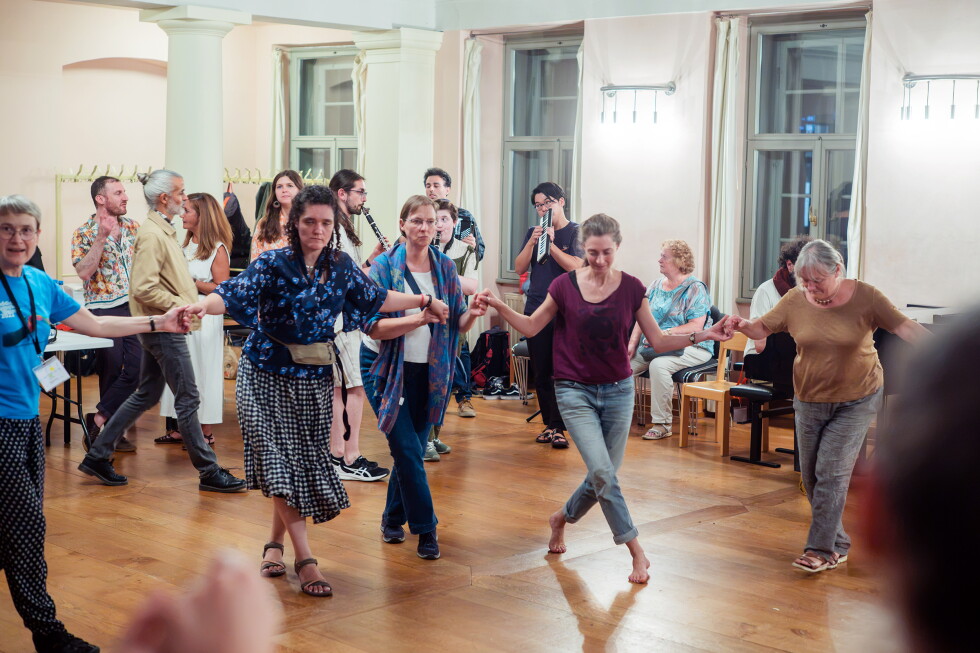
Nestled in central Germany, Weimar is a city etched into global cultural memory: it is the birthplace of the German Enlightenment, the creative home of Johann Wolfgang von Goethe and Franz Liszt, and the namesake of the fragile democratic republic that collapsed to open the door for Nazi Germany. For more than 25 years, however, a distinctly different, once-thought-lost European cultural tradition has filled its streets and performance venues: the vibrant language, music, and heritage of Yiddish.\n\nFounded in 1998 by composer and cultural scholar Alan Bern, who still serves as artistic director, the annual Yiddish Summer Weimar festival has grown from a small weekend workshop for a handful of participants to Europe’s largest gathering dedicated to Yiddish culture. Drawing hundreds of students, musicians, and scholars from across the globe, the month-long event combines immersive language workshops, skill-building musical training, and nightly public concerts that draw a combined audience of more than 10,000 people annually. All of it centers on a core mission: to frame Yiddish culture as a living, evolving tradition, not just a footnote to the Holocaust that nearly eradicated it.\n\n“From the beginning, the idea was to present Yiddish culture as something which is alive, and not something that was entirely destroyed by the Shoah,” Bern explained. Unlike the aristocratic roots of many Western European classical traditions, Bern notes Yiddish culture emerged from the masses of Jewish communities across the continent. “Jewish culture, Yiddish culture, has a different yichus than Western European classical culture. It came not from the courts of the aristocracy but the masses of the Jewish street, and he believes it’s one of Europe’s great cultural treasures nonetheless.”\n\nA millennium of Yiddish history\nYiddish first emerged around the 10th century among Ashkenazi Jewish communities in the Rhineland, in what is now western Germany. As these communities migrated eastward across Central and Eastern Europe, settling in what would become Poland, Lithuania, Ukraine, and Hungary, the language evolved: it retains close linguistic ties to German, but integrates Hebrew, Aramaic, and Slavic vocabulary and grammatical structures. By 1939, more than 11 million people around the world spoke Yiddish, making it the primary language of the vast majority of European Jews. Over centuries, it fostered a rich, distinct ecosystem of literature, folk music, political thought, and art — a world that was almost entirely destroyed during the Holocaust.\n\nToday, Yiddish is experiencing a quiet 21st-century renaissance, with growing demand across diverse communities. It remains the native language of expanding ultra-Orthodox and Hasidic Jewish communities from New York to Israel, spurring a boom in contemporary Yiddish pop culture, from rap music to graphic novels and new periodicals.\n\n“We have a huge Hasidic pop culture, a contemporary pop culture, which is growing day by day, and where you see often mixing of different elements,” said Eidel Malowicki, a Yiddish teacher at the festival who grew up in a Hasidic family in Vienna. “Now you even have Hasidic Rap, and it’s a repertoire that is growing every day. … there’s new comics coming out, new magazines.”\n\nThe revival also extends to secular Jewish communities and non-Jewish learners, for whom Yiddish fills unique personal and cultural gaps. For many young secular Jews in Israel, Yiddish offers a broader lens to explore Jewish identity outside the narrow, Hebrew-centric Zionist narrative many have grown disillusioned with.\n\nDan Kedem, a volunteer at this year’s festival who traveled from the Tel Aviv area, called Yiddish “a sort of path of redemption from the reality that I grew up in within Israel.” “The Jewish story taught to me in Israel was linear and narrow,” he explained. “So one of the things that I found most fascinating about Yiddish is that exploration of this other Jewish culture, identity and root system of paths and ideas has allowed me to explore my own identity through a much wider lens and open myself to new ideas and new thoughts.”\n\nAcross the globe, access to Yiddish language learning has exploded. The Yiddish academic journal *Ingeveb* projects that more than two dozen Yiddish-focused programs, camps, and festivals will run globally in summer 2026 alone. Popular language-learning platform Duolingo reports its Yiddish course now counts nearly 300,000 active users, most of them under 25.\n\nBridging divided cultural worlds in Weimar\nRoughly half of Yiddish Summer Weimar’s participants are not Jewish, and many are German locals seeking to reconnect with a cultural heritage erased from their national history. Michael Panzner, an intercultural consultant from Frankfurt, told the festival he grew up never meeting Jewish people in Germany, and long saw Jewish culture as a “secret” an important, overlooked part of his country’s history. At Yiddish Summer Weimar, he found a judgment-free space to explore that missing part of his national identity.\n\n“I think Yiddish is being given way too little attention in today’s cultural life and social life,” Panzner said.\n\nFor Malowicki, whose native Hasidic Yiddish dialect is rarely taught by native speakers in global programs, the festival fills a critical role as a bridge between divided cultural communities. “I see it as a chance to create a bridge between worlds that otherwise wouldn’t have a bridge or a connection,” she said. “I think that there’s a lot that we can learn from one another and our different worlds.”\n\nOrganizers frame the festival through a transcultural, transnational lens, rejecting the common misperception of Yiddish as an isolated culture only connected to remote Eastern European shtetls. To advance that mission, they regularly collaborate with artists and communities outside Ashkenazi Jewry: past projects have included youth orchestras from Poland and France, while this year’s event featured the Yam Ensemble, a collective of young musicians from Germany, Greece, and Turkey that explores shared cultural roots between Mediterranean folk and Klezmer music.\n\nWhy Weimar? It is not a historic center of Yiddish life, unlike Warsaw, Vilnius, or Krakow, but Bern and other organizers argue it is the perfect home for the festival. The city is defined by two conflicting legacies: it is the heart of German high culture, and also a cradle of 20th-century fascism: Adolf Hitler rebuilt the Nazi Party here in 1926, and today the surrounding state of Thuringia is the strongest base for the far-right, neo-Nazi-linked Alternative for Germany party.\n\n“It’s very ironic to think that here is a place that has a large Yiddish music festival, maybe one of the biggest in the world, and sold out concerts and everything, and it’s this same environment in which there’s a neo-Nazi movement that is just growing all the time,” Bern noted.\n\nEven as a cultural hub, Weimar is the ideal place for Yiddish, festival curator Andreas Schmitges argues: the city has long been celebrated as a center of German *hochkultur* (high culture), from Goethe and Schiller to Liszt and the Bauhaus movement. But Yiddish culture deserves to be counted among Europe’s great high cultural traditions too, he said.\n\n“To be honest, I think that Yiddish culture is right here in the right place where it belongs because it’s also one of Europe’s hochkulturen, so this is a perfect place,” Schmitges said.\n\nThis year’s festival ran from July 11 to August 15, with the main public concert week held from August 8 to 15, carrying forward a 25-year mission of reviving a living culture that refuses to be defined only by tragedy. “We’re not in a constant posture of mourning the past,” Bern said. “We’re also living and creating, so the fact that we’re talking about a living, creative culture, which is not in denial of the past, but also not stuck in the past, was, I think, surprisingly refreshing to people already in 1998, and it still is today.”
标签: Europe
欧洲
-
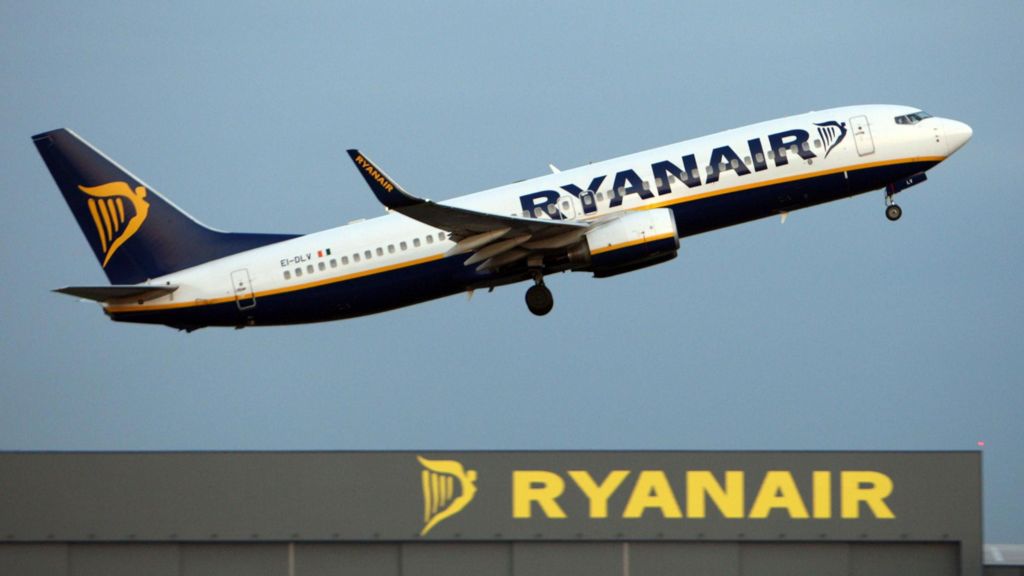
Engine parts smashed Ryanair window that man’s head was sucked out of, report says
A mid-flight engine failure on a Ryanair-operated flight last July left one passenger seriously injured after broken engine fragments shattered a cabin window, pulling his head and shoulder partially out of the aircraft, US transportation investigators have confirmed in a newly released preliminary assessment.
The event unfolded on 10 July, when the flight — traveling from Thessaloniki, Greece, to Memmingen, Germany, and operated by Ryanair’s subsidiary Malta Air — suffered a catastrophic fan blade break in its right-side engine just moments after departing Thessaloniki International Airport. As the broken fan blade fragmented, pieces of the engine structure collided with the plane’s cabin, dislodging one window entirely.
National Transportation Safety Board (NTSB) investigators, who took over full probe responsibilities at the request of Greek civil aviation authorities, confirmed that 62-year-old Serbian national Ljubisa Karović was seated adjacent to the broken window. The sudden change in cabin pressure pulled Karović’s head and right shoulder through the opening, leaving him with serious injuries and in acute shock following the incident.
In accounts collected after the emergency landing, Karović’s wife Svetlana Grković Maksimović recalled that she and two other traveling passengers grabbed onto her husband’s legs and held him firmly for several minutes, preventing him from being pulled completely out of the aircraft as the crew worked to stabilize the plane.
The NTSB’s timeline of the incident matches the chaotic sequence reported by crew members. Shortly after takeoff, as the plane climbed to cruising altitude, the flight crew received an alert indicating high engine vibration. Following standard protocol, they reduced power to the affected engine and ran a series of system checks. When vibrations temporarily subsided, the crew resumed the climb on autopilot.
Minutes later, however, vibrations spiked dramatically, followed by a loud bang that alerted the entire cabin to the seriousness of the failure. The crew immediately declared an in-flight emergency and initiated an immediate descent back to Thessaloniki, the departure airport.
Cabin crew members told investigators they felt the growing vibrations, spotted a small amount of smoke in the cabin, and deployed emergency oxygen masks before passengers began calling for help over the partially ejected passenger. The crew ultimately made a safe, uneventful landing back at Thessaloniki, with emergency crews waiting on the tarmac to treat the injured passenger.
Preliminary inspection records show the affected engine underwent routine ultrasonic testing for structural faults in May of this year, and no anomalies or damage were detected during that check. Ryanair Group CEO Michael O’Leary has previously hypothesized that the failure stemmed from foreign object damage — debris from the airfield or environment striking the engine fan blade during or before takeoff. The NTSB has not yet issued a final determination on the root cause of the incident, with the full investigation ongoing.
-
Family of Irish plane crash victim awarded $29m in damages
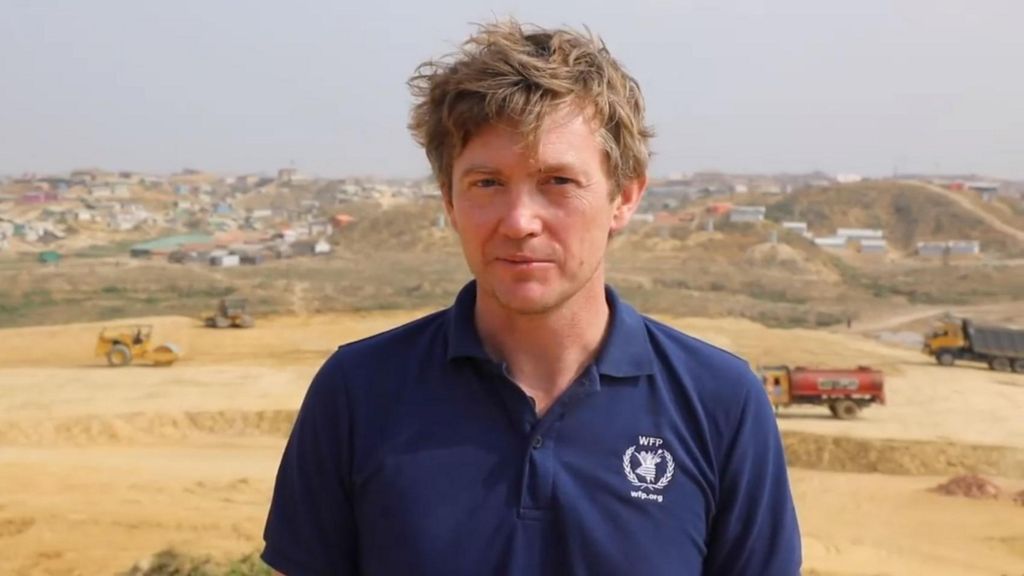
Six years after one of aviation’s deadliest modern crashes delivered unthinkable grief to families across the globe, a U.S. jury has delivered a landmark verdict holding aircraft manufacturing giant Boeing accountable for the loss of an Irish United Nations engineer who dedicated his life to aiding vulnerable communities. On March 10, 2019, Ethiopian Airlines Flight ET302, a brand-new Boeing 737 MAX jet, crashed just six minutes after departing Addis Ababa for Nairobi, Kenya, killing all 157 people on board. Among those killed was Michael “Mick” Ryan, a 40-something engineer from County Clare, Ireland, based in Cork, who worked for the UN World Food Programme (WFP) and left behind a wife and two children. This week, a Chicago civil jury ruled in favor of Ryan’s widow, Naoise Connolly Ryan, awarding her family $29 million (£21.5 million) in compensatory damages after she brought a civil wrongful death claim against Boeing over the disaster. The case marks one of the few wrongful death claims against the manufacturer to go to full trial, rather than being resolved through out-of-court settlement. Lawyers for the family say the verdict is far more than a financial award—it is a critical step toward securing long-overdue accountability and justice for the lives lost to the 737 MAX design failures that caused two deadly crashes within five months of each other. “While no amount of money can ever bring Mick back or undo the devastating loss his family has carried for six years, we are deeply grateful that the jury carefully weighed all the evidence and reached this decision,” lead family attorney Steven C Marks, of the Florida-based law firm Podhurst Orseck, told reporters after the verdict. Marks praised Connolly Ryan for her unwavering resolve in pursuing accountability, noting that she had fought for years to shine a light on the failures that led to her husband’s death. “Though this verdict is a major milestone in our fight, the larger work of holding Boeing responsible for this tragedy—and ensuring nothing like this can ever happen again to another family—remains just as urgent,” he added. In a prepared statement responding to the verdict, a Boeing spokesperson expressed remorse for the lives lost in both the Ethiopian Airlines crash and the earlier fatal 737 MAX crash of Lion Air Flight 610 off Indonesia in October 2018, which killed 189 people. “We are deeply sorry to all who lost loved ones on Lion Air Flight 610 and Ethiopian Airlines Flight 302,” the statement read. “While we have resolved nearly all of these claims through settlements, families are entitled to pursue their claims through the court process, and we respect their right to do so.” Beyond his role as a beloved husband and father, Ryan dedicated more than a decade of his career to delivering life-saving aid across some of the world’s most crisis-stricken regions. A memorial page published by the UN after his death details his extraordinary impact on vulnerable communities across Afghanistan, Sri Lanka, Nepal, Ethiopia and Bangladesh. Most notably, Ryan led infrastructure projects in Bangladesh that built flood and landslide-resistant shelters for tens of thousands of Rohingya refugees who had fled violence in Myanmar, work that saved countless lives at a time of unprecedented humanitarian crisis. He also helped construct critical medical treatment centers in Liberia during the 2014–2016 West African Ebola outbreak, when access to care was a matter of life and death for thousands of people. Speaking to BBC News NI, Marks emphasized that Ryan’s loss was felt far beyond his immediate family, saying: “Ryan will be missed by the world at large, because that was who he served. It’s tragic to the public, but it pales in comparison to the loss for the family. His impact was worldwide.” Investigations into the 2019 crash confirmed the disaster was caused by long-concealed design flaws in the 737 MAX’s Maneuvering Characteristics Augmentation System (MCAS), an automated anti-stall system that was added to the jet to compensate for its repositioned larger engines. After takeoff, two angle-of-attack sensors on Flight ET302 returned conflicting data, which triggered the MCAS system to repeatedly push the aircraft’s nose downward in a mistaken attempt to prevent a stall. Ethiopian accident investigators confirmed that pilots followed all required procedures to disable the faulty system, but were ultimately unable to overcome its repeated, uncommanded nose-down inputs before the jet crashed into the ground near Bishoftu, just 30 miles southeast of Addis Ababa. The impact of the crash was so severe that both of the plane’s engines were buried 10 meters deep in a 28-meter-wide crater, leaving little intact wreckage for recovery teams. The two 737 MAX crashes led to a 20-month global grounding of the aircraft fleet, a massive corporate scandal for Boeing, and sweeping changes to aviation safety regulations globally. To date, Boeing has paid more than $60 billion in fines, compensation, and legal settlements related to the crashes, though the latest verdict serves as a reminder that outstanding claims remain, and that many families have chosen to pursue their cases in court to secure public accountability rather than private settlement.
-
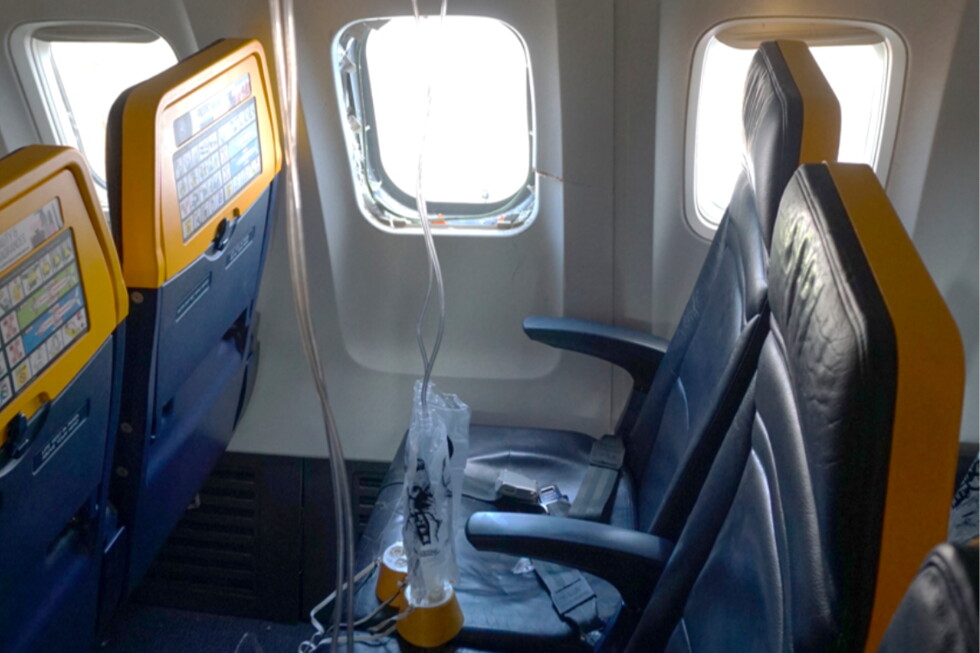
Broken engine parts shattered the Ryanair plane window that a passenger’s head got sucked into: NTSB
A mid-flight emergency that unfolded over Greece last July has been detailed in a new preliminary report from U.S. National Transportation Safety Board (NTSB) investigators, outlining how broken engine components shattered a passenger window minutes after takeoff, leaving a 61-year-old man partially pulled outside the aircraft before quick-acting fellow travelers pulled him back to safety.
The incident occurred on July 10 aboard a Malta Air-operated Boeing 737-800, a subsidiary of European budget airline giant Ryanair, which had just departed Thessaloniki, a major port city in northern Greece. According to the NTSB’s account, a fan blade inside the jet’s right engine fractured and broke loose, sending high-speed debris tearing through the fuselage and destroying the adjacent window in row 11, where the injured passenger was seated.
Investigators discovered bird remains within the damaged engine, leading to preliminary speculation that the aircraft may have collided with a flock of birds during its climb after takeoff. Still, the agency has not yet reached a final conclusion on what exactly caused the fan blade to fail.After the structural failure, the cabin immediately lost pressure, triggering the drop-down of emergency oxygen masks and filling the cabin with visible smoke or fog, crew members told investigators. It was only moments later that crew noticed passengers standing and calling for help, after the 61-year-old window-seat passenger was pulled partially into the broken window opening by rapid decompression. Fellow travelers worked quickly to haul him back into the cabin, a move that likely prevented a fatal outcome.
The injured man was relocated to an empty seat in row 12, where a passenger who worked as a physician provided immediate first aid for his injuries – which included neck and shoulder damage and friction burns from the decompression event. Other passengers worked with crew to retrieve a heavy metal box, which they positioned to block the broken opening and reduce air flow into the cabin until the jet could make an emergency landing.
Footage captured by passengers on board and later shared by local outlet Radio Thessaloniki documents the chaotic scene: passengers wearing dropped oxygen masks after pressure loss, a clear view of the blown-out window, and first responders working the aisle after the plane landed safely back at Thessaloniki Airport.Maintenance records reviewed by investigators show the failed right engine’s fan blades had undergone required ultrasonic inspections as recently as May 2026, with no damage detected in that check or a prior inspection in November 2025. Over the 12 months leading up to the incident, however, flight crews reported four separate suspected bird strikes involving the same engine, with bird remains confirmed after two of those events.
This incident marked an unusual handover of investigative authority: under international aviation regulations, Greece’s Hellenic Air and Rail Safety Investigation Authority permitted the NTSB to lead the probe, with Greek experts participating in the process. The NTSB issued a public reprimand to Ryanair CEO Michael O’Leary earlier this month after O’Leary told investors the investigation was already focused on foreign object damage, ruling out issues with the aircraft’s age or maintenance. The agency clarified that no causes have been ruled out at this preliminary stage, and O’Leary was not authorized to publicly disclose investigative details.
Jeff Guzzetti, a veteran former NTSB and FAA investigator who reviewed the preliminary findings on behalf of the Associated Press, noted that maintenance checks were completed on schedule per regulatory requirements. He added that investigators will almost certainly focus on how the inspections were conducted, and whether the four prior suspected bird strikes left hidden pre-existing damage that weakened the fan blade before the final failure.
“ We already understand the sequence of events that day, and even have some ideas about root causes, but there are still critical unanswered questions the NTSB will work to resolve,” Guzzetti explained.
The AP reached out to Ryanair, Boeing, and CFM International – the manufacturer of the 737-800’s engine – for comment on the NTSB’s preliminary findings, but had not received responses as of the report’s publication.
This engine failure is not an isolated incident for CFM-produced powerplants: at least two prior fatal or near-fatal incidents have involved broken engine parts penetrating the cabin. In 2018, a passenger on a Southwest Airlines flight was killed after being partially pulled out of a broken window caused by a fractured fan blade, and a similar blade failure occurred on another Southwest jet over Florida in 2016.Flight tracking data from Flightradar24 shows the 189-seat narrow-body jet was originally delivered new to Ryanair in 2008. Six minutes after departing Thessaloniki, the aircraft had climbed past 15,000 feet before pilots initiated an immediate descent to 6,000 feet to burn excess fuel over 30 minutes, before landing safely back at Thessaloniki roughly one hour after takeoff. All passengers disembarked normally after landing, with only the injured passenger requesting and receiving on-the-ground medical care.
-
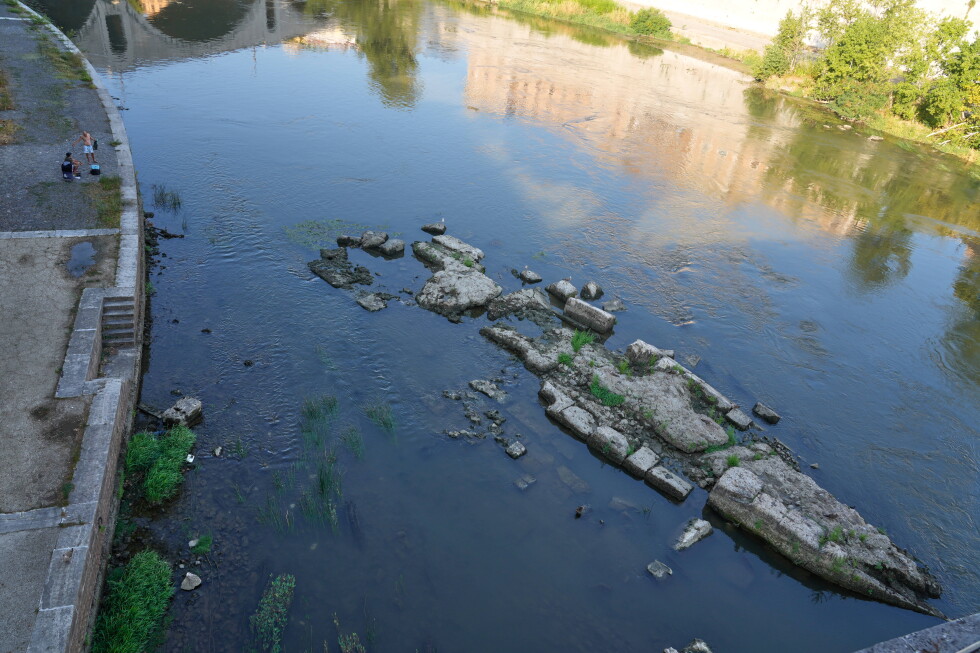
Nero’s Bridge emerges from Tiber River as Rome faces water crisis
A centuries-old archaeological treasure has risen from the shrinking waters of Rome’s iconic Tiber River, as a prolonged dry spell pushes the Italian capital into a growing water crisis. The stone remains of Nero’s Bridge, a structure that once linked central Rome to the right bank of the Tiber just steps from the famous St. Peter’s Basilica, are now fully exposed after weeks of near-total rainfall sent water levels plummeting to well below seasonal averages.
While the bridge bears the name of the infamous early Roman emperor Nero, archaeological scholars have traced its origins back even further in history. Antonella Bonini, an archaeologist with Rome’s cultural heritage superintendency, explained the name connection comes from the Emperor’s association with the surrounding area: Nero’s circus, the site where Christian tradition holds Apostle Peter was martyred, sits on the land that now houses the Vatican. But research indicates the bridge was actually constructed by Nero’s uncle, the Emperor Caligula, with evidence confirming it stood as early as 39 AD, nearly 2,000 years ago.
The dramatic drop in Tiber water levels that revealed the ancient structure is a symptom of a worsening water emergency across Rome. Giovanni Giganti, coordinator of the Rome civil protection service’s water management center, confirmed the river’s current flow has fallen below 80 cubic meters per second. That figure is roughly half the historic average flow for the month of July. Giganti added that while winter brought above-average precipitation to the region this year, extended dry spells that followed through spring and early summer created the current crisis, putting stress on the city’s water resources and revealing long-submerged landmarks along the river’s course.
The unexpected emergence of Nero’s Bridge has drawn public and archaeological attention, offering a rare chance to study a well-preserved piece of Rome’s ancient infrastructure that has spent most of its modern history hidden beneath the Tiber’s flowing waters.
-
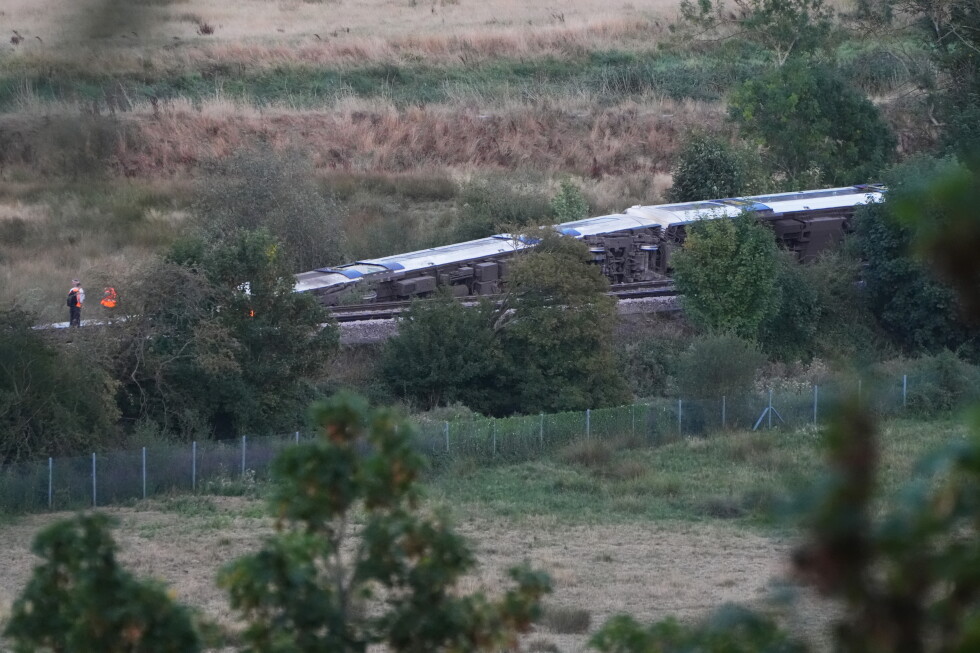
Passenger train derails and 11 people injured after carriages overturn in southern England
A routine Thursday commuter and leisure trip between London and the coastal Sussex town of Eastbourne turned into a chaotic incident when a Southern Rail passenger service derailed outside the popular tourist destination of Lewes, southern England, leaving multiple people injured, British Transport Police has confirmed. Three of the train’s carriages overturned in the crash, which left two people with severe injuries and a further nine with minor harm. The train, which departed London’s Victoria Station bound for Eastbourne, was carrying roughly 150 passengers when it left the tracks.
Rob Bradley, one of the passengers on board, was traveling with his 6-year-old daughter when the incident unfolded. He described how the train began to sway violently as it accelerated, before the carriage he and his daughter were occupying suddenly jolted upward, triggering an immediate emergency brake activation. “Everything got thrown forward. My laptop, my AirPods, our bags,” Bradley told the BBC in a post-evacuation interview. “The train kind of skidded for quite a while before it stopped and only then when we turned around did we see that the whole back of the train — literally where we were sat — was open and there was smoke and dust pouring into the carriage.”
After the train came to a halt, Bradley saw that one of the rear carriages had flipped onto its side, sliding down a grassy embankment to rest in an open field below. Though Bradley and his young daughter escaped without physical injury, he witnessed other trapped passengers from the overturned carriages with visible blood on their heads and clothing. He added that a second passenger told him they had sustained lacerations after a train window shattered during the derailment.
Aerial footage captured at the crash site shows emergency responders including firefighters and paramedics treating injured passengers in the adjacent field, with a large response fleet deployed: multiple ground ambulances and three air ambulances were on standby to transport severely injured people to local hospitals. British Transport Police confirmed that all 150 passengers were successfully evacuated from the crash site within approximately three hours of the derailment. As of Thursday, authorities have not confirmed what caused the incident, and a full investigation into the circumstances of the derailment is ongoing.
-
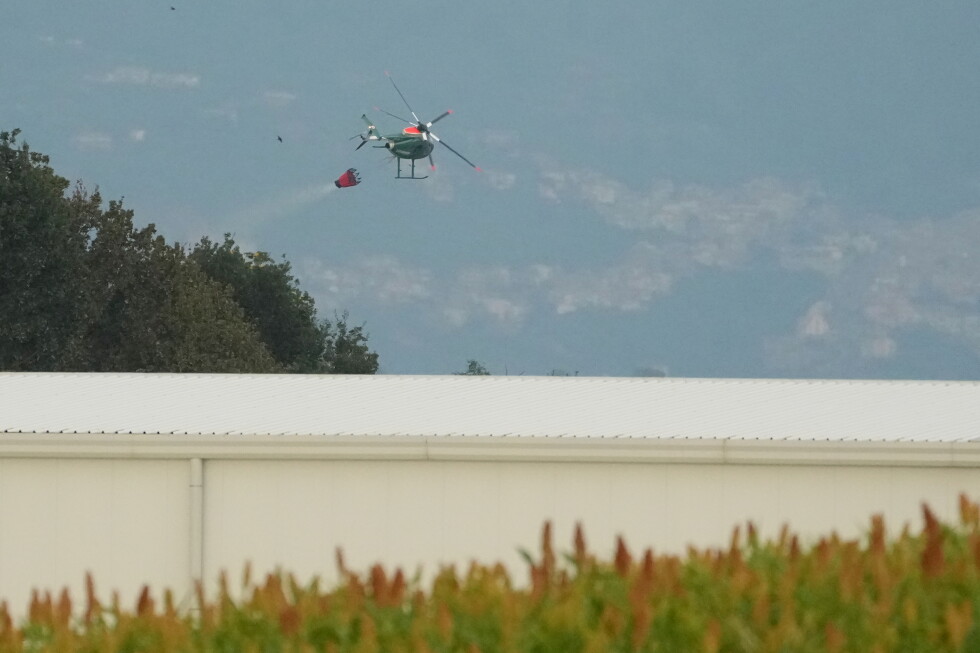
An explosion strikes an ammunition plant near Rome; no injuries reported
On Thursday, a powerful explosion triggered by an industrial fire ripped through an ammunition manufacturing facility in Colleferro, a small town located just outside of Rome, Italy. Local authorities confirmed that despite the dramatic scale of the incident, no casualties or injuries have been recorded so far.
The affected site is operated by KNDS Ammo Italy, a defense sector manufacturer that produces military ammunition and a range of other defense-related products. According to initial official briefings, the incident originated in the facility’s powder-pressing production department, where volatile explosive materials are processed.
Witnesses and local residents described hearing a deafening blast that shook buildings across the town. Visual content shared rapidly across social media platforms captured a massive, mushroom-shaped plume of thick smoke billowing high into the sky above the factory, shocking onlookers and sparking widespread public concern.
Emergency services mobilized quickly to contain the blaze: local law enforcement secured the perimeter of the site, while 10 dedicated firefighting crews, supported by a surveillance helicopter, worked to extinguish the flames. The fire spread from the factory grounds to adjacent dry vegetation, complicating initial containment efforts.
Colleferro Mayor Giulio Calamita acknowledged that the incident sparked widespread panic across the community, noting that “there was a huge scare” for local residents. Importantly, he confirmed that all 24 workers who were present inside the facility when the explosion occurred have now been accounted for, and the blast was limited to a single production and storage zone of the plant, preventing wider damage.
Francesco Rocca, president of the Lazio regional government, issued an official statement saying he was monitoring the developing situation with “great concern”. He emphasized that “at this time, the absolute priority is to ensure people’s safety and allow all personnel involved in the emergency response to operate under the best possible conditions.”
As of Thursday evening, the root cause of the explosion remained undetermined. Local law enforcement and public prosecutors have launched an official investigation, with investigators already on site collecting evidence and interviewing witnesses to piece together what led to the incident.
-
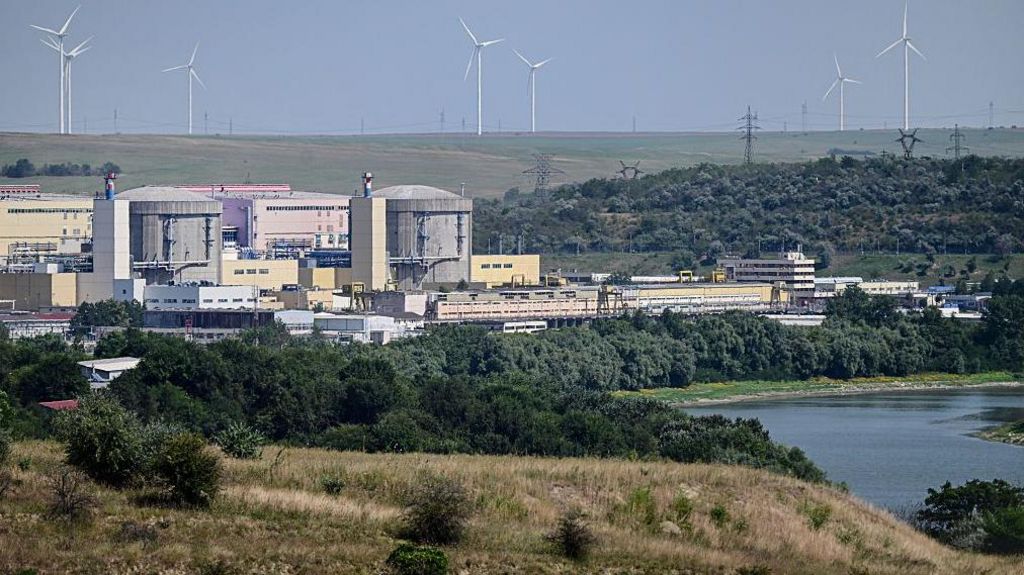
Romania shuts its only nuclear plant as Danube water levels drop
A record-breaking, climate-fueled drought that has parched much of Central and Southern Europe has forced the complete shutdown of Romania’s sole nuclear power facility at Cernavodă, triggering urgent concerns about energy shortages and economic fallout across the continent. The plant, whose two 706-megawatt reactors normally generate roughly 20% of Romania’s total electricity output, relies on water from the Danube — Europe’s second-longest river, where water levels have dropped to 30-year lows across multiple riparian nations. The second and final operating reactor at Cernavodă was taken offline just before midday Thursday, following the shutdown of the first reactor back in July.
Plant director Romeo Urjan confirmed to AFP that no restart is planned for at least the next 10 days, marking only the second time the facility has been fully shut down since it began operations, with the only previous full shutdown occurring in 2003. In a last-ditch effort to raise water levels around the plant’s cooling intake infrastructure, Romanian authorities sank rock-loaded barges in the Danube earlier this week, but the intervention failed to reverse the falling water levels enough to keep the reactors running.
Neighboring Hungary, which also operates its only nuclear plant — the Soviet-era Paks facility with four reactors — on the Danube, has so far avoided a similar shutdown, but the threat remains imminent. Last month, Hungarian Prime Minister Péter Magyar warned that Paks could be forced to shut down entirely for the first time in its history if water levels continue to drop. Plant officials have already noted that Danube levels are so low that some of the facility’s water intake suction nozzles are no longer fully submerged.
The full shutdown of Cernavodă has created an immediate gap in Romania’s energy grid that officials are scrambling to fill. While solar and wind generation are able to offset most of the shortfall during hot, windy daylight hours, evening demand requires increased output from coal and gas-fired power plants, as well as additional energy imports from neighboring countries. Romania’s large hydropower sector, which could otherwise fill the gap, has also seen its output slashed dramatically by the same low river levels that forced the nuclear shutdown.
Beyond energy security, the ongoing drought and accompanying extreme heat waves are causing widespread disruption across the European continent. Key waterways including the Rhine are seeing record-low levels that have severely restricted commercial shipping traffic, while the agricultural sector has suffered billions of euros in damage. Italy’s largest agricultural trade association Coldiretti estimates that climate-related damage from drought, hailstorms and wildfires this year could exceed €3 billion. In France, Environment Minister Monique Barbut warned that recent heat waves could result in between €10 billion and €15 billion in combined direct and indirect economic losses.
The extraordinary conditions have even revealed long-submerged remnants of history: dozens of sunken World War II ships that have sat hidden beneath the Danube’s waters for decades have now re-emerged as levels have dropped. Across Western Europe, the heat wave has pushed temperatures to record levels. On Thursday, temperatures at London’s Kew Gardens provisionally reached 38.1°C (100.6°F), which would mark the hottest day recorded in the United Kingdom so far this year if confirmed. Some parts of England already saw temperatures top 37°C (99°F) earlier the same day.
Scientists from the European Union’s Copernicus Climate Change Service confirm that climate change is the primary driver of these extreme conditions, noting that Europe is warming twice as fast as the global average, making it the fastest-warming continent on Earth. This accelerated warming is leading to more frequent and intense summer heat waves, increasing water scarcity, and spurring more severe wildfire seasons across the continent. Economists warn the extreme conditions could already erase much of the European Union’s projected economic growth for the year. Dutch bank Triodos noted that the EU’s projected 1.1% annual growth, and the International Monetary Fund’s 0.9% growth forecast for the euro area, are at severe risk from the cascading impacts of the drought and heat wave.
-
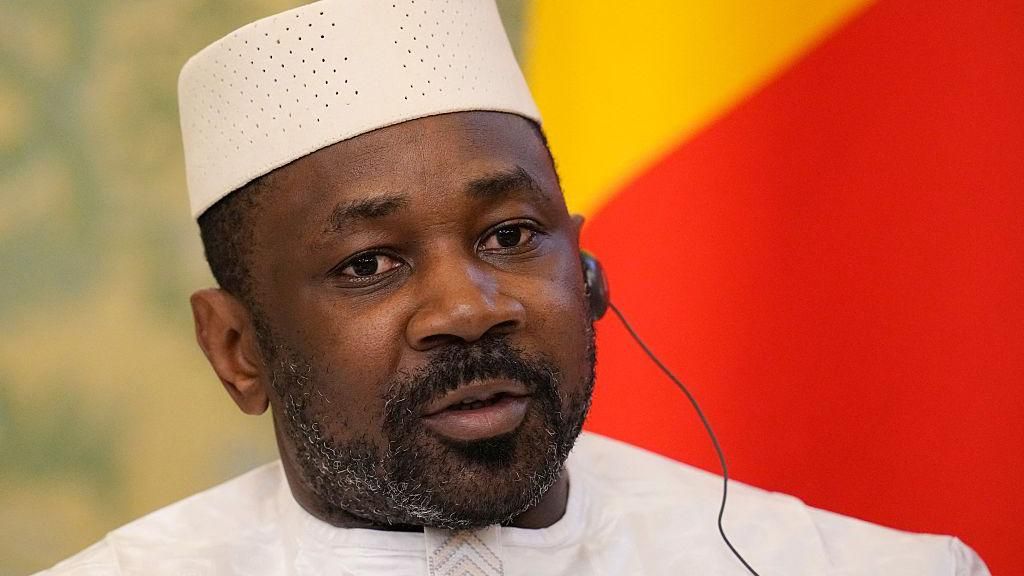
Presidential pardon for French alleged spy accused of plotting Mali coup
In a surprise move announced Thursday, Malian President Assimi Goïta has issued a presidential pardon to Yann Vezilier, a French national who was sentenced to 20 years in prison last year for his alleged role in plotting to overthrow Goïta’s ruling junta.
Vezilier was originally accused alongside a group of Malian army generals and dozens of soldiers of attempting to destabilize the current administration, with Malian officials claiming he was acting on behalf of French intelligence services. A year after the charges were laid, the clemency grant comes as a sudden reversal of the West African nation’s previous legal position, and no official explanation has yet been provided for what drove the policy shift.
The French foreign ministry, which previously dismissed the espionage allegations against Vezilier as completely unfounded, has remained silent on the pardon announcement to date. In an official statement posted to its Facebook page, the Malian government clarified that the act of mercy does not challenge the guilty verdict reached during the defendant’s trial, which the government says followed all legal procedures and fully protected Vezilier’s right to a defense. As a condition of the pardon, Vezilier is being immediately expelled from Malian territory.
The pardon unfolds against a backdrop of deepening political instability and unrelenting security crisis in Mali, a former French colony that has been grappling with a violent Islamist insurgency since 2012. Goïta, who seized power in a 2021 military coup that he justified by citing the ongoing security failure, has overseen a period of worsening violence, with jihadist attacks growing in frequency and reach across the country.
When Vezilier and other co-defendants were arrested last year, then-Security Minister General Daoud Aly Mohammedine confirmed that authorities had detained what he called “fringe elements of the Malian armed security forces” for conspiring to undermine the country’s republican institutions. He asserted at the time that the group of accused soldiers and civilian co-conspirators had received backing from foreign powers, specifically naming Vezilier as a proxy for French intelligence that had worked to recruit Malian political leaders, civil society figures and military personnel to the plot.
In the months since Vezilier’s conviction, political and security conditions in Mali have continued to deteriorate. In April, a suicide truck bombing targeting the defense minister’s residence on the outskirts of the capital Bamako killed the top defense official during a surge of militant attacks across the country. Shortly after the attack, Goïta appointed himself to the vacant defense minister post, a move widely interpreted as an effort to consolidate control over the security sector amid growing threats. Later that same month, Islamist fighters advanced on Bamako, enforcing a partial blockade of the capital and full blockades of other major population centers including the central city of Ségou.
In May 2025, the ruling military junta moved to dissolve all registered political parties in the country, a decision that came in response to rare large-scale anti-government protests. Former Malian Prime Minister Moussa Mara described the crackdown as a devastating blow to national reconciliation efforts that had been initiated by the junta itself after seizing power. When Goïta took power in 2021, he pledged to hold democratic elections within two years to transition back to civilian rule. That commitment has since been abandoned: last July, the junta extended the country’s political transition by an additional five years, extending Goïta’s rule until at least 2030.
In recent years, Mali has cut diplomatic and security ties with its former colonial ruler France, joining neighboring Niger and Burkina Faso in turning to Russian military allies for support to counter the regional jihadist insurgency. To date, the security partnership has failed to deliver meaningful improvements in stability across the Sahel, with attacks on civilian and government targets continuing to rise.
-

Person fined after using foghorn to wake sleeping polar bear
In a high-profile wildlife protection enforcement case on Norway’s remote Svalbard archipelago, an unnamed individual has been ordered to pay a 50,000 Norwegian kroner (roughly £3,890) penalty for intentionally waking a sleeping polar bear with a ship’s foghorn, local authorities confirmed this week.
The incident unfolded earlier this August in a fjord located in northwestern Svalbard, a frigid Arctic island chain sitting approximately 1,000 kilometers (620 miles) from the North Pole. As the vessel cruised along the coastline, crew members spotted a polar bear resting on shore. One person on board activated the ship’s foghorn directly at the animal, shocking it awake and forcing the bear to relocate to a new area, according to an official statement from Svalbard governor Lars Fause.
Longstanding regulations in Svalbard strictly prohibit the unnecessary disturbance, luring, or chasing of polar bears, a species that has held full protected status across the archipelago since 1972. The person who triggered the foghorn has already acknowledged responsibility and agreed to pay the issued fine.
This is not an isolated case of wildlife disturbance penalties in the protected Arctic region. Just last year, another visitor was fined 11,500 kroner (£900) after venturing too close to a resting walrus, violating the same wildlife protection framework. Broader rules laid out in the Svalbard Environment Act require all human activity on the archipelago — from tourism to local transport — to be conducted in a manner that avoids unnecessary disruption to native wildlife, a group that includes polar bears, seals, whales, Svalbard reindeer, and Arctic foxes.
Population estimates from the most recent comprehensive scientific survey, conducted in 2015, put the total number of polar bears residing across the Svalbard archipelago at around 250. Conservation experts have repeatedly emphasized that Arctic wildlife like polar bears already face extreme pressure from rapid climate warming, which erodes their sea ice hunting habitat and disrupts natural feeding and resting patterns. Unnecessary human disturbance adds additional stress to already vulnerable populations, making consistent enforcement of protection rules a key priority for regional environmental managers.