标签: Europe

欧洲

  • Germany sharply rejects RFK Jr.’s claims that it prosecutes doctors for vaccine exemptions

    Germany sharply rejects RFK Jr.’s claims that it prosecutes doctors for vaccine exemptions

    BERLIN — The German government has issued a stern rebuttal to allegations made by U.S. Health Secretary Robert F. Kennedy Jr., who claimed German authorities undermined patient autonomy and targeted physicians during the COVID-19 crisis. The diplomatic confrontation emerged through public statements and social media exchanges over the weekend.\n\nGerman Health Minister Nina Warken categorically denied Kennedy’s assertions in an official statement released Saturday evening, describing them as \”completely unfounded, factually incorrect, and must be rejected.\” The strong response came hours after Kennedy published a video claiming he had sent a formal letter to the German government expressing concerns about \”limiting people’s abilities to act on their own convictions when they face medical decisions.\”\n\nThe American health official alleged that \”more than a thousand German physicians and thousands of their patients now face prosecution and punishment for issuing exemptions from wearing masks or getting COVID-19 vaccines during the pandemic.\” However, Kennedy provided no specific evidence or documentation to support these claims.\n\nMinister Warken clarified Germany’s pandemic policies, emphasizing that \”during the coronavirus pandemic, there was never any obligation on the medical profession to administer COVID-19 vaccinations. Anyone who did not want to offer vaccinations for medical, ethical, or personal reasons was not liable to prosecution, nor did they have to fear sanctions.\”\n\nThe health minister further explained that criminal prosecution only occurred in cases involving fraud and document forgery, particularly regarding false vaccination or mask exemption certificates. She reaffirmed that German patients maintain full autonomy in deciding their preferred therapies.\n\nThe controversy expanded when former German Health Minister Karl Lauterbach, who led the country’s pandemic response, directly addressed Kennedy on social media platform X. Lauterbach suggested the U.S. official should prioritize domestic health challenges, citing \”short life expectancy, extreme costs, tens of thousands of drug deaths and murder victims\” in the United States.\n\nLauterbach emphasized Germany’s judicial independence, stating that \”doctors are not punished by the government for issuing false medical certificates. In our country, the courts are independent.\”\n\nWhile Germany experienced significant vaccination uptake during the pandemic, a small minority of vaccine skeptics—sometimes supported by far-right movements—organized protests against government health measures. The current exchange highlights ongoing international debates about pandemic policies and medical freedom that continue to resonate in global health diplomacy.

  • Ukrainian drone attack in Russia kills 1 following Moscow’s intense bombardment

    Ukrainian drone attack in Russia kills 1 following Moscow’s intense bombardment

    In a significant escalation of cross-border hostilities, Ukrainian drone operations struck the Russian city of Voronezh on Saturday, resulting in one fatality and three injuries according to regional governor Alexander Gusev. The attack damaged over ten residential buildings and educational facilities while Russian air defenses claimed interception of 17 drones approximately 155 miles from Ukrainian territory.

    Simultaneously, Ukraine’s military leadership announced a strategic strike against three Caspian Sea drilling platforms operated by Russian energy conglomerate Lukoil. These precision operations represent Kyiv’s systematic campaign to disrupt Moscow’s oil export capabilities, thereby constraining financial resources available for military operations.

    The retaliatory measures followed Russia’s massive aerial bombardment of Ukrainian infrastructure earlier in the week, which included the unprecedented deployment of advanced hypersonic missile systems. Ukrainian officials reported that the attacks left approximately 30,000 Kyiv residents without power during subzero temperatures, creating a humanitarian crisis in the capital.

    Military analysts note the conflict’s technological evolution as Russia reportedly deployed the new jet-powered ‘Geran-5′ strike drone, capable of carrying 200-pound warheads over 600 miles. This development signals both nations’ increasing reliance on advanced unmanned systems for long-range engagements.

    Diplomatic channels remain active despite the violence, with Ukrainian President Zelenskyy confirming ongoing negotiations with American counterparts regarding enhanced defensive capabilities and potential peace frameworks.

  • Swiss search souls and question government after ski resort fire

    Swiss search souls and question government after ski resort fire

    The devastating New Year’s Eve blaze at Le Constellation bar in Crans-Montana has ignited a profound national reckoning about Switzerland’s cherished decentralized governance model. With 40 young lives lost and 116 severely injured, the Alpine nation confronts uncomfortable questions about accountability in its famously devolved political system.

    Switzerland’s governance structure empowers local communities through part-time elected officials who oversee everything from education to fire safety inspections. This system, long celebrated for ensuring grassroots accountability, now faces scrutiny after Crans-Montana’s Mayor Nicolas Feraud disclosed the tragic venue hadn’t undergone mandatory fire safety checks since 2019. Shockingly, only 40 of 128 local establishments received inspections in 2025.

    The revelation triggered national fury, particularly as Crans-Montana and neighboring Zermatt rank among Switzerland’s wealthiest resorts. Mayor Feraud’s explanation—claiming insufficient inspectors—rang hollow for citizens who expect operational excellence from their institutions. Swiss journalists pressed aggressively about potential conflicts of interest in a system where inspectors often know establishment owners personally.

    This tragedy transcends typical administrative failure. Survivors’ accounts reveal deep trauma—brothers escaping separately while believing the other had perished. Their mother’s public plea for ‘complete, transparent answers’ encapsulates national sentiment.

    The crisis echoes previous Swiss institutional failures—Swissair’s 2001 collapse and UBS’s 2008 bailout—but with greater moral gravity. Unlike financial mismanagement, this represents catastrophic human cost. Valais President Matthias Reynard pledged a ‘strict and independent’ investigation near tears at Friday’s memorial service, while national President Guy Parmelin promised justice ‘without delay and without leniency.’

    Legal actions are mounting, with attorney Romain Jourdan preparing cases against Crans-Montana’s council to ensure ‘such a tragedy never happens again.’ Broader systemic reforms are emerging, including proposals to transfer inspection authority from municipalities to canton level.

    Paradoxically, the emergency response highlighted Swiss excellence—firefighters, paramedics, and helicopters arrived within minutes. Yet this efficiency magnifies the tragedy: world-class emergency services cannot compensate for neglected preventive measures.

    The Swiss now question whether their decentralized model can meet 21st-century safety demands when part-time officials oversee complex regulatory frameworks. As the nation mourns, it confronts whether local accountability requires stronger oversight mechanisms to prevent future tragedies.

  • Greenlanders fear for future as island embroiled in geopolitical storm

    Greenlanders fear for future as island embroiled in geopolitical storm

    The geopolitical spotlight intensifies on Greenland as US Secretary of State Marco Rubio prepares for critical talks with Danish and Greenlandic officials regarding the territory’s future. This diplomatic engagement follows President Donald Trump’s expressed interest in acquiring the semi-autonomous Danish territory for national security purposes, causing considerable unease among Greenland’s 57,000 predominantly Inuit residents.

    Despite Greenland’s serene Arctic landscape of ice-capped mountains and glittering fjords, the capital city of Nuuk reveals underlying tensions. Residents express profound concern about potential US intervention, with one pensioner emphatically stating that the American flag must never fly over Greenland. Many citizens, still grappling with the trauma of Danish colonization, now fear forced assimilation into American sovereignty.

    Pilu Chemnitz, a local pottery-maker, encapsulates the prevailing sentiment: “We have always lived a quiet and peaceful life here. We just want to be left alone.” This desire for autonomy extends beyond resisting US acquisition—85% of Greenlanders oppose American takeover—to include growing aspirations for complete independence from Denmark, despite appreciating Danish subsidies that support their welfare state.

    Parliament member Pipaluk Lynge-Rasmussen of the pro-independence Inuit Ataqatigiit party emphasizes the importance of Greenlanders determining their own destiny. She criticizes global powers, including Denmark, for discussing Greenland’s fate without meaningful engagement with its people. Surprisingly, she attributes more responsibility to Denmark than to Trump for overlooking Greenlandic interests, noting that Greenland and the Faroe Islands have historically been treated as “second-class citizens” within the Danish Kingdom.

    The US strategic interest stems from multiple factors: perceived national security concerns regarding Russian and Chinese activities in the Arctic, desire for Greenland’s untapped natural resources including rare earth minerals, and Trump’s proclaimed objective to dominate the Americas. Geographically, Greenland belongs to North America, lying closer to New York than to Copenhagen by approximately 1,000 miles.

    Current US-Denmark agreements already permit extensive American military presence in Greenland, though the US substantially reduced its forces from Cold War peaks of 10,000 personnel to approximately 200 today. The Trump administration proposes enhancing military infrastructure through its “Golden Dome” missile defense system and potentially establishing surveillance capabilities in the GIUK Gap (Greenland-Iceland-UK passage).

    Opposition MP Pele Broberg advocates for pragmatic engagement: “We are not for sale—but we are open for business.” He highlights the economic paradox of importing goods from Denmark 4,000km away rather than from closer North American sources.

    The situation reflects broader Arctic tensions, with Russia and China expanding military cooperation and developing new shipping routes through melting ice passages. NATO allies, including the UK under Prime Minister Keir Starmer, seek to reassure Washington of their commitment to regional security while attempting to dissuade unilateral action.

    The upcoming negotiations will test whether diplomatic solutions can prevail over military posturing, with Greenlanders hoping to leverage international attention to advance their priorities rather than become victims of great power competition.

  • How the US could take over Greenland and the potential challenges

    How the US could take over Greenland and the potential challenges

    The Trump administration’s unprecedented pursuit of acquiring Greenland has triggered a significant diplomatic confrontation with Denmark and raised profound questions about NATO’s future stability. Despite Greenland’s status as a semi-autonomous Danish territory and NATO ally, President Trump has openly declared his intention to obtain control of the strategically valuable Arctic island “whether they like it or not.”

    High-level discussions between American, Danish, and Greenlandic officials have revealed the administration is evaluating multiple approaches to secure control, including potential military action. This aggressive posture has drawn sharp condemnation from Danish Prime Minister Mette Frederiksen, who warned that any forced takeover would effectively terminate the NATO alliance.

    Strategic analysts identify several potential acquisition methods under consideration. While military conquest remains theoretically possible given the vast disparity between American and Danish military capabilities, most experts consider this option highly improbable due to its catastrophic diplomatic consequences. Alternatively, the administration could pursue enhanced bilateral agreements similar to the Compact of Free Association arrangements with Pacific island nations, granting Washington security veto power and military basing rights in exchange for economic assistance and security guarantees.

    Arctic security specialists challenge the administration’s stated justification for acquisition—countering Russian and Chinese influence—noting that existing defense agreements already provide substantial American military presence. The Thule Air Base (Pituffik Space Base) in northwestern Greenland already serves critical missile detection and space surveillance functions for both U.S. and NATO operations.

    Greenlandic politicians have unanimously rejected assimilation into the United States, emphasizing their preference for increased autonomy rather than changed sovereignty. Demographic and linguistic barriers would complicate any influence operations, while the financial burden of replicating Denmark’s comprehensive welfare system for Greenland’s population would represent a massive ongoing expenditure.

    Experts suggest the most plausible resolution involves modernizing existing defense agreements rather than pursuing territorial acquisition. However, some analysts speculate that the Greenland discussion may serve as a deliberate distraction from domestic political challenges rather than a genuine policy objective, given the president’s pattern of reviving the topic during contentious periods.

  • Night of Swiss ski bar fire ‘apocalyptic’, woman tells Crans-Montana memorial

    Night of Swiss ski bar fire ‘apocalyptic’, woman tells Crans-Montana memorial

    Switzerland observed a solemn day of national mourning on Friday as church bells resonated across the nation, commemorating the 40 young lives tragically lost in the New Year’s Eve inferno at Le Constellation bar in Crans-Montana. The emotional commemorations were immediately overshadowed by significant judicial developments, with authorities detaining bar co-owner Jacques Moretti following a reassessment of his flight risk.

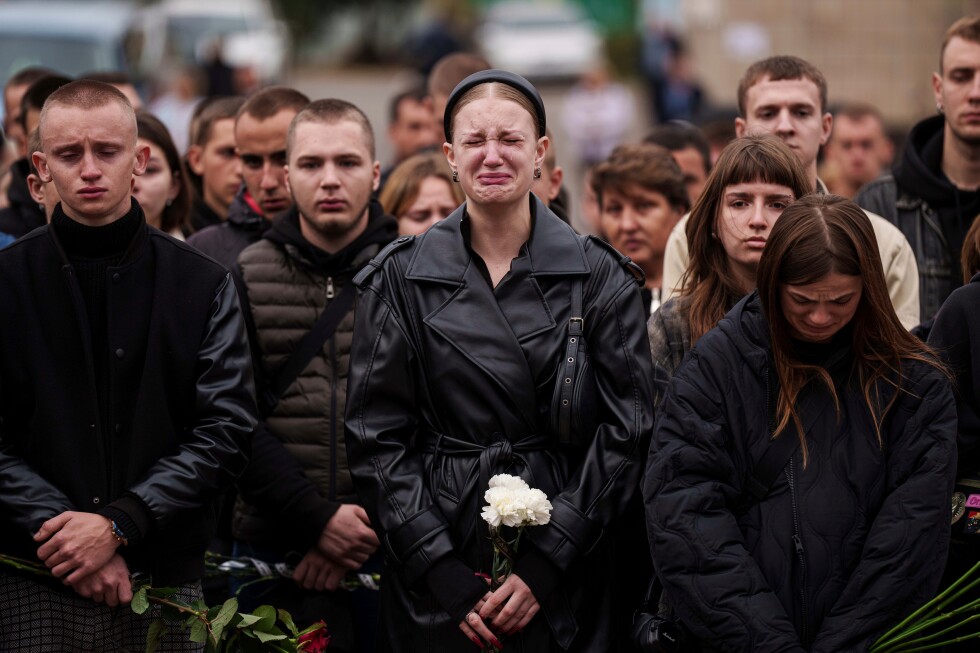
    The memorial ceremony in Martigny witnessed heartbreaking scenes as grieving families, survivors—some still hospitalized—and international dignitaries including the presidents of France and Italy gathered in solidarity. Attendees clasped white roses and held hands for comfort during the service, where firsthand accounts revealed the horror of the catastrophic blaze.

    Marie, a witness who assisted victims from the adjacent bar, delivered a chilling testimony: “We faced unbearable images—a scene worse than nightmare. Screams piercing the icy cold, the smell of burning. It was apocalyptic.” Her words echoed through the ceremony attended by representatives from nations whose citizens perished in the tragedy.

    Judicial authorities have launched a negligence investigation against both bar owners, Jacques and Jessica Moretti, for allegedly causing death and injury through negligence. Jessica Moretti broke her silence after questioning, stating: “I constantly think of the victims. It happened in our establishment, and I would like to apologize for this unimaginable tragedy.”

    Emerging evidence paints a disturbing picture of preventable failures. Mobile footage indicates the fire originated from a sparkler contacting soundproofing foam that had never undergone safety testing. Additional footage from six years prior reveals staff warnings about the flammable ceiling material, raising questions about long-standing negligence.

    Local authorities admitted to not conducting mandatory safety inspections for five years, compounding the systemic failures. Italy’s Ambassador to Switzerland, Gian Lorenzo Cornado, emphasized the demand for justice: “It was a hell inside that bar with over 1,000 degrees temperature. There was no way to escape.”

    Medical personnel at Sion regional hospital faced extraordinary challenges, with doctors fearing their own children might be among the victims. Hospital director Eric Bonvin described the identification process for severely burned victims and the long recovery ahead as a “rebirth” process for those facing life-altering injuries.

    The tragedy continues to resonate through the community where makeshift memorials grow daily, protected from the elements by canvas, as Switzerland seeks answers and accountability for one of its deadliest modern disasters.

  • Romance and parenthood feel remote in Ukraine: ‘I haven’t had a date since before the war’

    Romance and parenthood feel remote in Ukraine: ‘I haven’t had a date since before the war’

    In the dim ambiance of a Kyiv wine bar on a Saturday evening, 34-year-old Daria scrolls through a dating app before dismissing it with palpable resignation. Having emerged from long-term relationships prior to the conflict, her romantic prospects have evaporated amid Ukraine’s protracted war. ‘I haven’t had a proper date since before the war,’ she confesses, encapsulating a nationwide phenomenon where personal connections have become collateral damage in the struggle for national survival.

    Four years of relentless conflict have compelled Ukrainian society to reconfigure fundamental aspects of human existence, with relationships and reproductive choices now standing at the forefront of demographic concerns. With millions of women establishing new lives abroad since the 2022 invasion and hundreds of thousands of men either deployed or living overseas, those remaining face profoundly constrained options.

    Khrystyna, a 28-year-old Lviv resident, observes the conspicuous absence of eligible men with mounting frustration. ‘Many, I would say most [men] are afraid to go out now,’ she notes, referencing conscription squads patrolling urban centers. The psychological toll on military personnel further complicates romantic prospects, as she explains: ‘Many are traumatized now because most of them – if they have returned – were in places where they experienced a lot.’

    Daria conceptualizes the dating pool through three unsatisfactory categories: conscription-avoiders confined to their homes (‘not a person you want to build a relationship with’), soldiers engaged in sporadic long-distance relationships (‘you build a connection, then he leaves’), and men under conscription age who retain emigration options. None present viable foundations for meaningful partnerships.

    Frontline perspectives reinforce this romantic impasse. Ruslan, serving in the Kharkiv region, questions what tangible offerings he can provide beyond ‘visits once or twice a year, flower deliveries and the odd phone call.’ Denys, a 31-year-old drone operator in eastern Ukraine, articulates the moral dilemma through a voice message: ‘Promising a wife or fiancée any long-term plans is difficult. Every day there is a risk of being killed or injured, and then all plans will, so to speak, go nowhere.’

    The demographic consequences are both severe and quantifiable. Marriage rates have plummeted from 223,000 in 2022 to 150,000 in 2024, while fertility rates have reached a historic low of 0.9 children per woman—dramatically below the 2.1 replacement level and substantially beneath the EU average of 1.38. Combined with mass emigration (over six million departed since 2022) and elevated mortality, Ukraine faces what demographer Oleksandr Hladun of the National Academy of Sciences terms the ‘social catastrophe of war.’

    Projections indicate a potential population collapse to 25.2 million by 2051—less than half the 1992 figure—with war-induced stress creating fertility complications that may persist for generations. Dr. Liubov Mykhailyshyn, a gynecologist in Lviv, expresses concern about ‘years of chronic stress and sleepless nights’ affecting reproductive health, creating ripple effects that will impact birth rates for years to come.

    Even determined couples confront overwhelming obstacles. Olena, a 33-year-old policewoman and military instructor, undergoes fertility treatments while acknowledging the precarious timing: ‘taking into account my work and the situation in the country.’ She reflects on the transformational impact of the invasion: ‘During the first year of the war, it felt as if everything had stopped. Everything we were striving for – building a home, planning children – nothing mattered anymore.’

    Government initiatives addressing childcare and housing affordability have achieved limited traction due to decentralized implementation. Hladun concedes that policy solutions remain ineffective while ‘would-be mothers and children remain exposed to the dangers of war.’ Demographic recovery would require the return of a substantial proportion of the 6.5 million Ukrainians abroad, yet repatriation remains uncertain even after hostilities cease.

    The demographic crisis transcends social concerns to become a national security issue. Hladun frames the population decline within strategic parameters: ‘Russia is simply demographically much larger. And in this sense, it has more resources for war.’ This perspective transforms family planning into geopolitical calculus, where personal choices accumulate into national consequences.

    For ordinary Ukrainians, the psychological adaptation proves as challenging as the practical circumstances. Daria summarizes the collective resignation: ‘Planning a future feels fragile, almost naive. This uncertainty is painful, but it becomes a part of everyday life. I’ve come to accept that I might stay alone not because I want to, but because war reshapes what feels possible. Learning to live with that is, in itself, a form of survival.’

  • Owner of Swiss ski bar held in custody after deadly New Year’s Eve fire

    Owner of Swiss ski bar held in custody after deadly New Year’s Eve fire

    Swiss authorities have taken Jacques Moretti, French co-owner of Le Constellation bar in Crans-Montana, into custody following a devastating New Year’s Eve fire that claimed 40 lives and injured 116 others. Prosecutors cited flight risk concerns as they pursue charges of manslaughter by negligence, bodily harm by negligence, and arson by negligence against both Jacques and his wife Jessica Moretti.

    The tragedy, which primarily affected victims under 20 years old, is believed to have originated from New Year’s celebrations where champagne bottles equipped with sparklers were raised too close to the ceiling, igniting sound-insulating foam. The incident has revealed alarming safety oversight, as the popular ski resort establishment had not undergone mandatory safety inspections for five years despite requirements for annual checks.

    During Friday questioning with prosecutors in Sion, Valais canton, Jessica Moretti expressed profound remorse to victims and their families, describing the event as “an unthinkable tragedy.” The couple had previously pledged full cooperation with the investigation while expressing their devastated state.

    The nation observed a day of mourning on Friday with minute-long silences, halted transportation systems, and extended church bell ringing. Local commemorations in Crans-Montana featured standing ovations for firefighters who responded to the catastrophic blaze.

    Growing scrutiny now extends to municipal authorities, with victim representatives highlighting “staggering number of breaches and shortcomings in the inspections.” Crans-Montana Mayor Nicolas Feraud acknowledged regulatory failures and announced plans to ban sparklers in local venues while accepting responsibility for the oversight.

    Medical facilities across Switzerland and neighboring European countries continue to treat numerous victims suffering severe burns. Funeral services for deceased victims are ongoing as the community grapples with one of Switzerland’s deadliest nightlife disasters in recent history.

  • Almost 13,000 Irish passports to be re-issued

    Almost 13,000 Irish passports to be re-issued

    The Irish Department of Foreign Affairs has initiated a significant recall of approximately 12,904 passports issued between December 23, 2025, and January 6, 2026. This unprecedented action stems from a technical deficiency discovered in recently issued travel documents, rendering them non-compliant with international travel standards.

    The complication originated from a software update implemented by the Irish Passport Service during the busy holiday period. While specific technical details remain undisclosed, the flaw potentially creates complications for travelers utilizing automated eGates and undergoing standard border control inspections globally.

    In an official statement, the Passport Service expressed profound regret for the administrative error and extended sincere apologies for the resultant inconvenience to affected citizens. The department has proactively notified border authorities worldwide to mitigate potential travel disruptions for holders of the flawed documents.

    Affected individuals are not required to submit new applications. Instead, they must return their current passports via post to the Irish Passport Service headquarters in Dublin. The service has committed to an expedited processing timeframe, pledging to issue fully compliant replacement passports within ten working days of receipt.

    For passport holders with imminent international travel plans or those residing overseas, the Department of Foreign Affairs has established dedicated support channels through its Customer Service Team, available via telephone and email for urgent assistance and guidance.

  • Day of mourning for bar fire victims in Switzerland

    Day of mourning for bar fire victims in Switzerland

    The Swiss nation stood in solemn unity as a wave of collective grief swept across the country during an official day of mourning. In a powerful and poignant tribute, church bells resonated from every canton for a continuous five-minute period, creating a synchronized symphony of remembrance that echoed through city squares and mountain valleys alike. This profound act of national solidarity was dedicated to honoring the memory of the young victims whose lives were tragically cut short in a devastating bar fire that has left the nation in shock.

    The commemorative bell tolling served as both a public expression of shared sorrow and a demonstration of Switzerland’s communal strength during times of unprecedented tragedy. While specific details regarding the fire’s origin and casualty numbers remain under official investigation, the overwhelming response from citizens and institutions alike highlights the profound impact this event has made on the national consciousness. The coordinated memorial represents one of the most significant displays of public mourning in recent Swiss history, bringing together diverse communities across linguistic and cultural divides in a shared moment of reflection and support for the victims’ families and survivors.