标签: Europe

欧洲

  • Canada cruises into the quarterfinals at the Olympics by routing France

    Canada cruises into the quarterfinals at the Olympics by routing France

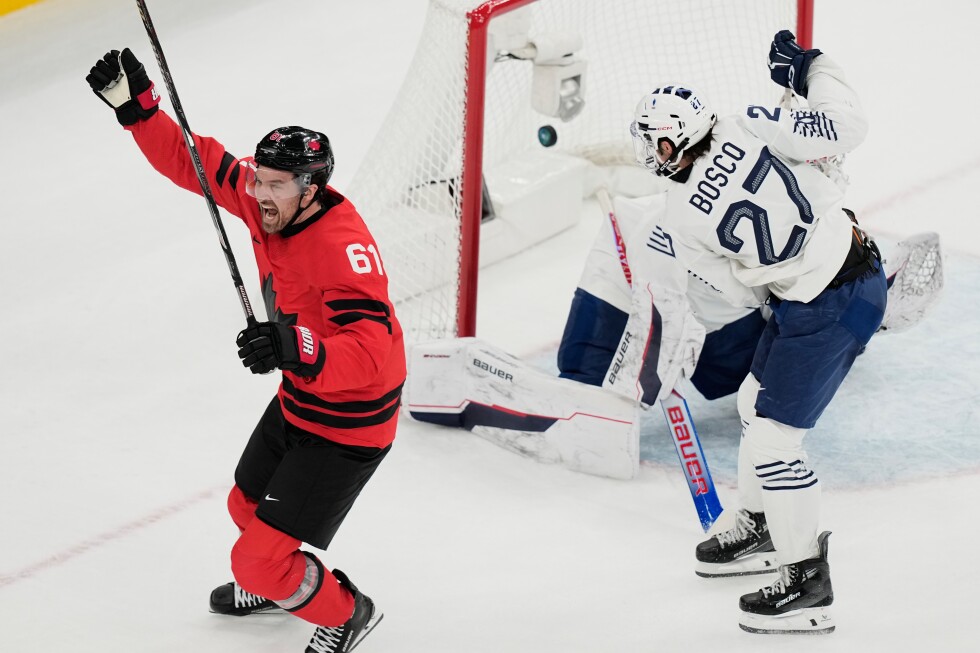
    MILAN — Team Canada has concluded the Olympic preliminary round with an unblemished record, establishing themselves as the tournament’s dominant force heading into the knockout phase. Their commanding 10-2 victory over France on Sunday showcased both offensive firepower and team resilience, cementing their position as top seed.

    The Canadian squad demonstrated exceptional skill and coordination with Sidney Crosby and Connor McDavid each contributing one goal and two assists. The game, however, featured a moment of controversy when Tom Wilson engaged in a fight with the French player responsible for a forearm hit to Nathan MacKinnon’s face. Under international ice hockey regulations, Wilson received a game misconduct for fighting, while MacKinnon later returned to the ice.

    Canada’s statistical dominance throughout the group stage has been remarkable, outscoring opponents by 17 goals across three matches. Their performance places them securely in the top seeding position, with the United States requiring an improbable 10-goal victory against Germany to claim the top spot.

    Young talent Macklin Celebrini, Canada’s youngest player at 19, continued his impressive Olympic debut with two goals against France, bringing his tournament total to four goals. Mark Stone contributed a shorthanded goal with mere seconds remaining in the first period, adding two assists to his performance.

    In other Olympic hockey action, Switzerland secured a critical 4-3 overtime victory against Czechia despite the absence of injured winger Kevin Fiala. Captain Roman Josi led the Swiss team with an opening goal, while Dean Kukan scored the overtime winner. The emotional victory, achieved amid concerns about Fiala’s lower left leg injury that required surgical intervention, positions Switzerland favorably for the qualification playoffs.

    Team Canada now looks ahead to quarterfinal competition, likely facing either Czechia or Germany, with Jordan Binnington expected to maintain his position in goal despite conceding two goals against France.
  • Lisa Vittozzi secures Italy’s first Olympic gold medal in biathlon with pursuit win

    Lisa Vittozzi secures Italy’s first Olympic gold medal in biathlon with pursuit win

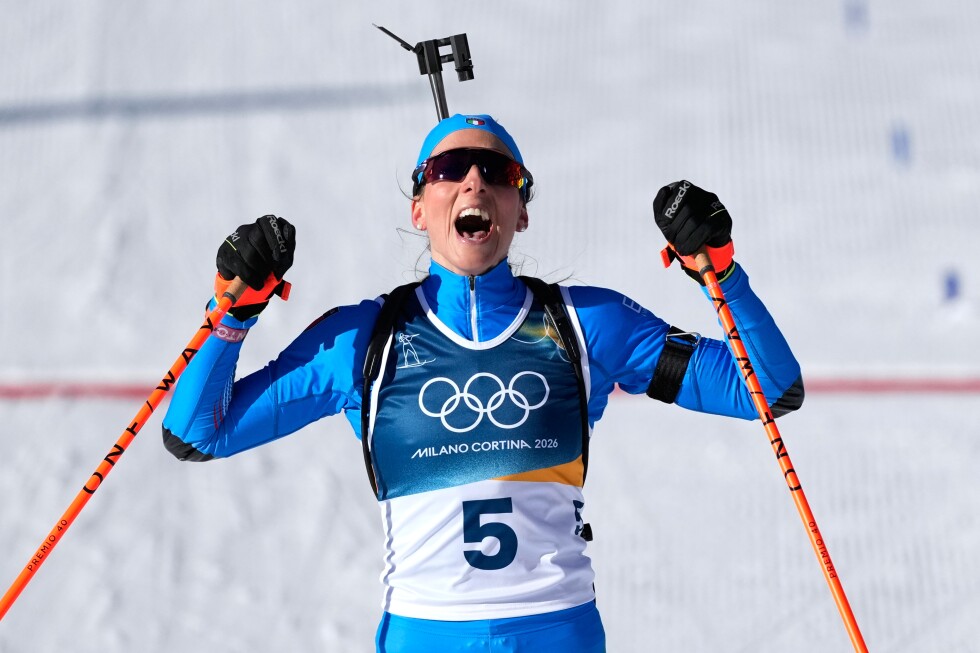
    In a stunning display of precision and athleticism, Italian biathlete Lisa Vittozzi captured the nation’s first-ever Olympic gold medal in the sport at the Milan Cortina Winter Games. The historic moment unfolded Sunday in the women’s 10-kilometer pursuit event, where Vittozzi delivered a flawless shooting performance, hitting all 20 targets with remarkable composure.

    Vittozzi crossed the finish line with a commanding time of 30 minutes and 11.8 seconds, triggering an emotional celebration before a roaring crowd of 20,000 spectators. The champion bowed, pumped her arms triumphantly, and collapsed into the snow in a moment of pure exhilaration, marking the culmination of an extraordinary personal journey.

    The victory represents a spectacular comeback for Vittozzi, who battled through a challenging previous season marred by a back injury and inconsistent shooting performances. Her path to Olympic glory required overcoming significant physical and mental hurdles, making her perfect performance particularly noteworthy.

    Norway’s Maren Kirkeeide claimed the silver medal, finishing 28.8 seconds behind the champion, while Finland’s Suvi Minkkinen secured bronze with a 34.3-second deficit. Notably, Minkkinen matched Vittozzi’s perfect shooting accuracy, hitting all 20 targets in her own impressive display.

    The event marked a significant shift in the Olympic biathlon landscape, breaking France’s previously unbroken podium streak. French contenders Oceane Michelon and Lou Jeanmonnot, who started in second and third positions respectively based on their sprint race results, fell out of medal contention due to shooting errors. Jeanmonnot missed three targets to finish fourth, while Michelon’s four misses placed her fifth overall.

    Biathlon pursuit competitions feature a unique format where athletes start according to their finishing times from the preceding sprint race, creating dynamic head-to-head competition. The sport’s distinctive penalty system requires competitors to ski a 150-meter penalty lap for each missed shot, adding strategic complexity to the physically demanding event.

  • Italy’s Winter Olympics dream: A record 22nd medal seals its best-ever Games

    Italy’s Winter Olympics dream: A record 22nd medal seals its best-ever Games

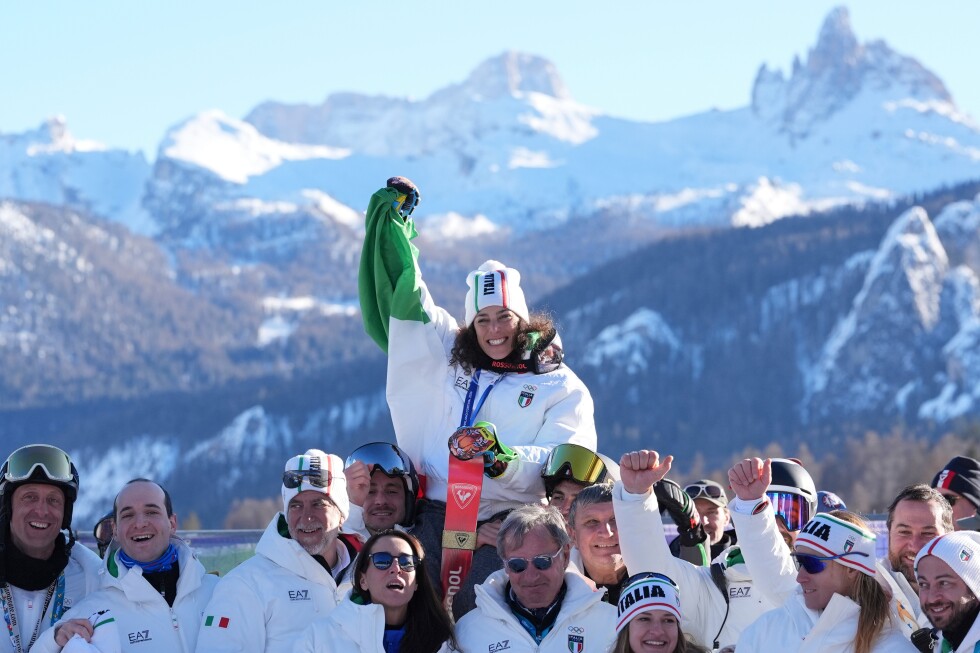
    MILAN — Italy has officially achieved its most successful Winter Olympics performance in history, surpassing all previous records with seven days of competition still remaining. The host nation’s extraordinary medal haul reached 22 on Sunday, eclipsing its previous benchmark of 20 medals established at the 1994 Lillehammer Games.

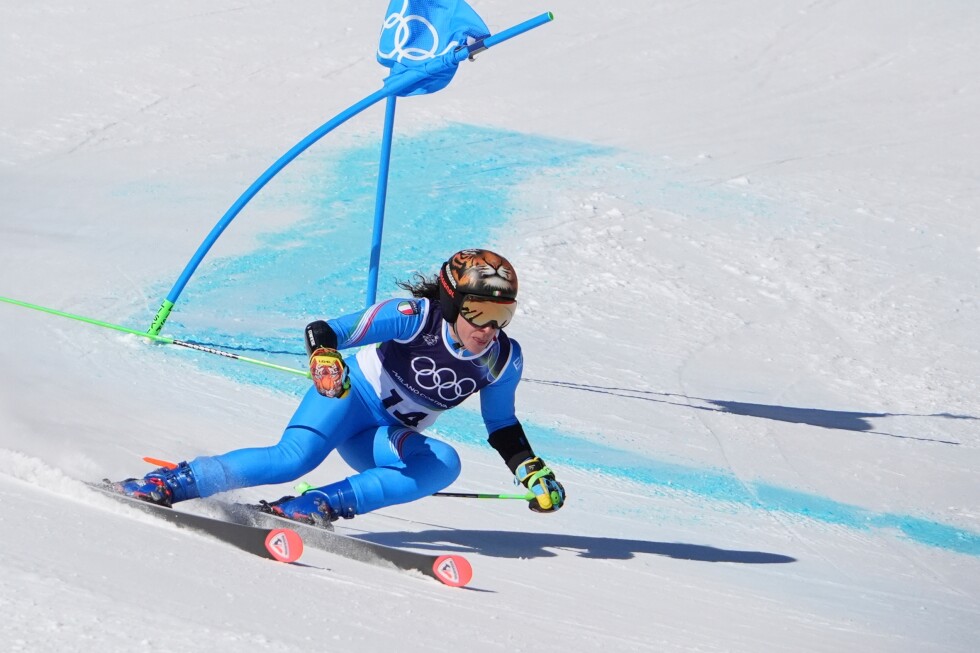
    The record-breaking day began with Italy’s cross-country team securing bronze in the men’s 4 x 7.5-kilometer relay. Shortly thereafter, Federica Brignone captured her second gold medal of the Games with a stunning victory in the giant slalom—a particularly remarkable achievement given her recent return to competition after recovering from a severe leg injury that involved multiple fractures.

    Within the hour, Michela Moioli and Lorenzo Sommariva contributed to the historic moment by earning silver in the mixed team snowboard cross, delivering Italy’s 21st medal and officially breaking the national record. The celebration continued as Lisa Vittozzi claimed gold in the 10-kilometer pursuit biathlon race shortly afterward.

    Italy’s current medal distribution stands at eight gold, four silver, and ten bronze medals—exceeding the pre-Games target of 19 medals set by Italian Olympic Committee president Luciano Buonfiglio.

    The nation’s performance represents a significant improvement over recent Olympic appearances. At the 2022 Beijing Winter Games, Italy won 17 medals, while the 2006 Turin Olympics as hosts yielded only 11 medals. Italy currently ranks among the top two nations in the medal table, a dramatic improvement from its fourth-place finish in Lillehammer behind Russia, Norway, and Germany.

    Early indications of Italy’s exceptional performance emerged on Day 3 of competition when the team collected six medals in 24 hours—a single-day national record. Local organizing committee president Giovanni Malagò emphasized the significance of Italy’s multidisciplinary success across sports where the nation had not traditionally been competitive.

    The emotional resonance of these achievements has been amplified by compelling athlete narratives. Brignone’s gold medal came after extensive rehabilitation, while short track speedskater Arianna Fontana earned her 12th and 13th Olympic medals, matching fencer Edoardo Mangiarotti’s longstanding record for most Olympic medals by an Italian athlete.

    International Olympic Committee President Kirsty Coventry praised Italy’s performance, noting: “Their stories of resilience and fight and everything good in humanity was really showcased. To do that at home, it’s so cool.”

  • Curling controversy widens amid higher surveillance as Britain accused of same infraction as Canada

    Curling controversy widens amid higher surveillance as Britain accused of same infraction as Canada

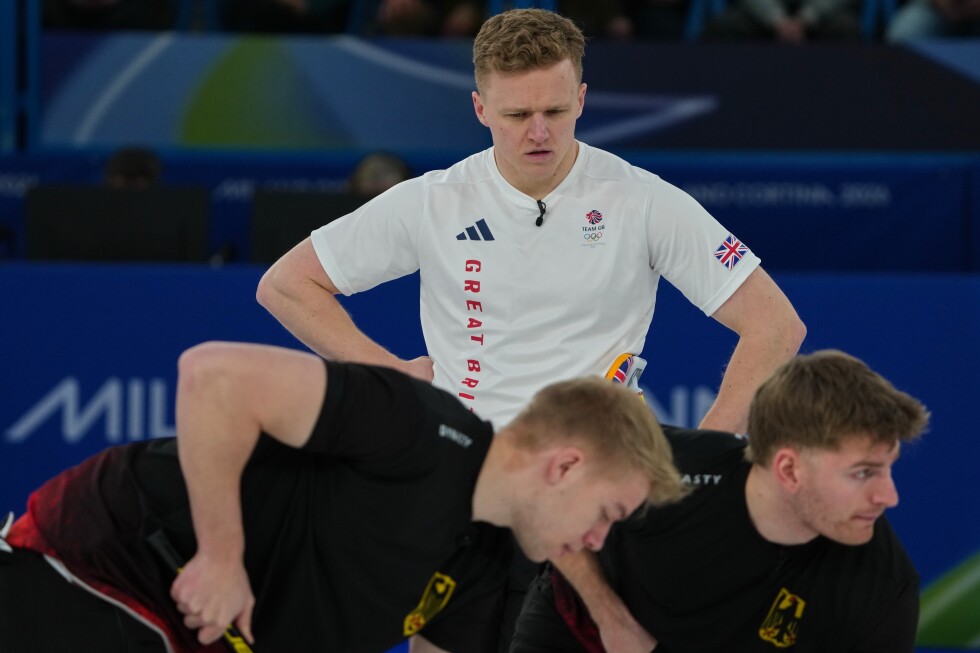
    CORTINA D’AMPEZZO — The ongoing officiating dispute in Olympic curling intensified Sunday when British curler Bobby Lammie became the latest athlete penalized for alleged rule violations during competition. During the ninth end of Britain’s round-robin match against Germany, officials determined Lammie had made illegal contact with his stone after release—a violation known as “double-touching”—resulting in the stone’s removal from play. Despite the controversy, the British team secured a decisive 9-4 victory.

    This incident marks the third such ruling in three days, following consecutive penalties against Canadian teams on Friday and Saturday. The initial controversy emerged when Swedish opponents raised allegations against the Canadian men’s team, with similar infractions called against the Canadian women’s team during their match against Switzerland the following day.

    In response to the growing dispute, World Curling announced enhanced monitoring measures beginning Saturday. The governing body assigned two dedicated officials to oversee the four simultaneous curling matches during each round, though acknowledged the impracticality of stationing umpires at every hog line—the critical zone where stones must be released.

    The organization maintains its position against utilizing video replay technology for officiating decisions, despite social media circulation of footage that appears to show the alleged violations. Questions regarding potential disproportionate surveillance of specific teams remain unanswered by tournament authorities.

    Until Sunday’s incident, the controversy had primarily involved Canadian athletes, who represent one of curling’s most passionate international fan bases. The repeated penalties have sparked debate about consistency in officiating and the need for technological assistance in determining infractions at the highest level of competition.

  • UK wants action taken on Russia after Navalny frog poisoning, Cooper says

    UK wants action taken on Russia after Navalny frog poisoning, Cooper says

    British Foreign Secretary Yvette Cooper has declared that the United Kingdom will pursue coordinated international action following conclusive evidence that Russian dissident Alexei Navalny was murdered using an exotic frog-based toxin. The announcement came during the Munich Security Conference where Cooper emphasized that European laboratories from five nations have definitively identified the poison responsible for Navalny’s death two years ago in a Siberian penal colony.

    Speaking from a snow-covered Munich rooftop on the BBC’s Sunday with Laura Kuenssberg programme, Cooper stated that the Russian government alone possessed the “means, motive and opportunity” to deploy the obscure biological agent derived from Ecuadorian dart frogs. The confirmation, obtained through analysis of smuggled biological samples, represents a “clear breach” of international chemical weapons conventions according to the Foreign Secretary.

    Cooper outlined Britain’s intention to escalate pressure on Moscow through continued sanctions coordination and formal reporting to the Organisation for the Prohibition of Chemical Weapons. She framed the poisoning as part of broader Russian aggression that requires united Western response, particularly noting the approaching fourth anniversary of Ukraine’s invasion.

    The diplomatic offensive occurs alongside Prime Minister Keir Starmer’s participation at the security conference, where both British leaders have emphasized European preparedness against Russian threats. Cooper characterized these efforts as continuing Navalny’s mission to “tell the truth, spread the truth” about Putin’s regime, which she described as “the most dangerous weapon of all.”

    Moscow’s London embassy issued a scathing rebuttal, dismissing the findings as “feeble-mindedness of Western fabulists” and accusing critics of engaging in “necro-propaganda.” Russian officials repeatedly questioned the scientific plausibility of the frog poison narrative while maintaining Navalny died of natural causes.

    The emerging divide was further highlighted by Conservative shadow foreign secretary Dame Priti Patel, who separately warned of an expanding “axis of authoritarianism” comprising Russia, China, North Korea and Iran. Despite these challenges, Patel reaffirmed America’s status as Europe’s “natural ally” in confronting global threats.

  • Europeans push back at US over claim they face ‘civilizational erasure’

    Europeans push back at US over claim they face ‘civilizational erasure’

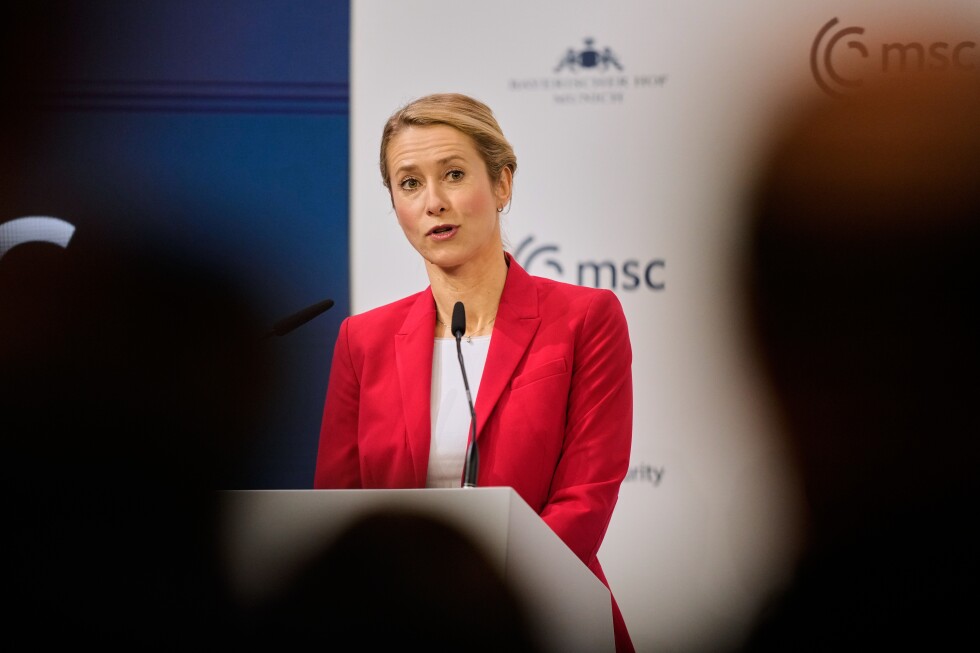
    MUNICH — European Union Foreign Policy Chief Kaja Kallas delivered a robust rebuttal to claims of Europe’s decline during her address at the Munich Security Conference on Sunday, directly countering assertions made in recent U.S. national security assessments.

    Kallas challenged the characterization of Europe as facing “civilizational erasure”—a concept outlined in the Trump administration’s December national security strategy document. That document had pointed to European economic stagnation, immigration policies, declining birth rates, and alleged suppression of political opposition as factors contributing to what it described as a loss of national identity and self-confidence.

    “Contrary to what some may say, woke, decadent Europe is not facing civilizational erasure,” Kallas asserted before the international security gathering. “People still want to join our club and not just fellow Europeans,” she added, referencing her conversations during a recent Canada visit where many expressed interest in EU membership.

    The EU diplomat characterized such criticism as “European-bashing” and emphasized Europe’s ongoing role in advancing human rights and prosperity. “We are pushing humanity forward, trying to defend human rights and all this, which is actually bringing also prosperity for people,” Kallas stated.

    Her comments followed Saturday’s address by U.S. Secretary of State Marco Rubio, who struck a more conciliatory tone than previous Trump administration officials while maintaining firm positions on policy differences. Rubio assured European allies that ending the trans-Atlantic partnership was “neither our goal nor our wish,” acknowledging America’s enduring ties to Europe while reaffirming the administration’s stance on migration, trade, and climate policies.

    European leaders including British Prime Minister Keir Starmer emphasized the strength derived from Europe’s diverse societies. Starmer noted the importance of defending “vibrant, free and diverse societies” while demonstrating how “people who look different to each other can live peacefully together.”

    Kallas acknowledged that while differences persist on specific issues, the fundamental trans-Atlantic relationship remains intact. “It is also clear that we don’t see eye to eye on all the issues and this will remain the case as well, but I think we can work from there,” she concluded.

  • Ukrainian drone strike sparks fires at Russian Black Sea port ahead of US-brokered peace talks

    Ukrainian drone strike sparks fires at Russian Black Sea port ahead of US-brokered peace talks

    In a significant escalation of hostilities, Ukrainian forces launched a precision drone strike against the Russian port of Taman on the Black Sea, triggering substantial fires and damaging critical energy infrastructure. Regional Governor Veniamin Kondratyev confirmed two casualties and damage to oil storage facilities, warehouses, and terminal operations.

    Simultaneously, Russian drone attacks targeted civilian infrastructure in Ukraine’s Odesa region, causing disruptions to power and water supplies. This exchange represents the ongoing strategic targeting of energy systems by both nations—Ukraine aims to cripple Russia’s oil export revenue financing its invasion, while Russia continues its campaign to disable Ukraine’s power grid amid winter conditions.

    The heightened violence precedes crucial U.S.-mediated negotiations scheduled for Tuesday and Wednesday in Geneva, marking the fourth anniversary of Russia’s full-scale invasion. Ukrainian President Volodymyr Zelenskyy, speaking at the Munich Security Conference, expressed reservations about proposed security guarantees and questioned the feasibility of U.S.-backed peace terms regarding the disputed Donbas region.

    International voices amplified these concerns. U.S. Senator Jeanne Shaheen warned that without enforceable security commitments, conflict recurrence remains inevitable. EU foreign policy chief Kaja Kallas accused Russia of seeking diplomatic victories unattained militarily, emphasizing that European nations would decide on sanctions relief rather than the U.S. Previous negotiation rounds in Abu Dhabi failed to resolve core issues, particularly the status of Russian-occupied Ukrainian territories, casting uncertainty on the upcoming Geneva talks.

  • Italy’s Federica Brignone fastest after first run in women’s giant slalom. Shiffrin sits seventh

    Italy’s Federica Brignone fastest after first run in women’s giant slalom. Shiffrin sits seventh

    CORTINA D’AMPEZZO, Italy — Italian skiing sensation Federica Brignone has positioned herself for a potential second Olympic gold medal within a week after delivering a commanding performance in the first run of the women’s giant slalom at the Milan Cortina Olympics.

    The 35-year-old veteran, who captured the super-G title just days ago after a 16-year Olympic pursuit, demonstrated exceptional form on the challenging Dolomite Mountains course. Brignone completed the 51-gate run in 1:03.23, establishing a substantial lead over her closest competitors in a field of 76 elite skiers.

    This impressive showing comes less than a year after Brignone suffered a severe fracture to her left leg that required surgical intervention with multiple screws and left her immobilized for weeks. The 2023 world champion in giant slalom has made a remarkable recovery to reach peak form at these Games.

    German skier Lena Duerr trails Brignone by 0.34 seconds, while Italian teammate Sofia Goggia sits third, 0.46 seconds behind. A three-way tie for fourth place at 1:03.97 includes defending Olympic champion Sara Hector of Sweden, Norway’s Thea Louise Stjernesund, and Albania’s Lara Colturi.

    American star Mikaela Shiffrin, the 2018 Olympic champion in this event, finished her first run in seventh position, more than a second behind Brignone. Shiffrin is seeking her first Olympic medal in eight years and aims to rebound from a disappointing fourth-place finish in the combined event earlier in these Games.

    Brignone described her approach: “I tried to attack, to be clean and intelligent on the terrain changes and then toward the end, to anticipate the bumps. It was just a natural reaction for me. I had a proper run and it all came naturally to me.”

    Current World Cup giant slalom leader Julia Scheib of Austria, who sits eleventh after the first run, acknowledged Brignone’s dominance: “Perfect skiing. She likes the snow. I noticed and it was not a huge surprise.”

    Brignone’s four Olympic medals now tie the record for most by an Italian woman in alpine skiing history. With her stellar first run, she stands poised to add a second gold to her collection when competition concludes.

  • Whether it’s a mini-sabbatical or an adult gap year, more people are taking extended work breaks

    Whether it’s a mini-sabbatical or an adult gap year, more people are taking extended work breaks

    While traditional vacations offer brief respites from work, a growing movement of professionals are embracing extended career breaks known as mini-sabbaticals, adult gap years, or micro-retirements. These transformative pauses—whether taken between jobs, through employer-approved leaves, or as digital nomad adventures—provide substantial mental, physical, and spiritual resets that go far beyond conventional time off.

    According to sabbatical experts and individuals who have taken extended breaks, significant barriers prevent many from pursuing this path. Financial constraints, personal responsibilities, and fears of social judgment from colleagues and family members often deter people from hitting pause on their careers to gain new perspectives.

    American attitudes toward extended time off differ markedly from European approaches, where rest and free time are culturally prioritized. Kira Schrabram, University of Washington management professor and researcher of meaningful work, notes that EU workers are legally entitled to at least 20 paid vacation days annually. However, more US companies are now offering weeks or months of paid or unpaid leave as retention strategies for valued employees.

    Schrabram brought her expertise on burnout to the Sabbatical Project, an initiative founded by Harvard Business School’s DJ DiDonna that promotes sabbaticals as “a sacred human ritual” deserving broader accessibility. Their research with University of Notre Dame’s Matt Bloom identified three distinct sabbatical types through interviews with 50 US professionals: working holidays pursuing passion projects; “free dives” combining adventure with rest periods; and transformative quests undertaken by burned-out individuals.

    Despite more than half of interviewees self-funding their breaks, the researchers advocate in Harvard Business Review for employer-sponsored sabbaticals as tools for recruiting, retaining, and developing talented workers. The Sabbatical Project has created coaching networks to support those considering extended leaves, challenging the notion that sabbaticals require employer sponsorship.

    Real-world examples demonstrate the transformative potential of extended breaks. Corporate lawyer Roshida Dowe, laid off at 39, spent a year traveling before co-founding ExodUS Summit with Stephanie Perry—a virtual conference helping Black women navigate sabbaticals and international relocation. Their initiative addresses both practical considerations (finances, safety, healthcare) and philosophical aspects (rest value, overcoming intergenerational trauma).

    Financial planning expert Taylor Anderson of Vancouver advises clients on sabbatical preparation, noting similar principles apply to retirement savings. She observes that while not everyone can afford extended unpaid time, many potential sabbatical-takers have savings but fear spending them—what she calls understanding “money breathing” patterns of accumulation and expenditure.

    For some, sabbaticals catalyze profound life changes. Artists Eric Rewitzer and Annie Galvin discovered their San Francisco gallery break led to permanent relocation after gaining new perspective on work-life balance. Similarly, Gregory Du Bois incorporated regular mini-sabbaticals throughout his IT career by negotiating extended time off with each new employer, ultimately finding these breaks essential for spiritual regeneration and peak performance.

    As these experiences demonstrate, extended career breaks are evolving from rare luxuries to strategic tools for personal and professional renewal in an increasingly burnout-prone workforce.

  • ‘First feline’ Larry marks 15 years as Britain’s political top cat

    ‘First feline’ Larry marks 15 years as Britain’s political top cat

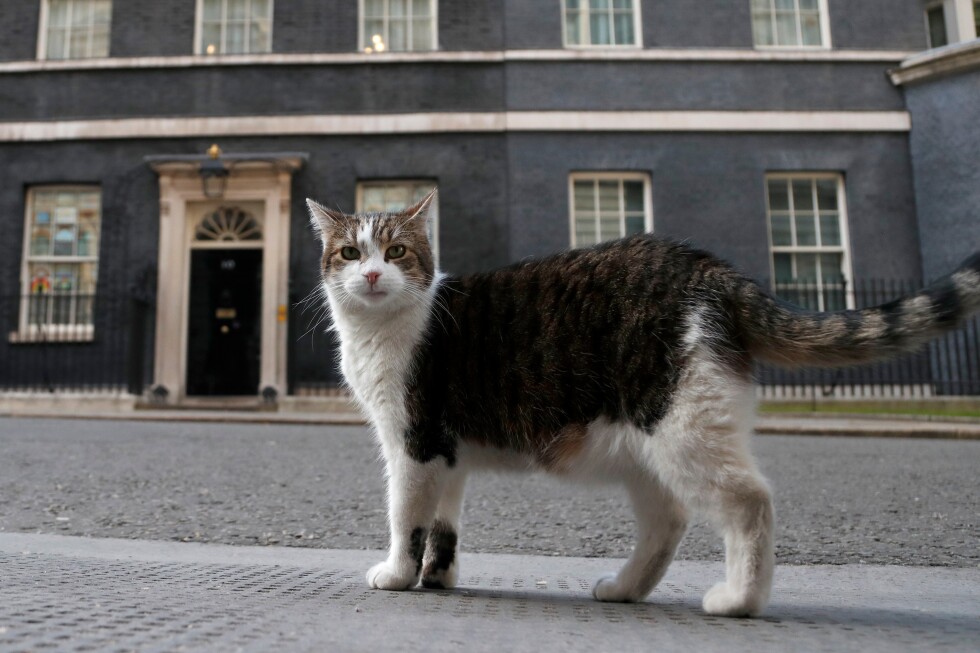
    LONDON — Amid Britain’s turbulent political landscape, an unconventional figure has emerged as the nation’s most enduring symbol of stability: Larry the Cat, who celebrates his 15th anniversary this Sunday as the official resident of 10 Downing Street.

    The gray-and-white tabby, who bears the formal title ‘Chief Mouser to the Cabinet Office,’ has outlasted six prime ministers since his appointment in February 2011. Originally rescued from London’s Battersea Dogs and Cats Home by former Prime Minister David Cameron, Larry has transformed from street stray to political institution.

    According to his official government profile, Larry’s duties extend beyond rodent control to include ‘greeting guests, inspecting security defenses, and testing antique furniture for napping quality.’ Yet his influence transcends these formal responsibilities. The feline regularly upstages world leaders during official visits, demonstrating a particular talent for strategic photo-bombing that delights press photographers.

    ‘He represents stability in a political environment where that’s at a premium,’ observed Cambridge University professor Philip Howell, an expert in human-animal relations. ‘Larry’s approval ratings consistently outperform those of the politicians he serves.’

    The cat’s diplomatic career has included encounters with numerous world leaders. He demonstrated particular affinity for former U.S. President Barack Obama and elicited smiles from Ukrainian President Volodymyr Zelenskyy. During Donald Trump’s 2019 visit, Larry famously interrupted the official doorstep photographs before retreating for a nap beneath the presidential armored vehicle.

    While his rodent-catching capabilities remain subject to debate—with documented captures including occasional mice and one escaped pigeon—Larry excels in his unofficial role as Britain’s furry diplomat. ‘He’s more of a lover than a fighter,’ noted freelance photographer Justin Ng. ‘His true expertise lies in lounging and projecting an air of nonchalant authority.’

    The feline statesman has navigated cohabitation challenges with various prime ministerial pets, maintaining territorial sovereignty over Downing Street’s working areas while avoiding current Prime Minister Keir Starmer’s private cats. His most notable rivalry was with Palmerston, the Foreign Office’s diplomatic cat, with whom he had several public altercations before Palmerston’s retirement and recent passing.

    Now estimated to be 18 or 19 years old, Larry continues his patrols from preferred napping spots, particularly a radiator-warmed window ledge near the famous black door. Experts suggest his enduring appeal lies in his nonpartisan authenticity and characteristically feline independence.

    ‘Cats are less tractable than dogs, and that’s part of Larry’s charm,’ Professor Howell explained. ‘His whimsical nonpartisanship and refusal to perform on command embody a certain unruliness that resonates deeply with the British public.’

    As Britain’s longest-serving political resident, Larry has become an institution that no prime minister would dare disrupt—a living symbol of continuity in a world of political transience.