标签: Europe

欧洲

  • Six Nations takeaways: Scotland amazes, England grounded, France rolling in round two

    Six Nations takeaways: Scotland amazes, England grounded, France rolling in round two

    The Six Nations Championship landscape underwent a seismic shift during the second round of competition, with France emerging as the tournament’s only undefeated team and sole contender for the Grand Slam. Les Bleus delivered a historic performance against Wales at Cardiff’s Millennium Stadium, registering a record-breaking 54-12 victory that marked their highest-ever score against the Welsh and extended Wales’ losing streak to 13 consecutive tournament matches.

    Meanwhile, at a raucous Murrayfield, Scotland delivered a stunning upset against England, halting their 12-test winning streak with a decisive 31-20 victory. The Scots demonstrated what coach Gregor Townsend described as ‘destructive genius’ throughout the full eighty minutes, though questions remain about their ability to maintain this form throughout the remainder of the championship.

    In Dublin, Ireland narrowly avoided catastrophe against a resurgent Italian side, securing a precarious 20-13 victory that raised significant concerns about their flyhalf position and overall championship credentials.

    France’s youth movement has proven particularly effective, with coach Fabien Galthié successfully integrating graduates from the nation’s successful under-20 program. Debutant Fabien Brau-Boirie and young center Émilien Gailleton both crossed for tries in Cardiff, demonstrating the team’s successful transition toward a faster, more dynamic style of play.

    England faces a critical reassessment after their Murrayfield defeat, with ill-discipline and tactical shortcomings undermining their championship aspirations. Despite the setback, coach Steve Borthwick’s team remains mathematically in contention as they prepare to host Ireland before traveling to face Italy.

    Italy’s performance in Dublin, though ultimately unsuccessful, demonstrated the nation’s remarkable progress and silenced critics who had questioned their continued participation in the tournament. Captain Michele Lamaro noted the significant shift in perception regarding Italian rugby, with the team now viewed as a genuine threat rather than merely making up the numbers.

  • What is the dart frog toxin allegedly used to kill Alexei Navalny?

    What is the dart frog toxin allegedly used to kill Alexei Navalny?

    In a coordinated declaration, the United Kingdom alongside several European allies has formally attributed the death of Russian opposition leader Alexei Navalny to a rare neurotoxin derived from South American poison dart frogs. Official statements indicate that laboratory analysis confirmed traces of epibatidine, an exceptionally potent compound, within samples taken from Navalny’s body. The allies asserted that the Russian state singularly possessed the “means, motive and opportunity” to deploy such an obscure biological agent.

    The Kremlin has vehemently rejected these allegations. Russian state-run news agency Tass quoted government spokesperson Maria Zakharova dismissing the findings as a baseless “information campaign” engineered to divert attention from Western political issues. The Russian embassy in London further decried the announcement as “feeble-mindedness” and “necro-propaganda.”

    Epibatidine, as explained by toxicology expert Jill Johnson, is a natural compound isolated from the skin of Ecuadorian poison dart frogs, notably the Anthony’s poison arrow frog and the Phantasmal poison frog. It is estimated to be 200 times more potent than morphine. Professor Alastair Hay, an environmental toxicologist at the University of Leeds, detailed its mechanism: the toxin overstimulates nicotinic receptors in the nervous system, which can lead to muscle paralysis, respiratory failure, and ultimately death by suffocation. Its presence in human blood is a strong indicator of deliberate administration.

    The rarity of this toxin underscores the gravity of the accusation. Epibatidine is not found naturally in Russia. Its production is contingent on a specific ecological chain; the frogs synthesize it only by consuming a precise diet of alkaloid-rich insects in their native habitats of Ecuador and Peru. Consequently, frogs in captivity do not produce the toxin. Johnson emphasized that finding a wild frog producing the exact required compound is “almost impossible,” and known cases of human epibatidine poisoning are virtually nonexistent outside of controlled laboratory accidents, which were non-fatal.

    Navalny died two years ago in a Siberian penal colony, where he had been imprisoned for three years following his return to Russia. Official Russian accounts claimed he felt unwell after a walk before collapsing and dying of natural causes—a narrative staunchly contradicted by his widow, Yulia Navalnaya, who has consistently stated her husband was murdered. This latest accusation from European nations reignites international scrutiny on the Kremlin’s alleged involvement in the dissident’s death.

  • Thousands of Czechs rally in support of President Pavel in his dispute with foreign minister

    Thousands of Czechs rally in support of President Pavel in his dispute with foreign minister

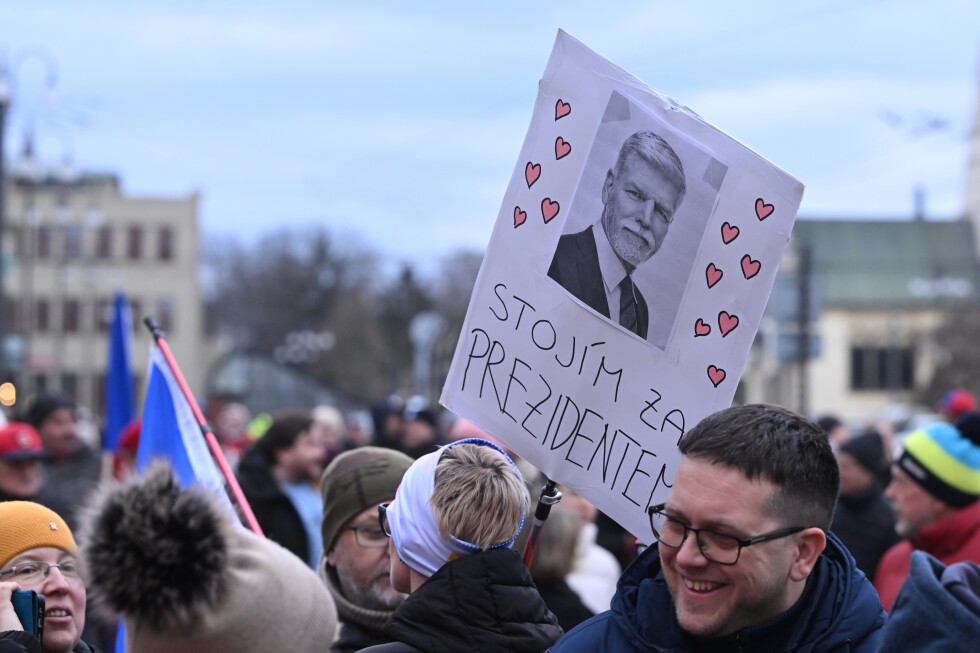
    PRAGUE — The Czech Republic witnessed widespread civic mobilization on Sunday as thousands of citizens participated in coordinated demonstrations across approximately 400 municipalities, including major urban centers like Brno. These protests, organized by the pro-democracy group Million Moments, represent a significant show of support for President Petr Pavel amid an escalating constitutional confrontation with Foreign Minister Petr Macinka’s political faction.

    The political crisis originated from President Pavel’s principled refusal to appoint Filip Turek as environment minister, a nomination put forward by the eurosceptic Motorists party. This decision followed media revelations exposing Turek’s history of publishing content with racist, homophobic, and sexist undertones on social media platforms. Although Turek offered partial apologies while disputing certain allegations, the president maintained that such appointments would violate ethical governance standards.

    Foreign Minister Macinka has escalated tensions by accusing the president of constitutional violations and issuing veiled threats of political consequences. President Pavel has characterized these actions as attempted blackmail, creating an unprecedented standoff between the presidential office and the governing coalition.

    This confrontation occurs against the backdrop of a fragile government formation led by populist Prime Minister Andrej Babiš, whose coalition includes the anti-migrant Freedom and Direct Democracy party alongside the Motorists group. The coalition’s agenda includes distancing the country from Ukrainian support mechanisms, challenging EU policy frameworks, and restructuring public broadcaster financing—moves that critics argue threaten democratic institutions.

    Mikuláš Minář, the lead organizer of the protests, emphasized that the demonstrations transcend presidential support, representing a broader defense of democratic values against what participants perceive as oligarchic and extremist influences. The protests explicitly position the Czech Republic against the pro-Russian orientations of neighboring Hungary and Slovakia, highlighting the geopolitical dimensions of this domestic political struggle.

  • Tom Wilson fights in Canada’s game vs. France at the Olympics

    Tom Wilson fights in Canada’s game vs. France at the Olympics

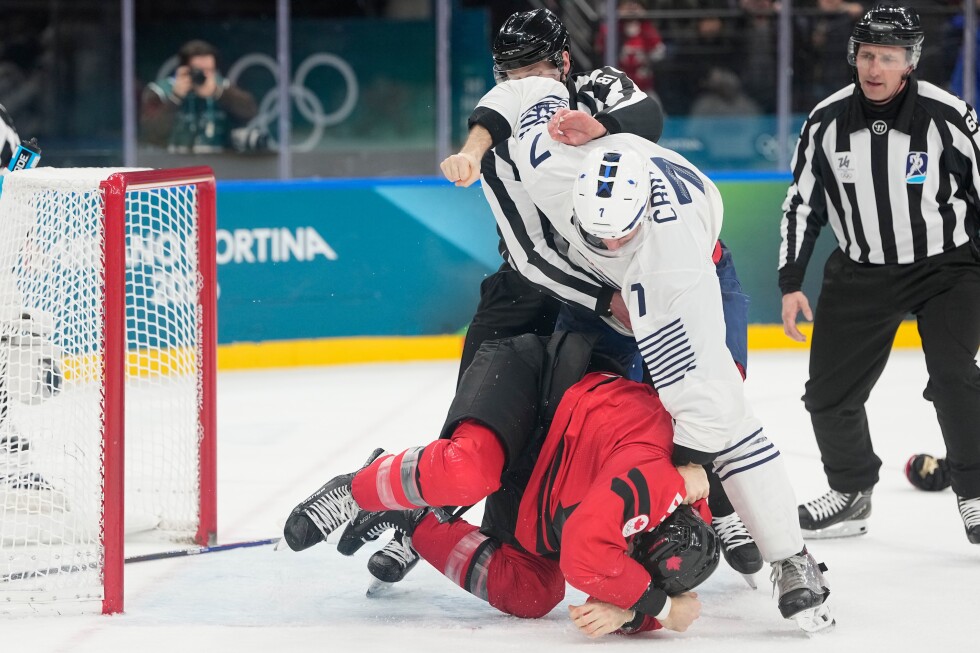
    MILAN — Olympic hockey witnessed a rare display of fisticuffs during Canada’s matchup against France on Sunday, challenging the conventional wisdom that international rules eliminate fighting from the game. The incident unfolded when Canadian winger Tom Wilson confronted French defenseman Pierre Crinon in retaliation for a forearm hit to the head of Wilson’s teammate, Nathan MacKinnon, during the third period.

    The altercation resulted in both players receiving game misconduct penalties and immediate ejections under International Ice Hockey Federation regulations, which treat fighting more severely than the NHL’s five-minute major penalty system. Despite the ejection, Wilson had already made significant offensive contributions with one goal and one assist prior to the fight.

    This physical exchange completed what hockey tradition calls a ‘Gordie Howe hat trick’—a goal, an assist, and a fight in the same game—a rare feat in international competition. The 31-year-old Washington Capitals star, who missed Canada’s 4 Nations Face-Off tournament last year, was specifically selected for the Olympic roster for his physical presence, puck retrieval skills, and offensive production. His inclusion addresses Canada’s need for toughness, particularly after the team’s previous tournament opener against the United States featured three fights within the first nine seconds of play.

    Crinon received a two-minute minor penalty for the initial hit on MacKinnon and subsequently apologized for the action. The incident highlights the ongoing tension between traditional hockey physicality and the IIHF’s stricter enforcement against fighting, even as players continue to police the game themselves when perceived dangerous plays occur.

  • France tears apart Wales with eight tries and is only unbeaten Six Nations team

    France tears apart Wales with eight tries and is only unbeaten Six Nations team

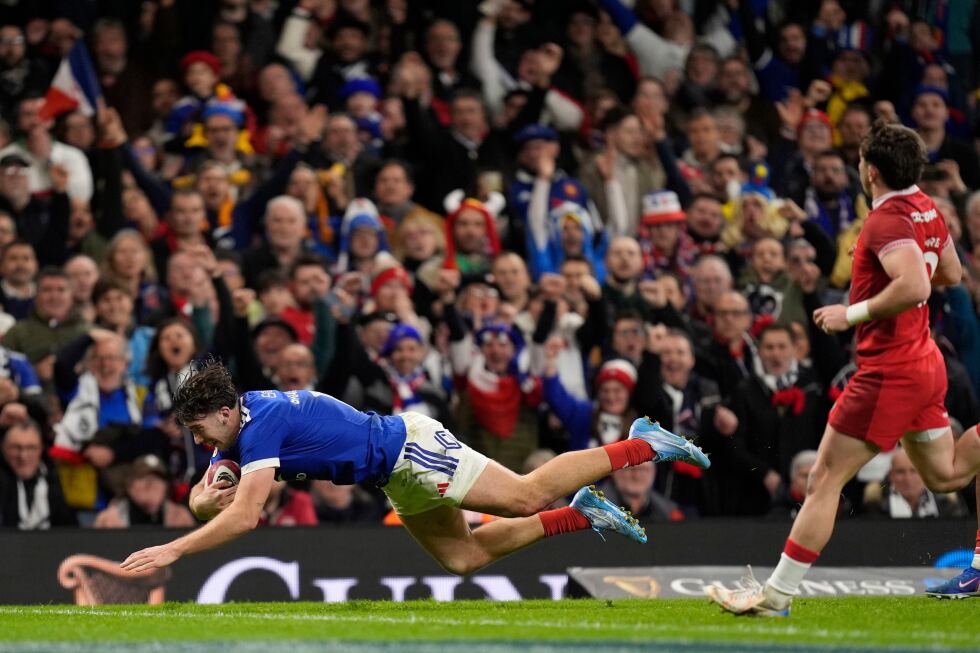
    CARDIFF, Wales — France delivered a masterclass performance against Wales in the Six Nations Championship on Sunday, securing a historic 54-12 victory that established new benchmarks for dominance in the tournament. The French squad emerged as the competition’s sole undefeated team after two rounds, solidifying their status as favorites for consecutive championship titles.

    The match witnessed an extraordinary offensive display with France scoring eight tries, beginning just 88 seconds into gameplay. This decisive triumph surpassed their previous record victory against Wales—a 51-0 result achieved at Wembley Stadium in 1998. Rather than relying on pure physical dominance, France employed an innovative sevens-style strategy characterized by continuous ball movement, precise offloading, and strategic positioning that systematically dismantled Wales’ defensive structures.

    France’s dynamic approach generated 28 line breaks, preventing Wales from establishing defensive cohesion. The strategy particularly benefited France’s emerging center talents—20-year-old Fabien Brau-Boirie and 22-year-old Émilien Gailleton from Pau Club—both of whom scored tries during the match. Flyhalf Matthieu Jalibert earned man-of-the-match honors with one try and three assists.

    For Wales, the defeat extended their Six Nations losing streak to 13 matches since 2022. The team has conceded 50-plus points in five of their last six home matches, including substantial losses to England (68-14), Argentina (52-28), New Zealand (52-26), and South Africa (73-0).

    The game attracted only 57,744 spectators—the smallest home crowd for Wales since the tournament’s expansion in 2000. Nearly 7,000 tickets remained unsold for Wales’ upcoming match against Scotland, reflecting growing fan disillusionment.

    Wales captain Dewi Lake acknowledged the challenges, stating: “It’s our job to make people want to come and watch games. We’re a side that’s not getting results but all we can ask is that people stick with us, come on the journey with us, because we’re growing as a team.”

    Defense coach Steve Tandy conceded France’s superiority: “If you look at the athletes France have, if we kick a little too far or if there’s an offload, they come alive. You have to tip your hat to France and where they are as a team. For us it’s transitioning, we’re not where we want to be.”

    France secured their bonus-point fourth try before halftime and added four more tries within 17 minutes during the second half. Captain Antoine Dupont was rested before the hour mark as France looks ahead to hosting Italy in Lille next weekend.

  • Hungarian opposition leader Magyar vows to pull Hungary back toward the West in campaign launch

    Hungarian opposition leader Magyar vows to pull Hungary back toward the West in campaign launch

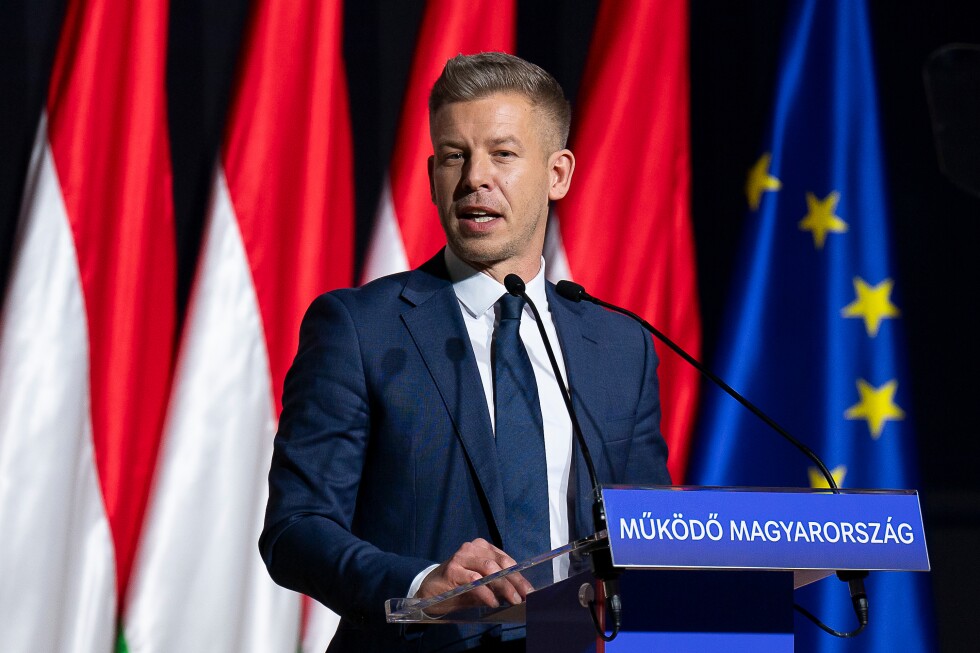
    BUDAPEST, Hungary — In a dramatic shift within Hungarian politics, opposition leader Péter Magyar has launched an ambitious campaign to unseat Prime Minister Viktor Orbán’s longstanding government. Speaking before supporters at a Budapest exposition center on Sunday, Magyar declared his center-right Tisza party stands “ready to govern” just 56 days before the crucial April 12 parliamentary elections.

    Magyar, a former insider within Orbán’s nationalist Fidesz party, has rapidly emerged as the most formidable political challenge to Orbán’s 16-year administration. Following an impressive performance in June’s European Parliament elections where Tisza captured approximately 30% of the vote, the party has maintained a consistent lead in independent polls for over a year.

    The opposition leader has conducted an intensive grassroots campaign across Hungary’s traditionally conservative rural heartlands—regions that have historically supported Orbán. Magyar’s platform centers on economic grievances, highlighting Hungary’s status as one of the EU’s poorest nations despite EU membership. He emphasizes stagnant wages, soaring living costs, and systemic corruption that he claims has enriched a small circle of government-connected oligarchs while ordinary Hungarians struggle.

    Foreign policy represents another critical dividing line. While Orbán recently stated that the European Union—not Russian aggression—poses the primary threat to Hungary, Magyar has positioned himself as pro-European. Following meetings with European leaders at the Munich Security Conference, Magyar pledged to end Hungary’s “drifting out of the European Union” and restore Western alliances, though he maintains certain Fidesz policies including border security measures and opposition to Ukraine’s accelerated EU accession.

    Tisza’s comprehensive 239-page governing program outlines ambitious reforms, including recovering billions in suspended EU funds by addressing democratic backsliding concerns, adopting the euro by 2030, and revitalizing Hungary’s deteriorating healthcare and public transportation systems. The party has recruited political newcomers from professional sectors—entrepreneurs, doctors, economists—with international energy expert Anita Orbán (no relation to the prime minister) slated as prospective foreign policy chief and former Shell executive István Kapitány as senior economy official.

    Magyar concluded his campaign launch with a promise of service-oriented governance: “We don’t plan to dominate this country, but to serve it.”

  • Ukraine’s ex-energy minister detained while attempting to leave country

    Ukraine’s ex-energy minister detained while attempting to leave country

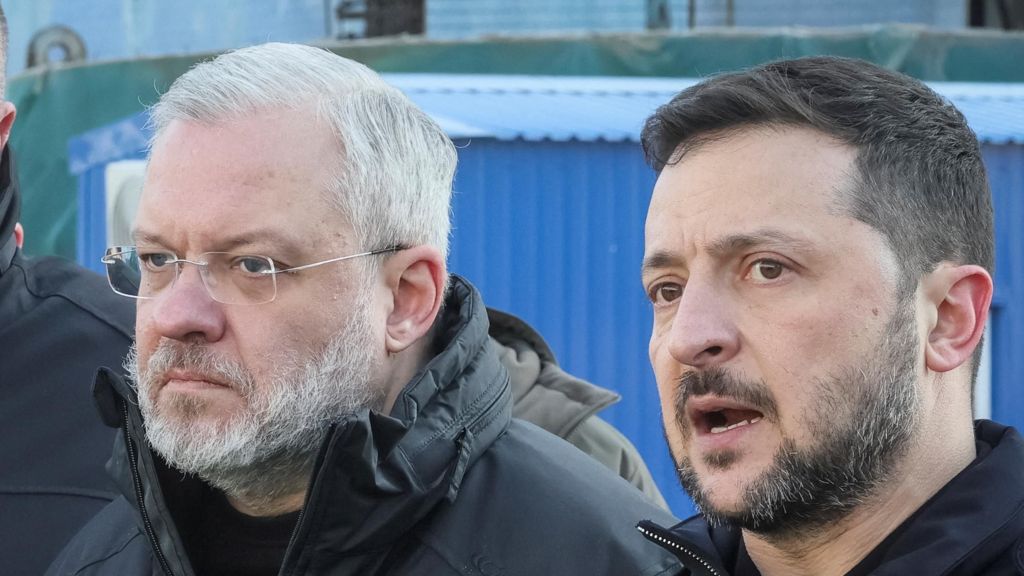
    Ukrainian authorities have apprehended former Energy Minister German Galushchenko while attempting to exit the country, marking the latest development in a sweeping corruption investigation that has shaken President Volodymyr Zelensky’s administration. The detention occurred at a border crossing point as Galushchenko reportedly sought to flee via train, though his intended destination remains unspecified.

    The arrest connects directly to Operation Midas, an extensive 15-month anti-corruption probe conducted by Ukraine’s National Anti-Corruption Bureau (NABU) and the Specialised Anti-Corruption Prosecutor’s Office (SAP). Investigators allege Galushchenko participated in a sophisticated $100 million embezzlement scheme within Ukraine’s energy sector, specifically targeting the state nuclear operator Energoatom. The operation uncovered systematic kickbacks ranging from 10-15% of contract values collected from energy contractors.

    This scandal emerges at a particularly sensitive time for Ukraine, as Russia intensifies attacks on energy infrastructure during winter months. The involvement of high-ranking officials in corrupt practices within the vital energy sector has generated substantial domestic outrage.

    The investigation has already produced significant political consequences, including the resignation of Zelensky’s chief-of-staff Andriy Yermak after his residence was searched, though neither he nor the president face direct allegations. Former Deputy Prime Minister Oleksiy Chernyshov was arrested in November on illicit enrichment charges, while businessman Timur Mindich, co-owner of Zelensky’s former TV studio Kvartal95, reportedly fled Ukraine after being named a suspect.

    International observers note that Ukraine’s persistent corruption problems present major obstacles to European Union integration, with anti-graft measures representing a key requirement for membership talks. The scandal has additionally increased pressure from the United States to resume elections, currently suspended under martial law provisions since Russia’s full-scale invasion began in 2022.

    NABU officials indicate Galushchenko is being transported to Kyiv for intensive questioning, with further updates on the Midas case expected shortly. The former minister, who previously served as justice minister before leading the energy portfolio for three years, has consistently denied wrongdoing and pledged to defend himself against all allegations.

  • Cold gold! Britain wins its first Olympics title on snow

    Cold gold! Britain wins its first Olympics title on snow

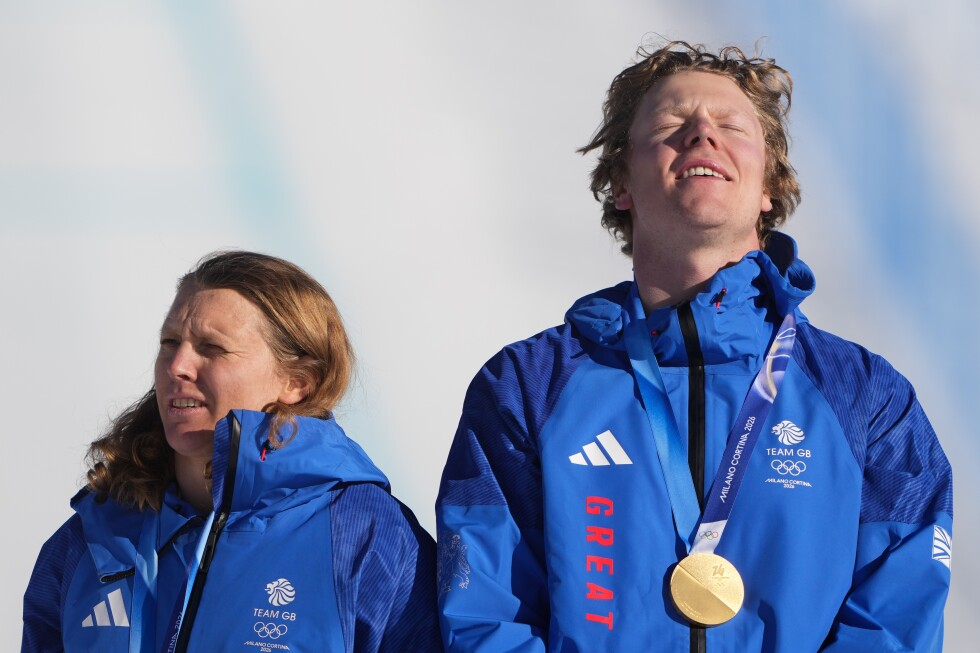
    LIVIGNO, Italy — In a stunning upset that rewrites British Winter Olympics history, Charlotte Bankes and Huw Nightingale captured gold in the mixed snowboardcross event on Sunday. This victory represents Britain’s first-ever gold medal won on snow in the 102-year history of the nation’s Winter Games participation.

    The breakthrough performance marks multiple historic milestones: not only is this Britain’s inaugural snow-surface gold, but it also represents the first time the nation has won multiple titles at a single Winter Olympics. The gold adds to the skeleton title secured by Matt Weston just two days earlier, bringing Britain’s total Winter Games gold count to just 15 in over a century of competition.

    What makes this victory particularly remarkable is the underdog status of the British pair. Seeded 13th out of 16 qualifying teams, Bankes and Nightingale had posted disappointing individual results just days earlier—13th and 26th place finishes in their respective events. Yet in the team format, everything coalesced perfectly on the Livigno course under sunny Italian skies.

    The mixed snowboardcross event, introduced just four years ago, features a unique relay-style format where four teams race simultaneously down the mountain. The first team to cross the finish line in the four-team final claims gold after three elimination rounds.

    Nightingale, emotional after the victory, stated: ‘The singles were tough but now there are tears of joy. GB on a whole is doing great on the snowboard side. We want to keep it going and inspire little kids to do it as well, and maybe one day they can get a gold medal.’

    The achievement shifts attention from Britain’s most famous Winter Olympians—ice dancers Jayne Torvill and Christopher Dean who won gold in 1984—to a new generation of snow sports athletes making history on different terrain.

  • Off-trail avalanche kills 2 skiers and injures 1 in northern Italy

    Off-trail avalanche kills 2 skiers and injures 1 in northern Italy

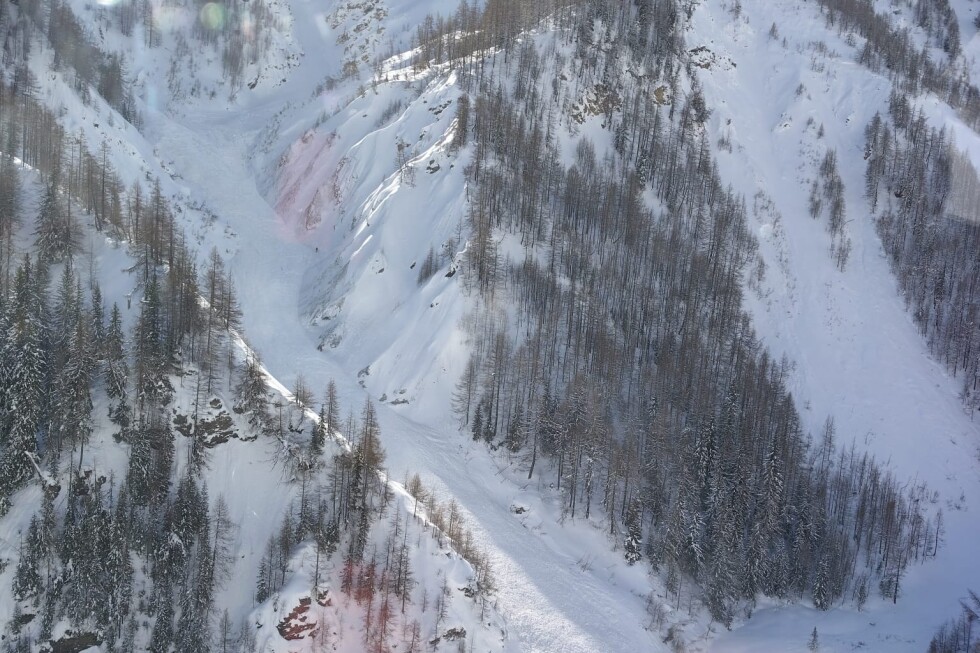
    A deadly off-piste avalanche struck the Mont Blanc massif near the Italy-France-Switzerland border on Sunday, resulting in two fatalities and one critical injury. The incident occurred in the renowned Couloir Vesses freeride zone within Courmayeur’s upper Val Veny region, according to official reports from Italy’s Alpine Rescue service.

    Emergency responders mobilized fifteen rescue specialists, three dog units, and two helicopter teams in a comprehensive search operation. Despite being transported to a medical facility in serious condition, one of the initially injured skiers succumbed to injuries sustained in the avalanche.

    This tragedy coincides with a separate avalanche event in Trentino where another skier experienced partial burial but was successfully extricated by fellow group members. These incidents follow a disturbing pattern of mountain accidents, with Alpine Rescue reporting thirteen fatalities among backcountry enthusiasts during the first week of February alone.

    Meteorological conditions have created particularly hazardous circumstances across the Alpine region. Recent storm systems have deposited fresh snow atop weak foundational layers, while powerful winds have formed unstable snowcaps along the mountain crescent spanning France, Switzerland, and Austria. Courmayeur, the picturesque Olympic venue town of approximately 2,900 residents located 200 kilometers northwest of Milan, now faces renewed scrutiny regarding mountain safety protocols during high-risk periods.

  • ‘Adopt a Statue’ program for Milan’s iconic Duomo restores centuries-old marbles

    ‘Adopt a Statue’ program for Milan’s iconic Duomo restores centuries-old marbles

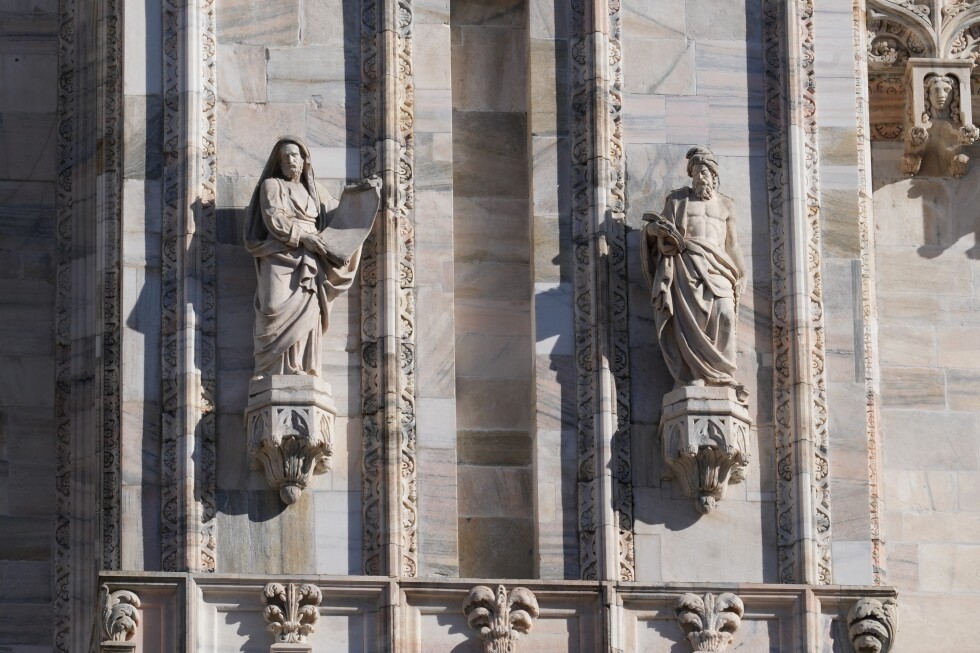
    MILAN — A remarkable cultural preservation initiative has brought a 15th-century marble sculpture from storage into public view through an innovative adoption scheme. The ‘Bearded Saint with Book,’ originally crafted for Milan’s iconic Duomo cathedral, now stands proudly displayed behind protective glass at Piazzale Cadorna, headquarters of Lombardy transport company FNM.

    The sculpture’s restoration and relocation mark the success of the ‘Adopt a Statue’ program launched in 2020 by Veneranda Fabbrica del Duomo, the centuries-old institution overseeing the cathedral’s conservation. This visionary program connects corporate and individual donors with historical artworks requiring restoration, creating a sustainable model for cultural preservation.

    Elisa Mantia, the program’s project manager, explained the significance: ‘This project’s uniqueness lies in restoring statues that would otherwise remain in our deposits, bringing them back to their original beauty. They can continue telling the Duomo’s story even in locations distant from the monument itself.’

    The adoption process involves formal loan agreements, typically beginning with one-year terms that may be renewed. Each restoration requires authorization from Italy’s cultural heritage authorities, with strict adherence to conservation, insurance, and transport regulations.

    The Duomo’s construction history reveals why such programs are necessary. Beginning in 1386 under Gian Galeazzo Visconti’s rule, the cathedral took over five centuries to complete, with artists from different regions and periods contributing statues that now represent a timeline of evolving artistic styles.

    FNM President Andrea Gibelli emphasized the broader mission during the February 13 unveiling: ‘Culture can save the world. We want to spread the cultural riches we are fortunate to have, which are often overlooked or not fully appreciated.’

    Other successfully adopted sculptures include a 16th-century David, a depiction of Samson and the Lion, and a statue of Saint Matthew the Apostle. The program has preselected approximately thirty additional sculptures eligible for restoration, each chosen for both artistic merit and structural integrity.

    The ‘Bearded Saint with Book’ required primarily surface cleaning to remove pollution-based black crust, having sustained no structural damage during its centuries outdoors. All Duomo sculptures originate from Candoglia quarries in Piedmont, with the same marble used consistently since the late 14th century.

    As Mantia reflects, ‘Beyond being Milan’s symbol, the Duomo represents its history—a monument that grew with the city, telling its entire story through statues and decorative styles.’