标签: Europe

欧洲

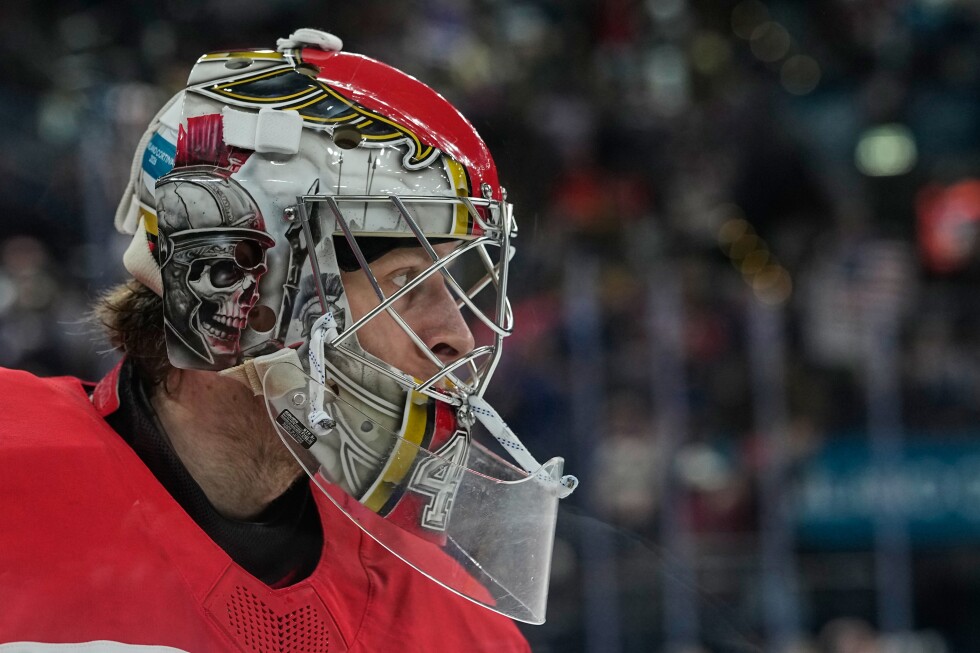
  • Defiant Denmark challenges US on Olympic ice with hockey as the motivation, not Greenland

    Defiant Denmark challenges US on Olympic ice with hockey as the motivation, not Greenland

    MILAN — In a display of pure determination that transcended geopolitical narratives, Denmark’s national hockey team delivered a spirited performance against the heavily favored United States at the Winter Olympics. Despite ultimately falling 6-3 to their more experienced opponents, the Danish squad demonstrated remarkable resilience by twice taking the lead during the contest.

    The matchup had been preceded by discussions about the complex relationship between the U.S. and Denmark, particularly regarding Greenland’s status as a self-governing Danish territory where independence sentiments run strong. However, Danish players emphatically stated these external factors played no role in their preparation or mindset.

    “We didn’t even mention it within the team,” revealed captain Jesper Jensen Aabo. “We just wanted to win a hockey game against a world-class team. We didn’t need extra fire to fire us up.”

    Instead, the Danish approach centered on fundamental hockey values: relentless effort, emotional investment, and collective purpose. Nick Olesen, who scored the opening goal in a first period that ended 2-1 with Denmark threatening an upset, explained: “I think that’s what represents Denmark, to always work hard.”

    The team’s composition highlighted their achievement, dressing just three NHL players compared to the American roster filled with top-tier professionals. Other Danish players compete in leagues across Austria, Czech Republic, Germany, Finland, and Sweden.

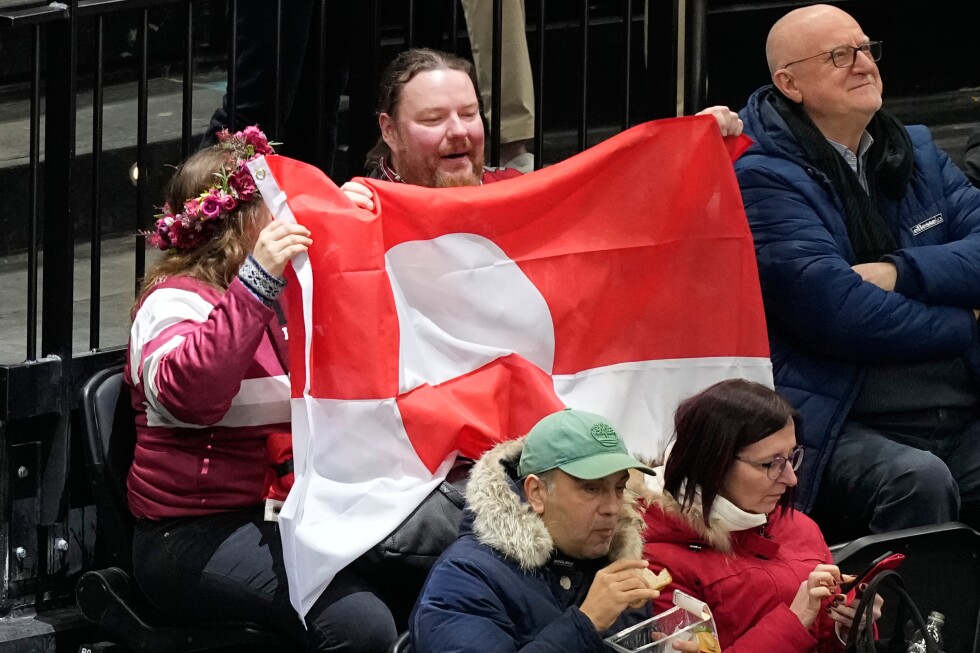
    A Greenlandic flag spotted in the stands—reportedly displayed by Latvian supporters as a pro-European gesture rather than Greenlanders themselves—went largely unnoticed by the Danish players during competition. “I didn’t see it, but that was nice,” Jensen Aabo commented. “So hopefully they supported us.”

    Lars Eller, Denmark’s most experienced NHL player from the Ottawa Senators, emphasized the Olympic spirit that prevailed: “Obviously we see the news and you’re aware of what’s going on, but today and the time we spent in the Village, it’s all about sports, it was all about hockey.”

  • The spectacular multimillion-euro heist nobody noticed

    The spectacular multimillion-euro heist nobody noticed

    In what authorities are calling Germany’s most spectacular bank robbery in recent memory, a meticulously executed heist at a Gelsenkirchen Sparkasse bank has left investigators baffled and victims devastated. The audacious burglary, occurring during the quiet Christmas weekend of December 27-29, 2025, involved thieves drilling through concrete walls to access the bank’s vault and plunder approximately 3,250 safety deposit boxes.

    According to police reconstruction, the perpetrators gained entry through an adjacent multi-story car park in the town’s Buer district. They allegedly manipulated an emergency exit door between the facilities, creating ‘unhindered access’ to the bank premises. Once inside, the criminals navigated multiple security systems before reaching an archive room adjacent to the main vault. Using industrial drilling equipment, they bored a precise 40-centimeter hole through the reinforced wall directly into the strongroom.

    The timing of the operation reveals remarkable sophistication. Investigators believe the thieves nearly encountered authorities when they triggered a fire alarm at approximately 6:00 AM on December 27. Despite the arrival of police and twenty firefighters, the response team concluded it was a false alarm after finding no evidence of smoke, fire, or damage. Interior Minister Herbert Reul later explained that firefighters couldn’t access the vault due to security shutters, and police lacked legal authority to conduct a search without a warrant.

    Security camera footage released by authorities shows masked individuals carrying large bags through the car park stairwell during the night of December 28. The thieves utilized two vehicles—a black Audi RS6 and a white Mercedes Citan—both equipped with falsified license plates.

    The full extent of the theft wasn’t discovered until December 29, when another fire alarm brought responders back to the bank. What they encountered resembled ‘a rubbish dump,’ according to Minister Reul, with over 500,000 items scattered across the vault floor. The criminals had doused many valuables with water and chemicals, significantly complicating the forensic investigation.

    While official loss estimates remain unconfirmed, German media sources project the stolen property could approach €100 million. The emotional impact on victims has been profound, with many reporting the loss of life savings, irreplaceable family jewelry, and sentimental heirlooms. The psychological toll has been compounded by insurance limitations—the bank covers only €10,300 per safety deposit box—and the reality that many victims lack formal documentation for their stored valuables.

    The investigation continues without any arrests, raising difficult questions about institutional security protocols and response procedures. The case has evolved beyond criminal dimensions into a broader societal conversation about trust in financial institutions and public security systems.

  • Fans who raised Greenland’s flag at US-Denmark Olympic hockey game say it was a pro-European gesture

    Fans who raised Greenland’s flag at US-Denmark Olympic hockey game say it was a pro-European gesture

    MILAN — In a striking display of pan-European solidarity during the Winter Olympics men’s hockey preliminary round, two Latvian fans raised the flag of Greenland as the United States faced Denmark on the ice. Vita Kalniņa and her husband Alexander Kalniņš, German-based supporters of the Latvian hockey team, prominently displayed the distinctive white-and-red Greenlandic banner during pre-game warmups and again when Denmark scored the opening goal against the American team.

    The symbolic gesture comes amid heightened diplomatic tensions between the U.S. and Denmark following recent remarks by former President Donald Trump regarding potential American interest in acquiring Greenland. The autonomous territory remains under Danish sovereignty despite having self-governing status.

    “We are Europeans and I think as Europeans we must hold together,” Alexander Kalniņš explained to The Associated Press. “The Greenlandic people ultimately decide their future, but currently Greenland remains part of the Danish kingdom. In this sporting context, we support both Greenland and Denmark against the U.S.”

    Other spectators attending the Olympic hockey matchup in Milan expressed belief that sports should transcend political divisions. Both American and Danish fans emphasized the game’s ability to bridge diplomatic differences through athletic competition.

    The recent geopolitical discourse surrounding Greenland has ignited renewed national pride in Denmark. While players from both teams maintained their focus remained exclusively on athletic performance, the matchup provided an opportunity for Danish supporters to rally behind their team as significant underdogs in the tournament.

  • Lindsey Vonn says her latest surgery after Olympic crash ‘went well’ and she can return to US

    Lindsey Vonn says her latest surgery after Olympic crash ‘went well’ and she can return to US

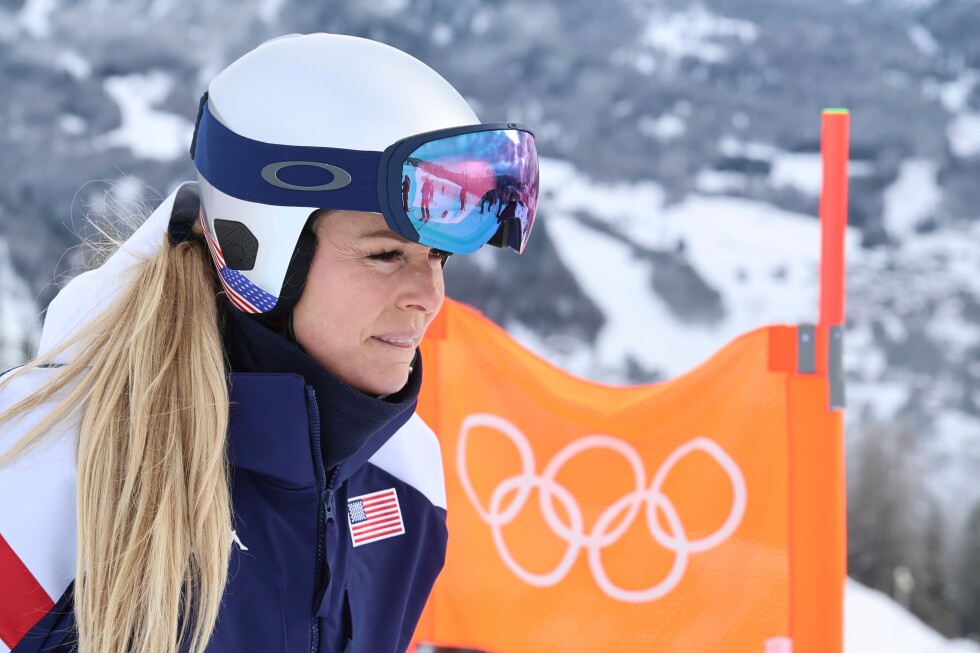
    CORTINA D’AMPEZZO, Italy — American skiing legend Lindsey Vonn has undergone successful surgery following a devastating crash during her Olympic downhill run, marking the latest chapter in her courageous battle with injury. The 41-year-old champion confirmed on Saturday that the procedure on her fractured left leg “went well,” clearing her for medical transport back to the United States.

    The incident occurred merely 13 seconds into Vonn’s run during last Sunday’s competition, necessitating immediate helicopter evacuation from the course. Medical examinations revealed a complex tibia fracture described as “currently stable but requiring multiple surgical interventions for proper stabilization”—a prognosis Vonn disclosed earlier this week.

    This represents the third surgical procedure in a series of devastating setbacks for the Olympic champion. Just nine days prior to the downhill crash, Vonn had ruptured the ACL in her left knee during another training incident, compounding the physical challenges of her highly anticipated comeback after nearly six years of retirement.

    Through her Instagram platform, Vonn delivered an emotionally powerful message to supporters worldwide: “I have been reading messages expressing sadness about my situation. Please, don’t be sad. While I welcome empathy, love and support with an open heart, I ask for no sympathy. Instead, may my experience provide strength to continue fighting—as I am doing and will continue to do always.”

    The veteran skier demonstrated remarkable perspective regarding her calculated risk-taking: “When I reflect on my crash, I didn’t stand in the starting gate unaware of potential consequences. I knew precisely what I was doing. I consciously chose to accept that risk.”

    Despite her father Alan Kildow’s expressed desire to see his daughter retire from competitive racing, Vonn’s determination remains unshaken. She concluded her statement with characteristic resolve: “I still anticipate the moment when I can stand atop the mountain once more. And I will.”

  • American Jeremy Swayman allows a long-distance goal against Denmark at the Olympics

    American Jeremy Swayman allows a long-distance goal against Denmark at the Olympics

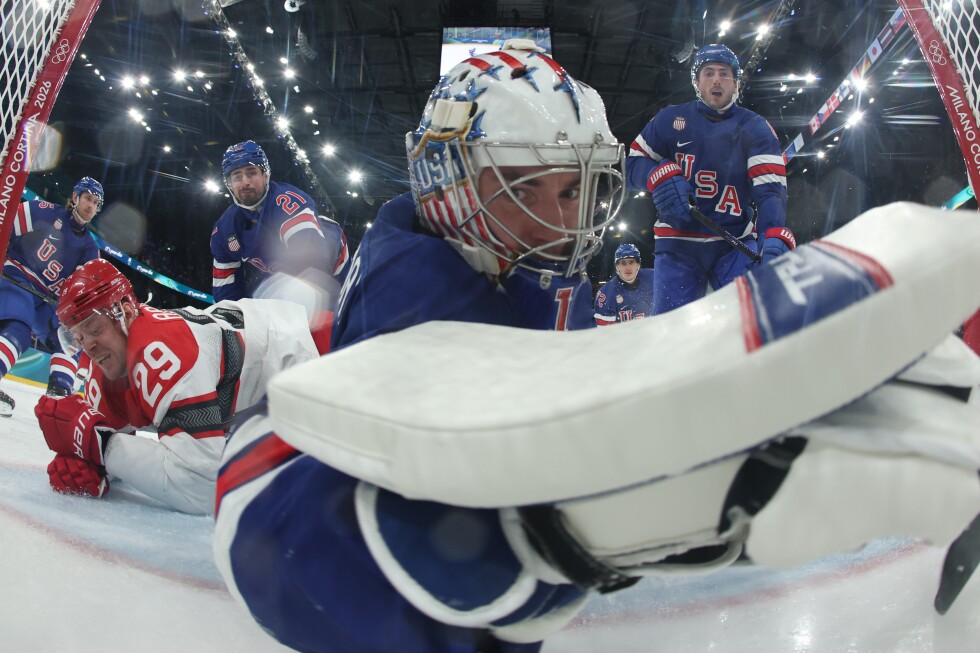
    In a stunning Olympic hockey moment that evoked memories of historic upsets, Denmark seized a surprise 2-1 lead against the heavily favored United States team following an extraordinary 95-foot goal that beat Boston Bruins goaltender Jeremy Swayman during Saturday night’s preliminary round match.

    The remarkable sequence occurred just past the midpoint of the first period when Danish defenseman Nicholas B. Jensen launched a seemingly routine shot from beyond the center red line. Swayman, appearing to lose sight of the puck, misjudged the trajectory as the shot sailed over his right shoulder into the net. The goal marked only Jensen’s fourth in 11 years of international competition.

    NBC analyst and former NHL goaltender Brian Boucher speculated during the broadcast that the arena’s dark board coloring may have contributed to Swayman’s visual challenges in tracking the unexpected shot.

    The bizarre play immediately drew comparisons to one of international hockey’s most famous upsets: Belarusian forward Vladimir Kopat’s game-winning goal against Sweden’s Tommy Salo from center ice during the 2002 Salt Lake City Olympics quarterfinals.

    U.S. head coach Mike Sullivan had implemented a strategic goaltending rotation for the tournament’s demanding schedule, selecting Swayman for the Denmark matchup while preserving reigning NHL MVP Connor Hellebuyck (Winnipeg Jets) for Sunday’s round-robin finale against Germany. Jake Oettinger (Dallas Stars) completed the American goaltending trio.

    Swayman entered the Olympics boasting arguably the strongest NHL season credentials among the three netminders, having recently backstopped Team USA to victory at the world championships. Hellebuyck brings Vezina Trophy-winning pedigree, while Oettinger has demonstrated playoff excellence with three consecutive Western Conference final appearances.

  • Marseille’s chaotic week continues as it concedes a stoppage-time penalty against Strasbourg

    Marseille’s chaotic week continues as it concedes a stoppage-time penalty against Strasbourg

    Olympique de Marseille’s institutional crisis escalated dramatically on Saturday as the club conceded a devastating 97th-minute equalizer against Strasbourg, transforming certain victory into a 2-2 draw that further inflamed tensions at the Stade Vélodrome. The result extends Marseille’s trophy drought since their 2012 League Cup triumph and compounds the turmoil following Roberto De Zerbi’s midweek departure.

    The match began promisingly with Amine Gouiri orchestrating Marseille’s early dominance. The attacking midfielder provided a sublime assist in the 14th minute, expertly controlling with the outside of his foot before delivering a precision pass for Mason Greenwood to score his league-leading 14th goal. Gouiri doubled the advantage shortly after halftime with a technically superb curled finish following Strasbourg goalkeeper Mike Penders’ errant clearance.

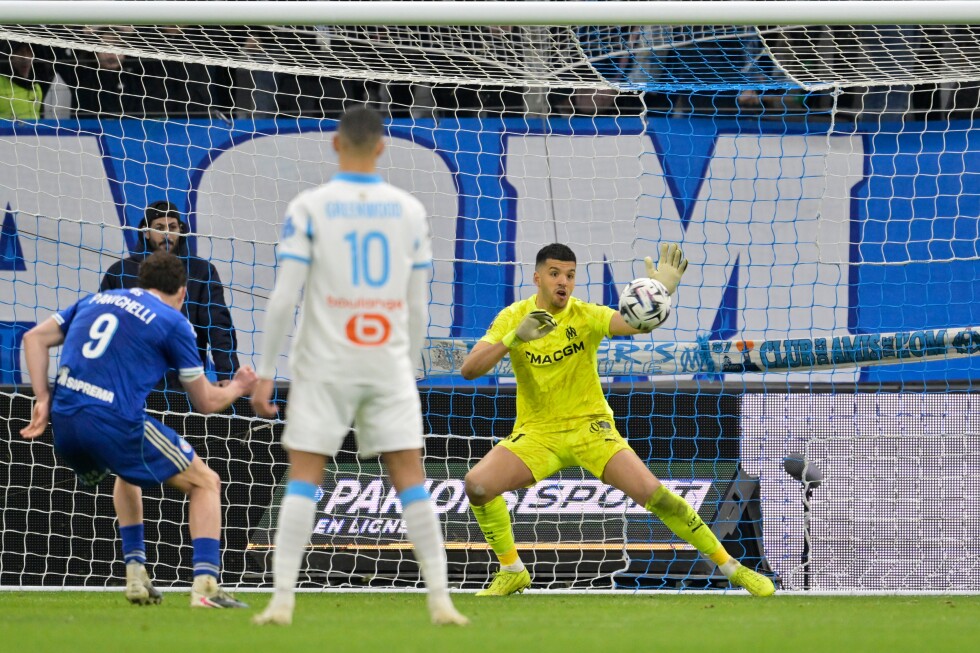
    However, Marseille’s defensive frailties resurfaced catastrophically in the final quarter. Sebastian Nanasi ignited Strasbourg’s comeback in the 74th minute before Emerson Palmieri’s clumsy challenge conceded a penalty deep into stoppage time. Striker Joaquin Panichelli converted from the spot to complete Marseille’s collapse.

    The atmosphere reflected the club’s profound discontent. Large sections of the stadium remained empty while protesting banners targeted American owner Frank McCourt and president Pablo Longoria with explicit demands for their departure. Those supporters who attended greeted players with audible boos, creating a palpably hostile environment.

    Gouiri’s post-match comments highlighted the squad’s accountability crisis: ‘We consistently surrender late goals and nullify our efforts. When this pattern repeats continuously, the responsibility lies with us on the pitch rather than tactical decisions.’

    The result leaves Marseille languishing in mid-table as the Ligue 1 title race continues elsewhere. Paris Saint-Germain’s surprising 3-1 defeat at Rennes marked their third loss this campaign—exceeding their total from the previous season—while Lens sought to capitalize against struggling Paris FC to reclaim the league leadership.

  • Ireland grinds out a shaky Six Nations win over Italy in second half fightback

    Ireland grinds out a shaky Six Nations win over Italy in second half fightback

    Dublin witnessed a tense Six Nations encounter on Saturday as Ireland narrowly overcame a determined Italian side 20-13 in a match that revealed significant concerns for the home team’s championship aspirations. Despite entering the game under pressure following their record 36-14 defeat to France—their worst Six Nations loss in 16 years—Andy Farrell’s squad delivered another underwhelming performance that failed to silence mounting doubts about their form.

    The match unfolded as a tale of two contrasting halves, with Italy making history by securing their first-ever halftime lead in Dublin. The visitors demonstrated remarkable progress from their traditional tournament underdog status, building on their opening victory against Scotland with courageous, inventive rugby that frequently exposed Irish vulnerabilities.

    Italy’s performance deserved greater reward, with two potential tries denied—one through a forward pass ruling and another lost to an unfortunate bounce. Their scrum dominance proved particularly alarming for Ireland, with prop Simone Ferrari consistently overpowering opposite number Jeremy Loughman and even managing to lift British and Irish Lions star Tadhg Furlong off his feet.

    Ireland’s response came through replacement playmakers Jamison Gibson-Park and Jack Crowley, whose second-half introduction provided crucial impetus. Winger Robert Baloucoune marked his first test appearance in over three years with a decisive try, while Crowley contributed vital points through conversions and penalties.

    The dramatic conclusion saw Ireland’s James Lowe intercepting Italy’s final attack beyond the 80-minute mark, yet instead of securing an easy penalty to deny Italy a losing bonus point, Ireland controversially pursued a fourth try only to kick the ball dead and end the match.

    The result sets up concerning prospects for Ireland’s upcoming clash against England at Twickenham, while Italy travels to face tournament favorites France with reinforced credibility and confidence.

  • Late goal in a loss to Sweden may get Slovakia into the quarterfinals at the Olympics

    Late goal in a loss to Sweden may get Slovakia into the quarterfinals at the Olympics

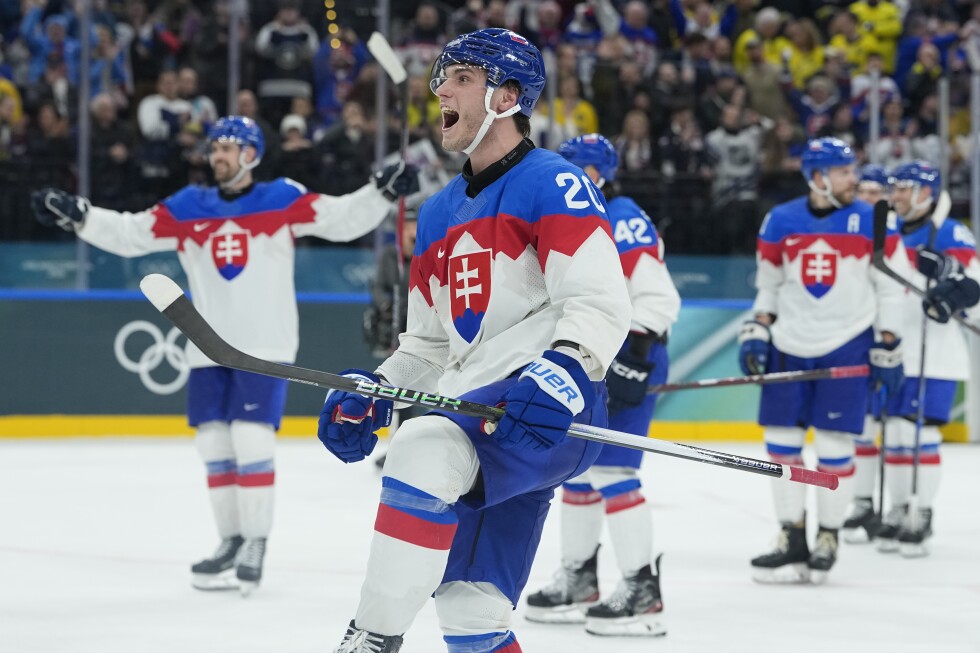
    In a stunning turn of events at the Milan Winter Olympics, Slovakia secured advancement to the quarterfinals in men’s hockey despite suffering a 5-3 defeat against Sweden in Saturday’s preliminary round finale. The crucial moment came when Dalibor Dvorsky of the St. Louis Blues scored with just 39 seconds remaining, creating a tiebreaker scenario that ultimately favored Slovakia.

    The complex advancement mathematics hinged on Slovakia’s superior goal differential among three tied teams in Group B, contingent upon Finland’s expected victory over host Italy later that day. This unusual circumstance prompted Slovakia’s Juraj Slafkovsky, the reigning Olympic MVP who shares the tournament scoring lead with Canada’s Connor McDavid at six points each, to describe the outcome as “probably the best loss I ever had.”

    Dvorsky, who netted the critical power-play goal following a penalty against Sweden’s Lucas Raymond, echoed this sentiment, calling it “the best loss of my life.” The forward revealed their late-game strategy was straightforward: “We all know what we need to do on the ice. There was not too much tactics, right? At this point of the game, just try to get pucks to the net.”

    Meanwhile, Sweden faced disappointment despite their on-ice victory, having performed significantly better than in their previous 4-1 loss to archrival Finland. Coach Sam Hallam’s decision to pull goaltender Jacob Markstrom while leading by two goals in the final seconds—aiming for additional tiebreaker advantages—backfired as Sweden failed to score again. Alternate captain Victor Hedman called the outcome a “tough pill to swallow” but vowed the team would “regroup and be ready for our next challenge.”

    In other Olympic hockey action, Latvia delivered an upset victory over Germany with a 4-3 win, thanks to goals from Eduards Tralmaks and Renars Krastenbergs just over three minutes apart. Zemgus Girgensons of the Buffalo Sabres, one of ten NHL players on Latvia’s roster, expressed confidence in his team’s capabilities: “We’re a good team. We believed it. We came in today thinking we’re going to win.” Germany now faces a critical match against the United States on Sunday night.

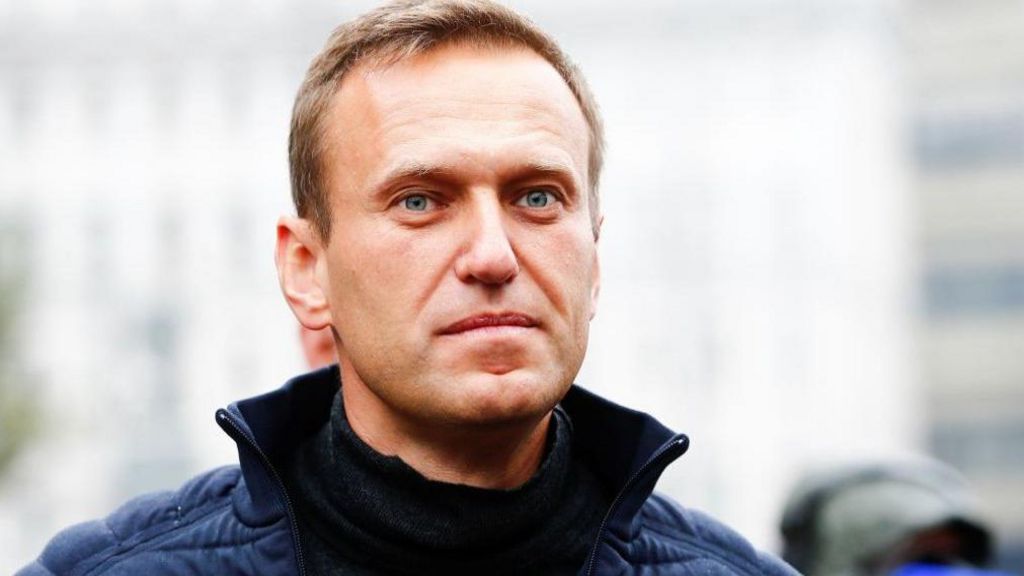
  • Russia killed opposition leader Alexei Navalny using dart frog toxin, UK says

    Russia killed opposition leader Alexei Navalny using dart frog toxin, UK says

    The United Kingdom has formally accused the Russian government of assassinating opposition leader Alexei Navalny using an exotic poison derived from dart frog toxin. This declaration comes exactly two years after Navalny’s death in a Siberian penal colony and follows a meticulous multinational forensic investigation.

    Foreign Secretary Yvette Cooper, speaking from the Munich Security Conference where she met with Navalny’s widow Yulia Navalnaya, stated that British intelligence analysis of biological samples revealed traces of epibatidine—a lethal toxin with no plausible innocent explanation for its presence. “Only the Russian government had the means, motive and opportunity to deploy this lethal toxin against Alexei Navalny during his imprisonment in Russia,” Cooper asserted, adding that the Kremlin’s use of such chemical agents demonstrated both its despicable capabilities and profound fear of political opposition.

    The UK’s findings have garnered international support, with Sweden, France, the Netherlands, and Germany jointly endorsing the accusation. In response to what it terms a blatant violation of the Chemical Weapons Convention, Britain has formally notified the Organisation for the Prohibition of Chemical Weapons of Russia’s alleged breach.

    Navalny, Russia’s most prominent anti-corruption activist and Vladimir Putin’s foremost critic, died suddenly on February 16, 2024, at age 47 while serving a three-year sentence on widely condemned politically motivated charges. His death occurred shortly after his transfer to a remote Arctic penal colony, with Russian authorities claiming he collapsed after a walk and never regained consciousness.

    This marks the second known poisoning attempt against Navalny, who survived a Novichok nerve agent attack in 2020 that necessitated extensive medical treatment in Germany. His widow Yulia Navalnaya, who had consistently maintained her husband was murdered, expressed gratitude for the international investigation: “I was certain from the first day that my husband had been poisoned, but now there is proof.”

    The Kremlin has remained silent regarding these latest allegations, continuing its pattern of avoiding direct acknowledgment of Navalny’s existence. President Putin only briefly referenced the opposition leader’s death a month after it occurred, calling any human passing “always a sad event” without mentioning Navalny by name.

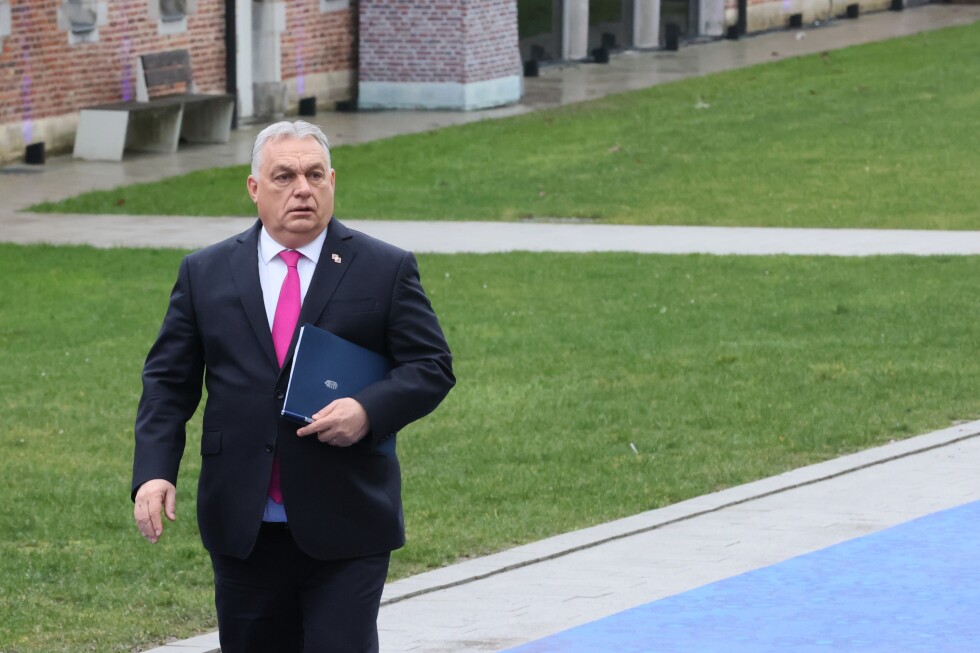
  • Orbán says the EU and not Russia is Hungary’s real threat ahead of April vote

    Orbán says the EU and not Russia is Hungary’s real threat ahead of April vote

    BUDAPEST, Hungary — In a fiery pre-election address to supporters on Saturday, Hungarian Prime Minister Viktor Orbán dramatically repositioned the European Union as Hungary’s principal antagonist, surpassing even Russia in perceived threat level. With critical national elections looming just eight weeks away, Orbán’s nationalist Fidesz party faces its most formidable electoral challenge since returning to power in 2010.

    Current independent polling indicates Fidesz trailing behind the emerging center-right Tisza party and its leader Péter Magyar, despite Orbán’s campaign narrative warning that an opposition victory would result in the EU forcibly deploying Hungarian citizens to combat zones in neighboring Ukraine—a claim entirely lacking evidentiary support.

    During his Saturday oration, Orbán drew provocative parallels between the contemporary European Union and the historically oppressive Soviet regime that dominated Hungary throughout the Cold War era. He explicitly dismissed widespread concerns among European leadership regarding Russian President Vladimir Putin’s threat to continental security, stating: “We must acclimatize to the reality that freedom-loving citizens should dread Brussels, not Eastern powers.”

    The Prime Minister elaborated: “Fear-mongering about Putin represents primitive and unserious rhetoric. Conversely, Brussels constitutes a tangible reality and source of imminent danger. This uncomfortable truth is one we refuse to tolerate.”

    Orbán has maintained consistent opposition to military and financial assistance for Kyiv since Russia’s full-scale invasion commenced nearly four years ago. His administration has cultivated unusually cordial relations with Moscow while adopting confrontational stances toward Hungary’s EU and NATO allies, frequently characterizing them as instigators of military conflict.

    This geopolitical positioning has generated significant friction with the European Union, resulting in the freezing of billions in EU funds allocated to Budapest. These financial sanctions respond to persistent concerns regarding democratic backsliding, erosion of judicial independence, and systemic corruption under Orbán’s governance.

    In retaliation, Orbán has increasingly functioned as an obstructionist within EU policymaking processes, routinely threatening vetoes on crucial initiatives including financial support packages for Ukraine.

    As electoral pressures intensify, the Prime Minister has amplified rhetoric portraying the Tisza party as an EU-engineered puppet regime designed to overthrow his government and advance foreign agendas—allegations vehemently denied by opposition leaders. Péter Magyar has committed to restoring Hungary’s deteriorating relationships with Western allies, revitalizing economic stagnation, and reinstating democratic norms.

    Orbán additionally accused multinational corporations in banking and energy sectors of capitalizing on the Ukraine conflict while conspiring with political opponents to secure electoral victory. He asserted: “Hungary’s petroleum industry, financial institutions, and Brussels elite are overtly preparing to establish a government. They require Hungarian leadership that will never oppose Brussels’ demands.”

    The Prime Minister promised that a fifth consecutive parliamentary majority would enable intensified efforts to eliminate entities he claims compromise national sovereignty. He notably praised former U.S. President Donald Trump—who has endorsed Orbán’s reelection bid—for creating international conditions conducive to expelling “fabricated NGOs and compromised journalists, judiciary members, and politicians.”

    Orbán concluded: “The American president’s rebellion against global liberal networks has improved our prospects. We too can eliminate foreign influences and their domestic agents that constrain our sovereignty. Brussels’ repressive apparatus remains operational in Hungary—we will commence its purification this April.”