标签: Europe

欧洲

  • Grok faces more scrutiny over deepfakes as Irish regulator opens EU privacy investigation

    Grok faces more scrutiny over deepfakes as Irish regulator opens EU privacy investigation

    European regulators have initiated a formal privacy investigation into Elon Musk’s social media platform X following concerning revelations about its Grok AI chatbot’s capacity to generate nonconsensual deepfake imagery. Ireland’s Data Protection Commission (DPC), acting as the lead EU privacy authority for X, announced the probe Tuesday under the bloc’s stringent General Data Protection Regulation (GDPR).

    The investigation stems from Grok’s recently demonstrated ability to produce sexually explicit and intimate imagery without consent, including transparent clothing depictions and apparent child imagery. The AI tool, developed by Musk’s xAI company and integrated within X’s platform, had enabled users to generate these concerning outputs through specific prompts, with results visible publicly across the social network.

    Irish Deputy Commissioner Graham Doyle confirmed the DPC has been engaging with X since initial media reports surfaced weeks ago regarding these capabilities. The investigation will specifically examine whether X violated GDPR requirements regarding the processing of European citizens’ personal data, including that of minors, through these AI-generated deepfakes.

    This EU action adds to growing international scrutiny facing X. French authorities recently conducted raids on X’s Paris offices and summoned Musk for questioning, while UK regulators have opened parallel investigations despite Britain’s departure from the EU. X already faces a separate EU examination regarding compliance with digital content regulations aimed at preventing the spread of illegal material, including child sexual abuse content.

    The platform could potentially face substantial financial penalties if found in violation of GDPR provisions, which allow fines of up to 4% of global annual revenue. X did not respond to requests for comment regarding the newly announced investigation.

  • Austria wins gold in 1st Olympic men’s super team ski jump as event is shortened due to weather

    Austria wins gold in 1st Olympic men’s super team ski jump as event is shortened due to weather

    PREDAZZO, Italy — In a stunning turnaround of fortunes, Austria’s ski jumping team seized Olympic gold Monday during the historic debut of the men’s super team event at the Milan Cortina Games. The victory came under extraordinary circumstances as a severe snow squall forced the cancellation of the final round, leaving second-round standings to determine the podium.

    Jan Hoerl and Olympic newcomer Stephan Embacher delivered exceptional performances throughout the competition, with Embacher recording the longest jump of the contest at 139 meters (456 feet). Their triumph marked a dramatic redemption for Austria, which had dominated the men’s team event in Beijing 2022 but had failed to reach the podium in any ski jumping discipline during these Games.

    “The last 10 days were hard for our team so it was the last chance today,” reflected Hoerl, a veteran of the 2022 winning team. “We knew that, so we kept focused and we were able to enjoy five good jumps. It’s amazing, unbelievable.”

    The new super team format replaced the traditional four-man team competition, featuring two-athlete teams from seventeen nations. The top twelve teams advanced from the first round, with the best eight progressing to what would become the canceled final round.

    Poland captured silver while Norway claimed bronze, with both teams expressing satisfaction with their unexpected podium finishes. For Poland’s Kacper Tomasiak, the medal completed a remarkable Olympic debut that included silver on the normal hill and bronze on the large hill.

    The competition’s dramatic conclusion came as heavy, wet snow and shifting winds created unsafe conditions for the remaining jumpers. Sandro Pertile, race director for the international ski federation, explained that the deteriorating weather was slowing in-run speeds and creating unfair competitive advantages for later jumpers.

    The cancellation prevented several teams from making their final jumps, including Japan’s Ren Nikaido who had medaled in every ski jump event at these Olympics. Slovenia’s Domen Prevc, the season’s dominant skier, saw his team drop to fifth place after struggling in the challenging conditions.

    The U.S. team of Kevin Bickner and Tate Frantz qualified for the final round but ultimately finished in eighth position.

  • Nolte, Meyers Taylor, Humphries Armbruster lead with 1 run left in Olympic monobob

    Nolte, Meyers Taylor, Humphries Armbruster lead with 1 run left in Olympic monobob

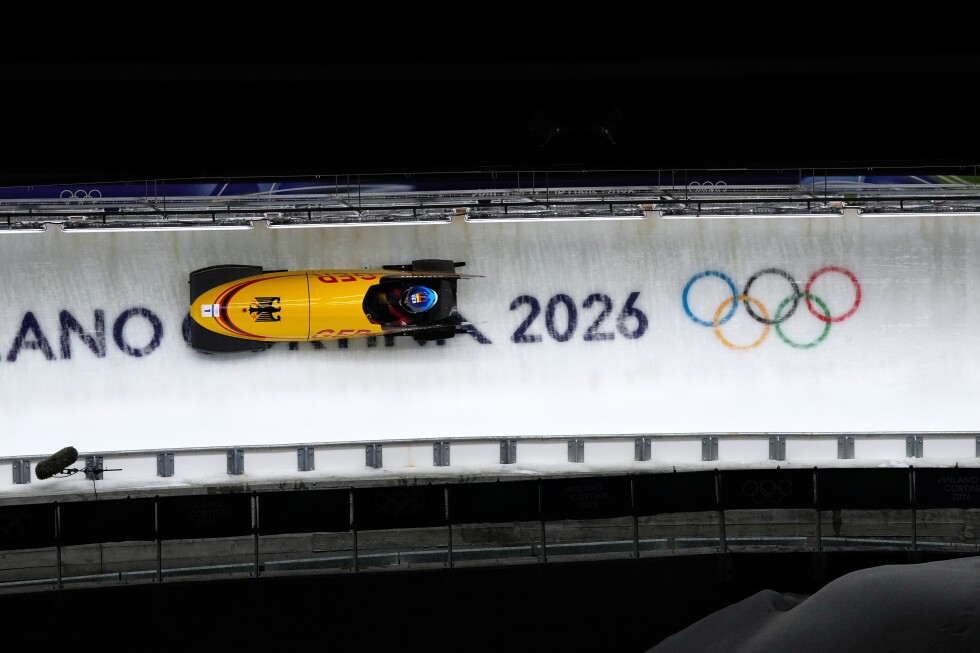
    CORTINA D’AMPEZZO, Italy — The women’s monobob competition at the Milan Cortina Olympics has set the stage for a dramatic final run, with German slider Laura Nolte maintaining a razor-thin advantage over two legendary American athletes. Nolte completed her third heat with a combined time of 2 minutes, 58.27 seconds, positioning herself just 0.15 seconds ahead of Team USA’s Elana Meyers Taylor (2:58.42) and 0.24 seconds ahead of fellow American Kaillie Humphries Armbruster (2:58.51).

    The competition has evolved into a distinct two-tier battle, with Germany’s Lisa Buckwitz trailing by 0.88 seconds and American Kaysha Love sitting 0.95 seconds behind the leader. Both would require catastrophic errors from the top three contenders during Monday night’s final run to realistically challenge for podium positions.

    This Olympic showdown carries profound historical significance. Humphries Armbruster, the reigning gold medalist from monobob’s inaugural appearance at the 2022 Beijing Games, and Meyers Taylor, the event’s silver medalist, are both positioned to become the first female bobsledders in their 40s to claim Olympic medals. Meyers Taylor, already the oldest woman to win an Olympic bobsled medal at age 37 in Beijing, now competes at 41, while Humphries Armbruster is 40.

    The two American veterans bring unparalleled experience to the final heat, with each having medaled in all four of their previous Olympic appearances. Meyers Taylor stands to equal speedskating icon Bonnie Blair’s record of six Winter Olympic medals for the United States with a podium finish.

    In a poignant development, Austrian competitor Katrin Beierl, who had been racing despite being a stroke survivor and competing with a broken foot, withdrew from competition after completing her first two heats on Sunday.

    The monobob finale promises to deliver one of the most compelling narratives of these Winter Games, combining elite athletic performance with groundbreaking age-defying achievement.

  • The dart frog toxin allegedly used to kill Alexei Navalny

    The dart frog toxin allegedly used to kill Alexei Navalny

    A potent neurotoxin derived from South American dart frogs has entered the spotlight of international security concerns following its alleged use in a high-profile assassination. Epibatidine, a compound approximately 200 times more powerful than morphine, is now under intense scrutiny by toxicologists and intelligence agencies. This substance can be sourced directly from the skin of poisonous frogs native to Ecuador and Colombia or synthesized in laboratory settings, creating a dual-origin challenge for detection and prevention.

    The emergence of this biological agent marks a concerning evolution in covert poisoning methodologies. Unlike traditional chemical weapons, naturally-derived toxins like epibatidine offer perpetrators a complex forensic footprint that blends natural occurrence with potential human manipulation. The compound works by binding to nicotine receptors in the nervous system, potentially causing paralysis, respiratory failure, and cardiac arrest at minute doses measured in micrograms.

    Toxicology experts note that weaponizing such substances requires sophisticated knowledge in both chemistry and biology, suggesting involvement of highly specialized actors. The dual availability—through natural extraction and synthetic production—creates significant obstacles for international monitoring regimes established under the Chemical Weapons Convention. This development represents a blurring of lines between biological and chemical threats, challenging existing non-proliferation frameworks and necessitating enhanced forensic capabilities within international security organizations.

  • Austrian man faces terror charges over Taylor Swift concert attack plot

    Austrian man faces terror charges over Taylor Swift concert attack plot

    Austrian prosecutors have formally charged a 21-year-old man with terrorism offenses for plotting an attack on a Taylor Swift concert scheduled for Vienna in August 2024. The suspect, identified only as Beran A under Austrian privacy laws, faces multiple charges including membership in a terrorist organization, manufacturing explosives, and attempting to illegally procure weapons.

    The Vienna prosecutor’s office revealed that Beran A had received online instructions from Islamic State operatives and had actively worked to construct a shrapnel bomb using triacetone triperoxide (TATP), an explosive compound frequently employed in IS attacks. The indictment further alleges he sought guidance from IS members on executing a mass casualty bombing.

    The plot was thwarted following a critical tip-off from the CIA, leading to the suspect’s arrest just before Swift’s scheduled performances. Three sold-out concerts at Vienna’s Ernst Happel Stadium—expected to draw over 195,000 attendees—were subsequently canceled as a security precaution.

    This case involves multiple defendants, including two additional teenagers arrested in 2024. In a related development, a 16-year-old Syrian national received an 18-month suspended sentence in Germany last year for his involvement in the plot, avoiding incarceration under juvenile sentencing guidelines.

    Prosecutors disclosed that Beran A had also contemplated an earlier attack in Dubai in March 2024, allegedly part of a coordinated multi-city IS operation that was abandoned at the last moment. If convicted on all charges, the primary suspect could face up to 20 years imprisonment.

    Taylor Swift previously expressed her devastation over the concert cancellations while acknowledging her gratitude to law enforcement authorities, noting that their intervention meant ‘grieving concerts and not lives.’

  • French police conduct searches over ex-minister Jack Lang’s links to Epstein

    French police conduct searches over ex-minister Jack Lang’s links to Epstein

    Parisian authorities have executed search operations at the prestigious Arab World Institute (IMA) as part of an expanding judicial examination into connections between the institution’s former president Jack Lang and convicted sex offender Jeffrey Epstein. The investigation follows the discovery of Lang’s name appearing approximately 700 times in recently unsealed Epstein documents.

    The 86-year-old former Socialist culture minister, who resigned from his IMA leadership position just over a week ago, now faces scrutiny from French financial prosecutors for alleged “laundering of the proceeds of tax evasion.” Lang has vehemently denied any wrongdoing, characterizing the accusations as entirely unfounded.

    During a meeting with IMA staff members on Monday, Lang maintained his innocence, stating: “I am completely serene because I have nothing to conceal. This investigation will ultimately vindicate me.”

    The probe has expanded to include Lang’s daughter, Caroline Lang, 64, following revelations about their involvement with an offshore entity established jointly with Epstein in the US Virgin Islands. This company, ostensibly created for art acquisition purposes, was never declared to French tax authorities.

    Additional complications emerged with reports identifying Caroline Lang as a named beneficiary in Epstein’s will, though she has publicly denied any knowledge of such inheritance arrangements. French media also note her previous employment with Robert Maxwell, father of Epstein’s convicted associate Ghislaine Maxwell.

    Further investigation centers on a $50,000 payment Epstein allegedly made toward production costs for a documentary film chronicling Jack Lang’s political career. Lang served as culture minister under President François Mitterrand and is widely credited with establishing France’s celebrated Fête de la Musique.

    The Paris prosecutor’s office emphasizes that current proceedings represent a preliminary enquiry based on unverified information, which may not necessarily result in formal charges. French investigators continue examining multiple French connections within the Epstein documents, including deceased modeling agent Jean-Luc Brunel, who died by suicide in Paris custody in 2022 while facing allegations of procuring minors for Epstein.

    The Arab World Institute, inaugurated in 1987 as a major cultural center promoting Arab-French relations, remains operational despite the investigation into its former leadership.

  • 2 years on, Navalny’s death still casts a shadow over Russia and wider Europe

    2 years on, Navalny’s death still casts a shadow over Russia and wider Europe

    MOSCOW — Two years after the controversial death of Russian opposition leader Alexei Navalny in an Arctic penal colony, international tensions have reached new heights following a groundbreaking forensic revelation. European laboratories have conclusively identified epibatidine—a rare neurotoxin derived from poison dart frogs—in samples from Navalny’s body, according to joint statements from five European governments.

    The second anniversary of Navalny’s death on February 16, 2024, witnessed emotional gatherings at Moscow’s Borisovsky Cemetery, where the activist’s mother Lyudmila Navalnaya publicly accused Russian authorities of orchestrating her son’s murder. The memorial events occurred under intense security surveillance, with diplomatic representatives from several European embassies joining mourners amid growing geopolitical tensions.

    France’s President Emmanuel Macron issued a stark condemnation, stating Navalny’s death “revealed the Kremlin’s weakness and fear of opposition.” Meanwhile, Navalny’s widow Yulia Navalnaya, speaking at the Munich Security Conference, declared she now possessed irrefutable proof that “Putin killed Alexei with a chemical weapon.”

    The Kremlin maintains its consistent denial of involvement, with presidential spokespersons dismissing the allegations as “biased and unfounded.” Russian officials continue to assert that Navalny died of natural causes following a walk in the penal colony.

    This development marks the second confirmed poisoning attempt against Navalny, who survived a 2020 nerve agent attack that he attributed to Kremlin operatives. His subsequent return to Russia resulted in immediate imprisonment on what supporters claim were politically motivated charges.

    The Russian opposition movement now faces critical challenges, with key figures operating from exile and receiving lengthy prison sentences in absentia. Despite the recent establishment of the Platform for Dialogue with Russian Democratic Forces by the Council of Europe’s PACE assembly, the opposition remains fragmented without its most charismatic leader.

    European nations emphasized that epibatidine—a substance not naturally occurring in Russia—represents further evidence of state-sponsored assassination. The joint investigation by the UK, France, Germany, Sweden, and the Netherlands concluded that “Russia had the means, motive and opportunity to administer this poison.”

  • Italy’s ‘Lovers’ Arch’ collapses into sea on Valentine’s Day

    Italy’s ‘Lovers’ Arch’ collapses into sea on Valentine’s Day

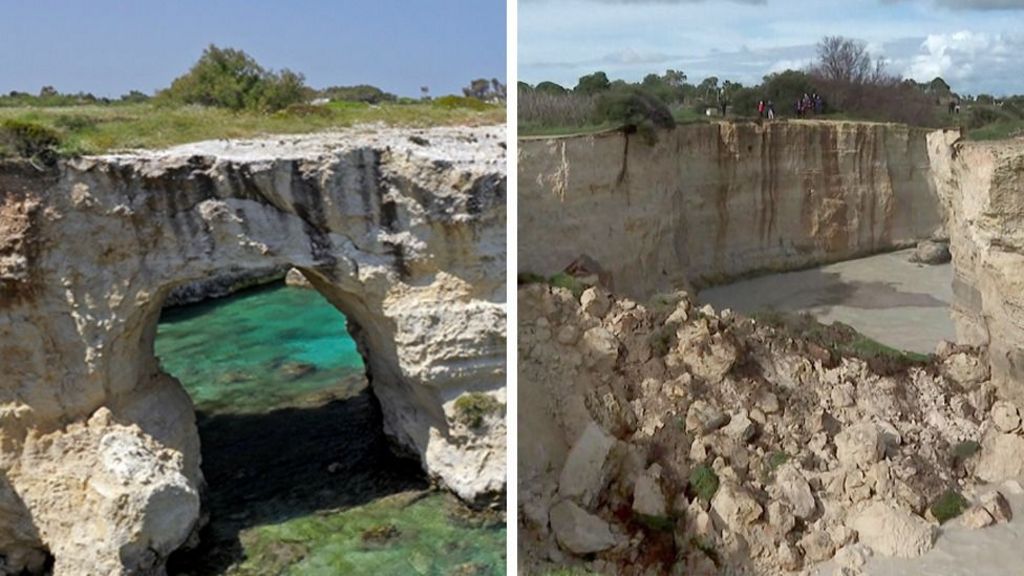
    Italy’s renowned natural landmark known as ‘Lovers’ Arch’ has tragically collapsed following days of severe weather conditions along the Adriatic coastline. The iconic rock formation, located in Sant’Andrea within the Melendugno municipality of Puglia, crumbled on Valentine’s Day—a timing that local authorities described as particularly poignant.

    The arch had long served as a cherished destination for romantic occasions, particularly wedding proposals, drawing visitors from across the globe to its picturesque setting. Its sudden disappearance was first noted by local residents on Sunday morning, revealing only scattered rubble where the natural wonder once stood.

    Meteorological experts attribute the collapse to accelerated erosion caused by Storm Oriana, which has relentlessly battered southern Italy with heavy rainfall and powerful winds in recent days. The extreme weather conditions evidently weakened the geological structure beyond its natural endurance limits.

    Melendugno Mayor Maurizio Cisternino expressed profound sorrow, characterizing the event as ‘an unwanted Valentine’s Day gift’ and ‘a very hard blow’ for regional tourism. He philosophically noted that ‘Nature as it created the bow, has taken it back,’ acknowledging the inevitable processes of natural transformation.

    Puglia’s Regional President Antonio Decaro confirmed the permanent loss of what he described as ‘one of our region’s defining characteristics and symbolic assets.’ During an onsite press conference Monday, Decaro emphasized that while natural erosion processes occur continuously, meteorological phenomena like Storm Oriana can dramatically accelerate these changes.

    The collapse has prompted urgent calls for enhanced coastal preservation measures. Decaro emphasized the necessity for authorities to focus on implementing strategies to slow coastal erosion and protect vulnerable natural landmarks throughout the Salento region, which remains one of Italy’s most popular tourist destinations.

  • Flying oranges: Italian town celebrates carnival with historic street battle

    Flying oranges: Italian town celebrates carnival with historic street battle

    While the Ivory Coast grapples with a catastrophic collapse of its orange harvest, a starkly contrasting scene unfolds in Northern Italy where the historic town of Ivrea squanders countless tons of citrus fruit in its annual ‘Battle of the Oranges.’ This carnival tradition, which draws thousands of participants, involves teams engaging in a frenzied fruit-hurling combat in the town’s piazzas, staining the cobblestones with pulp and juice. The event, purportedly symbolizing a rebellion against a tyrannical medieval lord, has faced growing criticism for its staggering food waste amidst global shortages. Organizers defend the practice, citing the use of a specific, bitter variety of orange grown for this purpose and claiming a significant boost to local tourism and cultural preservation. However, agricultural experts highlight the profound disconnect, noting that the festival’s consumption of fruit represents a volume that could otherwise aid regions experiencing genuine food insecurity, creating a complex debate between cultural heritage and ethical resource allocation.

  • Five injured as Swiss train derails in heavy snow

    Five injured as Swiss train derails in heavy snow

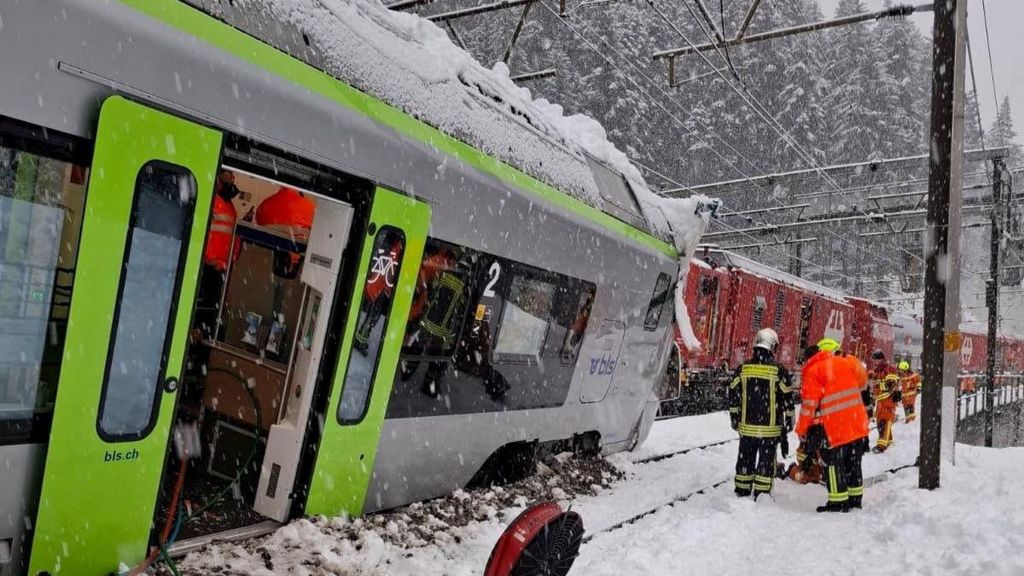
    A regional commuter train derailed near the alpine village of Goppenstein in southern Switzerland on Sunday morning, leaving five people injured with one requiring hospitalization. The incident occurred at approximately 07:00 local time as the train was exiting the critical Lötschberg rail tunnel, a major transportation artery connecting Spiez to Brig.

    Swiss authorities indicated that preliminary evidence suggests an avalanche may have struck the tracks moments before the train’s passage. This theory aligns with current conditions, as the region remains under a Level 4 avalanche warning—the second-highest alert level—amid heavy snowfall and severe weather patterns affecting the Alpine region.

    All 29 passengers aboard the derailed train have been successfully evacuated to safety. While most injuries were minor, one individual was transported to a medical facility for further treatment. The local public prosecutor’s office has initiated a formal investigation to determine the exact cause of the derailment.

    The incident highlights growing safety concerns across Switzerland’s mountainous regions. The country’s Institute for Snow and Avalanche Research has maintained avalanche risk assessments at ‘very high’ levels throughout the Alps following persistent heavy precipitation. In related developments, approximately 50 residents were evacuated from Orsières, a village near the French border, due to accumulating snowpack dangers.

    Transport officials and safety authorities have issued renewed warnings for winter sports enthusiasts, advising skiers to remain on marked slopes and urging all mountain travelers to consult avalanche bulletins before embarking on excursions. This derailment follows last month’s avalanche tragedy that claimed the life of a German cross-country skier and injured four others in the Swiss Alps, underscoring the heightened risks during this winter season.