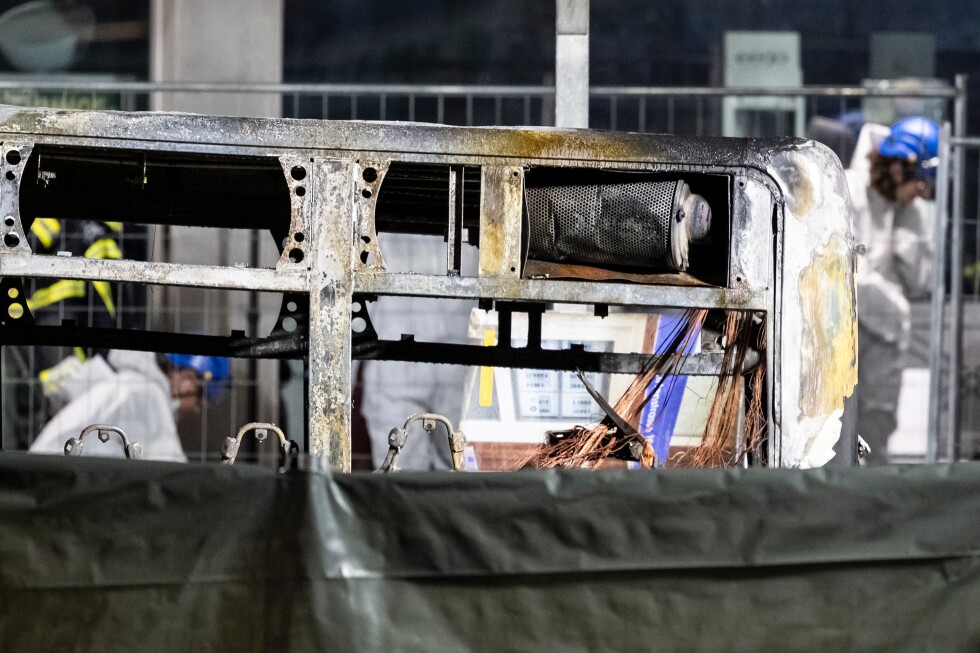
Munich Airport, one of Germany’s busiest aviation hubs, faced a temporary closure on Saturday night following unverified reports of drone sightings. According to federal police, the incident occurred after multiple individuals, including security personnel and airport staff, reported suspicious observations. The sightings took place around 10 p.m. and again at 11 p.m., lasting approximately 30 minutes each time. Despite the disruption, the airport resumed operations before midnight, and air traffic returned to normal by Sunday morning. The impact on flights and passengers was minimal, with only three flights diverted—two of which later landed in Munich—and one departure canceled. Federal police conducted a thorough search but found no drones or suspicious individuals in the vicinity. This incident marks the latest in a series of mysterious drone overflights affecting European Union airspace. Earlier this month, Munich Airport experienced two closures within 24 hours due to similar drone sightings, disrupting thousands of travelers.
标签: Europe
欧洲
-

Turkish Cypriots vote in an election seen as a choice on deeper Turkey ties or closer EU relations
In a decisive election held on Sunday, Turkish Cypriots in the ethnically divided island of Cyprus faced a critical choice: deepen their alignment with Turkey or pivot toward stronger ties with Europe. With approximately 218,000 registered voters, the polls closed at 1500 GMT, marking a significant moment in the region’s political landscape. The election featured seven candidates, but the primary contest was between the hard-right incumbent Ersin Tatar and the center-left challenger Tufan Erhurman. Tatar, 65, has been a vocal advocate for permanently dividing Cyprus and seeking international recognition for a Turkish Cypriot state closely aligned with Turkey’s political, economic, and social policies. His stance echoes that of Turkish President Recep Tayyip Erdogan, who recently reiterated at the U.N. General Assembly that Cyprus comprises “two separate states” and called for formal recognition of the Turkish Cypriot entity. In contrast, Erhurman, 55, has championed a return to negotiations with Greek Cypriots to establish a two-zone federation. He has criticized Tatar’s reluctance to engage in formal peace talks during his five-year tenure, arguing that it has isolated Turkish Cypriots internationally and wasted valuable time. The election unfolds against the backdrop of Cyprus’s division since 1974, when Turkey invaded following a coup by Greek junta-backed supporters of union with Greece. Turkish Cypriots declared independence in 1983, but only Turkey recognizes it, maintaining over 35,000 troops in the island’s northern third. While Cyprus joined the European Union in 2004, only the Greek Cypriot south enjoys full membership benefits, despite many Turkish Cypriots holding EU-recognized passports. Greek Cypriots firmly reject the two-state proposition, viewing it as incompatible with the U.N. and EU-endorsed federation framework. Cypriot President Nikos Christodoulides has repeatedly stated that talks based on a two-state solution are non-negotiable, fearing Turkey’s potential dominance over the entire island.
-

Pope gives Venezuela reason to celebrate by canonizing its beloved ‘doctor of the poor’ as 1st saint
In a historic moment for Venezuela, Pope Leo XIV will canonize José Gregorio Hernández, the nation’s revered ‘doctor of the poor,’ on Sunday. This marks Venezuela’s first saint and brings a rare moment of celebration to a country grappling with a prolonged economic crisis and escalating tensions with the United States. The canonization ceremony, held in St. Peter’s Square, will also honor Mother Carmen Rendiles Martínez, founder of a Venezuelan religious order, and Papua New Guinea’s first saint, Peter To Rot, among others. Thousands of Venezuelans are expected to attend in Rome, while many more will gather in Caracas to watch the livestreamed event. The Vatican highlighted that Pope Francis approved Hernández’s sainthood from his hospital room, bypassing the traditional miracle confirmation process due to the widespread veneration of the ‘doctor-saint.’ Hernández, a 19th-century physician, became a national icon for his selfless care of the poor, often refusing payment and even providing funds for medicine. His tragic death in 1919 while delivering medicine to an elderly woman cemented his legacy. The canonization comes at a critical time for Venezuela, following recent geopolitical tensions and the Nobel Peace Prize awarded to opposition leader María Corina Machado. Despite the challenges, this event symbolizes hope and unity for the Venezuelan people. Other individuals being canonized include Archbishop Ignazio Choukrallah Maloyan, Sister Vincenza Maria Poloni, Maria Troncatti, and Bartolo Longo, each recognized for their profound impact on faith and society.
-

Spanish town bans black cat adoptions during Halloween
In a move to safeguard black cats from potential harm during Halloween, the Spanish town of Terrassa in Catalonia has implemented a temporary ban on their adoption from local animal shelters. The prohibition, effective from October 6 to November 10, aims to prevent the animals from being exploited in sinister rituals or used as props during the holiday season. Deputy Mayor Noel Duque highlighted that adoption requests for black cats typically surge around Halloween, a time when they are often associated with witchcraft and bad luck in Western culture. However, in other cultures, such as Japan and Egypt, black cats are revered as symbols of prosperity and fortune. Terrassa’s city council clarified that while there have been no reported cases of cruelty towards black cats in the town, incidents in other regions prompted the decision, following warnings from animal welfare organizations. The council emphasized that the measure is temporary and exceptional, designed to protect the animals from impulsive or trend-driven adoptions. Terrassa is home to over 9,800 cats, with approximately 100 housed in the town’s adoption center, including 12 black cats. Exceptions during the ban period will be evaluated on a case-by-case basis, and normal adoption processes will resume post-Halloween.
-

Work begins to restore power to Ukraine’s Zaporizhzhia nuclear power plant
KYIV, Ukraine — Efforts to restore the damaged power supply to Ukraine’s Zaporizhzhia nuclear power plant have commenced, according to Rafael Grossi, the head of the International Atomic Energy Agency (IAEA). The repairs aim to end a precarious four-week outage during which the plant relied on backup generators. Grossi emphasized the importance of restoring off-site power, describing it as ‘crucial for nuclear safety and security.’
In a rare display of cooperation, Russian and Ukrainian forces established special ceasefire zones to facilitate the safe execution of repairs. Grossi commended both sides for their constructive engagement with the IAEA, enabling the complex repair plan to proceed. Ukrainian Energy Minister Svitlana Grynchuk confirmed the involvement of Ukrainian specialists in restoring power lines to the plant. She highlighted the plant’s stable operation and connection to the Ukrainian power grid as essential to preventing a nuclear incident. This marks the 42nd time since Russia’s full-scale invasion in February 2022 that power lines to the plant have required restoration.
The Zaporizhzhia plant, Europe’s largest nuclear power station, has been operating on diesel backup generators since September 23, when its last external power line was severed in attacks. Both Russia and Ukraine have accused each other of responsibility for the attacks. Although the plant is under Russian control and not in service, it requires reliable power to cool its six shutdown reactors and spent fuel, averting potential catastrophic nuclear incidents.
Meanwhile, the conflict continues to escalate elsewhere in Ukraine. Ukraine’s Air Force reported that Russia launched three missiles and 164 drones overnight, with Ukrainian forces successfully intercepting 136 of the drones. In the Zarichny district of Sumy, northeast Ukraine, two women aged 51 and 53 were injured after Russian drones targeted a gas station, according to local officials. On the other side, Russia’s Ministry of Defense claimed its air defenses had shot down 41 Ukrainian drones overnight.
For ongoing coverage of the war in Ukraine, visit AP’s dedicated hub at https://apnews.com/hub/russia-ukraine.
-

Deference and disappointment as Zelensky leaves White House empty-handed
Ukrainian President Volodymyr Zelensky’s high-stakes visit to the White House ended in disappointment as he failed to secure the much-needed American long-range Tomahawk missiles. The meeting, described by Zelensky as ‘pointed,’ starkly contrasted with the optimism his delegation had harbored before their arrival in Washington. Just hours before landing, news broke of a two-and-a-half-hour phone call between President Donald Trump and Russian President Vladimir Putin, followed by an announcement of an upcoming summit between the two leaders. This development cast a shadow over Zelensky’s visit, leaving Ukrainian hopes for decisive U.S. support unfulfilled.
Trump, who had previously expressed frustration with Putin, now appeared confident that the Russian leader was ready to negotiate. ‘I think he wants to make a deal,’ Trump stated, framing the conflict as a personal dispute rather than a geopolitical crisis. Zelensky, cautious not to challenge Trump directly, praised the U.S. president’s peacemaking efforts but made it clear that he did not share Trump’s trust in Putin’s intentions. ‘We understand that Putin is not ready,’ Zelensky said.
The meeting concluded with Trump suggesting that the war be frozen along existing battle lines, a proposal that falls short of Ukraine’s demands for security guarantees and military aid. For Ukraine and its allies, the conflict is not a personal grievance but a war of aggression by an authoritarian state with imperial ambitions. The absence of U.S. commitments leaves Ukraine to continue its fight against Russia, relying on its own resilience and determination.
In Kyiv, residents expressed mixed feelings about the outcome of the talks. Volodymyr Tsepovatenko, a shop owner repairing damage from recent missile strikes, warned that any peace deal now would only allow Russia to prepare for future aggression. Oleksandr Vilko, whose car was destroyed in the attacks, emphasized that Ukraine’s fate ultimately lies in the hands of its army. ‘With or without [Tomahawks], Ukrainians will fight on,’ he said. Despite the challenges, Ukraine remains steadfast in its resolve to defend its sovereignty and freedom.
-

Burning ship loaded with gas abandoned in Gulf of Aden off Yemen as 1 mariner missing
A Cameroonian-flagged vessel, the Falcon, caught fire in the Gulf of Aden off Yemen on Saturday, following a suspected projectile strike. At least one mariner is missing, and another is believed to remain aboard the burning tanker after the rest of the 26-member crew, predominantly Indian with one Ukrainian, abandoned the ship. The incident has sparked conflicting explanations, with British authorities suggesting a projectile hit the vessel, while the European Union described it as an accident. The ship, fully loaded with liquefied petroleum gas, poses a significant explosion risk, prompting warnings to nearby vessels. The British military’s United Kingdom Maritime Trade Operations (UKMTO) reported the incident occurred approximately 210 kilometers east of Aden, with investigations ongoing. The EU’s Operation Aspides, which patrols the region, noted the Greek frigate HS Spetsai and a French aircraft were nearby. The Falcon has previously been linked to an alleged Iranian ‘ghost fleet’ evading international sanctions, though its Indian-based owners could not be reached for comment. The Houthi rebels, known for targeting ships in the Red Sea, have not claimed responsibility, though their activities have disrupted global shipping routes, with $1 trillion in goods passing through annually before the conflict. The Israeli military denied involvement in the incident. The Houthis’ campaign has already claimed nine mariners’ lives and sunk four ships, exacerbating regional tensions.
-

Oviedo and Espanyol players stand still in protest
In a striking display of dissent, players from Oviedo and Espanyol staged a symbolic protest during their La Liga match on Friday, refusing to move for the first 15 seconds in response to the league’s decision to host a game in Miami. The protest targeted La Liga’s lack of transparency and dialogue regarding the relocation of Villarreal’s fixture against Barcelona to the Hard Rock Stadium on December 20. The Spanish Footballers’ Association (AFE) coordinated the protest, emphasizing their rejection of a project they claim lacks player approval and adequate labor protections. La Liga, however, refuted these accusations, expressing a willingness to engage in dialogue with the AFE. The protest was not broadcast live, as cameras shifted to the stadium’s exterior. The AFE announced that similar demonstrations would occur in remaining La Liga games this weekend, though Barcelona and Villarreal players were excluded to avoid misinterpretation. The controversy follows the Italian football federation’s decision to host a Serie A match in Perth, Australia. Barcelona coach Hansi Flick voiced his displeasure with the Miami game, while Real Madrid and Uefa expressed opposition and reluctant approval, respectively. RFEF president Rafael Louzan and Barcelona president Joan Laporta defended the move, calling it beneficial for football.
-

One scandal too many forces UK monarchy to sideline Prince Andrew
The British monarchy has taken decisive action to distance itself from Prince Andrew following a series of damaging revelations about his association with convicted sex offender Jeffrey Epstein. Buckingham Palace announced on Friday that Andrew, the second son of the late Queen Elizabeth II, has agreed to relinquish his remaining royal titles, including the Duke of York, to prevent further distractions from the monarchy’s public duties. This move comes after emails surfaced this week showing that Andrew maintained contact with Epstein longer than he had previously admitted, contradicting his earlier claims and misleading the British public. Craig Prescott, a constitutional law expert at Royal Holloway University of London, described this as the “straw that broke the camel’s back,” emphasizing the severity of the deception. The decision to strip Andrew of his titles marks the culmination of a years-long process that began in 2019 when he stepped back from public duties following a disastrous BBC interview addressing his ties to Epstein and allegations of sexual misconduct. The interview, widely criticized for its lack of empathy and implausible explanations, set the stage for this week’s revelations. Andrew’s banishment from royal life underscores King Charles III’s efforts to modernize and stabilize the monarchy, particularly as he prepares for a significant state visit to the Vatican. The king is also motivated by a desire to protect the reputations of Queen Camilla and the Duchess of Edinburgh, who have championed causes related to domestic and sexual violence. By severing ties with Andrew, the monarchy aims to insulate itself from further scandal and reaffirm its commitment to public service.
-

A look at Prince Andrew’s antics and scandals that have tried royal patience for decades
In a dramatic turn of events, Britain’s Prince Andrew has been compelled to relinquish his remaining royal titles, marking a significant fall from grace for the once-prominent royal figure. This decision, orchestrated by his brother King Charles III, comes in the wake of mounting controversies surrounding Andrew’s association with convicted pedophile Jeffrey Epstein. Over the past four decades, Andrew’s actions have repeatedly embarrassed the royal family, sparking lawsuits, public outrage, and allegations of exploiting his royal status for personal gain. The prince’s tumultuous journey includes a series of scandals that have tarnished his reputation and ultimately led to his banishment from public life. In 1984, Andrew made headlines for spraying reporters with paint during a visit to Los Angeles, an incident he later described as enjoyable. In 2007, he sold his Sunninghill Park estate for a price significantly above market value, raising suspicions of an influence-peddling scheme involving a Kazakh businessman. The prince’s troubles escalated in 2010 when his ex-wife, Sarah Ferguson, was caught on camera allegedly offering access to Andrew for £500,000. The following year, Andrew resigned as Britain’s special trade envoy amid revelations of his ties to Epstein and other controversial figures. The Epstein scandal reached its peak in 2019 when Andrew faced allegations of sexual misconduct with underage victims trafficked by Epstein. A disastrous BBC interview later that year further damaged his credibility, as he failed to express remorse for Epstein’s victims. By 2022, Andrew settled a civil lawsuit filed by Virginia Giuffre, who accused him of sexual abuse, though he admitted no wrongdoing. In 2024, new concerns emerged about his association with a suspected Chinese spy, prompting national security alarms. The prince’s downfall culminated in 2025 with the tragic suicide of Giuffre and the revelation of a 2011 email to Epstein, contradicting his earlier claims of severed ties. These events have irrevocably stained Andrew’s legacy, forcing the royal family to distance itself from his actions.