标签: Europe

欧洲

  • Skeletons found in mass grave are ancient Roman soldiers, study finds

    Skeletons found in mass grave are ancient Roman soldiers, study finds

    A groundbreaking archaeological discovery in Croatia has shed light on the lives and deaths of seven Roman soldiers who lived approximately 1,700 years ago. The remarkably well-preserved skeletons, unearthed in 2011 at the site of the ancient Roman city of Mursa (modern-day Osijek), were found in a mass grave that researchers believe was originally a water-well. The findings, detailed in a new research paper, suggest these men were likely victims of the tumultuous ‘Crisis of the Third Century,’ particularly the Battle of Mursa in 260 CE, a period marked by violent conflicts over imperial succession. The skeletons, belonging to men aged between 36 and 50, exhibited signs of robust physicality and a primarily vegetarian diet, though some had consumed meat and seafood. All bore evidence of both healed and unhealed injuries, including blunt force trauma and puncture wounds likely caused by arrows or spears. Additionally, DNA analysis revealed a diverse ancestry, indicating none were local to the region. The researchers noted that mass burials were uncommon in the Roman Empire, typically reserved for extreme circumstances such as large-scale battles. The discovery underscores Mursa’s historical significance as a hub of trade, craft, and conflict during the Roman era.

  • Trump only one who can force Putin to negotiating table, Finnish president tells BBC

    Trump only one who can force Putin to negotiating table, Finnish president tells BBC

    Finland’s President Alexander Stubb has asserted that Donald Trump is the sole figure capable of compelling Russian President Vladimir Putin to engage in peace negotiations regarding the ongoing conflict in Ukraine. In an interview with BBC Radio 4’s Today programme, Stubb emphasized that Finland will never recognize Crimea, Donetsk, or Luhansk as part of Russia. He expressed his commitment to ensuring Ukraine’s future as an EU and NATO member post-war. Stubb’s remarks came ahead of Ukrainian President Volodymyr Zelensky’s meeting with Trump at the White House, where Zelensky appealed for U.S. assistance in ending the war. Trump, in turn, revealed that Putin has agreed to a face-to-face meeting in Hungary, signaling a potential diplomatic breakthrough. Stubb underscored the necessity of applying pressure on Russia to bring them to the negotiating table, contrasting Trump’s earlier ‘carrot’ approach with a more forceful ‘stick’ strategy. He expressed optimism about the progress made in peace negotiations during Trump’s second term, citing economic sanctions and the depletion of Russia’s reserves as critical factors. Stubb also highlighted the importance of U.S. support in providing air defense, intelligence, and operational assistance to Ukraine. He outlined a two-phase peace process, beginning with a ceasefire and followed by extended negotiations, expressing hope for tangible results in the near future.

  • How an old suitcase revealed a hidden family fortune, lost under Nazi rule

    How an old suitcase revealed a hidden family fortune, lost under Nazi rule

    In 2009, Antony Easton stumbled upon a small brown leather suitcase hidden under his late father Peter’s bed in Lymington, Hampshire. What he discovered inside would unravel a decades-long mystery about his family’s past, revealing a tale of immense wealth, devastating loss, and survival during the Holocaust. The suitcase contained immaculate German banknotes, photo albums, and a birth certificate that shattered Antony’s understanding of his father’s identity. Peter Roderick Easton, who had prided himself on his ‘Englishness,’ was, in fact, born Peter Hans Rudolf Eisner in pre-war Germany, a member of one of Berlin’s wealthiest Jewish families.

  • UK sees lessons from Northern Ireland that could aid the fragile Gaza ceasefire process

    UK sees lessons from Northern Ireland that could aid the fragile Gaza ceasefire process

    As the ceasefire in the two-year Gaza war holds, the international community looks to the Northern Ireland peace process of the 1990s for insights into resolving seemingly intractable conflicts. Key figures from that era, including former British Prime Minister Tony Blair and his former chief of staff Jonathan Powell, have re-emerged in discussions about Gaza’s future. British Prime Minister Keir Starmer has emphasized the UK’s readiness to assist in disarming Hamas, drawing parallels to the disarmament of the Irish Republican Army (IRA) during the Northern Ireland peace process. The IRA’s eventual agreement to decommission weapons, overseen by an international commission, was a pivotal moment in the 1998 Good Friday Agreement, which largely ended decades of violence known as ‘the Troubles.’ However, experts caution that while there are parallels between the two conflicts, the scale of devastation and complexity in Gaza is far greater. The Trump-backed plan for Gaza focuses narrowly on Hamas’ disarmament but fails to address broader issues like Palestinian statehood, which is widely seen as essential for lasting peace. The Northern Ireland experience highlights the importance of inclusivity and patience in peacebuilding, though achieving a similar consensus in the Middle East remains a monumental challenge. Despite its successes, the Northern Ireland peace process was not without setbacks, including occasional dissident attacks and the collapse of its power-sharing government. Experts argue that excluding Hamas from future political processes could hinder progress, as inclusivity was a cornerstone of Northern Ireland’s success. As key players like Blair and Powell return to the spotlight, their experience in conflict resolution may offer valuable lessons, though the path to peace in Gaza remains fraught with uncertainty.

  • Polish judge refuses to extradite Ukrainian Nord Stream blasts suspect

    Polish judge refuses to extradite Ukrainian Nord Stream blasts suspect

    In a landmark decision, a Polish judge has refused to extradite a Ukrainian citizen, Volodymyr Zhuravlyov, who was suspected by Germany of involvement in the sabotage of the Nord Stream gas pipelines in September 2022. Judge Dariusz Lubowski of the Warsaw District Court ruled that if Ukraine was responsible for the attack, it could be considered a ‘just’ act in the context of Russia’s ongoing invasion of Ukraine. The ruling, which was met with surprise in the courtroom, led to Zhuravlyov’s immediate release and sparked a broader debate about the legal and moral implications of the case.

    Zhuravlyov, a deep-sea diver by profession, was detained in Poland last month on a European arrest warrant. He is accused of planting explosives on the Nord Stream pipelines, which run from Russia to Germany through the Baltic Sea. The explosions, which occurred in September 2022, severely damaged the controversial energy supply line, initially raising suspicions of Russian involvement before evidence pointed toward Ukrainian actors. Ukrainian officials have consistently denied any role in the sabotage.

    In his ruling, Judge Lubowski emphasized that the context of the war in Ukraine was critical to his decision. He described Russia’s invasion as a ‘bloody and genocidal attack’ and argued that Ukraine had the legal right to defend itself. Citing philosophical principles from Aristotle and Saint Thomas Aquinas, Lubowski stated that actions taken by Ukraine to weaken Russia’s military potential could be justified. ‘If Ukraine and its special forces organized an armed mission to destroy enemy pipelines, these actions were not unlawful. On the contrary, they were justified, rational, and just,’ he declared.

    The judge also questioned Germany’s jurisdiction over the case, noting that the explosions occurred in international waters on pipelines owned primarily by the Russian state. He insisted that his decision was based on legal reasoning rather than emotional or political considerations. Following the ruling, Zhuravlyov was granted compensation from the Polish state for his detention.

    Zhuravlyov’s wife, Yulianna, expressed relief at the verdict, stating that it was important for Ukrainians to feel understood. The family, who have lived in Poland since February 2022, plans to remain in the country. Meanwhile, another Ukrainian suspect, Serhiy Kuznetsov, detained in Italy in August, is also fighting extradition to Germany. His case was recently sent back to a lower court in Bologna after Italy’s top appeals court annulled an earlier extradition ruling.

    The Nord Stream sabotage case has highlighted the complexities of international law and the geopolitical tensions surrounding the war in Ukraine. While Germany has expressed respect for the Polish court’s decision, the case continues to raise questions about accountability and the legal boundaries of wartime actions.

  • Prince Andrew says he’s giving up his Duke of York title as Epstein allegations refuse to fade

    Prince Andrew says he’s giving up his Duke of York title as Epstein allegations refuse to fade

    In a significant development within the British royal family, Prince Andrew has announced his decision to relinquish his royal title as the Duke of York and other associated honors. This decision comes in the wake of renewed public scrutiny over his association with the convicted sex offender Jeffrey Epstein. The announcement was made in a statement released by Buckingham Palace on Friday, where Prince Andrew emphasized that the ongoing allegations against him were becoming a distraction from the duties of King Charles III and the royal family at large.

    Prince Andrew, 65, has consistently denied any wrongdoing, particularly in relation to the accusations made by Virginia Roberts Giuffre, who alleged that she was trafficked by Epstein and had sexual encounters with the prince when she was 17. Giuffre, who tragically passed away by suicide in April at the age of 41, detailed these allegations in a posthumous memoir set to be published soon. In 2021, Giuffre filed a lawsuit against Prince Andrew, which was settled in 2022 for an undisclosed sum. As part of the settlement, Prince Andrew acknowledged Epstein’s role as a sex trafficker and recognized Giuffre as a victim of abuse.

    This is not the first time Prince Andrew has faced public backlash over his ties to Epstein. In a widely criticized BBC interview in November 2019, his attempts to refute Giuffre’s claims were met with skepticism and further damaged his reputation. Following the interview, he stepped down from his royal duties. Now, with the release of Giuffre’s memoir reigniting public interest in the case, Prince Andrew has taken the additional step of giving up his titles, including Knight Grand Cross of the Royal Victorian Order and Royal Knight Companion of the Most Noble Order of the Garter. However, he will retain his status as a prince, a title he has held since birth.

  • Portuguese parliament approves bill banning face coverings in public

    Portuguese parliament approves bill banning face coverings in public

    In a significant legislative move, Portugal’s parliament has passed a bill prohibiting the wearing of face veils for ‘gender or religious’ reasons in most public spaces. The bill, primarily targeting Islamic face coverings such as burqas and niqabs, was introduced by the far-right Chega party and received backing from center-right political groups. While the ban excludes specific locations like airplanes, diplomatic premises, and places of worship, violators could face fines ranging from 200 euros to 4,000 euros ($234 to $4,669). The legislation now awaits approval from President Marcelo Rebelo de Sousa, who may either sign it into law, veto it, or refer it to the Constitutional Court for further review. If enacted, Portugal would join several European nations, including Austria, France, Belgium, and the Netherlands, which have implemented full or partial bans on face and head coverings. Although the number of women in Portugal wearing such garments is relatively small, the issue has sparked debates similar to those in other European countries. Chega has justified the ban by arguing that face coverings perpetuate ‘exclusion and inferiority,’ particularly for women, and contradict principles of ‘liberty, equality, and human dignity.’

  • Can Putin’s ‘Flying Kremlin’ travel through EU airspace to Budapest?

    Can Putin’s ‘Flying Kremlin’ travel through EU airspace to Budapest?

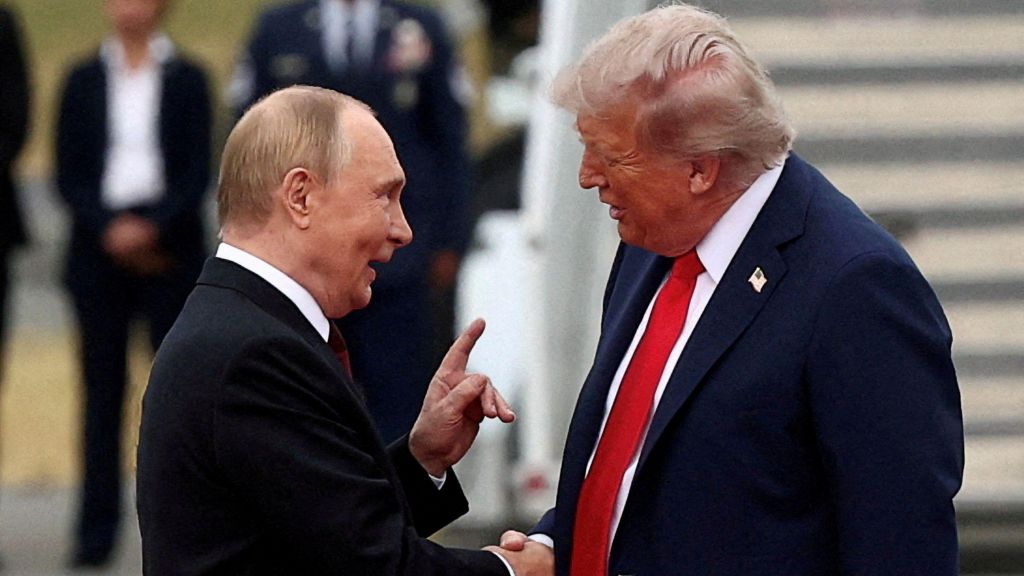
    Russian President Vladimir Putin’s potential visit to Budapest for a summit with US President Donald Trump faces significant logistical and diplomatic challenges, despite the willingness of both leaders to engage in talks. The meeting, which has yet to be finalized, would require Putin to navigate complex airspace restrictions imposed by the EU and NATO, as well as geopolitical tensions stemming from Russia’s invasion of Ukraine in 2022. Putin’s preferred mode of travel, his heavily modified Ilyushin Il-96 aircraft—often referred to as the “Flying Kremlin”—would necessitate special permissions to traverse EU airspace, which has been off-limits to Russian planes since the war began. Hungary, a NATO member and one of Putin’s closest allies within the EU, has expressed confidence in facilitating the visit. Hungarian Prime Minister Viktor Orban, who has maintained strong ties with both Putin and Trump, has already initiated preparations for the summit, emphasizing its potential to advance peace efforts in Ukraine. However, the EU’s executive commission has indicated that while it supports dialogue aimed at achieving a “just and lasting peace,” it will not directly participate in the talks. The logistical challenges of Putin’s journey to Budapest are compounded by the need to avoid airspace over Ukraine and Poland, both of which have strained relations with Moscow. Potential routes include flying through Turkey, Bulgaria, and Serbia, though each would require individual approvals from the respective countries. The summit, if realized, could bolster Orban’s domestic standing ahead of Hungary’s upcoming elections, while also testing the limits of EU unity in addressing the ongoing conflict in Ukraine.

  • Thousands rally in Albanian capital against EU-backed court prosecuting Kosovo war veterans

    Thousands rally in Albanian capital against EU-backed court prosecuting Kosovo war veterans

    Thousands of Kosovo war veterans and their supporters gathered in Tirana, Albania, on Friday to protest against the European Union-backed Kosovo Specialist Chambers, which is prosecuting former fighters of the Kosovo Liberation Army (KLA). The demonstrators, who filled Skanderbeg Square, accused the tribunal of bias and injustice, claiming it unfairly targets those who fought for Kosovo’s independence from Serbia during the 1998-1999 war. The rally, organized by the veterans’ association OVL-UCK and supported by the Albanian government, featured national Albanian and KLA flags, with some participants donning KLA uniforms and singing songs about freedom. The protest’s motto, ‘Freedom has a name. Justice for the liberators,’ underscored their demands for fairness. High-profile defendants, including former Kosovo President Hashim Thaci and other ex-leaders, are currently on trial at The Hague for charges such as murder, torture, and persecution of civilians. The court was established following a 2011 Council of Europe report alleging KLA involvement in human organ trafficking and killings, though these allegations were not included in the indictments. The rally remained peaceful, with former Albanian President Alfred Moisiu calling for justice and criticizing the court’s processes as biased. The event highlighted ongoing tensions between Kosovo and Serbia, with Kosovo’s 2008 independence still unrecognized by Serbia and its allies.

  • Russians and Ukrainians expect no major breakthrough at planned Trump-Putin summit

    Russians and Ukrainians expect no major breakthrough at planned Trump-Putin summit

    As U.S. President Donald Trump and Russian leader Vladimir Putin prepare for an upcoming summit in Budapest, Hungary, residents of Russia and Ukraine remain cautiously hopeful yet skeptical about the prospects of ending the ongoing conflict. The meeting, agreed upon during a recent phone call, follows Trump’s scheduled discussion with Ukrainian President Volodymyr Zelenskyy at the White House. However, expectations for a major breakthrough remain low, given the lack of progress in previous talks. Artyom Kondratov, a 36-year-old Moscow resident, expressed doubts, stating, ‘When they meet, I don’t think anything will be achieved quickly.’ He anticipates minor advancements, such as prisoner exchanges and the return of children, but no significant resolutions. Alexander Fedotov, another Moscow resident, believes Trump’s efforts could yield results, noting, ‘Trump isn’t going to Europe for nothing. I think there will be progress.’ Meanwhile, in Ukraine, the mood is less optimistic. Marichka Fartushna, an army medic, criticized the previous meetings as unproductive, asserting, ‘Trump has clearly shown his position. He is not for Ukraine.’ Despite the skepticism, Ukrainian veteran Ivan Balatskyi remains hopeful for continued U.S. support, emphasizing Ukraine’s readiness to fight until the end. The summit comes over three years after Russia’s full-scale invasion of Ukraine and more than a decade after the annexation of Crimea, with many weary of the prolonged conflict. Svetlana, a 55-year-old resident of Sevastopol, voiced a common sentiment: ‘I wish everyone well and peace. We’re all waiting for this, all Russians want it.’