标签: Europe

欧洲

  • France’s former president Sarkozy will begin serving a 5-year prison sentence Tuesday

    France’s former president Sarkozy will begin serving a 5-year prison sentence Tuesday

    In a historic turn of events, Nicolas Sarkozy, the former French president, is set to become the first ex-head of state in living memory to serve a prison sentence. On Tuesday, Sarkozy is expected to begin a five-year term at Paris’ La Santé prison, a facility renowned for housing high-profile inmates since the 19th century. The sentence stems from his 2021 conviction for criminal conspiracy related to the illegal financing of his 2007 presidential campaign using Libyan funds. Despite maintaining his innocence, Sarkozy will be admitted to the prison, where he may face solitary confinement or be placed in the “vulnerable” section, colloquially known as the VIP wing. La Santé, inaugurated in 1867, has undergone significant renovations in recent years, but its conditions remain stark. Former inmates describe the initial shock of incarceration, with cells measuring just 9 square meters and equipped with basic amenities. Sarkozy, who has vowed to “hold his head high,” is permitted to bring three books, including Alexandre Dumas’ “The Count of Monte Cristo,” and 10 family photos. His son, Louis, has called for a rally in support of his father, while Sarkozy’s wife, Carla Bruni-Sarkozy, has shared heartfelt messages on social media. The Paris court’s decision to enforce the sentence before his appeal is heard underscores the gravity of the case. Sarkozy’s imprisonment marks a dramatic fall from grace for the once-powerful leader, raising questions about accountability and justice in France’s political landscape.

  • Merz rejects calls to relax refusal to deal with German far-right party

    Merz rejects calls to relax refusal to deal with German far-right party

    German Chancellor Friedrich Merz has firmly dismissed appeals from within his Christian Democratic Union (CDU) to reconsider its stance against collaborating with the far-right Alternative for Germany (AfD). Speaking on Monday, Merz emphasized that the AfD, which has seen rising support in recent polls, shares no common ground with his conservative party. The AfD, known for its anti-migration policies, secured second place in Germany’s February national election and continues to gain traction, particularly in the eastern states where regional elections are slated for next year. Despite pressure from some CDU members, including former General Secretary Peter Tauber and ex-Defense Minister Karl-Theodor zu Guttenberg, Merz reiterated the party’s 2018 resolution to avoid coalitions or cooperation with the AfD. He described the far-right party as fundamentally opposed to decades of policies that have shaped modern Germany’s success. Merz also acknowledged internal challenges within his coalition government with the Social Democrats, citing public disagreements that have frustrated voters. However, he defended the coalition’s progress on key issues like economic revitalization and migration control. The AfD, classified as a right-wing extremist organization by Germany’s domestic intelligence agency, continues to challenge this designation in court while pushing for the CDU to dismantle its so-called ‘firewall’ against far-right collaboration. Merz dismissed these overtures, stating that the AfD’s ‘outstretched hand is, in reality, a hand that wants to destroy us.’

  • New road linking Baltic states to Poland opens at a time of tensions with Russia

    New road linking Baltic states to Poland opens at a time of tensions with Russia

    In a significant development for regional connectivity and security, the Via Baltica, a major road linking the Baltic states to Poland, was inaugurated on Monday. This opening comes at a time of heightened tensions between Europe and Russia, particularly following recent incursions of Russian drones into Polish territory and fighter jets into Estonian airspace in September. The 970-kilometer (600-mile) route, which forms part of the European E67 highway, stretches from Warsaw, Poland, through Lithuania, Latvia, and Estonia, culminating in Tallinn. The road traverses the strategically sensitive Suwalki Gap, a narrow strip of land between Belarus and Russia’s Kaliningrad exclave, often cited as a potential flashpoint in any conflict involving NATO and Russia. At the inauguration ceremony on the Polish-Lithuanian border, Polish President Karol Nawrocki and Lithuanian President Gitanas Nausėda emphasized the dual significance of Via Baltica, highlighting its role in bolstering both economic growth and regional defense. Nawrocki stated, ‘This road has a dual purpose – it will help our economy and strengthen the defense capabilities of our region.’ Nausėda echoed these sentiments, describing the road as a symbol of ‘freedom, prosperity, and security,’ while underscoring its economic and logistical importance in connecting Lithuania to the broader European market. The four-lane A5 highway, linking Kaunas, Lithuania’s second-largest city, to Suwalki in Poland, is a key component of Via Baltica. However, some northbound sections remain two lanes and are slated for future expansion, according to Lithuania’s Transportation Ministry. The road’s strategic value lies in its potential to facilitate faster NATO troop movements in the event of a crisis, reinforcing the Baltics’ defense posture amidst ongoing regional instability.

  • Driver dies after Italian basketball fans’ bus attacked with stones

    Driver dies after Italian basketball fans’ bus attacked with stones

    A tragic incident unfolded on a highway near Rieti, Italy, when a bus carrying supporters of the Pistoia Basket basketball team was attacked by rival fans, resulting in the death of a bus driver. The attack occurred as the fans were returning from a game between Pistoia Basket and SRS Sebastiani Rieti, two second-tier Italian basketball teams. According to local media reports, fans of SRS Sebastiani Rieti allegedly began hurling stones at the bus, one of which shattered the windscreen and struck 65-year-old Raffaele Marianella, a bus driver who was seated at the front but not driving at the time. Marianella succumbed to his injuries shortly after the attack. Italian Prime Minister Giorgia Meloni condemned the incident as ‘an unacceptable and insane act of violence,’ extending her condolences to the victim’s family and vowing to bring the perpetrators to justice. A police investigation is currently underway to identify and apprehend those responsible. Italy’s Sports Minister Andrea Abodi labeled the attack a ‘shocking assault,’ emphasizing that the perpetrators were ‘criminals who have turned into murderers and can never be called fans.’ Gianni Petrucci, president of the national basketball federation Federbasket, echoed these sentiments, stating, ‘This is not about basketball. These are criminals.’ He pledged to collaborate with legal authorities to address the incident. The attack has sparked widespread outrage and raised concerns about fan violence in sports.

  • A seed bank in England marks 25 years of preserving the world’s plant diversity

    A seed bank in England marks 25 years of preserving the world’s plant diversity

    Nestled deep beneath the Sussex countryside in southern England lies the Millennium Seed Bank, a state-of-the-art facility designed to withstand disasters and preserve the world’s plant diversity. Operated by the Royal Botanic Gardens Kew, this underground vault houses over 2.5 billion seeds from approximately 40,000 wild plant species. Stored in sealed glass jars and foil packets at a chilling minus 20 degrees Celsius, these seeds are safeguarded against extinction and climate change. Opened in 2000 by King Charles III, then the Prince of Wales, the facility recently celebrated its 25th anniversary, marking a quarter-century of global conservation efforts. The seed bank’s mission extends beyond preservation; it aims to restore ecosystems worldwide, combat biodiversity loss, and support agricultural resilience in the face of a growing global population. The process begins with field collectors gathering seeds from diverse regions, including Madagascar, Thailand, and Arctic Sweden. These seeds undergo meticulous drying, cleaning, and germination testing to ensure viability before being stored. Kew’s researchers are also pioneering cryopreservation techniques for tropical plants that cannot survive freezing. The Millennium Seed Bank has become a global hub, partnering with 279 organizations in over 100 countries and training more than 3,000 scientists. With nearly half of all flowering plants at risk of extinction, the seed bank serves as a vital insurance policy for global biodiversity, offering hope for a sustainable future.

  • Jewels stolen from the Louvre include imperial crowns and necklaces

    Jewels stolen from the Louvre include imperial crowns and necklaces

    In a stunning heist that has left Paris in shock, a collection of priceless jewels tied to 19th-century French imperial history was stolen from the Louvre Museum. The theft, described as extraordinary, has prompted an intense investigation as the iconic museum remains closed for a second day. According to the French Culture Ministry, the stolen items include several pieces of immense historical significance. Among them are the emerald necklace and earrings once worn by Empress Marie-Louise, the second wife of Napoleon I. Also missing are the crown and brooch of Empress Eugenie, wife of Napoleon III, as well as the crown and sapphire jewelry worn by Queen Marie-Amelie and Queen Hortense, who reigned from 1830 to 1848. A reliquary brooch, another treasured artifact, was also taken. These jewels not only represent opulence but also serve as tangible links to France’s imperial past. The heist has raised concerns about security at one of the world’s most renowned cultural institutions and has left historians and art enthusiasts mourning the loss of these irreplaceable treasures.

  • Louvre remains closed one day after jewel heist

    Louvre remains closed one day after jewel heist

    The Louvre Museum in Paris remained closed on Monday following a brazen daylight theft of historic Napoleonic-era jewels, prompting a nationwide reassessment of security measures at cultural institutions. The audacious heist, which unfolded just 250 meters from the iconic Mona Lisa, involved thieves using a basket lift to scale the museum’s facade, forcing entry through a window, and smashing display cases to steal priceless artifacts. The robbery, lasting less than eight minutes, occurred shortly after the museum opened, with visitors already inside, marking one of the most high-profile museum thefts in recent memory.

    French officials confirmed that eight objects, including a sapphire diadem, necklaces, earrings, and a reliquary brooch linked to 19th-century French queens and Empress Marie-Louise, were stolen. One item, Empress Eugénie’s imperial crown adorned with over 1,300 diamonds, was later recovered outside the museum. Culture Minister Rachida Dati described the operation as highly professional, with thieves demonstrating precise knowledge of their targets.

    Justice Minister Gerald Darmanin acknowledged significant security lapses, questioning why windows were unsecured and a basket lift was accessible on a public road. Interior Minister Laurent Nunez has ordered an immediate review of security protocols at cultural sites across France. Meanwhile, the Louvre’s staff informed visitors of the closure and promised refunds for pre-booked tickets.

    The incident has cast a spotlight on the museum’s ongoing ‘Louvre New Renaissance’ plan, a 700-million-euro initiative launched earlier this year to modernize infrastructure and enhance security. Dati emphasized that the museum, originally designed for far fewer visitors, faces unique challenges in safeguarding its treasures. Investigations are ongoing, with evidence including motorcycles and license plates recovered from the scene.

  • Pope meets with board of global organization of clergy sexual abuse victims to talk zero-tolerance

    Pope meets with board of global organization of clergy sexual abuse victims to talk zero-tolerance

    In a historic meeting at the Vatican on Monday, Pope Leo XIV convened with representatives from Ending Clergy Abuse (ECA), a global organization advocating for survivors of clergy abuse and pushing for a universal zero-tolerance policy within the Catholic Church. This marked the first time a pope has formally engaged with an activist group dedicated to this cause. The ECA, which campaigns to extend the U.S. church’s stringent abuse policies worldwide, emphasized the need for the permanent removal from ministry of any priest found guilty of child abuse. During the meeting, Pope Leo acknowledged the significant resistance to implementing a universal zero-tolerance law but expressed his willingness to collaborate with ECA and the Vatican to advance the initiative. Tim Law, co-founder of ECA, highlighted the pope’s openness to dialogue and his recognition of the importance of addressing systemic issues within the Church. While previous popes, including Francis and Benedict XVI, have met with individual survivors, they have largely avoided direct engagement with advocacy organizations. Pope Leo’s meeting with ECA underscores his commitment to addressing clergy abuse more proactively, building on his prior experience as a bishop in Peru, where he was known for listening to victims’ concerns.

  • BBC at scene of ‘brazen’ Louvre jewel theft

    BBC at scene of ‘brazen’ Louvre jewel theft

    In a stunning act of audacity, the Louvre Museum in Paris has become the site of a high-profile jewel theft. BBC correspondent Hugh Schofield is currently stationed outside the iconic museum, describing the incident as “extraordinary, daring, and brazen.” The robbery, which unfolded with remarkable boldness, has left authorities and the public alike in shock. Details of the stolen items and the methods employed by the thieves remain under investigation. The Louvre, renowned for its vast collection of art and historical artifacts, is now at the center of a security crisis. This event raises significant concerns about the safety of priceless treasures housed in one of the world’s most visited museums.

  • Zelensky ready to join Trump-Putin talks after ‘frank’ White House meeting

    Zelensky ready to join Trump-Putin talks after ‘frank’ White House meeting

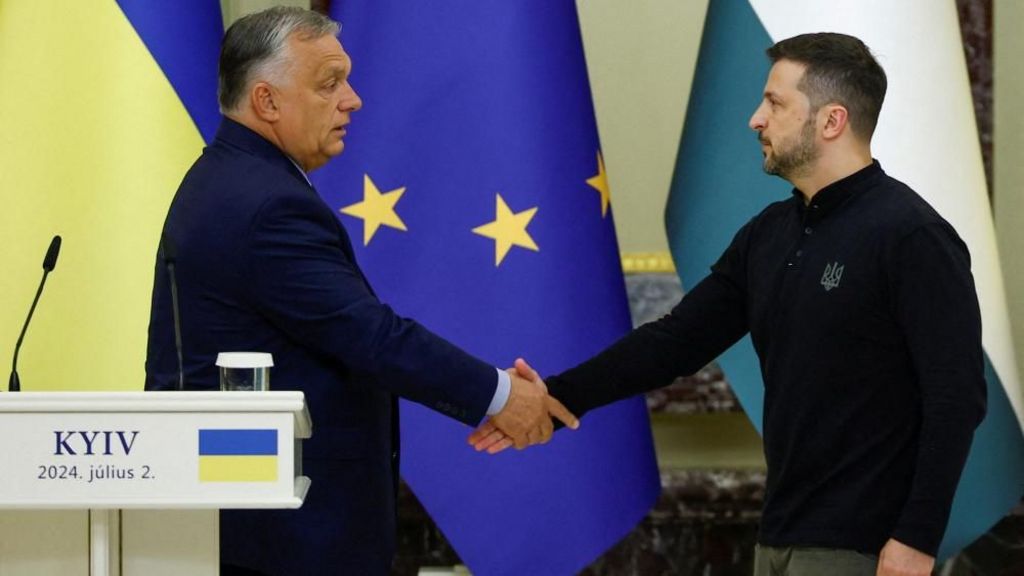
    Ukrainian President Volodymyr Zelensky has expressed willingness to participate in a proposed summit involving US President Donald Trump and Russian President Vladimir Putin in Hungary, provided he receives an invitation. The announcement of the planned talks, aimed at addressing the ongoing war in Ukraine, was made by Trump and Putin on Thursday, with Budapest as the potential venue in the coming weeks. Zelensky, in comments released on Monday, indicated his readiness to engage in a three-way dialogue or shuttle diplomacy format, emphasizing his commitment to a just peace rather than a hasty resolution.

    However, recent reports suggest that Zelensky’s meeting with Trump at the White House last Friday was far from cordial, with accounts of a heated exchange. The US reportedly urged Ukraine to accept Russia’s terms to end the conflict, a stance Zelensky firmly opposes. During his first press briefing since the talks, Zelensky described the meeting as frank but highlighted significant disagreements between the two sides. He criticized Hungary as the location for the Trump-Putin talks, questioning Prime Minister Viktor Orban’s ability to contribute positively to Ukraine’s interests.

    Trump, when asked about Zelensky’s involvement in the Budapest meeting, stated his intention to make the talks ‘comfortable for everybody,’ suggesting a possible separation of discussions. Zelensky had hoped to secure US Tomahawk missiles during the talks but left empty-handed as Trump remained non-committal. Media reports on Monday revealed that the atmosphere during the US-Ukraine leaders’ meeting was more acrimonious than previously understood, with Trump allegedly warning Zelensky that Putin would ‘destroy’ Ukraine if it did not agree to Russia’s terms.

    Trump’s shifting stance on the war has added complexity to the situation. Last month, he suggested that Ukraine could ‘win all of Ukraine back in its original form,’ a departure from his earlier position that Ukraine might need to cede territory. Trump has also been pressuring NATO nations, China, and India to halt purchases of Russian oil to increase economic pressure on Moscow. Despite threats of tougher sanctions, he has not followed through on these measures.

    The relationship between Trump and Zelensky has seen ups and downs, with a notable improvement since a contentious Oval Office meeting in February. During his re-election campaign, Trump claimed he could end the war in Ukraine within days but has since acknowledged the conflict’s complexity, describing it as one of the most challenging issues he has faced since returning to office.