In a high-profile move that reshapes both Manchester United’s attacking line and Napoli’s frontline for the upcoming season, Danish striker Rasmus Hojlund has finalized a permanent transfer to Italian Serie A side Napoli, following a standout one-year loan at the Naples-based club last season. The 2023-24 campaign proved transformative for Hojlund, who found consistent first-team football at the Stadio Diego Armando Maradona and delivered eye-catching results: he found the back of the net 16 times across 44 appearances in all competitions, playing a pivotal role in guiding Napoli to a second-place finish in Italy’s top-flight league and automatic qualification for the 2025-26 UEFA Champions League. Hojlund first arrived at Manchester United in 2023, joining from Italian club Atalanta for a transfer fee of $82 million, and was immediately hailed as one of the most exciting young attacking prospects in European football. However, a flurry of forward acquisitions by Manchester United last transfer window pushed the Dane well down the club’s attacking depth chart, with new signings Benjamin Sesko, Bryan Mbeumo and Matheus Cunha all preferred ahead of him for first-team minutes. Unable to compete for a regular starting spot at Old Trafford, Hojlund secured a loan move to Napoli last season, and his consistent goal-scoring form convinced the Serie A side to make the move permanent. According to industry reports, the permanent transfer commands an upfront fee of approximately $58 million, capping off a dramatic year of change for the Danish international. For Napoli, the move locks in a proven goalscorer who has already adapted to Serie A’s physical and tactical demands, while Manchester United clears salary and roster space after the departure of a player who could not break into the first team following their attacking rebuild.
标签: Europe
欧洲
-

Norway teen was in UK to ‘undertake a hit’ – court
A high-stakes trial opened this week at London’s historic Old Bailey, where 19-year-old Norwegian national Johannes Natland has pleaded not guilty to a charge of conspiracy to murder, amid serious allegations that he was recruited by an Iranian-linked Swedish organized crime network to carry out a targeted killing in the United Kingdom.
Prosecutors laid out detailed allegations before a jury outlining how the alleged plot unfolded in March 2025. According to opening arguments from lead prosecutor Alistair Richardson, Natland was recruited by the Foxtrot network, a criminal group that the prosecution claims is controlled and used by the Iranian regime for extra-territorial targeted attacks. The plot was activated after the originally assigned assassin pulled out of the planned operation, prompting senior figures in the network to scramble for a replacement.
Court documents and messaging logs presented to the jury show that coded conversations on encrypted platforms between two co-conspirators, using the usernames ‘Generalen’ and ‘Agent 47’, reveal an urgent request for a foreign-based assassin to carry out a hit in the UK for a payout of €25,000. By March 15, Generalen had brought Natland into the plot, with the teenager telling his girlfriend he was embarking on a ‘crazy mission’, according to the prosecution.
Complications arose early when the group discovered Natland’s passport had expired. Within two days, he secured an emergency travel document and booked a flight from Stavanger Airport in Norway to Manchester Airport in northern England. Even after being warned that Generalen, one of his key recruiters, had already been arrested in connection with the conspiracy, Natland chose to proceed with the plan, Richardson told the jury.
On arrival at Manchester Airport, UK Border Force officials detained Natland after noting he carried only £40 in cash, had no pre-booked accommodation and no return ticket to Norway. When officers offered to contact his mother, the 19-year-old claimed he was a legal adult and declined assistance. Though border officials initially intended to refuse entry, they granted temporary permission to stay in the country for four days while arranging a return flight – a decision the prosecution described as surprising.
The following day, acting on instructions from Agent 47, Natland took a taxi to the West Yorkshire town of Huddersfield and checked into the Briar Court Hotel for a three-night stay. Via the encrypted messaging app Signal, he was directed to a hidden weapons cache at the base of a tree in a nearby wooded area, where prosecutors say he retrieved two working firearms: a semi-automatic pistol and a revolver, alongside 12 rounds of live ammunition.
After collecting the weapons, Natland purchased three pairs of rubber gloves from a local supermarket and was directed to a stolen vehicle that the prosecution alleges was intended to be used for the planned killing the following day. When a friend messaged Natland asking if he had completed the assassination, he replied ‘No tomorrow.’ When asked if he had test-fired the weapons, Natland responded, ‘Hell no. They will be tested on the guy,’ according to messaging logs presented to the court.
In the early hours of the morning before the planned attack, specialist counter-terrorism firearms officers raided Natland’s hotel room, Room 207, and took him into custody. Prosecutors told the jury that as Natland answered the door, he mimicked holding a gun and pretended to fire at the arresting officers. A search of the room turned up the two loaded weapons, 12 live rounds, and £2,000 in cash linked to the planned hit.
Natland has already entered a guilty plea to charges of illegal possession of the two firearms and the 12 rounds of ammunition, but he maintains his innocence on the core charge of conspiracy to murder. Prosecutors emphasized that the intended target of the planned killing has not been identified, but that the evidence clearly shows Natland had committed to carrying out the attack.
‘The defendant’s response to those warnings [of Generalen’s arrest] was not to pull out of what he was doing. Not to stop,’ Richardson told the jury. ‘He had signed up to, and intended to commit murder.’
The trial, which is being held at the Old Bailey, is expected to continue for approximately three weeks as the prosecution and defense present evidence and witness testimony to the jury.
-

The Revolutionary War’s chief villain is being rehabilitated — just in time for America’s 250th
As the United States prepares to mark its 250th year of independence, a long-held popular portrayal of King George III – the man Americans were taught to see as a tyrannical, mad monarch who drove the colonies to revolution – is undergoing a long-overdue reassessment by historians and cultural institutions.
For generations, American popular culture has cemented this one-note image of George III: the maniacal villain of the Broadway megahit *Hamilton*, the central figure of *The Madness of King George*, and the tyrant referenced in the classic educational song *No More Kings* who imposed unfair taxes without colonial consent. But new archival access and modern scholarship are upending this long-accepted narrative, revealing that the founding story’s iconic villain was far more complex than wartime propaganda depicted.
Leading British historian Andrew Roberts, author of the 2021 biography *The Last King of America*, argues that the simplified caricature of George III grew from wartime misinformation, a pattern common to most conflicts. “Truth became the first casualty of the American War of Independence, as it is in most wars,” Roberts notes, pointing out that 25 of the 27 grievances against the king listed in the Declaration of Independence collapse under historical scrutiny. In his view, the American Revolution was not a reaction to fabricated tyranny of George III, but rather a reflection of colonists’ deep desire for political autonomy.
Even in 1972, decades before this recent wave of reappraisal, then-Prince Charles (now King Charles III) pushed back against the pervasive narrative in a foreword to a George III biography. “If the average schoolchild remembers anything about history after leaving school, he will remember that George III was mad,” Charles wrote. “If he is American as well then madness is often given as a reason for the ‘irrational’ behavior of the King toward the Colonists, making it necessary for them to declare independence.” He closed with a hope that Americans would one day see the true king without centuries of bias.
Historical context confirms that George III, who inherited the British throne in 1760 at just 22 years old, was a constitutional monarch operating within existing British political structures. As is still the case in the modern UK, all legislation and taxation were approved by Parliament, not imposed unilaterally by the crown. While George stood with Parliament as tensions escalated – from the 1765 Stamp Act to the 1773 Coercive Acts that responded to the Boston Tea Party – his role was largely ceremonial, bound by the will of elected lawmakers. When the first shots of the revolution rang out at Lexington and Concord in 1775, the conflict was as much a dispute between Parliament and colonial assemblies as it was a rejection of the monarchy itself.
A major catalyst for this historical shift came in 2015, when Queen Elizabeth II oversaw the public release and digitization of 280,000 uncatalogued Georgian Papers from Windsor Castle’s archives. The complete record revealed a meticulous, engaged monarch who tracked everything from crop yields to parliamentary politics in detailed journals and notes, and offered new granular insight into his long-debated medical condition. The long-popular theory that George suffered from the genetic metabolic disorder porphyria has now been discredited; modern medical analysis of the new records points to Type 1 bipolar affective disorder, which only caused severe, extended manic episodes after 1788 – more than a decade after the Revolutionary War ended.
That finding confirms a core claim of the reassessment: George III was not experiencing mental instability during the revolution, a point that cultural institutions across the U.S. are now highlighting as part of 250th anniversary programming. The Library of Congress’ major exhibit *The Two Georges* frames the revolution as a clash between two contemporary leaders – George III and George Washington – rather than a battle against a mad tyrant. Philadelphia’s Museum of the American Revolution opens its core exhibit by acknowledging that, in the 15 years before the revolution, many colonists held George III in such high regard that they widely referred to him as “the king of liberty” and displayed royal symbols on everyday household objects and public buildings.
This new framing received a high-profile public validation in April 2024, when current King Charles III twice referenced his five-times great-grandfather George III during a visit to Washington D.C., marking the upcoming 250th anniversary. Speaking from the U.S. Congress rostrum, he lightheartedly endorsed the “Tale of Two Georges” exhibit theme, joking: “King George never set foot in America, and, please rest assured, I am not here as part of some cunning rear-guard action.” The assembled lawmakers reacted with no hostility, and Charles repeated the reference that evening during a White House state dinner, noting “As the direct descendant of King George III, I know this is a nation that never gives up.”
Still, historian Roberts is skeptical that the traditional caricature will fade entirely from American popular memory. When asked if his scholarship had shifted broader public perception, he wrote via email: “Nothing will dislodge the Americans from their desire to see GIII as an evil dictator.”
-

Germany seizes tons of cocaine and suspects are arrested in Spain
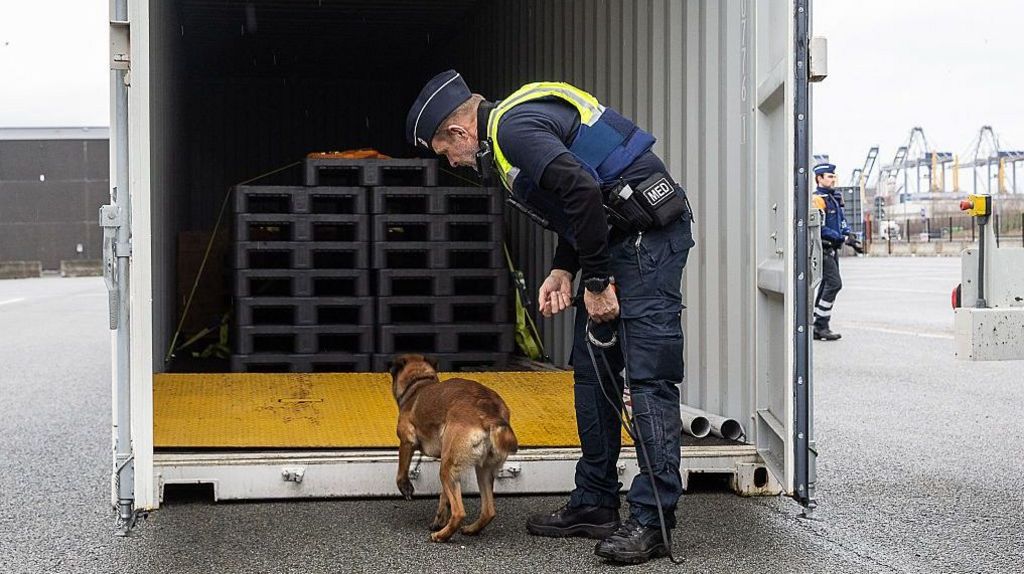
BERLIN – In a landmark cross-border drug bust that exposes a sprawling West African-to-European smuggling network, German law enforcement officials announced Wednesday that they have seized more than 8 metric tons of cocaine hidden in a shipping container falsely labeled as holding cacao beans. Two suspected ringleaders of the operation were taken into custody days later in southern Spain, following a coordinated multinational investigation.
German customs investigators put the estimated street value of the confiscated narcotics at roughly 500 million euros, equivalent to $582 million – one of the largest cocaine seizures in the country in recent years. The contraband was first discovered during a routine inspection at the North Sea port of Wilhelmshaven on February 9, more than three months before the arrests were carried out.
According to an official statement released by German investigative authorities, the shipping container originated from West Africa and was marked for final delivery in Spain. When officers opened the container to conduct a compliance check, they did not find the cacao beans listed on the cargo manifest. Instead, they uncovered more than 400 individually wrapped black foil packets, each holding roughly 20 compressed blocks of high-purity cocaine.
After documenting the find and removing the entire drug shipment, German authorities arranged to have the emptied container continue its scheduled route to the port of Barcelona, Spain, to allow investigators to track the smuggling ring’s leadership. Working off forensic and tracking evidence gathered during the port inspection, German and Spanish law enforcement identified the two primary suspected organizers of the shipment. The pair was arrested on May 14 in El Ejido, a municipality in Spain’s southern Almería province, during a planned handover of the container, when law enforcement moved in to take them into custody.
Investigative records show that one of the two suspects, who works as the manager of a registered import company, was already linked to a prior large-scale cocaine smuggling attempt uncovered by Spanish customs authorities. If convicted on drug trafficking charges in Spanish courts, the two suspects could face lengthy prison sentences under Europe’s strict drug control regulations.
-

Ukrainian drones hit St Petersburg as Putin’s flagship economic forum opens
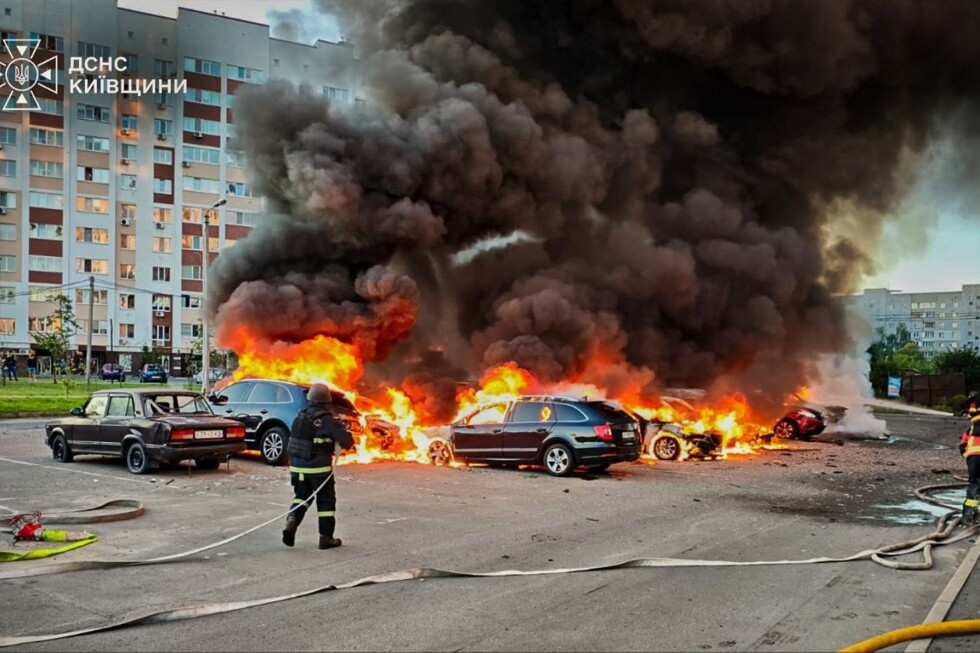
In a coordinated attack timed to overshadow Russia’s flagship international economic gathering, Ukraine launched a wave of drone strikes on the outskirts of St Petersburg early Wednesday, just hours before the opening of the annual St Petersburg International Economic Forum, an event designed to draw foreign direct investment back to Russia amid sweeping Western sanctions. As dawn broke over Russia’s second-largest city, thick plumes of black smoke billowed into the sky from a burning oil terminal, a visible marker of the attack that disrupted operations across the region. Local Russian authorities confirmed that air defense systems intercepted 59 drones launched overnight, but debris from the downed unmanned vehicles hit three separate districts of St Petersburg. Remarkably, no fatalities were reported in the strikes, though critical infrastructure was impacted: mobile internet connectivity was disrupted across parts of the city, and St Petersburg’s Pulkovo International Airport was temporarily shut down to all air traffic as a security precaution. The ripple effects of the attack extended beyond Russia’s borders, with neighboring Latvia and Estonia both issuing temporary air raid alerts for their northern border regions. Hours after the initial attack, Ukrainian President Volodymyr Zelensky publicly confirmed responsibility for the strikes, confirming that targets included the burning St Petersburg oil terminal and a key Russian naval outpost in Kronstadt, a coastal town just off St Petersburg’s shoreline. In a post on his official social media channels, Zelensky framed the attack as part of what he called Ukraine’s “long-range sanctions plan” — a widely understood euphemism for long-distance strikes against Russian infrastructure that supports its invasion of Ukraine. “The Ukrainian plan of long-range sanctions is being implemented exactly as it is needed to bring peace closer,” Zelensky wrote. Kronstadt holds major strategic significance for Russia, as it serves as the primary forward base for the Russian Navy’s Baltic Fleet. Unverified footage posted to social media by Ukrainian military personnel showed drones approaching docked Russian naval vessels at the base, with the video cutting out moments before expected impact. Robert Brovdi, commander of Ukraine’s unmanned systems forces, later claimed via Telegram that the Russian corvette Boikiy had sustained direct damage in the attack. The timing of the strike carries significant symbolic weight, as the St Petersburg International Economic Forum — long nicknamed the “Russian Davos” — is the cornerstone event on Russia’s annual political and economic calendar. Prior to Moscow’s full-scale invasion of Ukraine in February 2022, the forum regularly drew high-profile Western delegations, including Fortune 500 CEOs and sitting heads of state. This year, for the first time in nearly 10 years, a low-profile unofficial delegation from the United States is scheduled to attend, led by Rodney Mims Cook Jr., head of the U.S. Commission of Fine Arts and the official overseeing former President Donald Trump’s White House ballroom renovation project. Controversial U.S. right-wing commentator Candace Owens and pro-Putin American actor Steven Seagal are also listed as attendees. A senior official with Ukrainian defense technology firm Fire Point, Denys Shrilierman, leaned into the timing of the attack in a playful post on X (formerly Twitter), writing: “Due to such distinguished guests and the importance of the event itself, we couldn’t ignore it – and urgently flew to [St Petersburg].” The post was paired with drone footage of unmanned vehicles crossing the Baltic sky followed by clips of thick black smoke rising from unnamed locations along St Petersburg’s seafront. The St Petersburg strikes mark a notable milestone in Ukraine’s evolving strike capabilities: in the more than four years since Russia launched its full-scale invasion, Kyiv has built a rapidly expanding domestic defense sector, allowing it to regularly produce and deploy long-range drones that can strike targets deep inside Russian territory. Ukraine has focused most of these long-range attacks on energy and oil infrastructure, framing these facilities as critical components of Russia’s war machine that fund its military operations. The strikes on St Petersburg came amid continued tit-for-tat attacks across the front lines and behind enemy lines. On the same Wednesday as the St Petersburg attack, a Russian-installed official in the Moscow-controlled Donetsk region of eastern Ukraine reported that seven civilians were killed when a drone struck a passenger bus traveling along a regional highway. For its part, Russia continues to launch large-scale combined missile and drone strikes across major Ukrainian cities, resulting in consistent civilian casualties. Just two days before the St Petersburg attack, Russian strikes across multiple Ukrainian regions killed at least 22 civilians and injured dozens more, according to Ukrainian emergency officials. In the wake of the St Petersburg strikes, Kremlin spokesman Dmitry Peskov confirmed that Moscow planned a coordinated response to the Ukrainian attack. “Our responses will be systemic in nature,” Peskov told reporters Wednesday, offering no additional details on what form the retaliation would take.
-

UK orders Google to allow publishers to opt out of AI scraping for search summaries
In a groundbreaking, first-of-its-kind regulatory action announced Wednesday, the United Kingdom’s Competition and Markets Authority (CMA) has ordered Google to grant all online content publishers serving British users the explicit right to opt out of having their work scraped to train the tech giant’s artificial intelligence systems and power its AI-driven search features. The ruling marks one of the most significant regulatory interventions to date to balance the rapid growth of generative AI against the intellectual property rights of content creators, and it uses the CMA’s new digital market oversight authorities to curb what regulators frame as the outsized market power Google holds over the UK’s online search ecosystem.
Under the terms of the order, Google is required to build and roll out robust, effective tools that let publishers block their content from being used to develop two of the company’s high-profile AI offerings: AI Overviews, the AI-generated summary panels that appear at the top of search results, and the broader AI Mode search experience. Beyond the opt-out right, Google must also implement clear, prominent attribution for any publisher content included in AI-generated search results, with direct working links directing users to the original source material. The order also extends the opt-out right to content used for fine-tuning Google’s large language AI models, giving publishers full control over whether their work contributes to the company’s AI development.
This ruling was widely anticipated by industry observers, after the CMA released draft proposals for the new rules earlier this year. The regulatory move followed an investigation that confirmed a tangible negative impact on news publishers: after Google launched its AI Overviews feature, publishers saw measurable drops in referral traffic from search, as fewer users click through to original content when an AI summary is provided directly in search results. The new requirements also apply to the sweeping AI updates Google unveiled for its search platform in May 2024, which integrate artificial intelligence more deeply into every layer of the user search experience.
For Google, the company has signaled it is cooperating with the CMA’s order. In an official blog post, Mrinalini Loew, Google’s general manager for search ecosystem, noted that the company is already working alongside global regulators to give website owners appropriate control over their content as AI reshapes user preferences. “Today, we’re beginning to test a new control that lets website owners manage how their links and content appear in generative AI Search features,” Loew wrote.
CMA Chief Executive Sarah Cardell framed the ruling as a win for both content creators and UK consumers. The new measures will deliver “fair treatment, greater transparency and meaningful choice for businesses and consumers,” Cardell said, adding that the rules will help tens of millions of British users “better understand and trust the information presented to them.” Regulators also note the order will strengthen publishers’ negotiating position when they enter into content licensing deals with Google, leveling a playing field that has long been tilted toward the U.S.-based tech giant. For the purposes of the ruling, any entity that publishes online content accessible to users in the UK qualifies as a covered publisher, meaning the opt-out right applies to everyone from individual bloggers to large national news organizations.
The landmark decision sets a global precedent for AI regulation, as other countries around the world grapple with how to address the widespread scraping of copyrighted content to train commercial AI systems. As the first major regulator to mandate a broad opt-out right for publishers in AI search, the CMA’s action could serve as a template for future policy and regulatory action in other major markets.
-

UK government condemns violence at protest over teen’s stabbing death
Fresh political and social unrest has erupted in the United Kingdom following the sentencing of an 18-year-old’s killer, after clashes broke out between protesters and police at a demonstration in the southern coastal city of Southampton this week.
The fatal December 2024 stabbing of Henry Nowak, a white teenager, has roiled national discourse in recent weeks after his killer, 23-year-old Vickrum Digwa — a Sikh man — was convicted of murder and sentenced to life in prison with a minimum 21-year term on Monday. The case ignited outrage after it was revealed that when responding to the scene, officers initially treated the wounded Nowak as a suspect rather than a victim, after Digwa falsely claimed he had been the target of a racist attack by Nowak. Police body camera footage released after sentencing shows Nowak, who was handcuffed as he lay dying, repeatedly telling officers he had been stabbed and could not breathe, only to be dismissed by responding personnel. The judge in the trial explicitly rejected Digwa’s unsubstantiated racism claim, ruling there was no evidence Nowak made any racist remarks before the attack.
In the aftermath of the sentencing, hundreds of protesters gathered in Southampton on Tuesday to demand answers over the handling of Nowak’s death. But the demonstration quickly turned violent, as a subset of attendees hurled chairs, metal cans, rocks and flares at responding police officers. The incident has deepened an already bitter national debate over policing, knife crime, and systemic bias, after far-right political actors and activists seized on the case to push claims that the UK justice system is inherently biased against white people. That narrative has gained traction among far-right circles, who have weaponized the case to push the popular far-right talking point of “two-tier policing,” which falsely claims law enforcement disproportionately favors ethnic minority groups over white Britons.
Britain’s newly appointed Home Secretary Shabana Mahmood swiftly condemned the Tuesday violence, labeling it “completely unacceptable.” In a statement following the clashes, Mahmood emphasized that the Nowak family itself had already called on the public not to allow Henry’s death to be twisted to fuel further societal division. “There can be no justification for hijacking this tragedy to stir up violence and disorder,” Mahmood said. “Those responsible can expect to face the full force of the law.”
Prime Minister Keir Starmer echoed that condemnation, while also acknowledging the legitimate public concern over the police handling of the case. Starmer told reporters he was “sickened” by the newly released police body camera footage, and confirmed there are pressing unanswered questions about how unproven accusations of racism shaped officers’ on-scene decision-making. The Independent Office for Police Conduct, the national watchdog that probes alleged police misconduct, has launched a full investigation into the actions of officers from the Hampshire and Isle of Wight Constabulary, who responded to the stabbing. In a move to address systemic gaps exposed by the incident, the National Police Chiefs’ Council has also announced it will conduct a full review of national anti-bias training and guidance for officers.
Notably, the victim’s own family has pushed back against efforts to frame the case through a racial or religious lens. Mark Nowak, Henry’s father, said in a statement after the sentencing that his son’s death should not be used to stoke division, and that the family’s priority is pushing for safer streets across the UK rather than fomenting hatred. “This case is not about racism or religion,” he emphasized.
That appeal has not stopped high-profile far-right figures from exploiting the tragedy for political gain. Nigel Farage, leader of the anti-immigration Reform UK party, used the sentencing to double down on the two-tier policing narrative Tuesday, urging supporters to respond to the incident with “pure cold rage” and claiming “white lives matter just as much as Black lives.” X (formerly Twitter) owner Elon Musk and notorious British far-right activist Tommy Robinson have also amplified baseless claims of systemic anti-white bias to their massive online audiences, stoking further public anger. The case has also reignited a fringe political push to ban Sikhs from carrying kirpans, the ceremonial religious dagger many Sikh people wear as a symbol of faith. The trial judge confirmed that while Digwa carried a small traditional kirpan, the weapon used to kill Nowak was an 8-inch sheathed dagger separate from the ceremonial item.
The unrest comes as UK political parties grapple with rising far-right influence ahead of upcoming local elections, with critics warning that the exploitation of Nowak’s death risks deepening racial and religious division across the country at a time of already heightened social tension.
-

Ukrainian drones set fire to a St. Petersburg oil terminal ahead of Putin visit
On Wednesday, as Russian President Vladimir Putin prepared to open his country’s flagship annual international economic forum in St. Petersburg, Ukrainian forces launched a wave of long-range drone attacks that penetrated hundreds of kilometers into Russian territory, striking multiple key targets including a coastal oil terminal in the city. Ukrainian President Volodymyr Zelenskyy confirmed the attack in a social media statement, noting that the drones successfully traveled more than 1,000 kilometers (620 miles) to reach their target. Footage and on-the-ground reports showed thick plumes of black smoke billowing from the oil terminal near St. Petersburg’s port area following the strike.
Russian official confirmation of the attack was limited, with authorities only acknowledging that the strike targeted civilian infrastructure in the city. In response to the incursion, St. Petersburg’s main airport temporarily halted all flight operations overnight, and local mobile internet services were temporarily shut down as a security precaution.
The St. Petersburg International Economic Forum, which Putin is scheduled to address on Friday, has long been framed by the Kremlin as a major prestige event designed to showcase Russia’s global economic standing amid mounting international isolation. Since Moscow’s full-scale invasion of Ukraine more than four years ago, however, all major Western business leaders and government officials have boycotted the gathering. This year, Saudi Arabia holds the position of special guest and is set to dispatch a large business delegation to the event.
The brazen attack on St. Petersburg marks a fresh political embarrassment for Putin, coming just weeks after he was forced to drastically scale back Moscow’s annual Victory Day military parade over widespread security concerns about potential Ukrainian drone strikes on the capital.
Wednesday’s wave of Ukrainian strikes was launched just 24 hours after Russian forces carried out a massive, widespread assault across Ukraine using a combination of drones and cruise missiles. That attack killed at least 22 civilians and left 138 others injured, carrying out Moscow’s stated threat to ramp up regular long-range barrages against Ukrainian targets.
After more than four years of full-scale conflict, the front line across eastern and southern Ukraine has remained largely static, with both sides relying heavily on swarms of drones that have slowed large-scale troop movements and stalled major offensives. To break the stalemate, both Moscow and Kyiv have increasingly turned to long-range strike operations to gain strategic leverage over their opponent.
For Ukraine, these strikes on Russian energy and industrial infrastructure serve two core strategic goals: cutting into revenue from Russian oil production, which remains the single largest source of funding for Moscow’s war machine, and disrupting Russian manufacturing facilities that produce weapons and military equipment. Zelenskyy noted that Ukraine has repeatedly targeted oil and port facilities in the St. Petersburg region and surrounding coastal areas in recent months.
Beyond the St. Petersburg oil terminal, Zelenskyy confirmed that overnight strikes also hit two additional high-value targets: the Kronstadt naval base, a historic installation that serves the Russian Baltic Fleet, and a weapons manufacturing plant located in Russia’s Tambov region, roughly 600 kilometers (370 miles) northeast of the Ukrainian border.
Russia’s Defense Ministry reported that its air defense systems intercepted and downed a total of 354 Ukrainian drones launched during the overnight wave of attacks across multiple Russian regions.
The cross escalation of strikes also resulted in civilian casualties on both sides. In Russia-occupied portions of Ukraine’s eastern Donetsk region, a Ukrainian strike hit a civilian bus traveling from Moscow to Crimea. Denis Pushilin, the Kremlin-appointed head of the occupation administration, reported that the attack killed seven people and injured 11 others. In Russia’s western Smolensk region, regional governor Vasily Anokhin said a Ukrainian drone strike killed two responding firefighters and wounded two other firefighters plus one local civilian.
On the Ukrainian side, Ukraine’s Air Force reported that Russia launched 198 long-range attack drones at Ukrainian targets overnight, with Ukrainian air defenses successfully intercepting and neutralizing 189 of the incoming weapons. In Ukraine’s northern Sumy region, local authorities confirmed that Russian strikes over the preceding 24 hours killed one civilian and injured 15 more, including three children. In the southern Kherson region, overnight Russian shelling and drone attacks killed an 86-year-old civilian woman and wounded five other residents, according to regional officials.
With both sides continuing to escalate long-range attacks and no diplomatic negotiations underway to end the conflict, the war now stretching into its fifth year shows no sign of a near-term resolution.
-

Seven killed in drone attack on bus in Russia-controlled part of Ukraine
A fatal drone strike targeting a passenger bus traveling through a Russia-occupied portion of Ukraine has left seven people dead and 11 others wounded, according to a Moscow-appointed regional official. The attack unfolded in the early hours of Wednesday, when the bus—en route from Moscow to Simferopol, the main city in Russian-annexed Crimea—was hit, stated Denis Pushilin, the Kremlin-installed head of Ukraine’s eastern Donetsk region.
The bus strike comes just 24 hours after a large-scale Russian air offensive against multiple cities across Ukraine claimed at least 22 lives, among them several women and children. In simultaneous overnight developments, Russian defense officials claimed that air defense systems downed more than 350 Ukrainian drones launched across multiple occupied and Russian territories.
Among the intercepted drones, at least 50 were shot down over Leningrad Oblast, a region in northwest Russia that includes St. Petersburg, according to regional governor Alexander Drozdenko. This interception comes as St. Petersburg prepares to open the annual St. Petersburg International Economic Forum (SPIEF) Wednesday, a flagship event designed to project Russia’s global standing and economic openness to the international community.
Event organizers confirm that delegations from over 130 countries and territories are scheduled to attend the forum, including high-profile attendees such as Chinese Vice-President Han Zheng, and the sitting presidents of Uzbekistan and Tanzania. The exchange of cross-border attacks comes amid an ongoing stalemate in the Russia-Ukraine war, with both sides ramping up drone and missile strikes on each other’s territory in recent months. A photo of a Ukrainian-manufactured Vampire heavy bomber drone, taken last month, accompanies this report, distributed via Getty Images.
-

US says it plans extra tariffs of 10% or more for most trading partners after forced labor probe
The Trump administration has unveiled a sweeping new proposal to impose additional tariffs of 10 percent or higher on imports from dozens of the United States’ major trading partners, stemming from a high-stakes probe into foreign nations’ failure to block goods produced with forced labor from entering global supply chains. In a report released publicly early Wednesday, the Office of the U.S. Trade Representative (USTR) laid out a two-tiered tariff structure: a 10 percent additional levy will apply to imports from Canada, Mexico, Taiwan, the United Kingdom, and a handful of other jurisdictions deemed to have fallen short of enforcing their own forced labor import bans. A steeper 12.5 percent additional tariff is proposed for a larger group of economies including China, Japan, India, South Korea, Brazil, and Switzerland, among dozens of other nations.
USTR Ambassador Jamieson Greer defended the proposed measures in an official statement, arguing that the persistent failure of key U.S. trading partners to crack down on forced labor-produced goods creates an unfair competitive landscape that disadvantages American workers. “This creates a dynamic where American workers are forced to compete globally on an unlevel playing field,” Greer said, adding that every trading partner has a responsibility to strengthen enforcement to prevent trade from enabling and entrenching exploitative forced labor practices across the world.
Notably, the proposed tariffs will not go into effect immediately. The plan will first undergo a formal period of public comment and regulatory review, giving stakeholders and affected nations time to weigh in before any final action is taken.
The entire probe that led to this proposal was conducted under Section 301 of the 1974 U.S. Trade Act, a legal framework that analysts say would allow the Trump administration to bypass the restrictions the U.S. Supreme Court placed on the president’s tariff authority earlier this year. In a February ruling, the high court found that Trump had exceeded his constitutional and statutory power when he used the 1977 International Emergency Economic Powers Act (IEEPA) to impose broad, sweeping tariffs on U.S. trading partners.
The USTR’s report formalizes a clear definition of forced labor consistent with international standards, describing it as “work or service exacted from a person under the menace of any penalty for its nonperformance and for which the worker does not offer himself voluntarily.” The proposal marks a major shift in the administration’s trade policy strategy, coming in direct response to the Supreme Court’s limits on emergency tariff authority, while framing the new measures around a globally shared goal of combating labor exploitation.