标签: Europe

欧洲

  • Cow astonishes scientists with rare use of tools

    Cow astonishes scientists with rare use of tools

    In an extraordinary challenge to conventional understanding of bovine cognition, an Austrian cow named Veronika has demonstrated sophisticated tool-using capabilities previously undocumented in cattle. This remarkable discovery, documented by researchers from the University of Veterinary Medicine Vienna, emerged from the mountainous Austrian countryside where Veronika perfected her scratching techniques over several years.

    The Swiss brown cow exhibited exceptional discrimination in her tool selection, utilizing both ends of implements for different purposes. When addressing tougher areas like her back, Veronika consistently chose the bristled end of brooms for effective scratching. For more sensitive regions such as her underbelly, she deliberately selected the smooth handle end, demonstrating contextual awareness and adaptive problem-solving skills.

    Dr. Antonio Osuna-Mascaró, lead researcher on the study published in Current Biology, expressed profound surprise at the findings: ‘We encountered two unexpected dimensions—first that cattle could utilize tools at all, and second that an individual cow would employ tools with multipurpose functionality. Until this documentation, such sophisticated tool use had only been consistently observed in chimpanzees.’

    This discovery gains additional significance when considering the evolutionary context. While chimpanzees—humanity’s closest genetic relatives—demonstrate varied tool use including stick manipulation for insect gathering and stone usage for nut cracking, cattle have coexisted with humans for approximately 10,000 years without previously documented tool application.

    Veronika’s owner, organic farmer Witgar Wiegele, sees broader implications beyond scientific interest. He emphasizes that her unexpected cognitive abilities should inspire greater appreciation for nature’s complexity: ‘Preserving nature ultimately means protecting ourselves. Biological diversity represents the fundamental key to planetary survival.’

    The research team suggests that given appropriate environmental conditions and opportunities, other cattle might develop comparable skills, potentially revolutionizing how we perceive and interact with these domesticated animals.

  • ‘The miracle’: 6-year-old girl is the sole survivor of a family that perished in Spanish train wreck

    ‘The miracle’: 6-year-old girl is the sole survivor of a family that perished in Spanish train wreck

    BARCELONA, Spain — A catastrophic train collision in southern Spain has claimed at least 41 lives while producing a remarkable story of survival amid overwhelming tragedy. The incident, which occurred near Adamuz on Monday, January 19, 2026, resulted in one of Spain’s deadliest rail accidents in recent history.

    Eyewitness accounts describe terrifying moments as carriages derailed and tumbled down a steep embankment, their structural integrity compromised by the violent impact. Amid the twisted wreckage and heartbreaking scenes of casualties, rescue workers discovered a miraculous survivor—a six-year-old girl who emerged virtually unharmed from the devastation.

    According to La Vanguardia newspaper, Civil Guard officers located the child walking barefoot along the tracks after she apparently escaped through a shattered window. Medical personnel confirmed her remarkably good condition, requiring only three stitches for a minor head injury despite the severity of the crash.

    The young survivor’s family experienced unimaginable loss, with both parents, her brother, and a cousin among those killed in the front carriages that absorbed the worst of the impact. The Zamorano Álvarez family, residents of Punta Umbria village located near the ill-fated rail line, were returning home when the tragedy struck.

    Punta Umbria Mayor José Carlos Hernández expressed both profound grief and measured relief regarding the girl’s survival. “There are many people who are very sad for the victims of this terrible accident,” he stated during a press conference Tuesday, “but there were also many who survived, like the miracle of the girl who is safe.”

    The municipality has declared three days of official mourning as investigation continues into the cause of the derailment. Meanwhile, the orphaned child has been placed in the care of her grandparents at a hotel in Córdoba, the nearest major city to the crash site. Mayor Hernández emphasized the family’s commitment, noting “She has a tremendous family who will do what it takes for her to have a happy life.”

  • In their words: What France’s Macron and head of NATO wrote to Trump

    In their words: What France’s Macron and head of NATO wrote to Trump

    In an unprecedented diplomatic disclosure, U.S. President Donald Trump publicly shared private text messages from French President Emmanuel Macron and NATO Secretary General Mark Rutte on Tuesday. The messages reveal behind-the-scenes coordination efforts regarding Syria policy and ongoing discussions about Greenland’s status.

    President Macron’s message demonstrated strong alignment with Trump on Syrian affairs while expressing confusion about U.S. interest in Greenland. The French leader proposed concrete diplomatic initiatives, including organizing a special G7 meeting in Paris following the Davos summit. Macron suggested inviting Ukrainian, Danish, Syrian, and Russian representatives for marginal discussions and offered to host a private dinner with Trump before his return to the United States.

    NATO chief Mark Rutte’s communication struck a notably congratulatory tone, praising Trump’s accomplishments in Syria as “incredible” and committing to highlight these achievements during his media appearances at Davos. Rutte specifically mentioned Trump’s work in Gaza and Ukraine alongside the Syrian developments. The NATO leader also referenced continued discussions about Greenland, indicating his dedication to “finding a way forward” on the matter while expressing anticipation for their upcoming meeting.

    The publication of these private diplomatic exchanges provides rare insight into the personal dynamics between world leaders and their behind-the-scenes negotiation styles. The messages reveal both cooperation and tension points within international alliances, particularly regarding European concerns about U.S. interests in Arctic territories.

  • Russian strikes again leave half of Kyiv with no heating in winter cold snap

    Russian strikes again leave half of Kyiv with no heating in winter cold snap

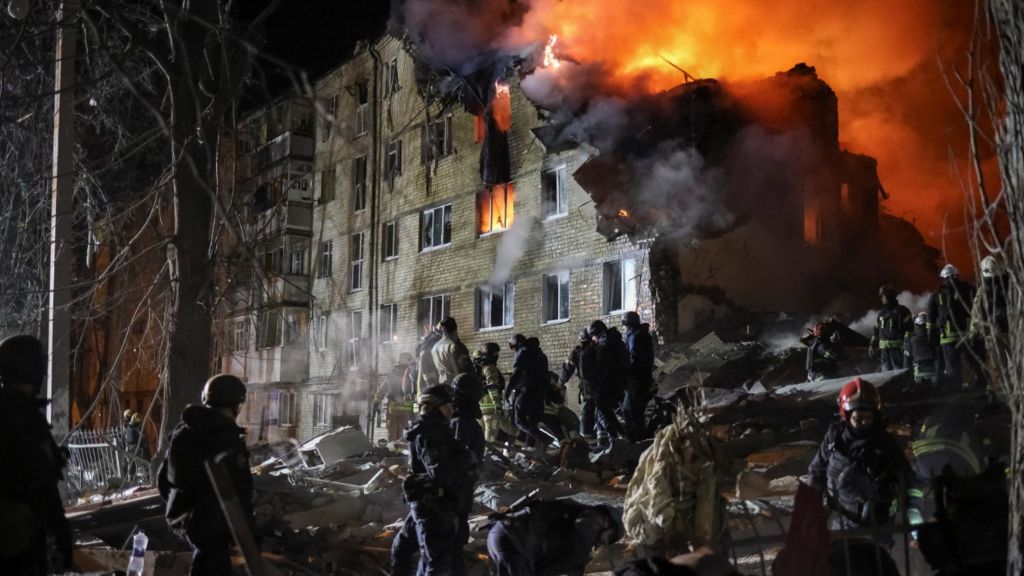
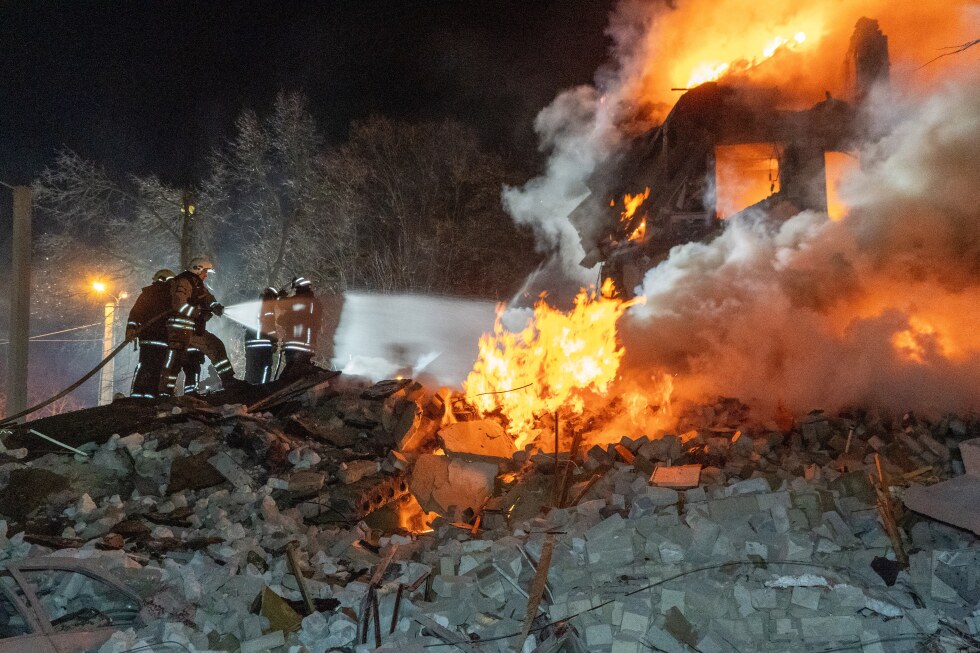
    A massive Russian aerial offensive has plunged Kyiv into a deep freeze, severing heating and power to half the city’s residential buildings as temperatures plummet to -10°C. The assault, employing drones, ballistic missiles, and cruise missiles, targeted multiple Ukrainian cities including the capital, Dnipro, and Odesa, triggering prolonged air raid alerts throughout the night and into Tuesday.

    Ukrainian President Volodymyr Zelensky confirmed a ‘significant number’ of incoming projectiles were intercepted but revealed the financial toll of the defense reached approximately €80 million (£69 million) in air defense missiles alone. The human cost was equally stark, with at least four fatalities and 33 injuries reported across the country.

    The attack has catastrophic implications for civilian infrastructure. Kyiv Mayor Vitalii Klitschko reported over 5,600 residential buildings, each containing dozens of apartments, were left without heating and water. This setback nullifies weeks of relentless repair work following the large-scale January 9th attack, which had previously crippled the city’s utilities. ‘I have no electricity and no water,’ recounted Oleksandr Palii, a 29-year-old veteran, describing a night of relentless explosions.

    The crisis has forced extreme adaptations. With radiators bursting from frozen water and fires sparked by improvised gas heaters, residents are resorting to communal generators, portable stoves, and innovative food storage methods. Social media depicts scenes of resilience with citizens barbecuing in snowy yards, yet many describe this as the most brutal winter since the full-scale invasion began in 2022.

    Amid the turmoil, President Zelensky canceled his scheduled appearance at the World Economic Forum in Davos, stating he would only attend if documents on U.S. security guarantees and a prosperity plan were ready for signing. His absence underscores the severity of the situation on the ground.

    Shelter from the onslaught was found underground, as over 10,000 people, including nearly 800 children, sought refuge in Kyiv’s metro stations—the only reliable sanctuary in many high-rise areas lacking adequate shelters.

    While acknowledging the receipt of defensive missiles that ‘helped significantly,’ Zelensky emphasized a critical and ongoing need for enhanced air defense systems. He pointed to Russia’s undiminished capacity to produce and deploy a growing number of ballistic missiles, a threat for which U.S. support is pivotal. ‘A great deal in the security of Ukrainians depends on the unity of Europe and America,’ he stated, hinting at concerns that transatlantic tensions could jeopardize timely deliveries of essential military aid. Foreign Minister Andrii Sybiha echoed the sentiment, asserting that Ukrainian resilience ‘cannot be an excuse for this war to continue.’

  • Read what France’s Macron and the head of NATO are saying to Trump behind the scenes

    Read what France’s Macron and the head of NATO are saying to Trump behind the scenes

    In a remarkable breach of diplomatic protocol, former U.S. President Donald Trump has publicly disclosed private text messages from French President Emmanuel Macron and NATO Secretary General Mark Rutte, revealing a stark contrast between their public criticism and private deference regarding his controversial interest in acquiring Greenland.

    The authenticated message from Macron, opened with the familiar address “My friend,” demonstrated a notably conciliatory tone compared to France’s public stance against Trump’s proposition to wrest Greenland from NATO ally Denmark. The French leader strategically framed his communication by first emphasizing alignment on significant geopolitical matters, stating “We are totally in line on Syria. We can do great things on Iran” before cautiously addressing the Greenland issue with the measured query: “I do not understand what you are doing on Greenland,” immediately followed by the constructive suggestion “Let us try to build great things.”

    This unprecedented public exposure of typically confidential diplomatic correspondence offers rare insight into the dual-track nature of international relations, where leaders frequently maintain divergent public and private personas. Trump’s disclosure tradition, established during his presidency, continues to challenge established diplomatic norms and transparency boundaries.

    The messages further revealed Macron’s unexpected proposal to host representatives from both Ukraine and Russia during Paris meetings, a initiative not previously disclosed publicly. This suggestion carried particular diplomatic sensitivity given France’s ongoing military support for Ukraine against Russian aggression, with Macron noting Russian representatives could be accommodated “in the margins” to mitigate potential awkwardness.

    An anonymous official from Macron’s administration asserted that the disclosed message demonstrates consistency between the French president’s public and private positions, emphasizing that France considers respect for national sovereignty “non-negotiable” regarding the Greenland matter. Meanwhile, Rutte’s published message expressed commitment to “finding a way forward on Greenland” despite his public refusal to comment on the sensitive territorial issue.

    This extraordinary glimpse into behind-the-scenes diplomacy highlights the complex interplay between public posturing and private negotiation that characterizes modern international relations, particularly during the Trump administration’s unconventional approach to foreign policy.

  • Israel will aid Greece in countering military drone swarms

    Israel will aid Greece in countering military drone swarms

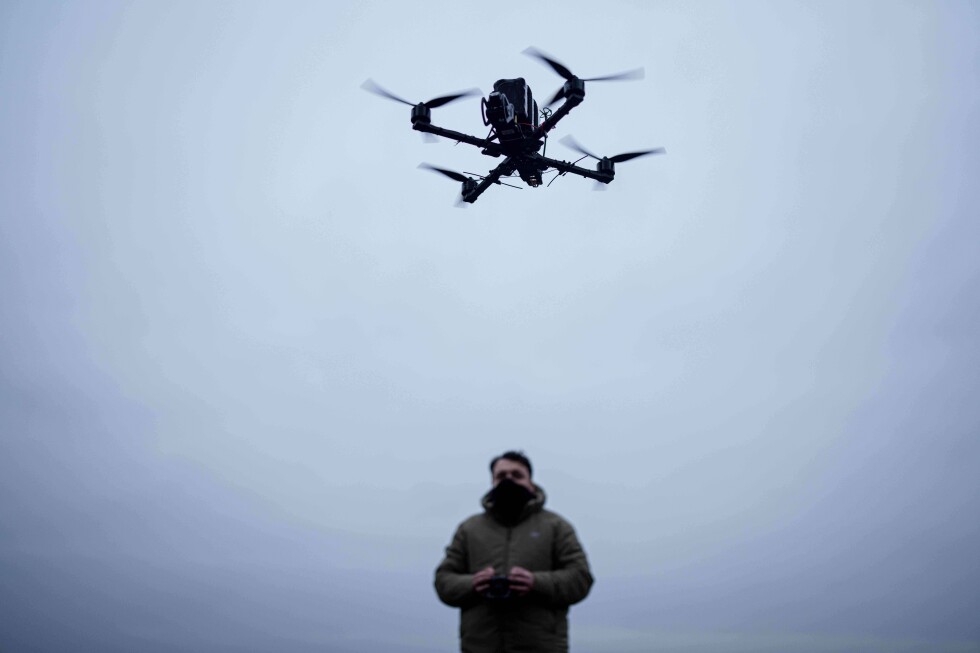
    In a significant move to bolster regional security, Israel has committed to assisting Greece in developing advanced counter-drone technology to address the emerging threat of coordinated unmanned aerial and underwater vehicle swarms. This defense collaboration was announced following high-level talks in Athens between Greek Defense Minister Nikos Dendias and Israeli counterpart Israel Katz on Tuesday.

    The strategic partnership builds upon the trilateral defense agreement established in December between Greece, Israel, and Cyprus, which already includes Israeli assistance in developing Greece’s air defense capabilities. Minister Dendias emphasized the critical nature of this cooperation, stating that both nations would ‘exchange views and expertise to counter unmanned platforms—specifically swarms of unmanned aerial vehicles and groups of unmanned underwater vehicles.’

    Israeli Defense Minister Katz characterized the growing alliance as ‘an anchor of stability in the Mediterranean,’ highlighting its strategic importance beyond bilateral relations. The collaboration addresses a paradigm shift in modern warfare where drone swarms—typically employing numerous low-cost, coordinated craft—are increasingly deployed for reconnaissance, defensive operations, and overwhelming enemy systems.

    The defense partnership unfolds against the backdrop of Greece’s ongoing maritime disputes with NATO ally Turkey concerning boundaries and offshore resources. Despite being NATO members, both nations remain locked in a long-standing confrontation that has prompted Greece to maintain one of Europe’s highest military expenditures relative to its economic size.

    The December agreement established a comprehensive framework for joint military exercises, specialized operations training, and regular strategic consultations among the three Eastern Mediterranean nations. This trilateral cooperation emerged from discussions between national leaders focused on enhancing maritime security and advancing mutual energy initiatives in the region.

  • Waterfall in Ukraine completely freezes

    Waterfall in Ukraine completely freezes

    An extraordinary natural phenomenon has emerged in Ukraine as one of the country’s waterfalls has completely solidified into a magnificent ice formation. The spectacular transformation occurred during a severe cold snap that has gripped the nation, with temperatures plummeting to approximately -20° Celsius (-4° Fahrenheit).

    The freezing conditions, characteristic of Arctic air masses sweeping across Eastern Europe, have created ideal circumstances for this rare winter spectacle. The waterfall’s continuous flow has gradually crystallized, layer by layer, forming intricate ice structures that capture and refract light in mesmerizing patterns. This temporary geological marvel demonstrates nature’s ability to create breathtaking art under extreme weather conditions.

    Local meteorologists report that the current cold front represents some of the most severe winter weather experienced in the region this season. The subzero temperatures have persisted for several consecutive days, allowing for the complete transformation of the waterfall into a frozen monument. While the specific location hasn’t been disclosed, similar phenomena have been documented previously in the Carpathian Mountains and other elevated regions of Ukraine during particularly harsh winters.

    The frozen waterfall has attracted attention from photographers and nature enthusiasts, though authorities caution against approaching too closely due to potential instability of the ice formations. Such natural ice sculptures typically remain intact until temperatures rise significantly above freezing, which meteorological forecasts suggest may not occur for at least another week.

  • France makes first interception targeting small boat crossings to UK

    France makes first interception targeting small boat crossings to UK

    French authorities have executed their inaugural maritime interception under a revamped strategy targeting human smuggling operations across the English Channel. On Saturday, law enforcement officers boarded an inflatable vessel termed a ‘taxi-boat’ along the Aa canal in Gravelines, situated along the Channel coast near Calais.

    This tactical shift emerged from a July 2025 UK-France summit between President Emmanuel Macron and Prime Minister Keir Starmer, responding to sustained British pressure for enhanced border security measures. Previously, French interventions were limited to preventing boat launches from beaches due to safety concerns regarding open-water operations.

    Criminal networks had adapted to previous enforcement methods by deploying these taxi-boats from distant locations to coastal pickup points where migrants enter the water to board. French documentation revealed this method achieved an alarming 81% success rate in 2025, contributing to 41,472 migrant arrivals in Britain last year—a increase from 36,566 in 2024 though below 2022’s peak of 45,774.

    The breakthrough in operational protocol addresses earlier safety and legal concerns that delayed implementation. Under the current engagement framework, gendarmerie exclusively intercept vessels before migrant boarding occurs, avoiding potentially dangerous situations with fully loaded craft. Saturday’s operation followed this protocol after police identified the inflatable craft moving toward the sea as likely preparing for migrant pickup.

    Visual evidence obtained by media outlets shows French police alongside the intercepted inflatable with several apparent smugglers aboard before the craft was towed to dock. French authorities have not yet provided official commentary on the operation.

  • Full messages shared between Trump and European leaders over Greenland

    Full messages shared between Trump and European leaders over Greenland

    A series of unprecedented text exchanges between former US President Donald Trump and European leaders regarding American claims to Greenland have been publicly released, revealing extraordinary diplomatic conversations. The messages, obtained through freedom of information requests and shared on Trump’s Truth Social platform, expose the former president’s persistent pursuit of acquiring the autonomous Danish territory.

    The communications began with Norwegian Prime Minister Jonas Støre and Finnish Prime Minister Alexander Stubb expressing concern about escalating tensions regarding Greenland, Gaza, Ukraine, and trade tariffs. They proposed de-escalation through diplomatic calls, emphasizing the need for Western unity.

    Trump’s response revealed a significant shift in his diplomatic approach, explicitly linking his failed Nobel Peace Prize nomination to his changed perspective on international cooperation. The former president stated he no longer felt ‘obliged to think purely of Peace’ after Norway’s decision regarding the prize, instead prioritizing what he deemed ‘good and proper for the United States of America.’

    In subsequent messages, French President Emmanuel Macron expressed confusion about Trump’s Greenland ambitions while suggesting collaborative efforts on Syria and Iran. Macron proposed organizing a special G7 meeting in Paris with additional participants including Ukrainian, Danish, Syrian, and Russian representatives.

    NATO Secretary General Mark Rutte later praised Trump’s accomplishments in Syria and committed to using his Davos platform to highlight the former president’s work in conflict zones. Rutte specifically mentioned his dedication to ‘finding a way forward on Greenland,’ indicating the territory had become a subject of high-level diplomatic discussions.

    The leaked correspondence reveals how personal grievances influenced Trump’s foreign policy decisions and demonstrates his unconventional approach to international relations through direct messaging rather than traditional diplomatic channels.

  • Russia batters Ukraine’s power grid again as officials try to keep up momentum of US-led peace talks

    Russia batters Ukraine’s power grid again as officials try to keep up momentum of US-led peace talks

    Ukrainian authorities reported Tuesday that Russia launched one of its most extensive aerial bombardments to date, targeting critical energy infrastructure across the country with over 300 drones and missiles overnight. The assault represents Moscow’s continued escalation of its campaign to disrupt essential services during Ukraine’s harshest winter period.

    President Volodymyr Zelenskyy confirmed the massive attack, which specifically targeted Ukraine’s power grid system. Kyiv Mayor Vitali Klitschko detailed the immediate consequences, noting that heating systems failed in more than 5,600 apartment buildings throughout the capital. This setback comes just weeks after 80% of these buildings had their heating restored following a previous major Russian barrage on January 9th that left thousands without power for extended periods.

    The timing appears strategically significant as Ukraine experiences exceptionally frigid conditions, with temperatures in Kyiv plummeting to -20°C (-4°F). Military analysts suggest Russia’s intensified attacks on energy infrastructure represent a calculated effort to demoralize civilian populations and strain Ukraine’s defensive capabilities nearly four years after the full-scale invasion began in February 2022.

    Concurrently, Ukrainian diplomatic efforts continue with a negotiating team arriving in the United States on Saturday. According to Zelenskyy, their primary mission involves conveying how Russia’s relentless aerial campaign undermines diplomatic progress. The delegation seeks to finalize documents related to postwar security guarantees and economic recovery, with potential signing opportunities at the World Economic Forum in Davos, Switzerland this week.

    Ukraine’s air force command reported successful defensive operations, intercepting 27 missiles and 315 drones through shooting or jamming techniques. However, five missiles and 24 drones penetrated defenses, striking 11 locations nationwide. The constant attacks have severely tested Ukraine’s air defense capabilities, with Zelenskyy acknowledging recent ammunition shortages before new shipments arrived.

    In response to the escalating threat, Ukraine is implementing revised defensive strategies under newly appointed Deputy Air Force Commander Pavlo Yelizarov. While specifics remain confidential, Zelenskyy indicated that ‘this system will be transformed’ to better counter Russia’s evolving aerial tactics. Ukraine continues to depend heavily on sophisticated Western-made air defense systems, particularly those supplied by the United States, to counter Russian missile and drone operations.