标签: Europe

欧洲

  • Terror trial to begin for man accused of plotting attack on Taylor Swift concert

    Terror trial to begin for man accused of plotting attack on Taylor Swift concert

    A high-stakes terror trial targeting one of the world’s biggest entertainment events has opened in Austria, after a last-minute tip from U.S. intelligence agencies prevented what Taylor Swift has described as an imminent large-scale massacre at her 2024 Vienna Eras Tour concerts.

    Two 21-year-old Austrian men are standing before a court in Wiener Neustadt, a city just south of the Austrian capital Vienna, in connection with the foiled attack. The lead defendant, identified only as Beran A. under Austrian privacy rules, faces a slate of serious charges including membership in a designated terrorist organization, planning a mass terrorist attack at the concerts, spreading jihadist propaganda, pledging allegiance to the Islamic State (IS) terror group, illegally manufacturing explosive materials, and attempting to acquire banned weapons. Prosecutors allege that Beran A. obtained online instructions to build a shrapnel bomb using triacetone triperoxide, or TATP — an explosive commonly used in high-profile IS attacks — and received hands-on explosives training from other IS operatives. He also made repeated attempts to purchase illegal firearms and a hand grenade from underground dealers for the planned attack, according to official charging documents.

    The second defendant, Arda K., is accused of being a co-conspirator in Beran A.’s IS-aligned terror cell. Prosecutors confirm the pair not only plotted the concert attack but also planned additional assaults in three major international destinations: Mecca, Istanbul, and Dubai. If convicted on all charges, both men — who were teenagers when the plot was first developed — could face up to 20 years behind bars. A third co-defendant, a teenage Syrian national identified as Mohammed A., was already sentenced to an 18-month suspended prison term in Germany last year for assisting the plot: he translated bomb-making instructions from Arabic for Beran A. and connected him to an active IS member. The current trial in Austria is scheduled to run through late May 2026.

    The plot was derailed only by a timely tip-off from the U.S. Central Intelligence Agency, which alerted Austrian authorities to the plan just 24 hours before the first scheduled concert on August 7, 2024. Beran A. was taken into custody that same day, and law enforcement ultimately arrested three total suspects linked to the conspiracy ahead of the shows. In the wake of the arrests, Austrian officials and Swift’s team made the decision to cancel all three sold-out performances at Vienna’s Ernst Happel Stadium, which were expected to draw a total audience of more than 195,000 fans from across Europe. The cancellation left thousands of disappointed Swift fans gathering in central Vienna, where they sang the singer’s hits and traded the Taylor Swift-themed friendship bracelets that have become a staple of the Eras Tour experience.

    Details of the close call were revealed in Swift’s new Disney+ documentary about her record-breaking Eras Tour, with the pop superstar sharing her first-hand account of the moment she learned of the plot. Speaking to reporters including the BBC at the documentary’s New York premiere, Swift said the tour narrowly “dodged a massacre situation” thanks to the intervention of intelligence and law enforcement. After two decades of performing, she noted, fearing for the safety of her audience was an unprecedented experience. In a social media post shared immediately after the 2024 cancellation, she reflected on the mixed emotions of the moment: “Having our Vienna shows cancelled was devastating. But I was also so grateful to the authorities because thanks to them, we were grieving concerts and not lives.”

    The Eras Tour, which wrapped its 149-show global run in December 2024 after launching in March 2023, made history as the first concert tour to surpass $1 billion in total ticket sales, drawing more than 10.1 million attendees across five continents.
  • Venice opera house drops incoming music director after nepotism remarks

    Venice opera house drops incoming music director after nepotism remarks

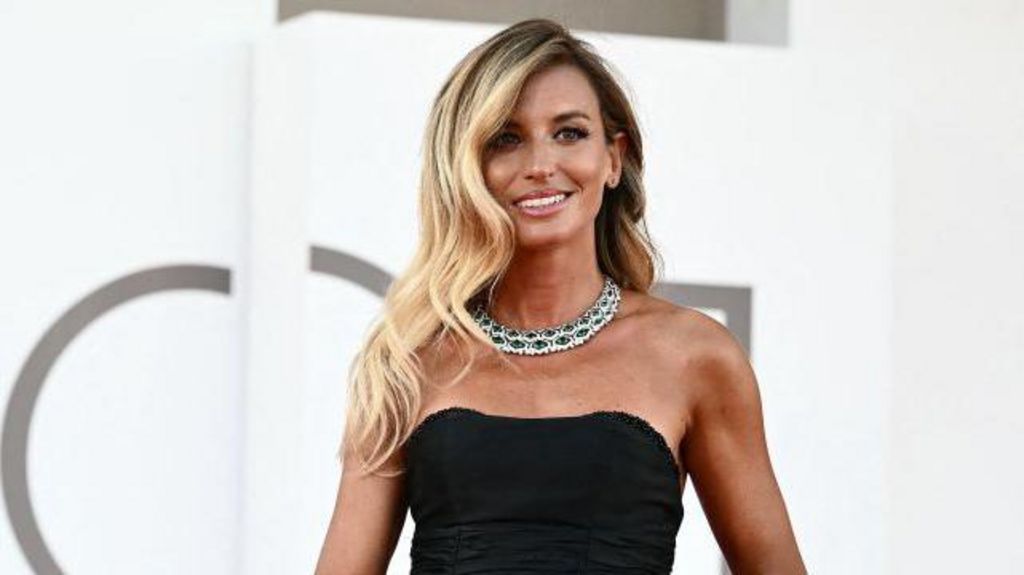
    One of Italy’s most iconic cultural institutions, Venice’s historic La Fenice opera house, has cut ties with its incoming music director Beatrice Venezi just months before she was set to assume the role, capping off months of escalating controversy that pitted the 36-year-old conductor against the theater’s musicians, staff, and even segments of the audience. The final break came after Venezi gave an inflammatory interview to an Argentine newspaper that reignited long-simmering tensions with the La Fenice community. In the conversation, Venezi implied that open positions in the opera’s orchestra were effectively passed down through familial nepotism, arguing that many long-time orchestra members opposed her appointment because they feared disruption to their closed system. “I have no godfathers. That is the difference. I do not come from a family of musicians,” Venezi said in the interview, adding that critics of her selection were “afraid of change, of renewal”. Days after the interview went public, La Fenice’s leadership released an official statement announcing Venezi’s dismissal, citing her “repeated and serious public statements, which were offensive and damaging to the artistic and professional standing” of both the theater and its orchestra. Controversy has dogged Venezi’s appointment ever since it was first announced in September of last year. Critics immediately raised two core objections: first, that Venezi, unusually young for such a prestigious role and with far less professional experience than past holders of the post, lacked the qualifications to lead one of Italy’s most celebrated opera houses. Second, widespread speculation that the appointment stemmed not from Venezi’s artistic resume, but from her close personal ties to Italian Prime Minister Giorgia Meloni. Venezi, whose father was a former leader of the far-right neo-fascist party Forza Nuova, has served as a musical consultant for Italy’s Ministry of Culture since 2022. In her recent Argentine interview, Venezi praised Meloni as a “powerful, competent woman” and confirmed the pair have known each other since before Meloni rose to national political leadership. She pushed back against claims of political favoritism, however, insisting she has never been involved in politics and has no desire to enter the field. From the moment the appointment was announced, resistance from within La Fenice was swift and sustained. In October, the theater’s workers’ union held a strike to protest Venezi’s selection. In an open letter to La Fenice General Manager Nicola Colabianchi, staff argued that Venezi’s resume was “not remotely comparable to that of the great conductors who have previously held the post of Music Director of this theatre”. By convention, La Fenice’s general manager holds the formal authority to appoint a music director unilaterally, but long-standing institutional practice requires consultation with the orchestra to ensure collaborative alignment between musicians and leadership. Colabianchi broke with this norm, only notifying the orchestra of Venezi’s appointment after the decision was already finalized. Tensions remained high through the end of last year: during La Fenice’s traditional televised New Year’s Eve concert, orchestra members, choristers, and technicians wore matching golden pins to publicly signal their disapproval of the appointment. Discontent also spilled over to audiences, with multiple spectators dropping flyers reading “Music is art, not entertainment” from the upper stands of the theater following several performances in 2025. Even after Venezi’s dismissal, questions of political involvement remain unresolved. Italy’s leading daily newspaper Corriere della Sera reported this week that Meloni’s office had authorized the termination, responding to the steady accumulation of controversy surrounding the appointment. Meloni’s office quickly issued a public statement denying the report, pushing back against claims that the national government intervened in the institutional decision. Venezi, who began her career as a conductor at age 22, has led performances across Italy and in multiple international venues, including Armenia, Uruguay, and Argentina, though she has never held a top leadership post at a major European opera house.

  • Encrypted texts key evidence against ‘senior lieutenant’ in Kinahan gang, court hears

    Encrypted texts key evidence against ‘senior lieutenant’ in Kinahan gang, court hears

    On Monday, a Dublin court laid bare the extent of a senior Kinahan organized crime cartel figure’s role in the gang’s brutal Irish operations, opening a high-stakes case that will set a precedent for the future prosecution of the cartel’s top leader, Daniel Kinahan. Sean McGovern, identified by prosecutors as a top on-the-ground lieutenant for the transnational crime group, has already pleaded guilty to two grave criminal charges connected to the long-running and deadly feud between the Kinahan and Hutch gangs. The case, being heard at Dublin’s non-jury Special Criminal Court, relies heavily on damning evidence gathered by Ireland’s national police force, Gardaí, including encrypted communications, GPS tracking devices, CCTV footage, and telephone records. McGovern, who was arrested in Dubai and extradited back to Ireland to face charges, admitted to directing criminal organization activities between October 2016 and December 2016 linked to the murder of innocent bystander Noel ‘Duck Egg’ Kirwan. He also pleaded guilty to directing criminal activity between October 2015 and April 2017 that involved the prolonged surveillance of James Gately, a member of the rival Hutch gang, in preparation for an assassination attempt. Court testimony laid out the context for the targeted attacks: both men were marked for death solely because of their attendance at funerals of deceased Hutch gang associates. Gately carried the coffin of Gary Hutch at his funeral, while Kirwan attended the service for Eddie Hutch. The long-running Kinahan-Hutch feud escalated dramatically following the 2016 Regency Hotel shooting in Dublin, an incident where McGovern himself was wounded, Detective Garda Superintendent David Gallagher told the court. In building the case against McGovern over the planned attack on Gately, prosecutors outlined six distinct strands of evidence. Among the most damning pieces are three encrypted devices seized directly from McGovern, where cartel members used coded codenames to communicate; McGovern’s codename was “Knife”. Exchanges captured on these devices reveal chilling details of the assassination plot. In one message, McGovern shared live GPS tracker data on Gately’s location with other cartel associates. Imre Arakas, a hired hitman who was later arrested and jailed for the conspiracy to kill Gately, messaged an unidentified senior Kinahan leader to discuss the best locations for the attack, writing “silencer would be good” and noting that “if picture on Google is the same as in real life it could be one shot to the head and that’s it.” When Gardaí disrupted the plot before it could be carried out, McGovern exchanged messages confirming his commitment to the cartel, writing to an associate: “Me and you ain’t any rats we are the ones up to our bollox [sic] in it”. After associates noted that the attack could still be carried out within two to four weeks, McGovern replied that the news would be “the best news of the year that will be once everyone is safe”. When the plot fell through completely, he responded to a message calling for a new strategy by writing: “100pc or all going to jail with stitch ups mate”. Beyond the Gately plot, Gardaí also presented detailed evidence connecting McGovern to the tracking and eventual murder of Kirwan. Detective Sergeant Donal Daly told the court that investigators recovered tracker data from devices placed on Kirwan’s car, as well as forensic evidence from a laptop used by McGovern. Investigators also found an instruction manual for the operation hidden behind a mirror in a Kinahan cartel safe house. During the hearing, Donna Kerwin, Kirwan’s daughter, delivered a powerful victim impact statement describing the irreversible harm the murder has caused her family. “We have been stripped of everything,” Kerwin said. “We will have to live with this nightmare every day for the rest of our lives. My dad was an innocent man who was not involved in crime, the only thing he was guilty of was showing his respect at a childhood friend’s funeral. You will get out one day to live a normal life with your children. We will never have that.” Legal observers note that the outcome of McGovern’s sentencing, which is set to resume on Friday, will serve as a key indicator of how Irish courts will handle the upcoming extradition and trial of Daniel Kinahan, the cartel’s alleged leader, who was recently arrested in Dubai. The Kinahan cartel has been the target of international law enforcement action for years, with the U.S. government imposing formal sanctions on Daniel Kinahan and other core family members in April 2022, after they were publicly identified as the leaders of the transnational organized crime syndicate.

  • French coastguard rescues more than 100 migrants crossing Channel

    French coastguard rescues more than 100 migrants crossing Channel

    Just five days after the United Kingdom and France formalized a new multi-million-pound agreement to curb dangerous smallboat crossings of the English Channel, French authorities have carried out three separate rescue operations that saved 119 migrants attempting the perilous journey.

  • Archaeologists at Pompeii use artificial intelligence to reveal the face of one of the victims

    Archaeologists at Pompeii use artificial intelligence to reveal the face of one of the victims

    Nearly 2,000 years after Mount Vesuvius’ catastrophic eruption smothered the ancient Roman city of Pompeii in ash and pumice, archaeologists have achieved a groundbreaking first: leveraging artificial intelligence to digitally reconstruct the face of one of the disaster’s victims. The project marks a transformative intersection of cutting-edge technology and classical archaeology, offering fresh, human-centered insight into one of the most iconic natural disasters in recorded history.

    The reconstructed portrait belongs to an elderly man, one of two fleeing victims unearthed during excavations near Pompeii’s Porta Stabia necropolis, located just outside the ancient city’s defensive walls. Archaeologists determined the man died in the early stages of the AD 79 eruption, when heavy volcanic debris first began raining down on Pompeii as residents scrambled to escape toward the nearby Italian coast.

    Archaeologists found the man’s remains alongside a collection of personal belongings that paint a vivid picture of his final minutes. He clutched a terracotta mortar, which researchers interpret as an improvised shield against falling lapilli — small, sharp volcanic stones that bombarded the city in the eruption’s opening phase. This detail aligns with ancient historical accounts, including the firsthand writings of Roman chronicler Pliny the Younger, who recorded that Pompeii’s residents used everyday objects to protect themselves as ash and debris blanketed the settlement. The victim also carried a small oil lamp, a tiny iron ring, and 10 bronze coins, artifacts that add tangible context to both his final flight and daily life in Pompeii before catastrophe struck.

    The collaborative project was led by the Pompeii Archaeological Park in partnership with researchers from the University of Padua, built on detailed archaeological survey data collected during recent excavations. To build the realistic portrait, the team combined AI-powered analysis with specialized photo-editing techniques, which translated structural data from the victim’s skeleton and surrounding archaeological context into an accurate, lifelike human likeness.

    Pompeii, a UNESCO World Heritage Site located near modern-day Naples, has captivated archaeologists and the public for centuries since its rediscovery. The volcanic ash that buried the city preserved entire buildings, art, and even the remains of inhabitants in extraordinary detail, creating an unparalleled snapshot of Roman life in the first century AD. Now, researchers say AI is unlocking new ways to engage with that vast archive of historical material.

    “The vastness of archaeological data is now such that only with the help of artificial intelligence will we be able to adequately protect and enhance them. If used well, AI can contribute to a renewal of classical studies,” Gabriel Zuchtriegel, director of the Pompeii Archaeological Park, explained in an official statement. Beyond advancing academic research, the project’s core goal is to make archaeological work more accessible and emotionally resonant for the general public, all while upholding rigorous scientific standards, the team confirmed.

  • Lamine Yamal and Chris Martin help Polish influencer raise more than £50m for cancer patients

    Lamine Yamal and Chris Martin help Polish influencer raise more than £50m for cancer patients

    In a historic display of grassroots philanthropy and digital community power, a 23-year-old Polish YouTube creator has pulled off one of the most successful charity fundraising events in modern livestream history, drawing global celebrity support and smashing previous world records to raise more than £52 million (roughly $65 million) for a Polish children’s cancer organization.

    Piotr Hancke, who goes by the online alias Latwogang and boasts millions of followers across his social media platforms, hosted the non-stop 9-day broadcast from a small apartment in the Polish capital of Warsaw, running from April 17 through Sunday’s close. To keep the stream anchored throughout its 216-hour run, Hancke repeatedly played a custom charity rap track created specifically for the effort—written as a diss track aimed directly at cancer, featuring guest vocals from a young patient currently undergoing treatment for the disease.

    The event captured widespread attention not just from Hancke’s loyal fanbase, but also from A-list entertainers and top global sports stars who rallied to support the cause. Coldplay frontman Chris Martin made a surprise virtual appearance, performing an original short snippet for the audience and joking about his imperfect attempt at speaking Polish. Football megastars also turned out in force: Former Arsenal goalkeeper Wojciech Szczęsny shared a promotional video featuring rising Spanish football prodigy Lamine Yamal backing the appeal, while Barcelona star striker Robert Lewandowski posted a viral TikTok of himself dancing to the charity track, later writing on Instagram that he was “proud to be Polish” for the outpouring of support. Polish rapper Bedoes 2115, who created the looping charity track, also joined the effort, alongside dozens of other Polish influencers and public figures.

    Many participating guests shaved their heads in a show of solidarity with chemotherapy patients, a gesture Hancke also joined to honor children undergoing cancer treatment. At the peak of viewership, state-run Polish news agency PAP reports that more than 1.4 million people tuned into the livestream simultaneously, highlighting the massive reach of the digital campaign.

    The final fundraising total, posted to the Cancer Fighters Foundation (CFF), the Polish charity benefiting from the drive, came in at just over £52 million—well over the initial £50 million reported as the event wrapped, and more than three times the previous Guinness World Record for livestream charity fundraising. The prior record, set by a group of French streamers in 2025, stood at €16.1 million (£14 million) raised for multiple charitable causes.

    In the wake of the historic fundraiser, CFF has launched a dedicated public transparency website, pledging to publish full, itemized accounts of every pound raised to ensure every donor can see how their contributions translate to tangible support for young patients. CFF president Marek Kopysc emphasized the stakes of the work the funds will support, saying the organization is “reaching for the stars” to help “innocent children who fight the hardest battles every day.”

  • Germany suspects Russia is behind Signal phishing that targeted top officials

    Germany suspects Russia is behind Signal phishing that targeted top officials

    BERLIN — Tensions between Germany and Russia have taken a new turn following revelations that German federal authorities have identified Russia as the suspected perpetrator behind a coordinated phishing campaign that compromised hundreds of Signal accounts belonging to high-profile German figures, including senior government ministers, military personnel, and leading journalists. A German government spokesperson confirmed the official suspicion in statements to reporters, marking a rare public attribution of state-backed cyber malicious activity ahead of a formal legal investigation conclusion.

    The German Federal Public Prosecutor General’s office confirmed Saturday that it launched an initial preliminary probe into the cyber intrusions targeting private Signal accounts back in mid-February 2026. A spokesperson for the prosecutor’s office noted that the investigation is centered on initial allegations of espionage, though the office declined to publicly name the suspected state actor at this stage of the inquiry, and the German government has not yet issued a formal formal attribution of the attacks to Russia.

    Since Russia launched its full-scale invasion of Ukraine in February 2022, Germany and other European Union member states have faced a sharp rise in state-linked cyberattacks and other disruptive malicious activity attributed to Russia by Western security officials, creating a persistent threat to European political and governmental infrastructure.

    According to reporting from German weekly magazine Der Spiegel, which cited unnamed government sources, the campaign compromised roughly 300 Signal accounts held by individuals active in German political circles. No official list of affected individuals or confirmation of victim identities has been released to the public to date.

    Der Spiegel detailed the modus operandi of the phishing operation: targeted users received deceptive messages purporting to originate from Signal’s official security chatbot. The messages falsely claimed the user’s account had shown signs of suspicious activity, and urged immediate action to secure the account. Users who followed the embedded instructions — which included entering their account PIN and scanning a fraudulent QR code — unknowingly granted hackers access to link their accounts to an external device controlled by the threat actors.

    Once access was obtained, attackers were able to access the full archive of historical chat messages, monitor real-time ongoing conversations, and view stored user data including contact address books linked to the compromised accounts.

    As early as February 2026, Germany’s domestic intelligence agency, the Bundesamt für Verfassungsschutz (BfV), and the federal cybersecurity authority, the Bundesamt für Sicherheit in der Informationstechnik (BSI), issued a public warning about this specific style of phishing campaign, stating that the activity was “likely being carried out by a state-controlled cyber actor.” German news agency DPA also confirmed that German security officials personally contacted at-risk politicians to alert them that their accounts may have already been compromised by the operation.

    The German findings align with earlier warnings from neighboring European security services. In March 2026, Dutch intelligence and security agencies issued a public alert confirming that Russian state hackers were running a large-scale global phishing campaign targeting Signal and WhatsApp accounts belonging to international dignitaries, military personnel, and civil servants. Dutch authorities noted that domestic government employees were among the confirmed targets, and that journalists were also considered potential victims of the campaign.

    The Associated Press requested comment from the Russian embassy in Berlin regarding the allegations, but received no response. The Russian government has repeatedly and consistently denied accusations that it conducts state-sponsored espionage operations against foreign countries and their political leaders.

    In a separate development coinciding with the revelations, German Ambassador to Russia Alexander Graf Lambsdorff was summoned to meet with Russia’s Foreign Ministry on Monday morning, in connection with Russian accusations of improper contacts between German politicians and terrorist organizations. DPA reported that there is no established link between the summons and the newly publicized phishing attack revelations.

    Speaking ahead of the meeting, Lambsdorff stated, “I will, of course, comply with the summons. I consider it unlikely that the Russian side will be able to substantiate its accusations.” Relations between Germany and Russia have remained consistently strained for years, with tensions escalating dramatically following the 2022 full-scale invasion of Ukraine.

    This report was contributed by Ciobanu, reporting from Warsaw, Poland.

  • Venice’s La Fenice theater drops incoming music director after months of protests

    Venice’s La Fenice theater drops incoming music director after months of protests

    MILAN — One of Italy’s most iconic cultural institutions, Venice’s historic La Fenice Opera House, has officially severed all planned collaboration with its controversial incoming music director Beatrice Venezi, ending a months-long standoff fueled by widespread public pushback from the theater’s own artistic staff over the conductor’s close political ties to Italian Prime Minister Giorgia Meloni’s government. In a statement released Sunday, the La Fenice Theater Foundation confirmed the decision, with general manager Nicola Colabianchi justifying the split by pointing to what he called Venezi’s “repeated and serious public statements that were offensive and harmful” to the reputation of both the landmark venue and its resident orchestra.

    The reversal comes after weeks of escalating protests from La Fenice’s musicians, singers, and backstage crew, who almost uniformly rejected Venezi’s appointment from the moment it was announced last September. Colabianchi, who originally championed Venezi’s selection, had initially argued that the 36-year-old conductor’s youth and energetic approach would help draw younger audiences to the 19th-century opera house, a position that was also backed by Italian Culture Minister Alessandro Giuli. Giuri, however, struck a more conciliatory tone Sunday, noting he hoped the decision would “clear misunderstandings, tensions and manipulations” that have dogged Venezi’s nomination process since it began.

    Critics of the appointment centered their opposition on two core grievances: first, that Venezi lacked the depth of senior-level experience required to lead a world-renowned artistic institution like La Fenice, and second, that the hiring process was marked by a troubling lack of transparency. Many in the theater’s artistic community raised broader alarms that the appointment amounted to political interference in autonomous artistic decision-making, given Venezi’s longstanding ties to Meloni’s right-wing administration. She was named a special advisor to Culture Minister Giuli shortly after Meloni’s government took power in 2022.

    Venezi’s professional resume includes stints as principal conductor of the Nuova Orchestra Scarlatti Young and guest conductor of the Orchestra della Toscana, and she has led international performances in countries including Armenia, Uruguay, and Argentina. Even so, that experience failed to assuage the concerns of La Fenice’s in-house artistic team, who ramped up their protests in recent months. Demonstrations included a work stoppage that forced the cancellation of a scheduled full performance, as well as a public march through Venice that drew support from cultural workers from other Italian opera houses.

    Footage circulated by Italian state and independent media shows that when news of the canceled appointment broke during a public performance at La Fenice Sunday evening, the gathered audience and the theater’s own orchestra broke out in sustained, enthusiastic applause. The high-profile controversy has put a spotlight on long-simmering tensions in Italy between political leadership and independent cultural institutions, as artists and sector workers push back against what they see as growing attempts to exert political control over artistic leadership and programming.

  • A predawn Russian drone strike hits Ukraine’s Odesa, wounding 14; 2 killed in Russian-held Kherson

    A predawn Russian drone strike hits Ukraine’s Odesa, wounding 14; 2 killed in Russian-held Kherson

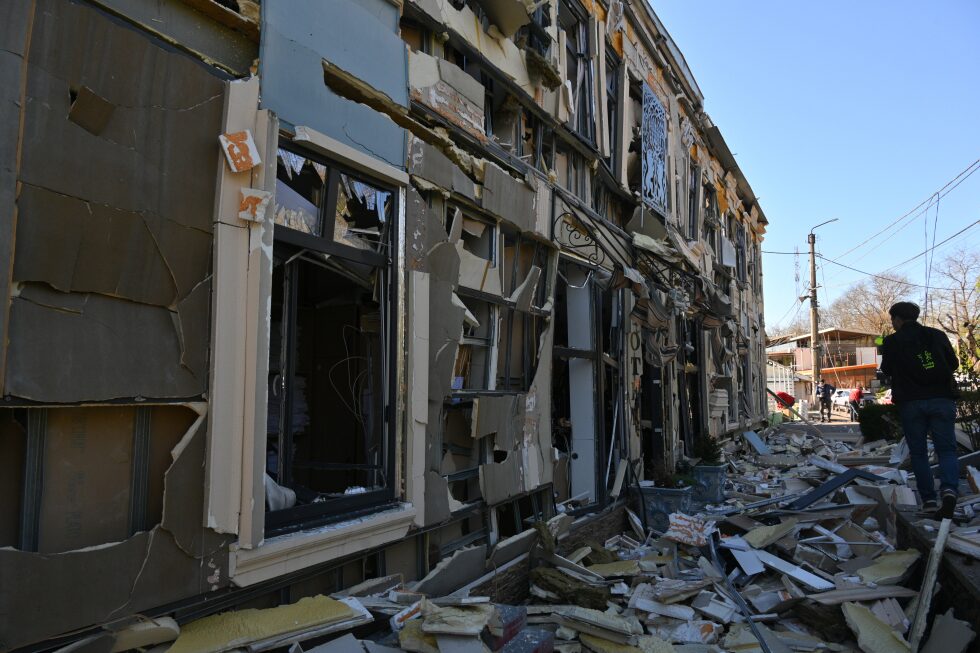
    KYIV, Ukraine – As Moscow’s full-scale invasion of Ukraine enters its third year, a pre-dawn Russian drone assault on the southern Ukrainian port city of Odesa left 14 people injured, including two minors, local officials confirmed Monday. The attack targeted residential blocks and key civilian infrastructure, according to Serhii Lysak, head of Odesa’s city military administration. As a strategically critical Black Sea export hub, Odesa has been repeatedly targeted by Russian strikes throughout the ongoing conflict.
    Oleh Kiper, governor of Odesa’s regional military administration, added that five of the wounded — all suffering from shrapnel injuries — were admitted to local hospitals for treatment. The assault marked the latest in a continuous wave of Russian attacks on populated civilian areas across Ukraine.
    In a parallel development reported by Russian-installed officials, a Ukrainian drone strike left two elderly civilians dead in Dnipriany, a village located in the Russian-occupied portion of Ukraine’s Kherson region. Moscow-appointed regional governor Vladimir Saldo confirmed that the deceased victims were a 70-year-old man and a 70-year-old woman.
    In an update posted to the social platform X on Monday, Ukrainian President Volodymyr Zelenskyy disclosed the staggering scale of Russian strikes over the previous seven days: approximately 1,900 attack drones, close to 1,400 heavy precision-guided aerial bombs, and around 60 missiles of multiple variants launched across Ukrainian territory. Zelenskyy noted that years of wartime innovation have allowed Ukraine to develop cutting-edge domestic air defense capabilities, enabling Ukrainian forces to intercept more than 90% of the Russian drones targeting the country. Even so, he emphasized that Ukraine still urgently requires additional American-made Patriot air defense systems to counter Russia’s ballistic missile threats, which current systems are not fully equipped to intercept at scale.
    Beyond developments on the frontline, Zelenskyy highlighted a series of recent diplomatic and economic wins for Kyiv. NATO member states outside the United States have finalized a funding framework to procure U.S.-manufactured weapons for Ukraine, the European Union has formally approved a €90 billion ($106 billion) lending package to support Ukraine’s wartime and reconstruction budget, and the bloc is preparing to roll out additional economic sanctions targeting Moscow. Separately, Norway became the latest European nation to formalize a joint drone production partnership with Ukraine, the Ukrainian Defense Ministry announced Monday. Zelenskyy also added that Ukraine is now sharing its anti-drone expertise with Middle Eastern and Gulf nations facing attacks from Iranian unmanned aerial vehicles amid regional tensions tied to the ongoing Iran conflict.
    On the offensive side, Ukraine has stepped up long-range drone and missile strikes against Russian energy infrastructure deep within Russian territory, targeting oil terminals and refineries to disrupt Moscow’s core energy export economy. The Institute for the Study of War, a Washington D.C.-based independent think tank, reported Sunday evening that it has verified geolocated evidence of at least 10 separate Ukrainian strikes against Russian oil and gas infrastructure over the past 14 days.
    This coverage is part of ongoing reporting on the Russia-Ukraine war from The Associated Press, with full updates available at https://apnews.com/hub/russia-ukraine.

  • Archbishop of Canterbury Sarah Mullally meets with pope and prays at the Vatican

    Archbishop of Canterbury Sarah Mullally meets with pope and prays at the Vatican

    VATICAN CITY – In a landmark moment for Christian ecumenism, Sarah Mullally, the newly installed first female Archbishop of Canterbury and spiritual leader of 100 million Anglicans worldwide, touched down in Vatican City on Monday for a historic audience with Pope Leo XIV. This meeting marks Mullally’s first international trip since she took up the highest office in the Church of England, and comes as the global Anglican Communion grapples with deep internal divisions over her appointment.

    Mullally arrived ahead of schedule for a closed-door meeting with Pope Leo in the pontiff’s private library, before the pair moved to the Urban VIII Chapel inside the Apostolic Palace for a scheduled moment of prayer, per Vatican announcements. The archbishop’s four-day Roman pilgrimage has already included stops at the Vatican’s major pontifical basilicas, where she prayed at the tombs of Saints Peter and Paul and held preliminary meetings with senior Vatican leadership.

    Lambeth Palace, the official London residence of the Archbishop of Canterbury, outlined the core goals of the visit: “to strengthen Anglican–Roman Catholic relations through prayer, personal encounter, and formal theological dialogue. It aims to deepen bonds of communion, affirm a shared witness, and encourage ongoing collaboration at both global and local levels.”

    The historical divide between the two church bodies stretches back to 1534, when King Henry VIII split the Church of England from Roman Catholic authority after his request for a marriage annulment was denied. While formal bilateral theological dialogue launched in the 1960s, major theological divides persist – most notably the Church of England’s gradual move to ordain women to all levels of clergy, a practice the Roman Catholic Church rejects, as it restricts the priesthood exclusively to men.

    Mullally’s appointment caps a decades-long shift for the Church of England: the first female Anglican priests were ordained in 1994, the first female bishop took office in 2015, and Mullally’s installation last month broke the final stained-glass ceiling as the first woman to hold the post of Archbishop of Canterbury. Her rise to leadership has split the already fractured 100-million-member Anglican Communion, which counts believers in 165 countries. Liberals and progressive Anglicans, mostly based in Western nations including the United Kingdom, have celebrated Mullally’s appointment as a long-overdue milestone for gender equality in faith leadership. But conservative factions across the communion have pushed back fiercely. The Global Anglican Future Conference (Gafcon), a conservative bloc that counts the communion’s largest and fastest-growing African churches among its members, has openly condemned the appointment and threatened a permanent schism. In North America, the conservative Anglican Church in North America – which split from the more liberal U.S. Episcopal Church and the Anglican Church of Canada over LGBTQ+ and gender issues – has joined Gafcon’s opposition to Mullally.

    In a message exchanged ahead of the visit, Pope Leo congratulated Mullally on her recent installation, while openly acknowledging she assumes office at a uniquely challenging moment, and that core differences still separate the two global church bodies. “We also know that the ecumenical journey has not always been smooth,” Leo wrote. “Despite much progress, our immediate predecessors, Pope Francis and Archbishop Justin Welby, acknowledged frankly that new circumstances have presented new disagreements among us.” Even so, the pontiff reaffirmed the Catholic Church’s commitment to continuing the dialogue.

    The meeting comes just two months after Pope Leo welcomed King Charles III, the titular head of the Church of England, and Queen Camilla to the Vatican, where the two royal visitors prayed in the Sistine Chapel. That October 25 gathering marked the first time since the 16th-century Reformation that the heads of the two churches have prayed together publicly. This year also marks the 60th anniversary of the first formal ecumenical statement signed by Anglican and Roman Catholic leadership, a 1966 agreement signed at the Basilica of St. Paul Outside the Walls by then-Archbishop Michael Ramsey and Pope Paul VI.

    Beyond ecumenical relations, Mullally has already expressed public solidarity with Pope Leo’s recent calls for peace in Iran, which came under fierce attack from former U.S. President Donald Trump after the American-born pontiff made the appeal.

    This coverage of religious affairs comes via the Associated Press, with support for AP religion reporting through a collaboration with The Conversation US, funded by Lilly Endowment Inc. The AP holds sole responsibility for this content.