标签: Europe

欧洲

  • Stock market cuts through to Trump on Greenland in a way allies’ messages failed to resonate

    Stock market cuts through to Trump on Greenland in a way allies’ messages failed to resonate

    DAVOS, Switzerland — President Donald Trump abruptly reversed course on his threat to impose punitive tariffs against eight European allies following intense market reactions and diplomatic pressure over his controversial Greenland acquisition proposal. The dramatic shift occurred during the World Economic Forum where financial markets had registered their most significant declines since October.

    The initial proposal to acquire Greenland from Denmark had sparked serious concerns within NATO about potential damage to the transatlantic military alliance that has served as a cornerstone of post-World War II security architecture. During his keynote address in Davos, Trump first dismissed the possibility of military action to seize Greenland, stating unequivocally: “I won’t do that. OK?”

    Hours later, the president announced a complete retreat from the tariff threat after claiming to have reached a “framework” agreement with NATO Secretary-General Mark Rutte regarding Greenland’s strategic future. Trump promptly appeared on CNBC to declare the framework “going to be a very good deal for the United States” while downplaying the role of market volatility in his decision.

    Financial markets responded positively to the de-escalation, with the S&P 500 rallying 1.2% following Trump’s remarks, recovering approximately half of its previous day’s losses. The Dow Jones Industrial Average and Nasdaq Composite showed similar gains.

    European officials familiar with the negotiations indicated that potential compromise solutions included expanded U.S. military infrastructure in Greenland through cooperation with Denmark and NATO. Rutte later confirmed on Fox News that discussions focused on preventing Russian and Chinese military and economic access to the Arctic region.

    The episode revealed significant concerns within the administration about how Trump’s aggressive stance toward allies could undermine other foreign policy objectives, particularly the proposed ‘Board of Peace’ initiative expected to be highlighted during the forum. Several European nations had already declined invitations to participate in this initiative following the tariff threats.

    Foreign policy experts offered mixed assessments of the strategy, with some viewing it as successful brinksmanship while others criticized it as unnecessarily damaging to alliances. The incident prompted Canadian leadership to propose smaller nations uniting against aggressive superpower tactics, highlighting the broader diplomatic repercussions of the confrontation.

  • Ex-intelligence officer in Austria’s biggest spy trial for years

    Ex-intelligence officer in Austria’s biggest spy trial for years

    Vienna witnessed the commencement of a landmark espionage trial on Thursday, as former Austrian intelligence operative Egisto Ott faced charges of conducting extensive espionage activities for Russian intelligence services. The 63-year-old defendant stands accused of systematically compromising national security through unauthorized data collection and transmission to foreign agents.

    The prosecution alleges that between 2015 and 2021, Ott exploited his official authority to harvest substantial volumes of sensitive information, including vehicle registration details, travel patterns, and personal data. This intelligence was reportedly funneled to both Russian intelligence operatives and Jan Marsalek, the fugitive former Wirecard executive currently believed to be residing in Moscow under Russian protection.

    Court documents reveal Ott allegedly received financial compensation for supplying classified information extracted from national and international police databases. In a particularly serious allegation from 2022, prosecutors claim Marsalek commissioned Ott to acquire a specialized EU government laptop containing electronic security hardware for secure communications, which was subsequently delivered to Russian intelligence.

    One extraordinary incident involves Ott allegedly recovering official phones belonging to senior Interior Ministry officials that accidentally fell into the Danube River during a boating excursion. Rather than returning the devices intact, Ott is accused of copying their contents and transferring the data to Marsalek and ultimately Moscow.

    The case has triggered significant political repercussions, with former Chancellor Karl Nehammer characterizing the allegations as constituting ‘a threat to democracy and our country’s national security’ following Ott’s 2024 arrest. Ott maintains his innocence against all charges, which carry potential imprisonment of up to five years.

    In a parallel development, Austrian prosecutors have charged former far-right Freedom Party (FPÖ) parliament member Thomas Schellenbacher with facilitating Marsalek’s escape to Belarus following Wirecard’s spectacular collapse in 2020. The FPÖ has vigorously denied allegations of functioning as ‘an extension of Russia’s arm’ in Austria.

    Marsalek himself remains an international fugitive, wanted by German authorities for alleged fraud and embezzlement connected to Wirecard’s missing €1.9 billion. Recent evidence from related espionage trials in London suggests Marsalek has undergone cosmetic surgery to alter his appearance and has been actively studying Russian while evading capture, reportedly boasting about needing to ‘outperform James Bond’ in his new role as a fugitive.

  • Record snowfall leaves cars stuck and people stranded in Russia’s Far East

    Record snowfall leaves cars stuck and people stranded in Russia’s Far East

    The Kamchatka Peninsula in Russia’s Far East is experiencing its most severe winter conditions in over six decades, with unprecedented snowfall creating a regional crisis. Meteorological records indicate that certain areas have accumulated snow depths not witnessed since the 1960s, leading to widespread transportation paralysis.

    Local authorities report that numerous vehicles have become completely immobilized on roadways, while many residents find themselves trapped in their homes by massive snowdrifts. Emergency services are operating at maximum capacity, deploying specialized equipment to clear critical access routes and assist stranded citizens. The regional government has declared a state of emergency, prioritizing the restoration of essential services and transportation networks.

    Climate scientists analyzing this extreme weather event suggest a potential connection to broader climate change patterns. Researchers note that while individual weather events cannot be directly attributed to climate change, the increasing frequency and intensity of such anomalies align with climate model predictions for northern latitudes. The warming Arctic region may be contributing to altered atmospheric patterns that generate more extreme winter precipitation events in certain regions.

    The socioeconomic impact continues to mount as businesses remain shuttered and schools suspend operations indefinitely. Regional officials emphasize that recovery operations may require several days given the unprecedented volume of snow accumulation. Meteorological agencies are monitoring the situation closely, as additional precipitation is forecasted for the coming days.

  • Trump’s jibes are wearing thin for many of Europe’s leaders

    Trump’s jibes are wearing thin for many of Europe’s leaders

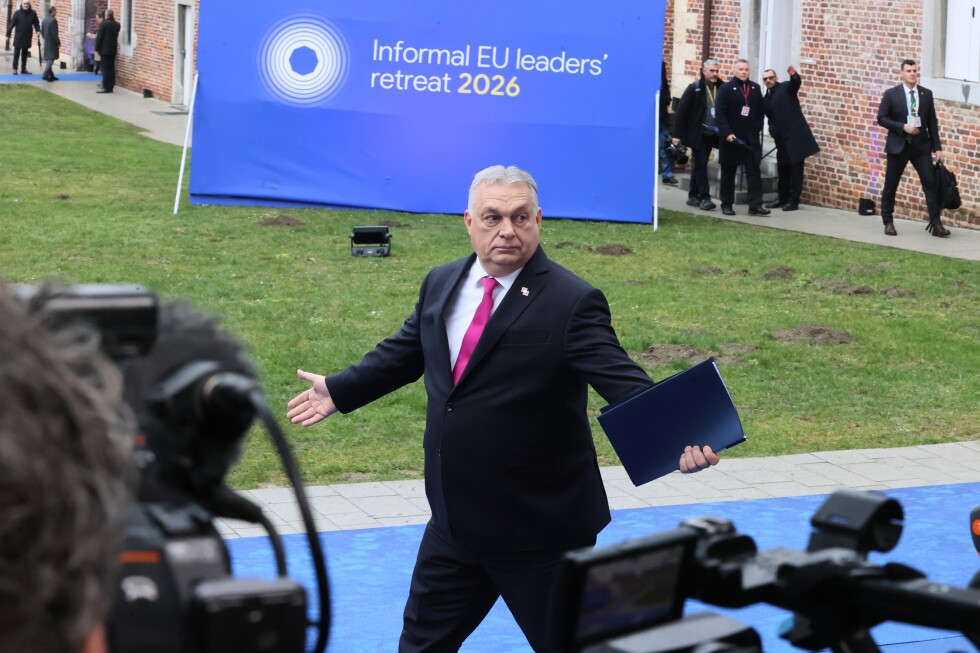
    At the World Economic Forum in Davos, Switzerland, U.S. President Donald Trump delivered a contentious speech that further strained relations with European allies. His remarks, which combined historical revisionism with territorial ambitions, left European delegates visibly unsettled.

    Trump asserted that without American intervention, Europe ‘would all be speaking German,’ overlooking that German is actually one of Switzerland’s four official languages. He repeatedly criticized European nations for what he characterized as insufficient NATO contributions and misguided policies, delivering these criticisms directly to the faces of the continent’s leaders.

    The speech provided temporary relief on one front—Trump explicitly ruled out military action to acquire Greenland. However, he maintained that purchasing the semi-autonomous Danish territory remained a ‘perfectly reasonable transaction,’ despite Copenhagen’s firm position that the island is not for sale.

    Danish Foreign Minister Lars Løkke Rasmussen acknowledged the military reassurance as ‘positive in isolation’ but noted the president’s broader ambitions remained unchanged. Meanwhile, in Nuuk, Greenlandic officials unveiled a crisis preparedness brochure that Self-Sufficiency Minister Peter Borg described as ‘an insurance policy’ against potential instability.

    The address contained no retreat from Trump’s threat to impose 10% tariffs on eight European countries by February 1st, targeting nations he accused of obstructing his Arctic ambitions. This uncompromising stance dashed European hopes for de-escalation at the summit.

    Trump particularly singled out France’s Emmanuel Macron for ridicule, mocking his appearance in sunglasses (worn due to a medical eye condition) and his stern podium demeanor. The president’s familiar refrain about European nations benefiting disproportionately from U.S. military protection ignored substantial allied sacrifices, including Denmark’s proportionally significant losses in Afghanistan and Iraq.

    The European Union has called an emergency summit in Brussels to formulate a response. European leaders now face a critical decision: whether to activate aggressive counter-tariffs—including the EU’s ‘trade bazooka’—or maintain diplomatic pressure while awaiting the February deadline.

  • Russia watches US-European tensions over Greenland with some glee, gloating and wariness

    Russia watches US-European tensions over Greenland with some glee, gloating and wariness

    Amid escalating transatlantic tensions surrounding former President Donald Trump’s controversial proposition to acquire Greenland, Russian officials and state-aligned media have responded with a complex blend of triumphalism and strategic apprehension. The Kremlin’s reaction reveals a multifaceted geopolitical calculus as Moscow assesses both opportunities and threats arising from Washington’s unexpected territorial ambitions.

    Kremlin spokesman Dmitry Peskov characterized the potential acquisition as potentially historic, suggesting Trump could enter ‘world history’ regardless of legal or ethical considerations. This measured endorsement aligns with Moscow’s broader strategy toward the Trump administration, seeking concessions in ongoing Ukraine negotiations and improved bilateral relations.

    Russian Foreign Minister Sergey Lavrov framed Denmark’s sovereignty over Greenland as a colonial relic, drawing direct parallels to Russia’s annexation of Crimea while asserting equivalent security interests. State media outlets amplified this narrative, with Rossiyskaya Gazeta comparing the potential acquisition to Abraham Lincoln’s abolition of slavery in historical significance.

    The Russian response simultaneously highlighted perceived divisions within NATO, with officials including Lavrov and presidential envoy Kirill Dmitriev declaring a ‘deep crisis’ in Atlantic solidarity. State news agency RIA Novosti mocked European military responses as impotent while celebrating the diversion of Western attention from Russia’s operations in Ukraine.

    Beyond the political maneuvering, Russian analysts expressed significant security concerns regarding Arctic dominance. Prominent military blogger Aleksander Kots interpreted the move as targeting Russia’s Arctic interests, while Moskovsky Komsomolets warned Greenland could become an ‘icy noose around Russia’s throat’ threatening the Northern Fleet and economic projects. These security apprehensions contrast with Putin’s public offers of Arctic cooperation, even as Russia strengthens its military capabilities in response to NATO activities in the region.

  • Centuries of love letters go on display at the National Archives in London

    Centuries of love letters go on display at the National Archives in London

    LONDON — As Valentine’s Day approaches, Britain’s National Archives unveils a remarkable exhibition titled “Love Letters,” showcasing five centuries of heartfelt correspondence that transcends conventional romantic notions. The collection presents an extraordinary tapestry of human emotion through meticulously preserved documents ranging from royal missives to ordinary citizens’ expressions of affection.

    Curator Victoria Iglikowski-Broad describes the exhibition as revealing “legendary romances from British history” alongside voices from everyday life. “We’re trying to open up the potential of what a love letter can be,” she explained, noting that expressions of love emerge from unexpected sources and diverse formats. The collection spans medieval songs of heartbreak, twentieth-century classified ads seeking same-sex romance, and wartime correspondence between soldiers and their sweethearts.

    Among the most poignant exhibits is Robert Dudley’s final letter to Queen Elizabeth I, written days before his death in 1588. The document, found at the queen’s bedside upon her death fifteen years later, reveals the intimate connection between the “Virgin Queen” and her self-described “poor old servant.”

    The exhibition broadens the definition of love beyond romance to include familial bonds and friendship. Jane Austen’s handwritten will bequeathing nearly everything to her sister Cassandra appears alongside a 1956 plea from the father of gangster twins Reggie and Ronnie Kray, begging courts for leniency based on their good intentions.

    Remarkable contrasts emerge throughout the collection. An 1851 petition from unemployed weaver Daniel Rush, begging authorities not to separate him from his wife through workhouse assignments, appears beside King Edward VIII’s 1936 Instrument of Abdication, through which he relinquished the throne to marry “the woman I love,” Wallis Simpson.

    “These two items share a common human feeling that sacrifice is worth it for love,” observed Iglikowski-Broad.

    The exhibition also explores love’s tragic dimensions. A previously unseen 1944 letter from British intelligence officer John Cairncross (later revealed as a Soviet spy) reflects on lost romance with former girlfriend Gloria Barraclough. Historical tragedies include Catherine Howard’s 1541 letter to Thomas Culpeper—written with “restrained panic” before both were executed for treason—and Queen Henrietta Maria’s rare intimate letter to King Charles I, discovered among possessions abandoned after a civil war defeat.

    Archives historian Neil Johnston noted the exceptional nature of the royal correspondence: “This is a little gem within the disaster of the English Civil War.”

    The “Love Letters” exhibition opens Saturday and continues through April 12 with free admission, offering visitors an unprecedented journey through centuries of emotional history.

  • Loved ones of victims reeling after high-speed rail crash in southern Spain

    Loved ones of victims reeling after high-speed rail crash in southern Spain

    Spain’s railway infrastructure faces intense scrutiny following two catastrophic derailments within 72 hours, claiming at least 43 lives and leaving dozens injured in the country’s worst rail disaster in over a decade.

    The initial tragedy struck Sunday evening near Córdoba when two high-speed trains collided in dense woodland 36 miles from the city. Emergency services responded to what doctors describe as ‘unprecedented carnage.’ Dr. Eduardo Morán of Córdoba’s Reina Sofía Hospital recounted the chaotic scene: ‘We prepared every department – emergency room, intensive care, surgical theaters. The injuries ranged from minor scratches to traumatic amputations.’ Despite the influx of casualties, hospital staff maintained control through rigorous triage protocols.

    Investigators are focusing on a potential track gap in the straight section where the collision occurred. Sniffer dogs continue searching through twisted metal and shattered glass as forensic teams work to identify victims.

    The tragedy became personal for countless families. Mari Carmen Abril Vega, a teacher returning from a surprise 50th birthday celebration in Córdoba, was among those confirmed dead. Her friend Jose Manuel Muñoz described the emotional whiplash: ‘We spent Saturday celebrating life, then endured two days of uncertainty before receiving confirmation of her death.’

    Before the nation could process the first disaster, a second derailment occurred near Barcelona during heavy rainfall, though without fatalities. This incident prompted Spain’s train drivers’ union to announce strikes against what they term ‘unacceptable constant deterioration of railway infrastructure.’

    At Córdoba’s Civic Center, families of the missing provide DNA samples under makeshift tents. Yamilei, whose brother-in-law Victor Luis Terán perished due to a last-minute travel change, expressed the collective anguish: ‘We need answers. We cannot continue like this.’

    Official calls for patience contrast with growing public demand for accountability as Spain’s rail network faces its most severe safety crisis in modern history.

  • Ukraine endures a bitter winter after Russian attacks as peace efforts overshadowed

    Ukraine endures a bitter winter after Russian attacks as peace efforts overshadowed

    KYIV, Ukraine — Ukrainian President Volodymyr Zelenskyy reported Wednesday that approximately 4,000 buildings in Kyiv remain without heating and nearly 60% of the capital faces power outages following sustained Russian attacks on Ukraine’s energy infrastructure. The crisis emerges during one of the most severe winters in recent years, with temperatures plunging to -20°C (-4°F), exacerbating humanitarian challenges nearly four years into Russia’s full-scale invasion.

    While the physical conflict intensifies, diplomatic efforts continue behind the scenes. U.S. special envoy Steve Witkoff confirmed plans to discuss peace proposals with Russian President Vladimir Putin and engage with Ukrainian delegates. Speaking at the World Economic Forum in Davos, Switzerland, Witkoff emphasized the urgent need for peace, though discussions on Ukraine’s defense appeared overshadowed by other transatlantic issues.

    Ukrainian authorities are implementing emergency measures to address the energy crisis. The Cabinet of Ministers has allocated 2.56 billion hryvnias (approximately $60 million) from reserve funds to purchase generators, according to Prime Minister Yuliia Svyrydenko.

    NATO Secretary-General Mark Rutte issued a compelling appeal to the alliance’s military chiefs, urging them to leverage their influence with national governments to supply critically needed air defense systems to Ukraine. “Please use your influence to help your political masters to do even more,” Rutte stated in a video message from NATO’s Brussels headquarters. “Look deep into your stockpiles to see what more you can give to Ukraine, particularly air defense interceptors. The time really is now.”

    The military situation remains volatile. Overnight, Russia launched 97 drones and a ballistic missile at Ukraine, according to the Ukrainian air force. Attacks in the central Dnipropetrovsk region resulted in the deaths of a 77-year-old man and a 72-year-old woman, confirmed Oleksandr Hanzha, head of the regional military administration.

    Russia’s Defense Ministry reported intercepting 75 Ukrainian drones over several regions, while the international airports of Krasnodar, Sochi, Gelendzhik and Saratov temporarily suspended operations due to drone activity. In Adygea, more than 200 kilometers from the Ukrainian border, a Ukrainian drone strike caused an apartment building fire that injured 11 people, including two children, according to regional governor Murat Kumpilov.

  • Marine Le Pen admits ‘mistake’ in EU embezzlement trial as she fights to save political career

    Marine Le Pen admits ‘mistake’ in EU embezzlement trial as she fights to save political career

    PARIS — French far-right leader Marine Le Pen confronted potentially career-altering allegations during a high-stakes appeals trial this week, where she admitted to procedural errors while vehemently denying systematic fraud in the European Parliament funds case that threatens her 2027 presidential aspirations.

    The 57-year-old political figure is challenging a March 2025 conviction that found her guilty of misappropriating EU legislative funds between 2004 and 2016. The original ruling imposed a five-year ban from elected office, two years of electronic monitoring house arrest, and an additional two-year suspended sentence for violating the 27-nation bloc’s financial regulations.

    Before a three-judge appellate panel, Le Pen acknowledged that some parliamentary aides compensated through EU channels had occasionally performed work for her National Front party (now renamed National Rally). “The mistake lies here: there were certainly some aides who must have worked either marginally, more substantially, or entirely for the benefit of the party,” she testified, maintaining this represented isolated incidents rather than organized misconduct.

    The Paris court’s initial determination described an elaborate “fraudulent system” that allegedly diverted €2.9 million ($3.4 million) in EU funds, characterizing the scheme as “a democratic bypass” that created unfair competitive advantages. Prosecutors argue Le Pen personally authorized hiring contracts while aware of their improper nature.

    During intense judicial questioning, Le Pen remained composed while rejecting the existence of any coordinated scheme to fund party operations with European money. “I wouldn’t say we did everything perfectly. Some criticism can be made about us,” she conceded, while insisting her party “acted in complete good faith.”

    The five-week appellate proceedings, which commenced last week, could dramatically reshape France’s political landscape. The court’s decision, expected before summer, will determine whether Le Pen can pursue the presidency or must transfer her political ambitions to protégé Jordan Bardella, the 30-year-old she has designated as potential successor.

    Judge Michèle Agi challenged Le Pen’s claims of ignorance regarding contractual obligations, noting her dual roles as European Parliament member and party president made her directly responsible for approvals. “You are a lawyer, you know the law — inevitably, a signature, a contract are notions that have a meaning for you,” Agi asserted.

    Le Pen countered that European Parliament authorities failed to provide adequate guidance about hiring violations, while defending unusual arrangements including her personal bodyguard’s parliamentary aide contract as responding to “exceptional” security needs.

  • Germany arrests woman accused of supplying war-related information to Russian agent

    Germany arrests woman accused of supplying war-related information to Russian agent

    BERLIN — German federal prosecutors have taken into custody a dual German-Ukrainian citizen suspected of conducting espionage operations on behalf of Russian intelligence services. The individual, identified under German privacy regulations as Ilona W., was apprehended in Berlin following an extensive investigation into her activities.

    According to official statements, Ilona W. established contact with a known Russian intelligence operative stationed at the Russian Embassy in Berlin as early as November 2023. Prosecutors allege she systematically provided sensitive information regarding Ukraine’s military capabilities, including detailed intelligence on defense industry locations, experimental drone testing protocols, and scheduled weapon deliveries to Ukrainian forces.

    The suspect reportedly leveraged her personal connections with former German Defense Ministry personnel to acquire classified information. Additionally, she facilitated her Russian contact’s access to high-level political events in Berlin using fabricated identities, enabling the intelligence officer to establish networks and gather information for Russian interests.

    Concurrent with the arrest, German authorities executed search warrants at multiple locations, including the primary suspect’s residence and properties belonging to two additional individuals under investigation. Defense Ministry spokesperson Mitko Müller confirmed the investigation involves two former military employees—one recently retired officer and a civilian employee who departed over fifteen years ago. Both are suspected of unlawfully sharing information with Ilona W., though investigators are determining whether they were aware the intelligence would ultimately reach foreign agents.

    The case emerges amid heightened security concerns across Europe regarding Russian espionage activities, particularly those related to the ongoing conflict in Ukraine. German authorities have intensified counter-intelligence operations to prevent sensitive military information from reaching hostile foreign entities.