标签: Europe

欧洲

  • Dortmund criticizes police actions against fans going to Italy for Champions League match

    Dortmund criticizes police actions against fans going to Italy for Champions League match

    German football club Borussia Dortmund has issued a formal protest against what it describes as “disproportionate” police interventions preventing its supporters from traveling to Italy for the critical Champions League playoff match against Atalanta. The club expressed astonishment at the unprecedented scale of security measures implemented by authorities, noting such intensive protocols had never been encountered during previous international away fixtures.

    The controversy emerged as German police instituted travel bans against approximately 300 identified Dortmund fans over the weekend, with Italian law enforcement simultaneously conducting visits to supporters who had already arrived in Bergamo. While some initial prohibitions were successfully challenged through expedited legal proceedings, the widespread security operations created insurmountable barriers for many fans attempting to reach the match venue.

    In response to these developments, Südtribune Dortmund, an umbrella organization representing multiple fan groups, announced its collective decision to abstain from attending the match in protest against what it termed “flimsy reasons” for the travel restrictions. This voluntary boycott compounds the situation created by the official bans.

    Borussia Dortmund, which maintains a 2-0 aggregate lead from the first leg, officially registered its disappointment that loyal supporters would be absent from the decisive playoff match due to what the club considers questionable administrative actions by German and Italian authorities. The club has requested comprehensive clarification regarding the legal foundations and operational rationale behind these security measures.

  • Louvre Museum’s director resigns in wake of jewels heist in Paris

    Louvre Museum’s director resigns in wake of jewels heist in Paris

    In a significant development for France’s cultural leadership, Laurence des Cars has officially resigned from her position as Director of the Louvre Museum in Paris. The resignation comes seven months after a spectacular security breach that saw thieves steal crown jewels valued at approximately €88 million ($102 million) from the world’s most visited museum.

    President Emmanuel Macron’s office confirmed the acceptance of des Cars’ resignation on Tuesday, characterizing the decision as “an act of responsibility” during a critical period for the institution. The presidential statement emphasized the museum’s current need for “calm and a strong new impetus” to advance crucial security enhancement projects and modernization initiatives.

    The October heist, which unfolded with shocking efficiency in under eight minutes during a weekend operation, represented one of the most significant museum security failures in recent history. The audacious theft of French national treasures from the prestigious institution drew international attention and raised serious questions about the museum’s protective measures.

    Des Cars, who assumed leadership of the Louvre in 2021—one of the most coveted positions in the global museum community—had initially offered her resignation immediately following the October incident. That initial offer was declined by France’s Culture Minister, despite des Cars’ characterization of the event as exposing a “tragic, brutal, violent reality” for the institution.

    President Macron expressed gratitude for des Cars’ “work and commitment” during her tenure and indicated intentions to assign her a new diplomatic role focused on fostering cooperation among major international museums. The presidential office did not specify whether des Cars has accepted this proposed transition to cultural diplomacy.

  • Queen Camilla meets Gisèle Pelicot, a symbol of the fight against sexual violence

    Queen Camilla meets Gisèle Pelicot, a symbol of the fight against sexual violence

    In a deeply symbolic meeting at London’s Clarence House, Queen Camilla of Britain hosted French rape survivor and activist Gisèle Pelicot for a private tea gathering that carried significant weight amid ongoing conversations about institutional responses to sexual violence. The 73-year-old Pelicot, currently concluding her UK book tour for the memoir “A Hymn to Life: Shame Has to Change Sides,” received personal praise from the Queen for her courageous storytelling.

    During their 30-minute conversation facilitated by an interpreter, Queen Camilla expressed being profoundly moved by Pelicot’s account, revealing she had completed the memoir within just two days. “I couldn’t put it down,” the Queen remarked, adding that despite her extensive work with survivors of sexual assault, Pelicot’s particular case had left her “speechless” and “shocked.”

    The meeting occurs against a complex backdrop for the British monarchy, which continues to navigate renewed scrutiny following the Andrew-Epstein scandal. This context lends additional significance to Camilla’s very public embrace of Pelicot’s cause, signaling the royal household’s attempt to demonstrate moral leadership on issues of violence against women.

    Pelicot has emerged as an international symbol of resilience since waiving her anonymity to confront her abusers. Her former husband, Dominique Pelicot, received a 20-year prison sentence for drugging and raping her over nearly a decade, while permitting other men to assault her while unconscious. A landmark trial in Avignon concluded in December 2024 with fifty men convicted of rape or sexual offenses.

    The survivor spoke of drawing “incredible strength” from supporters during the meeting, to which Camilla responded with affirmation: “you have so much support.” This encounter builds upon previous correspondence between the two women, including a letter from the Queen praising Pelicot’s “extraordinary dignity and courage”—a document the French activist now keeps framed in her office.

    Pelicot’s memoir launch at London’s Royal Festival Hall earlier featured readings by acclaimed actors Kate Winslet, Kristin Scott Thomas, and Juliet Stevenson, attracting a sold-out audience exceeding 2,000 attendees.

  • Reddit hit with $20 million UK data privacy fine over child safety failings

    Reddit hit with $20 million UK data privacy fine over child safety failings

    LONDON — Britain’s Information Commissioner’s Office (ICO) has imposed a substantial £14.5 million ($19.5 million) penalty against social media platform Reddit for serious breaches in children’s data protection protocols. The regulatory action, announced Tuesday, marks the latest escalation in the UK’s intensified scrutiny of digital platforms concerning child safety measures.

    The investigation revealed that Reddit’s inadequate age verification systems enabled children under 13 to access the platform and have their personal information processed unlawfully. Information Commissioner John Edwards stated that these systemic failures resulted in minors being exposed to inappropriate content without proper understanding or consent mechanisms.

    Despite Reddit’s policy prohibiting users under 13, the platform lacked effective age assurance measures until July 2025. The ICO criticized Reddit’s subsequent implementation of ‘self-declaration’ age verification as fundamentally insufficient and easily circumvented. Regulatory officials confirmed they would continue monitoring the platform’s handling of children’s data.

    This enforcement action follows similar recent penalties against digital platforms. Earlier this month, MediaLab—owner of image-sharing service Imgur—received a £247,590 fine for comparable violations. The ICO has also maintained an ongoing investigation into TikTok’s child data practices since last year.

    Reddit has announced its intention to appeal the decision, asserting that the ICO’s demands conflict with the company’s privacy-first approach. In an official statement, Reddit emphasized: ‘Our commitment to user privacy means we don’t require identity sharing regardless of age. The ICO’s insistence on collecting more private information from UK users contradicts our fundamental principles of online safety and privacy protection.’

    The case highlights growing tensions between regulatory bodies seeking enhanced child protection measures and technology companies advocating for minimal data collection practices.

  • From Expo to the Olympics, Milan bets on big events to fuel its transformation to a global city

    From Expo to the Olympics, Milan bets on big events to fuel its transformation to a global city

    Milan has strategically leveraged its hosting of the Milan Cortina Winter Games to cement its status as a global metropolis, adding ‘Olympic city’ to its established identities as Italy’s fashion and financial capital. This achievement represents the culmination of two decades of transformative urban development that has reshaped the city’s skyline while stimulating unprecedented investment, tourism, and cultural vitality.

    The Olympic legacy manifests in both tangible infrastructure and intangible prestige. Unlike traditional Games that emphasize massive construction, Milan adopted a distributed model across seven existing venues spanning hundreds of kilometers. The city inherits the state-of-the-art Santgiulia arena—destined for concerts, exhibitions, and sporting events—while the Olympic Village will address critical housing needs by transforming into accommodation for 1,700 students in a city grappling with affordability challenges amid its 10 universities.

    Preliminary data from Bocconi University’s ongoing IOC-commissioned study reveals approximately €4 billion in Games-related investments, encompassing sports facilities, transportation upgrades (roads, metro access, railways, ski lifts), energy infrastructure, and administrative costs. According to Assolombarda business association, Milan specifically invested €735 million to host 90 indoor ice events and the opening ceremony at San Siro, with visitors projected to spend around €1 billion. The Olympics are forecast to boost Milan’s 2026 economic growth by 0.6 percentage points to 1.7%, accelerating industrial output throughout the region.

    This Olympic chapter continues Milan’s remarkable transformation that began in the early 2000s, shifting from a provincial industrial center to an international destination. The CityLife district emerged with iconic skyscrapers by starchitects Zaha Hadid, Daniel Libeskind, and Arata Isozaki, while Porta Nuova development introduced the 218-meter UniCredit Tower. Expo 2015 served as a pivotal catalyst, drawing 22 million visitors over six months and triggering sustained tourism growth—rising 6.5% to 9.6 million visitors in 2025.

    Beyond tourism, Expo sparked a €3 billion investment converting the former site into MIND, a science and technology hub. The city has since tripled its five-star hotel capacity, added two subway lines, and opened numerous cultural institutions including Fondazione Prada, MUDEC, and Pirelli HangarBicocca.

    However, rapid development has fueled criticism from housing activists who argue that mega-events and luxury developments prioritize wealthy interests, driving real estate prices beyond reach for many workers. They demand policies addressing 80,000 vacant residences while increasing subsidized housing options.

    The Olympic Village has accelerated regeneration of the southern Porta Romana railyard, adjacent to major former industrial sites. This 20-hectare project will deliver 100,000 square meters of housing—approximately half designated as social housing under 2019 regulations—along with extensive parks and public spaces. The area neighbors Fondazione Prada and emerging fashion hubs hosting Bottega Veneta, Moncler, and upcoming OTB headquarters.

    Sporting legacy extends beyond infrastructure, with Italy’s record 30 medals expected to reignite winter sports participation. Olympic organizers are collaborating with companies to promote daily physical activity—an initiative carried over from Paris 2024. Milan’s convention operator has committed to maintaining temporary ice facilities while studying permanent rink options, capitalizing on renewed enthusiasm for ice sports.

    As Professor Dino Ruta of Bocconi University notes, ‘Milan is increasingly creating a distinctive brand able to attract an international audience.’ The Games have provided both global visibility and concrete mechanisms for urban improvement, though balancing growth with social equity remains an ongoing challenge for Italy’s rising metropolis.

  • Ex-Olympic boxing champ Yoka takes DR Congo license but rejects Olympic switch from France

    Ex-Olympic boxing champ Yoka takes DR Congo license but rejects Olympic switch from France

    PARIS — French Olympic gold medalist Tony Yoka has formally obtained a boxing license from the Democratic Republic of Congo, his father’s homeland, while simultaneously clarifying that this administrative move does not signal a change in his competitive nationality or Olympic aspirations.

    The 33-year-old super heavyweight champion, who triumphed at the 2016 Rio de Janeiro Olympics, addressed speculation through a video message on his Instagram platform this Tuesday. Yoka explicitly stated: “Under no circumstances is there any question of me going to the Olympic Games representing the Democratic Republic of Congo. I am and will remain a French Olympic champion.”

    This clarification comes after Congolese Sports Minister Didier Budimbu Ntubuanga previously announced that Yoka had committed to representing Congo with ambitions for Olympic gold, alongside establishing a dedicated boxing academy within the country. The minister had characterized the arrangement as “a major boost for national boxing.”

    Yoka explained that the Congolese license serves purely practical purposes for an upcoming bout scheduled in the country later this year. The boxer emphasized his pride in contributing to Congo’s international recognition while honoring his familial heritage.

    “I’m proud to be able to help the Democratic Republic of Congo shine in the eyes of the world, as well as to honor my word and pay tribute to minister Didier Budimbu, who trusts me in this adventure,” Yoka stated in his social media announcement.

    Following an extensive amateur career spanning 84 fights, Yoka transitioned to professional boxing in 2017. His current professional record stands at 15 wins (12 by knockout) against 3 losses. The former champion is currently working to revitalize his career under the guidance of British promoter Frank Warren.

  • European officials visit Ukraine to show support as country marks 4 years of Russia’s all-out war

    European officials visit Ukraine to show support as country marks 4 years of Russia’s all-out war

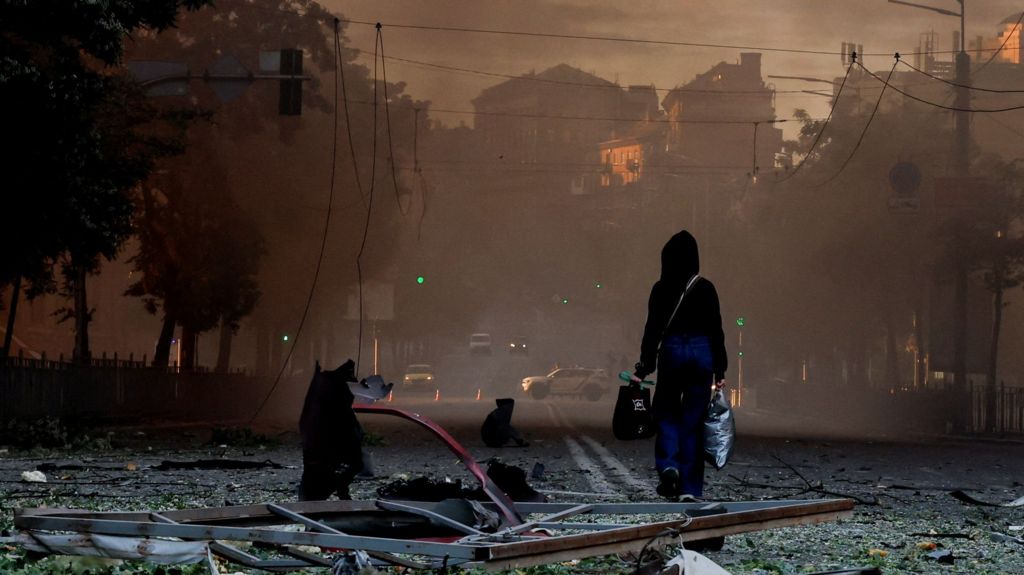
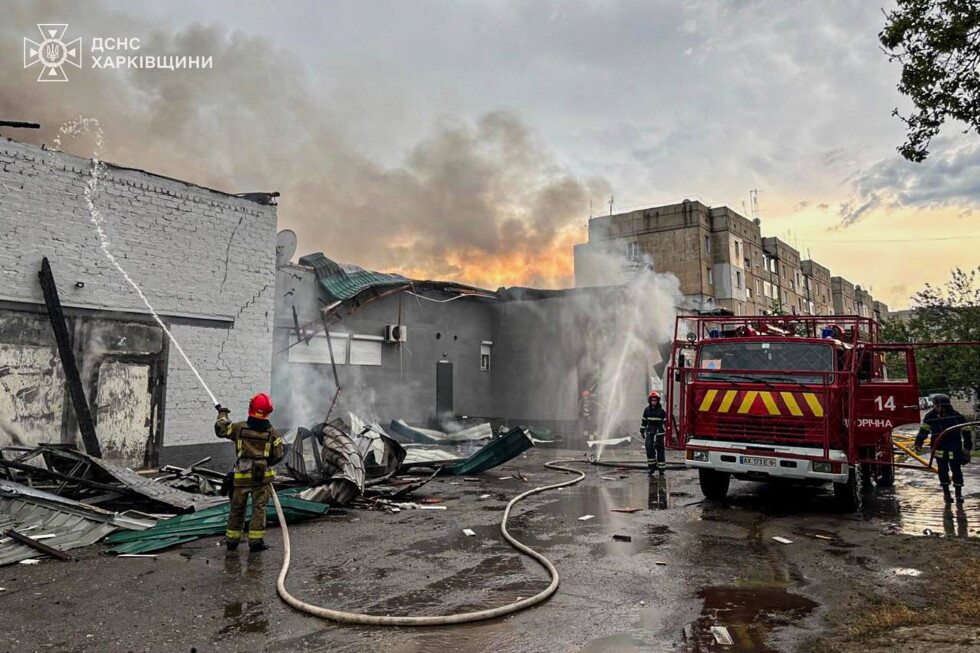
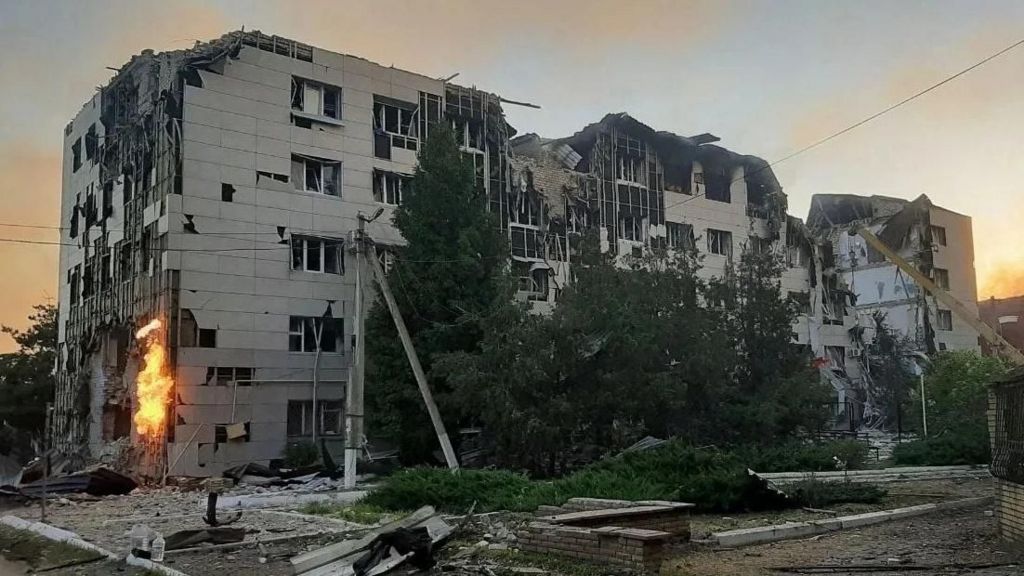
    KYIV, Ukraine — In a powerful demonstration of solidarity, more than a dozen high-ranking European officials converged on the Ukrainian capital Tuesday, marking the somber fourth anniversary of Russia’s full-scale invasion. The diplomatic delegation included European Council President Antonio Costa, European Commission President Ursula von der Leyen, Finnish President Alexander Stubb, along with seven prime ministers and three foreign ministers.

    Ukrainian President Volodymyr Zelenskyy declared that despite overwhelming odds, Ukraine has successfully preserved its sovereignty against Russia’s superior military forces. According to analysis from the Washington-based Institute for the Study of War, Russian forces captured merely 0.79% of Ukrainian territory over the past year of fighting. “We have defended our independence, we have not lost our statehood,” Zelenskyy stated via social media, emphasizing that President Vladimir Putin “has not achieved his goals” and “has not broken Ukrainians.”

    However, the conflict has evolved into a corrosive war of attrition with no diplomatic breakthrough in sight. U.S.-led peace initiatives remain stalled over critical issues including the status of the Russian-occupied Donbas region and post-war security arrangements demanded by Kyiv to prevent future invasions.

    The human cost continues to mount dramatically. A recent Center for Strategic and International Studies report estimates combined casualties on both sides could reach 2 million by spring, representing the highest troop mortality rate for any major power since World War II.

    European leaders increasingly view the conflict as directly impacting their own security. German Chancellor Friedrich Merz characterized the war as “a nightmare for us all” in a social media post, adding that “the fate of Ukraine is our fate.”

    The conflict has assumed global dimensions, with NATO countries providing military assistance while Russia receives support from North Korea (troops and artillery), Iran (drone technology), and China (machine tools and chips according to U.S. and analyst reports). This internationalization threatens to exacerbate shortages, hunger, and political instability across developing nations.

    With Ukraine dependent on foreign assistance to continue resisting Russian aggression, NATO members have stepped up weapons procurement following the Trump administration’s policy shift away from direct arms donations. The European Union has provided financial aid, though occasionally facing resistance from member states Hungary and Slovakia.

    The staggering reconstruction costs for Ukraine are now estimated at nearly $588 billion over the next decade—almost triple the country’s nominal GDP for last year, according to a joint report from the World Bank, European Commission, United Nations, and Ukrainian government.

  • India cuts dividend tax for large French investors

    India cuts dividend tax for large French investors

    India and France have modernized their bilateral tax agreement, implementing significant changes that will reshape investment dynamics between the two nations. The revised treaty, which updates terms established three decades ago, reduces dividend taxation for substantial French investors while simultaneously expanding India’s authority to tax certain financial transactions.

    Under the new framework, French corporations holding at least 10% stakes in Indian companies will benefit from a reduced dividend tax rate of 5%, a substantial decrease from the previous 10%. Conversely, portfolio investors with smaller holdings (below 10%) will face an increased tax rate of 15% on dividends, up from the former 10% levy.

    The agreement represents a strategic recalibration of fiscal relations, particularly through the elimination of the most-favored-nation (MFN) clause that previously permitted French entities to claim lower tax rates if India granted more favorable terms to other OECD members. This modification aligns with a 2023 Supreme Court of India ruling that such benefits cannot be automatically applied without formal notification procedures.

    The treaty revision, announced by India’s finance ministry days after President Emmanuel Macron’s diplomatic visit to Delhi, forms part of broader bilateral enhancements. During the meetings, both nations elevated their relationship to a ‘Special Global Strategic Partnership’ and expanded cooperation in defense and space technology sectors.

    Prominent French corporations including Sanofi, Renault, and L’Oreal stand to benefit from these changes, having significantly expanded their Indian investments in recent years. The updated agreement aims to stabilize economic activities for businesses from both countries while encouraging increased investment flows and collaborative ventures.

    According to financial data, France-based portfolio investors held approximately $21 billion in Indian company shares as of January 2026, with bilateral trade between the nations reaching $15 billion in the previous year. The revised treaty awaits final formalities and legal approvals in both countries before implementation.

  • ‘Anyone who runs is shot’: Watch Russian soldiers describe killings of troops who refuse orders

    ‘Anyone who runs is shot’: Watch Russian soldiers describe killings of troops who refuse orders

    In a harrowing firsthand account, Russian soldiers who have fled their units are providing unprecedented testimony about systematic executions and extreme brutality within the Russian military ranks in Ukraine. These defectors, now in hiding for their safety, describe a command structure that employs lethal force to maintain discipline, creating an environment of terror among troops.

    The soldiers report that any attempt to retreat or disobey orders results in immediate execution by specialized barrier troops—dedicated units operating behind front-line forces. These ‘blocking units’ function as military police with shoot-to-kill authority against their own comrades, effectively eliminating any possibility of surrender or retreat for ordinary soldiers.

    Beyond these executions, the defectors describe widespread atrocities against Ukrainian civilians and prisoners of war, painting a picture of complete moral collapse within Russian units. The accounts suggest these war crimes are not isolated incidents but rather systematic behaviors encouraged or tolerated by command structures. The testimonies emerge as international investigators continue gathering evidence of potential crimes against humanity committed during Russia’s invasion of Ukraine.

  • Bowen: Why Ukraine remains defiant and does not feel close to defeat

    Bowen: Why Ukraine remains defiant and does not feel close to defeat

    Beneath the eerie glow of headlights in eastern Ukraine’s Donetsk region, miles of suspended fishing nets create a shimmering canopy over strategic roadways—a surreal defense against explosive drones that now define modern warfare. These improvised barriers, donated by European fishermen including 280 tonnes of Scottish salmon nets, represent Ukraine’s ingenious adaptation to the deadly drone warfare that has transformed this conflict.

    The battlefield’s most feared weapons are FPV (first-person view) drones, capable of transmitting real-time footage to operators 40km away while delivering precision strikes. Both Ukrainian and Russian forces have revolutionized their use, transitioning from radio-controlled systems to fiber-optic guidance to counter electronic warfare tactics. In hidden command centers within shattered buildings, Ukrainian analysts monitor banks of screens, directing ground operations with terrifying accuracy.

    This technological arms race has expanded traditional front lines into vast “kill zones” stretching 20km beyond forward positions. Rear areas once considered safe now face equal peril as surveillance drones saturate the skies. The economic asymmetry is staggering: a $1,000 drone can destroy a $30 million tank, making skilled pilots invaluable assets. Both nations have become global leaders in drone warfare, with NATO forces struggling to match their operational experience.

    The conflict’s technological evolution occurs against persistent geopolitical pressures. Russian President Vladimir Putin demands Ukrainian surrender of Donetsk’s remaining 20% under Ukrainian control, along with portions of Zaporizhzhia and Kherson regions. Despite American pressure for a ceasefire—including direct appeals from the Trump administration—President Zelensky maintains he will never relinquish unconquered territory, fearing renewed Russian aggression following any temporary pause.

    In Slovyansk, designated a “fortress city” with extensive anti-tank defenses, civilian life persists amid constant danger. Residents hurry through snow-covered streets, aware that nowhere in Donetsk remains truly safe. Local humanitarian efforts continue against impossible odds, with figures like Pastor Oleh Tkachenko delivering 17,000 weekly bread loaves to frontline communities while evacuating those who can no longer endure the danger.

    The human cost remains staggering, with Zelensky acknowledging 55,000 military deaths and countless civilians displaced. Recruitment challenges mount as veterans describe the horrors of months-long deployments in underground bunkers. Yet polling indicates most Ukrainians believe continued resistance remains necessary against what they perceive as existential threats to their nationhood.

    As winter persists, Russia systematically targets energy infrastructure, creating humanitarian crises in already devastated communities. Evacuation trains continue transporting civilians westward, their passengers carrying minimal belongings and maximum trauma. Through it all, Ukraine demonstrates remarkable resilience—maintaining functional cities despite constant attacks while developing domestic military production capabilities.

    The war’s conclusion appears distant as both sides maintain fundamentally incompatible positions. International mediation efforts continue, but appear more focused on diplomatic appearances than genuine breakthrough. With spring approaching, Ukraine prepares for renewed hostilities while advocating for increased European support, determined to prevent what many citizens describe as the repetition of historical mistakes made against previous aggressors.