标签: Europe

欧洲

  • Police in Britain arrest former ambassador Mandelson in probe into Epstein ties

    Police in Britain arrest former ambassador Mandelson in probe into Epstein ties

    London’s Metropolitan Police have taken into custody Peter Mandelson, the former British ambassador to the United States, as part of an ongoing investigation into misconduct within public office. The arrest, which occurred at a north London residence, marks the second high-profile detention within days connected to the Jeffrey Epstein scandal, following the recent apprehension of the former Prince Andrew.

    The 72-year-old diplomat, who served under previous Labour administrations, faces allegations of improperly sharing sensitive government information with the disgraced financier Epstein during his tenure as a senior minister. While no sexual misconduct charges have been brought against Mandelson, the investigation centers on communications from 2009 that suggest he provided Epstein with confidential documents, including internal reports discussing post-financial crisis asset sales and potential tax policy changes.

    The arrest follows the release of over three million pages of Epstein-related documents by the U.S. Justice Department in January, which contained explosive revelations about Mandelson’s relationship with the convicted sex offender. Correspondence indicates Mandelson referred to Epstein as ‘my best pal’ and allegedly promised to lobby government colleagues regarding bankers’ bonus taxation.

    Prime Minister Keir Starmer had previously dismissed Mandelson from his ambassadorial position in September after evidence emerged showing continued contact with Epstein following his 2008 conviction. The appointment had already placed Starmer’s leadership under scrutiny, with his political future potentially hinging on the scheduled release of documents related to Mandelson’s selection in early March.

    Mandelson, a controversial figure nicknamed ‘Prince of Darkness’ for his political maneuvering, has resigned from the House of Lords but retains his lifetime peerage title. The investigation continues as police examine evidence gathered during searches of Mandelson’s properties in London and western England.

  • Toyota Racing Development signs 13-year-old Keelan Harvick to a long-term driver deal

    Toyota Racing Development signs 13-year-old Keelan Harvick to a long-term driver deal

    In a landmark move for motorsports development, Toyota Racing Development has secured the future of third-generation racing prodigy Keelan Harvick with a comprehensive long-term contract. The 13-year-old son of NASCAR legend Kevin Harvick has formally committed to pursuing an American stock car racing career, setting the stage for a potential Daytona 500 debut in 2031—exactly 24 years after his father’s victory in the prestigious event.

    The announcement marks a significant departure from Keelan’s previous motorsports trajectory. The young driver had been actively pursuing European racing opportunities until a pivotal incident during a karting event in Italy fundamentally altered his career perspective. While competing at an event attended by Formula 1 superstar Charles Leclerc, Keelan witnessed overwhelming fan intensity that reshaped his professional ambitions.

    “The experience in Italy demonstrated that European racing culture might not align with my personal preferences,” Keelan explained to The Associated Press. “When hundreds of fans literally broke down the tent structure just to meet Charles Leclerc at a grassroots karting event, I recognized that the American racing environment better suits my competitive temperament.”

    Toyota has meticulously crafted an extensive development program for the teenage sensation. For the current season, Keelan will partner with RACKLEY W.A.R. and his father’s organization, Kevin Harvick, Inc., to compete in numerous late model races across the United States. He will pilot the No. 62 Toyota Camry with ExxonMobil serving as primary sponsor for multiple events.

    This partnership introduces an intriguing dynamic to the Harvick racing legacy. Kevin Harvick, who retired after the 2023 season with 63 Cup Series victories and the 2014 championship, spent his entire 23-year career competing exclusively with Chevrolet and Ford manufacturers. The NASCAR Hall of Fame contender, now an analyst for Fox Sports, provided insight into the unconventional manufacturer alignment.

    “Toyota’s developmental philosophy perfectly aligns with our family’s approach to racing progression,” Kevin Harvick stated. “Their comprehensive investment in both driving excellence and personal development significantly influenced our decision. The human development component remains particularly important to our family’s values.”

    The Toyota Driver Development program boasts an impressive pedigree, having nurtured current Cup Series competitors including Christopher Bell, Corey Heim, and John Hunter Nemechek. The initiative provides holistic support through the Toyota Performance Center, offering resources in physical conditioning, sports psychology, recovery protocols, and nutritional guidance.

    Tyler Gibbs, President of TRD U.S.A., expressed enthusiasm about the new partnership: “Keelan has demonstrated exceptional track prowess and remarkable maturity beyond his years. His professionalism and work ethic have impressed everyone at Toyota, and we anticipate a brilliant future ahead as we support his racing journey.”

    Keelan already possesses an impressive racing resume. In December, he became the youngest-ever winner of the Snowflake 125 at Florida’s Five Flags Speedway, followed by a victory in Florence Motor Speedway’s Icebreaker event this February—another age-record achievement that simultaneously marked his first Late Model triumph. The 2024 INEX Young Lions National Champion has already made history by becoming the first driver to win Pro Late Model events in both the zMAX CARS Tour and CARS Tour West Series during the same season.

    When questioned about his Cup Series aspirations and timeline for advancement, Keelan demonstrated characteristic humility: “I will progress according to Toyota’s assessment of my capabilities and readiness. Their expertise will guide my development toward competing at the highest level of NASCAR competition.”

  • Why did Putin’s Russia invade Ukraine?

    Why did Putin’s Russia invade Ukraine?

    Four years after Russian President Vladimir Putin initiated Europe’s largest military offensive since World War Two, the conflict in Ukraine remains entrenched in a devastating stalemate. The initial February 2022 invasion, intended to swiftly seize Kyiv and topple the pro-Western government, has instead resulted in a protracted war of attrition, with approximately one-fifth of Ukrainian territory under Russian control.

    The geopolitical struggle is rooted in Putin’s longstanding rejection of Ukrainian sovereignty. Historical revisionism has been a central tenet of the Kremlin’s justification, with baseless allegations of Nazi influence and genocide used to legitimize the invasion. This narrative directly contradicts reality: President Volodymyr Zelensky is Jewish, with family members who perished in the Holocaust, and no far-right parties hold seats in Ukraine’s parliament.

    Diplomatic efforts to resolve the conflict have repeatedly faltered. Despite US President Donald Trump’s push for a settlement—including a high-profile August meeting with Putin in Alaska and subsequent trilateral negotiations in early 2026—fundamental disagreements persist. Moscow demands international recognition of its territorial acquisitions, including Crimea and four eastern regions annexed through sham referendums, while insisting on Ukraine’s permanent neutrality and abandonment of NATO aspirations. These conditions remain unacceptable to Kyiv, which seeks security guarantees against future Russian aggression.

    The human cost continues to mount dramatically. Conservative estimates suggest over 92,000 Ukrainian military casualties and at least 14,500 civilian deaths, though actual figures are likely substantially higher. Russian military losses are estimated between 243,000-352,000. The economic impact on both nations is severe, with Russia dedicating over 33% of its federal budget to defense and Ukraine suffering catastrophic infrastructure damage and industrial disruption.

    As the conflict enters its fifth year with no clear military resolution in sight, the prospects for a negotiated settlement appear increasingly remote, leaving millions displaced and a nation’s sovereignty hanging in the balance.

  • Rob Jetten becomes Netherlands’ youngest and first gay PM

    Rob Jetten becomes Netherlands’ youngest and first gay PM

    The Netherlands has entered a new political era with the inauguration of Rob Jetten as Prime Minister, marking dual historic milestones as both the nation’s youngest leader at 38 and its first openly gay head of government. King Willem-Alexander formally swore in Jetten at Huis ten Bosch Palace in The Hague on Monday, cementing a hard-won political victory after October’s intensely contested general election.

    Jetten’s Democrats 66 (D66) party secured a narrow victory over Geert Wilders’ anti-Islam populist movement, culminating in the formation of a center-right minority coalition. The governing alliance comprises Jetten’s D66, the People’s Party for Freedom and Democracy (VVD), and the Christian Democratic Alliance (CDA). This tripartite arrangement grants D66 seven ministerial portfolios, VVD six, and CDA five, supplemented by three state secretaries from each party.

    The minority status of this government introduces significant legislative challenges. Every major policy initiative outlined in the coalition agreement—including a substantial €19 billion defense spending increase coupled with austerity measures in healthcare and social benefits—will require individual negotiation and vote-by-vote support in both chambers of the Dutch parliament.

    Migration policy represents a cornerstone of the coalition’s agenda, particularly regarding asylum seekers. The government proposes implementing offshore asylum processing, requiring refugees to apply for protection outside European borders before arrival. This approach addresses what has become a deeply polarizing issue in Dutch politics, having contributed to the collapse of the two previous coalition governments.

    Jetten’s political persona has evolved significantly from his early “Robot Jetten” nickname, earned through initially stiff media appearances. His election night appearance in Leiden revealed a transformed leader—effortlessly engaging with enthusiastic young supporters in a vibrant, packed music venue. Many observers contrast his relatively youthful, pro-EU, socially liberal platform against Wilders’ hard-right establishment politics.

    In a pre-inauguration social media post, Jetten struck an optimistic tone: “Proud to be doing this together. In a new phase, with great responsibility and, above all, a shared promise to work for everyone in the Netherlands. By not dwelling on what’s wrong, but by building on what can be improved. That requires courage and collaboration.” His subsequent Instagram caption after confirmation was notably succinct: “Let’s get to work.

    However, governing challenges loom large. Wilders has pledged outright opposition to all government initiatives, while other political factions have expressed reservations about the coalition’s proposed policy directions.

  • From ‘Robot Jetten’ to prime minister: The rise of the Netherlands’ youngest leader

    From ‘Robot Jetten’ to prime minister: The rise of the Netherlands’ youngest leader

    THE HAGUE, Netherlands — In a landmark moment for Dutch politics, Rob Jetten has been sworn in as Prime Minister of the Netherlands, becoming both the youngest leader in the nation’s history and the first openly gay individual to hold the office. The 38-year-old politician took his oath on Monday to lead a minority three-party coalition government, breaking the previous age record set by Christian Democrat Ruud Lubbers, who assumed office at age 43 in 1982.

    Jetten’s ascent to the pinnacle of Dutch politics represents the culmination of a nearly decade-long parliamentary career that began in 2017 when he first won a seat for the centrist, pro-European D66 party, which he now leads. Initially known for his overly rehearsed responses that earned him the nickname ‘Robot’ Jetten, the new prime minister has since developed a more relaxed public persona that has resonated with voters. His popularity received a significant boost after he reached the finals of the prime-time television quiz ‘The Smartest Person.’

    The historic nature of Jetten’s appointment is particularly noteworthy given the Netherlands’ pioneering role in LGBTQ+ rights, having become the first country to legalize same-sex marriage in 2001. Jetten regularly shares aspects of his personal life on social media, including photos with his partner Nicolás Keenan, an Argentine field hockey star who won bronze at the 2024 Paris Olympics. Following his election victory in late October, Jetten posted a heartfelt message combining Dutch and Spanish, thanking Keenan for his ‘unconditional support.’

    However, Jetten faces significant governing challenges as he leads a coalition holding only 66 seats in the 150-seat House of Representatives without a majority in the upper house either. His political career has been marked by environmental advocacy, earning him the nickname ‘climate pusher’ during his time as climate spokesman. As a Cabinet minister under former Prime Minister Mark Rutte, now NATO chief, Jetten championed comprehensive climate legislation involving 120 measures costing 28 billion euros aimed at reducing Dutch carbon emissions by 60% by 2030 compared to 1990 levels.

    Born in the southeastern town of Uden, Jetten studied business administration and worked at government-owned railway infrastructure company ProRail before entering politics. His background also includes athletic pursuits—he once served as a pace setter for future Olympic long-distance champion Sifan Hassan, demonstrating the diverse experiences he brings to his new role as the Netherlands’ youngest-ever prime minister.

  • EU diplomats scramble to overcome Hungary’s threat to derail new sanctions on Russia

    EU diplomats scramble to overcome Hungary’s threat to derail new sanctions on Russia

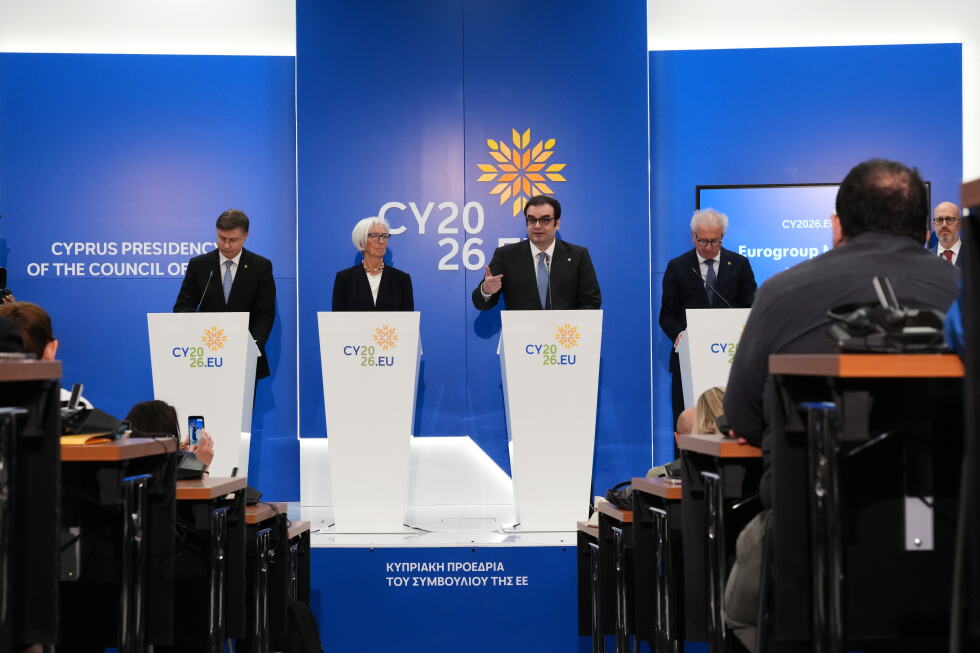
    BRUSSELS — European Union efforts to impose a twentieth sanctions package against Russia have encountered significant obstruction from Hungary, creating a major rift within the bloc on the eve of the fourth anniversary of Russia’s full-scale invasion of Ukraine.

    EU Foreign Policy Chief Kaja Kallas confirmed Monday that the comprehensive sanctions package targeting Russia’s shadow fleet and energy revenues would likely not advance during the foreign ministers’ meeting in Brussels. The development follows Hungary’s weekend threat to block both the sanctions and a critical €90 billion loan package for Ukraine until Russian oil deliveries to Hungary resume.

    The diplomatic standoff stems from the January 27 interruption of Russian oil shipments to Hungary and Slovakia via the Druzhba pipeline, which Ukrainian officials attribute to Russian drone attacks damaging the infrastructure. Hungarian Prime Minister Viktor Orbán has made unsubstantiated claims that Ukraine is deliberately withholding oil shipments and attempting to destabilize his government.

    In a social media post, Orbán characterized the situation as a “Ukrainian oil blockade” orchestrated by President Volodymyr Zelenskyy, warning that “by attacking Hungary, he can only lose.” The comments come as Orbán faces a crucial election in less than two months, during which he has launched an aggressive anti-Ukraine campaign accusing the leading opposition party of conspiring with EU and Ukrainian officials.

    The Hungarian position has drawn sharp criticism from other EU members. Polish Foreign Minister Radosław Sikorski suggested Orbán’s actions represent a domestic political maneuver, stating it was “shocking” to see hostility toward “the victim of aggression” exploited for electoral gains.

    German Foreign Minister Johann Wadephul expressed astonishment at Hungary’s stance, urging reconsideration and emphasizing the need to “show strength” and “support Ukraine sustainably.” Latvian and Estonian officials similarly emphasized the urgency of both sanctions and financial support for Ukraine.

    The blocked €90 billion loan package represents crucial funding for Ukraine’s military and economic needs over the next two years, with Estonian Foreign Minister Margus Tsahkna stressing that “Ukraine needs this money heavily.”

    Unlike most European nations that have significantly reduced or eliminated Russian energy imports since the 2022 invasion, Hungary and Slovakia maintain substantial Russian oil and gas supplies under a temporary EU exemption.

  • A look at the how Russia’s invasion of Ukraine has unfolded, by the numbers

    A look at the how Russia’s invasion of Ukraine has unfolded, by the numbers

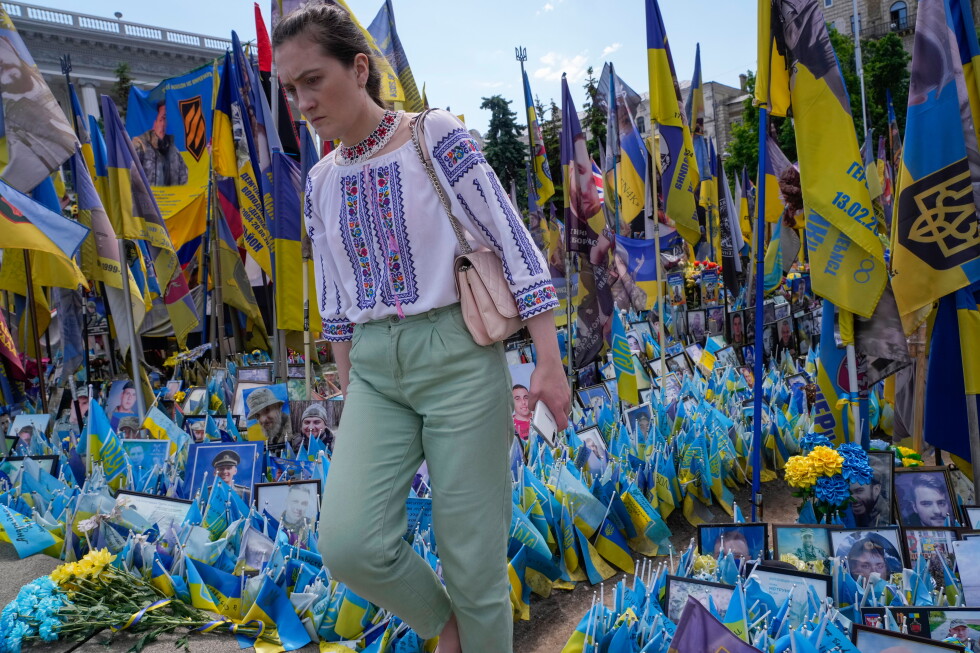
    As the Ukraine conflict marks its grim fourth anniversary this Tuesday, Europe’s largest military confrontation since World War II continues with no resolution in sight. The devastating war has fundamentally reshaped continental security architecture while inflicting unprecedented suffering on combatants and civilians alike.

    Peace negotiations brokered by the U.S. administration have encountered significant obstacles, particularly regarding the status of Russian-occupied Ukrainian territories and postwar security guarantees for Kyiv. These diplomatic efforts have yielded minimal progress amid entrenched positions from both Moscow and Kyiv.

    The human toll remains staggering: recent analysis from the Center for Strategic and International Studies estimates approximately 1.8 million military casualties (killed, wounded, or missing) across both armies. Russian forces have reportedly suffered between 1.1-1.2 million casualties, including up to 325,000 fatalities—the highest death toll for any major power in a single conflict since World War II. Ukrainian military casualties are estimated at 500,000-600,000, with President Zelenskyy acknowledging 55,000 troop deaths earlier this month.

    Civilian suffering has been equally devastating. The UN Human Rights Monitoring Mission documents nearly 15,000 confirmed civilian deaths (acknowledging this as a conservative estimate) with over 40,600 injuries. Tragically, at least 763 children have perished in the conflict, with 2025 representing the deadliest year for civilians since the invasion began.

    The territorial situation remains largely stagnant despite massive military investment. Russia currently occupies 19.4% of Ukrainian territory, having gained merely 0.79% over the past year according to the Institute for the Study of War. This minimal territorial shift highlights the grinding war of attrition that has characterized recent fighting.

    International support dynamics have shifted significantly, with foreign military aid to Ukraine declining by 13% last year compared to the 2022-2024 average. This reduction coincides with the Trump administration halting weapons shipments to Kyiv, though European nations have increased their military assistance by 67% during the same period.

    The humanitarian crisis continues to deepen, with 5.9 million Ukrainians having fled the country—5.3 million finding refuge in European nations—while another 3.7 million remain internally displaced. Additionally, the World Health Organization has recorded 2,851 Russian attacks affecting medical care provision, including 2,347 direct strikes on healthcare facilities.

  • A new era for Dutch politics with Rob Jetten set to be sworn in as prime minister

    A new era for Dutch politics with Rob Jetten set to be sworn in as prime minister

    THE HAGUE, Netherlands — In a ceremony at the Huis ten Bosch Palace on Monday, King Willem-Alexander formally inaugurated the Netherlands’ newest coalition government under Prime Minister Rob Jetten, who at 38 becomes the country’s youngest-ever leader. The administration faces immediate governing challenges as it commands only a minority position in parliament.

    The three-party coalition comprises Jetten’s centrist D66 party alongside two center-right partners: the Christian Democrats and the People’s Party for Freedom and Democracy. Collectively, they control just 66 seats in the 150-member lower house, requiring extensive negotiation with opposition factions for every legislative proposal.

    This fragile majority faces its first test from the newly merged Green Left-Labor Party bloc, which has already voiced strong opposition to the government’s proposed healthcare and welfare reductions. Opposition leader Jesse Klaver declared on social media platform X that the plans would burden ordinary citizens with hundreds of euros in additional costs while exempting the wealthiest from proportional contributions.

    The political landscape leading to this minority government emerged from October’s snap election, triggered when Geert Wilders’ Party for Freedom withdrew from the previous coalition in June. Jetten’s D66 narrowly secured victory through postal ballots after tying with Wilders’ party in seat count.

    Internationally, Prime Minister Jetten aims to reestablish the Netherlands’ influential role within the European Union, which many observers believe diminished under the previous administration. Despite past criticisms of U.S. President Donald Trump, Jetten emphasizes maintaining strong transatlantic relations while prioritizing European cooperation. His government has committed to continuing military support for Ukraine against Russian aggression.

    Key ministerial appointments include Christian Democrat Tom Berendsen as Foreign Minister, expected to leverage his European Parliament experience to revitalize Dutch diplomacy. Eelco Heinen retains his position as Finance Minister, providing continuity in economic stewardship. Dilan Yeşilgöz-Zegerius transitions from Justice to Defense Minister, tasked with military strengthening, while Bart van den Brink will lead immigration policy with focus on asylum processing reforms.

  • French artist JR’s installation will transform Paris’ oldest bridge into a giant cave

    French artist JR’s installation will transform Paris’ oldest bridge into a giant cave

    PARIS — Renowned French artist JR, often compared to the elusive Banksy, is preparing to execute his most ambitious urban intervention yet—transforming Paris’s historic Pont Neuf into a massive immersive art experience this June. The 17th-century bridge will temporarily become a walk-through cavern installation, creating a striking juxtaposition of mineral formations against classical Parisian architecture.

    The project, titled ‘Pont Neuf Cavern,’ will run from June 6-28, stretching 120 meters in length and reaching over 17 meters in height. The installation will completely envelop the bridge’s stone arches with a prehistoric rock-like illusion, incorporating multi-sensory elements including specialized sound design by former Daft Punk member Thomas Bangalter and augmented reality technology developed by Snap’s Paris studio.

    This monumental work serves as both homage and innovation, referencing the iconic 1985 wrapping of Pont Neuf by artistic duo Christo and Jeanne-Claude while establishing a distinctly contemporary approach to public art. JR acknowledges the significance of following these pioneers, stating he’s proceeding ‘in a very different style, in my own way.’

    The experience offers dual perspectives: externally, the bridge will appear as a massive geological formation disrupting the urban landscape; internally, visitors will navigate a completely darkened tunnel designed to create temporal disorientation and total immersion. The artist describes it as potentially ‘the largest immersive installation ever made,’ accessible 24/7 throughout its three-week exhibition.

    JR’s team has conducted extensive engineering and safety studies, including tests at Paris’s Orly airport hangar, to ensure structural integrity and emergency preparedness. Visitor numbers will be regulated in consultation with authorities, with continuous monitoring throughout the installation period.

    Beyond its physical presence, the work engages with philosophical themes, explicitly referencing Plato’s allegory of the cave as commentary on contemporary digital realities. ‘What are our caves today? Our phones,’ JR notes, drawing parallels between the cave’s shadow reality and algorithmic social media environments.

    The installation coincides with Paris Fashion Week and World Music Day, with the bridge closing to traffic during this period, creating a unique cultural convergence in the heart of the French capital.

  • The 102-year-old kitman who left his mark on the World Cup

    The 102-year-old kitman who left his mark on the World Cup

    At 102 years young, Charlie O’Leary stands as a living monument to Irish football history. The Dubliner, who recently celebrated his birthday in February, possesses a legacy that intertwines with the very fabric of the sport across both the Republic and Northern Ireland. His remarkable journey from local innovator to international football figure is now being immortalized in “The Charlie O’Leary Story – From Johnny Cullen’s Hill to the Olympic Stadium Rome,” set to premiere at the Dublin International Film Festival.

    O’Leary’s most enduring contribution remains the revolutionary “street leagues” he established in Dublin’s East Wall neighborhood in 1945. Recognizing the lack of organized football opportunities for teenagers, O’Leary proposed utilizing the parish church’s juvenile sodality as a foundation for competitive play. The leagues organized teams based on residential streets, creating an immediate sense of community pride and belonging.

    The initiative rapidly expanded throughout Dublin during the 1950s before spreading across the island to cities including Belfast. What began as a local solution evolved into a breeding ground for legendary talent. The leagues produced an extraordinary roster of players who would achieve international acclaim, including Manchester United’s European Cup winner Tony Dunn, Arsenal and Juventus star Liam Brady, and Leeds United icon Johnny Giles.

    Northern Ireland similarly benefited from O’Leary’s vision, with three members of their historic 1958 World Cup squad—Harry Gregg, Bertie Peacock, and Jimmy McIlroy—having developed their skills in the street leagues. Later participants included Manchester United’s Sammy McIlroy and current Northern Ireland assistant manager Jimmy Nicholl.

    O’Leary’s influence extended beyond community organizing to direct involvement with the Republic of Ireland national team. Serving as kitman for 16 years during Irish football’s golden era, he witnessed iconic victories including the historic defeat of England at Euro 1988 and the stunning triumph over Italy at the 1994 World Cup.

    Film producer Fergus Dowd emphasizes the cultural significance of O’Leary’s creation: “These kids had a jersey on, they were representing their road and their mothers and fathers were watching. It was a massive community event that grew organically from Charlie’s vision.”

    Reflecting on his extraordinary life in football, which included refereeing behind the Iron Curtain during the Cold War, O’Leary identifies meeting Pope John Paul II during the 1990 World Cup as his most cherished memory. “I was frozen, I couldn’t speak,” he recalls. “That to me was the biggest thrill I ever got in my life.”

    The documentary not only chronicles O’Leary’s personal journey but preserves the story of an innovative community program that transformed Irish football and provided opportunities for generations of young athletes who might otherwise have been overlooked by traditional systems.