标签: Europe

欧洲

  • UK leader Starmer faces an electoral test after Epstein fallout shakes his grip on power

    UK leader Starmer faces an electoral test after Epstein fallout shakes his grip on power

    British Prime Minister Keir Starmer confronts a pivotal political challenge as his Labour Party battles to retain a historically secure parliamentary seat in northwest England. The Thursday special election in Gorton and Denton, a Greater Manchester constituency under Labour control for a century, has evolved into an unexpected three-way contest that threatens to expose the Prime Minister’s vulnerability across the political spectrum.

    The election pits Labour local councilor Angeliki Stogia against two insurgent candidates: Matthew Goodwin of the hard-right anti-immigration Reform UK party and Hannah Spencer of the progressive Green Party. Current polling and betting markets indicate an exceptionally tight race, with a Labour victory now considered a potential ‘man-bites-dog’ upset according to University of Manchester political science professor Rob Ford.

    This electoral battle unfolds against a backdrop of significant leadership challenges for Starmer. Since leading Labour to a landslide victory in July 2024, the Prime Minister has struggled to deliver promised economic growth, repair deteriorating public services, and address the ongoing cost-of-living crisis. These difficulties were compounded recently by the scandal involving former UK ambassador to Washington Peter Mandelson, whose connections to convicted sex offender Jeffrey Epstein sparked internal party rebellion and the resignation of key staff members.

    The Gorton and Denton constituency’s diverse demographics—combining traditional working-class neighborhoods, university students, and Muslim residents—create particularly fertile ground for challengers. Reform UK has gained traction among disaffected former Labour voters, while the Green Party has expanded its appeal beyond environmental issues to include support for Palestinian causes and drug legalization, attracting left-leaning voters disillusioned with Labour’s centrist shift.

    A defeat for Labour would intensify questions about Starmer’s leadership strategy, particularly the party’s decision to block popular Greater Manchester Mayor Andy Burnham from running. The outcome may also validate criticisms that the government’s attempts to appeal to potential Reform UK supporters through stricter immigration policies have alienated its liberal base.

    With the next national election not required until 2029, Starmer’s most immediate threat comes from within his own party. While the Prime Minister recently survived a leadership challenge, political analysts suggest that poor performance in upcoming May elections for Scottish and Welsh parliaments could reignite internal opposition to his leadership.

  • Orbán orders extra security at energy sites, claiming Ukraine plots disruptions

    Orbán orders extra security at energy sites, claiming Ukraine plots disruptions

    BUDAPEST, Hungary — Hungarian Prime Minister Viktor Orbán has ordered heightened security measures at critical energy facilities following allegations that Ukraine intends to disrupt Hungary’s energy infrastructure. The directive includes military deployment and enhanced police patrols around power plants, distribution stations, and control centers.

    The escalating tensions stem from conflicting accounts regarding interruptions in Russian oil deliveries through the Druzhba pipeline, which traverses Ukrainian territory. Budapest claims Kyiv is deliberately withholding shipments, while Ukrainian officials maintain that the pipeline sustained damage during a Russian drone attack, making repairs hazardous amid ongoing hostilities.

    Orbán, who maintains Europe’s closest relationship with the Kremlin, characterized Ukraine’s actions as ‘an oil blockade’ designed to pressure Hungary. In a social media address, he asserted that national security intelligence indicated preparations for further disruptive actions, though no specific evidence was provided to substantiate these claims.

    The energy dispute occurs against a backdrop of broader geopolitical tensions. Hungary recently vetoed a new EU sanctions package against Russia and threatened to block a €90 billion EU loan package for Ukraine. Orbán has pledged to obstruct all EU assistance measures to Kyiv until oil shipments resume.

    Additionally, the Hungarian government has implemented a drone operations ban in Szabolcs-Szatmár-Bereg County, which borders Ukraine, citing security concerns.

    The confrontation unfolds just weeks before Hungary’s April 12 parliamentary elections, where Orbán’s Fidesz party faces its most significant challenge since returning to power in 2010. The prime minister has launched an extensive media campaign portraying Ukraine as an existential threat to Hungarian interests, while opposition parties accuse him of leveraging the crisis for political gain.

  • What to know as the Louvre gets a new chief after a surprise resignation and a bruising year

    What to know as the Louvre gets a new chief after a surprise resignation and a bruising year

    The Louvre Museum has appointed Christophe Leribault as its new director following the abrupt resignation of predecessor Laurence des Cars, marking a dramatic leadership transition at the world’s most-visited museum. This swift administrative change comes as the iconic institution grapples with multiple crises, including October’s spectacular crown jewels heist valued at €88 million ($102 million), labor disputes, infrastructure deterioration, and a suspected decade-long ticket fraud scheme amounting to $12 million.

    Leribault, an 18th-century art specialist and seasoned administrator, assumes control amid what government officials characterize as a critical need for institutional stability. His extensive credentials include leadership roles at France’s most prestigious cultural institutions—most recently directing the Palace of Versailles, where he managed substantial visitor traffic and a €170 million annual budget.

    The departure of des Cars, who made history as the Louvre’s first female director in 2021, represents a symbolic turning point for the palace built for kings. Her resignation followed months of mounting pressure after the jewel theft exposed fundamental security vulnerabilities. In a telling interview with Le Figaro, des Cars stated she had become a ‘lightning rod’ for criticism and could no longer effectively advance the museum’s transformation.

    Beyond immediate security concerns, the Louvre faces structural challenges inherent to its identity as both historic monument and modern tourist destination. Officials note the complexity of securing 86,000 square meters containing 35,000 displayed artworks while accommodating approximately 9 million annual visitors amidst aging infrastructure and persistent water leaks.

    This leadership transition carries significant political implications for President Emmanuel Macron, whose ‘Louvre New Renaissance’ project stands as his signature cultural legacy initiative. The ambitious €1.15 billion renovation plan—featuring a new Seine-side entrance, expanded underground spaces, and a dedicated Mona Lisa chamber with timed access—now falls under Leribault’s stewardship as Macron approaches his term’s conclusion next year.

    Security enhancements remain the most pressing priority, with French audits revealing that less than 40% of museum rooms currently have camera coverage. While anti-intrusion devices and vehicle barriers were implemented following the theft, the comprehensive security overhaul isn’t projected for completion until 2032, underscoring the monumental challenge facing the new director.

  • Pope Leo will visit 4 African countries as part of his packed 2026 travel plan

    Pope Leo will visit 4 African countries as part of his packed 2026 travel plan

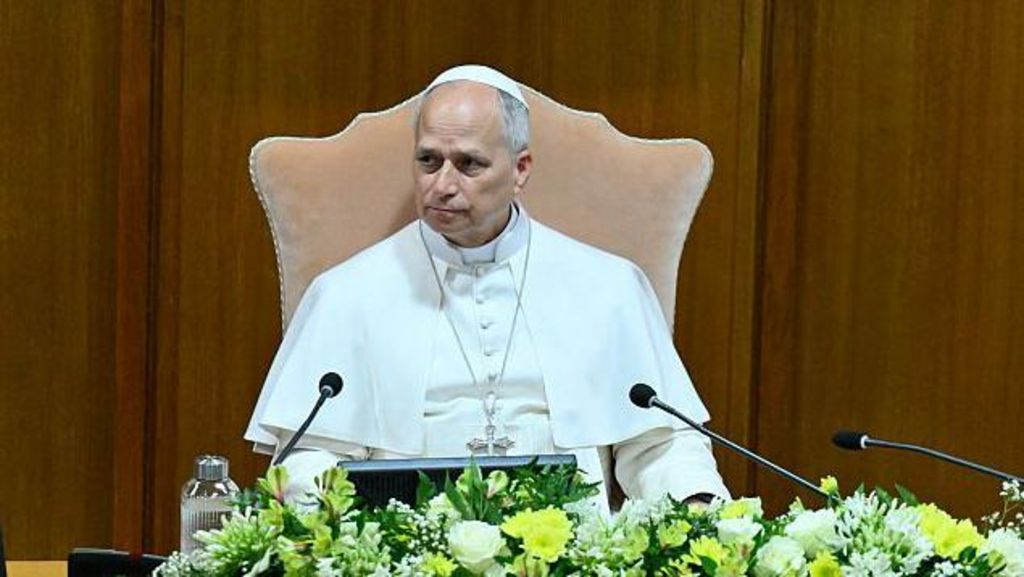
    The Vatican unveiled an extensive international travel itinerary for Pope Leo XIV on Wednesday, mapping out one of the most ambitious papal schedules in recent years for the first half of 2026. The pontiff will embark on significant journeys to Monaco, Spain, and four African nations: Algeria, Cameroon, Angola, and Equatorial Guinea.

    This announcement signals a new chapter in Leo XIV’s papacy following the conclusion of the 2025 Holy Year, during which he ministered to 33 million pilgrims in Rome. The 70-year-old pontiff, who assumed office in May 2025 as the first U.S.-born pope, has maintained a relatively stationary presence until now due to Jubilee commitments.

    The travel program commences with a one-day visit to Monaco on March 28, followed by an extensive 10-day African pilgrimage from April 13-23. This African journey represents one of the most extensive papal trips since Pope Francis’s 2024 tour of Southeast Asia. The Algeria stop holds particular significance for Leo XIV, given its deep connections to Saint Augustine of Hippo, the 5th-century theologian who inspired the pontiff’s religious order.

    In June, the pope will spend nearly a week in Spain (June 6-12), with expectations high for his presence in Barcelona on June 10 to commemorate the centenary of architect Antoni Gaudí’s death. This timing coincides with the recent completion of the Sagrada Familia basilica’s central tower, reaching its maximum height just last week.

    Concurrently, Pope Leo will undertake a grand tour of Italy beginning in May, featuring half a dozen one-day visits throughout the peninsula. On July 4, while the United States celebrates its 250th independence anniversary, the pontiff will be visiting the Italian island of Lampedusa—a symbolic gesture highlighting his focus on migration issues and peripheral communities.

    The Vatican confirmed that while additional travel to Peru, Argentina, and Uruguay is anticipated in the latter half of 2026, no visit to the United States is planned for this year. This travel pattern reflects Leo XIV’s background as former Augustinian superior Robert Prevost, who spent two decades as a missionary in Peru and developed a reputation for extensive travel during his leadership of the religious order.

  • Seven killed in Ukrainian drone attack on Russian factory

    Seven killed in Ukrainian drone attack on Russian factory

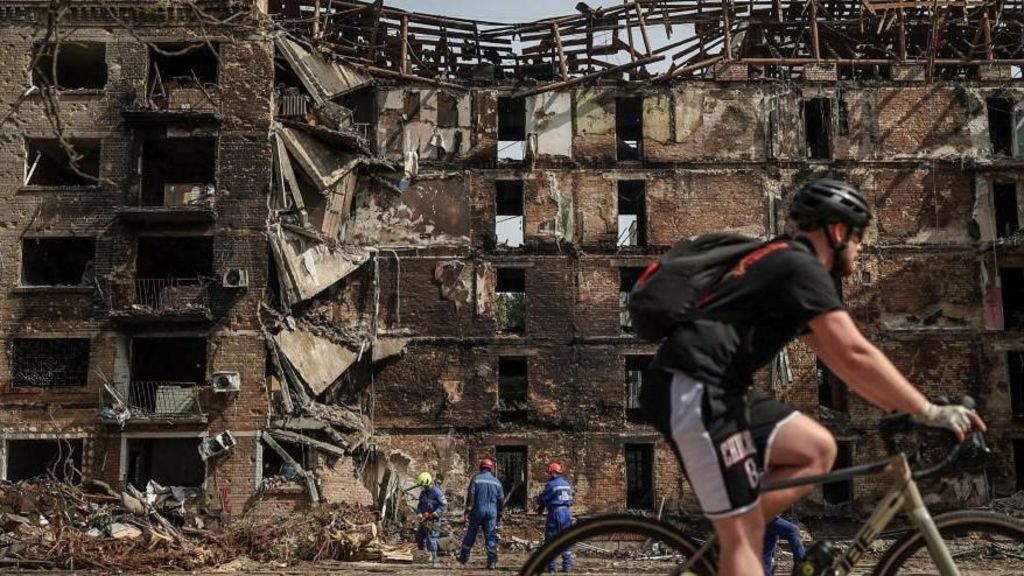
    A Ukrainian drone offensive has struck a civilian chemical facility in western Russia, resulting in significant casualties and raising environmental concerns. According to Russia’s Investigative Committee, approximately thirty unmanned aerial vehicles targeted a fertilizer production plant in the Smolensk region’s city of Dorogobuzh, located 290 kilometers from the Ukrainian border.

    The assault killed seven individuals and left at least ten others injured, marking one of the deepest penetrations into Russian territory since the conflict’s inception. Regional Governor Vasily Anokhin condemned the operation as a ‘barbaric terrorist attack’ by Ukrainian forces, emphasizing the plant’s civilian status despite its dual-use production capabilities.

    The targeted facility manufactures ammonium nitrate and nitric acid—components essential for agricultural fertilizers but also convertible into explosive materials. Emergency responders contained the resulting blaze, though authorities acknowledged potential toxic hazards by considering evacuation protocols for adjacent communities as a precautionary measure.

    This incident follows Ukraine’s expanding campaign against Russian energy infrastructure, including a recent drone strike on the Kaleykino oil pumping station in Tatarstan—over 1,200 kilometers from the border. That attack disrupted crude oil flows through the Druzhba pipeline network, forcing operator Transneft to reduce daily intake by 250,000 barrels and affecting supplies to Hungary and Slovakia.

    As the conflict enters its fifth year, military analysts observe Ukraine’s strategic shift toward long-range drone warfare targeting economic assets. Previous attacks on refineries prompted Moscow to implement gasoline export bans through 2025. Peace negotiations remain stagnant regarding Donbas sovereignty, though upcoming trilateral talks mediated by the United States may address prisoner exchanges, as indicated by Ukrainian President Volodymyr Zelensky.

  • Gucci criticised for ‘AI slop’ images ahead of major fashion show

    Gucci criticised for ‘AI slop’ images ahead of major fashion show

    Italian luxury fashion house Gucci has ignited significant controversy by deploying artificial intelligence to create promotional imagery for its upcoming Milan Fashion Week presentation. The AI-generated visuals, prominently featured across social media platforms, have drawn sharp criticism from users questioning the alignment between this technological approach and the brand’s celebrated commitment to ‘creativity and Italian craftsmanship.’

    One particularly discussed image features a glamorous older Italian woman adorned in classic 1976 Gucci attire, which prompted sarcastic commentary about the company’s apparent inability to source authentic human models. While clearly labeled as ‘created with AI,’ detractors have categorized these visuals as representative of ‘AI slop’—a term describing the flood of often low-quality synthetic content proliferating across digital platforms.

    The controversy emerges as Creative Director Demna Gvasalia prepares to unveil his latest vision on Friday’s runway. This incident marks neither Gucci’s inaugural venture into AI integration nor the industry’s broader exploration of generative technology. The Kering-owned brand previously commissioned digital artists to produce AI-generated content auctioned as NFTs through Christie’s, and released an AI-generated video last December depicting photographers literally falling over themselves to capture a model.

    Industry peers including Valentino and H&M have similarly experimented with AI tools, frequently framing these endeavors as creative exercises. However, Dr. Priscilla Chan, senior lecturer at Manchester Metropolitan University’s Fashion Institute, cautions that luxury brands risk significant reputational damage when implementing such technologies. While previous digital innovations often generated positive publicity, Dr. Chan notes AI currently carries heightened potential for negative backlash.

    Not all feedback has been critical, with some observers praising Gucci’s preservation of ‘Milano glam’ essence. Professional photographer Tati Bruening (known online as illumitati) offered nuanced perspective, suggesting limited, non-invasive AI applications—such as retouching or mood board creation—might coexist with traditional creative processes. Bruening alternatively proposed that Gucci might be intentionally provoking discourse about luxury’s definition in the AI era, potentially positioning the campaign as parody rather than pure marketing.

  • Champions League: Vinícius, Madrid set for feisty Benfica rematch and Italy heading for humiliation

    Champions League: Vinícius, Madrid set for feisty Benfica rematch and Italy heading for humiliation

    European football’s premier club competition is set for a dramatic conclusion to its playoff stage, with two dominant narratives capturing global attention: a racially charged controversy in Madrid and a potential historic collapse for Italian football.

    At the Santiago Bernabéu Stadium, Real Madrid enters its second-leg fixture against Benfica holding a narrow 1-0 aggregate advantage. The match, however, is shrouded in controversy following allegations from Brazilian superstar Vinícius Júnior that Benfica’s Gianluca Prestianni directed a racial slur at him during the first leg. The incident occurred after Vinícius celebrated his decisive goal near the corner flag. While Prestianni has vehemently denied the accusations, UEFA has imposed a provisional one-match ban, preventing him from participating. The suspended Benfica player has nevertheless traveled with the squad, ensuring a tense and emotionally charged atmosphere. Further compounding Benfica’s challenges, their manager and former Real Madrid coach, Jose Mourinho, will also serve a suspension after being dismissed late in the initial encounter.

    Simultaneously, Italian football stands on the precipice of an unprecedented humiliation. For the first time since the round of 16 format was reintroduced in the 2003-04 season, Serie A risks having zero representation in the knockout phase. The nation’s prospects look bleak; reigning champion Napoli failed to qualify for the playoffs altogether, while last season’s finalist, Inter Milan, suffered a shocking elimination at the hands of Norwegian underdogs Bodø/Glimt on Tuesday. The fate of Italian football now rests on the shoulders of Juventus and Atalanta, both facing monumental tasks to overturn significant deficits. Juventus trails 5-2 against Galatasaray, and Atalanta must overcome a 2-0 disadvantage against Borussia Dortmund.

    In other playoff action, defending champion Paris Saint-Germain maintains a 3-2 lead in its all-French clash with Monaco after a spectacular comeback in the first leg. The draw for the highly anticipated round of 16 is scheduled for Friday.

  • Zelenskyy says Ukrainian officials to meet Trump envoys in Geneva for more Russia talks

    Zelenskyy says Ukrainian officials to meet Trump envoys in Geneva for more Russia talks

    GENEVA – A high-level Ukrainian delegation is scheduled to engage in pivotal discussions with American representatives on Thursday, marking a significant diplomatic effort ahead of anticipated trilateral negotiations involving Russia. President Volodymyr Zelenskyy confirmed the meeting during a Wednesday media briefing, highlighting its importance within the broader context of ongoing conflict resolution efforts.

    Rustem Umerov, Secretary of Ukraine’s National Security and Defense Council, will lead discussions with key U.S. figures including Steve Witkoff, special envoy for former President Donald Trump, and Jared Kushner, Trump’s son-in-law. The Geneva meeting, confirmed by Umerov’s press secretary Diana Davytian, occurs alongside separate nuclear negotiations between the United States and Iran in the same diplomatic hub.

    This diplomatic engagement continues a pattern of U.S.-mediated peace initiatives that previously brought Russian and Ukrainian officials to negotiation tables in Abu Dhabi and Geneva earlier this year. Despite these efforts, substantial breakthroughs remain elusive as Russia’s comprehensive invasion approaches its fifth anniversary without resolution of fundamental disagreements.

    According to Zelenskyy, Thursday’s agenda will focus on developing a comprehensive postwar recovery framework for Ukraine and coordinating preparations for upcoming trilateral discussions with Moscow representatives. Additionally, Umerov has been authorized to explore potential prisoner exchange mechanisms during the talks.

    The diplomatic developments occur against a backdrop of continued military confrontation. Ukrainian forces have achieved notable advances along the 1,250-kilometer eastern front in recent months, described by the Institute for the Study of War as the most significant territorial gains since 2024. However, analysts note these advances face limitations due to personnel shortages and are unlikely to evolve into major offensive operations.

    Simultaneously, Ukraine has maintained its campaign of long-range drone strikes against military and infrastructure targets within Russian territory. These operations have drawn measured criticism from the U.S. State Department, particularly regarding attacks affecting American oil interests in Kazakhstan through strikes on the Russian port of Novorossiysk.

    The human cost of the conflict was further emphasized by recent casualties on both sides. Russian officials reported four fatalities and ten injuries from a Ukrainian drone strike on a Smolensk region fertilizer plant, while Ukrainian authorities confirmed four civilian deaths and a child injured from Russian drone attacks in Zaporizhzhia district.

    Zelenskyy reiterated Ukraine’s resilience during commemorations of the invasion’s fourth anniversary, asserting that Russian forces have neither defeated Ukraine nor broken the national spirit despite military advantages and sustained attacks on civilian areas.

  • Two teenagers killed in crash near Irish border

    Two teenagers killed in crash near Irish border

    A devastating road accident has resulted in the deaths of two adolescent males and left another teenager with serious injuries in County Donegal, Ireland. The fatal collision occurred near the Irish border on Tuesday night at approximately 11:15 PM local time in the village of St Johnston, situated approximately eight miles from Londonderry.

    According to Gardaí (Irish police), the incident involved a passenger car and a commercial lorry. Both passengers in the car succumbed to their injuries—one pronounced dead at the scene, while the other passed away at Altnagelvin Hospital in Derry shortly after. The vehicle’s driver, also believed to be in his late teens, was transported to Royal Victoria Hospital in Belfast with critical injuries. Authorities have confirmed no other individuals sustained injuries in the crash.

    In the aftermath of the tragedy, the R236 roadway remained closed throughout Wednesday to facilitate a comprehensive technical examination by Garda forensic collision investigators. Local traffic diversions were implemented to manage the closure while evidence collection continued.

    Law enforcement officials have issued a public appeal for witnesses to come forward with any relevant information. Specifically, investigators are seeking individuals who may have been traveling through the area between 10:45 PM and 11:45 PM on Tuesday night. Gardaí have additionally requested that motorists with potential video evidence—including dash-cam footage—make it available to assist with the ongoing investigation into the circumstances surrounding the collision.

  • The home of the ‘Mona Lisa’ has a new boss to steer the Louvre out of crisis after jewel heist

    The home of the ‘Mona Lisa’ has a new boss to steer the Louvre out of crisis after jewel heist

    The Louvre Museum in Paris, home to Leonardo da Vinci’s iconic Mona Lisa, has appointed seasoned art historian Christophe Leribault as its new director following the resignation of Laurence des Cars. This leadership transition comes amid multiple institutional crises that have plagued the world’s largest museum.

    The appointment, announced Wednesday by French government spokeswoman Maud Bregeon, places Leribault at the helm of an institution reeling from a brazen October heist of French crown jewels that exposed critical security vulnerabilities. The daylight theft represents one of the most high-profile museum robberies in recent memory.

    Beyond security concerns, the former royal palace faces mounting challenges including infrastructure decay, staff disputes, and financial irregularities. Recent revelations of a suspected decade-long ticket fraud operation potentially costing the museum €10 million ($11.8 million) have intensified pressure for institutional reform.

    The Louvre’s physical plant shows significant wear with reported water leaks damaging priceless collections, burst pipes near the Mona Lisa exhibition space, and aging facilities struggling under the strain of mass tourism. Staff walkouts over chronic understaffing, visitor overcrowding, and controversial ticket price increases for non-European visitors have further compounded operational difficulties.

    Leribault brings substantial administrative experience from his current role directing the Palace of Versailles, where he managed an annual budget of approximately €170 million ($200 million). His previous leadership at Paris’ Orsay Museum and oversight of Versailles during its role as an Olympic equestrian venue for the 2024 Summer Games demonstrate his capability with large-scale cultural operations.

    Bregeon emphasized that Leribault will spearhead “crucial projects for the institution’s future,” including security enhancements, modernization initiatives, and the ambitious “Louvre New Renaissance” renovation plan championed by President Emmanuel Macron. Unveiled in January 2025, this comprehensive decade-long modernization project aims to address systemic issues created by overwhelming visitor numbers.

    The renovation blueprint includes a new Seine River entrance to alleviate congestion at I.M. Pei’s pyramid, expanded underground spaces, and a dedicated timed-access chamber for the Mona Lisa—all designed to improve visitor flow and experience. With an estimated cost of €700-800 million ($826-944 million), funding will come from ticket revenues, state support, private donations, and income from Louvre Abu Dhabi.

    The Culture Ministry highlighted Leribault’s “extensive experience at the helm of major institutions” and stated his priorities will include strengthening security protocols, ensuring building and collection safety, and restoring institutional trust.