标签: Europe

欧洲

  • New travel rules for UK visitors kick in – how are you affected?

    New travel rules for UK visitors kick in – how are you affected?

    The United Kingdom has officially implemented its Electronic Travel Authorisation (ETA) system as of February 25th, fundamentally altering entry procedures for visitors from 85 visa-exempt nations including the United States and Australia. This digital pre-authorization requirement represents the most significant overhaul of UK border protocols in years.

    Designed as a digital travel permit, the ETA costs £16 per application and remains valid for two years or until passport expiration, permitting multiple visits of up to six months each for tourism, business, or short-term study. The Home Office promotes the system as enhancing border security through advanced digital verification while streamlining immigration processing. Travel carriers now utilize government-provided tools to electronically validate permissions before boarding.

    However, the transition has exposed particular complications for dual nationals holding both British and foreign citizenship. Unlike regular visitors, these individuals cannot obtain an ETA and must instead present either a British passport or a £589 Certificate of Entitlement attached to their foreign passport when returning to the UK. This requirement has created urgent challenges for those who previously traveled on non-British passports, with many reporting difficulties obtaining necessary documentation within the implementation timeframe.

    While the system underwent a soft launch in October 2023 with relaxed enforcement, mandatory compliance began this week. Application processing typically occurs within minutes through official mobile apps, though authorities recommend applying at least three business days before travel. Notably, the ETA does not guarantee entry, as border officials retain authority to deny admission even with approved authorization.

    The UK joins several nations including Canada and the United States in implementing electronic travel authorization systems, though fee structures vary significantly across jurisdictions.

  • Courting controversy and befriending Trump – Fifa’s ‘unlikely saviour’

    Courting controversy and befriending Trump – Fifa’s ‘unlikely saviour’

    A transformative yet divisive era in global football governance marks its tenth anniversary as Gianni Infantino completes a decade presiding over FIFA. Assuming leadership amidst unprecedented institutional crisis following Sepp Blatter’s corruption-tainted resignation, the Swiss-Italian administrator inherited a governing body facing a $550 million financial deficit and catastrophic credibility loss.

    The restoration journey commenced with radical financial redistribution policies. Infantino’s flagship FIFA Forward program revolutionized funding mechanisms, injecting $2.8 billion across 211 member associations through 1,600 development projects. This financial engineering produced staggering results: projected revenues of $13 billion for the 2023-2026 cycle, representing monumental growth from the precarious situation inherited in 2016.

    This economic renaissance however emerges alongside escalating controversies. The expansion of flagship tournaments—including the 48-team World Cup format and revamped Club World Cup—has drawn criticism from player unions and European stakeholders. Infantino’s unorthodox diplomatic approach has manifested through close ties with controversial figures, most notably U.S. President Donald Trump who received FIFA’s inaugural Peace Prize despite widespread skepticism.

    Geopolitical tensions peaked when European federations staged symbolic walkouts protesting Infantino’s perceived prioritization of political relationships over football governance. The awarding of the 2034 World Cup to Saudi Arabia, coupled with Qatar 2022’s human rights controversies, has intensified scrutiny about ethical consistency within FIFA’s decision-making processes.

    Infantino’s personal leadership style remains equally polarizing. His theatrical pronouncements—including the much-criticized “Today I feel Qatari” speech—contrast with substantial financial achievements for developing football nations. A 33% salary increase to $2.9 million, while independently determined, ironically places his compensation near Blatter’s disputed earnings level.

    Despite European criticism, Infantino maintains impregnable support from Asia and Africa, regions that have benefited most from financial redistribution. With term limit interpretations potentially enabling extended leadership, the football world contemplates a future where economic prosperity increasingly contends with ethical governance questions.

  • Hungary’s Orbán stakes his reelection on anti-Ukraine message

    Hungary’s Orbán stakes his reelection on anti-Ukraine message

    BUDAPEST, Hungary — As Hungary approaches a pivotal April 12 election, Prime Minister Viktor Orbán is leveraging an aggressive disinformation campaign to redirect voter attention from domestic economic concerns toward neighboring Ukraine. With his right-wing Fidesz party trailing behind center-right challenger Péter Magyar in independent polls, Orbán’s government has launched a taxpayer-funded media blitz featuring AI-generated imagery of Ukrainian President Volodymyr Zelenskyy depicted alongside European officials in what appears to be a demand for financial support.

    The campaign’s central message—”We won’t pay!”—directly challenges European Union efforts to sustain Ukraine amid Russia’s ongoing invasion. Orbán positions himself as protecting Hungarian interests against what he characterizes as EU warmongering, suggesting alignment with Ukraine could economically cripple the nation and force Hungarian youth into military conscription.

    This rhetoric escalated Monday when Hungary blocked the EU’s 20th sanctions package against Russia and vowed to veto further pro-Ukraine policies until resumed oil shipments via Ukraine are guaranteed. Orbán’s administration claims Russian oil disruptions resulted from Ukrainian actions, though Kyiv attributes the January pipeline damage to Russian drone strikes.

    Analysts note Orbán’s strategy mirrors previous successful election tactics where external threats were emphasized over domestic shortcomings. András Rácz, Russia expert at the German Council on Foreign Relations, observed: “Populists often define an imaginary enemy and offer protection. Ukraine has been ideal from this perspective.”

    The campaign emerges amid Fidesz’s weakening position following political scandals, including a presidential pardon for a child sexual abuse case accomplice that triggered resignations. Challenger Magyar, a 44-year-old former Fidesz insider, has capitalized on these controversies while campaigning on economic issues, anti-corruption measures, and restoring Hungary’s Western alliances.

    Despite government-controlled media amplifying anti-Ukraine narratives, dissenting voices emerged during recent Budapest demonstrations where hundreds commemorated the invasion’s anniversary. Liberal Mayor Gergely Karácsony condemned Orbán’s approach as “a betrayal not only of Ukraine, but of Hungary’s national interest,” while Ukrainian students in Hungary criticized the billboards as politically motivated misinformation funded by Hungarian taxpayers.

  • Ukrainian envoy says US raised concerns about strikes aimed at Russia that impacted US oil interests

    Ukrainian envoy says US raised concerns about strikes aimed at Russia that impacted US oil interests

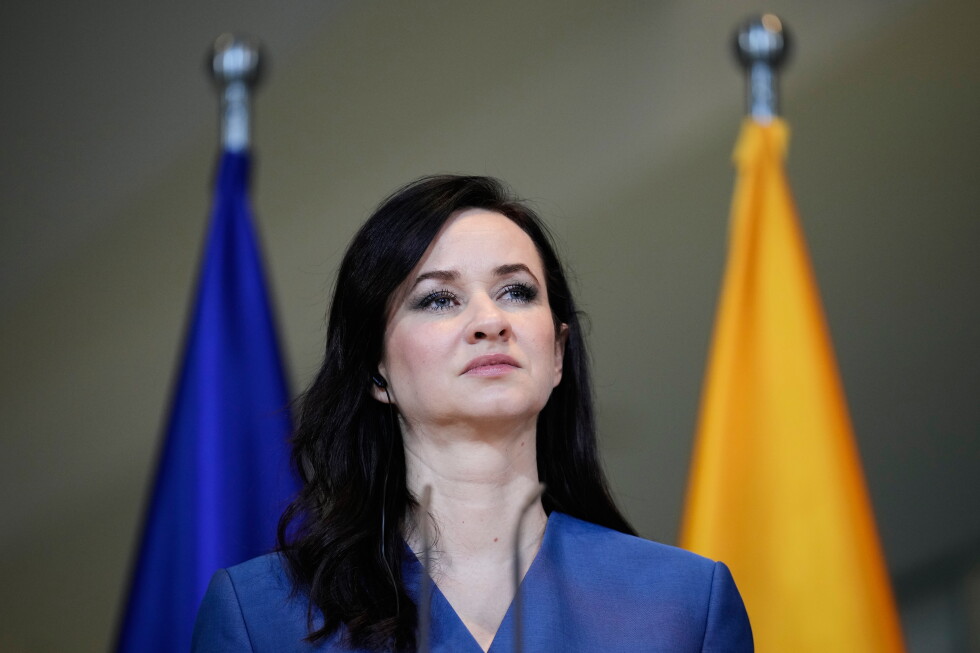
    In a significant diplomatic development, Ukraine’s top envoy to Washington revealed on Tuesday that the U.S. State Department has conveyed concerns regarding Ukrainian strikes on Russia’s Novorossiysk port in the Black Sea region. Ambassador Olga Stefanishyna clarified that these communications specifically addressed the impact on American economic interests rather than attempting to discourage Ukraine from targeting Russian military and energy infrastructure.

    The timing of this diplomatic exchange coincides with the fourth anniversary of Russia’s full-scale invasion of Ukraine. The Caspian Pipeline Consortium, which operates a critical oil pipeline from Kazakhstan to Novorossiysk, has been affected by these military operations. This infrastructure handles substantial crude exports from major Kazakh fields where U.S. energy giants Chevron and ExxonMobil maintain significant financial stakes.

    Meanwhile, the international community demonstrated mixed responses to the ongoing conflict. The G7 nations issued a strong statement reaffirming unwavering support for Ukraine’s territorial integrity and sovereignty, while simultaneously praising President Trump’s peace negotiation efforts. Conversely, the United Nations General Assembly witnessed the U.S. among 51 countries abstaining from a resolution supporting Ukraine, with American diplomats arguing that references to Ukrainian sovereignty might complicate peace talks.

    Russian President Vladimir Putin continues to maintain maximalist demands during U.S.-brokered negotiations, insisting Ukrainian forces withdraw from four regions that Moscow has illegally annexed. President Trump has characterized Russian control of Ukrainian territory as inevitable and has pressured President Zelenskyy to negotiate a settlement. Despite these diplomatic pressures, Ukrainian forces have demonstrated remarkable resilience, with independent analyses indicating Russia captured less than 1% of Ukrainian territory over the past year, though Moscow still controls approximately 20% of the country.

    As President Trump prepared to deliver his State of the Union address, Ambassador Stefanishyna expressed hope that Ukrainian concerns would be heard, emphasizing that the Ukrainian people continue to rely on American leadership despite the complex and tragic circumstances of the conflict.

  • Norway’s King Harald admitted to a hospital on the Spanish island of Tenerife

    Norway’s King Harald admitted to a hospital on the Spanish island of Tenerife

    OSLO, Norway — Norway’s Royal Palace confirmed Tuesday that King Harald V has been hospitalized while on a private winter retreat in Spain’s Canary Islands. The 89-year-old monarch, who recently celebrated his birthday on February 24, was admitted to a medical facility on Tenerife Island Tuesday evening.

    According to the official palace statement, the world’s oldest reigning sovereign is receiving treatment for dehydration and an unspecified infection. Medical staff have reported the king to be in stable condition despite these health complications. The royal household emphasized that appropriate medical protocols are being followed to ensure His Majesty’s recovery.

    In response to the development, the king’s personal physician is en route to Tenerife to oversee the monarch’s care. The palace has committed to providing a comprehensive health update following the doctor’s medical assessment on Wednesday.

    King Harald and Queen Sonja were enjoying a scheduled winter vacation on the Spanish island when the health incident occurred. The Norwegian monarch has held the throne since January 1991, making his reign one of Europe’s longest among current sovereigns. The royal household has expressed gratitude for the quality of care being provided by Spanish medical authorities.

  • What to know about UK politician Peter Mandelson’s ties to his ‘best pal,’ the late Jeffrey Epstein

    What to know about UK politician Peter Mandelson’s ties to his ‘best pal,’ the late Jeffrey Epstein

    LONDON — Prominent British political figure Peter Mandelson, former UK ambassador to the United States, faces a criminal investigation regarding alleged misconduct in public office connected to his association with convicted sex offender Jeffrey Epstein. The investigation represents a significant development in the ongoing fallout from the release of over three million pages of Epstein-related documents by the U.S. Justice Department.

    Mandelson was apprehended at his London residence near Regent’s Park on Monday, marking the second high-profile arrest in connection with the Epstein case following the detention of Prince Andrew just four days prior. Authorities are examining whether Mandelson improperly shared sensitive government information with Epstein during his tenure as a senior minister in 2009, including confidential discussions about potential asset sales following the 2008 financial crisis and efforts to reduce banker bonus taxes.

    Financial records indicate Epstein may have transferred $75,000 to Mandelson or his husband between 2003 and 2004, though Mandelson claims no recollection of such transactions and questions the authenticity of the documentation.

    After nine hours of interrogation, Mandelson was released early Tuesday without formal charges. His legal representatives from Mishcon De Reya characterized the arrest as predicated on a “baseless suggestion” of flight risk, emphasizing Mandelson’s commitment to cooperating fully with investigators to clear his name.

    The scandal has created substantial political repercussions for Prime Minister Keir Starmer, who appointed Mandelson as Washington ambassador despite prior warnings about his Epstein connections. Starmer dismissed Mandelson in September after evidence emerged of continued communication with Epstein following his 2008 conviction. Mandelson subsequently resigned from the Labour Party and his House of Lords seat to prevent “further embarrassment,” though he retains his Lord title.

    The controversy has also impacted Mandelson’s commercial interests, with his lobbying firm Global Counsel entering bankruptcy proceedings after clients severed ties due to the Epstein association. Opposition figures have called for Starmer’s resignation over his judgment in the appointment, though the Prime Minister has maintained that Mandelson deceived him about the extent of his Epstein connections.

  • Ukraine remembers its dead as war enters a fifth year

    Ukraine remembers its dead as war enters a fifth year

    Ukraine solemnly commemorated the fourth anniversary of Russia’s full-scale invasion this week, honoring the fallen in a conflict with no end in sight. The nation observed a moment of silence at 10:00 local time, bringing Kyiv to a standstill as citizens gathered in Maidan Square and other memorial sites across the country.

    President Volodymyr Zelensky delivered a defiant address from the presidential palace’s subterranean corridors, asserting that “Ukraine never chose this war” while emphasizing the preservation of national sovereignty. “We have defended our independence, we have not lost our statehood,” he declared, acknowledging the staggering human cost while reaffirming Ukraine’s resilience.

    The military situation remains dire as the conflict enters its fifth year. Russian forces currently control approximately 20% of Ukrainian territory, though Moscow has failed to capture the entire Donbas region as initially intended. Kremlin spokesman Dmitry Peskov acknowledged that Russia’s war aims “haven’t been fully achieved yet,” while blaming Western support for Ukraine for escalating the conflict into a “confrontation between Russia and the West.”

    International support was visibly demonstrated as Zelensky hosted European leaders including Finnish President Alexander Stubb, Swedish Prime Minister Ulf Kristersson, and European Commission President Ursula von der Leyen. The so-called “Coalition of the Willing,” led by Britain and France and comprising approximately 35 nations, convened to discuss continued support, with some members expressing willingness to deploy troops to enforce any potential ceasefire.

    UK Prime Minister Keir Starmer, participating via video link, challenged the perception of Russian dominance, noting that Moscow had gained only “0.8% of land in Ukraine at a terrible cost to themselves of half a million losses” over the past year. Conversely, French President Emmanuel Macron expressed skepticism about near-term peace prospects, stating there was “no willingness on the Russian side to have a robust and solid peace.”

    The human toll continues to mount dramatically. BBC investigations have identified over 186,000 Russian soldiers killed, while UK defense estimates suggest total Russian casualties may reach 1.25 million. Ukrainian losses remain contested, with Zelensky acknowledging 55,000 battlefield deaths while other sources suggest the figure could approach 200,000.

    Civilian infrastructure remains under constant threat, with Ukraine urgently requesting additional Patriot interceptor missiles from the US after winter bombardments depleted defensive capabilities. The conflict has displaced millions and created Europe’s largest humanitarian crisis since World War II, with no diplomatic breakthrough appearing imminent despite multiple negotiation attempts.

  • Louvre museum director resigns months after high-profile heist

    Louvre museum director resigns months after high-profile heist

    The director of Paris’s renowned Louvre Museum has stepped down from her position months after a spectacular theft of France’s crown jewels from one of the world’s most visited cultural institutions. Laurence des Cars tendered her resignation to President Emmanuel Macron, who characterized the move as “an act of responsibility” according to French media reports.

    The audacious heist occurred on the morning of October 19 last year when perpetrators utilized a stolen vehicle equipped with a mechanical lift to access the Galerie d’Apollon (Gallery of Apollo) via a balcony overlooking the River Seine. Although authorities have apprehended four primary suspects, the eight invaluable jewelry pieces, valued at approximately €88 million (£76 million, $104 million), remain missing. Among the stolen items was a diamond and emerald necklace originally presented by Emperor Napoleon to his wife.

    During their escape, the thieves dropped Empress Eugenie’s 19th-century diamond-studded crown, resulting in significant damage. Earlier this month, the Louvre released the first images of the damaged crown since the incident, noting it was “nearly intact” and could undergo complete restoration.

    In the aftermath of the robbery, des Cars acknowledged critical vulnerabilities in the museum’s security infrastructure, describing the perimeter CCTV system as both weak and “aging.” The only camera monitoring the exterior wall where the breach occurred was pointed away from the balcony providing access to the jewel gallery.

    Despite hosting over 8.7 million visitors annually, the museum has faced challenges in modernizing its security apparatus. Des Cars, who assumed leadership of the Louvre in 2021, had previously advocated for doubling the number of surveillance cameras to enhance protection.

    A parliamentary investigation into the security lapses is currently underway, with a preliminary report citing “systemic failures” that facilitated the break-in. The full findings are scheduled for release in May. The museum has additionally encountered other operational challenges recently, including a suspected ticket fraud scheme and significant water damage.

  • What to know about the charge that former Prince Andrew and Peter Mandelson could face

    What to know about the charge that former Prince Andrew and Peter Mandelson could face

    LONDON — Britain’s centuries-old misconduct in public office statute faces mounting scrutiny as two prominent figures—former Prince Andrew (now Andrew Mountbatten-Windsor) and ex-Business Secretary Peter Mandelson—undergo criminal investigations regarding their associations with convicted sex offender Jeffrey Epstein.

    Both individuals, questioned within days of each other by metropolitan police, are being investigated for allegedly leaking sensitive government information to the financier. Though neither has been formally charged, the high-profile cases have exposed fundamental flaws in the medieval-era legal framework governing public officials’ conduct.

    Recently unsealed U.S. government documents suggest Mountbatten-Windsor, during his tenure as UK’s special trade representative (2001-2011), provided Epstein with confidential trade reports. Mandelson, a veteran Labour Party politician and former ambassador to Washington, allegedly shared internal government documents with Epstein and promised to lobby for reduced banker bonus taxes during his ministerial term approximately 15 years ago.

    The Crown Prosecution Service defines misconduct in public office as “serious willful abuse or neglect of the power or responsibilities of the public office held.” Conviction carries a potential life sentence, yet legal experts emphasize the offense remains notoriously difficult to prove due to its vague terminology and high evidentiary thresholds.

    Particular challenges exist in Mountbatten-Windsor’s case, where prosecutors must first establish whether his unsalaried trade envoy role constituted a “public office.” Additionally, investigators must demonstrate willful misconduct rather than mere negligence, and prove actions were so severe they fundamentally abused public trust.

    The Law Commission, an independent legal body, has repeatedly called for reforming what it describes as “unhelpfully vague” legislation. Critics note the offense has historically targeted mid-level officials like police and prison officers rather than senior politicians or high-ranking officials.

    Both subjects were released following questioning, with legal analysts suggesting charges remain distant. Marcus Johnstone of PCD Solicitors noted: “The threshold is high: conduct must be so far below acceptable standards that it affronts the office’s standing. We remain considerably distant from potential prosecution.”

  • Dortmund criticizes police actions against fans going to Italy for Champions League match

    Dortmund criticizes police actions against fans going to Italy for Champions League match

    German football club Borussia Dortmund has issued a formal protest against what it describes as “disproportionate” police interventions preventing its supporters from traveling to Italy for the critical Champions League playoff match against Atalanta. The club expressed astonishment at the unprecedented scale of security measures implemented by authorities, noting such intensive protocols had never been encountered during previous international away fixtures.

    The controversy emerged as German police instituted travel bans against approximately 300 identified Dortmund fans over the weekend, with Italian law enforcement simultaneously conducting visits to supporters who had already arrived in Bergamo. While some initial prohibitions were successfully challenged through expedited legal proceedings, the widespread security operations created insurmountable barriers for many fans attempting to reach the match venue.

    In response to these developments, Südtribune Dortmund, an umbrella organization representing multiple fan groups, announced its collective decision to abstain from attending the match in protest against what it termed “flimsy reasons” for the travel restrictions. This voluntary boycott compounds the situation created by the official bans.

    Borussia Dortmund, which maintains a 2-0 aggregate lead from the first leg, officially registered its disappointment that loyal supporters would be absent from the decisive playoff match due to what the club considers questionable administrative actions by German and Italian authorities. The club has requested comprehensive clarification regarding the legal foundations and operational rationale behind these security measures.