
Claudia Cardinale, the legendary Tunisian-born Italian actress celebrated for her roles in cinematic masterpieces such as *The Leopard*, *8 ½*, and *The Pink Panther*, has died at the age of 87. Her passing occurred in Nemours, France, surrounded by her children, as confirmed by her agent, Laurent Savry. Cardinale’s illustrious career spanned six decades, during which she became a symbol of Italian cinema’s golden era, collaborating with iconic directors like Federico Fellini and Luchino Visconti. Born in Tunisia in April 1938 to Sicilian parents, Cardinale’s journey to stardom began when she won a beauty contest at 16, earning her the title of ‘the most beautiful Italian woman in Tunis.’ This victory led her to the Venice Film Festival, where she was discovered by filmmakers. Despite her initial reluctance to pursue acting, she eventually embraced the craft, driven by a desire for independence and financial stability. Her early career was marked by personal challenges, including a traumatic assault and the secret birth of her son, Patrick, whom she initially introduced as her younger brother. Cardinale’s unique multilingual background initially posed challenges in Italian cinema, as her accent led to her voice being dubbed by other actors. However, her breakthrough came in 1963 with her roles in Fellini’s *8 ½* and Visconti’s *The Leopard*. She later ventured into Hollywood, starring in *The Pink Panther* and *Once Upon a Time in the West*, working alongside legends like Henry Fonda and Charles Bronson. Cardinale’s career was also marked by her advocacy for women’s rights, earning her the title of UNESCO Goodwill Ambassador in 2000. She continued acting into her 80s, leaving behind a legacy of grace, resilience, and artistic brilliance. Italy’s Culture Minister, Alessandro Giuli, hailed her as ‘one of the greatest Italian actresses of all time,’ embodying ‘Italian grace.’
标签: Europe
欧洲
-
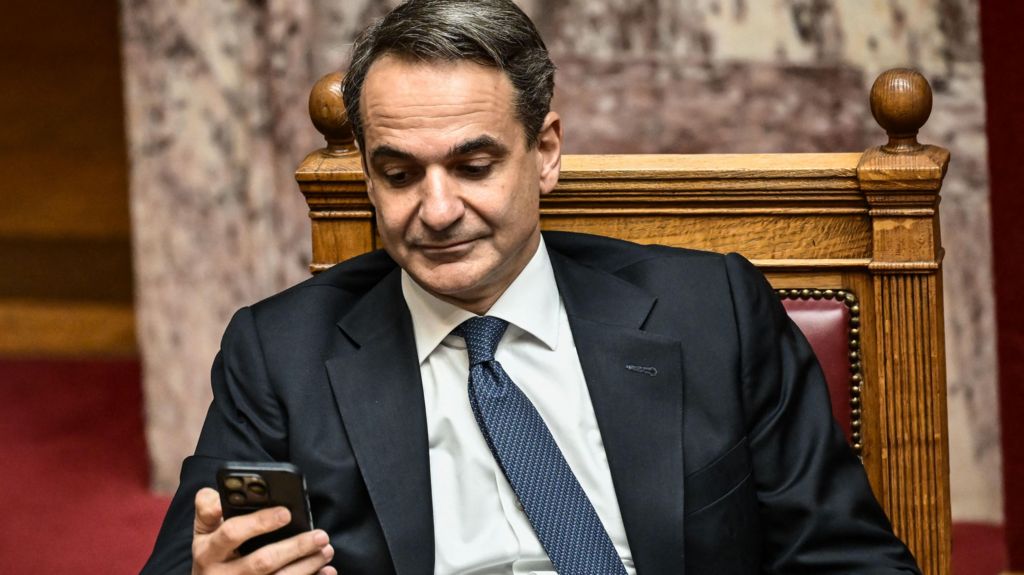
Phone spyware scandal in Greece moves to court as critics claim cover-up
The unfolding saga of Greece’s spyware scandal, often likened to a modern-day Watergate, has sent shockwaves through the nation’s political and judicial systems. At the heart of the controversy is the use of Predator spyware, developed by the Athens-based Israeli company Intellexa, which allegedly targeted the mobile phones of government ministers, senior military officers, judges, and journalists. Prime Minister Kyriakos Mitsotakis has labeled the incident a scandal, yet no government officials have faced charges in court, leading critics to accuse the administration of a cover-up.
-
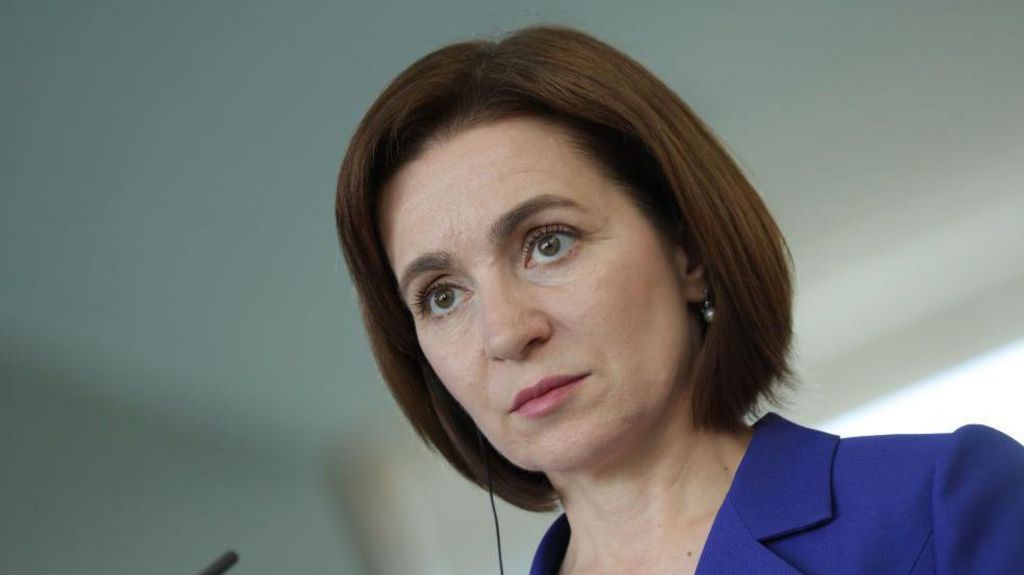
Kremlin threatening Moldova’s independence, president warns ahead of key vote
Moldovan President Maia Sandu has issued a stark warning about the threats to her country’s independence and European aspirations, as authorities arrested dozens of individuals allegedly involved in a Russian-backed plot to incite violence. The arrests, which occurred just days before pivotal parliamentary elections, included the seizure of weapons and explosives in nationwide raids. Authorities claim that some of the 74 detainees received training in Serbia from Russian instructors, including firearms instruction. President Sandu accused the Kremlin of investing heavily in efforts to destabilize Moldova through violence, disinformation, and fear, asserting that Russia views Moldova as a territory rather than a sovereign nation. She emphasized Moldova’s determination to resist such interference, declaring, ‘Moldova is our home. And our home is not for sale.’ Pro-Russian parties, however, have accused Sandu of attempting to intimidate them and influence the election outcome. Sandu has urged her supporters to participate actively in the elections, where pro-Russian forces are poised to challenge the pro-EU status quo. The ruling Party of Action and Solidarity (PAS), led by Sandu, faces significant risks of losing its majority. A high voter turnout, particularly among the diaspora, is seen as crucial for maintaining Moldova’s pro-European trajectory. Moldova, which declared independence from the USSR over 30 years ago, has a significant Russian-speaking population and a breakaway region, Transnistria, supported by Moscow. Despite Russia’s lingering influence, Sandu has pursued EU integration, including a constitutional referendum last year that narrowly endorsed EU accession. However, the referendum was marred by evidence of Russian interference, including vote-buying. Analysts warn that Russia may resort to violence if pro-EU forces prevail in the elections. Recent reports from Bloomberg and the BBC have uncovered extensive Russian plans to sow unrest and spread disinformation, further complicating Moldova’s political landscape. Russia’s SVR intelligence service has even accused European countries of planning to falsify election results, a claim dismissed as baseless by experts. As Moldova braces for a high-stakes election, the nation’s future hangs in the balance between European integration and Russian influence.
-
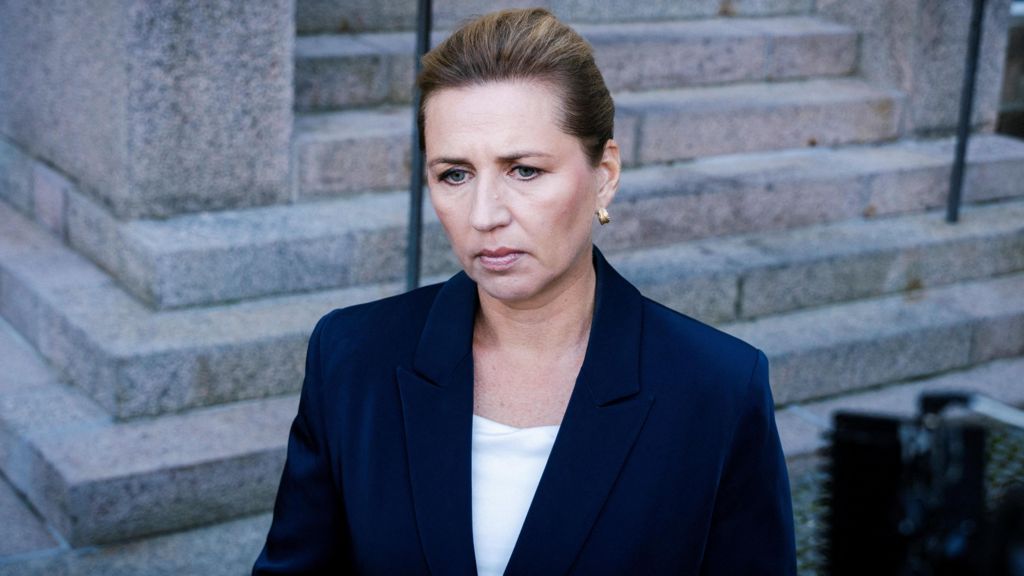
Russia’s involvement in drone sightings cannot be ruled out, Danish PM says
Denmark’s Prime Minister Mette Frederiksen has labeled the drone incursion that disrupted Copenhagen Airport on Monday night as “the most severe attack on Danish infrastructure so far.” The incident, which forced the closure of Kastrup Airport for several hours, was described as an attempt to “disrupt, create unrest, and test the limits” of Denmark’s defenses. Frederiksen drew parallels between this event and recent Russian drone incursions in Poland, Romania, and Estonia, suggesting a broader pattern of destabilization. While Kremlin spokesman Dmitry Peskov dismissed the allegations as “unfounded,” Danish intelligence warned of a “high threat of sabotage.” Flemming Drejer, director of operations at Denmark’s intelligence service PET, noted that the motive may have been to “stress us out and see how we react.” Around 20,000 passengers were affected by the airport closure, which resumed operations after midnight. Danish police described the drone operators as a “capable actor” but have yet to identify their origin. In Norway, Oslo Airport also faced a temporary closure due to suspected drone activity, with 14 flights diverted. Norwegian Prime Minister Jonas Gahr Store condemned Russia’s repeated airspace violations in 2025, emphasizing that such actions are “not acceptable.” The incidents have heightened tensions in Europe, with NATO bolstering its eastern flank by deploying troops and fighter jets from member states, including the UK, France, Germany, and Denmark. The alliance has also warned of a “wider pattern of increasingly irresponsible Russian behavior” following recent incursions into Poland, Romania, and Estonia. As the conflict in Ukraine continues, NATO members like Poland and Sweden have vowed to shoot down any unauthorized objects in their airspace, underscoring the growing security challenges in the region.
-
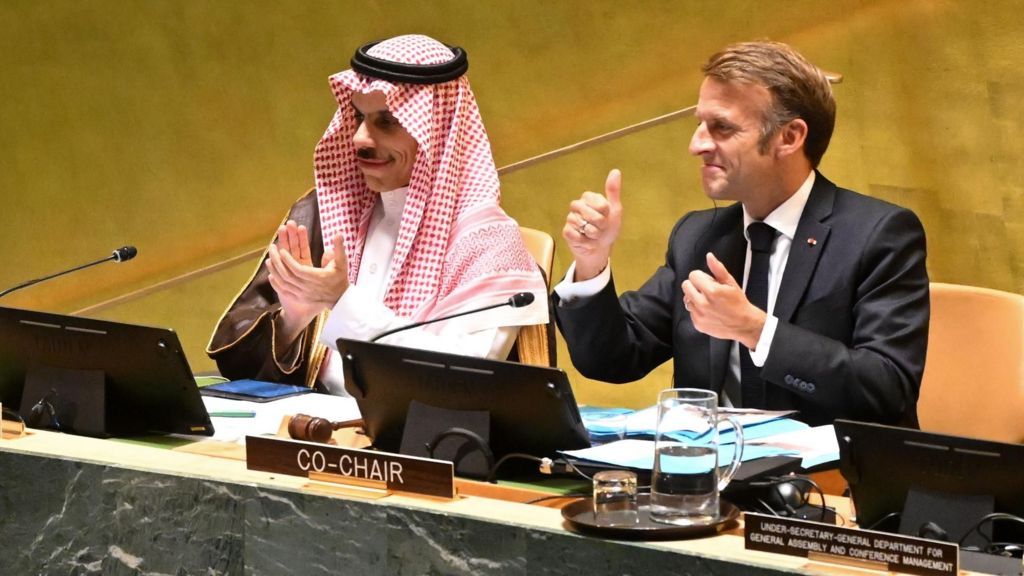
European recognition of Palestinian state shows US still only power that counts
In a landmark move, France and Britain have officially recognized the state of Palestine at the United Nations, marking a pivotal moment in the century-long Israeli-Palestinian conflict. This unprecedented decision, co-chaired by French President Emmanuel Macron and supported by Saudi Arabia, underscores the growing belief among European powers that the conflict has reached a critical juncture requiring bold diplomatic action. Macron, addressing the UN conference in New York, emphasized that “right must prevail over might,” condemning both Israel and Hamas for the ongoing catastrophe in Gaza. The initiative aims to sustain the two-state solution, seen as the only viable path to a fair and shared future for Israelis and Palestinians. UN Secretary-General António Guterres warned that the alternative—a one-state solution—would result in Israeli domination and the subjugation of Palestinians, a scenario he deemed unjustifiable. Israel, however, views the conference and the recognition of Palestine by several nations as a reward for Hamas following its October 2023 attack and hostage-taking. Israeli ministers are considering annexing parts of the occupied West Bank, effectively nullifying the possibility of a Palestinian state. The Trump administration has rejected the European approach, further deepening the rift between Washington and its European allies. Despite the lack of U.S. support, European leaders argue that their strategy offers a diplomatic alternative to the ongoing violence, which has claimed countless lives and left Gaza in ruins. The conference, also led by Saudi Arabia and backed by the Arab League, seeks to exert pressure on Hamas to disarm and relinquish its leadership role, while keeping the door open for normalization of relations between Israel and Saudi Arabia. However, the absence of coordinated efforts among key nations and the Trump administration’s opposition highlight the challenges ahead. Macron and UK Prime Minister Keir Starmer invoked their countries’ colonial legacies in the Middle East, acknowledging the historical recognition of Israel and now advocating for the equal right of Palestinians to statehood. While Palestinians welcome the European recognition, they remain aware that true statehood hinges on the support of the United States, the global superpower of today.
-
Copenhagen and Oslo airports forced to close temporarily due to drone sightings
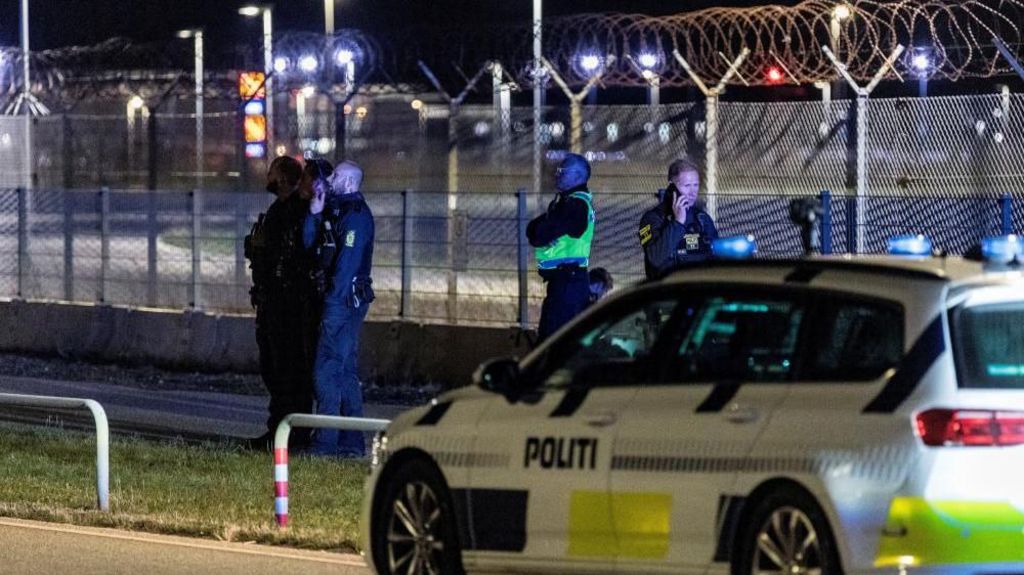
Major airports in Denmark and Norway were temporarily shut down on Monday night following unidentified drone sightings, causing significant disruptions to air travel. Copenhagen Airport in Denmark and Oslo Airport in Norway were both forced to suspend operations for nearly four hours, impacting approximately 20,000 passengers. Danish authorities reported that two to three large drones were observed flying near Copenhagen Airport, prompting the activation of armed forces. However, police emphasized there was no evidence suggesting the drones intended to cause harm, speculating instead that the operator aimed to ‘show off.’ Both airports resumed operations by early Tuesday morning. Investigations are ongoing, with Danish police implementing unspecified measures to address the incident. Meanwhile, Norwegian authorities confirmed a drone sighting near Oslo Airport, leading to similar airspace closures. Ukrainian President Volodymyr Zelensky referenced a ‘Russia’s violation’ of NATO airspace in Copenhagen on September 22, though no official attribution has been made by EU or NATO leaders. Flight-tracking website Flightradar24 reported at least 35 flights bound for Copenhagen were diverted due to the closure. Both countries are now assessing the security implications of these incidents.
-
Clashes break out as Italians strike demanding action over Gaza
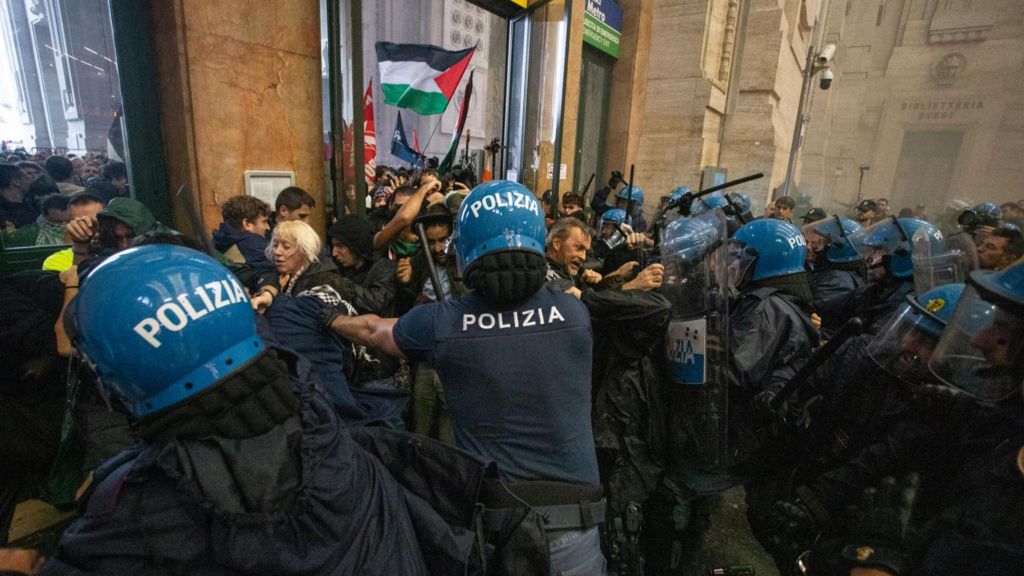
Italy witnessed widespread protests on Monday as thousands of citizens rallied in solidarity with Palestinians, coordinated by trade unions across the country. The demonstrations, marked by clashes with police, were particularly intense in Milan and Rome, with around 60 officers reported injured near Milan’s central station. Protesters called for a ceasefire in Gaza and burned a U.S. flag, while fringe groups engaged in violent confrontations, throwing stones and smoke bombs at law enforcement. The unrest disrupted public transport, shut down key metro lines, and blocked major ports in Livorno and Genoa. University students in Turin and Bologna also joined the protests, barricading lecture halls. Milan Mayor Giuseppe Sala condemned the vandalism, stating it undermined the cause of Gaza. Prime Minister Giorgia Meloni, who has faced criticism for her stance on Gaza, labeled the violence as shameful and counterproductive. Meanwhile, France’s President Emmanuel Macron announced the formal recognition of a Palestinian state, describing it as a necessity for peace. This move, following similar decisions by the UK, Canada, and Australia, was met with backlash from Israel, which denounced it as a reward for Hamas. Macron’s decision, supported by Belgium, Malta, and Luxembourg, was hailed by French Foreign Minister Jean-Noël Barrot as a diplomatic victory. However, Italy and Germany, key European powers, have not followed suit. The protests and diplomatic shifts highlight the deepening divide over the Israel-Gaza conflict in Europe.
-

Emil the Elk caught after long summer on the loose in Central Europe
A remarkable elk, affectionately named Emil, who captivated Central Europe with his extensive travels this summer, has been safely captured and released by Austrian wildlife officials. The young male elk was tranquilized on Monday near the village of Sattledt in Upper Austria after venturing perilously close to a motorway. Following the intervention, Emil was equipped with a GPS tracking device and released near the Czech-Austrian border, close to the Sumava forest in South Bohemia. It remains uncertain whether Czech authorities were involved in the operation. The Sumava forest, home to an estimated 10-20 elk, is now Emil’s new habitat, where it is hoped he will settle rather than continue his wanderings. Emil’s journey began on June 2 near Ludgerovice in the Czech Republic, where he was first sighted after crossing from Poland. Over the summer, he traversed approximately 500 kilometers across four countries—Poland, the Czech Republic, Slovakia, and Austria—visiting 60 towns and villages. His adventures included crossing roads, railways, and even swimming across the River Danube. Emil became a social media sensation, with numerous photos and videos shared online and at least three Facebook groups dedicated to him, amassing nearly 50,000 members. Elk were once native to Czech forests but were hunted to extinction in the Middle Ages. Reintroduction efforts have been ongoing since the 1970s, with the current Czech elk population estimated at around 50, significantly fewer than Poland’s tens of thousands.
-
France transfixed by murder trial without a body
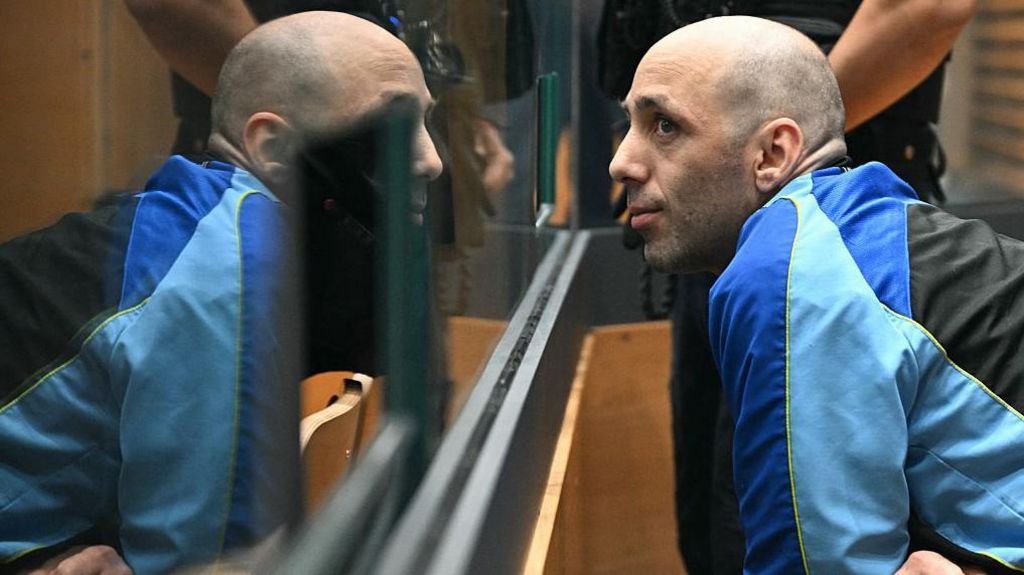
The trial of Cédric Jubillar, a 38-year-old painter-decorator accused of murdering his wife Delphine nearly five years ago, has gripped France as it opened on Monday. The case, shrouded in mystery due to the absence of the victim’s body, has become a social media sensation, with self-proclaimed investigators forming countless chat groups to exchange theories and testimonies. This has frustrated both the police and the families involved. Psychoanalyst Patrick Avrane likened these groups to a ‘bistro counter – but with more people,’ where everyone constructs their own theory. The Jubillar mystery began during the height of the Covid lockdown in December 2020 when Cédric reported his wife missing. Delphine, a 33-year-old night nurse, was in a troubled marriage with Cédric, who was a habitual cannabis user and barely held down a job. The couple, who had two young children, were discussing divorce, and Delphine was in a relationship with another man. Despite extensive searches in the surrounding countryside, Delphine’s body was never found. However, a case was gradually built against Cédric, leading to his detention in mid-2021. The prosecution argues that Cédric had a clear motive due to their impending split, while the defense will question the credibility of key witnesses, including a former cellmate and a former girlfriend who claim Cédric confessed to the murder. The trial, expected to last four weeks, will hear from 65 witnesses and 11 experts, with over 16,000 pages of evidence compiled. Writer Thibault de Montaigu compared the case to a ‘novel by Georges Simenon,’ highlighting the central question: how could a man described as a ‘red-eyed, fuzzy-brained guy who smoked ten joints a day’ have carried out the perfect crime? The court will ultimately decide whether Cédric is a ‘genius bluffer, lucky fool, or poor innocent.’
-
Germany open to ideas on frozen Russian assets, finance minister says
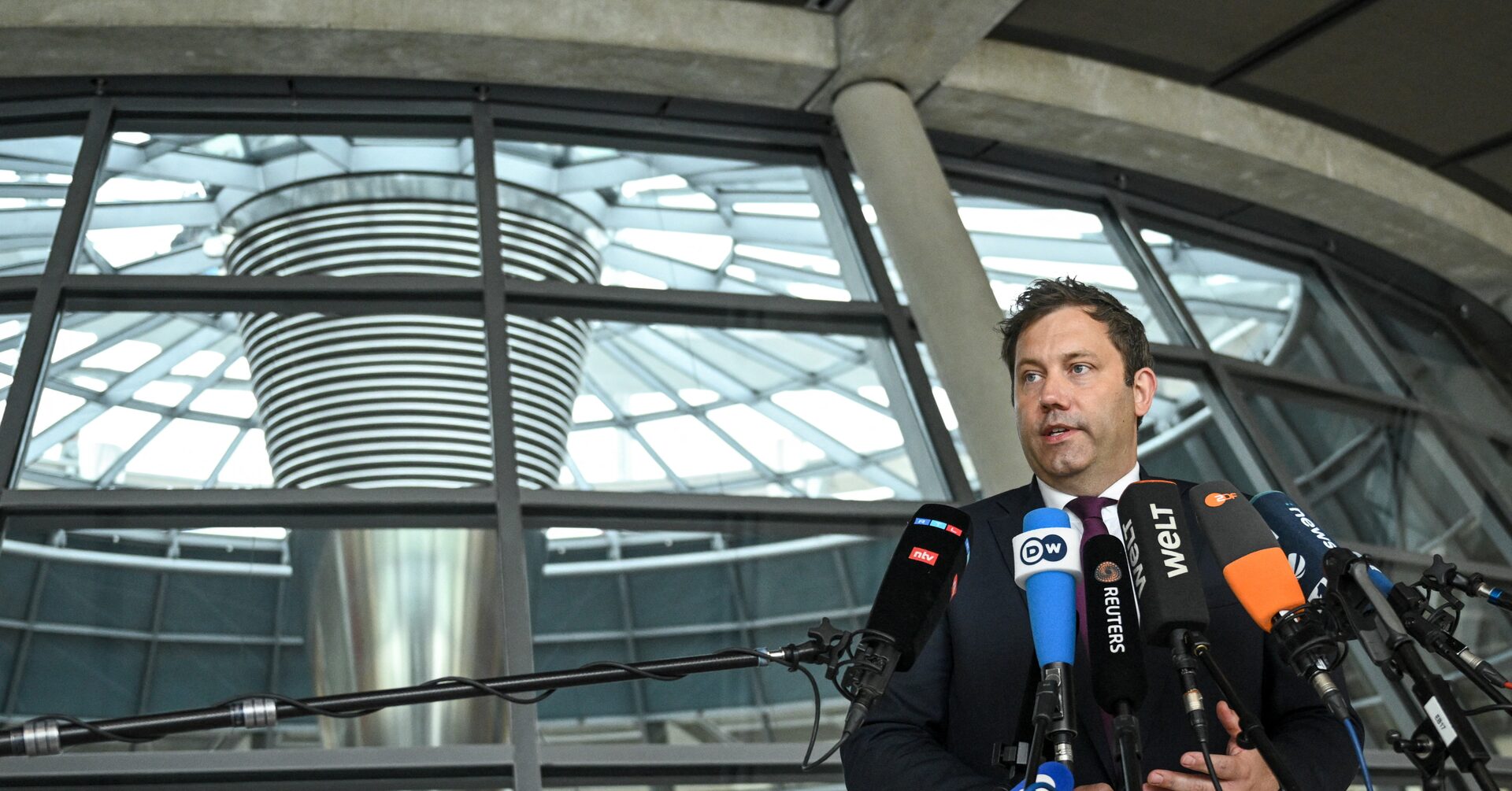
In a significant development, German Finance Minister and Vice Chancellor Lars Klingbeil has expressed Berlin’s willingness to explore productive ideas regarding the use of Russian assets frozen in the European Union. Speaking in Copenhagen on Friday, Klingbeil emphasized the need for careful examination of the issue, which remains legally complex and sensitive. ‘Germany will take on a role in which we want to make things possible and not one in which we block things,’ he stated, signaling a cooperative approach ahead of discussions with EU counterparts. The EU has been cautious about seizing the assets outright, a move considered a red line by some member states. Instead, the bloc is exploring ways to utilize these assets more intensively to support Ukraine, particularly amid uncertainties surrounding U.S. commitment under President Donald Trump. Since Russia’s invasion of Ukraine in February 2022, the EU has only accessed the interest generated from the frozen assets. Germany has historically raised legal concerns over proposals to seize the assets entirely. However, Klingbeil affirmed his coalition government’s commitment to intensifying their use to meet Ukraine’s financial needs. ‘There is a financial need there. We want to fulfill our responsibility for Ukraine,’ he told reporters. This stance underscores Germany’s evolving position on a contentious issue that continues to shape Europe’s response to the ongoing conflict.