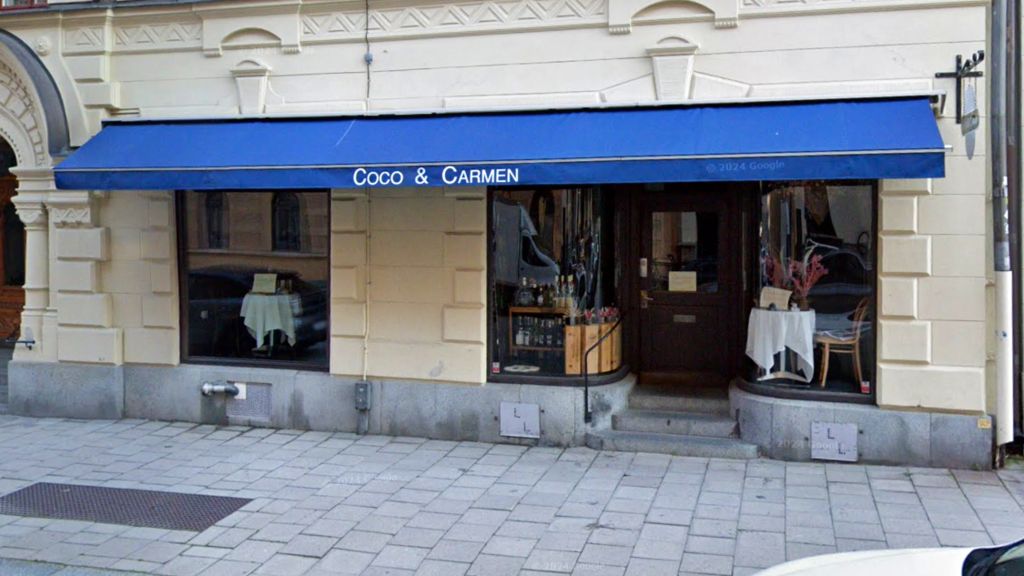
A suspected listeria outbreak linked to Coco & Carmen, a high-end restaurant in Stockholm’s Östermalm district, has resulted in multiple hospitalizations and widespread concern. Health authorities report that at least 15 individuals have been treated or are under observation, with four diagnosed with sepsis—a severe immune system reaction that can be life-threatening. While most of the affected individuals are not seriously ill, none have required intensive care so far. The outbreak has prompted an extensive infection tracing effort, initially focusing on diners from September 25 to 27 but later expanded to include those who visited the restaurant on September 23 and 24. Maria Rotzén Östlund, an infectious disease physician, advised anyone experiencing symptoms such as fever, vomiting, or diarrhea to seek immediate medical attention. Regional health officials have warned that a significant number of people may have been exposed, particularly vulnerable groups like pregnant women, older adults, and those with weakened immune systems. According to state broadcaster SVT, 80 people have reported food poisoning through a city tracking tool, and 400 have been contacted for infection tracing. Coco & Carmen has voluntarily closed its doors pending an investigation, emphasizing its commitment to guest safety and cooperation with authorities. The restaurant, which has a history of passing food safety inspections, hopes to reopen on October 7. Chef and co-owner Joakim Almquist expressed deep remorse, stating, ‘The only thing I can do is sincerely apologize, because I suffer with these people.’ Listeria, a bacterium found in soil, water, and animals, can contaminate food, especially when stored in cold conditions for extended periods. While most infections cause mild, flu-like symptoms, severe cases can lead to meningitis or sepsis, with an incubation period ranging from several days to three weeks.
标签: Europe
欧洲
-

Benidorm cracks down on display of ‘offensive’ items in shop windows
The Spanish tourist hotspot of Benidorm is intensifying efforts to regulate shops displaying lewd or offensive items in their windows, aiming to protect the city’s reputation and ensure public decorum. The initiative targets products such as joke t-shirts and souvenirs with sexual innuendos, often found in the area known as the ‘Guiri zone,’ which caters primarily to foreign tourists. Many of these items are advertised in English, reflecting the significant British visitor demographic. Javier Jordá, the city’s commerce head, emphasized the need to shield minors and vulnerable groups from inappropriate public displays, stating that certain commercial practices conflict with local regulations. Benidorm, a renowned Mediterranean resort, attracted nearly three million visitors last year, including over 830,000 British tourists. Local laws prohibit shop windows from displaying products that could offend moral sensibilities, such as ‘sexy articles,’ though items sold inside shops remain unaffected. Authorities are initially reminding shop owners to comply voluntarily, with potential fines of up to €3,000 for non-compliance. Jordá expressed hope that enforcement measures would not be necessary, stressing the importance of maintaining the city’s image. Spain welcomed a record 94 million foreign visitors last year, with Mediterranean resorts like Benidorm remaining top destinations. However, the country is increasingly shifting away from its traditional sun-and-sand tourism model amid concerns about over-tourism and local protests.
-

Dublin airport rail link given the go-ahead
Ireland’s planning board, An Coimisiún Pleanála, has officially approved the ambitious MetroLink project, a groundbreaking transport initiative set to connect Dublin city centre to its airport. Scheduled to commence operations by the early 2030s, the €9.5 billion (£8.16 billion) project will span 19.4 kilometers, featuring 16 predominantly underground stations. The MetroLink aims to seamlessly link the north and south sides of Dublin, with trains operating every three minutes during peak hours, capable of transporting up to 20,000 passengers per hour in each direction. Irish Minister for Transport, Eamon Ryan, hailed the decision as a transformative milestone for North Dublin, the city, and the airport, emphasizing its potential to drive growth, create jobs, and support housing development. The MetroLink route will extend from Swords in the north to Charlemont Street in the south, integrating with existing DART and Luas transport systems. Ryan expressed confidence in delivering the project on time and within budget, noting that the €9.5 billion cost estimate was ‘excessively cautious and conservative.’ Dublin Airport’s operator, DAA, praised the MetroLink as a ‘key element’ in the airport’s expansion beyond 40 million passengers annually, highlighting its role in bolstering tourism, foreign investment, trade, and job creation. While the project has received planning approval, it awaits final Cabinet endorsement before construction can begin. The construction phase is expected to span several years, with the ultimate costs yet to be determined.
-

Relief and new baby for asylum family of child suffocated in Channel crossing
The Alhashemi family’s story is one of resilience, loss, and eventual hope. For 15 years, this Iraqi family has navigated the harsh realities of life as asylum seekers in Europe, enduring legal limbo, deportation threats, and unimaginable grief. Their journey took a tragic turn in April 2024 when their seven-year-old daughter, Sara, died during a perilous attempt to cross the English Channel in a small boat. This devastating event marked a low point in their struggle for safety and stability. However, a year later, a life-changing email from a French refugee agency brought a glimmer of hope, granting them provisional asylum and a chance to rebuild their lives in France. Ahmed and Nour Alhashemi, who fled Iraq due to threats linked to Saddam Hussein’s regime, met in Belgium and raised three children while battling bureaucratic hurdles and constant uncertainty. After Sara’s death, the family applied for asylum in France, where they faced further challenges but eventually secured housing and support. In July 2025, they received official permission to stay in France for four years, with the possibility of permanent residency. The family’s newfound stability was further brightened by the birth of their baby girl, Sally, named in memory of Sara. Ahmed, a tiler, now dreams of starting his own business, while Nour envisions opening a bakery. Their eldest daughter, Rahaf, reflects on the security she feels for the first time in her life. Despite past criticism for their choices, the Alhashemis have finally found a safe place to call home, offering a poignant reminder of the resilience of refugees and the importance of compassion in immigration systems.
-
Billionaire populist eyes power in Czech vote but may need help from extremes
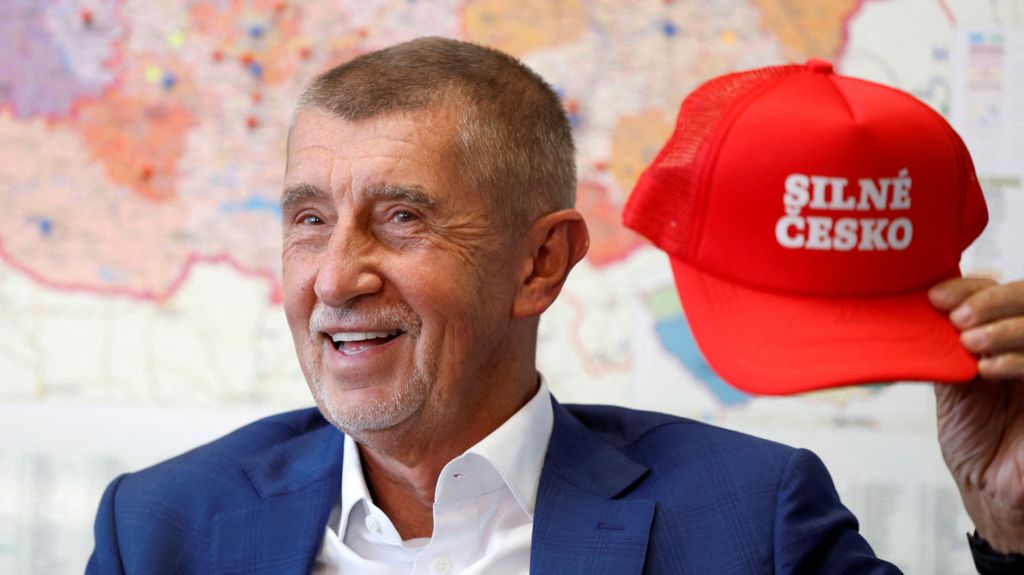
As Czech voters prepare to cast their ballots this weekend, the nation stands at a political crossroads. Populist billionaire Andrej Babis, leader of the ANO party, is poised to lead the next government, potentially replacing the current pro-Western coalition. However, his path to power may require alliances with fringe parties, raising concerns about the country’s future direction. Babis, a former prime minister, has sought to distance himself from accusations of pro-Russian sentiment, vowing to maintain Czechia’s alignment with the West. Yet, his potential coalition partners—ultra-nationalist and anti-EU factions—pose significant challenges to the nation’s longstanding commitments to NATO and European integration. The election comes amid heightened fears of Russian interference and a deteriorating security situation in Europe. Babis, inspired by the US MAGA movement, has adopted red caps emblazoned with ‘Strong Czechia,’ symbolizing his populist appeal. While he has ruled out forming a coalition with Communists, his potential allies advocate for radical policies, including referendums on EU and NATO membership. Critics warn that an ANO-led government could mirror the illiberal trajectories of Slovakia and Hungary, undermining Czechia’s democratic values and Western alliances. As the nation grapples with these uncertainties, the election’s outcome will have far-reaching implications for its role in Europe and beyond.
-

Surge in Ukrainian attacks on oil refineries sparks Russian fuel shortages
Ukraine has significantly intensified its drone attacks on Russian oil refineries in recent months, leading to widespread fuel shortages and price hikes across parts of Russia, according to investigations by BBC Verify and BBC Russian. Since January, 21 of Russia’s 38 major refineries—facilities crucial for converting crude oil into petrol and diesel—have been targeted, marking a 48% increase in successful strikes compared to the entirety of 2024. The surge in attacks, particularly in August and September, has disrupted operations at key refineries, including those deep within Russian territory, such as the Gazprom Neftekhim Salavat refinery in Bashkortostan, over 1,100 kilometers from Ukraine’s border. Satellite imagery confirmed significant damage, with smoke billowing from the facility post-attack. The strikes have not only impacted civilian fuel supplies but also targeted refineries near the border that support military logistics. Verified footage shows long queues at petrol stations, with some independent stations in Siberia suspending operations to avoid losses. Ukrainian President Volodymyr Zelensky has emphasized the strategic importance of these strikes, stating that damaging Russia’s oil industry is a key tactic to force Moscow to negotiate. While the Kremlin insists the situation is under control, Deputy Prime Minister Alexander Novak extended a partial ban on petrol exports until the end of 2025, a move critics argue is insufficient to stabilize the domestic market. Analysts suggest that while the strikes alone may not cripple Russia’s war efforts, they are increasing the economic strain of the prolonged conflict.
-
Irish citizens on intercepted Gaza flotilla boats
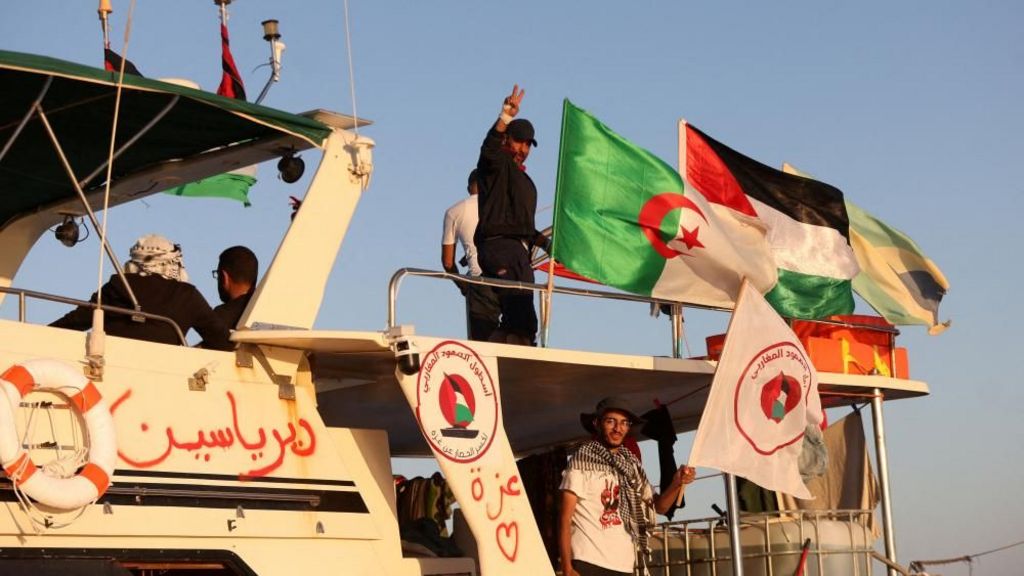
The Israeli navy has intercepted the Global Sumud Flotilla (GSF), a humanitarian mission comprising 44 vessels carrying aid to Gaza, detaining at least six Irish citizens among the participants. The flotilla, which included prominent Irish figures such as Senator Chris Andrews and activists Tara O’Grady and Louise Heaney, was reportedly 70 nautical miles from Gaza’s shoreline when the intervention occurred. Israel’s Foreign Ministry stated that the vessels were “safely stopped” and redirected to an Israeli port, citing their proximity to an “active combat zone.” The GSF condemned the interception as “illegal” and “a brazen act of desperation,” emphasizing the mission’s peaceful intent to address the humanitarian crisis in Gaza. Livestream footage from the Alma vessel, carrying Belfast man Fra Hughes, showed crew members awaiting the inevitable boarding by Israeli forces. The Irish government, including Tánaiste Simon Harris and President Michael D Higgins, expressed deep concern, urging Israel to uphold international law and ensure the safety of all participants. Sinn Féin president Mary Lou McDonald called for immediate action, describing the situation as a “moment of huge danger.” While Irish Prime Minister Micheál Martin acknowledged the mission’s humanitarian purpose, he cautioned against further progress toward Gaza, citing safety risks. The incident has reignited debates over international law and the blockade of Gaza, with Higgins questioning the global commitment to recognizing a Palestinian state amid such actions.
-
Hundreds attend candlelit vigil for murdered parents and son
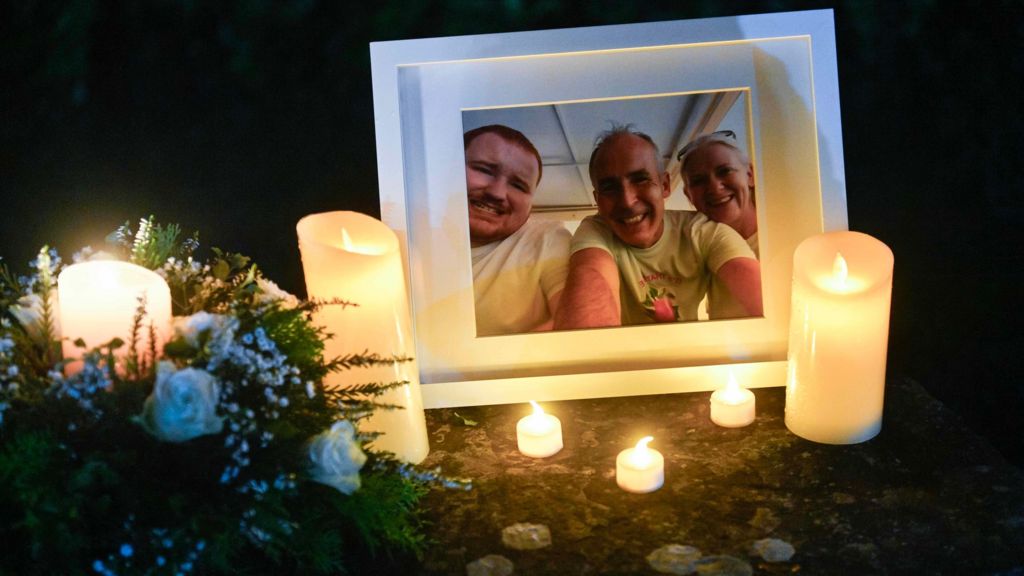
A somber candlelit vigil was held on Wednesday evening in County Louth to honor the lives of Mark and Louise O’Connor and their 27-year-old son Evan, who were tragically found dead in their rural Drumgowna home earlier this week. The Irish police, Gardaí, confirmed that the family had suffered “violent deaths,” sending shockwaves through the community. Hundreds of mourners, including Archbishop Eamon Martin, the leader of the Catholic Church in Ireland, gathered at the Stonetown Community Walking Track to pay their respects. Fr Gerry Campbell led prayers, expressing the profound grief felt by the community, stating that the tragedy had “sent ripples of grief across our parish and beyond.” The O’Connors were well-known advocates for autism services, having co-founded the Drogheda Abacas Special School in 2003, where Evan was one of the first students. The school paid tribute to the family on its Facebook page, remembering them as “passionate advocates” for autistic individuals. In a shocking turn of events, Robert O’Connor, 31, another son of the couple, appeared in court on Tuesday, charged with three counts of murder. He was remanded in custody and is set to appear again on October 6. Taoiseach Micheál Martin expressed his condolences, calling the killings “appalling” and a “really sad and shocking event.”
-
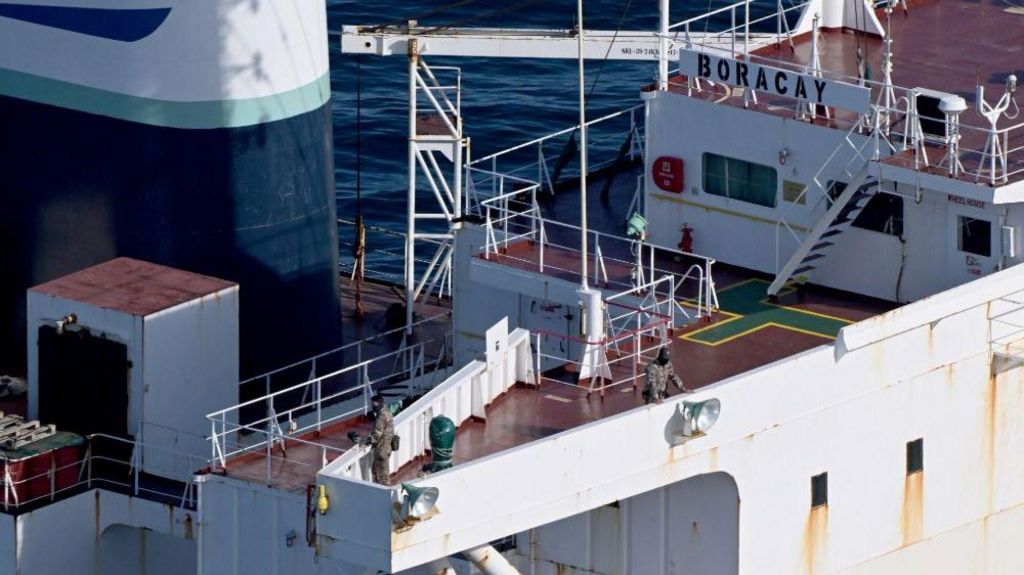
French troops board oil tanker linked to Russian ‘shadow fleet’
French military personnel have boarded the oil tanker Boracay, suspected to be part of Russia’s ‘shadow fleet’ used to circumvent international sanctions imposed due to the Ukraine conflict. The vessel, which departed Russia last month, was anchored off the western coast of France after being involved in a series of drone-related disruptions near Denmark last week. President Emmanuel Macron, speaking at an EU leaders’ summit in Copenhagen, accused the crew of committing ‘serious offences’ but provided no further details. Kremlin spokesman Dmitry Peskov denied any knowledge of the vessel. French prosecutors in Brest have launched an investigation into the ship for refusing to stop and failing to justify its flag nationality. The Boracay, also known as Pushpa and Kiwala, is registered under Benin but is subject to UK and EU sanctions. It was previously detained by Estonian authorities for sailing without a valid flag. The incident highlights the ongoing tensions between Russia and Western nations, particularly in the context of energy sanctions and hybrid warfare tactics. EU leaders are under pressure to enhance European defense capabilities following a series of Russian incursions into EU airspace, including drone attacks on Danish airports. Danish Prime Minister Mette Frederiksen emphasized the need for a robust response to these threats, linking the drone disruptions to broader Russian hybrid warfare strategies. The EU is considering a multi-layered ‘drone wall’ to detect and neutralize such threats, particularly in Eastern European countries like Poland and Estonia.
-

Germany arrests suspected Hamas members over alleged attack plot
German authorities have apprehended three individuals suspected of planning terrorist attacks on Israeli and Jewish institutions within Germany. The suspects, identified as Abed Al G, Wael F M, and Ahmad I, include two German citizens and one Lebanese-born individual. According to Germany’s federal prosecutor’s office, the trio had allegedly been procuring firearms and ammunition since the summer, intending to carry out the attacks. The arrests took place in Berlin on Tuesday, just one day before Yom Kippur, the most sacred day in the Jewish calendar. During the operation, law enforcement seized an AK-47 assault rifle, several pistols, and a substantial quantity of ammunition. The weapons were reportedly intended for use by Hamas, the Palestinian armed group that controls Gaza and is designated as a terrorist organization by the EU. German media revealed that the suspects were arrested during a weapons handover in the capital. Concurrent police searches were conducted in Leipzig and Oberhausen. The suspects face charges of preparing a serious act of violence threatening the German state and membership in a foreign terrorist organization. They are scheduled to appear before a federal judge on Thursday. This development follows the February trial of four Hamas members in Berlin, who were accused of plotting similar attacks on Jewish sites across Europe.