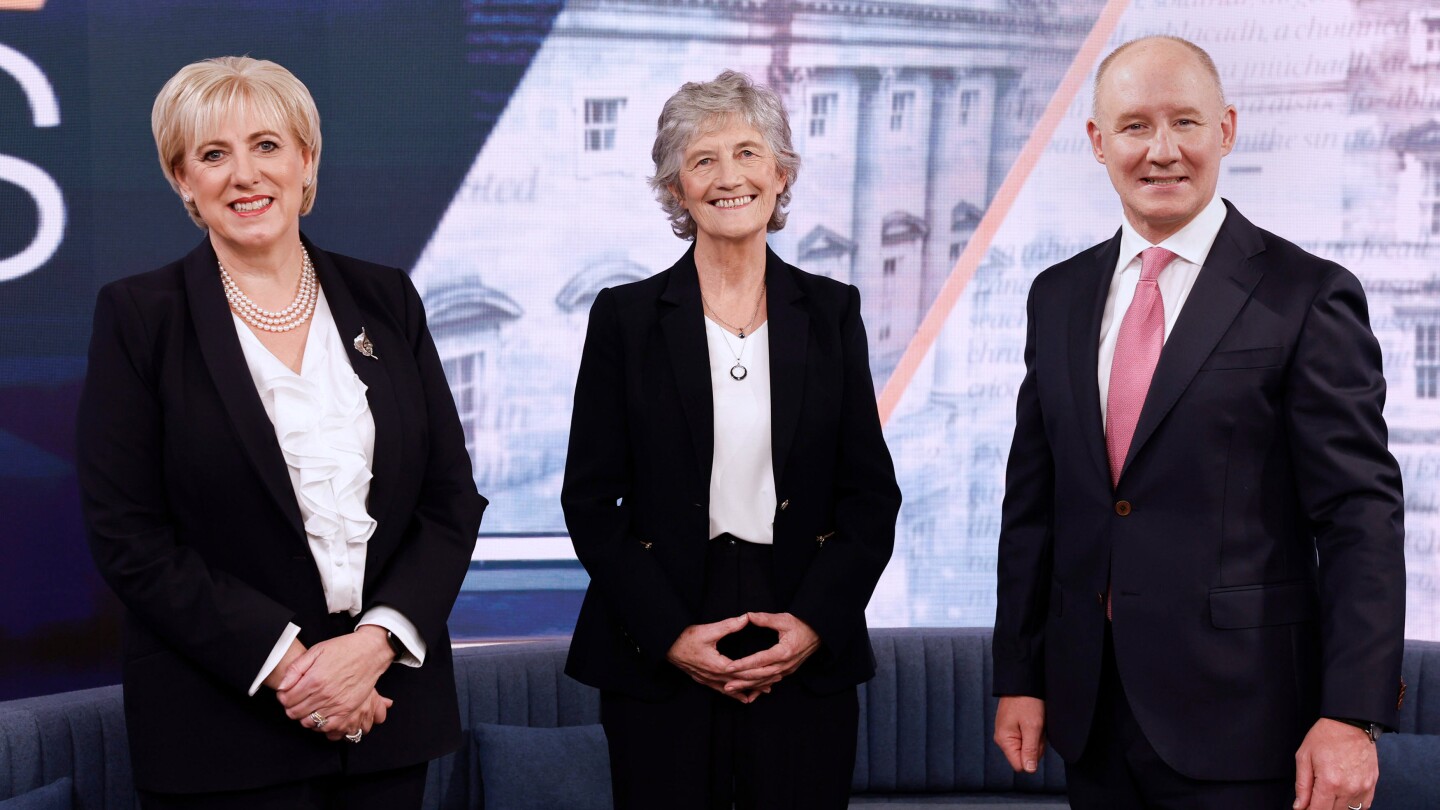
Ireland is poised to elect its next president in a landmark vote on Friday, with two women vying for the largely ceremonial role. Catherine Connolly, a left-wing independent lawmaker supported by Sinn Féin, is the frontrunner, holding a commanding lead of approximately 40% in recent polls. Her rival, Heather Humphreys of the center-right Fine Gael party, trails with 20% to 25% support. The election marks the end of Michael D. Higgins’s 12-year presidency, as he completes his maximum two terms. The race narrowed after other potential candidates, including musician Bob Geldof and former MMA champion Conor McGregor, failed to secure nominations. Connolly, a former barrister and independent lawmaker since 2016, has faced criticism for her stance on Israel and Hamas, as well as her past legal work for banks involved in home repossessions. Despite this, she has garnered endorsements from left-leaning parties and pledges to be an “independent president for all the people.” Humphreys, a seasoned government official, emphasizes her centrist, pro-business, and pro-EU approach, aiming to foster unity with Northern Ireland. The president’s role, while ceremonial, includes appointing the prime minister, signing laws, and influencing public discourse on key issues. Polls close at 10 p.m. Friday, with results expected by late Saturday, followed by the inauguration at Dublin Castle.
标签: Europe
欧洲
-
Starmer to push allies on long-range missiles for Ukraine at London summit
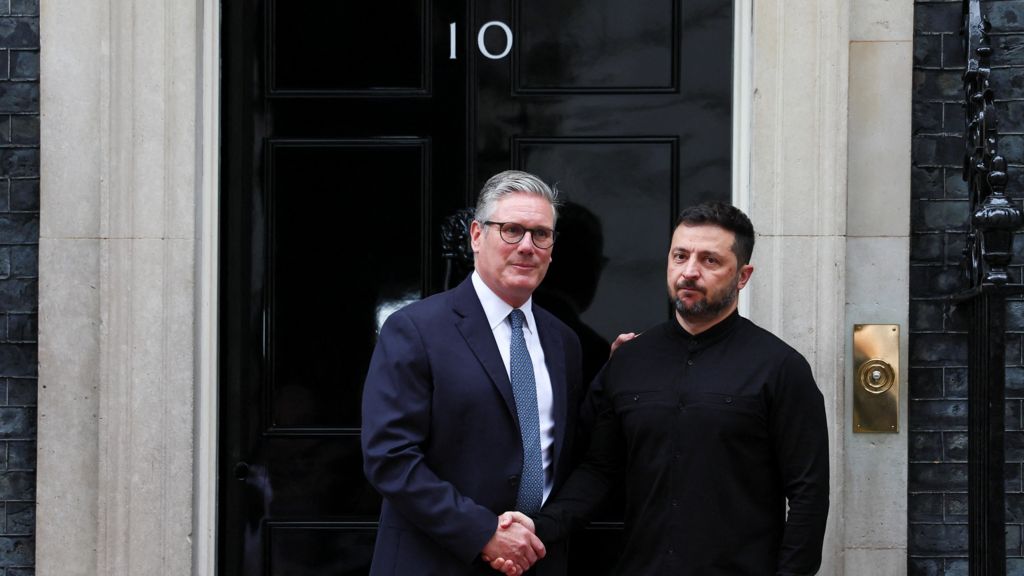
British Prime Minister Sir Keir Starmer is set to host Ukrainian President Volodymyr Zelensky and a coalition of over 20 allied nations in London on Friday. The meeting, dubbed the ‘coalition of the willing,’ aims to strengthen Ukraine’s military capabilities, particularly by providing long-range missiles to target Russian positions. Zelensky has persistently sought advanced weaponry from Western allies, a move Russia has warned could escalate the conflict. This gathering follows Zelensky’s recent diplomatic successes, including Donald Trump’s decision to impose further sanctions on Russia and the European Union’s agreement to address Ukraine’s budgetary shortfall. Sir Keir emphasized the urgency of pressuring Moscow to negotiate peace, citing recent Russian strikes on civilian targets, including a nursery in Kharkiv that claimed the lives of two children. The UK will also expedite the delivery of 100 air defense missiles as part of a £1.6 billion defense deal signed in March. The summit will include NATO Secretary General Mark Rutte, Danish Prime Minister Mette Frederiksen, and Dutch Prime Minister Dick Schoof, with French President Emmanuel Macron joining virtually. Discussions will also focus on strategies to remove Russian oil and gas from global markets and explore the use of frozen Russian assets to support Ukraine financially. However, a proposal to utilize €140 billion in frozen assets faced political and legal challenges at the recent Brussels summit. The US has also ramped up pressure on Moscow by sanctioning Russia’s largest oil companies, Rosneft and Lukoil. Russia’s invasion, which began in February 2022, continues to occupy approximately 20% of Ukrainian territory, including Crimea.
-
German bid to close migrant boats loophole could face delay
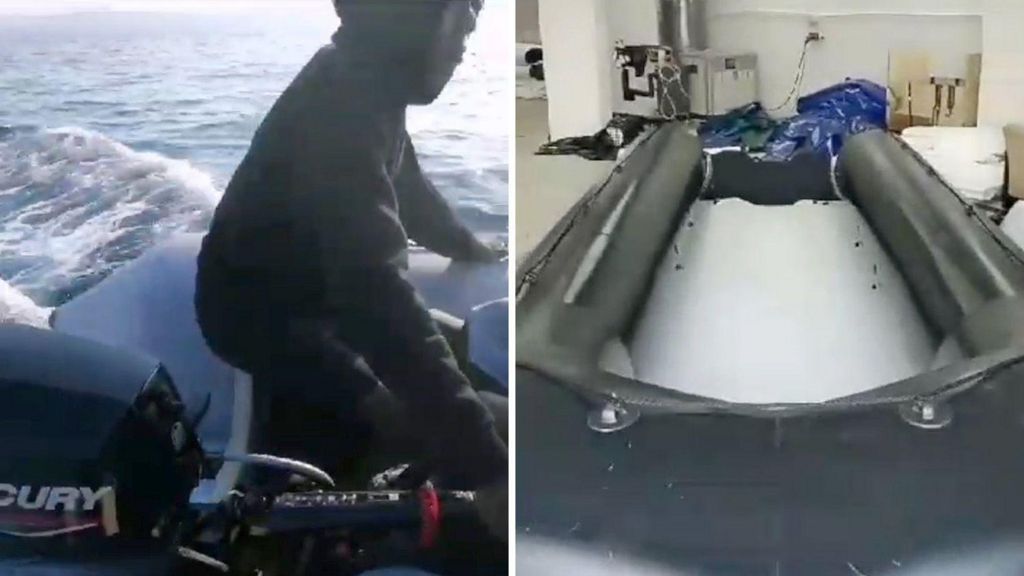
Germany’s commitment to tighten laws against small-boat smuggling faces growing uncertainty, as delays in legislative processes threaten to derail efforts to combat illegal Channel crossings. A BBC investigation last year revealed that Germany serves as a hub for storing boats and engines used in these crossings, prompting Berlin to pledge legal reforms by the end of 2025. However, the German Interior Ministry has only confirmed its intention to introduce the bill to parliament by the deadline, without guaranteeing its final approval this year. The proposed legislation aims to criminalize the facilitation of human smuggling to the UK, a loophole that currently exists post-Brexit. Despite UK pressure, German officials have not prioritized the bill, with some expressing skepticism about its effectiveness in curbing illegal migration. Meanwhile, France is reportedly retreating from its pledge to intercept migrant boats at sea, further complicating international efforts to address the issue. The UK’s Labour government, which has emphasized closer international collaboration, faces mounting pressure to demonstrate the efficacy of its strategy. Any delay in Germany’s legal reforms is likely to exacerbate UK frustrations, as it has long urged Berlin to strengthen its rules and enforcement mechanisms.
-
Watch: Historic moment King Charles prays alongside Pope Leo
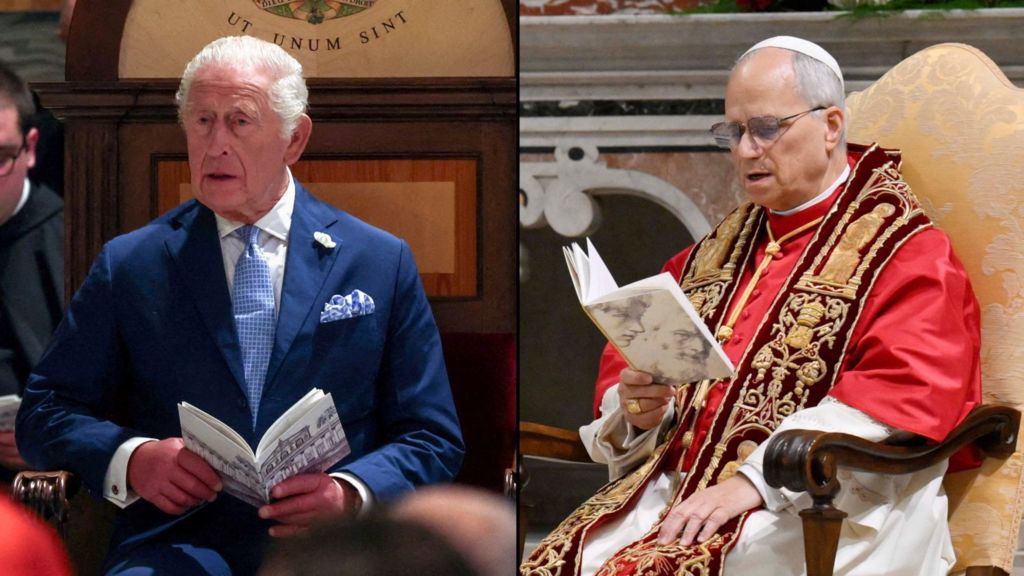
In an unprecedented event marking a significant milestone in religious history, King Charles and Pope Leo shared a moment of prayer together, a gesture unseen since the Reformation. This historic encounter symbolizes a profound step towards unity between the Anglican and Catholic churches, which have been divided for centuries. The meeting, held in a serene and solemn atmosphere, underscored the mutual respect and shared spiritual values between the two leaders. Observers noted that this momentous occasion could pave the way for enhanced dialogue and cooperation between the two faiths, fostering a spirit of reconciliation and understanding in a world often marked by religious discord.
-
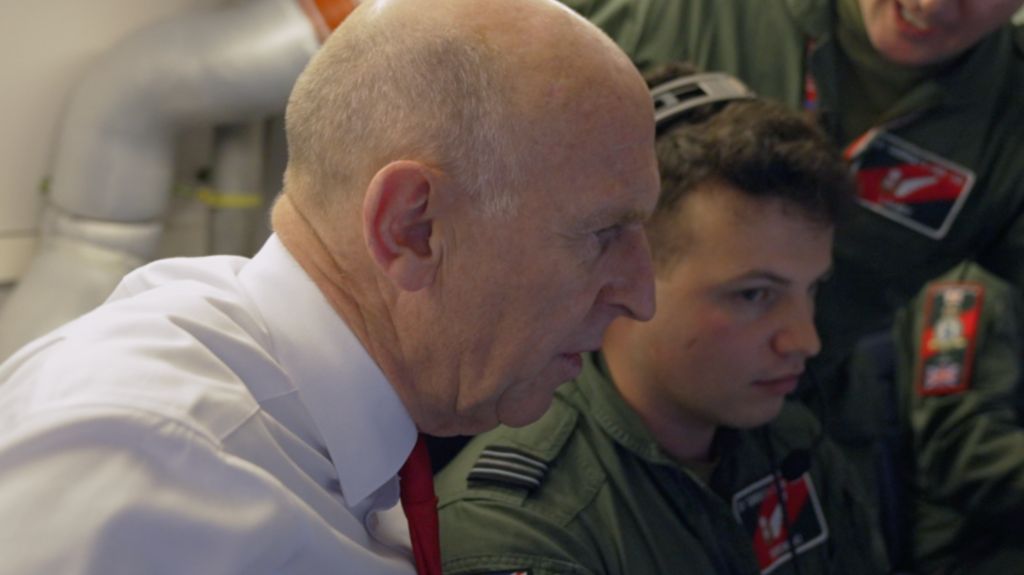
UK defence secretary warns Putin: ‘We’re watching you’
Defence Secretary John Healey has issued a stark warning to Russian President Vladimir Putin, declaring, ‘We’re hunting your submarines.’ Healey revealed a 30% increase in Russian vessels encroaching on UK waters, signaling a broader pattern of Russian aggression that extends beyond Ukraine to impact Europe as a whole. The Ministry of Defence confirmed that Russian submarine activity in the North Atlantic has surged to levels reminiscent of the Cold War era. In response, the RAF and Royal Navy have intensified their surveillance efforts, with RAF P-8 aircraft conducting frequent missions, often supported by NATO allies. BBC News accompanied Healey on a flight aboard a P-8, a high-tech spy plane equipped with advanced cameras, sensors, and sonar buoys designed to detect and track submarines. The crew, working in a highly classified environment, monitors both surface vessels and underwater threats. Recent incidents, such as the tracking of the Russian spy ship Yantar near undersea cables in the Irish Sea, highlight growing Western concerns over Russia’s potential to disrupt critical infrastructure. Germany, a key ally, has ordered eight P-8 aircraft and is deepening its defense collaboration with the UK under the Trinity House Agreement. German Defence Minister Boris Pistorius, who joined Healey on the flight, emphasized the North Atlantic’s strategic importance and the need for vigilance against Russian hybrid warfare tactics, including disinformation and threats to undersea infrastructure. The two nations are also cooperating on cybersecurity and arms production, further solidifying their partnership in the face of escalating Russian threats.
-
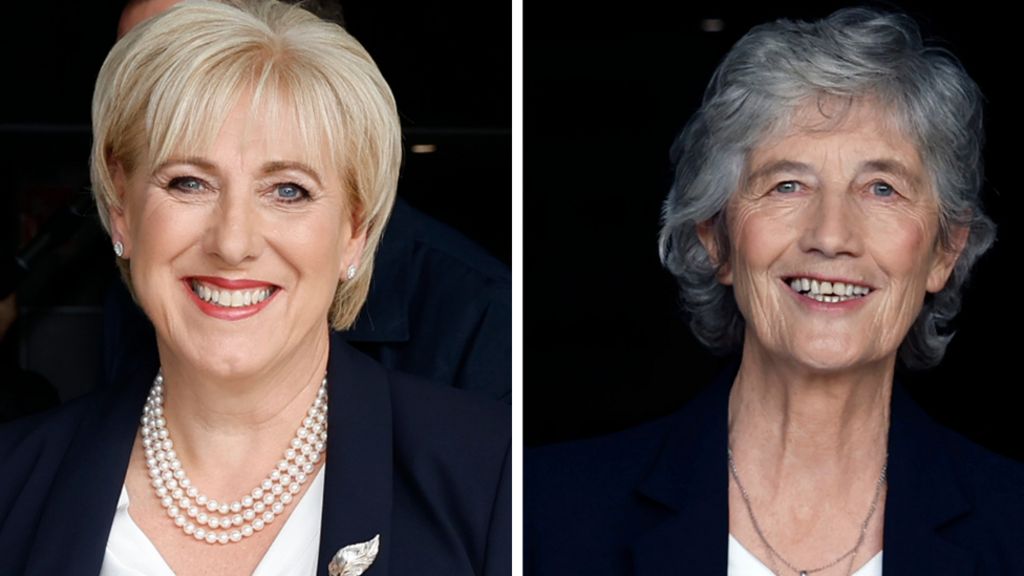
Voters set to decide new Irish president
The Republic of Ireland is set to hold a pivotal presidential election on Friday, marking a significant moment in the nation’s political landscape. Voters will choose between two primary candidates, Catherine Connolly and Heather Humphreys, to succeed the incumbent President Michael D Higgins, who is concluding his second consecutive seven-year term. Although a third candidate, Jim Gavin, withdrew from the race due to a past controversy, his name remains on the ballot due to legal constraints, allowing votes cast for him to be transferred to other candidates if necessary. Polls will open at 07:00 local time and close at 22:00, with approximately 3.6 million eligible voters expected to participate. Catherine Connolly, an independent candidate, has garnered support from left-leaning parties, including Sinn Féin, while Heather Humphreys, a former government minister from Fine Gael, represents the coalition government. The vote counting will commence at 09:00 on Saturday, with the winner announced at Dublin Castle. The new president will be inaugurated on 11 November, following Higgins’ departure on 10 November.
-
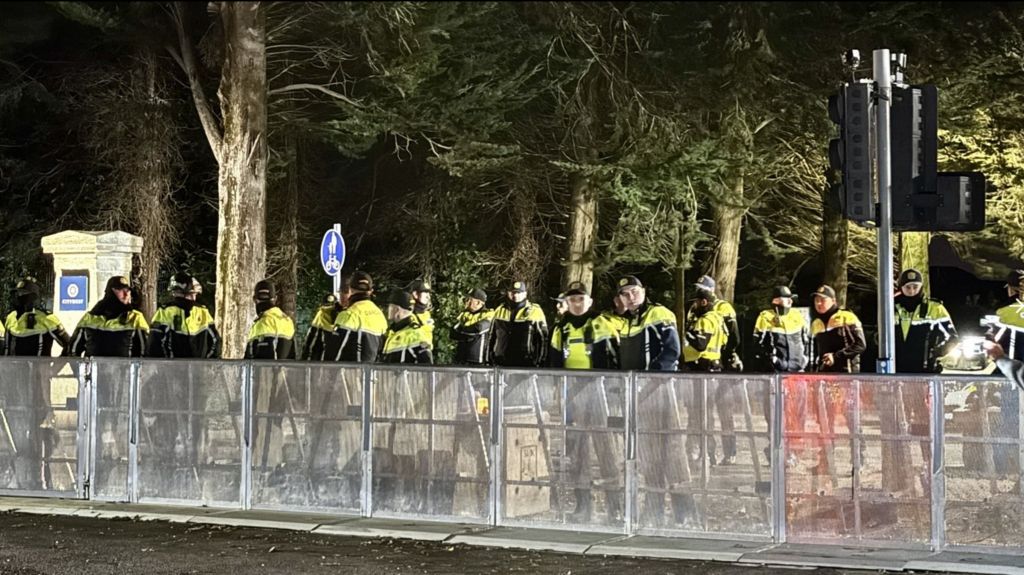
Dublin asylum hotel protest peaceful after two nights of disorder
A tense atmosphere has enveloped the Citywest Hotel in Dublin, which serves as temporary housing for asylum seekers, following two nights of violent protests. The unrest, which began on Tuesday, saw approximately 2,000 protesters gather in response to an alleged sexual assault of a young girl in the area earlier in the week. The protest escalated into hours of sustained rioting, with stones and fireworks hurled at police officers and a Garda vehicle set ablaze. Seven individuals were arrested, and five were charged with public order offenses. Irish Justice Minister Jim O’Callaghan issued a stern warning, emphasizing that any recurrence of violence would be met with a forceful response. On Thursday, the situation appeared calmer, with around 100 people assembling at the hotel entrance for a peaceful demonstration before dispersing by 21:30 local time. Gardaí maintained a heavy presence throughout the day, ensuring order. O’Callaghan reiterated that while people have the right to protest and oppose government policies, violence and lawbreaking are unacceptable. The hotel complex houses families, including schoolchildren, under Ireland’s international protection program. Garda Commissioner Justin Kelly condemned Tuesday’s violence as ‘unacceptable’ and vowed to respond robustly to any future disturbances. On Wednesday, the disorder continued but at a reduced intensity, with three officers injured and 24 people arrested, including 17 adults charged with public order offenses and five juveniles referred to a youth diversion program. Authorities noted that most participants were young adult males and teenagers.
-
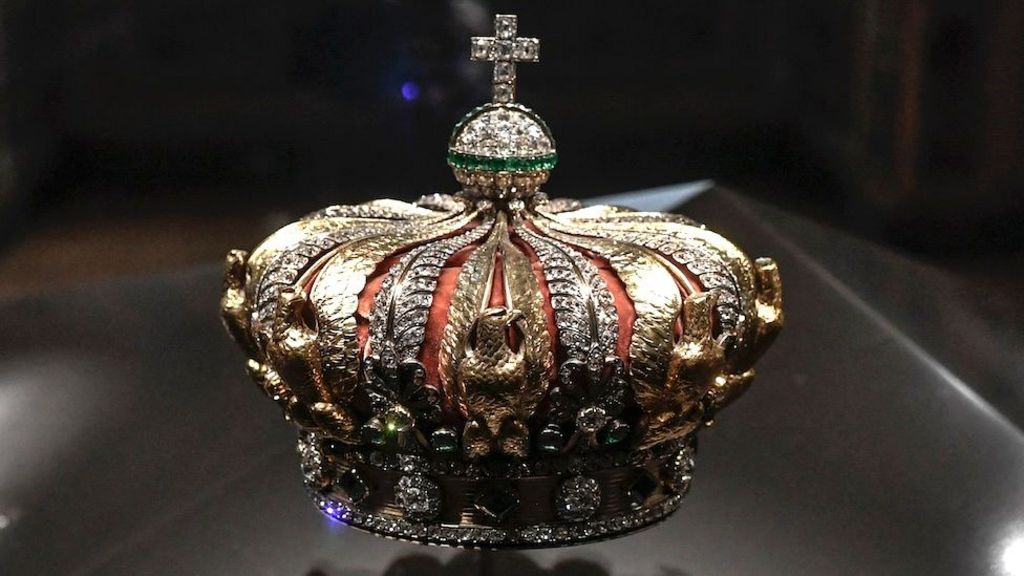
Weekly quiz: Whose crown was stolen from the Louvre?
This week witnessed a series of significant events across the United States and beyond. Millions of Americans participated in the ‘No Kings’ protests, voicing their opposition to President Donald Trump’s policies in cities nationwide. Meanwhile, Amazon Web Services experienced a near-catastrophic outage that threatened to disrupt internet services globally. In the entertainment world, fans of the popular show ‘Strictly’ were left in shock as presenters Tess Daly and Claudia Winkleman announced their departure. Amidst these headline-grabbing events, the week also saw developments in France, including updates on crime, jewellery, and museums in Paris. For those keen on testing their memory of these events, quizzes curated by Ben Fell offer a chance to revisit last week’s happenings or delve into the archives for a broader perspective.
-
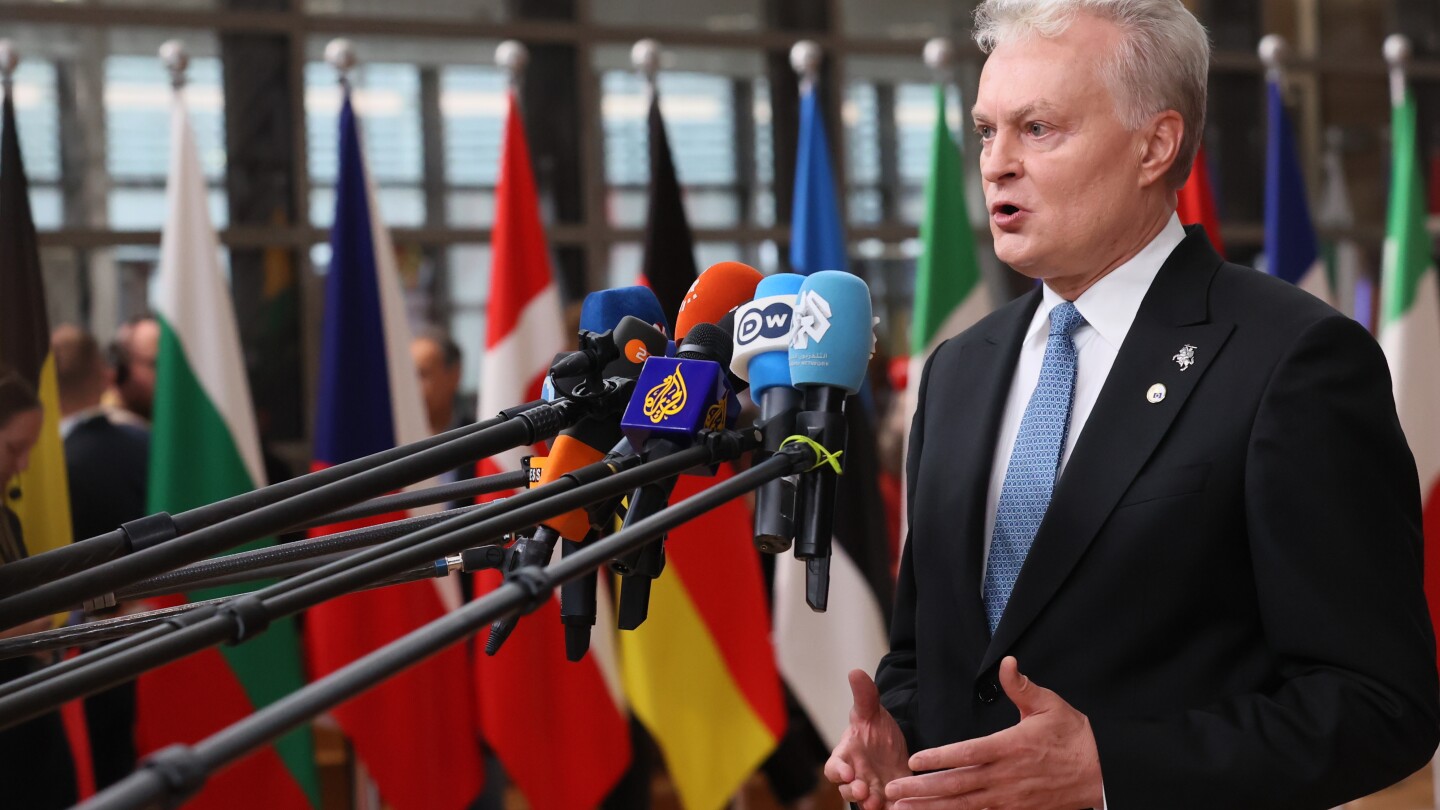
Lithuanian president says Russian military planes violated the Baltic country’s airspace
VILNIUS, Lithuania — Lithuanian President Gitanas Nausėda has strongly denounced the violation of Lithuania’s airspace by Russian military aircraft on Thursday evening, labeling it a flagrant infringement on the territorial integrity of the European Union and NATO member state. In a statement posted on the social media platform X, Nausėda announced that Lithuania’s foreign ministry would summon representatives from the Russian Embassy in Vilnius to formally protest the incident. He emphasized that the breach constitutes a direct violation of international law and underscores the urgent need to bolster European air defense capabilities. The Baltic region has been on high alert following a series of recent drone incidents and airspace violations by Russian warplanes, which have raised fears that President Vladimir Putin may be testing NATO’s resolve. Some European leaders have accused Russia of engaging in a hybrid war strategy, a claim Moscow vehemently denies.
-
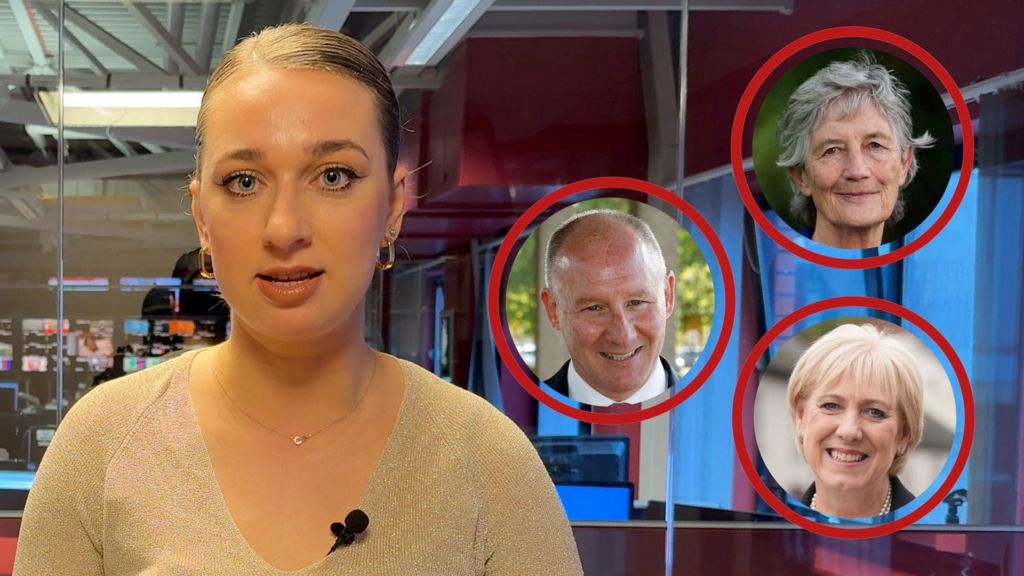
Who’s in the running to become the next president of Ireland?
As Ireland gears up for its presidential election, the political landscape is abuzz with speculation and anticipation. BBC News NI’s Dublin Correspondent Gabija Gataveckaite provides an insightful overview of the key candidates vying for the prestigious role. The election, which is set to determine the next head of state, has drawn a diverse array of contenders, each bringing unique qualifications and visions for the nation’s future. The race is expected to be highly competitive, with candidates from various political backgrounds and independent figures entering the fray. The presidency, largely a ceremonial position, holds significant symbolic importance in Ireland, representing unity and national identity. As the campaign unfolds, voters will be closely scrutinizing the candidates’ platforms, leadership qualities, and commitment to addressing key societal issues. The outcome of this election will not only shape Ireland’s political trajectory but also influence its standing on the global stage.