标签: Europe

欧洲

  • Hittler faces Zielinski as French town’s election contest goes viral

    Hittler faces Zielinski as French town’s election contest goes viral

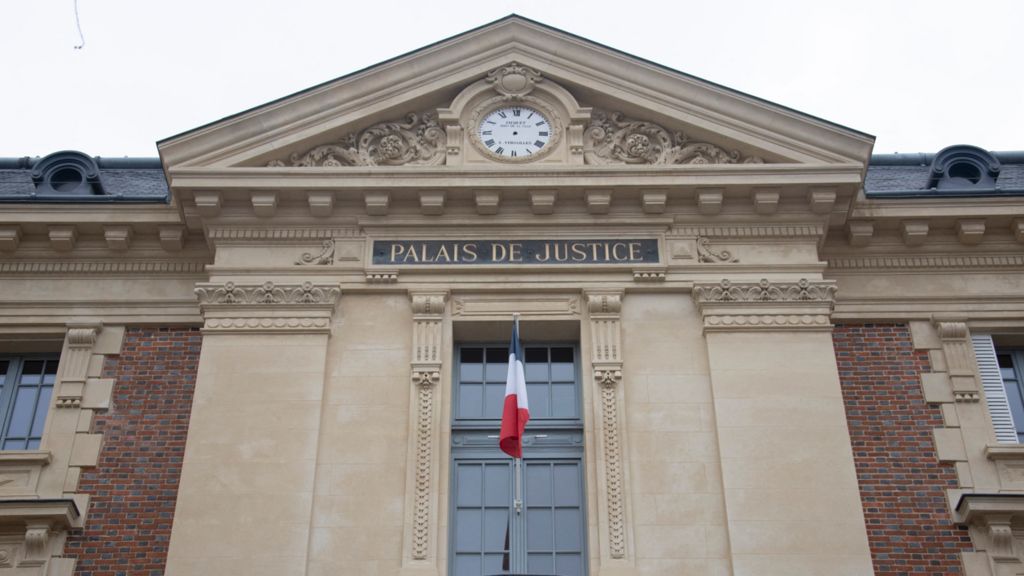
    The tranquil French commune of Arcis-sur-Aube, with its modest population of 2,785 residents, has unexpectedly become the epicenter of international attention due to an extraordinary electoral coincidence involving its mayoral candidates’ surnames. Current mayor Charles Hittler, seeking re-election in Sunday’s municipal runoff, finds himself at the center of a viral storm simply because of his family name’s phonetic similarity to the notorious German dictator.

    The situation has escalated beyond occasional jokes that Hittler has endured throughout his life. Social media platforms have been inundated with satirical posts drawing parallels between the electoral contest and the historical conflict between Adolf Hitler and modern Ukrainian leader Volodymyr Zelensky—particularly since one of Hittler’s opponents bears the surname Zielinski.

    In an exclusive interview with the BBC, an exasperated Hittler revealed the personal toll of this unexpected fame: ‘The situation has gone completely crazy. My wife is in tears. We’ve seen online articles falsely claiming that 37% of Arcis residents are Hitlerites. People should be discussing our town’s policies, not our names.’

    The mayor’s family history reveals why he never changed his controversial surname. His father, a shepherd from Alsace near the German border, was conscripted into Nazi Germany’s forced labor program during World War II. Despite recommendations to change the name in 1949, the administrative complexity and financial burden prevented the alteration. Today, only a few Hittlers remain in France, with most family members either altering pronunciation to ‘Hit-lay’ or adopting maternal surnames to avoid embarrassment.

    Remarkably, Hittler’s daughter and daughter-in-law—both retaining the surname—are concurrently running for municipal council positions in other French towns. ‘Once you establish your reputation, the name becomes secondary. People eventually see the person behind the name,’ Hittler explained.

    The electoral dynamics extend beyond nominal coincidences. While Hittler represents center-right policies, his opponent Antoine Renault-Zielinski belongs to the far-right Patriot movement—a significant detail in a region where the National Rally party traditionally performs strongly. The 28-year-old customs officer, whose Polish mother contributed the latter part of his hyphenated surname, maintains philosophical perspective: ‘I understand why people find this amusing, though personally it doesn’t make me laugh. At least our town is on the map now.’

    Historical ironies abound: Arcis-sur-Aube’s name was adopted by a town near Odesa in Ukraine after German immigrants named their settlement Artsyz following Napoleon’s 1814 battle against Austrian, Prussian, and Russian armies. The French town also happens to be the birthplace of revolutionary leader Georges Jacques Danton.

    As Sunday’s runoff approaches with Hittler maintaining a narrow lead over Zielinski and third candidate Annie Soucat, the world watches a municipal election that has transcended local politics through the unpredictable power of onomastic coincidence.

  • What to know about the meningitis outbreak in England causing angst among university students

    What to know about the meningitis outbreak in England causing angst among university students

    A severe meningitis outbreak in Kent, southeast England, has resulted in two fatalities and triggered an extensive public health intervention. UK Health Secretary Wes Streeting characterized the situation as unprecedented due to the rapid surge of cases, with the count rising to 20 confirmed infections within days of the first diagnosis on Friday.

    The victims include a university student from the University of Kent and a pupil from a local school. In response, health authorities have implemented emergency measures, distributing thousands of antibiotic doses and vaccinations to students at the Canterbury campus. The outbreak has been traced to a bacterial strain, specifically meningococcal sepsis, which causes infection of the brain and spinal cord membranes and can prove fatal without prompt treatment.

    Epidemiologists identified a potential super-spreader event at Club Chemistry, a nightclub in Canterbury, between March 5-7. Many of those affected attended the venue during this period. Nationwide medical professionals have been instructed to provide antibiotics to anyone who visited the club on those dates, regardless of their current location.

    Meningitis, though rare in the UK with approximately 350 annual cases, spreads efficiently in densely populated environments like university accommodations. The bacteria can remain dormant in the nose or throat, transmitting through respiratory droplets or close personal contact.

    Amid heightened public anxiety, reminiscent of COVID-19 precautions, some residents have resumed mask-wearing and social distancing. Health officials emphasize that antibiotics remain the primary tool for containment, with over 2,500 doses already administered. Vaccinations targeting the meningitis B strain are also being offered, though availability through private pharmacies has been limited.

    With an incubation period of up to 14 days, additional cases are anticipated. However, scientists have not yet determined if this strain exhibits heightened virulence. Health Secretary Streeting assured the public that the outbreak does not currently constitute a national incident, expressing confidence in containment measures preventing wider dissemination.

  • Prosecution asks for seven years’ jail for crown princess’s son in Norway rape trial

    Prosecution asks for seven years’ jail for crown princess’s son in Norway rape trial

    In a landmark case that has captivated Norway, prosecutors have formally requested a prison sentence of seven years and seven months for Marius Borg Høiby, the son of Crown Princess Mette-Marit, concluding their arguments in a trial that has dominated national headlines for nearly seven weeks.

    The 29-year-old defendant faces an extensive list of 40 criminal charges, with prosecutors advocating for convictions on 39 counts. The most severe allegations include four distinct rape charges and serious assault. Høiby has entered not guilty pleas for these primary accusations while admitting to lesser offenses including drug transportation, traffic violations, and breaching a restraining order.

    State Prosecutor Sturla Henriksbø presented the prosecution’s final arguments this week at Oslo District Court, emphasizing that the case should be judged solely on factual evidence rather than the defendant’s royal connections. ‘He is not a monster,’ Henriksbø stated during his summation, ‘but must be judged for what he has done.’

    The prosecution’s case hinges on compelling evidence including non-consensual videos documenting three of the alleged rape incidents. Central to their argument is the assertion that the victims were either asleep or otherwise incapacitated during the assaults—a claim directly contradicting Høiby’s defense that all sexual encounters were consensual.

    Henriksbø detailed the recommended sentencing structure: three rape charges should carry two-year terms each, while a fourth more severe incident warranted a three-year sentence. ‘Rape can leave lasting scars and destroy lives,’ the prosecutor told the court, emphasizing the gravity of these offenses.

    The trial has placed unprecedented scrutiny on the Norwegian royal family, coinciding with separate revelations about Crown Princess Mette-Marit’s past contacts with convicted sex offender Jeffrey Epstein. Høiby himself testified about the crushing psychological toll of media coverage, lamenting that public perception had transformed him from ‘Marius’ to ‘a monster.’

    With the prosecution’s case now complete, defense attorneys are preparing their closing arguments. Legal commentators suggest that while Høiby will likely receive reduced sentencing for admitted offenses, the court must weigh the serious nature of the rape allegations against a backdrop of intense public interest and judicial scrutiny.

  • Irish PM boxes clever as Trump doubles down on Starmer ‘disappointment’

    Irish PM boxes clever as Trump doubles down on Starmer ‘disappointment’

    Irish Taoiseach Micheál Martin demonstrated remarkable diplomatic dexterity during his traditional St. Patrick’s Day meeting with President Donald Trump in the Oval Office on Tuesday. The encounter evolved into an unexpected political sparring session where Martin’s background as an amateur boxer proved metaphorically appropriate.

    The meeting, typically a ceremonial affair marking the longstanding Irish-American relationship, quickly turned substantive as President Trump dominated discussions with criticisms of UK Prime Minister Sir Keir Starmer and European immigration policies. Trump reiterated his previous characterization of Starmer as “no Winston Churchill,” expressing disappointment in the British leader’s Middle East stance and calling his Iran policy a “big mistake.”

    Martin, who had just hosted Starmer in Cork days earlier for a UK-Ireland summit, mounted a nuanced defense. While acknowledging Churchill’s wartime leadership, the Taoiseach noted that from an Irish perspective during the War of Independence, “he created his own bit of difficulties for us.”

    The dialogue encountered another potential flashpoint when Trump criticized European immigration approaches. Martin countered diplomatically, asserting that “Europe is still a very good place to live” and is sometimes “characterised wrongly in terms of it being overrun.” He emphasized Ireland’s controlled immigration through legal economic channels.

    Throughout the 40-minute meeting, Martin employed strategic discretion, avoiding direct engagement on several contentious issues. He sidestepped questions about Middle Eastern civilian casualties, declined to comment on the conflict’s legality, and even avoided correcting Trump when the president misgendered Irish President Catherine Connolly despite her criticism of US actions in Iran.

    The encounter concluded with Martin emerging unscathed from what observers characterized as a diplomatic test of agility against an unpredictable negotiating partner.

  • Why ex-Palace winger Olise is now in Ballon d’Or contention at Bayern

    Why ex-Palace winger Olise is now in Ballon d’Or contention at Bayern

    Michael Olise is rapidly establishing himself as one of football’s most formidable talents following his spectacular debut season with Bayern Munich. The 24-year-old French winger, who joined the German giants from Crystal Palace in 2024, has been delivering extraordinary performances that place him among Europe’s elite players.

    Olise’s exceptional abilities were on full display during Bayern’s Champions League last-16 first leg against Atalanta, where he scored twice and provided an assist in a commanding 6-1 victory. This performance epitomizes his remarkable contribution throughout the season, with statistics showing him leading Europe’s top five leagues with 23 assists across all competitions and accumulating 38 goal involvements—numbers unmatched by any other winger.

    Bayern manager Vincent Kompany, drawing from his experience playing alongside Kevin De Bruyne, identifies a similar obsessive attention to detail in Olise’s approach. “I was fortunate to witness Kevin’s development into a superstar,” Kompany remarked. “Michael possesses that same mentality—an unwavering focus on refining every aspect of his game.”

    Olise’s journey to stardom has been unconventional. Beginning his career at Reading before moving to Crystal Palace, he was considered a late bloomer. His transition to Bayern Munich and exposure to a different cultural environment accelerated his maturation both as a player and individual. European football expert Julien Laurens notes that international experience, including representing France at the Olympics and earning his senior national team debut, significantly contributed to his development.

    Statistical analysis from Opta reveals Olise’s dominance in his position. Since the start of last season, he has registered 44 assists—seven more than any other player in Europe’s top five leagues. Only Bruno Fernandes has created more scoring opportunities during this period. His tendency to cut inside from the right flank and finish with his left foot has drawn inevitable comparisons to Bayern legend Arjen Robben, a similarity the club’s official social media acknowledged after his recent spectacular goal.

    With Bayern still competing for a treble this season and the World Cup approaching, Olise finds himself at a pivotal moment in his career. France manager Didier Deschamps reportedly plans to deploy him as a number 10 following Antoine Griezmann’s international retirement, though some analysts question moving him from his preferred position where he has excelled.

    Despite competing with exceptional talents like Kylian Mbappé and Ousmane Dembélé for a starting position, Olise’s current form makes him virtually indispensable. His statistical output rivals recent Ballon d’Or winners in similar roles, though major silverware with either club or country would strengthen his case for individual honors. With both Champions League glory and World Cup success potentially within reach this season, Olise’s trajectory suggests he may soon be considered among football’s absolute elite.

  • Emergency room for injured wild birds opens at Warsaw Zoo in Poland

    Emergency room for injured wild birds opens at Warsaw Zoo in Poland

    WARSAW, Poland — A revolutionary emergency care system for wild birds has taken flight in Poland’s capital, transforming avian rescue operations. The innovative facility, operational since February, features automated metal containers functioning as a round-the-clock drop-off center for injured and sick birds at the entrance of the Warsaw Zoo.

    The concept materialized when Marcin Jarzębski discovered a male bullfinch with a suspected broken wing after it collided with his apartment window. Following overnight care, Jarzębski transported the distinctive black-headed, gray-backed bird with reddish chest feathers in a shoebox to become one of the pioneering patients at this novel facility.

    Designed collaboratively by zoo ornithologists and veterinary staff, the container system operates similarly to automated parcel rooms while maintaining optimal thermal conditions for avian patients. Each deposited bird triggers an immediate alert to the adjacent bird hospital, enabling veterinarians to promptly collect and initiate treatment.

    Zoo Director Andrzej Kruszewicz, an accomplished ornithologist who conceptualized the project, emphasizes humanity’s responsibility toward creatures affected by urban development. “This bullfinch represents forest wildlife disoriented by human structures during migration,” Kruszewicz noted. “Automobile collisions, window impacts, electrocutions, and entanglement hazards are predominantly human-caused tragedies that warrant our intervention.”

    The hospital, operational since 1998 and currently treating approximately 9,000 patients annually, has significantly enhanced its efficiency through this innovation. Common admissions include tits, sparrows, thrushes, starlings, and pigeons, though Warsaw’s verdant urban landscape with the Vistula River running through it occasionally brings rarer species.

    Hospital Manager Andżelika Gackowska identifies climate change impacts as an emerging challenge, noting that previously migratory species like cranes and herons now overwinter in Poland due to warmer temperatures. “Birds that abandoned migration patterns due to mild winters were unprepared for this year’s severe conditions,” Gackowska explained. “Many developed anemia from nutritional deficiencies during cold months, increasing disease susceptibility.

    Financed partially through Warsaw’s participatory budgeting program, which allocates funds based on citizen voting preferences, the facility reflects growing public awareness about wildlife conservation. Zoo officials simultaneously caution against excessive intervention, particularly during spring when well-intentioned citizens might mistake fledgling birds for orphans.

    “We annually campaign against avian ‘kidnapping’,” Gackowska clarified. “Avian parenting differs significantly from human care—a lone chick on grass is typically learning flight skills, not abandoned.”

    Inside the hospital, veterinary assistants continuously administer food and medication across species-segregated rooms. Recovering birds graduate to outdoor enclosures for environmental reacclimatization before ultimate release—a moment veterinarian Ewelina Chudziak describes as “fighting for freedom,” embodying the institution’s fundamental mission.

  • Georgian Orthodox Patriarch Ilia II, hailed as an ‘epochal figure,’ dies at 93

    Georgian Orthodox Patriarch Ilia II, hailed as an ‘epochal figure,’ dies at 93

    The nation of Georgia enters a period of profound mourning following the passing of Patriarch Ilia II, the revered head of the Georgian Orthodox Church, who died Tuesday evening at age 93. His death marks the conclusion of a transformative spiritual leadership spanning nearly half a century.

    The Patriarch’s health had deteriorated significantly, leading to his hospitalization in critical condition due to internal bleeding. The medical complications ultimately proved fatal, leaving a spiritual void in one of Eastern Orthodoxy’s most significant sees.

    Shio Mujiri, who has assumed temporary leadership of the church during this transitional period, characterized the loss as monumental. “He was an epochal figure; it is a tremendous loss for the entire Orthodox Church,” Mujiri stated, reflecting the sentiment shared by millions of faithful across Georgia and the Orthodox world.

    Patriarch Ilia II’s tenure represented one of modern Christianity’s most remarkable leadership arcs. Ascending to the patriarchal throne in 1977 during Soviet rule, he guided the church through decades of religious suppression under communist ideology. His steadfast leadership provided spiritual continuity as Georgia transitioned from Soviet republic to independent nation in 1991, maintaining the church’s central role in national identity throughout profound political transformations.

    Church authorities have announced that the process to elect a new patriarch will commence promptly, with a successor to be chosen within the canonical timeframe of two months. This transition occurs amid concerns about potential power struggles within the church hierarchy and questions about whether any successor can match Ilia II’s unique combination of spiritual authority and national influence.

  • Zelensky calls for Trump and Starmer to meet and find common ground

    Zelensky calls for Trump and Starmer to meet and find common ground

    Ukrainian President Volodymyr Zelensky has issued a diplomatic appeal for U.S. President Donald Trump and UK Prime Minister Sir Keir Starmer to convene and rebuild their strained relationship amid growing Western fragmentation. In an exclusive BBC interview following talks with Starmer in London, Zelensky emphasized the critical need for allied unity, stating he would “really like President Trump to meet with Starmer… so that they have a common position.”

    The urgency comes as tensions escalate between Washington and London following Trump’s repeated criticisms of Starmer’s leadership, including recent remarks dismissing the British leader as “no Winston Churchill.” These diplomatic frictions coincide with a broader Middle East conflict triggered by U.S.-Israeli strikes on Iran, which Zelensky warned is dangerously diverting attention and resources from Ukraine’s defense against Russia.

    Speaking to British parliamentarians in a packed Westminster committee room, Zelensky delivered a stark message: “The regimes in Russia and Iran are brothers in hatred and that is why they are brothers in weapons.” He expressed grave concerns about the Iran conflict’s impact on Ukraine’s war effort, revealing he had a “very bad feeling” about the constant postponement of peace negotiations due to Middle Eastern hostilities.

    Despite the tensions, Downing Street maintained that the U.S.-UK relationship remains “enduring,” with Starmer insisting Britain would not be drawn into a wider Middle East conflict. The Ukrainian president’s London visit marked another stop on his European tour seeking sustained support, having previously visited Paris with Madrid next on his itinerary.

    Zelensky also highlighted Ukraine’s unexpected role as a military innovation hub, suggesting Ukrainian-developed technology could have prevented the recent drone strike on RAF Akrotiri in Cyprus. He told British lawmakers that through necessity, Ukraine has become a pioneer in modern warfare techniques that could benefit allies.

    The gathering brought together key Western leaders including NATO Secretary-General Mark Rutte, Defense Secretary John Healey, and opposition party leaders, underscoring the continued importance of the Ukraine conflict amid competing global crises.

  • Bodo/Glimt’s fairytale run comes to crashing halt

    Bodo/Glimt’s fairytale run comes to crashing halt

    In a stunning reversal of fortune, Norwegian champions Bodo/Glimt saw their remarkable UEFA Champions League campaign conclude despite establishing a commanding 3-0 advantage in their first leg encounter. The Arctic Circle outfit, competing in Europe’s premier club competition for the first time, witnessed their dreams of quarter-final qualification evaporate as Sporting CP engineered one of the tournament’s most spectacular comebacks with a 5-0 victory in Lisbon, progressing 5-3 on aggregate.

    The Norwegian minnows, hailing from a town positioned just north of the Arctic Circle where winter temperatures plunge well below freezing, had previously defied astronomical odds by eliminating both Manchester City and Atlético Madrid during the league phase before comprehensively defeating last season’s finalists Inter Milan across two legs in the knockout play-offs.

    Manager Kjetil Knutsen reflected on the emotional aftermath: “We became consumed by the occasion rather than focusing on our football. While Sporting played with fearless abandon, our players were burdened by the magnitude of the moment from the opening whistle.”

    Bodo/Glimt’s European journey has been characterized by their formidable home advantage at the 8,500-capacity Aspmyra Stadion, where artificial turf and extreme weather conditions have consistently troubled elite opponents. Their continental pedigree was previously demonstrated through a historic Europa League semi-final appearance against Tottenham last season and a legendary 6-1 demolition of José Mourinho’s Roma in the Conference League five years ago.

    Despite their elimination, the Norwegian champions depart the competition with significant financial rewards, securing approximately £40 million in prize money—nearly equivalent to the entire market valuation of their squad. Their achievement becomes even more remarkable when considering the economic disparities within the competition; Transfermarkt values Bodo/Glimt’s roster at €57 million, compared to Galatasaray’s €345 million as the next least valuable squad in the round of 16.

    The club’s campaign now enters the annals of Champions League folklore alongside other legendary underdog stories including APOEL’s 2012 quarter-final appearance, Málaga’s 2013 last-eight run, and Club Brugge’s knockout phase victory two seasons ago. What distinguishes Bodo/Glimt’s accomplishment is the microscopic size of their community and infrastructure compared to European football’s established giants.

  • Trump fumes at NATO for refusing to help secure the Strait of Hormuz, and embraces going it alone

    Trump fumes at NATO for refusing to help secure the Strait of Hormuz, and embraces going it alone

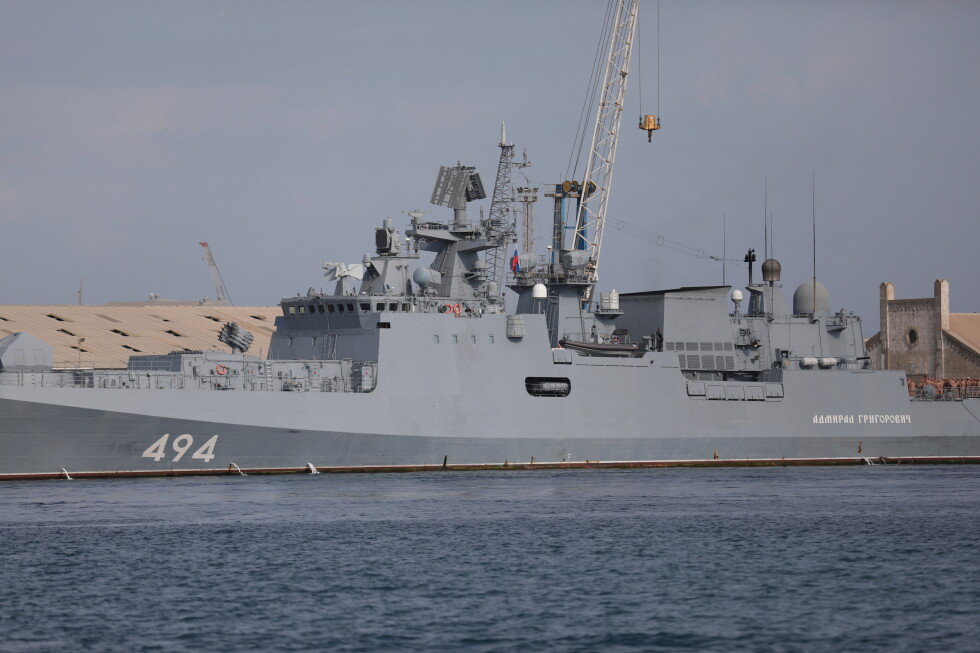
    President Donald Trump expressed sharp frustration on Tuesday as NATO members and key global allies declined his appeals for military assistance in securing the Strait of Hormuz amid escalating tensions with Iran. During a St. Patrick’s Day meeting with Irish Prime Minister Micheál Martin, Trump revealed that traditional U.S. partners had rejected his calls for naval support in the critical waterway, despite what he characterized as substantial American investments in global security.

    The President specifically criticized NATO members for their reluctance to contribute minesweepers or naval assets, noting that such assistance would involve minimal financial burden. Trump’s comments highlighted growing tensions within the transatlantic alliance, which he accused of benefiting from American protection while refusing reciprocal support. “We will protect them, but they will do nothing for us, in particular, in a time of need,” Trump stated via social media.

    European leaders pushed back strongly against the administration’s requests. EU Foreign Policy Chief Kaja Kallas explicitly stated that member nations “do not have the wish to be dragged into this” conflict, emphasizing that the European Union was neither consulted about nor responsible for initiating military actions against Iran. French President Emmanuel Macron offered conditional support for securing the strait but only through operations separate from current hostilities.

    The administration has meanwhile pursued diplomatic pressure campaigns, with the State Department circulating cables urging foreign governments to designate Iran’s Islamic Revolutionary Guard Corps and Hezbollah as terrorist organizations. This effort forms part of a broader strategy to isolate Iran internationally through economic sanctions and diplomatic measures.

    Trump’s relationship with NATO remains characteristically volatile, with the President openly questioning the alliance’s value and suggesting he might reconsider U.S. participation without congressional approval—though legal experts note that 2023 legislation requires congressional authorization for NATO withdrawal.