标签: Europe

欧洲

  • Italy’s improbable World Baseball Classic run ends, but Azzurri leave lasting impact at home

    Italy’s improbable World Baseball Classic run ends, but Azzurri leave lasting impact at home

    MIAMI — Italy’s remarkable journey in the World Baseball Classic concluded Monday night with a heartbreaking 4-2 semifinal loss to Venezuela, yet manager Francisco Cervelli declared his team had achieved something far greater than a tournament victory. The Azzurri, who captured global attention with their unexpected deep run, believe they have fundamentally transformed baseball’s status in their soccer-dominated homeland.

    The semifinal matchup saw Italy surrender a 2-1 seventh-inning lead when Michael Lorenzen yielded consecutive run-scoring singles to Ronald Acuña Jr., Maikel Garcia and Luis Arraez with two outs. Following the final out, Italian players remained draped over the dugout railing for approximately ten minutes, watching Venezuelan celebrations unfold before a roaring sellout crowd at loanDepot Park.

    Despite the defeat, the Italian squad—composed of limited major leaguers and numerous minor league players—accomplished what many considered impossible. They stunned the baseball world with a perfect 5-0 start that included an 8-6 victory over the United States in pool play, a dominant 9-1 win against Mexico featuring captain Vinnie Pasquantino’s historic three-homer game, and an 8-6 quarterfinal triumph over Puerto Rico.

    ‘We are no longer the Cinderella,’ declared Cervelli, addressing his team’s transformation from overlooked underdogs to legitimate contenders. ‘In three years they are going to take us seriously. We have a group of young players that are going to participate in the next classic. What they experienced today, they are going to take it away for the rest of their lives.’

    The tournament impact extended far beyond the field. Pasquantino revealed that approximately 7 million viewers in Italy watched the semifinal broadcast, which began after 1 a.m. local time. ‘That’s incredible,’ he stated. ‘That’s why we’re doing this tournament. The goal of this team—we’ve talked about it a lot—is to impact Italy, and we have. We weren’t successful on the field tonight, but we were successful in Italy.’

    Italy’s captivating run featured endearing celebrations that garnered widespread attention, including espresso shots after each of their 12 home runs and progressively more expensive bottles of wine following victories. While some critics questioned the roster’s composition of primarily Italian-American players who had never visited Italy, Pasquantino expressed hope this would change: ‘We want in 20 years for the World Baseball Classic Italian team to be full of Italians, like Italian speakers from Italy.’

    Center fielder Jakob Marsee, entering his second season with the Miami Marlins, reflected on the experience: ‘To play in front of all these crowds and just how loud they were in these games—no one thought we could win, and being able to do it with all the guys was a lot of fun.’

    The Azzurri’s unexpected success has positioned them as ambassadors for baseball’s growth in Europe, with Cervelli concluding: ‘They revolutionized Italy. They put another sport on the map, which is good.’

  • Venezuela rallies past Italy 4-2 with 3-run 7th and will face US for World Baseball Classic title

    Venezuela rallies past Italy 4-2 with 3-run 7th and will face US for World Baseball Classic title

    In a stunning seventh-inning rally, Venezuela secured its first-ever appearance in the World Baseball Classic championship game with a 4-2 victory over previously undefeated Italy on Monday night at Miami’s loanDepot park.

    The Venezuelan squad, playing before a passionate pro-Venezuelan sellout crowd, mounted a dramatic comeback after trailing 2-0 through four innings. The game-changing sequence occurred in the seventh when Ronald Acuña Jr., Maikel Garcia, and Luis Arraez delivered consecutive run-scoring, two-out singles against Italian reliever Michael Lorenzen.

    Italy, the first European nation to reach a WBC semifinal, had established an early lead in the second inning when Keider Montero issued three consecutive walks, the last forcing in a run against J.J. D’Orazio. Dante Nori added another run with a forceout against Venezuelan pitcher Ricardo Sánchez.

    The Venezuelan comeback began with Eugenio Suárez’s fourth-inning home run off Aaron Nola. The critical defensive moment came in the sixth when reliever Ángel Zerpa escaped a bases-loaded jam by throwing a perfectly placed sinker past Sam Antonacci.

    The seventh-inning rally began with Gleyber Torres drawing a walk, followed by Jackson Chourio’s two-out single that placed runners at the corners. Acuña then beat out an infield hit to score pinch-runner Andrés Giménez, Garcia lined a go-ahead single to left field, and Arraez completed the scoring with another run-scoring single.

    Daniel Palencia secured the victory with a perfect three-out save, striking out Antonacci to end the game and send Venezuela to Tuesday’s championship matchup against the United States.

  • Criticized for their cool, American players head into the WBC final appreciating opponents’ flair

    Criticized for their cool, American players head into the WBC final appreciating opponents’ flair

    As Team USA advances to the World Baseball Classic championship game, their characteristically reserved demeanor stands in stark contrast to the theatrical displays of their Latin American counterparts. Under the leadership of captain Aaron Judge, the American squad has cultivated a clubhouse culture defined by measured composure rather than flamboyant expression.

    Following their narrow 2-1 victory against the Dominican Republic, outfielder Pete Crow-Armstrong acknowledged the cultural differences in baseball expression: “You guys would all think it’s silly if we shuffled like Soto or did Vladdy’s little wiggle. That’s them and if I had enough swag to do that I would probably do that, too. We have fun in our own way, but we definitely have fun out there.”

    The towering 6-foot-7 Judge has established the team’s philosophical foundation through his authentic leadership approach. “It’s been cool to see how he goes about his business,” remarked pitcher Paul Skenes, himself standing at 6-foot-6. “He’s not faking anything. He’s playing as Aaron Judge, so that’s just his personality in the clubhouse and off the field.”

    Manager Mark DeRosa revealed that Judge declined the traditional captain’s “C” on his uniform, demonstrating his humble leadership style. “Leader of men. Classy in every decision he makes,” DeRosa stated. “A lot of decisions that I’ve made throughout the course of the WBC I have made with his recommendations.”

    The team has drawn criticism for occasionally stoic behavior, including catcher Cal Raleigh’s refusal to shake hands with Seattle teammate Randy Arozarena during pool play. Simultaneously, they’ve embraced military connections, with players saluting after victories and hosting former Navy SEAL Robert J. O’Neill, who claimed involvement in the Osama bin Laden operation.

    DeRosa addressed his earlier miscalculation regarding tournament advancement, admitting his premature declaration of quarterfinal qualification was an “overly confident statement” that required correction after Italy’s crucial victory over Mexico secured their progression.

    Seeking their second title after the 2017 championship, Team USA faces either Venezuela or Italy in the final, having reached their third consecutive WBC championship game after falling 3-2 to Japan in the 2023 final.

    Veteran Bryce Harper reflected on cultural differences in baseball expression, recalling early career criticism for his distinctive equipment choices: “I kind of got pounded for it. So there’s an American way of baseball everybody talks about, right? But I think that’s so far from the truth. Obviously, when we grow up, we play a different style. But we learn from other people’s styles, as well.”

    The team will start rookie right-hander Nolan McLean, who previously struggled in the group stage loss to Italy, allowing multiple home runs. Despite this challenge, McLean expressed readiness: “It’s just kind of a dream come true to be able to get the ball in such a big moment, and it’s something I want to do.”

  • Spain’s king acknowledges ‘much abuse’ in the conquest of the Americas

    Spain’s king acknowledges ‘much abuse’ in the conquest of the Americas

    In a significant diplomatic gesture, King Felipe VI of Spain has publicly recognized the historical injustices committed during Spain’s conquest of the Americas, marking a potential turning point in years of strained relations with Mexico. The monarch’s remarks came during his visit to a Madrid museum exhibition highlighting the role of women in pre-Columbian Mexico, where he met with Mexican Ambassador Quirino Ordaz.

    Addressing the contentious historical period, King Felipe stated that the Spanish conquest involved ‘much abuse’ and ‘ethical controversies’ that ‘with our current values, they obviously cannot make us feel proud.’ However, he emphasized the importance of contextual understanding, advocating for ‘objective and rigorous analysis’ rather than ‘excessive moral presentism.’

    This symbolic acknowledgment follows nearly five years of diplomatic tension stemming from former Mexican President Andrés Manuel López Obrador’s 2019 demand for Spain to formally apologize for colonial-era atrocities. The dispute intensified in 2024 when current President Claudia Sheinbaum excluded the Spanish king from her inauguration ceremonies due to the palace’s refusal to issue an official apology.

    The recent thaw in relations began last fall when Spanish Foreign Minister José Manuel Albares acknowledged the ‘pain and injustice’ suffered by Mexico’s Indigenous population during conquests that decimated pre-Hispanic communities. Sheinbaum had characterized those comments as an unprecedented first step toward reconciliation.

    While not constituting a formal apology from the Spanish monarchy, Felipe’s carefully measured statements represent the highest-level recognition to date of historical grievances from Spain’s colonial empire, which once spanned five continents between the 16th and 18th centuries. President Sheinbaum has indicated she will review the king’s remarks as bilateral relations show signs of gradual improvement.

  • Nola to start World Baseball Classic semifinal for Italy against Venezuela instead of Lorenzen

    Nola to start World Baseball Classic semifinal for Italy against Venezuela instead of Lorenzen

    MIAMI — In a strategic pivot just hours before the World Baseball Classic semifinal, Italian manager Francisco Cervelli has announced a significant pitching change. Aaron Nola, not Michael Lorenzen as previously anticipated, will take the mound for Italy against Venezuela at loanDepot Park on Monday night. This last-minute decision reshapes the tactical landscape for the crucial elimination game. Nola, a 32-year-old right-handed pitcher, brings formidable recent form to the start. He secured a victory in Italy’s group stage finale against Mexico on March 11, delivering a dominant performance with five scoreless innings. In that outing, he limited opponents to just four hits while recording five strikeouts and a single walk over 69 pitches. Opposing him will be Venezuela’s starter, Keider Montero. The 25-year-old right-hander will be tasked with neutralizing an Italian lineup that has surprised many in the tournament. The stakes for this semifinal clash are immense, with the victorious team earning the right to face the United States in the championship final on Tuesday night.

  • Dembélé feeling fit and ready to steal the limelight for PSG and France

    Dembélé feeling fit and ready to steal the limelight for PSG and France

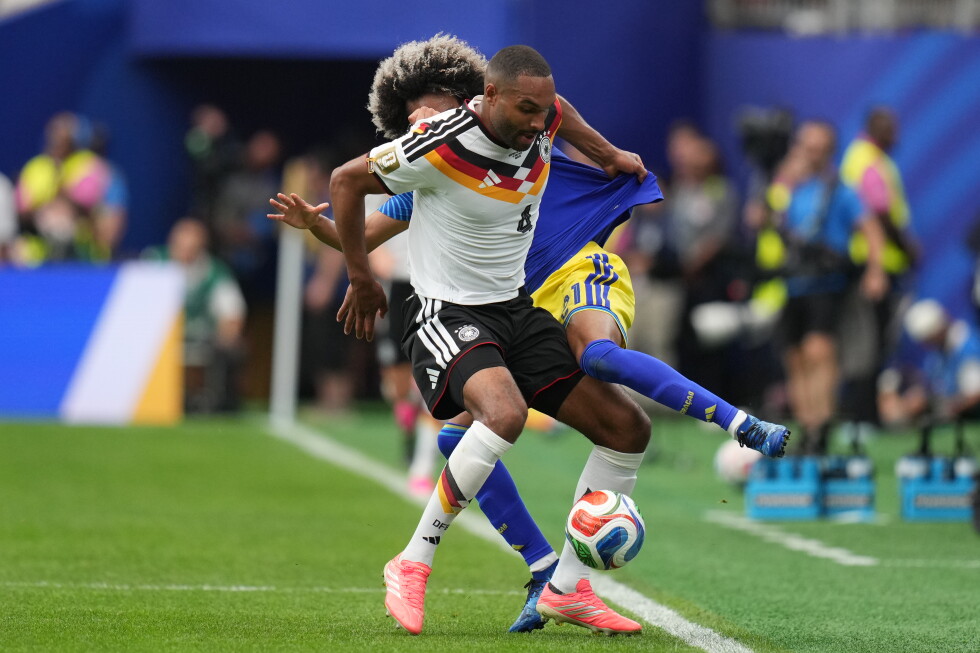
    As the season reaches its pivotal climax, Paris Saint-Germain forward Ousmane Dembélé has declared himself fully fit and brimming with ambition to dominate both club and international football. The French international, now 28 and entering his athletic prime, has overcome persistent injury struggles that previously limited his contributions.

    Dembélé’s resurgence was spectacularly demonstrated during PSG’s 5-2 Champions League victory against Chelsea last Wednesday, where he scored a breathtaking solo goal after sprinting from the halfway line. This performance echoed his career-best form from last season, when he netted 35 goals and played an instrumental role in securing PSG’s inaugural Champions League title while simultaneously earning the prestigious Ballon d’Or.

    “My determination to secure additional silverware with PSG has never been stronger,” Dembélé stated on Monday, ahead of the crucial Champions League return leg against Chelsea. “With the World Cup approaching, my motivation levels are extremely high. Despite previous physical setbacks, I recognize the necessity to demonstrate my capabilities consistently.”

    The talented winger has endured a challenging period with calf and hamstring injuries that caused him to miss 14 matches and be substituted prematurely in several others. Now fully recovered, Dembélé emphasizes his commitment to offensive productivity: “I thrive on frequent ball involvement, making penetrating runs, and contributing either goals or assists in every appearance—this fundamental objective remains unchanged.”

    Beyond his on-field aspirations, Dembélé has emerged as an influential voice within the squad. Following PSG’s disappointing 3-1 defeat to Rennes last month, he publicly criticized teammates for insufficient collective effort, stating: “We must demonstrate greater desire on the pitch. Individualistic play will prevent us from achieving our trophy ambitions. The club’s interests must supersede personal agendas.”

    Although coach Luis Enrique initially advocated for maintaining squad unity, Dembélé remains unapologetic about his constructive criticism, believing it produced positive results: “I have no regrets—this approach is essential for PSG’s success. The message was intended for the entire team, and I believe it yielded benefits. We’ve addressed the issue of poor decision-making in final third situations without creating dressing room conflicts.”

    Luis Enrique, who once benched Dembélé for disciplinary reasons during a Champions League encounter against Arsenal, has transformed into his most ardent supporter. The Spanish manager praised: “He’s an incredible asset who can adapt his playing style dynamically. From a spectator’s perspective, his ball possession is consistently delightful to watch.”

    French national team supporters eagerly anticipate Dembélé’s World Cup performance, hoping for redemption after his premature substitution during the first half of the 2022 final defeat against Argentina.

  • Pope Leo will accept the Liberty Medal in a remote broadcast from Rome

    Pope Leo will accept the Liberty Medal in a remote broadcast from Rome

    In a significant departure from tradition, Pope Leo XIV will accept the prestigious Liberty Medal from Rome via remote broadcast on July 3rd, rather than traveling to Philadelphia during the United States’ 250th anniversary celebrations. The first American pontiff, born Robert F. Prevost in Chicago and educated at Villanova University, will instead mark Independence Day on the Italian island of Lampedusa—a symbolic location known as a primary landing point for African migrants seeking refuge in Europe.

    The National Constitution Center, which bestows the annual honor, announced the decision Monday, recognizing Pope Leo’s lifelong dedication to advancing religious freedom, conscience rights, and expression liberties worldwide—fundamental principles embedded in America’s First Amendment. The Liberty Medal traditionally celebrates individuals of exceptional courage and conviction who have significantly contributed to global liberty, with previous recipients including Ukrainian President Volodymyr Zelenskyy, the late Supreme Court Justice Ruth Bader Ginsburg, and civil rights icon Congressman John Lewis.

    Vatican officials confirmed the Pope’s packed travel schedule for the year includes extensive tours throughout Italy and visits to four African nations, but explicitly excludes any journey to the United States despite a personal invitation from President Donald Trump. This strategic decision aligns with Pope Leo’s continued emphasis on migrant advocacy, following the path of his predecessor Pope Francis who made Lampedusa his first official visit outside Rome in 2013. During that historic trip, Francis conducted Mass on an altar constructed from wrecked migrant boats and condemned what he termed the ‘globalization of indifference’—a stance that previously created diplomatic tensions with the Trump administration.

    The Pope’s deliberate choice to stand in solidarity with migrants on America’s independence celebration reinforces his commitment to humanitarian causes over ceremonial appearances, continuing the Vatican’s focus on global displacement crises despite the symbolic significance of the U.S. semiquincentennial.

  • Wary allies show there’s no quick fix to Trump’s Iran crisis

    Wary allies show there’s no quick fix to Trump’s Iran crisis

    Former President Donald Trump’s latest remarks regarding NATO’s role in securing the Strait of Hormuz have ignited fresh tensions within the transatlantic alliance, revealing fundamental disagreements about its strategic purpose. Trump suggested that failure to secure the vital waterway would prove “very bad for the future of NATO,” implying offensive obligations that contradict the alliance’s defensive foundation.

    This perspective has drawn sharp criticism from European leaders and military experts. Germany’s Defense Minister Boris Pistorius openly questioned what “a handful of European frigates” could accomplish that the powerful U.S. Navy could not, emphasizing that “This is not our war. We have not started it.” The sentiment echoes across European capitals, where governments are resisting pressure to join military operations against Iran.

    The crisis stems from Iran’s effective blockade of the Strait of Hormuz, except for vessels carrying Iranian oil to allies like India and China. This has created urgent economic concerns as Western governments scramble to address the disruption to global shipping routes.

    Military capabilities present another challenge. Former Royal Navy Commander Tom Sharpe noted that Western navies have largely neglected mine-clearing capabilities since the last major naval de-mining operation in 1991. The Royal Navy currently has no mine-clearing ships in the region, instead offering newly developed seaborne drones that remain combat-untested.

    Complicating matters further, Iran’s Revolutionary Guard possesses sophisticated asymmetric capabilities including armed fast boats, naval suicide drones, and shore-based missiles. Recent imagery from Iranian media shows extensive preparations with boats and drones stored in underground tunnels.

    While Trump has characterized keeping the strait open as “a very small endeavour” potentially involving attacks on the Iranian coastline, European allies are advocating for de-escalation. EU foreign ministers are considering expanding the mandate of Operation Aspides, currently focused on Red Sea security, though member states including Spain and Italy have expressed reservations.

    French President Emmanuel Macron has emerged as the most willing European leader to participate in escort operations, but only after the “hottest phase” of conflict concludes. The complex threat environment—with dangers from air, surface, and underwater dimensions—makes any escort operation significantly more challenging than previous missions against Houthi rebels.

    With no clear resolution in sight, NATO allies remain caught between American pressure for involvement and their own strategic calculations about engaging in a conflict they did not initiate.

  • Morocco or France? Lille’s 18-year-old Ayyoub Bouaddi keeps his World Cup choice open

    Morocco or France? Lille’s 18-year-old Ayyoub Bouaddi keeps his World Cup choice open

    LILLE, France — The international football community awaits a pivotal decision from Ayyoub Bouaddi, Lille’s 18-year-old midfield prodigy, who must choose between representing France or Morocco at the highest level. Currently starring in Ligue 1, Bouaddi has emerged as one of Europe’s most promising talents, creating intense recruitment competition between two footballing nations.

    Despite his established presence in France’s youth squads, including the Under-21 team, Bouaddi remains the subject of aggressive courting by Moroccan football authorities. The North African nation, fresh from their historic World Cup semifinal appearance in 2022, has intensified efforts to secure the dual-nationality player’s commitment ahead of the 2026 World Cup in North America.

    When questioned about his international allegiance following Lille’s 2-1 victory over Rennes, Bouaddi maintained an open stance: ‘Let’s see, I’ve not chosen yet.’ This ambiguity comes as Morocco’s football federation and newly appointed coach Mohamed Ouahbi accelerate their pursuit, potentially including Bouaddi in upcoming World Cup preparation matches against Ecuador and Paraguay in late March.

    The technical midfielder’s remarkable trajectory includes breaking records at Lille, where he became the youngest player to feature in the UEFA Conference League just three days after his 16th birthday. His Champions League debut against Real Madrid on his 17th birthday further cemented his status as an exceptional talent with world-class potential.

    Morocco’s recruitment strategy has consistently targeted players of Moroccan descent developed in European systems, and Bouaddi represents their latest priority. The Atlas Lions face Brazil, Haiti, and Scotland in Group C of the 2026 World Cup, adding urgency to their talent acquisition efforts.

  • Ex-French president Sarkozy appeals conviction in Libyan campaign financing case

    Ex-French president Sarkozy appeals conviction in Libyan campaign financing case

    PARIS — Former French President Nicolas Sarkozy appeared before an appeals court in Paris on Monday to contest his landmark conviction for illicit campaign financing tied to Libyan sources during his 2007 presidential bid. The 71-year-old conservative leader, who previously served 20 days in prison last year, is fighting a five-year sentence for “criminal conspiracy” handed down last September.

    The original trial concluded that Sarkozy and his associates orchestrated a sophisticated scheme between 2005 and 2007 to secure millions in funding from the regime of late Libyan dictator Moammar Gadhafi. In exchange for financial support, prosecutors alleged Sarkozy offered political and diplomatic concessions to the North African government.

    This appeal proceeding, expected to continue through June 3, will reexamine all evidence and testimony involving Sarkozy and nine co-defendants, including three former government ministers. The case represents an unprecedented moment in French judicial history—marking the first time a modern French president has faced actual imprisonment.

    Sarkozy maintains his complete innocence, characterizing the allegations as politically motivated attacks. Despite multiple legal challenges since leaving office in 2012, he remains an influential figure within conservative political circles.

    The appeal unfolds against the backdrop of another recent judicial setback for Sarkozy. France’s Court of Cassation upheld his conviction in November for separate illegal campaign financing violations during his 2012 reelection attempt. That ruling requires him to serve six months under house arrest with electronic monitoring—a sentence that has not yet been implemented.