Marking her first official overseas trip since completing cancer treatment, the Princess of Wales has outlined a bold call to center early childhood development on the global policy agenda, while sounding a sharp warning about the erosion of genuine human connection in an increasingly digitized world.
The two-day visit to Reggio Emilia, northern Italy, last month forms the backdrop for a newly published reflective essay from Catherine, Princess of Wales, released this week by the Royal Foundation’s Centre for Early Childhood. Titled *Creating the conditions for love to flourish through nature and creativity*, the piece is the most prominent public contribution from the princess since she stepped back from full duties to undergo cancer treatment, and lays out a clear roadmap for her ongoing advocacy work.
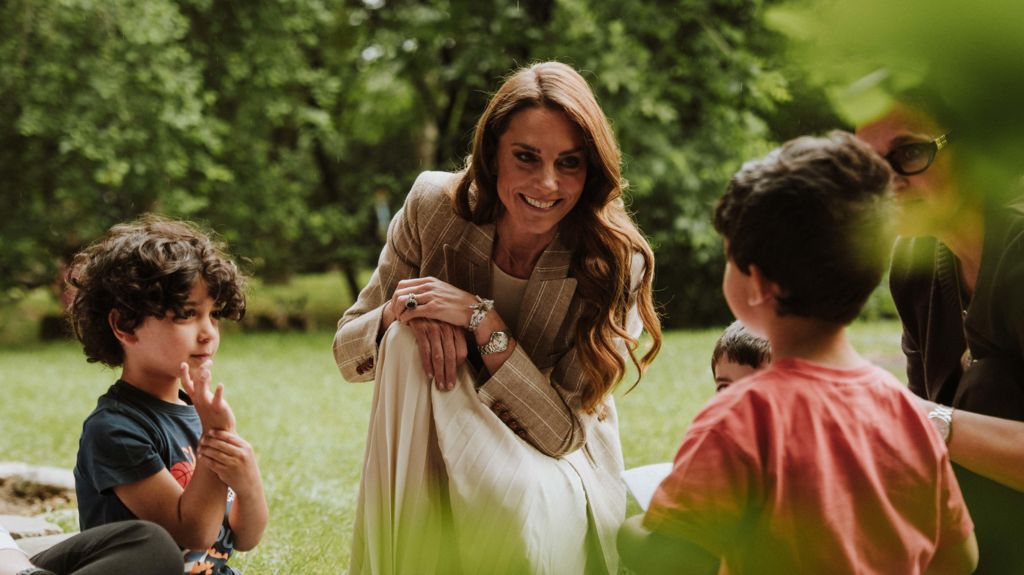
During her time in Reggio Emilia – a region globally renowned for its child-centered, community-focused approach to early years education – the Princess toured local education projects, met with young children and their families, and observed firsthand how low-technology, connection-focused learning shapes childhood development. To accompany the essay, the Royal Foundation has published a series of new candid photos capturing the Princess interacting with local children during the trip.
In the essay, Catherine recalls a question posed by a fellow parent at her children’s school: If every person could change just one thing to improve the world, what would it be? Her answer, she writes, is simple: to prioritize love. She clarifies that this is not a call for grand, sentimental gestures, but rather a commitment to quiet, unconditional love built through consistent presence, shared time, and intentional patience.
The Princess’s reflection comes amid growing concern about the impact of pervasive screen use on childhood development and human interaction. She argues that in an era where nearly every part of daily life is mediated through digital devices, the need for unstructured, face-to-face human connection has never been more urgent. Catherine, who has spoken repeatedly about the power of human contact since her cancer diagnosis, expands on this theme in the essay, emphasizing the joy found in unremarkable everyday moments and what she calls the “everyday magic of life itself.”
“Children always give me hope. Their natural openness, their curiosity about the simplest of things, and their ability to wonder, dream and play remind me of the very best qualities of humanity,” the Princess writes. “The children I met on my recent trip to Reggio Emilia radiated such qualities. Their innate ability to connect and communicate in all sorts of different ways made me feel immediately welcome, as they accepted a complete stranger with confidence and joy.”
Christian Guy, Executive Director of the Royal Foundation Centre for Early Childhood, explained that the essay reflects the Princess’s long-running goal to elevate early childhood development to the status of a pressing global priority, on par with challenges such as climate change. “This essay gives a real insight into how passionately HRH feels about the unique importance of early childhood and its ability to shape society,” Guy said.
Sources close to the Princess describe the Italy trip as a key turning point in her gradual return to full public duties, which has been planned and paced carefully following her treatment. The overwhelmingly positive public response to the visit has confirmed that Catherine remains one of the most popular and influential figures in the British royal family, drawing large public interest and support for her advocacy work.
Following the success of the Reggio Emilia visit, the Princess’s team is now researching other global destinations with innovative, proven approaches to early childhood support, with plans for future study visits. The essay makes clear that supporting young families and nurturing healthy childhood connection will remain the core priority of Catherine’s public work moving forward.
“By allowing children to feel connected from an early age, we can help them carry that sense of balance into adulthood,” the Princess concludes. “If healing later in life is about rediscovering our most important connections, then perhaps the real task is to ensure that they are never lost in the first place.”