标签: Europe

欧洲

  • EU steps in to make sure Google gives rivals access to AI services and data

    EU steps in to make sure Google gives rivals access to AI services and data

    BRUSSELS — The European Union has initiated formal proceedings against tech giant Google to ensure compliance with the Digital Markets Act (DMA), specifically targeting the company’s artificial intelligence services and data sharing practices. The executive arm of the 27-nation bloc announced on Tuesday the opening of specification proceedings to verify whether Google is providing rival AI companies and search engines with equitable access to Gemini AI services and essential data.

    The European Commission’s action focuses on two primary concerns: whether Google is granting third-party AI developers “equally effective access to the same features” available through its proprietary services, and whether competing search engines are receiving fair and reasonable access to Google Search data, including eligibility for AI chatbot providers.

    This regulatory move represents the EU’s latest effort to enforce its landmark digital competition rules, designed to prevent dominant tech platforms from leveraging their market position to disadvantage smaller competitors. The proceedings, which must conclude within six months, could result in draft measures imposed on Google’s operations.

    Google’s Senior Competition Counsel Clare Kelly responded with concerns about the procedure, stating that Android’s open design already facilitates Search data licensing to competitors under DMA requirements. Kelly warned that additional rules “driven by competitor grievances rather than consumer interests” could potentially compromise user privacy, security, and technological innovation.

    Teresa Ribera, Executive Vice President of the European Commission overseeing competition affairs, emphasized the EU’s commitment to ensuring that the current technological transformation benefits from “an open and fair playing field, not tilted in favor of the largest few.”

    This development intensifies regulatory pressure on Google, which already faces ongoing antitrust scrutiny from EU authorities regarding potential unfair advantages gained through using online content for its AI models and services.

  • Fascist salutes from the podium: Cortina’s forgotten ‘mini-Olympics’ during World War II

    Fascist salutes from the podium: Cortina’s forgotten ‘mini-Olympics’ during World War II

    CORTINA D’AMPEZZO, Italy — As the world prepares for the 2026 Milan Cortina Winter Olympics, a largely erased chapter of sports history resurfaces from the very grounds where Olympic events will unfold. The current curling arena and mobile-home Athletes’ Village stand precisely where fascist imagery once dominated during the 1941 World Ski Championships—an event orchestrated by Mussolini’s Italy and Nazi Germany as a propaganda spectacle.

    While Cortina’s 1956 Winter Games are well documented, the 1941 championships remain conspicuously absent from official records. The International Skiing Federation (FIS) expunged all results after World War II, effectively erasing the event from historical memory. Recently discovered archival materials and amateur films reveal athletes performing Nazi salutes on podiums, swastika flags throughout the resort town, and a substantial military presence.

    According to University of Bologna sports historian Nicola Sbetti, “The Italian republic has never been interested in taking responsibility for the championships.” He characterizes the event as part of an Axis powers strategy “to create a new world order” through sports, maintaining normalcy while war ravaged Europe.

    The competition excluded Allied nations while featuring Axis countries and puppet states. Germany—bolstered by annexed Austria’s skiers—and Italy dominated the Alpine events, claiming all 18 medals between them. Austrian-born Josef Jennewein and German skier Christl Cranz achieved multiple gold medals, with Cranz’s record-equaling performances only recently matched by American Mikaela Shiffrin.

    Communications director Max Vergani, author of “Cortina41: The Phantom World Championship,” describes how Mussolini transformed the event into a “mini-Olympics” after the cancellation of the 1944 Winter Games. The championships served as a demonstration of fascist power similar to Hitler’s 1936 Berlin Olympics.

    Tragically, many 1941 medalists perished in subsequent war operations, including Jennewein shot down over the Soviet Union and Cranz’s brother killed on the Eastern Front. Italian slalom champion Celina Seghi continued competing after the war, eventually earning a bronze medal at the 1950 worlds before passing away in 2022 at age 102.

    The FIS formally nullified the championships at its first postwar congress in 1946, with the motion passing unanimously. Today, few physical traces remain beyond souvenir shop items featuring the event’s official poster—a ghostly reminder of sports’ complex relationship with political propaganda.

  • Russian drones injure Ukrainian children and a pregnant woman as Zelenskyy urges swifter diplomacy

    Russian drones injure Ukrainian children and a pregnant woman as Zelenskyy urges swifter diplomacy

    Ukrainian authorities reported a devastating Russian drone assault on the southern port city of Odesa, leaving 23 civilians wounded—including two children and a pregnant woman. The attack, which utilized over 50 advanced drones, targeted critical infrastructure and residential areas, exacerbating the humanitarian crisis during an exceptionally harsh winter.

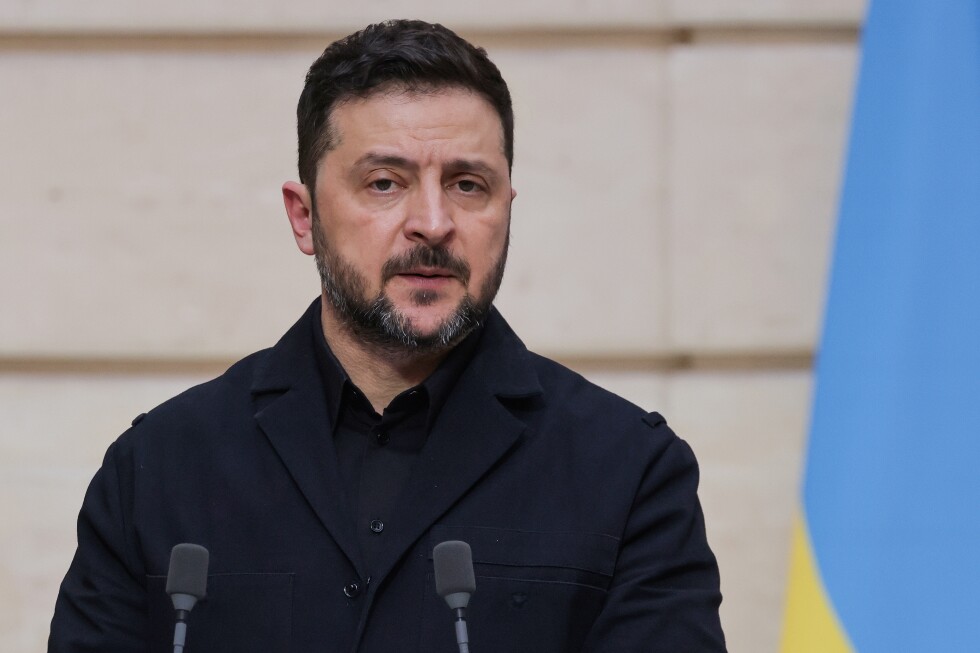
    President Volodymyr Zelenskyy urgently appealed for accelerated U.S. diplomatic intervention to resolve the nearly four-year conflict, emphasizing that each Russian strike undermines ongoing peace negotiations. Despite reported progress in diplomatic channels, fundamental disagreements persist regarding the status of Russian-occupied Ukrainian territories.

    Military analysts suggest Russian President Vladimir Putin remains strategically patient, betting on waning Western support and Ukrainian fatigue. Meanwhile, Russia continues enhancing its drone capabilities, recently deploying the jet-powered ‘Geran-5’ model capable of carrying 90-kilogram warheads over 1,000 kilometers.

    In response, Ukraine has significantly ramped up production of interceptor drones while developing long-range offensive capabilities. The overnight exchange saw Russian air defenses claim 19 Ukrainian drones destroyed across multiple regions.

    Notably, Russia’s military recruitment strategies have expanded to include cash incentives, prisoner releases, and the exploitation of foreign laborers—with an Associated Press investigation revealing Bangladeshi workers being deceived into combat roles under false pretenses.

  • World pauses to commemorate International Holocaust Remembrance Day

    World pauses to commemorate International Holocaust Remembrance Day

    Communities across Europe and beyond gathered in solemn reflection on Tuesday to mark International Holocaust Remembrance Day, honoring the memory of the six million Jewish victims and countless others systematically murdered by Nazi Germany. The January 27th observance coincides with the 1945 liberation of Auschwitz-Birkenau by Soviet forces, the most infamous complex within Germany’s network of extermination camps.

    At the Auschwitz memorial site in German-occupied Poland, survivors placed floral tributes at the Execution Wall where thousands, predominantly Polish citizens, were murdered. Polish President Karol Nawrocki joined remembrance ceremonies at Birkenau, where European Jews were transported for mass extermination in gas chambers. The site witnessed the murder of approximately 1.1 million people, primarily Jews but also Poles, Roma, and other targeted groups.

    In Berlin, flickering candles and white roses adorned the Memorial to the Murdered Jews of Europe, where 2,700 concrete slabs stand near Brandenburg Gate as a permanent testament to Germany’s remorse. National commemorations occurred simultaneously at the United Nations and across European nations, with Germany’s official parliamentary observance scheduled for Wednesday.

    New data from the Conference on Jewish Material Claims Against Germany reveals approximately 196,600 Holocaust survivors remain alive worldwide—a significant decrease from 220,000 just one year prior. Notably, 97% represent ‘child survivors’ born in 1928 or later. Despite the diminishing survivor community, many continue to share their testimonies for the first time after decades of silence.

    The Netherlands conducted its annual memorial on Sunday with a silent procession through Amsterdam’s historic Jewish quarter. Mayor Femke Halsema addressed hundreds of attendees at Wertheim Park, characterizing Nazi camps as “unprecedented and still incomprehensible examples of what intolerance, hatred, and racism can lead to.”

  • ICE agents will have a security role at Milan-Cortina Olympics, US sources say

    ICE agents will have a security role at Milan-Cortina Olympics, US sources say

    In an unprecedented security arrangement for the Olympic stage, the United States will deploy agents from its Immigration and Customs Enforcement (ICE) agency to the upcoming Milan Cortina Winter Games. According to authoritative sources within the U.S. embassy in Rome, this deployment was formally confirmed this Tuesday. The initiative, however, comes with a clearly defined and limited operational scope. The primary mandate for these federal agents will be to provide robust support and reinforcement to existing U.S. diplomatic security contingents. Embassy officials were explicit in clarifying that the personnel will have no role in, nor will they conduct, any form of immigration enforcement operations on Italian soil. Their presence is framed purely as a collaborative measure to ensure the safety and security of American diplomatic personnel and assets during the high-profile international event, which draws global attention and necessitates heightened security protocols.

  • She was born in a concentration camp. A Holocaust survivor tells her story for the first time

    She was born in a concentration camp. A Holocaust survivor tells her story for the first time

    TEL AVIV, Israel — Ilana Kantorowicz Shalem, among the youngest living Holocaust survivors at 81 years old, has chosen to break her lifelong silence by revealing an extraordinary story of survival that begins with her birth in the Bergen-Belsen concentration camp during the final days of World War II.

    Her mother, Lola Kantorowicz, concealed her pregnancy amidst the horrific conditions of the camp, where widespread starvation made distended bellies commonplace. On March 19, 1945—just thirty days before British forces liberated the camp—Ilana was born as Russian troops advanced through Germany. Archivist Sima Velkovich of Yad Vashem described the circumstances as “unimaginable,” noting the camp was filled with “mountains of corpses” and thousands of desperately ill prisoners at the time.

    Shalem’s survival represents a statistical miracle. Most infants born in concentration camps were immediately killed by Nazi authorities. Her existence only became possible because the Nazi leadership was in disarray during the war’s final weeks.

    The backdrop to this revelation comes as the world prepares to observe International Holocaust Remembrance Day on January 27, the anniversary of the liberation of Auschwitz-Birkenau. This year’s commemorations occur amidst rising global antisemitism following the Israel-Hamas conflict.

    Shalem’s parents, Lola Rosenblum and Hersz (Zvi) Abraham Kantorowicz, first met as teenagers in the Tomaszow Ghetto in Poland. They maintained a clandestine relationship through multiple labor camps after being separated from their families. Though they married informally in the ghetto, they were ultimately separated in 1944. Hersz perished in a death march just days before the war’s end.

    Lola survived Auschwitz, the Hindenburg labor camp, and a death march to Bergen-Belsen while pregnant. “If they discovered she was pregnant, they would have killed her,” Shalem explained. “She hid her pregnancy from everyone, including her friends, because she didn’t want the extra attention or anyone to give her their food.”

    Following liberation, baby Ilana became a symbol of hope in the displaced persons camp. “Actually, I was everyone’s child,” Shalem recalled. “For them, it was some kind of sign of life.” Photographs from the period show a healthy infant surrounded by adoring adults who saw her as “a new seed” of hope.

    Shalem noted that discussing Holocaust experiences was largely taboo in Israeli society during the 1960s when she first began asking her mother questions. “Now we know, in order to absorb trauma, we need to talk about it,” she said, contrasting this with the immediate public sharing by survivors of the October 7 Hamas attacks.

    The decision to share her story comes as Holocaust survivors dwindle in number. According to the Claims Conference, approximately 196,600 survivors remain alive today, with nearly half residing in Israel. Nearly 25,000 survivors passed away last year alone, with the median age now 87.

    Shalem, who has two daughters, reflects on her mother’s extraordinary strength: “It’s a situation that was very unusual, it probably required special strength to be able to believe. She said that one of the things was that if she had known my father was killed, she wouldn’t have tried so hard. She wanted him to know me.”

  • Russia offers cash bonuses, frees prisoners and lures foreigners to replenish its troops in Ukraine

    Russia offers cash bonuses, frees prisoners and lures foreigners to replenish its troops in Ukraine

    Russia has developed a multi-pronged recruitment strategy to sustain its military operations in Ukraine while avoiding another politically risky nationwide mobilization. The Kremlin’s approach leverages substantial financial incentives, immigration benefits, and questionable recruitment practices to maintain troop levels in the nearly four-year conflict.

    For Russian citizens, military service offers unprecedented economic rewards. Regional authorities provide enlistment bonuses reaching approximately $50,000 in some areas—more than double the average annual income. Additional benefits include tax breaks, debt relief, and extensive perks. Despite claims of voluntary enlistment, reports indicate conscripts and prisoners face coercion to sign contracts that automatically extend indefinitely, contrary to initial fixed-term representations.

    The recruitment net extends globally, targeting foreign nationals through accelerated citizenship programs and deceptive employment schemes. Citizens from India, Nepal, Bangladesh, South Africa, Iraq, Cuba, and Kenya have reported being misled into military service by traffickers promising legitimate jobs. North Korea contributed thousands of soldiers following a 2024 mutual defense treaty with Moscow, primarily deployed to defend Russia’s Kursk region.

    President Vladimir Putin maintains that 700,000 troops are currently deployed in Ukraine, though independent verification remains impossible. British defense officials estimate over 1 million Russian casualties, while Mediazona and BBC researchers have documented more than 160,000 fatalities, including at least 550 foreigners from two dozen countries.

    The strategy carries significant economic consequences. Analysts note that recruitment has become “extremely expensive” for Russia’s slowing economy, with foreign nationals particularly vulnerable due to language barriers, lack of military experience, and being considered “dispensable” by commanders. Despite these challenges, recruitment numbers reportedly remained strong throughout 2023-2024, with Putin claiming over 400,000 voluntary enlistments last year.

  • Spanish soccer federation president says Spain will host the final of the 2030 World Cup

    Spanish soccer federation president says Spain will host the final of the 2030 World Cup

    In a significant development for international football, Spain has been officially confirmed as the host nation for the 2030 World Cup final. The announcement was made by Rafael Louzán, President of the Spanish Football Federation, during a media briefing on Monday, though FIFA has yet to make an official statement regarding venue allocations for the tri-continental tournament.

    Louzán definitively stated that Spain would lead the World Cup organization and host the championship match, without specifying the exact location within the country. This confirmation follows considerable speculation about potential venues, with Spanish media long favoring Real Madrid’s renovated Santiago Bernabeu Stadium as the frontrunner. Barcelona’s upgraded Camp Nou stadium also remains a potential contender for hosting the final match.

    The decision represents a setback for Morocco, which had aggressively campaigned to host the final at the future Hassan II Stadium in Casablanca. Slated for completion in 2028 with a planned capacity of 115,000 spectators, the venue would have been the world’s largest football arena. However, recent organizational challenges during the Africa Cup of Nations tournament, which faced criticism for logistical issues, potentially diminished Morocco’s bid to host the World Cup final.

    The 2030 World Cup will feature an unprecedented hosting arrangement across three continents, with Spain, Portugal, and Morocco serving as primary co-hosts. In a symbolic nod to football history, South American nations Uruguay, Argentina, and Paraguay will each host one match to commemorate the tournament’s centennial celebration, marking a return to Uruguay where the inaugural World Cup was held in 1930.

  • The first refugee to lead the U.N. refugee agency calls this a ‘very difficult moment in history’

    The first refugee to lead the U.N. refugee agency calls this a ‘very difficult moment in history’

    ROME — The newly appointed United Nations High Commissioner for Refugees, Barham Salih, issued a stark warning Monday about the unprecedented challenges facing global refugee protection systems. Speaking in his first major interview since assuming office on January 1st, the former Iraqi president described the current situation as “a very difficult moment in history” that demands innovative solutions and international solidarity.

    The UNHCR faces a catastrophic funding shortfall following a dramatic reduction in U.S. contributions, which have plummeted from $2.1 billion to approximately $800 million for 2024-2025. Despite this drastic cut, the United States remains the agency’s largest single donor. Salih emphasized that while resources are being “constrained and limited in very, very significant ways,” he maintains hope that global humanity will prevail in supporting the world’s displaced populations.

    With 117.3 million forcibly displaced people from 194 countries worldwide—including approximately 30 million refugees requiring direct support—the funding crisis couldn’t come at a worse time. Salih stressed the urgent need to safeguard the 1951 Refugee Convention amid growing repression of immigrants and attempts to redefine international asylum protocols.

    The High Commissioner, who himself fled Iraq twice during Saddam Hussein’s regime, brings personal experience to his role. His background informs his perspective that “refugees are not just numbers and victims” but individuals who can thrive given proper protection and opportunities.

    Salih has already undertaken field visits to refugee camps in Chad and Kenya, witnessing firsthand the conditions of those displaced by conflicts in Sudan, Somalia, Congo, and Ethiopia. He has also secured support from Pope Leo XIV during a Vatican meeting, noting the crucial role of faith-based organizations in refugee advocacy.

    Despite the overwhelming challenges, Salih described his new position as “a great honor” and remains committed to making UNHCR more cost-effective while maintaining essential services for those most in need.

  • Hungary’s Orbán accuses Ukraine of election interference and summons ambassador

    Hungary’s Orbán accuses Ukraine of election interference and summons ambassador

    BUDAPEST, Hungary — Hungarian Prime Minister Viktor Orbán has dramatically escalated diplomatic tensions with Ukraine by accusing Kyiv of attempting to interfere in Hungary’s upcoming parliamentary elections. In a striking move on Monday, Orbán ordered the summoning of Ukraine’s ambassador to the Hungarian foreign ministry following what he characterized as “grossly offensive and threatening statements” from Ukrainian leadership.

    The nationalist leader, who faces his most significant electoral challenge in sixteen years this April, has intensified his longstanding anti-Ukraine campaign strategy. Orbán claims Ukrainian officials, including President Volodymyr Zelenskyy, have launched coordinated efforts to undermine Hungary’s sovereignty and influence the election outcome. Without presenting specific evidence, the prime minister asserted that national security assessments confirmed Ukrainian interference attempts.

    This diplomatic confrontation emerges as Orbán’s right-wing Fidesz party trails opposition parties by double digits in most pre-election polls. The prime minister has centered his campaign on unverified claims that Hungarian citizens could face forced conscription to fight in Ukraine if his government loses power. Orbán has additionally accused his primary political rival, Péter Magyar, of conspiring with Kyiv to install a pro-Western administration in Budapest.

    Hungary has consistently opposed European Union military and financial assistance to Ukraine throughout Russia’s ongoing invasion, maintaining Orbán’s unique position as the EU leader with closest ties to Moscow. The government has vowed to veto Ukraine’s EU membership aspirations and recently launched a national petition campaign against continued European support for Kyiv.

    The diplomatic rift widened last week when President Zelenskyy criticized Orbán at the World Economic Forum in Davos, suggesting the Hungarian leader “lives off European money while trying to sell out European interests” and comfortable relations with Moscow shouldn’t dictate European policy.