标签: Europe

欧洲

  • France’s Muslim gathering ban overturned by courts

    France’s Muslim gathering ban overturned by courts

    A major four-day annual gathering of French Muslims in northern Paris will proceed as scheduled after a French administrative court struck down a government attempt to ban the event in a last-minute ruling delivered just two hours before the gathering was set to open at 14:00 local time.

    The Paris Police Prefecture had justified the ban by citing heightened national and international security tensions, arguing the event — known as the Annual Encounter of Muslims of France — faced significant risk of terrorist targeting against attendees, and that far-right extremist groups could mobilize to disrupt the gathering, potentially with remote backing from foreign actors. French authorities have repeatedly accused nations including Russia and Iran of fomenting domestic division through proxy groups carrying out small-scale provocations and sabotage. Police also claimed the gathering would place an unsustainable strain on local law enforcement resources.

    Organized by the Muslims of France (MF) association, the largest Muslim representative body in the country, the event combines religious and cultural conferences with a commercial trade fair. The gathering was a long-running annual tradition that regularly drew tens of thousands of attendees from across Europe before it was paused in 2019. Critics have long claimed MF has close ties to the international Muslim Brotherhood, an allegation the organization repeatedly denies.

    Following the ban announcement, MF filed an emergency injunction to challenge the government order, arguing that a prohibition would violate fundamental French civil liberties. In its ruling, the court sided with organizers, finding that evidence provided by police failed to prove a concrete risk of counter-protests or targeting by far-right groups. The court also rejected the police resource strain argument, noting that event organizers had already committed to funding and deploying additional private security measures.

    The court decision comes amid a broader policy push by the French government to advance a new anti-separatism law, primarily targeting religious institutions that promote ideologies deemed inconsistent with French republican principles. Interior Minister Laurent Nunez explained the proposed legislation would build on a similar law enacted five years prior, which allowed the government to shut down associations accused of spreading Islamic separatism. Nunez noted that existing legal powers left gaps in regulation, particularly for oversight of collective childcare services, and that the new law would also enable authorities to ban publications that incite hatred, violence, and discrimination.

    During the injunction hearing, MF lawyer Sefen Guez Guez argued that the proposed ban represented a clear violation of the constitutional right to peaceful assembly, and that the government’s push for the prohibition was primarily a political maneuver to build support for its new anti-separatism legislation. In response, legal representatives for the police maintained that the ban was rooted exclusively in public safety concerns, and rejected claims that the order was anti-Muslim or anti-Islam.

  • Exclusive: Orbán challenger Magyar says election is a ‘referendum’ on Hungary’s place in the world

    Exclusive: Orbán challenger Magyar says election is a ‘referendum’ on Hungary’s place in the world

    With just one week remaining until Hungary’s high-stakes national election on April 12, opposition leader Péter Magyar has cast the upcoming vote as a defining national referendum: will Hungary continue its shift toward Eastern authoritarianism, or reaffirm its place in Europe’s democratic community? A one-time ally of long-serving pro-Russian Prime Minister Viktor Orbán, Magyar has emerged as the most formidable threat to Orbán’s hold on power since the nationalist leader first took office in 2010.

    In an exclusive interview with The Associated Press following a campaign rally for his center-right Tisza Party in the southern Hungarian city of Kiskunhalas, Magyar argued that Orbán has steered the country on a 180-degree ideological turn over his tenure, endangering Hungary’s longstanding Western alignment while building closer political and economic ties to Moscow. Despite this shift, Magyar emphasized that a majority of Hungarians still view EU and NATO membership as the only guarantee of the country’s long-term peace and sustainable development. “I think this really will be a referendum on our country’s place in the world,” he told AP.

    Magyar’s grassroots campaign has been relentless: he has crisscrossed Hungary, holding hundreds of rallies in cities, towns and rural settlements, stopping at as many as six communities a day in the lead-up to voting. The rapid rise of Magyar and Tisza has shocked political observers across Europe. For 14 years, Hungary’s fragmented opposition groups failed repeatedly to unseat Orbán, with most opposition leaders neglecting outreach to Orbán’s core rural base and leaving many opposition supporters demoralized and apathetic after a string of crushing electoral defeats.

    A 45-year-old lawyer and former insider within Orbán’s ruling Fidesz party, Magyar has unique insight into the ruling party’s system: he previously worked as a diplomat in Brussels, held roles in Hungarian state institutions, and was once married to a former Fidesz justice minister and close Orbán ally. His break with the ruling party came in early 2024, amid a public scandal over a presidential pardon granted to an accomplice in a child sexual abuse case. After publicly cutting ties, he accused Fidesz of systemic, entrenched corruption and the systematic capture of Hungary’s independent institutions.

    Magyar launched Tisza, named for Hungary’s second-longest river, just four months before the 2024 European Parliament elections, where the new party won an surprising 30% of the national vote. Its skyrocketing popularity spawned the rallying chant that has become the party’s unofficial motto: “The Tisza is flooding.”

    Heading into the national election, Magyar leads Orbán in most public opinion polls. He has centered his campaign on pocketbook and quality-of-life issues that resonate with everyday Hungarians: the crumbling state of Hungary’s public healthcare system, underfunded public transportation, and widespread government corruption that he says has left Hungary the poorest and most corrupt member state in the EU. He promises voters a “peaceful, humane and functioning” Hungary that is within reach if Fidesz is voted out.

    On the international stage, Magyar has drawn sharp lines with Orbán’s approach to Europe and Russia. Orbán, the EU’s longest-serving national leader, has built a reputation as a persistent disruptor within the bloc, using his veto power to block key EU initiatives repeatedly – most recently holding up a €90 billion ($104 billion) macroeconomic assistance package for Ukraine. His hardline euroskeptic posturing has prompted renewed calls within the EU to reform its unanimity requirement for key policy decisions, a change intended to prevent obstructionist member states from paralyzing bloc-wide action.

    Magyar argues that Orbán’s vetoes are almost always performative, used solely to rally his domestic base rather than advance genuine Hungarian interests. A Tisza government, he says, will take a “constructive but critical” approach to EU governance: Hungary will remain a willing participant at the negotiating table, will advocate forcefully for Hungarian national interests when needed, and will retain the power to veto decisions as a legitimate tool when appropriate. “The European leaders have no problem with this, they have a problem with the unnecessary troublemaker role,” Magyar said.

    Orbán’s closest alignment with Russia has drawn particular condemnation from European leaders. Following Russia’s full-scale invasion of Ukraine in 2022, nearly all EU member states cut ties with Russian fossil fuel suppliers – but Hungary, alongside Slovakia, maintained and even increased its imports of Russian energy, drawing accusations from across the bloc that it is indirectly funding Putin’s war effort. Orbán’s warm relationship with Putin has also led many analysts and opposition figures to accuse Russian intelligence of meddling in the 2025 election to boost Orbán’s chances of victory.

    Magyar has condemned both Orbán’s pro-Russian drift and alleged Russian election interference, but says a Tisza government will pursue a pragmatic, sovereign approach to Moscow: “Pragmatism means that we have no say in Russia’s internal affairs, and they don’t have any say in our affairs. We are both sovereign countries, and we respect each other, but we don’t have to like each other.” He has criticized Orbán’s failure to diversify Hungary’s energy supply, a critical vulnerability for the landlocked country, and has called for new infrastructure and trade agreements to bring energy from alternative suppliers, while noting that an immediate full cut-off of Russian oil is not practical, and that EU funds should be leveraged to facilitate a gradual transition.

    Notably, Magyar has retained popular positions from Orbán’s policy platform that enjoy broad support among Hungarian voters, including the southern border fence designed to block irregular migration and the widely used utility price reduction program. Unlike the rising tide of far-right nationalist populist movements across Europe and North America that hold Orbán up as a ideological model, Tisza is a member of the center-right European People’s Party, the largest political grouping in the European Parliament. Orbán enjoys strong support from American right-wing populists, including former U.S. President Donald Trump’s MAGA movement; U.S. Vice President JD Vance is scheduled to travel to Budapest next Tuesday to publicly endorse Orbán’s re-election campaign.

    Across the EU, national leaders are closely watching the election results, with many quietly hoping for an Orbán defeat. For Magyar, however, the outcome will be decided by Hungarian voters’ core values: even many Fidesz supporters do not want their country to become a Russian client state rather than a full member of the European democratic community. “I think that Tisza will have an overwhelming electoral victory,” he said.

  • 3 Greek ministers quit as EU investigates alleged farm subsidy fraud

    3 Greek ministers quit as EU investigates alleged farm subsidy fraud

    ATHENS, Greece — In a significant political upheaval tied to a cross-continental corruption probe, three senior Greek government ministers officially stepped down from their posts on Friday, as the European Union pushes forward with an investigation into widespread alleged fraud involving EU agricultural subsidy funds.

    The departing officials include Agriculture Minister Kostas Tsiaras, Civil Protection Minister Yiannis Kefalogiannis, and Deputy Health Minister Dimitris Vartzopoulos. In public statements following their resignations, all three have outright rejected any claims of personal wrongdoing. They emphasized that their decision to leave office was made intentionally to remove procedural barriers and allow the investigation to move forward unimpeded.

    At the heart of the unfolding scandal is an alleged scheme centered on a Greek national agency that failed to stop the misappropriation of millions in EU agricultural funding, via false subsidy claims submitted for non-existent land plots and unregistered livestock. This probe is being directly led by the European Public Prosecutor’s Office (EPPO), headed by chief prosecutor Laura Codruta Kovesi, who traveled to Athens last year to hold in-person coordination talks with Greek government leaders.

    Currently, the EPPO is requesting the Greek parliament to lift legal immunity for 11 sitting Greek lawmakers who are implicated in the case. The scandal has already sparked intense public outrage across Greece, while also casting uncertainty over the already struggling domestic agricultural sector.

    This resignation wave marks the second major shakeup tied to the fraud scheme, after five senior Greek administrative officials stepped down from their roles last year. In recent months, Greece’s farming industry has been roiled by escalating unrest: weeks of mass protests have been organized by farmers angered by delayed subsidy payments, which have been put on hold as a direct result of the ongoing investigation. Earlier this year, thousands of agricultural workers drove tractors into central Athens and major hubs of central Greece to stage demonstrations over the disruptions.

    Within hours of the Friday resignations, Greece’s ruling center-right administration moved quickly to reorganize its cabinet, naming former European Commission Vice President Margaritis Schinas to fill the vacant agriculture minister post.

  • Russian strikes on Ukraine kill 8 as Kyiv holds door open for Easter truce

    Russian strikes on Ukraine kill 8 as Kyiv holds door open for Easter truce

    Fresh deadly Russian strikes across multiple regions of Ukraine have left at least eight civilians dead and dozens wounded, marking a violent escalation just days before the Orthodox Easter holiday, as Kyiv officially confirms it remains open to a temporary holiday truce and warns of a dramatic shift in Moscow’s aerial attack tactics.

    Local Ukrainian military officials first reported the wave of attacks early Friday, highlighting what they described as a massive combined assault of missiles and drones targeting communities near the Ukrainian capital Kyiv. Mykola Kalashnyk, head of Kyiv’s regional military administration, announced via Telegram that one civilian was killed and eight more injured in strikes on three satellite towns surrounding the capital: Bucha, Fastiv and Obukhiv. The attack came as Bucha residents just marked the somber fourth anniversary of widespread atrocities committed by Russian invading forces during their early advance on the capital in 2022.

    Lesia Podoriako, a 37-year-old Obukhiv resident who was at work with her child when the strike hit her residential building, told the Associated Press she only learned of the damage through social media alerts. “I have no words,” she said, adding that the greatest relief was that all her family members emerged unharmed.

    Deadly strikes were reported far beyond the Kyiv region. In northern Ukraine’s Sumy region, one civilian died after a Russian guided aerial bomb hit a local apartment block, according to regional governor Oleh Hryhorov. In eastern Ukraine’s Donetsk region, a midday Russian bombing of Kramatorsk killed two more people and left three injured, regional military head Vadym Filashkin confirmed. Ukraine’s second-largest city Kharkiv, which has faced near-constant bombardment for months, saw two additional fatalities from sustained drone and missile strikes that stretched from Thursday into Friday, with at least five more civilians wounded. In the southern Kherson region, a Russian drone strike hit a public bus, leaving the driver critically injured and eight passengers hurt. Casualties were also reported in the Zhytomyr region, bringing the total nationwide death toll to at least eight.

    Ukrainian officials have drawn sharp attention to what they call a deliberate change in Russian attack strategy. For months, Moscow relied heavily on large-scale nighttime barrages of missiles and drones, but in recent weeks, strikes have increasingly been carried out during daytime working hours. Andrii Kovalenko, head of the Center for Countering Disinformation under Ukraine’s defense ministry, said the tactical shift is an intentional choice to raise civilian harm. “The daytime strikes aim to increase civilian casualties,” Kovalenko wrote in a Telegram post Friday. “That is why the combined attack is carried out on a working day, using a large number of drones and missiles.”

    Ukrainian Foreign Minister Andrii Sybiha criticized Moscow’s timing, noting that the large-scale assault came directly in response to Kyiv’s Easter truce proposal. “This is how Moscow responds to Ukraine’s Easter ceasefire proposals — with brutal attacks,” Sybiha wrote on social platform X, adding that nearly 500 drones and cruise missiles have been launched against Ukraine in the past 24 hours.

    President Volodymyr Zelenskyy confirmed Thursday that Kyiv remains willing to implement a temporary truce during Orthodox Easter, which falls on April 12 for both Ukrainian and Russian Orthodox churches following the Julian calendar. The proposal has been relayed to the Kremlin through U.S. diplomatic channels, Zelenskyy said, though Moscow has yet to deliver a formal response.

    The Kremlin has already signaled skepticism of a temporary truce. Kremlin spokesperson Dmitry Peskov said earlier this week that Moscow is seeking a long-term peace settlement rather than a short holiday pause. Last year, Russian President Vladimir Putin unilaterally declared a 30-hour Easter truce, but both sides quickly accused one another of violating the ceasefire.

    Beyond the shift to daytime strikes, Zelenskyy warned that Russian attacks are also expected to expand beyond the energy infrastructure that has been the primary target of Moscow’s winter aerial campaign. Ukrainian intelligence indicates future strikes will target water supply networks, transportation and logistics hubs including key railway routes, and other critical civilian infrastructure that has so far been spared intense bombardment. “We are already making all necessary preparations to repel these potential attacks,” Zelenskyy added.

    On a more positive note for Kyiv, Zelenskyy reported that the overall frontline situation has stabilized in recent weeks, with intelligence assessments from both Ukrainian and British MI6 services describing the current conditions as the most favorable for Ukraine in 10 months. While intense fighting continues across eastern front sectors, Ukrainian forces have successfully disrupted multiple recent Russian offensives and reclaimed small amounts of territory, he said.

    As diplomatic efforts continue, Zelenskyy confirmed that Ukraine has invited senior U.S. negotiators to visit Kyiv for further talks on long-term security guarantees and a broader framework to end the full-scale invasion. Recent discussions have also included NATO Secretary General Mark Rutte, with Ukraine pushing for clearer, more binding commitments on long-term defense support and collective responses to any future Russian aggression.

    In tit-for-tat strikes across the border, Ukraine launched a wave of drone attacks on Russian territory Friday, hitting targets hundreds of kilometers from the shared border. In Russia’s Leningrad region, more than 1,100 kilometers from the Ukrainian border, a drone strike injured two people and set fire to an unoccupied building at the Morozov industrial zone, regional governor Alexander Drozdenko reported. The zone is home to a state-owned explosives and ammunition plant that produces solid fuel for Russia’s Topol-M intercontinental ballistic missile systems, and has been under Western sanctions since the 2022 full-scale invasion. In border region Belgorod, 12 people including three Russian soldiers were injured in a late Thursday Ukrainian drone strike, regional governor Vyacheslav Gladkov said. Four additional drones were shot down outside Moscow early Friday, with no casualties or damage reported, according to Moscow mayor Sergei Sobyanin. Russia’s Defense Ministry added that a total of 192 Ukrainian drones were intercepted and shot down overnight across Russian territory and occupied Crimea.

  • The ‘Swiss Leicester’ closing on their first title

    The ‘Swiss Leicester’ closing on their first title

    In the shadow of the Swiss Alps, along the shores of crystal-blue Lake Thun, a football miracle is unfolding that has drawn comparisons to Leicester City’s iconic 2015-16 Premier League fairytale. For newly promoted FC Thun, a small-town club that barely escaped financial collapse just five years ago, a historic top-flight title is now all but guaranteed, with a 15-point lead at the top of the Swiss Super League and only seven matches left to play.

    The story of Thun’s 2025-26 season is inseparable from the personal journey of club president Andres Gerber, a former Swiss national defender who took the helm in 2020. In the years since he took office, Gerber has navigated crippling financial uncertainty and devastating personal loss: his brother died of cancer in 2021, and today Gerber honors his memory with daily cold-water swims in Lake Thun, come rain or shine. When he stepped into the presidency, the club was on the brink of extinction, saved only by repeat last-minute investments from Chinese multi-club owner Chien Lee and board member Beat Fahrni, with the most recent rescue coming as recently as early 2024. After suffering relegation from the top flight in 2020, Thun spent five seasons in the second tier, finally earning promotion last year following an 11-point win in the Swiss Challenge League, bouncing back from a 2023-24 play-off final defeat.

    No pundits predicted what would come next. Powerhouses Young Boys of Bern (19 miles from Thun, 17-time Swiss champions and regular European competitors) and FC Basel, both with vastly larger player budgets and squad values, were the overwhelming pre-season title favorites. But those big-name clubs have been plagued by inconsistency this season, while Thun has delivered a performance no one saw coming. Barring a catastrophic collapse in the final seven games, Thun will become just the second Swiss club in history – and the first since Grasshopper Zurich in 1952 – to win back-to-back second division and top-flight titles. For a 128-year-old club that has never lifted a major senior trophy, hailing from a town of only 45,000 residents, this would go down as one of the most remarkable underdog triumphs in modern European football.

    Thun’s dominance is not a fluke of luck, but the product of a deliberate, effective system crafted by head coach Mauro Lustrinelli, a former Thun club legend who scored the two qualifying goals that sent the club to the Champions League group stage back in their 2004-05 historic campaign. The 50-year-old coach, who previously managed Switzerland’s Under-21 national team before taking the permanent Thun job in 2022, has built a dynamic, vertically oriented attack built on high pressing and quick transitions, rejecting the modern obsession with possession football. “If we can score with two passes, why do we have to make 10 or 20 passes?” Lustrinelli told BBC Sport. “For me it is not the most important thing to have the ball in our half.” The data backs up his approach: despite averaging just 46.5% possession this season – lower than eight other Super League sides – Thun ranks first in the league for touches in the opposition penalty area, is the league’s top scoring side, and has conceded the fewer goals than any other club. In February, they set a new Swiss top-flight record with 10 consecutive wins, breaking the previous club record they set in their 2004-05 Champions League run. Swiss football journalist Craig King describes the side as streetwise and clever: “Their style of play isn’t pretty but they are smart and control games in whichever way they can. They win games that they are second-best in because of that cunning in the side that accentuates the positives of a squad that lacks the depth and overall skill of the more illustrious sides in the league.”

    Crucially, Thun’s success has not been bought with big money. Transfermarkt data shows the club sits mid-table in the 12-team Super League for transfer spending this season, and their entire squad has a combined market value of just £13.8 million – the second lowest in the league, and a fraction of Young Boys’ £61 million valuation and defending champions Basel’s £51.5 million. Instead of clearing out the promoted squad to sign big-name new additions, Lustrinelli retained the core of players that had already thrived in his system, betting on continuity over roster upheaval. “People said we had to change the squad,” Lustrinelli explained. “But it was really important to give continuity to a group that did something special. This group had a good mentality and a winning mindset.” That gamble has paid off handsomely: North Macedonian striker Elmin Rastoder, who scored 13 goals across three second-tier seasons, has already netted 12 times in the top flight this term; striker Christopher Ibayi has nine goals after scoring just three last season; and academy graduate Franz-Ethan Meichtry has added eight more. The squad is perfectly balanced by the addition of experienced title winners Kastriot Imeri and Leonardo Bertone (both former Young Boys) and the steady leadership of captain Marco Burki, with Imeri thriving as a team-focused player after joining on loan. Lustrinelli credits the team’s extraordinary results to intangibles that money can’t buy: “These things make the big difference, that you have a team on the pitch who can suffer together and stick together when things don’t go well, to grow and develop together.”

    For Lustrinelli, leading Thun to this historic run is more than a job – it’s a lifelong dream. When he returned to the club as coach, he came with a singular goal: to create something special for a community that has always punched above its weight. “My mission is to help this club, the players, to reach something special and historical. To go to the glory. But it’s not just a mission, it’s a joy,” he said. If Thun closes out the title, it will take its place alongside other iconic underdog wins like Kaiserslautern’s 1997-98 Bundesliga title, Leicester’s 2015-16 Premier League miracle, and Mjallby’s 2025 Swedish title. More than that, Lustrinelli says the run carries a bigger message for the future of the sport: “Some value is not with money. For the future it’s important that you can have something good without money. One of the most beautiful things we can do is show the world there are crazy moments, and for the kids in the stadium, so that they can hope to become footballers in the future and give emotions.”

    Even Thun’s biggest title rivals are celebrating the club’s fairytale run. Christian Fassnacht, a winger for Young Boys who previously played for Thun, put it simply: “That’s why we love football, because it has its own rules, and stories like this go around the world. All of Switzerland is happy for FC Thun.”

    As the club closes in on history, captain Marco Burki has already teased a celebration to match president Gerber’s daily lake tradition: when the title is secured, the entire squad will join Gerber for a dip in Lake Thun. “That’s the smallest thing we would do,” Burki said. “I cannot speak for everyone, but I think they have no other choice.” Right now, football is watching, and it seems only a matter of time before a new chapter of Swiss football history is written by the unlikeliest of champions.

  • Man arrested after threatening an attack on a high-speed train in Germany

    Man arrested after threatening an attack on a high-speed train in Germany

    A dramatic incident unfolded on a German high-speed rail service Thursday evening, ending with the arrest of a male suspect accused of threatening a large-scale attack on the moving train, federal law enforcement officials have confirmed. The event left multiple people with minor injuries after homemade explosive devices were ignited onboard.

    The train was traveling along a busy intercity route between the western German city of Cologne and the major financial hub of Frankfurt when the emergency broke out, according to reporting from Germany’s national news agency DPA. Responding to the threat, authorities ordered the full evacuation of all passengers and crew at the Siegburg station, a commuter stop located just a short distance outside Cologne, where the suspect was taken into custody.

    Witness and law enforcement accounts detail that the suspect barricaded himself inside a train bathroom for a period before being restrained by officers. A search of his belongings following the arrest uncovered a knife stowed in his backpack. Mass-appeal German tabloid Bild additionally confirmed that the suspect ignited multiple firecrackers and threw the lit devices into the main passenger aisle of the train. The resulting blasts caused superficial flesh wounds to several passengers, none of which have been classified as life-threatening as of the initial investigation.

    As of Thursday night, German federal police had not released any immediate additional details about the suspect, including his identity, possible motives, or any connection to extremist groups. Investigations into the incident remain ongoing, with authorities yet to issue further updates on whether the threat was tied to a broader plot or the actions of a lone individual.

  • Man dies in storm near Athens as Saharan dust shrouds Crete

    Man dies in storm near Athens as Saharan dust shrouds Crete

    Greece is grappling with two overlapping extreme weather events that have already claimed one life, upended travel and infrastructure, and put residents and tourists on high alert ahead of the key Easter holiday travel season. The deadly combination of Storm Erminio, which has brought gale-force winds, torrential rain and widespread flooding across much of the country, and an incoming Saharan dust storm that has turned Mediterranean skies a deep reddish-orange over the popular tourist island of Crete, has emergency services stretched thin.

    The fatality was reported in the coastal town of Nea Makri, located roughly 30 kilometers northeast of Athens. Local fire department officials confirmed that the victim, a man in his 50s, was killed early Thursday after being swept away by fast-moving floodwaters while attempting to cross a submerged street. His body was later recovered trapped under a parked car, and the nearby Nea Makri police station also suffered significant basement flooding from the storm surge.

    Across the country, Storm Erminio has left a trail of damage. On the Saronic island of Poros, a major bridge collapsed after being battered by floodwaters, and multiple vehicles were washed away by rushing currents. Regional authorities have closed schools in hard-hit areas to keep residents out of harm’s way, and high gale-force winds have forced all ferries to remain anchored at ports across the Aegean, halting inter-island travel for thousands of travelers. Greek media reports that some ferry departures could resume Thursday if weather conditions improve.

    Between Wednesday and early Thursday, the Greek fire department received more than 670 calls for emergency assistance, the vast majority from the Attica region surrounding Athens. Most of the calls came from residents reporting downed trees and flood damage to homes and properties, with local media also documenting multiple incidents of motorists trapped inside their vehicles by rising floodwaters.

    Meanwhile, hundreds of kilometers south on Crete, Greece’s largest island and one of its top tourist destinations, a different weather hazard has disrupted daily life: a thick plume of Saharan dust carried north across the Mediterranean has blanketed the island, turning the normally bright blue sky a rusty reddish-orange. The dust plume forced the cancellation and diversion of multiple commercial flights into Crete’s major airports Wednesday as low visibility disrupted landing and takeoff operations.

    Ahead of the Easter holiday, one of the busiest travel periods of the year for Greece, the travel disruptions have hit Crete particularly hard. Local residents and tourists have taken to wearing protective face masks to avoid inhaling the fine particulate dust, and Greece’s national meteorological service has issued a Level Red weather warning for western and southern Crete, effective from midday Thursday through late Thursday night. The warning notes that widespread infrastructure damage and significant risk to life are likely over the warning period.

    Greece’s national weather service has also extended severe storm warnings to most of the rest of the country, cautioning that the long-lasting, intense rain and thunderstorm activity brought by Storm Erminio will continue through Thursday.

  • Pope Leo XIV revives the Holy Thursday foot-washing of priests after Francis’s inclusive tradition

    Pope Leo XIV revives the Holy Thursday foot-washing of priests after Francis’s inclusive tradition

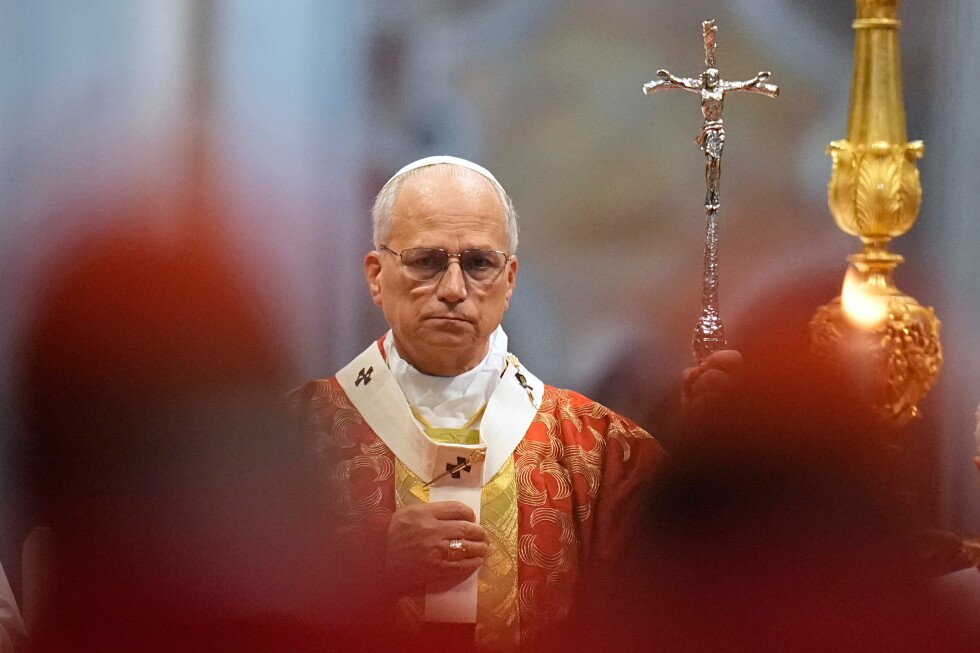
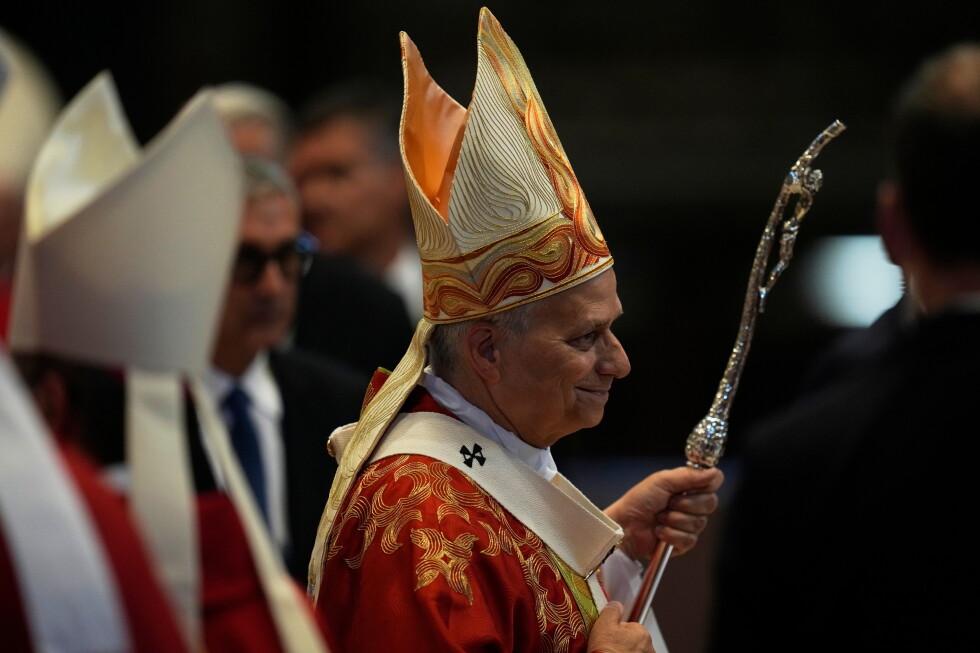
    VATICAN CITY, ROME — In a deliberate departure from the progressive reforms of his predecessor Pope Francis, Pope Leo XIV has revived a centuries-old tradition for the Holy Thursday foot-washing ritual, washing the feet of 12 priests this year in a ceremony held at Rome’s Archbasilica of St. John Lateran, the official episcopal seat of the Bishop of Rome.

    Among the 12 participants, 11 were ordained by Leo himself just last year, and the group was rounded out by Rev. Renzo Chiesa, head of the Rome Diocese’s main seminary. Following the long-standing script for the ritual, Leo poured water over each priest’s feet from a ornate golden pitcher, dried them with a plain white linen cloth, and finished with a ceremonial kiss. In his homily delivered during the service, the pontiff framed the humble act as a reflection of divine power, calling it a “gratuitous and humble gesture” that reveals “the true omnipotence of God.”

    “Through this act, Jesus purifies not only our image of God – from the idolatry and blasphemy that have distorted it – but also our image of humanity,” Leo told attendees. The pope, who has already established a pattern of outspoken public opposition to global armed conflict, added that modern conceptions of power stand in stark contrast to Christ’s example: “For we tend to consider ourselves powerful when we dominate, victorious when we destroy our equals, great when we are feared. In contrast, as true God and true man, Christ offers us the example of self-giving, service and love.”

    The foot-washing rite is a central tradition of Christian Holy Week, commemorating the act of Jesus washing the feet of his 12 apostles during the Last Supper, ahead of his crucifixion. For decades before Francis’ papacy, popes exclusively performed the ritual on Catholic men within the walls of a Rome basilica. But when Francis took office in 2013, he revolutionized the ceremony, expanding it to include laypeople, women, and even non-Christians, often holding services in unconventional settings including prisons, youth detention facilities, and refugee asylum centers. Francis framed this shift as a rejection of the “clerical culture” that elevates priests above lay followers, an attitude he blamed for enabling the systemic clergy sexual abuse crisis that has shaken the global Catholic Church for decades.

    Leo’s decision to roll back this reform and restore the ritual’s exclusive focus on priests is not an arbitrary change, but a deliberate step aligned with his broader papal priorities. The new pontiff has made supporting and protecting clergy a core focus of his early tenure, highlighting the struggles many priests face in modern ministry. Just this week, the Vatican released Leo’s monthly prayer intentions for April, which are dedicated to priests experiencing crisis, burnout, loneliness, and spiritual doubt. In that message, Leo pushed back against the idea that priests are mere ecclesiastical functionaries, asking: “Let them feel they are not mere functionaries or lonely heroes, but beloved sons, humble and cherished disciples, and pastors sustained by the prayer of their people.” He called on lay Catholic faithful to support their clergy, urging them “to listen without judging, to give thanks without demanding perfection,” and walk alongside priests through persistent prayer.

    This shift in the Holy Thursday ritual is the latest in a series of early moves by Pope Leo that signal a return to more traditional Vatican practices, paired with a renewed focus on lifting up the Catholic clergy. It comes alongside other recent high-profile actions from the new pontiff, including carrying the cross during the entire Good Friday procession (the first pope to do so in decades) and delivering repeated calls for global peace in his first Easter celebrations as head of the Catholic Church.

  • Judges say ICC prosecutor in sexual misconduct inquiry can potentially resume work, documents show

    Judges say ICC prosecutor in sexual misconduct inquiry can potentially resume work, documents show

    ### Key Developments in the ICC Chief Prosecutor Sexual Misconduct Case
    In a landmark ruling that has sent ripples through global judicial circles, a three-judge independent panel has concluded that a United Nations investigation into alleged sexual misconduct by International Criminal Court (ICC) Chief Prosecutor Karim Khan failed to meet the legal standard to prove wrongdoing, clearing the way for the embattled British barrister to potentially resume his leadership duties.
    The findings, reviewed by The Associated Press, mark a major turning point in a case that has roiled the world’s permanent war crimes court since allegations first emerged in late 2024. The ultimate decision on Khan’s future, however, now rests with the Assembly of States Parties (ASP), the 123-member governing body that oversees ICC operations. On Wednesday, the ASP voted to extend the ongoing review process, as leaders grapple with an unprecedented situation that has sparked internal staff unrest and drawn intense external geopolitical pressure.
    Khan first temporarily stepped aside from his post in May 2025, after the U.N. Office of Internal Oversight Service (OIOS) launched a formal probe into claims of non-consensual sexual contact with a female junior ICC staff member. Khan has repeatedly and categorically denied all allegations, asserting he never engaged in any inappropriate behavior—either sexual or otherwise—toward the complainant, and rejecting even claims of a consensual relationship. Through his legal team, he reaffirmed this denial in a statement shared with AP this week.
    The U.N. investigation’s final report, a copy of which has been obtained by AP, claimed there was evidence of “nonconsensual sexual contact” between Khan and the aide that occurred across multiple locations: his ICC office, his private residence, and during official overseas work missions. But when the three-judge panel, appointed specifically by the ASP to conduct an independent legal review of the U.N. findings, assessed the more than 5,000 pages of evidence collected by OIOS, it identified critical flaws that undermined the probe’s conclusions.
    In its 85-page assessment, the panel noted that U.N. investigators “failed to indicate which witnesses’ testimony they found credible” and left multiple key “narrative inconsistencies” in witness accounts unresolved. The judges ruled that the U.N. probe did not meet the high legal bar of proving misconduct or a breach of professional duty under the ICC’s governing framework, writing that “the resolution of a number of disputes, which remains outstanding, would be necessary before a proper characterisation of the facts can be made.” The panel’s finding is advisory and not legally binding on the ASP, and OIOS was never tasked with making a formal misconduct determination—only with gathering evidence for the ICC’s governing body to evaluate.
    ### The Origin of the Allegations
    The accusations against Khan first came to light in an October 2024 AP investigation, based on internal whistleblower documents reviewed by the news agency. Those documents allege that after Khan encountered the woman, who worked in a separate ICC department, he arranged to transfer her to his own office team. She subsequently became a regular member of his entourage on official international travel.
    Specific claims laid out in the whistleblower materials include an incident on a foreign trip where Khan allegedly asked the woman to rest with him on his hotel bed before sexually assaulting her, and another occasion where he banged on her hotel room door for 10 minutes in the early hours of the morning. Other alleged non-consensual behaviors include locking the door of his ICC office and reaching into the woman’s pocket, as well as repeatedly pressuring her to join him on a personal vacation.
    Two of the woman’s colleagues first reported the alleged misconduct to the ICC’s internal oversight body in May 2024. At that time, the investigation was closed after just five days when the complainant declined to file a formal report, citing intense fear of professional retaliation. The case has inflicted severe harm on the complainant: the U.N. investigation confirmed that the woman was placed on suicide watch at one point during the proceedings. In an interview, she told AP, “I have been left with little dignity and no privacy.” AP has followed its standard policy of not identifying survivors of sexual misconduct.
    ### Internal Tension and Geopolitical Context
    The panel’s ruling has done little to ease deep divisions within the ICC’s own ranks. A group of current prosecutor’s office staff sent an open letter to the ASP on Wednesday, warning that the U.N. investigation’s findings make it incompatible for the ICC community to maintain confidence in Khan’s leadership if he returns to office. Multiple current and senior ICC staff, speaking to AP on condition of anonymity over fear of retaliation, confirmed that many colleagues remain deeply unsettled by the situation, with widespread anxiety about potential retaliation against staff who spoke out in support of the complainant. The U.N. investigation itself noted that before Khan stepped aside, he was accused of retaliatory behavior toward two ICC staff members who backed the complainant.
    This unprecedented disciplinary process, the first of its kind in the ICC’s 23-year history, has forced the ASP to draft new procedural rules from scratch to manage the review. The case also unfolded against a backdrop of intense geopolitical pressure on the court, just weeks before Khan requested historic arrest warrants for Israeli Prime Minister Benjamin Netanyahu over alleged war crimes in the Gaza Strip. A three-judge panel of the ICC approved those warrants in November 2024, prompting immediate retaliation from then-U.S. President Donald Trump, who imposed sweeping sanctions on 11 senior ICC staff including Khan. The sanctions resulted in the closure of judges’ and prosecutors’ U.S. bank accounts and the revocation of their U.S. travel visas, a move that has severely disrupted the court’s daily operations and battered already low staff morale.

  • Edoardo Molinari to return as Luke Donald’s 1st vice captain for Europe at 2027 Ryder Cup

    Edoardo Molinari to return as Luke Donald’s 1st vice captain for Europe at 2027 Ryder Cup

    Fresh off back-to-back Ryder Cup triumphs alongside Team Europe, Edoardo Molinari is set to reprise his role as Luke Donald’s first vice captain for the 2027 installment of golf’s iconic transatlantic showdown, Europe’s captain confirmed this week. The 2027 biennial clash between Europe and the United States will tee off at Ireland’s renowned Adare Manor in September, and Donald has turned to a proven trusted advisor to anchor his backroom team once again.

    Molinari first stepped into the vice captain role for the 2023 Ryder Cup hosted at Rome’s Marco Simone Golf & Country Club, where he helped guide Team Europe to a commanding 16½-11½ victory over the Americans. He returned to the support staff for the 2024 contest at New York’s Bethpage Black, where Europe secured another narrow 15-13 win to keep their recent winning streak intact. No stranger to the prestige of the Ryder Cup, Molinari also competed as a player alongside his brother Francesco in Europe’s 2010 victory in Wales; Francesco himself has also served as a vice captain under Donald in both the 2023 and 2024 tournaments.

    In a statement released Thursday, Molinari expressed his enthusiasm for returning to the role, saying, “It was a very easy decision when Luke called me and asked me if I was willing to help him again. I was obviously very happy. Any time you can get involved in the Ryder Cup, in any role, it’s a great thing and I cannot wait for Adare Manor to come soon enough.”

    As vice captain, Molinari will bring his specialized expertise in statistical analysis to the team, a skill Donald highlighted as irreplaceable to the squad’s success. In remarks confirming the appointment at Virginia Water, England, Donald emphasized just how critical Molinari’s contributions have been to the team’s two recent wins, calling him a “rock of support” that has reshaped the team’s operational approach.

    “Edoardo has been a rock of support to me. He has made such a difference to our team. He is invaluable from a statistical analysis perspective, in terms of helping me with the qualification system, navigating the ever-changing world of golf,” Donald said. “He is a very steady head. I always know where I stand with him and he gives me great advice … He is a major factor in our backroom team.”

    Donald added that Molinari’s attention to detail and focus on marginal gains gives Team Europe a critical advantage, particularly as hosts, where teams have more control over course preparations. “He works closely with a number of players. He is a numbers guy and he is always looking at how to gain those edges, through statistics, through looking at the golf course and how you can set it up to give yourself just a little bit of an edge, which you have a little bit more control over as a home team,” Donald explained.

    Notably, Team Europe has not lost a Ryder Cup on home soil since 1993, a 34-year undefeated streak they will look to extend when they compete at Adare Manor. Donald wrapped up his remarks by celebrating Molinari’s commitment to the event’s core values, saying, “I’m excited to work with him again. He is so committed, so dedicated and he loves what the Ryder Cup represents. It’s an honor to having him by my side once again.”