标签: Europe

欧洲

  • Police appeal after stag beheaded

    Police appeal after stag beheaded

    Local authorities in the Republic of Ireland have launched a public appeal for information regarding a disturbing wildlife crime that has shocked the community. The incident involved the deliberate decapitation of a stag in what officials are describing as a particularly callous act of animal cruelty.

    The investigation, spearheaded by local council representatives, aims to identify those responsible for the gruesome killing. The decapitation appears to have been performed with deliberate intent rather than as part of legitimate hunting activities, raising concerns about possible wildlife crime violations.

    Environmental and animal welfare organizations have expressed outrage at the incident, highlighting the protected status of deer species in Ireland and the severe penalties that can accompany such offenses. The case has drawn attention to broader issues of wildlife protection and the enforcement of animal welfare laws across rural areas.

    Authorities are urging anyone with relevant information, including potential witnesses or those who may have noticed suspicious activity in the area, to come forward to assist with the ongoing investigation. The appeal emphasizes that even minor details could prove crucial in identifying the perpetrators of this brutal act.

  • Sweden promises action against illegal sex doll sales

    Sweden promises action against illegal sex doll sales

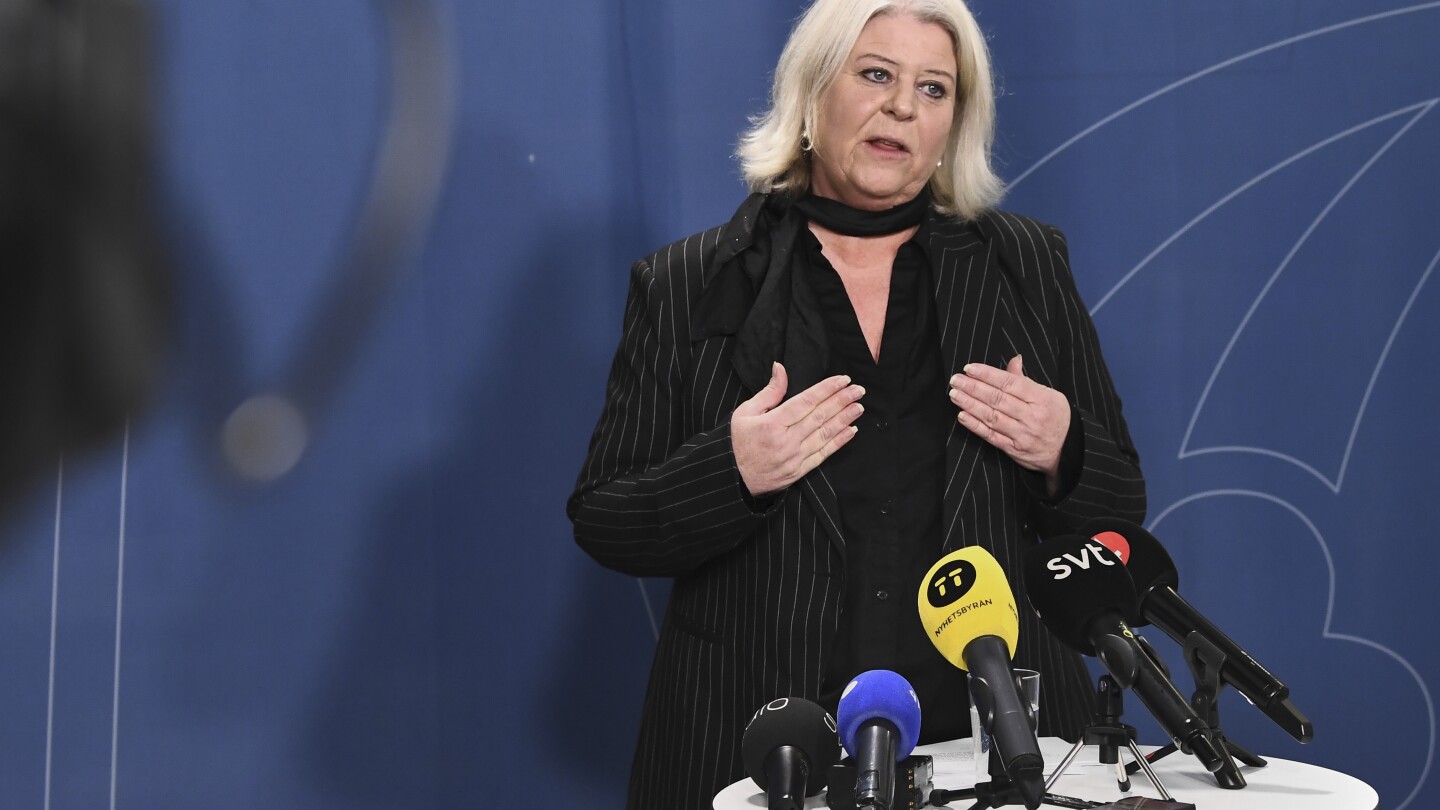
    The Swedish government has declared an aggressive stance against the online commerce of childlike sex dolls, pledging to implement stricter measures following concerning reports of such products being marketed within the country. Social Services Minister Camilla Waltersson Grönvall expressed profound distress, stating, “As a mother, your heart really breaks watching these images and pictures of these dolls,” emphasizing the government’s determination to eradicate the sale and purchase of these items entirely.

    The ministerial commitment emerged from a high-level meeting convened on Friday, gathering child protection advocates, digital commerce representatives, and government agencies. This assembly was specifically organized in response to multiple documented instances of e-commerce platforms facilitating the trade of anatomically childlike dolls. During the discussions, online marketplaces outlined their existing protocols for identifying and removing such prohibited content.

    Minister Waltersson Grönvall maintained a firm position, indicating that governmental oversight would be relentless. She explicitly warned that further legislative action remains a viable option if current industry measures prove insufficient. This initiative is part of a broader, forthcoming national strategy designed to shield children from violence, incorporating enhanced protections against sexual and online exploitation.

    Public awareness of this issue escalated when the advocacy organization ChildX filed an official police report against Amazon and other retailers earlier this month. The complaint targeted the sale of explicitly child-proportioned sex dolls, often attired in school uniforms and marketed within a sexual context. ChildX argued that these products, typically measuring about one meter in height, violate Swedish laws against material that sexualizes children and may constitute criminal child exploitation.

    Ida Östensson, Secretary General of ChildX, confirmed that their activism resulted in the removal of certain product listings. She condemned the normalization of child sexual abuse through such commodities, asserting that children must never be treated as sexual objects. In response, Amazon referenced its attendance at the government meeting and its policy of removing flagged items, reiterating its strict prohibition of child pornography. This development in Sweden mirrors similar regulatory movements in Europe, notably in France, where authorities recently pressured retailers like Shein over comparable compliance failures.

  • Ukrainian man suspected of Nord Stream pipeline explosions placed in custody in Germany

    Ukrainian man suspected of Nord Stream pipeline explosions placed in custody in Germany

    German authorities have taken into custody a Ukrainian national allegedly responsible for coordinating the September 2022 explosions that severely damaged the Nord Stream gas pipelines. Serhii Kuznietsov, 49, was ordered detained by a Federal Court of Justice judge in Karlsruhe on Friday following an arrest warrant issued by federal prosecutors.

    The sophisticated operation, which targeted critical energy infrastructure beneath the Baltic Sea, involved the use of a yacht chartered from a German company using falsified identification documents. According to investigative findings, Kuznietsov allegedly masterminded the placement of explosives on the pipelines that were designed to transport Russian natural gas to Germany.

    Kuznietsov’s extradition from Italy culminated on Thursday after the Italian Supreme Court approved his transfer on November 19. His initial detention occurred on August 21 at an Adriatic coastal campground where he was vacationing with family members. The suspect has consistently denied involvement, claiming he was serving as an army captain in Ukraine during the time of the explosions.

    This development contrasts sharply with a recent Polish judicial decision that blocked the extradition of another Ukrainian suspect in the same case. A Polish judge had characterized the pipeline attack as legitimate military action in the context of the Ukraine conflict, thereby exempting individuals from criminal liability—a legal interpretation explicitly rejected by Italian authorities in Kuznietsov’s case.

    The 2022 pipeline explosions significantly escalated geopolitical tensions as European nations sought to reduce dependence on Russian energy resources following Moscow’s full-scale invasion of Ukraine. The incident remains one of the most consequential acts of energy infrastructure sabotage in recent European history.

  • Runaway nuns can stay in Alpine convent if they leave social media

    Runaway nuns can stay in Alpine convent if they leave social media

    Three elderly Austrian nuns in their eighties have secured a temporary victory in their extraordinary standoff with Church authorities, winning permission to remain in their beloved convent despite previously being relocated to a care home against their will.

    Sisters Bernadette (88), Regina (86), and Rita (82) – the last remaining residents of Kloster Goldenstein convent near Salzburg – have been granted conditional residence following weeks of tension. The breakthrough came after Church representatives offered a compromise: the nuns may stay indefinitely provided they cease all social media activities that have garnered international attention.

    Their controversial return to the historic convent in September 2023, facilitated by former students and a locksmith after eight months in Church-mandated care, sparked both global support and institutional disapproval. The nuns’ social media presence, managed by supporters, has attracted nearly 100,000 Instagram followers through candid glimpses of their daily routines – from prayer sessions to Sister Rita’s recently viral boxing workouts.

    Harald Schiffl, spokesman for Provost Markus Grasl of Reichersberg Abbey, confirmed to Austrian Press Agency that the Church’s conditions include maintaining the convent’s enclosed areas as restricted spaces and accepting regular medical and spiritual oversight. In exchange, the nuns would receive official permission to remain with necessary support services.

    The trio’s deep roots at Schloss Goldenstein span decades: Sister Bernadette arrived as a student in 1948 (sharing classrooms with actress Romy Schneider), followed by Sister Regina in 1958 and Sister Rita in 1962. All taught at the convent’s school, with Sister Regina serving as headmistress before declining numbers led to the community’s dissolution in early 2024.

    The nuns have yet to respond to the Church’s conditions, leaving their future uncertain despite the temporary reprieve.

  • Search for British man who fell from cruise ship off Tenerife coast

    Search for British man who fell from cruise ship off Tenerife coast

    A multinational maritime search operation is currently underway off the northwestern coast of Tenerife following the distressing incident involving a British national who fell from a cruise vessel. The 76-year-old passenger was reportedly observed entering the water while the Marella Explorer 2, operated by TUI Group, was transiting toward La Gomera island on Thursday morning.

    The Spanish Coast Guard initiated coordinated search and rescue protocols at 09:48 local time (08:48 GMT), mobilizing maritime assets to scour the waters where the incident occurred. The Malta-registered cruise ship, which specializes in adult-only voyages, immediately participated in initial search efforts before proceeding to its scheduled docking in Santa Cruz de Tenerife during Friday’s early hours.

    Marella Cruises, TUI’s cruise division, confirmed the company is providing comprehensive support to the passenger’s family while maintaining close collaboration with Spanish authorities. The vessel was completing an inter-island journey from Madeira, Portugal to Spain’s Canary Islands archipelago when the overboard incident transpired.

    According to TUI’s specifications, the Marella Explorer 2 represents modern cruise hospitality with capacity for 1,814 passengers distributed across 907 cabins and 14 decks. The Foreign Office has been contacted regarding the incident involving the British citizen, though official statements remain pending as search operations continue.

  • France to intercept small boats after pressure from UK

    France to intercept small boats after pressure from UK

    In a significant policy reversal, French authorities have consented to commence maritime interceptions of migrant vessels in the English Channel after sustained diplomatic pressure from the United Kingdom. This strategic shift follows a personal appeal from Prime Minister Sir Keir Starmer to President Emmanuel Macron, emphasizing the current absence of effective deterrence mechanisms in the crucial waterway.

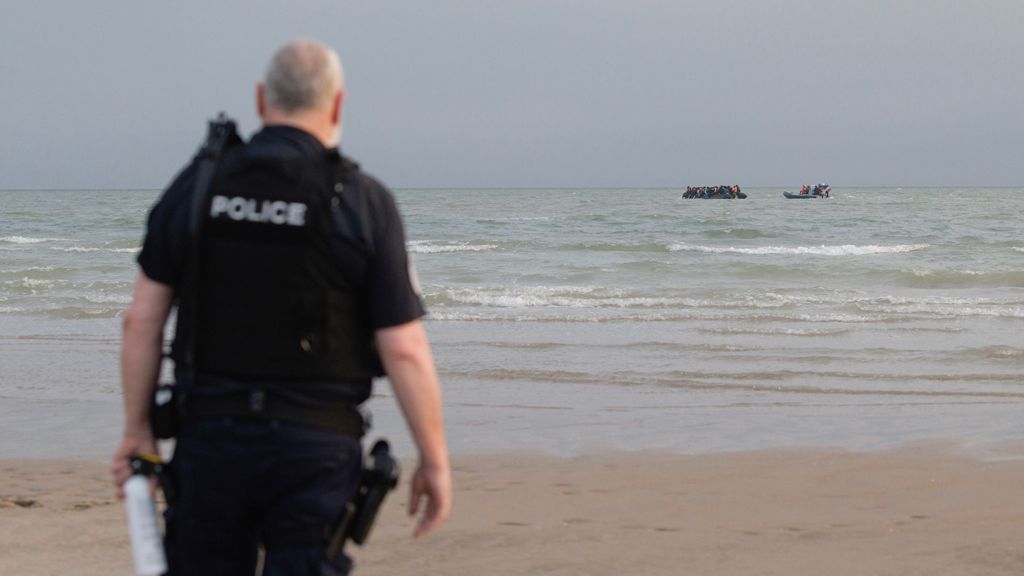
    According to confirmed reports from French maritime police, security forces will now engage in preventive operations targeting empty migrant boats before they embark passengers from northern French coastlines. This approach marks a departure from previous restraint, where French police historically avoided intercepting overloaded vessels due to safety concerns for both officers and migrants.

    A spokesperson for the French maritime police clarified that while interception tactics will be implemented, they explicitly exclude controversial methods such as propeller-entangling nets. The primary stated objective remains the preservation of human life amidst increasingly dangerous crossing attempts.

    This development revives elements of a previously abandoned strategy championed by former Interior Minister Bruno Retailleau, which included more aggressive interception methods observed during summer operations. The BBC documented one such instance in July near Boulogne, where French officers waded into shallow waters to disable migrant vessels.

    Meteorological challenges currently delay operational implementation, with strong winds temporarily preventing interception activities. Meanwhile, people-smuggling networks are expected to adapt their tactics to evade enhanced surveillance measures, continuing the cat-and-mouse dynamic that has characterized cross-Channel migration patterns.

    The UK government acknowledged the collaboration, stating: “We continue to work closely with our French partners on the shared challenge of illegal migration, ensuring officers in France review their maritime tactics for intervention in shallow waters.” This bilateral agreement represents the latest chapter in ongoing efforts to manage migration flows through one of Europe’s most contentious transit routes.

  • ‘Callous’ beheading of stag prompts police investigation

    ‘Callous’ beheading of stag prompts police investigation

    Authorities in Dublin’s Fingal County have launched a criminal investigation following the brutal beheading of a cherished eight-year-old stag at Newbridge Demesne public park. The headless carcass of the Irish Red Deer was discovered by park staff on Thursday morning during routine feeding of the protected herd.

    According to official statements from Fingal County Council, intruders illegally entered the Donabate park overnight Wednesday and deliberately removed the stag’s head, presumably as a hunting trophy. The council has characterized the act as ‘callous’ and is collaborating with both gardaí (Irish police) and the National Parks and Wildlife Service in their investigation of this wildlife crime.

    The slain stag, known for his impressive antlers and gentle demeanor, was one of only two stags in the herd and had become a beloved attraction for park visitors. Ivan Smith, foreman at Newbridge House and Traditional Farm, emotionally described the animal as ‘a lovely stag with a beautiful pair of antlers’ that was ‘a big favourite with the public.’

    Fingal Mayor Tom O’Leary expressed profound shock at the incident, recalling personal visits with his granddaughters to see the ‘wonderful animal.’ He emphasized that deer killing without proper licensing is illegal under Irish law and urged anyone with information to contact authorities immediately. The investigation continues as officials work to identify and prosecute those responsible for this violation of protected wildlife.

  • Paris’ Louvre museum to increase ticket price for visitors from outside the European Union

    Paris’ Louvre museum to increase ticket price for visitors from outside the European Union

    The Louvre Museum in Paris has officially sanctioned a substantial ticket price adjustment for international visitors, elevating admission fees from €22 to €32 ($25 to $37) exclusively for non-European Union nationals effective January 14. This strategic financial decision emerged from the museum’s governing board during Thursday’s session, forming a critical component of President Emmanuel Macron’s comprehensive “Louvre New Renaissance” revitalization initiative.

    The pricing restructuring directly responds to security vulnerabilities exposed during October’s high-profile crown jewels heist, where thieves successfully absconded with €88 million ($102 million) in valuables through astonishingly breached defenses. Museum Director Laurence des Cars confirmed the technical obsolescence of existing infrastructure, prompting immediate implementation of over twenty emergency security enhancements.

    European Economic Area participants—including Iceland, Liechtenstein, and Norway—retain current pricing structures under the exemption clause. Statistical data reveals the measure’s significant reach, with 77% of Louvre’s 8.7 million annual visitors originating internationally, predominantly from the United States (13%), China (6%), and Britain (5%).

    The ambitious renovation blueprint, projected to consume €800 million ($933 million) through 2031, envisions infrastructure modernization, visitor flow optimization, and dedicated exhibition space for masterpieces including the Mona Lisa. Concurrently, judicial developments unfolded Tuesday as Paris prosecutors announced four additional arrests—two men and two women—in connection with the October robbery, with detainees remaining under interrogation pending magistrate review.

  • Anti-corruption units raid home and offices of Zelenskyy’s chief of staff

    Anti-corruption units raid home and offices of Zelenskyy’s chief of staff

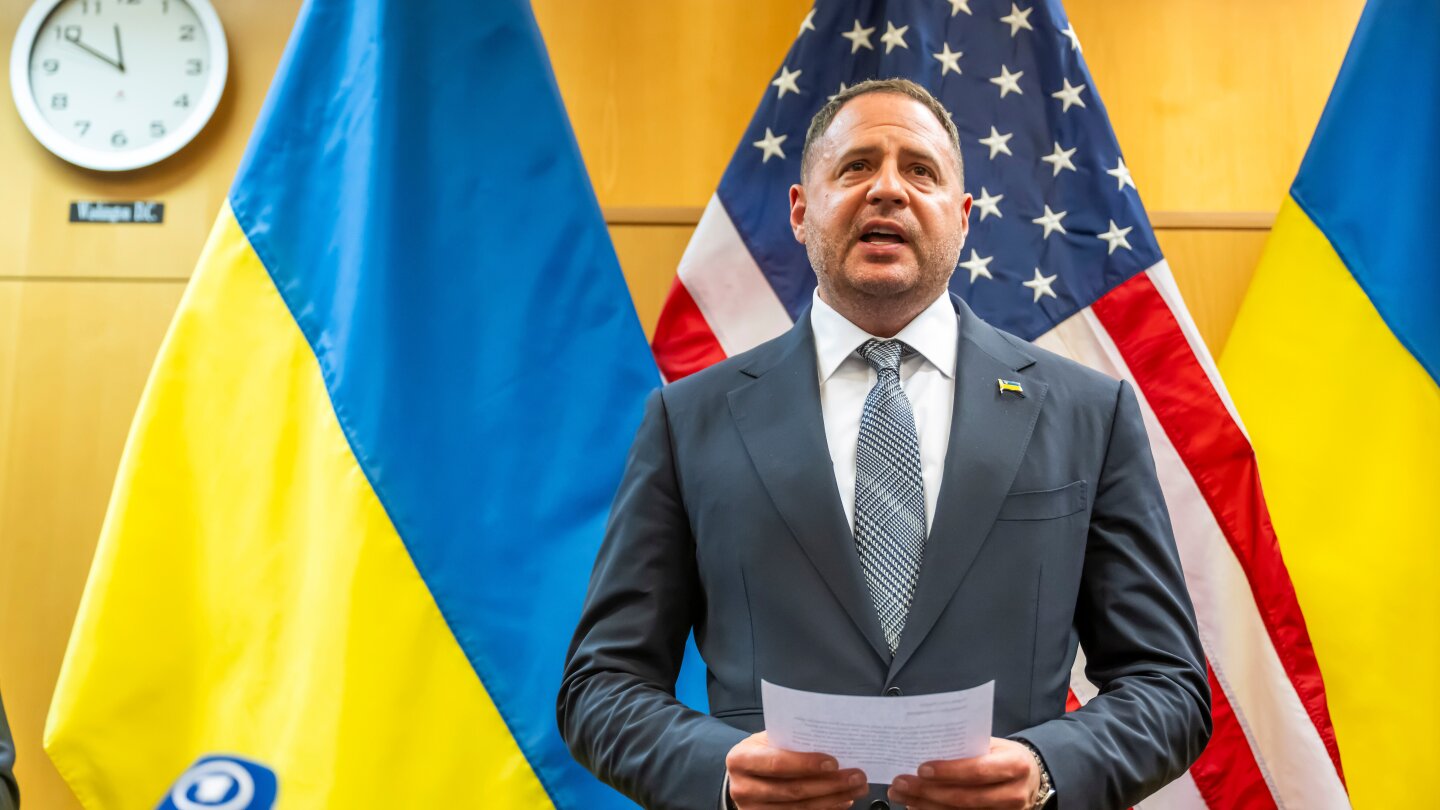
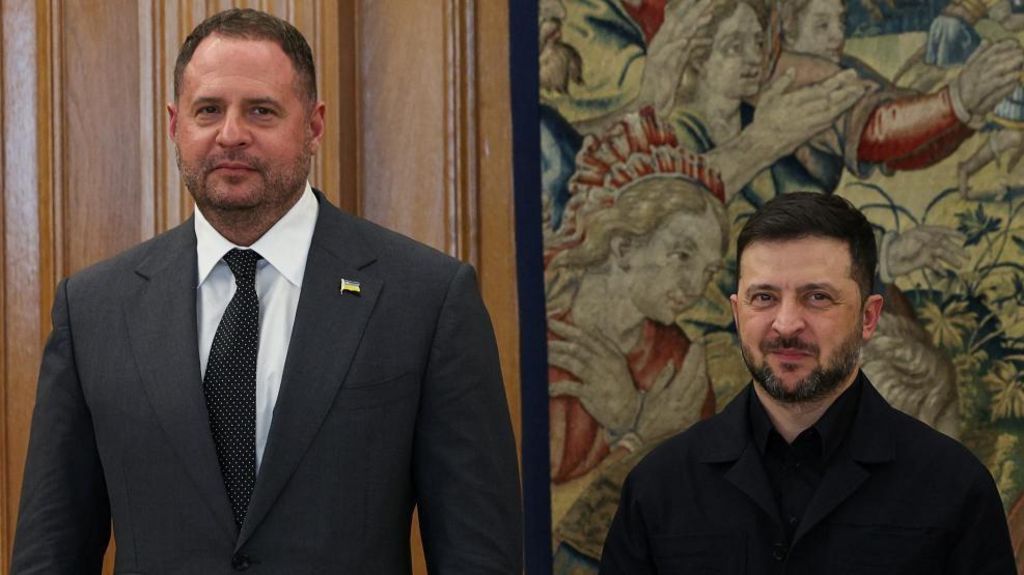
    In a significant development within Ukraine’s political landscape, anti-corruption authorities have executed coordinated raids targeting the residence and official workplace of Presidential Chief of Staff Andrii Yermak. This operation represents a substantial escalation in Ukraine’s ongoing campaign against systemic corruption, particularly striking given Yermak’s position as one of President Volodymyr Zelenskyy’s most influential advisors and a central figure in diplomatic negotiations with the United States.

    The National Anti-Corruption Bureau of Ukraine (NABU), in collaboration with the Specialized Anti-Corruption Prosecutor’s Office (SAPO), confirmed conducting searches as part of a comprehensive investigation into corruption allegations within the nation’s energy sector. The probe centers on a massive financial scandal involving approximately $100 million and implicates several high-ranking Ukrainian officials.

    Yermak publicly acknowledged the investigations through a statement on Telegram, emphasizing his full cooperation with authorities. He noted that investigative teams encountered no obstructions during their searches and confirmed that his legal representatives were present throughout the proceedings. This transparency statement appears designed to demonstrate compliance with anti-corruption efforts despite the sensitive timing.

    The raids create considerable complications for the Zelenskyy administration as it simultaneously manages military operations against Russian invasion forces and delicate diplomatic negotiations regarding potential peace settlements. Western nations, particularly the United States, have consistently emphasized anti-corruption reforms as prerequisite conditions for continued financial and military assistance to Ukraine.

    This development occurs amid critical discussions with international partners regarding Ukraine’s defense funding and long-term security guarantees. The administration must now navigate these domestic investigations while maintaining confidence among its international allies that governance reforms remain on track despite the ongoing conflict.

  • Ukraine anti-corruption agents search home of Zelensky’s top adviser

    Ukraine anti-corruption agents search home of Zelensky’s top adviser

    Ukrainian anti-corruption authorities have executed authorized searches at the residence of Presidential Chief of Staff Andriy Yermak, a central figure in President Volodymyr Zelensky’s administration. The National Anti-Corruption Bureau of Ukraine (NABU) confirmed conducting investigative operations at Yermak’s apartment, with the Specialized Anti-Corruption Prosecutor’s Office (SAPO) jointly overseeing procedural activities.

    Yermak acknowledged the investigations via social media, stating authorities had obtained full access to his property with his legal representatives present. He emphasized his complete cooperation with the proceedings, though specific allegations remain undisclosed. The development emerges amid growing corruption controversies involving multiple officials within Zelensky’s inner circle, though neither the president nor his chief of staff face formal accusations.

    Having served as Zelensky’s principal aide for over five years, Yermak has been instrumental in coordinating Ukraine’s military and diplomatic strategies following Russia’s full-scale invasion. His role as Kyiv’s lead negotiator in peace discussions with international partners, particularly the United States, has positioned him as a pivotal figure in Ukraine’s wartime leadership. However, his influence has increasingly drawn criticism from political opponents and reform advocates demanding accountability and governmental restructuring.

    The investigation signifies deepening anti-corruption efforts within Ukraine’s institutions as the country continues its pursuit of European Union membership. Western allies have consistently emphasized anti-corruption reforms as prerequisite for continued financial and military support. This probe occurs against a backdrop of heightened geopolitical tensions and ongoing military operations, raising questions about potential impacts on Ukraine’s governance stability and diplomatic negotiations.