标签: Europe

欧洲

  • Italy’s Meloni suffers surprise setback in close vote on electoral reform

    Italy’s Meloni suffers surprise setback in close vote on electoral reform

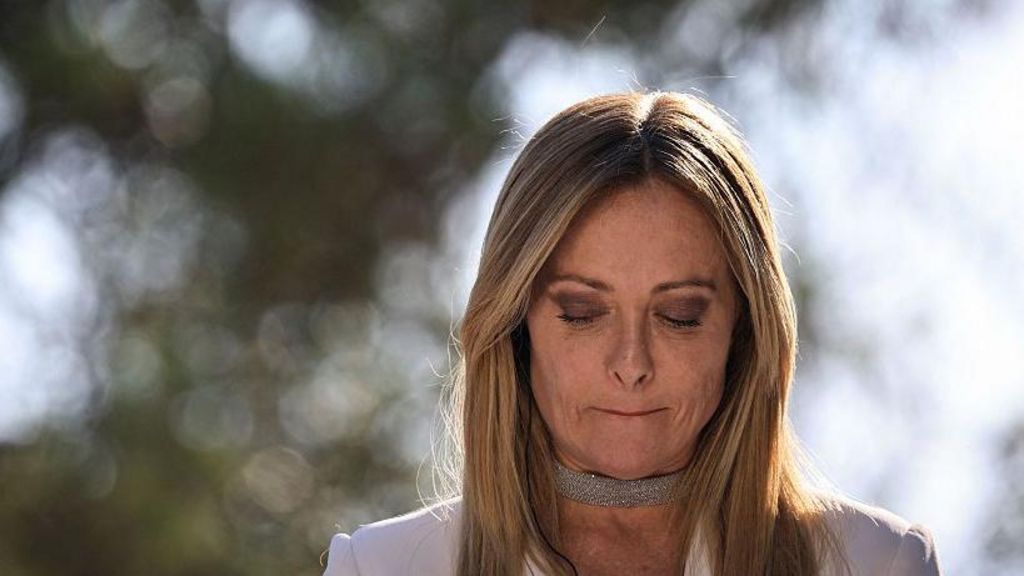
    Italy’s right-wing coalition government led by Prime Minister Giorgia Meloni has been handed a major political setback after a narrow one-vote defeat for a key electoral reform amendment in the country’s Chamber of Deputies, deepening existing fractures within her ruling bloc ahead of the next general election scheduled for autumn 2027.

    The secret ballot held Wednesday evening saw 188 Members of Parliament reject the preference voting provision, which was championed by Meloni’s own Brothers of Italy (FdI) party, compared to just 187 votes in support. The razor-thin margin has led to widespread speculation that multiple government-backing MPs defied party lines to vote against the amendment, a sign of growing internal discontent within Meloni’s coalition.

    Speaking shortly after the result was announced, an outspoken Meloni took to social media to frame the defeat as a lost chance for Italian voters. In a heated post, she argued that opposition celebrations, which she compared to a World Cup victory, exposed their opposition to giving citizens direct control over selecting their parliamentary representatives. The Prime Minister has not yet addressed repeated opposition demands that she resign and call an early general election, breaking with the current 2027 timeline.

    The broader electoral reform package pushed by FdI aims to shift Italy to a fully proportional voting system that grants a parliamentary seat bonus to the largest party or coalition, even if that bloc fails to win an outright majority. The legislation also requires all pre-election coalitions to agree to a shared policy platform and a single candidate for prime minister — a requirement that has proven unpopular with many smaller parties, which have long preferred to run independent election campaigns. While the specific preference voting amendment was struck down, the government retains the ability to advance the remaining components of the reform package through parliament.

    Meloni has long defended the proposed changes, arguing they would deliver more stable governing coalitions and end the cycle of frequent government collapses that have defined modern Italian politics. But opposition parties have fiercely pushed back against the plan, dismissing it as an authoritarian power grab designed to lock in a majority for Meloni’s bloc in the next election.

    Meloni has led her centre-right to hard-right coalition government since 2022, but internal tensions have risen steadily in recent months as individual coalition partners have seen their national poll numbers decline. Reservations about the electoral reform among junior coalition partners already strained alliances ahead of the vote, and the eventual defeat has amplified questions about the coalition’s long-term cohesion.

    Adding to Meloni’s political challenges, centre-left and left-wing opposition groups have already begun building a unified electoral front to challenge her government in 2027. This collaboration already delivered a victory for opposition forces this spring, when they defeated a government-backed constitutional referendum — the first major high-profile loss for Meloni’s administration.

    To secure a more comfortable parliamentary majority in the upcoming election, political analysts note Meloni will need to expand her appeal, either by reaching toward centrist voters or aligning more closely with newer hard-right factions such as former paratrooper Roberto Vannacci’s National Future (FN). Vannacci split from Matteo Salvini’s League party earlier this year to launch the Eurosceptic FN, which advocates for “remigration” — the mass deportation of people with migrant backgrounds. Recent polling puts FN at around 6% national support, edging out the League’s current 5.6% rating.

    If Meloni is able to hold her coalition together and avoid an early election, she will make history as the first Italian prime minister since 1946 to complete a full five-year term with a single uninterrupted government.


  • Heatwave prompts Italy’s delivery riders to strike for extra rights

    Heatwave prompts Italy’s delivery riders to strike for extra rights

    As record-shattering heatwaves push temperatures across Southern Europe above 40°C, delivery gig workers across multiple Italian cities are launching coordinated strike action this Wednesday to demand urgent improvements to exploitative working conditions that put their lives and livelihoods at risk. The industrial action comes on the heels of local regulations that attempt to mitigate heat risk, but fail to address the core economic pressure that forces riders to work through dangerous high temperatures.

  • Spanish authorities identify all 13 victims of deadly southern fire

    Spanish authorities identify all 13 victims of deadly southern fire

    Amid an ongoing extreme heat wave sweeping across Europe that has amplified wildfire risk across the continent, two major blazes have seen key updates in recent days: all 13 victims of a devastating wildfire that destroyed an expat community in southern Spain have now been formally identified by authorities, while French fire crews have successfully brought a major forest fire near Paris under control.

    The fatal Los Gallardos fire, which tore through a remote residential area in southern Spain five days before the identification announcement, scorched roughly 70 square kilometers of mixed forest and agricultural land. Ranking among the deadliest wildfires to hit fire-prone Spain in recent years, the blaze left 13 people dead, all of whom were adults. Judicial authorities confirmed in an official statement on late Tuesday that DNA and biological testing had successfully matched remains to all missing people, closing the initial missing persons investigation.

    Of the 13 victims, 12 were foreign nationals, spanning multiple countries: seven were British citizens (including a 93-year-old woman who succumbed to her injuries in a hospital after the blaze), three were Belgian, one was a French woman, and one was an American. The remaining fatality was a Spanish national. Demographically, eight of the victims were women and five were men. Initial official assessments had placed the number of missing people at 23, but all unaccounted-for residents have now been cleared, leaving no outstanding missing persons cases connected to the fire.

    Across the border in France, another high-profile wildfire that broke out in the iconic, tourist-frequented Fontainebleau forest just south of the French capital has been fully contained by French firefighting teams, according to local officials. The blaze forced the evacuation of multiple nearby residential communities when it spread earlier, though crews managed to halt its expansion ahead of worsening heat. Firefighters are still working to extinguish small, isolated flare-ups across the burned area as of Wednesday.

    The twin wildfire incidents come as Europe grapples with a dangerous combination of extreme heat, prolonged drought, and long-term climate warming. On Wednesday, temperatures across much of France hit exceptionally high levels, with local peaks reaching 39 degrees Celsius (102 degrees Fahrenheit). Météo-France, the country’s national weather service, has maintained warnings that the mix of record heat and parched, dry soil creates persistent severe wildfire risk across large swathes of the nation.

    In Spain, the current extreme heat wave, paired with strong winds and near-absent rainfall over recent weeks, has created perfect tinder conditions that allow small ignitions to spread into large, out-of-control blazes rapidly. Long-term climate data underscores the growing risk facing the continent: the European Union’s Copernicus Climate Change Service confirms Europe is warming faster than any other continent on Earth, with average temperatures rising twice as quickly as the global average since the 1980s, a trend that is expected to continue increasing the frequency and severity of extreme heat and devastating wildfires across the region.

  • Celebrations as Gibraltar-Spain border fence removed

    Celebrations as Gibraltar-Spain border fence removed

    In a momentous step that has been hailed as a new chapter in cross-border relations, the long-standing physical barrier separating Gibraltar and Spain has been removed, triggering widespread celebrations among communities on both sides of the boundary. The landmark event kicked off with a carefully orchestrated symbolic ceremony held at the stroke of midnight, marking the end of decades of physical separation at the crossing point.

    As the final sections of the fence were taken down, thousands of people from Gibraltar and neighboring Spanish towns gathered to witness the historic occasion, and immediately after the ceremony concluded, huge crowds began moving freely across the unobstructed boundary without any mandatory border checks in place. For many local residents, the removal of the fence represents more than just an infrastructure change—it is a powerful symbol of improved cooperation and easier connection between communities that have been separated by political disputes for generations.

    Local leaders on both sides have framed the move as a confidence-building measure that will boost cross-border travel, support local economies that rely on movement between the two territories, and strengthen people-to-people ties across the Gibraltar-Spain border. The event has drawn international attention as a sign of progress in resolving long-standing regional tensions through diplomatic dialogue.

  • Three killed as Russian bombing of Odesa continues

    Three killed as Russian bombing of Odesa continues

    A new wave of deadly Russian strikes on Ukraine’s southern Odesa region has left three civilians dead, marking five consecutive days of targeted assaults on the strategic Black Sea port area that underpins Ukraine’s wartime economy. The overnight attacks that began late Tuesday damaged a multi-story residential building, a non-civilian structure and a local gas pipeline, Odesa regional governor Oleh Kiper confirmed in a Telegram post Wednesday. Kiper accused Russian forces of intentionally targeting civilian populations alongside critical industrial and port infrastructure, a charge that contradicts Moscow’s official claims about the strikes.

    Russia’s Ministry of Defense stated the attacks were deliberately focused on port facilities used to unload fuel products, and that all targets were linked to Ukrainian military weapons manufacturing and cargo transport operations. The targeted deepwater ports in the greater Odesa area handle the vast majority of Ukraine’s grain and commercial cargo exports, making them a strategically critical asset for the country’s wartime economic stability.

    The assault on Odesa coincided with a major reciprocal strike by Ukrainian forces, who announced their drones had hit 20 Russian vessels operating in the Black Sea overnight. This latest attack follows a series of intensive strikes on Russian shipping in the nearby Sea of Azov, a waterway bounded by Crimea, eastern Ukraine’s coastline and mainland Russia. According to Reuters reporting, the persistent Ukrainian attacks on shipping have forced Russia — the world’s largest grain exporter — to suspend commercial traffic through the Sea of Azov, which carries roughly a quarter of the country’s total grain exports.

    Parallel to the escalating military clashes on the Black Sea frontlines, Ukraine is navigating a sudden domestic political shakeup. On Tuesday, Ukraine’s parliament approved the resignation of Prime Minister Yulia Svyrydenko, who had held the post for less than a year. The dismissal came amid widespread pushback from lawmakers, who raised questions about the lack of a clear public explanation for the leadership change. Serhiy Koretskyi, the current head of Ukraine’s state-owned energy giant Naftogaz, is widely tipped as Svyrydenko’s successor, with a parliamentary confirmation vote scheduled for Thursday.

    The unfolding violence and political shifts come as European Commission President Ursula von der Leyen arrived in Kyiv on Wednesday for her 11th visit to Ukraine since Russia launched its full-scale invasion in 2022. Von der Leyen called the visit a “special moment” on social media, noting that she would present new cooperation initiatives designed to ramp up joint defense production between the European Union and Ukraine. The announced initiatives are expected to streamline collaboration, enabling both sides to increase defense output at a faster pace to support Ukraine’s frontline needs.

  • Top EU official visits Ukraine and pledges continued support against Russia’s invasion

    Top EU official visits Ukraine and pledges continued support against Russia’s invasion

    On Ukraine’s annual Statehood Day, European Commission President Ursula von der Leyen traveled to Kyiv Wednesday to reaffirm unwavering European Union backing for the country’s ongoing defense against Russia’s full-scale invasion, now in its third year. The visit marked von der Leyen’s 11th trip to Ukraine since Moscow launched its large-scale incursion in February 2022, and comes as Kyiv has built growing battlefield momentum through deep strikes inside Russian territory.

    Ukraine’s Statehood Day, a national public holiday, honors the country’s right to self-determination — a principle that has been under active threat for more than a decade. Russian forces first seized and illegally annexed Ukraine’s Crimean Peninsula in 2014, before expanding their aggression with the full-scale invasion eight years later. The war has already claimed thousands of military and civilian lives, displaced millions of people, reduced major Ukrainian urban centers to rubble, and stoked global fears of a broader direct confrontation between Russia and the NATO alliance.

    Alongside von der Leyen, senior leaders from across Southeast Europe gathered in Kyiv Wednesday for a regular summit focused on Black Sea and regional security. Notably, Serbia’s Moscow-aligned President Aleksandar Vucic joined the gathering, marking a high-profile appearance from a Balkan state that has refused to join Western sanctions on Russia, despite officially recognizing Ukraine’s territorial integrity. Serbia remains almost entirely dependent on Russian energy imports. The 2023 iteration of this summit was held in Odesa, where leaders collectively reaffirmed their commitment to upholding Ukraine’s sovereignty and territorial integrity.

    During her visit, von der Leyen announced new targeted EU support packages tailored to Ukraine’s immediate and long-term needs. The bloc will advance new integration measures linking European and Ukrainian defense industries, and deliver additional assistance to strengthen Ukrainian air defenses ahead of the coming winter — a season when Russia has repeatedly launched large-scale strikes to cripple Ukraine’s critical energy infrastructure. To date, the EU has committed tens of billions of euros in military, financial, and diplomatic backing to Kyiv, and remains watchful of Russia’s broader expansionist ambitions across the European continent.

    The high-level diplomatic visit coincides with a shifting battlefield dynamic, Western military analysts and officials confirm. Ukraine’s increasingly frequent and precision drone and missile strikes are now successfully striking high-value targets deep inside Russian territory, disrupting key Russian military supply lines and triggering widespread civilian fuel shortages across multiple Russian regions. “Ukraine has built a strong military momentum. The tide is turning,” von der Leyen wrote on social media ahead of her Kyiv engagements.

    The day was marked by fresh Russian attacks across Ukrainian territory, which left at least eight civilians dead and 11 more injured. Three people were killed and seven wounded when Russian forces dropped six powerful glide bombs on infrastructure targets in Ukraine’s northern Sumy region, regional military governor Oleh Hryhorov confirmed. A separate Russian strike on the southern port city of Odesa killed three more civilians and injured three others, according to Odesa military head Serhii Lysak. In northern Chernihiv region, two civilians died and an 18-year-old was seriously wounded in a Russian drone attack, regional governor Viacheslav Chaus reported.

    In a corresponding update, Russia’s Defense Ministry claimed its air defense forces intercepted 93 Ukrainian drones overnight across multiple Russian regions, as well as over occupied Crimea, the Sea of Azov, and the Black Sea. No immediate reports of casualties or major damage from the intercepted drones were released by Russian officials.

    Von der Leyen’s visit adds to a string of recent international support pledges secured by Ukrainian President Volodymyr Zelenskyy, including new commitments from the Group of Seven leading industrialized nations and the broad “Coalition of the Willing” backing Kyiv’s defense. To date, no negotiated peace settlement has emerged to end the conflict, which remains deadlocked along hundreds of kilometers of front line.

  • British leader Starmer faces his last question session in Parliament before leaving office next week

    British leader Starmer faces his last question session in Parliament before leaving office next week

    LONDON – As British Prime Minister Keir Starmer prepares to formally resign from office next Monday, he will face one final round of scrutiny from lawmakers this Wednesday at the weekly Prime Minister’s Questions (PMQs) in the House of Commons.

    Starting at noon, Starmer will bid goodbye to the raucous, high-stakes weekly session where he spent two years clashing with opposition politicians and defending his administration’s policy record. When he steps down at the end of next week, he will pass leadership of the country and the ruling Labour Party to Andy Burnham, the former Greater Manchester mayor who ran unopposed in the leadership contest and will be officially confirmed as the new party leader this Friday.

    Under the UK’s parliamentary democratic system, ruling parties are permitted to replace their leader — and therefore the country’s prime minister — without triggering an immediate general election. The next mandatory national vote is not scheduled to take place until 2029.

    Starmer’s time in office has been a short two-year tenure that started with a historic landslide general election victory in July 2024, but ended in resignation following a string of policy missteps and judgment errors that eroded his support among both Labour Party members and the general public. He failed to deliver on core campaign pledges to boost sustained national economic growth, repair underfunded, overstretched public services, and ease the persistent cost of living crisis that has strained household budgets across the UK.

    His position was further weakened by high-profile controversial decisions, most notably the appointment of Peter Mandelson — a figure with documented ties to disgraced financier Jeffrey Epstein — as British ambassador to the United States. After the Labour Party suffered severe losses in May’s local elections, pressure from within the party grew to a breaking point, and Starmer announced he would step down.

    In advance of his departure, Starmer is expected to use his final PMQs to highlight the policy wins his administration did secure, including expanded legal protections for residential renters, a landmark increase to the national minimum wage, and the passage of the Hillsborough Law, a reform that bans official cover-ups following public tragedies. He is also likely to reference his foreign policy work, including unwavering support for Ukraine amid Russia’s ongoing invasion and efforts to repair strained post-Brexit relations between the UK and the European Union.

    Just one day before his final PMQs, Starmer joined French President Emmanuel Macron for Paris’s annual Bastille Day celebrations, where Macron awarded him the Legion of Honor, France’s highest civilian honor, in recognition of his work strengthening European security cooperation between the two nations.

    Back in London on Tuesday, Starmer hosted a thank-you reception in the garden of 10 Downing Street for campaigners who have spent years pushing for official accountability after losing loved ones to violent tragedies. Addressing the gathering, he struck a conciliatory tone about his departure.

    “I leave on Monday with good grace,” he told attendees. “I’m very pleased I’ve had the privilege of being prime minister. I’m pleased to have delivered on the promises that are made to many people in this garden. And I’ll make this last promise, which is I will stand with you and walk with you, as long as I’ve got breath in my body.”

    The formal handover of power will take place next Monday, when Starmer travels to Buckingham Palace to officially tender his resignation to King Charles III. Following Starmer’s departure, the King will invite Burnham to form a new government and take office as the UK’s next prime minister.

  • UK unveils plans for voluntary overnight social media curfew for older teens

    UK unveils plans for voluntary overnight social media curfew for older teens

    LONDON – In a renewed push to shield young people from rising online harm, the British government outlined new policy proposals Wednesday that would introduce a voluntary overnight social media curfew for 16 and 17-year-olds, alongside default restrictions on addictive platform design features for this age group.

    Under the draft plans, auto-play functions that keep users scrolling continuously by playing consecutive videos automatically will be turned off by default for older teenagers. The announcement comes just one month after the administration unveiled a broader ban on social media access for users under the age of 16, set to take effect next spring. That ban will apply to major platforms including Snapchat, TikTok, YouTube, Instagram, Facebook and X, but will not extend to end-to-end encrypted messaging services such as WhatsApp and Signal.

    These new proposals mark one of the final policy actions from Prime Minister Keir Starmer’s sitting government, and will require formal parliamentary legislation to move forward. Political observers broadly expect Andy Burnham, Starmer’s widely anticipated successor, to advance the plans through the legislative process once he takes office.

    Critics of the measures have raised immediate questions about their effectiveness, noting that teenagers retain the option to manually disable the default curfew and auto-play restrictions. But U.K. Online Safety Minister Kanishka Narayan pushed back against this criticism, arguing that assuming all young people would immediately turn off the protections does them a disservice.

    Narayan pointed to empirical evidence from a recent national pilot involving more than 300 teenagers and their parents across the U.K. that tested similar default protections. The pilot recorded a dramatic drop in overnight social media usage, alongside reported improvements in young participants’ sleep quality and daytime concentration. He added that when major platforms rolled out comparable default restrictions last October, more than 90% of participating teenagers chose to keep the settings active rather than disable them.

    “The evidence base is clear, the motivation is very clear and I wouldn’t do the disservice to teenagers of saying they’re all going to switch it off,” Narayan told Sky News.

    Reaction to the proposals from child welfare advocacy groups has been mixed. The NSPCC, the U.K.’s leading children’s charity, acknowledged that the new rules would modestly improve young people’s social media experiences, but warned that the measures on their own are insufficient to tackle systemic harms. NSPCC Chief Executive Chris Sherwood argued that without follow-up stronger regulations, the proposals amount to no more than a temporary fix that fails to address the addictive platform design features that drive excessive screen time and erode children’s mental and physical wellbeing.

    Rachel de Souza, Children’s Commissioner for England, framed the government’s announcement as a welcome positive step. She noted that many young people want to reduce their social media consumption but struggle to do so amid platforms’ intentionally addictive design. De Souza added that she would continue monitoring the policy’s rollout closely to ensure it delivers on its stated goals, saying “I want to know more about how the policies, such as a curfew, will be delivered and will be watching closely to make sure they are effective.”

  • Face-to-face with ancient Rome: Exhibition in Hungary brings forgotten faces to life

    Face-to-face with ancient Rome: Exhibition in Hungary brings forgotten faces to life

    Nearly two millennia after Aquincum thrived as a busy military and commercial outpost on the Roman Empire’s Danube frontier, the ordinary people who called this ancient settlement home — now located in modern-day Budapest, Hungary — are stepping out of historical obscurity into vivid, life-sized view. A groundbreaking new exhibition at Budapest’s Aquincum Museum has recreated the faces and life stories of 16 residents of the long-gone city, blending cutting-edge genetic science, classical archaeological methods and handcrafted art to pull these forgotten people from the footnotes of Roman history.

    Running through October 31, the exhibition centers on 16 detailed facial reconstructions built from excavated human skulls uncovered at the Aquincum archaeological site. Six of the models are fully realized, hyperrealistic silicon sculptures, complete with period-accurate clothing, authentic hair work and hand-painted features, all crafted to match the physical traits researchers confirmed through scientific analysis.

    Unlike digital AI-generated facial models that only exist on screen, these physical reconstructions allow visitors to walk around the life-sized figures and study their features from every angle, creating an intimate connection that digital renderings cannot match. “Our core goal was to bridge the 2,000-year gap between these ancient people and modern visitors,” explained Loránt Vass, an archaeologist and co-curator of the exhibition. Named “Once We Were Like You,” the project seeks to answer the quiet, universal questions that surround ordinary members of ancient societies: What did they actually look like? What kind of lives did they lead? What marked their days and their fates?

    To build each reconstruction, experts combined multiple scientific disciplines to get the most accurate portrait possible. DNA extracted from preserved ancient bones revealed specific details including skin tone, natural hair color, eye color, and even whether an individual was prone to freckles. Analysis of the skull’s shape, bone density and structure helped researchers pinpoint the person’s age at death, identify past injuries, and detect traces of chronic disease that plagued them during their lifetime. The original excavated skulls are even displayed directly beneath their corresponding reconstructions, giving visitors full access to the primary evidence behind the project.

    While the actual names and full life histories of these people were lost to time, curators assigned names, occupations and narrative biographies to each figure, all rooted in the scientific data they gathered and well-documented context of daily life in Aquincum. Co-curator Péter Vámos emphasized that all invented details are built on “authentic historical foundations” that align with what anthropological and genetic research revealed about each person. “Unfortunately, we will never know their real names, but we worked to incorporate every single insight science could give us about their life stories,” Vámos noted.

    One of the most compelling portraits is that of Respectus, a working-class construction worker who made his living plastering walls and splitting stone blocks. The heavy physical labor of his trade left clear evidence of wear and inflammation on his bones, and researchers confirmed he suffered a broken nose and knocked-out tooth from a violent, alcohol-fueled fight in a local tavern.

    Respectus’s experience is representative of almost all the individuals featured in the exhibition. Voss explained that analysis of the skeletons found a consistently high rate of chronic inflammation across almost all remains. “These people did heavy manual labor every day, and many of them faced periods of starvation over their lifetimes,” he said. “This tells us most of them belonged to the lower middle class of Roman society — the group that is most often forgotten in historical records.”

    Genetic analysis also shed new light on the extraordinary cultural and ethnic diversity of Aquincum, a frontier trading hub that drew people from across the vast Roman Empire and surrounding regions. Researchers confirmed the residents had origins ranging from the Italian heartland of the empire, to Iron Age Celtic communities that had lived in the region for centuries before Roman rule, to nomadic Sarmatian tribes from the Eurasian steppe, and even people born as far away as modern-day Scotland and Syria.

    Emese Gábor, the artist who handcrafted the silicon facial reconstructions, explained why physical sculpting offers unique value even in an age of AI-generated facial modeling. “AI can create a face that shows up on a screen, but these physical pieces can be exhibited in a museum, viewed from every angle, and they are exactly life-sized,” she said. “I stick to rigorous scientific methods, and this work combines classical sculpting techniques with modern scientific data to get the most accurate result possible.”

    For the museum’s curatorial team, the project is about far more than displaying archaeological finds. In most standard excavations, Vass noted, human remains are documented, studied, and stored away, leaving the people who once owned them stripped of their humanity, reduced to mere data points. By putting tangible, humanized portraits of these ordinary people front and center, the museum aims to help modern visitors see themselves reflected in the ancient past. “The exhibition’s title says it all: these people were just like us. They had the same kinds of jobs, the same kinds of everyday problems,” Vass said. “Their living conditions and social statuses were different, of course, but people are people. That hasn’t changed much across thousands of years of history.”

  • France’s National Assembly will give final approval to assisted-dying bill after years of debate

    France’s National Assembly will give final approval to assisted-dying bill after years of debate

    After more than three years of legislative wrangling and decades of public debate over end-of-life care, France’s lower parliamentary chamber, the National Assembly, is set to cast the final decisive vote on a controversial bill legalizing medically assisted suicide for terminally ill patients on Wednesday.

    The bill, which was first proposed by President Emmanuel Macron’s administration in 2021, is widely projected to pass the final vote, having already secured majority support across three previous readings in the National Assembly. Under France’s unique legislative framework, the lower house holds final authority over legislation when disagreements arise between the two parliamentary chambers. Despite the conservative-majority Senate voting to reject the measure, that opposition will not block the bill’s advancement.

    The legislation establishes a tightly regulated framework for end-of-life choice. To qualify for lethal medication, patients must meet a strict set of criteria: they must be at least 18 years old, hold French citizenship or legal residency, have a serious, incurable, life-threatening illness in an advanced or terminal stage, and experience persistent, untreatable unbearable physical suffering. Psychological suffering alone does not meet the eligibility threshold, and patients with severe psychiatric disorders or neurodegenerative conditions such as Alzheimer’s are explicitly excluded from accessing the option.

    All requests for medically assisted suicide must be initiated by the patient themselves. A mandatory 15-day review period by a medical team is required after the initial request, followed by a minimum two-day reflection period before the patient confirms their decision. Once approved, patients may choose the time and location of the procedure — whether at home or in a medical facility — and may have family members present. A treating physician or nurse will confirm the patient’s final decision and remain on-site to address any unexpected complications, and all associated costs will be fully covered by France’s national health insurance system. Only patients physically unable to self-administer the lethal medication are permitted to receive direct assistance from a medical provider.

    Following the National Assembly’s expected approval, Senate President Gérard Larcher has confirmed he will refer the legislation to the Constitutional Council for a constitutional compliance review, which can take up to one month to complete. The new law will only go into effect after the Council issues a favorable ruling.

    Public opinion in France has shifted steadily in favor of expanded end-of-life choice over the past 20 years, with recent polling and a 2023 national report confirming a majority of French people support the legalization reform. Advocacy groups like the Association for the Right to Die With Dignity frame the legislation as a long-overdue expansion of personal autonomy. “A law that creates a new right never forces anyone to exercise it. It does, however, ensure that every person … can remain at the heart of medical decisions that concern them and have their wishes respected,” group president Jonathan Denis noted in a statement.

    Opponents of the bill, however, have raised significant ethical concerns. Anti-euthanasia organization Alliance Vita argued in an open letter to President Macron that the measure risks placing unspoken pressure on vulnerable older adults, people living with illness, and people with disabilities. The group contends that expanded access to high-quality palliative care, rather than legalized assisted dying, is the only dignified response to end-of-life suffering.

    For years, many French people seeking end-of-life choice have traveled to neighboring European countries where medically assisted suicide or euthanasia is already legal to access the care they want. If adopted, France will join more than a dozen countries around the world that have legalized regulated end-of-life options. Euthanasia is already permitted under strict conditions in the Netherlands, Belgium, Luxembourg, Spain, Portugal, Canada, Colombia, Australia, and New Zealand, while medically assisted suicide is legal in Switzerland, Austria, and multiple U.S. states.