标签: Europe

欧洲

  • Families of 43 victims await verdict in Genoa bridge disaster

    Families of 43 victims await verdict in Genoa bridge disaster

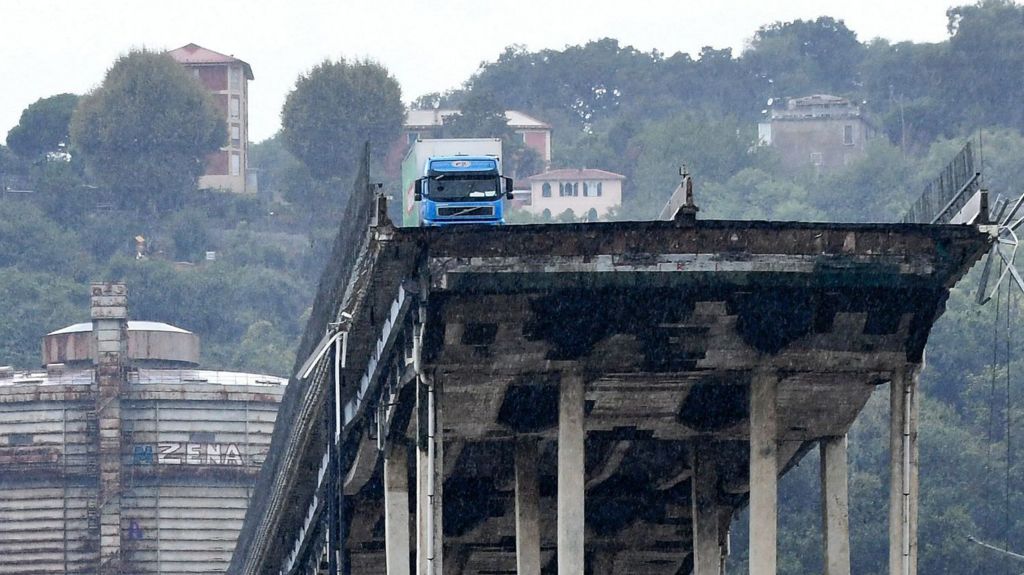
    It has been almost eight years since Italy suffered one of its deadliest modern infrastructure disasters, when a section of the 1960s-era Morandi Bridge in the northern port city of Genoa collapsed during a summer storm at the peak of 2018’s holiday travel season. On Thursday, a Genoa courtroom will finally deliver the first-instance verdict in a years-long trial that has gripped the nation, with dozens of defendants facing charges linked to the tragedy that claimed 43 lives.

    Among those set to attend the hearing is Egle Possetti, whose sister Claudia, Claudia’s new husband Andrea, and the couple’s two children aged 12 and 16 died when their vehicle plunged from the collapsed viaduct onto the railway tracks below. The family had just married and was en route to a holiday on the Italian Riviera when disaster struck. Claudia’s first husband, father to the two children who died, will also join Egle in court Thursday.

    In an interview with the BBC, Possetti, who also serves as a representative for the committee of victims’ families, described her conflicting emotions heading into the verdict: “I feel anxious, worried, very emotional. After so many years, so many hearings, we may be able to see some light. It would be so important for us to know if someone’s been held accountable.” For nearly a decade, Possetti says, families have been told the collapse was an unavoidable accident with no culpable party. A clear ruling on responsibility, she adds, would bring a long-awaited measure of peace and justice to grieving relatives who have lived with uncertainty for years.

    The disaster triggered a years-long investigation that ultimately led to 57 people going on trial starting in July 2022. Defendants include former senior executives of Autostrade per l’Italia (Aspi), the toll road operator that managed the bridge, executives from Aspi’s former parent company Atlantia, lead engineers from maintenance contractor Spea, and former Italian transport ministry officials. Charges against the accused range from multiple counts of manslaughter to document falsification, and all 57 defendants have repeatedly denied any wrongdoing. Several lesser charges, including some counts of forgery, have already been dropped due to Italy’s statute of limitations.

    At the core of the case is a fundamental dispute over what caused the bridge, a critical transit link connecting Genoa to the French border, to fail. Prosecutors argue the collapse was entirely preventable: they claim warnings of structural degradation were repeatedly ignored for years, while critical maintenance work was deliberately delayed to protect corporate profits. Defense teams, by contrast, argue the disaster stemmed from an inherent design flaw in the concrete-encased stay cable that failed, and that no feasible maintenance program could have averted the collapse.

    The trial, which has spanned nearly four years and required 284 separate hearings, has drawn widespread criticism over its plodding pace, which has exposed deeper structural issues within Italy’s judicial system. Francesco Pinto, the former deputy chief prosecutor who led work on the case, has noted that even after Thursday’s first-instance ruling, additional appeals and a final Supreme Court decision could add another two and a half years to the process. Defense attorneys, including Giovanni Paolo Accinni who represents former Atlantia CEO Giovanni Castellucci, counter that the lengthy proceedings stem from the prosecution’s years of complex pre-trial technical investigations, most of which needed to be revisited after the trial formally began. Castellucci is already serving a six-year prison sentence for his role in a separate 2013 viaduct collapse in southern Italy that killed 40 people.

    Ahead of Thursday’s verdict, Aspi broke its long silence to issue the first formal public apology to victims’ families. In an open letter published in two major Italian newspapers, current CEO Arrigo Giana — who took over leadership of the company last year, when it came under new ownership and management — called the lack of an earlier apology a “further, incomprehensible wound” for a community already shattered by grief. While acknowledging no apology can undo the pain of losing loved ones, Giana called the apology a long-overdue moral duty. Both Aspi and Spea have already stepped down as defendants in the criminal case after reaching a settlement agreement that pays out roughly €30 million (£25 million) in damages to victims.

    Beyond the trial, the 2018 collapse sparked a sustained national debate over the state of Italy’s aging infrastructure, bringing long-neglected issues of delayed maintenance and structural safety to the forefront of public discourse. The wreckage of the original Morandi Bridge was demolished via controlled explosion in June 2019. Just 18 months later, a new replacement span — the Genoa San Giorgio Bridge, designed by celebrated Genoa-born architect Renzo Piano, with sail-like white pillars that pay homage to the city’s maritime heritage — opened to traffic in August 2020. Even with the physical replacement complete, families of the victims say closure will only come once clear accountability is delivered for the disaster. Following Thursday’s verdict, the victims’ families committee will hold a public press conference in Genoa to address the ruling.
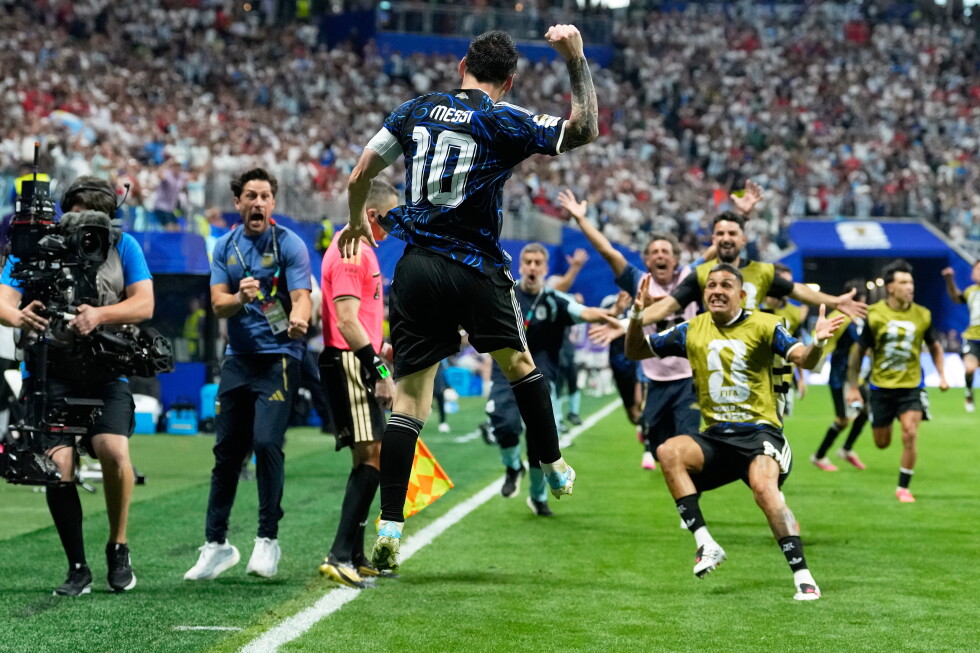
  • The World Cup final is set, with Messi and Argentina facing Yamal and Spain for the title on Sunday

    The World Cup final is set, with Messi and Argentina facing Yamal and Spain for the title on Sunday

    The expanded 48-team 2026 FIFA World Cup co-hosted across the United States, Canada and Mexico is days away from crowning a new champion, and the title decider has delivered one of the most anticipated storylines in modern soccer history. When Lionel Messi’s defending champion Argentina faces Spain’s rock-solid defensive side in East Rutherford, New Jersey this Sunday, it will be more than a fight for the golden trophy—it is a clash of contrasting styles, generations, and long-brewing destiny that no soccer fan could have scripted.

    The road to the final began with two breakout semifinal performances. On Tuesday, Spain booked their spot with a commanding 2-0 victory over France, while a day later, tournament comeback kings Argentina pulled off another late rally to defeat England 2-1, punching their ticket to the decider.

    Argentina enters the match chasing history that has not been made in more than 60 years. The South American side is vying for its fourth World Cup title, and would become the first nation to win back-to-back World Cups since Brazil achieved the feat in 1958 and 1962. Leading the charge is Messi, the tournament’s all-time leading goalscorer, who has powered Argentina to a tournament-high 19 goals so far—an explosive attacking record that stands as the best in the competition.

    Standing in their way is a Spanish side built on elite defensive discipline that has been nearly unbreakable throughout the tournament. Spain has conceded just one goal across seven matches, the lowest total of any team, earning their place in the final as they chase their second World Cup title, their first coming in 2010. Ranked second in the pre-tournament FIFA world rankings behind Argentina’s top spot, La Roja have been almost unbeatable for more than a year: they carry a 37-match unbeaten streak across all competitions into Sunday’s final, with 28 wins and nine draws since their last loss, a 1-0 defeat to Colombia in March 2024.

    What makes this final even more remarkable is the twist of fate that brought the two teams to New Jersey, after a planned pre-tournament showcase never came to be. As the reigning South American and European champions respectively, Argentina and Spain were scheduled to meet in a high-profile Finalissima clash in Doha, Qatar last March. The match was ultimately canceled over security concerns, sparked by escalating regional unrest linked to the ongoing conflict involving Iran, the United States and Israel. What was supposed to be a preview of a World Cup final has instead become the main event, with the two sides set to square off not at Lusail Stadium—site of Argentina’s iconic 2022 penalty shootout win over France— but at a venue just outside New York City for soccer’s biggest stage.

    Beyond the team rivalry, the final will deliver a once-in-a-generation meeting between two Barcelona superstars separated by 20 years. A viral 2007 photograph captured Messi, then a rising young star participating in a UNICEF initiative, posing with an infant. That baby was Lamine Yamal, now Spain’s breakout young left-footed talent who followed in Messi’s footsteps to become a star at Barcelona. Two decades after that innocent photo op, the pair will share the World Cup final pitch, capping the tournament with a narrative that feels too perfect to be scripted.

    A look at both teams’ journey to the final highlights their contrasting paths to the decider. Spain have remained unbeaten throughout this World Cup, posting six wins and one draw across seven matches, with 13 goals scored and just one conceded. Their campaign began with a tense 0-0 draw against Cape Verde in the group stage, followed by a 4-0 rout of Saudi Arabia and a 1-0 win over Uruguay. In the knockout round, they dismantled Austria 3-0, edged Portugal 1-0, defeated Belgium 2-1, and shut out France 2-0 to reach the final.

    Argentina, by contrast, has been perfect so far, with seven wins from seven matches and zero draws, netting 19 times while conceding seven. The Albiceleste started their group stage campaign with a 3-0 win over Algeria, a 2-0 defeat of Austria, and a 3-1 victory over Jordan. They have lived up to their “comeback kings” reputation in the knockout round, grinding out tight wins: 3-2 over Cape Verde, 3-2 over Egypt, 3-1 over Switzerland, and the late 2-1 turnaround against England that booked their final spot. Argentina also brings an impressive long-form World Cup unbeaten streak into Sunday: they have not lost a World Cup match since their opening group game defeat to Saudi Arabia in 2022, going 11 wins and two draws over their last 13 outings.

    As the 104-match, five-week extravaganza comes to a close, all eyes turn to the East Rutherford pitch. One side boasts the most dynamic attack in the tournament, the other boasts the tightest defense. One is led by the greatest goalscorer in tournament history chasing back-to-back titles, the other is a youthful defensive juggernaut led by the sport’s next great star chasing a second world crown. After a canceled pre-tournament match and a months-long journey across North America, the biggest World Cup in history is set for a picture-perfect ending that no fan will want to miss.

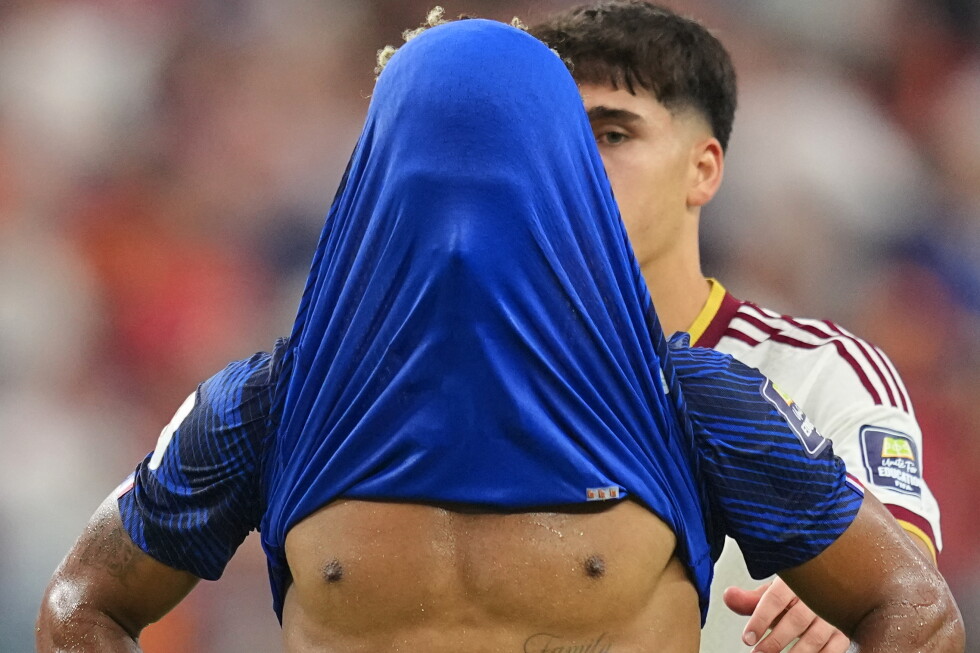
  • One Extraordinary Photo: France’s Kylian Mbappe shows his frustration against Spain

    One Extraordinary Photo: France’s Kylian Mbappe shows his frustration against Spain

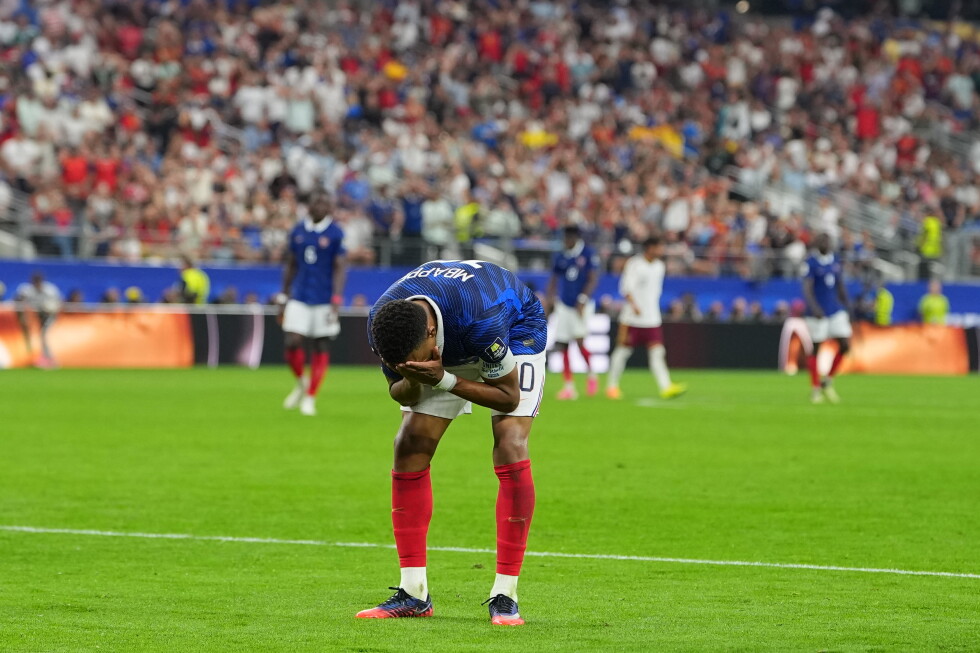
    ARLINGTON, Texas — For veteran Associated Press photojournalist Julio Cortez, a Pulitzer Prize winner and AP’s regional chief photographer based in Dallas, this Women’s World Cup assignment marked his third time covering the global tournament, capping 16 years of work with the news agency. What began as a quiet stretch of the match shifted into one of the most memorable photographic opportunities of the entire competition, capturing the raw, unfiltered heartbreak of elite sports at its highest stakes.

    The match was France’s semifinal against Spain, and with less than 10 minutes remaining in regular play, the French side was staring down a 2-0 deficit, with the clock ticking down on their dreams of reaching a third consecutive World Cup final. For French superstar Kylian Mbappé, every missed scoring chance had already been followed by unmistakeable displays of frustration, and the 81st minute would bring one of the game’s last best opportunities for France to get back into the match.

    Mbappé broke into open field after receiving a well-placed pass, with Spanish goalkeeper Unai Simon rushing out of his penalty box to cut off the advance, leaving the Spanish net completely unguarded. The breakaway left France with a golden chance to cut the deficit to a single goal, setting up a potential late comeback. But Spain’s backline rallied quickly, blocking the attempt and shutting down the threat before France could capitalize. In the immediate aftermath, Mbappé froze, unable to believe his missed opportunity. He doubled over, buried his face in his hands, and in that moment of unguarded emotion, Cortez captured the iconic image that would come to define the match’s outcome.

    Cortez never expected to get the shot when the breakaway unfolded. Moments before, the play had been concentrated on the opposite side of the pitch, so he had positioned his 400mm telephoto lens on a luxury suite above the team benches, where global soccer icon David Beckham was seated in attendance. With no high-stakes action near his vantage point, Cortez had been scanning the stands for celebrity guests — until the sudden breakaway shifted all momentum back to his side of the field.

    In the space of a single second, Cortez switched gears, moving from his long-lens camera to a second body outfitted with a Sony G-Master 50-150mm f/2 lens to frame the fast-developing play. After the scoring attempt was blocked, Cortez kept his lens locked on Mbappé, anticipating the star’s raw reaction to the missed chance that would all but end France’s run in the tournament. For several seconds, other players cleared out around Mbappé as he processed the disappointment, leaving Cortez a clean frame to capture the unscripted moment of despair.

    What makes the image stand out, beyond its perfect timing, is how it distills the high emotion of a World Cup semifinal. France came into the match chasing history, eyeing a third straight trip to the tournament’s championship match — a feat that would have cemented their status as one of the greatest international sides of the modern era. But Spain’s organized defense shut down every French attacking push throughout the late stages of the game, leaving Mbappé visibly frustrated long before the fateful 81st minute; the star had already picked up a yellow card in an earlier run-in with Simon.

    In any high-stakes elimination match, emotions run to extremes: the winner leaves the pitch with unbridled joy and a spot in the final, while the loser is left to grapple with the crushing weight of what could have been. This shot does not capture a goal, a celebration, or a trophy lift — it captures the quieter, universally recognizable pain of falling short at the last moment, turning a single frame of the match into a story that resonates far beyond soccer.

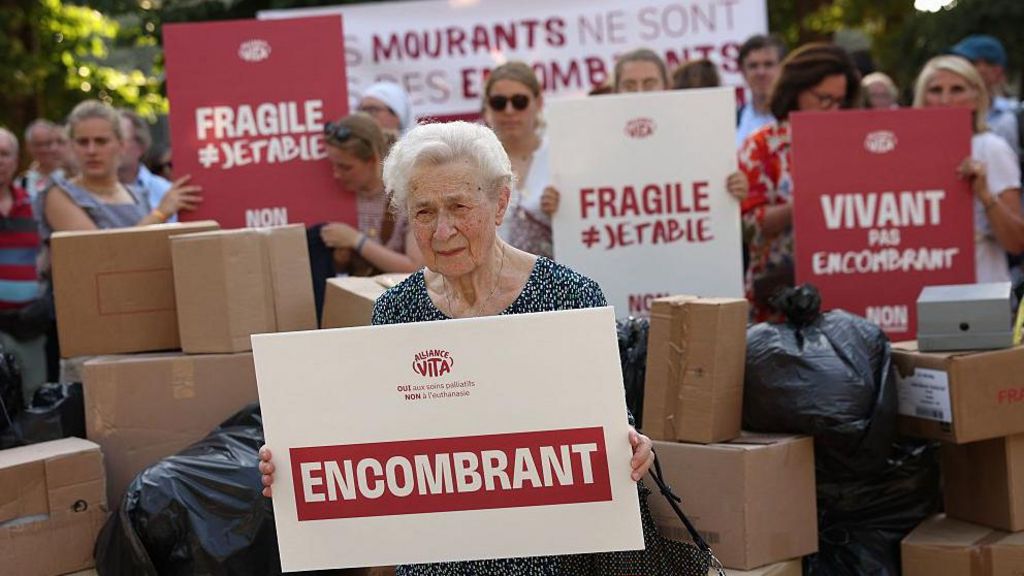
  • French MPs approve assisted dying law with strict rules after years of argument

    French MPs approve assisted dying law with strict rules after years of argument

    After decades of fraught public and political debate and multiple rounds of legislative revisions, France’s lower house of parliament, the National Assembly, has passed a landmark bill establishing a legally protected right to assisted dying, subject to narrow eligibility criteria. The final vote on Wednesday split the chamber sharply, with 299 MPs backing the legislation and 241 opposing it — a result that comes after the country’s upper house, the right-leaning Senate, rejected the bill three consecutive times.

    The legislation sets clear boundaries for access to assisted dying: only adult French residents living with a serious, incurable, life-threatening illness that has reached an advanced or terminal stage qualify. To be eligible, patients must also experience constant, unbearable physical or psychological suffering that cannot be relieved by ongoing treatment.

    Under the bill’s terms, patients must explicitly and voluntarily state their intention to access assisted dying to a treating physician, who is required to conduct internal consultations and issue a decision within 15 days of the request being filed. After receiving approval, patients must complete a 48-hour reflection period before confirming their request, and must self-administer the lethal substance in most cases. If a patient is physically unable to self-administer, a licensed physician or nurse may carry out the step instead, and the patient’s decision must be re-verified by the attending medical professional on the day of the procedure.

    Prior to the bill taking legal effect, Prime Minister Sébastien Lecornu has announced he will refer three contentious sections of the legislation to France’s Constitutional Council, the nine-member independent body tasked with reviewing whether new laws comply with the national constitution. The three provisions under review include the 48-hour reflection period, which opponents argue is too short to allow for fully informed decision-making; the rules governing consent for patients placed under legal guardianship due to impaired decision-making capacity; and the role of palliative care-focused healthcare facilities in offering assisted dying services.

    While Macron has long supported end-of-life choice legislation, the process was significantly delayed after he called snap parliamentary elections in 2024, and successive prime ministers have moved cautiously to advance the bill. Lecornu has openly acknowledged holding personal reservations about the legislation’s terms, and his office stated Wednesday that the Senate’s review process failed to adequately address both the hopes of the bill’s supporters and the concerns of its opponents.

    If the Constitutional Council approves the legislation, France will become the latest European nation to decriminalize assisted dying, joining a growing bloc of countries that have formalized end-of-life choice frameworks. The Netherlands and Belgium first legalized physician-administered assisted dying for patients with unbearable incurable suffering in 2002, and multiple other European states have passed similar legislation in the years since. Switzerland has long permitted assisted suicide, provided the person assisting acts without personal motive.

    The debate over assisted dying has similarly divided policymakers in the United Kingdom, where a bill to legalize the practice in England and Wales was put on hold earlier this year and is scheduled to return to parliamentary debate in September.

    In France, the legislation has faced fierce opposition from the Catholic Church and segments of the medical community, and political divisions have kept the bill stalled for years, with the right-wing majority in the Senate blocking it repeatedly. Despite this political opposition, public opinion polling consistently shows a large majority of French citizens support giving terminally ill patients the choice between palliative care and assisted dying, with many critics of the status quo arguing the current system fails to address intolerable end-of-life suffering.

  • Kylian Mbappé-led France falls flat in World Cup loss to Spain when hopes for a title were high

    Kylian Mbappé-led France falls flat in World Cup loss to Spain when hopes for a title were high

    ARLINGTON, Texas — Entering Tuesday’s high-stakes World Cup semifinal at AT&T Stadium, home of the NFL’s Dallas Cowboys, France carried all the momentum: an undefeated run through the tournament’s first six matches, a dynamic attacking front led by golden boot contender Kylian Mbappé, and the experience of a squad that had reached the final of the last two World Cups. Many expected the defending runners-up to outclass Spain’s solid defense and punch their ticket to a third consecutive title decider, in what was widely expected to be head coach Didier Deschamps’ final match on soccer’s biggest global stage.

    But the night belonged entirely to Spain, who shut out Les Bleus 2-0 to secure their spot in the World Cup final, leaving France and its long-tenured coach with a crushing early exit.

    Deschamps, who has publicly stated this tournament would be his final World Cup at the helm of the French national team, boasts one of the most impressive resumes in international soccer: he lifted the trophy as a player for France in the 1998 home World Cup, then claimed gold again as manager in the 2018 tournament in Russia, before guiding his side to the 2022 final in Qatar, where France fell to Argentina in a dramatic penalty shootout.

    Speaking to reporters after the final whistle through a translator, Deschamps reflected on his decades-long career with the French program while acknowledging the sting of the defeat. “I’ve been lucky as a player to enjoy happy moments. Today is not such a moment. But I think we must accept it without forgetting everything that we’ve experienced so far. But today’s feeling is that I am not happy,” he said, adding that it was too early to make any official announcements about his future.

    The disappointment of the upset rippled 4,000 miles across the Atlantic to France itself, where unrest broke out in major urban centers. Multiple clashes were reported between law enforcement and young people in Paris, with similar disturbances recorded in Lyon. French sports media and pundits widely lamented the team’s flat performance, which marked the first time France conceded defeat in this year’s tournament after opening with six straight unbeaten matches.

    Leading French sports daily L’Équipe summed up the widespread national disappointment, noting that Deschamps’ side were outperformed in every department of the game, “unable to live up to their dreams and to the hope they had inspired.”

    Even France’s star players acknowledged the subpar showing, though captain Mbappé was quick to defend his embattled head coach, and pledged the squad would fight hard to secure a third-place finish for Deschamps when they face the loser of the other semifinal between England and Argentina this Saturday in Miami Gardens, Florida.

    “Nothing changed about what Didier means to us as a French people. As a manager, as a player, he wrote an amazing story,” Mbappé said, after sharing a quick sideline hug with Deschamps following the final whistle. “There’s one game left for him, so we’re going to try to play the best game for him because he deserves it, and also the fans deserve to have a win and finish third in this World Cup.”

    Much of France’s failure to threaten stemmed from the total shutdown of its high-profile attacking unit. The dynamic playmaking of Mbappé, Ousmane Dembele and Michael Olise, which had carried Les Bleus through the earlier rounds, never materialized against a sharp Spain defense that notched its sixth clean sheet in seven matches of the tournament.

    Mbappé’s only clear-cut chance of the night came in the 67th minute, when his shot deflected off Spain defender Marc Cucurella and drifted just wide of the goal. By that point, Spain already held a comfortable 2-0 lead. Entering the semifinal, the 27-year-old French captain was tied with Argentina’s Lionel Messi for the tournament lead in goals with eight, but he failed to add to his tally Tuesday. He picked up a yellow card in the 86th minute after a frustrating collision with Spain goalkeeper Unai Simón, rushing toward the keeper as he bent to collect the ball and sending Simón tumbling to the turf.

    Midfielder Rayan Cherki, speaking through a translator, summed up the team’s collective disappointment while looking ahead to future tournaments. “In so many ways, France was missing everything today. We’ll be back in four years, and we won’t make the same mistakes.”

  • Motorists causing ‘chaos’ at Blue Flag beach, says councillor

    Motorists causing ‘chaos’ at Blue Flag beach, says councillor

    As summer tourist season hits the Irish coast, a dramatic crackdown on rogue parking at one of County Donegal’s most scenic Blue Flag beaches has exposed long-simmering infrastructure gaps that have turned a popular leisure spot into a site of daily gridlock.

    Shroove — also spelled Stroove or Shrove — sits along the iconic Wild Atlantic Way on the eastern edge of the Inishowen Peninsula, just across the border from Northern Ireland near the fishing village of Greencastle. Tucked beside the mouth of Lough Foyle and overlooked by a historic lighthouse, this quiet sandy stretch draws thousands of visitors annually, many of whom travel across the border from Northern Irish areas like Derry for a day of swimming, coastal walks and unobstructed views of Ireland’s natural landscape.

    But this summer’s warm weather has brought a surge of visitors that has overwhelmed the area’s limited parking infrastructure, leading to widespread disregard for double yellow line restrictions put in place to ease congestion. The crisis reached a head this week when Irish police (Gardaí) seized two vehicles during targeted enforcement of road traffic laws, a move that local representatives say was long overdue after years of mounting chaos.

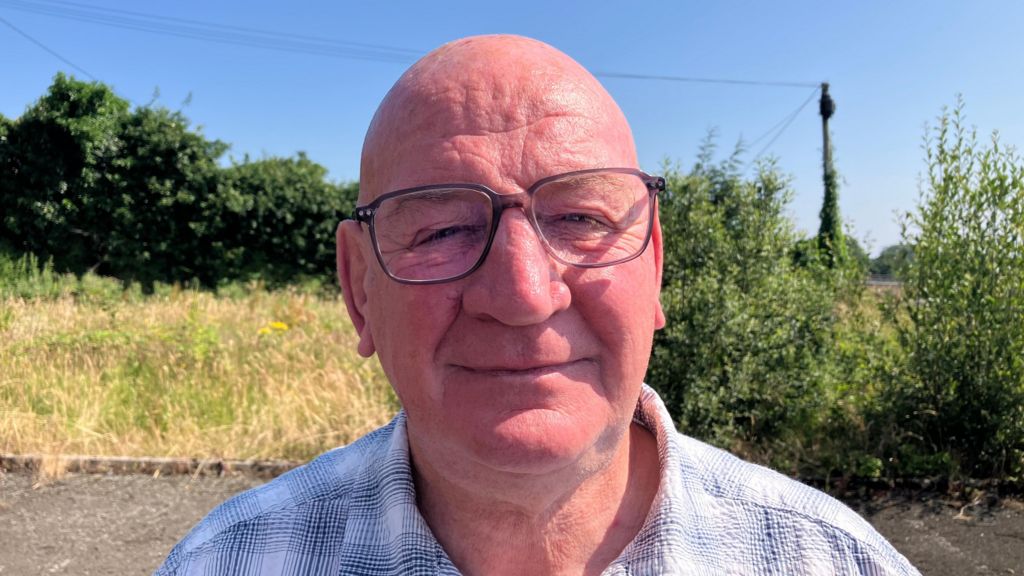
    Sinn Féin councillor Terry Crossan, who first highlighted the severity of the problem, described the current situation at the beach as unchecked pandemonium. “The single road in and out of Shroove is already extremely narrow, and when warm weather brings hundreds of visitors from north of the border, it becomes completely gridlocked,” Crossan explained. “Double yellow lines were added to fix the congestion, but visitors have just ignored them and parked haphazardly wherever they can find space. Up until recently, Gardaí hadn’t enforced the rules strictly, and that’s how we ended up with absolute chaos.”

    Beyond the daily inconvenience for visitors and locals, the illegal parking creates a critical public safety risk. Gardaí have officially warned that blocked roads would prevent emergency services from reaching the area in the event of an accident, medical emergency or coastal rescue, putting lives directly in danger. This week, the gridlock became so severe that local bus operators were forced to suspend all services to the Shroove area entirely. The parking crisis is not isolated to Shroove either: just days earlier, Donegal County Council followed Gardaí advice and closed Downings Beach, located roughly 99 kilometers away, after an overwhelming influx of vehicles made the area unsafe.

    Interviews with visitors to Shroove this week reveal a mix of frustration and calls for improved infrastructure to address the root of the problem. Katherine Moloney, a first-time American tourist visiting from Massachusetts who chose to explore Donegal amid a stretch of unseasonably warm weather, said poor signage leaves first-time visitors confused about where legal parking is located. “I’d heard about the parking issues before I arrived, and I can see why it’s a problem,” Moloney said. “There’s very little clear signage marking where you can and cannot park, so tourists who don’t know the area often end up parking in restricted spots without meaning to.”

    Other visitors, who planned ahead to avoid the worst of the gridlock, say the only long-term solution is expanding the area’s legal parking capacity. Sophia Hegarty, who arrived at the beach early in the morning with her grandchildren to secure a spot before afternoon congestion hit, said overcrowding is an unavoidable problem when there is not enough designated parking. “It’s obvious that if we don’t create more legal spaces, people will keep parking on the main road,” Hegarty said. “Right now it’s so overcrowded that emergency vehicles couldn’t get through, and that’s a real worry for everyone.”

    Nicole O’Neill, a visitor from Londonderry who traveled across the border for a family day out with her three-year-old daughter, described the parking experience as a total nightmare. “People park on double yellow lines, block other cars in, and there’s nowhere to pull over to let people pass,” O’Neill said. “It’s incredibly stressful, especially when you have young children in the car. We need a larger car park here, or we need to encourage more people to walk to the beach when they can to cut down on vehicle numbers.”

    As enforcement ramps up, local leaders are now facing growing pressure to address the infrastructure gaps that have turned one of Inishowen’s most beloved natural attractions into a summertime hotspot for gridlock and public safety risk.

  • Wærenskjold sprints to his 1st stage win at the Tour de France, Pogačar protects his lead

    Wærenskjold sprints to his 1st stage win at the Tour de France, Pogačar protects his lead

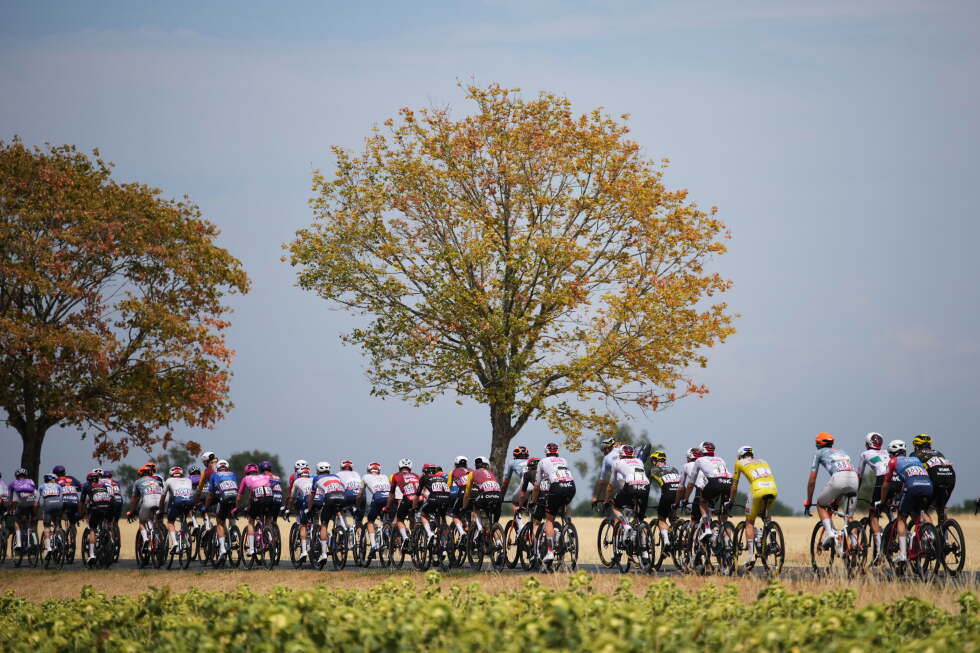
    NEVERS, France — The 2024 Tour de France’s 11th stage delivered a textbook sprint finish that ended with a breakthrough win for 26-year-old Norwegian rider Søren Wærenskjold on Wednesday, while defending champion and current race leader Tadej Pogačar successfully protected his commanding overall position atop the general classification.

    The 161.3-kilometer (100.2-mile) parcours from central France’s Vichy to Nevers was defined by rolling terrain that flattened out in the closing kilometers, a profile that always favored a bunch sprint finish. Expectations held true as the peloton reeled in every early breakaway ahead of the final dash to the line, setting the stage for the fastest riders in the race to compete for the stage honors.

    Wærenskjold held off fellow Norwegian sprinter Olav Kooij by a tire’s width to take the win, with Belgian sprint star Jasper Philipsen and a large pack of fast-finishing riders trailing close behind. What makes the victory even more remarkable for the Norwegian is that it came just 24 hours after he crashed heavily during the demanding, hilly 10th stage that finished at Le Lioran. Wærenskjold recovered from the incident to claim the first Grand Tour stage win of his professional career.

    For overall classification contender Tadej Pogačar, Wednesday’s stage was all about maintaining the advantage he built on the previous day of racing. The Slovenian, who claimed his third stage win of this year’s Tour on Tuesday to extend his lead over his closest rivals, crossed the finish line in the main peloton alongside defending champion Jonas Vingegaard, Pogačar’s primary challenger for the yellow jersey. Pogačar now retains his cushion of more than three and a half minutes over Vingegaard in the general classification standings as the race heads toward the decisive mountain stages in the Alps.

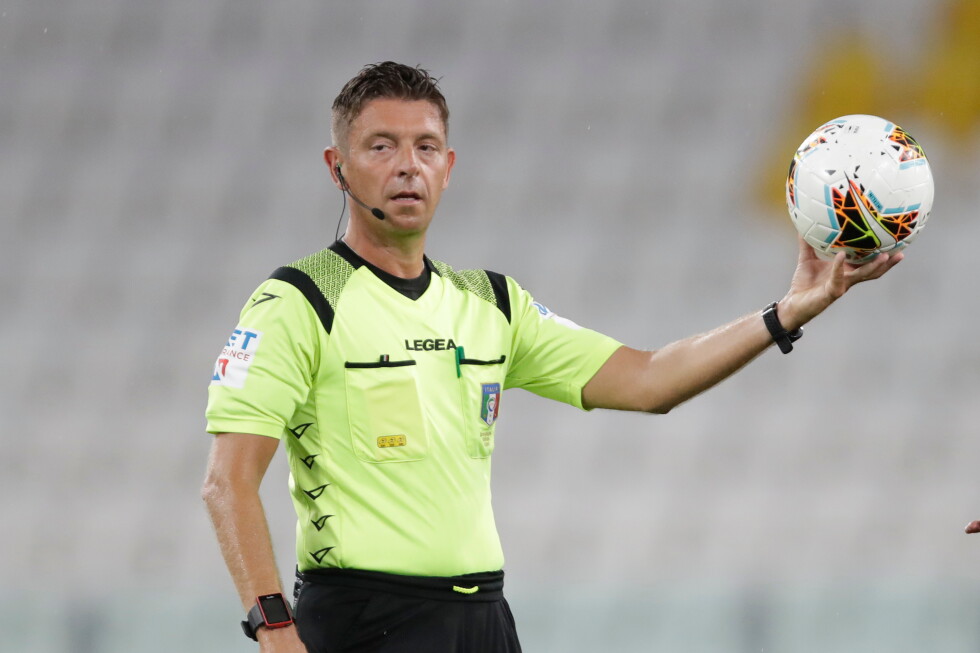
  • Milan prosecutor dismisses fraud case against former Italian referee chief Gianluca Rocchi

    Milan prosecutor dismisses fraud case against former Italian referee chief Gianluca Rocchi

    MILAN — In a significant development in Italian football’s latest judicial inquiry, public prosecutors in Milan have formally closed the sports fraud case against Gianluca Rocchi, the former head of referee designation for Italy’s top two professional leagues, and his deputy Andrea Gervasoni, clearing both men of all criminal allegations.

    Rocchi, who oversaw referee and VAR appointments for Serie A and Serie B until the investigation launched, was first named as a target of a criminal probe back in April this year. The accusations against him centered on two key claims: that he had manipulated video assistant referee (VAR) decisions during top-flight matches, and improperly altered referee selection processes to favor specific clubs.

    In an official statement released Wednesday, the Milan Public Prosecutor’s Office confirmed it had found “no evidence of a structured system aimed at interfering with appointments” that would support the sports fraud charges. The investigation centered on incidents that took place during the 2024-25 Serie A season. One of the most high-profile claims was that Rocchi had swapped the assigned referee for an Inter Milan match with an official thought to be more favorable to the Milan-based club. Inter Milan, which finished just one point behind eventual Serie A champion Napoli that season, was never implicated in any wrongdoing as part of the inquiry.

    The second allegation tied to Rocchi involved a March 1, 2025 Serie A fixture between Udinese and Parma. Prosecutors claimed he interfered with VAR protocols by banging on the window of the VAR booth to urge officials to conduct an on-field review of a potential penalty call. Jurisdiction over this specific incident has been transferred to the Monza Public Prosecutor’s Office, as the league’s central VAR operations room falls within their geographic authority.

    Shortly after the investigation was opened earlier this year, Rocchi immediately resigned from his post. He was temporarily replaced by Dino Tommasi before the Italian Football Federation appointed Daniele Orsato as his permanent successor.

    Antonio D’Avirro, Rocchi’s legal representative, spoke publicly after the case dismissal Wednesday, noting that his client was relieved by the outcome. “I’ve spoken to him and he is very pleased; now we will consider our next steps. I’m meeting him tomorrow to discuss the matter in detail,” D’Avirro said. He added that while the case was resolved quickly, the personal and professional cost for Rocchi had already been high.

    D’Avirro also pushed back against the remaining allegations tied to the Udinese-Parma incident, arguing no sporting fraud could be established in that case. “I fail to see how those ‘knocks’ could constitute sporting fraud; they were intended to correct a serious error the referee was making, certainly not to alter the match result. From a legal standpoint, I do not see how a case for sporting fraud could be established.”

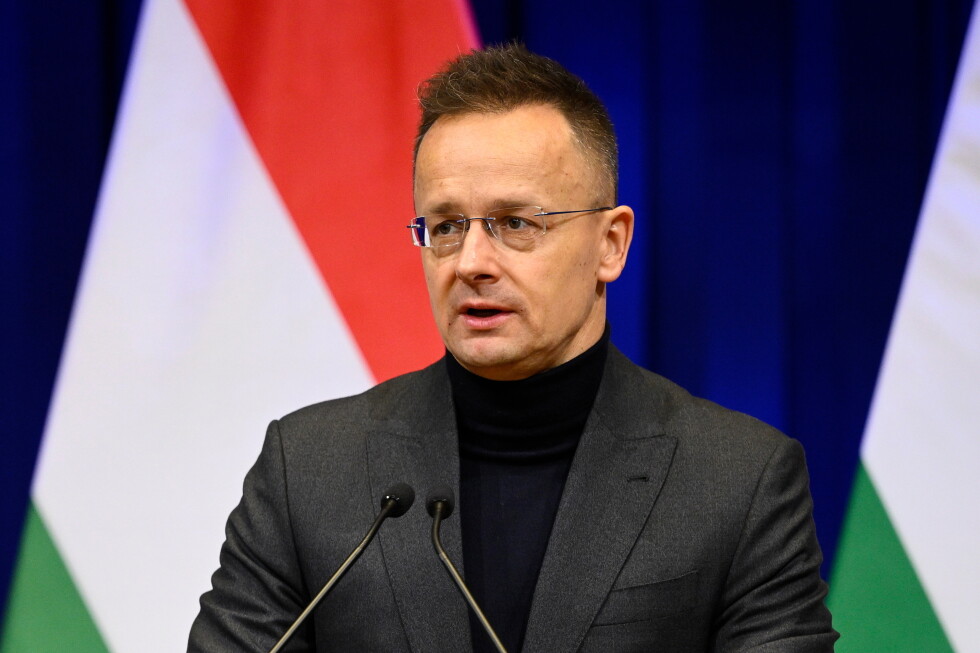
  • Former Hungarian foreign minister resigns from parliament for job with Chinese automaker

    Former Hungarian foreign minister resigns from parliament for job with Chinese automaker

    BUDAPEST, Hungary — In a surprise announcement posted to social media Wednesday, Péter Szijjártó, Hungary’s top diplomat for nearly 12 years under former Prime Minister Viktor Orbán, confirmed he has resigned his seat in the country’s national parliament to accept a senior executive role at Chinese electric vehicle manufacturing giant BYD.

    Szijjártó, who first won a parliamentary mandate in 2002, lost his cabinet position following Orbán’s far-right Fidesz party’s landslide April election defeat to the pro-European Tisza party led by current Prime Minister Péter Magyar. In the months after the election, the former foreign minister was absent from the vast majority of parliamentary votes, made few public appearances, and stayed largely silent on social media platforms.

    In his Facebook statement Wednesday, Szijjártó described the opportunity at BYD — the world’s largest producer of electric vehicles — as a “highly prestigious international position.” He hailed the Chinese automaker as one of the most remarkable success stories in the global automotive sector over the past two decades, and confirmed he will now serve as the executive leading the BYD group’s external affairs and expansion of new business lines.

    The new role marks a full-circle moment for Szijjártó, who as foreign minister spearheaded years of negotiations to bring BYD’s first European manufacturing facility to Hungary. Announced in 2023, the Hungarian plant allows BYD to avoid punitive European Union import tariffs imposed on Chinese electric vehicles, a policy Szijjártó and Orbán’s administration openly opposed throughout their time in office. At the time of the 2023 announcement, Szijjártó noted the investment deal followed 224 separate rounds of talks between BYD and Hungarian officials, and called the project “one of the largest investments in Hungarian economic history,” adding the Orbán government would extend significant financial incentives to the company to support construction of the facility.

    Under Szijjártó’s tenure as foreign affairs and trade minister, Hungary actively courted billions in Chinese investment, attracting a string of Chinese EV battery manufacturing plants across the country. The Orbán administration also partnered with Beijing on the Hungary-Serbia rail corridor, a key infrastructure project under China’s global Belt and Road trade initiative.

    Beyond his economic outreach to Beijing, Szijjártó was a highly controversial figure in European diplomatic circles for his close alignment with Russia following Moscow’s full-scale invasion of Ukraine in February 2022. Breaking ranks with nearly all other EU foreign ministers, Szijjártó made repeated trips to Moscow to negotiate energy purchase agreements with Russian officials and met repeatedly with Russian Foreign Minister Sergey Lavrov, whom he openly described as a personal friend. In 2021, before the invasion, Russian President Vladimir Putin awarded Szijjártó the Russian Order of Friendship, one of the highest state honors granted to foreign citizens.

    Controversy around Szijjártó’s ties to Moscow escalated during Hungary’s 2026 election campaign, when The Washington Post reported he provided Lavrov with live updates on discussions during high-level EU meetings. Szijjártó denied the core allegation of the report but confirmed he held regular consultations with Lavrov before and after EU foreign minister gatherings to discuss agenda items and policy outcomes. Earlier this year, the outgoing Orbán government filed espionage charges against a prominent Hungarian investigative journalist who was probing Szijjártó’s communications with Russian officials. Those charges were immediately dropped after the new Tisza government took office in April.

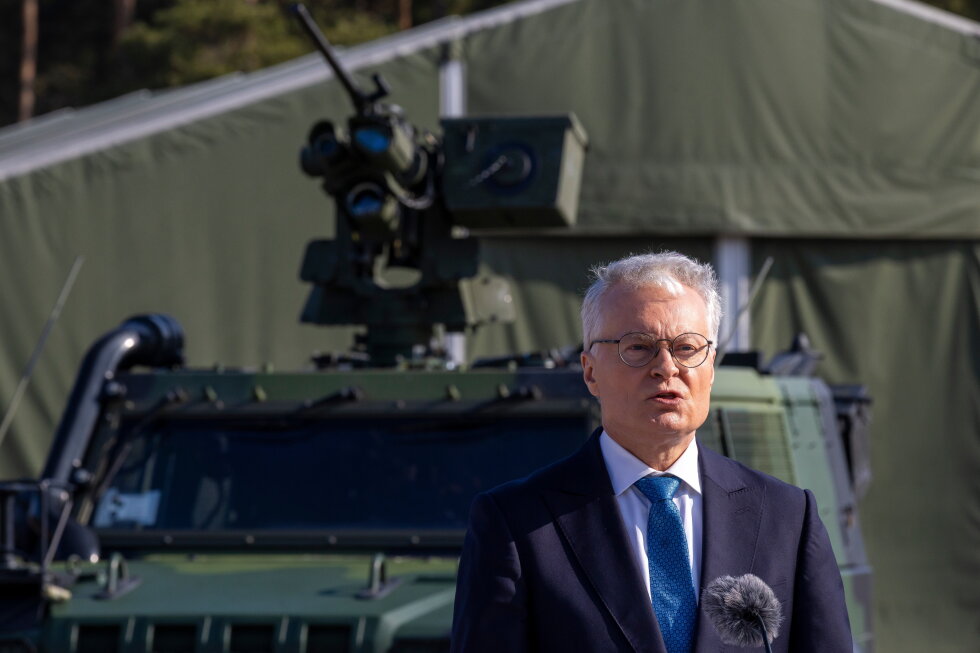
  • Baltics and Poland warn Russia could launch limited military or hybrid provocation against NATO

    Baltics and Poland warn Russia could launch limited military or hybrid provocation against NATO

    In coordinated warnings issued this week, top leaders from Lithuania and Latvia have sounded the alarm over newly declassified intelligence indicating Russia is preparing potential limited strikes against critical energy and transport infrastructure across NATO’s eastern flank, encompassing the Baltic states and Poland. As regional governments ramp up defensive deployments and security preparations, Moscow has dismissed the claims as a manufactured pretext for further NATO military expansion in the region.