标签: Europe

欧洲

  • No cuddles, but lots of care: How a Paris-area wildlife hospital keeps rescued animals wild

    No cuddles, but lots of care: How a Paris-area wildlife hospital keeps rescued animals wild

    Nestled in Maisons-Alfort, a southeastern suburb of Paris, France, a one-of-a-kind wildlife hospital operates under a simple but strict rule: no affectionate cuddling, but unwavering, expert care for every wild patient that passes through its doors. Every year, the facility takes in thousands of injured, ill, and orphaned wild animals, most of whom have been harmed directly or indirectly by human activity and the relentless spread of urbanization. Its ultimate mission is to heal these creatures and return them to their natural wild habitats.

    Last week, local residents who keep hunting dogs discovered a tiny female fox cub alone in an outskirt garden, with no sign of her mother anywhere nearby. Estimated to be just two weeks old — far too young to fend for herself in the wild — the cub was quickly transported to the hospital for care. After a thorough examination by veterinarian Julie Piazza, the cub was found to be in generally good condition, with only a small wound likely caused by a bite from either another wild animal or one of the residents’ hunting dogs. Currently, a team of dedicated volunteers provides 24-hour care for the cub, feeding her specially formulated artificial milk that matches the nutrient composition of a wild fox mother’s milk. Piazza noted that the cub currently has a slightly swollen abdomen after adjusting to her new diet, a common condition for very young animals that have experienced a disruption to their regular feeding routine.

    Animal caretaker Valentin Delon explained that the facility’s no-cuddling policy is not a lack of compassion, but a critical measure to protect the animals’ future. “Any kind of imprinting that makes animals dependent on human caregivers long-term has to be completely avoided,” Delon said. “So we don’t hold them, we don’t interact with them more than necessary, and we maintain a careful distance for their own good. If they become attached to humans, they’ll never be able to survive once released back into the wild.”

    Once the cub gains enough weight and matures, she will not be released directly into the wild. Instead, she will first move to a specialized outdoor rehabilitation enclosure, where she will socialize with other young foxes. Staff will use a gradual release process: the enclosure door will be left open so the fox can come and go freely while still having access to food, before portions are slowly reduced to encourage her to hunt and forage on her own.

    Over the 12 months prior to this report, the Wildlife Veterinary Hospital of Maisons-Alfort admitted more than 10,400 wild animals, covering a huge range of native species: from songbirds and waterfowl to European mammals including foxes, roe deer, and hedgehogs. Run by the nonprofit organization Faune Alfort, it is the only facility in the greater Paris region that provides medical care and rehabilitation for a full spectrum of wild species, with approximately 86% of its patients being birds. From swans with broken wings and injured hedgehogs to orphaned ducklings often found abandoned on urban balconies and injured city pigeons, every animal receives the same level of skilled care, regardless of how common or rare it is.

    Elisa Mora, head of communications for Faune Alfort, told reporters that the facility saw a record 200 admissions in a single day last summer. Between April and September, wild animals enter their breeding season, bringing a surge of orphaned or injured juvenile animals to the hospital. “All wild animals face growing pressure from human activity, but juveniles are far more vulnerable than adults,” Mora explained. For animals whose injuries are too severe to heal, or who can never adapt to survival in the wild, humane euthanasia is the only option.

    Funded almost entirely by individual donations and charitable grants, the hospital depends heavily on its network of volunteers to handle daily feeding, cleaning, and basic care. The organization traces its roots back to 1987, when veterinarian Jean-François Courreau founded Faune Alfort after seeing veterinary students eager to develop better care protocols for wild animals. Six years later, the organization opened its dedicated hospital on the campus of the National Veterinary School of Alfort, an institution founded in the 18th century.

    “It’s impossible to stand by and watch an animal in distress when you have the training to help,” Courreau said. “Before this center existed, people who found an injured wild animal would think ‘there’s nothing I can do, this animal will die.’ When they know they can bring it here to get care, it’s a huge relief for them too.”

    Data from the hospital confirms that 60% to 80% of all admitted animals are harmed by human activity: common causes include vehicle collisions, entanglement in barbed wire fencing, and accidental injury from gardening or agricultural machinery. As urbanization continues to encroach on native wildlife habitats across France, the role of this unique wildlife hospital has grown more critical than ever.

  • Late Queen Elizabeth II’s legacy still looms over British monarchy 100 years after her birth

    Late Queen Elizabeth II’s legacy still looms over British monarchy 100 years after her birth

    LONDON — As the United Kingdom prepares to mark what would have been the 100th birthday of Queen Elizabeth II on Tuesday, the late monarch’s enduring hold on British public affection remains clearly visible, even as debate simmers over her complicated legacy.

    Near Buckingham Palace, the Cool Britannia gift shop tells a clear story of public preference: four years after her passing, mugs, tea towels, key chains and other souvenirs bearing the face of Britain’s longest-reigning monarch sell out rapidly, while merchandise featuring her son, current King Charles III, moves far more slowly. Store manager Ismail Ibrahim confirms that on any given day, Elizabeth II-themed products outsell those of the reigning king by a wide margin. Even two years after her death in September 2022, when most living Britons never knew any other monarch, a reference to “the queen” still brings Elizabeth to mind far more often than King Charles’ wife, Queen Camilla.

    Elizabeth’s 70-year on the throne shaped the modern British monarchy, transforming her from a glamorous young sovereign who lifted national morale in the grim post-WWII era into a beloved matriarch figure who united the country through the COVID-19 pandemic. But time has also brought growing scrutiny of her legacy. While she is widely celebrated as a symbol of unbroken tradition and national continuity through the end of the British Empire, shifting economic tides and large-scale migration that reshaped Britain’s national identity, one cloud lingers: the prolonged delay in addressing the Jeffrey Epstein scandal linked to her second son, the former Prince Andrew, with critics questioning why the issue was allowed to remain unresolved for years.

    “Despite her absence, Elizabeth II remains this key presence whenever we think about the monarchy,” Ed Owens, author of *After Elizabeth: Can the Monarchy Save Itself?*, told the Associated Press. “She’s certainly the most significant figure in the history of the institution in the last 100 years and, I think, therefore deserves probably the attention that’s going to be focused on her in connection with what would have been her 100th birthday.”

    Official centenary celebrations include a Buckingham Palace reception hosted by King Charles, where he will honor other centenarians who share Elizabeth’s birth date. A commemorative memorial garden will also be dedicated in London’s Regent’s Park, and an exhibition showcasing the queen’s iconic wardrobe is already open to the public.

    What many have forgotten is that Elizabeth Alexandra Mary Windsor was never born to be queen. Born on April 21, 1926, in a private London Mayfair townhouse rather than a royal palace, she was the eldest daughter of King George V’s second child, Albert. For the first decade of her life, she was expected to live a quiet, comfortable life as a minor royal: focused on horses, dogs, country estate living and a suitable marriage, far from the spotlight of the crown. That all changed when her uncle, King Edward VIII, abdicated the throne to marry Wallis Simpson, an American divorcée. Elizabeth’s father became King George VI, suddenly catapulting the young princess into position as heir to the British throne. She would officially become queen on February 6, 1952, the day her father died, receiving the news at age 25 while on tour in Kenya before rushing back to London to assume her new role.

    For seven decades, Elizabeth carried out her royal duties with meticulous consistency. She presided over the annual State Opening of Parliament, robed in ermine and wearing the imperial crown; hosted state banquets for global leaders at Buckingham Palace; and made thousands of public appearances across the United Kingdom, famously wearing vividly colored tailored outfits to ensure she was visible to crowds. She also served as a global ambassador for the United Kingdom, undertaking more than 200 overseas visits to strengthen ties with former colonies including India and Tanzania, post-war former enemies Germany and Japan, and long-standing allies such as the United States.

    Late in her reign, she unexpectedly gained new fame as a global internet icon, thanks to a skit alongside James Bond’s Daniel Craig that seemingly saw her parachute into the 2012 London Olympic Opening Ceremony, and a later viral tea party sketch with beloved children’s character Paddington Bear for her Platinum Jubilee celebrations marking 70 years on the throne.

    “In a world of relentless change, she moved with the times — applauding the nation’s successes and consoling Britons during difficult times, while remaining above the fray of politics,” Robert Hardman, author of *Elizabeth II: In private. In public. The Inside Story*, told the AP.

    That decades-long record of steady public service makes the delayed response to the Andrew Epstein scandal all the more notable. Despite repeated warnings about Andrew’s boorish conduct, questionable business arrangements and connections to convicted sex offender Jeffrey Epstein, Andrew served for 10 years as the UK’s international trade envoy and retained his full royal title until 2022, when King Charles finally stripped him of his royal patronages and title, leaving him known publicly by his civilian name Andrew Mountbatten-Windsor.

    “He was problematic and that gave her cause for worry,” Hardman said. “But I do think people let him have an easy ride because they thought if they came down hard on him, they might somehow upset the queen. Now that’s partly attributable to her, but partly attributable to others.”

    Even with that controversy, Hardman argues that Elizabeth’s far-reaching achievements as queen far outweigh any missteps. She took the throne as a 25-year-old mother of two, when intercontinental jet travel was nonexistent and human spaceflight had not yet been achieved, and remained a constant, authoritative presence in British public life through seven decades of massive social, technological and political change. “She just reigned through this vast span of the ages and was as authoritative and loved and respected at the end as she was at the beginning,” Hardman said. “And she was working till the very end, ‘til her last day.”

    As historians continue to debate her mixed legacy, ordinary visitors to the UK are forming their own nuanced views. Sylvie Deneux and her daughter Clara, traveling from their home in Lille, France, stopped at the Cool Britannia gift shop during their London trip, and praised Elizabeth as an icon of elegance. When asked about the Andrew scandal, Deneux acknowledged that failing to act sooner was a misstep, but offered sympathy for the late queen, noting the decision was as much a mother’s choice as a monarch’s. “Can we blame her?” Deneux asked. “I’m not sure.”

  • Slovaks to vote in a July referendum on lifelong payments for Prime Minister Fico and others

    Slovaks to vote in a July referendum on lifelong payments for Prime Minister Fico and others

    BRATISLAVA, Slovakia — Slovak President Peter Pellegrini announced Monday that the nation will hold a nationwide referendum this coming July 4 to let voters decide on two high-stakes, widely debated issues tied to Prime Minister Robert Fico’s populist government: ending the controversial lifelong benefit payments granted to Fico and other senior former leaders, and reinstating the dissolved special prosecutor’s office that targeted large-scale corruption and organized crime.

    The referendum move comes after a grassroots petition drive organized by the Democrats, a pro-Western opposition party that currently holds no seats in parliament, crossed the legal required threshold of 350,000 valid citizen signatures. While public pressure has mounted for a vote on snap parliamentary elections amid widespread discontent with Fico’s administration, Pellegrini confirmed that question will not appear on the ballot. He cited a 2021 binding ruling from Slovakia’s Constitutional Court, the nation’s highest legal body, which deemed a public vote on early elections unconstitutional.

    The lifelong payment policy at the center of the referendum was expanded in 2024, just after an assassination attempt left Fico gravely wounded during a pre-election campaign event. The shocking attack on the prime minister sent ripples across the small Central European nation and the entire European continent. Previously, this lifelong benefit — which grants eligible recipients a monthly payment equal to the full salary of a sitting member of parliament — was only available to former presidents. The revised rules extended the perk to any prime minister or parliamentary speaker who has served at least two full terms in office, framed by the government as a measure to enhance long-term security for former top officeholders.

    The second referendum question addresses the fate of the special prosecutor’s office, which Fico’s ruling coalition shut down through legislative action in 2024. The independent body was tasked with prosecuting high-level corruption, transnational organized crime and violent extremism, and its elimination drew fierce condemnation from both domestic critics and international observers. Thousands of Slovak citizens gathered in repeated street protests to oppose the closure, which came as multiple individuals with close ties to Fico’s ruling party were facing active corruption prosecutions from the office.

    Fico, who returned to the prime ministership in 2023, has emerged as one of Slovakia’s most polarizing modern political figures. His government’s pro-Russian stance on the ongoing war in Ukraine and a series of domestic policy shifts that critics say erode democratic checks and balances have already sparked mass, sustained protests across the country. This referendum marks the latest flashpoint in the growing tension between the populist government and its opponents.

    It is worth noting that only one referendum has ever succeeded in Slovakia’s post-independence history: the 2003 vote that approved the country’s accession to the European Union. Every other public referendum held in the nation has failed to meet the required voter turnout threshold, a hurdle that could still block the results of this year’s vote from taking effect even if a majority of participating voters back the opposition’s proposed changes.

  • Hungary’s Magyar announces ministers after landslide election win

    Hungary’s Magyar announces ministers after landslide election win

    BUDAPEST, Hungary — Fresh off a defining electoral upset that ended 16 years of populist rule in Hungary, prime minister-in-waiting Péter Magyar has released the first slate of cabinet nominees for his incoming administration, marking the first formal step toward building his new government following an opening meeting of his party’s parliamentary bloc.

    Magyar and his center-right Tisza party secured a historic landslide victory on April 12, ousting long-serving Prime Minister Viktor Orbán and capturing a supermajority two-thirds of seats in Hungary’s national parliament. The lopsided win grants Tisza the legislative power to roll back decades of controversial policies enacted by Orbán’s administration. Out of the 199 total parliamentary seats, Tisza walked away with 141 — the largest governing majority Hungary has seen since the end of Communist rule. Orbán’s far-right, euroskeptic Fidesz party, which held 135 seats before the vote, will now hold just 52 seats in the new legislature.

    Since his victory, Magyar has campaigned on a platform of systemic overhaul, promising to restore democratic institutions and the rule of law, which critics argue eroded significantly during Orbán’s tenure. He has also pledged to launch accountability investigations into figures he accuses of overseeing and profiting from the widespread public corruption that flourished under the previous government.

    Speaking at a press briefing in Budapest on Monday, Magyar laid out plans to restructure the national government, expanding the number of cabinet ministries from the current 12 to 16. Under his plan, separate portfolios for health, environmental protection, and education — which were merged into larger departments under Orbán’s administration — will be reestablished as standalone ministries.

    Among the first nominees announced, Magyar named Anita Orbán (no relation to outgoing Prime Minister Viktor Orbán) as his pick for foreign minister, István Kapitány for the role of economy and energy minister, and András Kármán to lead the finance portfolio. Magyar emphasized that his administration will work every day to honor the mandate Hungarian voters gave the party, saying it will be “a government that will be worthy of the Hungarian people’s trust.”

    The incoming prime minister confirmed that the inaugural session of the new parliament will convene on either May 9 or 10. Immediately following the opening session, the legislature will vote to confirm the new prime minister, with full confirmation of all cabinet appointments expected in the days after that vote.

  • EU says Serbia could lose access to a billion euros over democratic backsliding

    EU says Serbia could lose access to a billion euros over democratic backsliding

    BRUSSELS – The European Union has issued a stark ultimatum to Serbia: reverse eroding democratic standards or risk losing access to nearly €1.5 billion ($1.8 billion) in pre-accession development funding, EU Enlargement Commissioner Marta Kos confirmed to EU legislators Monday.

    Kos emphasized that the European Commission is increasingly alarmed by multiple troubling developments in Serbia, which has been working toward EU accession for years. The bloc’s concerns span systemic issues, including newly enacted laws that weaken judicial independence, heavy-handed crackdowns on public protest movements, and repeated interference with independent media outlets. These issues have raised serious questions about whether Serbia continues to meet the eligibility requirements for disbursements from EU pre-accession financial instruments, Kos added.

    International election monitors have already documented widespread irregularities and instances of voter intimidation during last month’s local elections held across 10 Serbian municipalities, adding to international scrutiny of Belgrade’s democratic commitments.

    Under the EU’s pre-accession assistance framework, candidate countries gain access to large-scale growth-focused funding on the condition that they implement targeted democratic and institutional reforms. To date, Serbia has received roughly €110 million ($130 million) from the allocation, leaving the remaining €1.5 billion in funding now hanging in the balance, Kos said.

    This warning comes amid a broader EU push to deepen integration with Western Balkan nations, a strategy accelerated after Russia launched its full-scale invasion of Ukraine in February 2022. The bloc has grown increasingly concerned that Moscow could seek to expand its influence and destabilize the Western Balkans, a region still grappling with political and economic fallout from the violent conflicts of the 1990s.

    Serbian populist President Aleksandar Vucic has repeatedly stated his government’s official goal of securing EU membership, but his administration has maintained close political and economic ties to Moscow. Last year, Vucic openly defied EU diplomatic warnings by attending Russia’s annual Victory Day parade in Moscow alongside Russian President Vladimir Putin, a move that deepened distrust between Belgrade and Brussels.

    To address growing concerns over judicial reforms, experts from the Venice Commission – Europe’s leading constitutional and democratic oversight body – traveled to Serbia last month. The delegation held meetings with senior political leaders, judicial heads, and legal officials to review concerns raised by the speaker of Serbia’s national parliament. The Commission is set to release an urgent formal opinion on its findings in the coming weeks.

    Kos made clear that Brussels’ demands are non-negotiable: Serbia must fully bring its national judicial legislation into line with the Venice Commission’s upcoming recommendations, and take concrete steps to restore full independence to the country’s media sector. “Serbia has to deliver,” Kos told lawmakers.

  • Tour de France Femmes UK stage routes revealed

    Tour de France Femmes UK stage routes revealed

    For the first time in history, the women’s edition of the Tour de France will bring its world-class racing to British roads, with organisers pulling back the curtain on the full route details for the event’s opening three stages of the 2027 race.

    This historic occasion marks a milestone for global cycling: 2027 will be the first time that both the men’s and women’s Grand Departs (opening stages) of the Tour de France are hosted outside France in the same nation, building on the UK’s long history of welcoming the world’s most prestigious cycling race. The men’s race has previously held its opening stages in Britain four times, most recently in 2014 when an estimated 4.8 million fans lined the roads to cheer on riders.

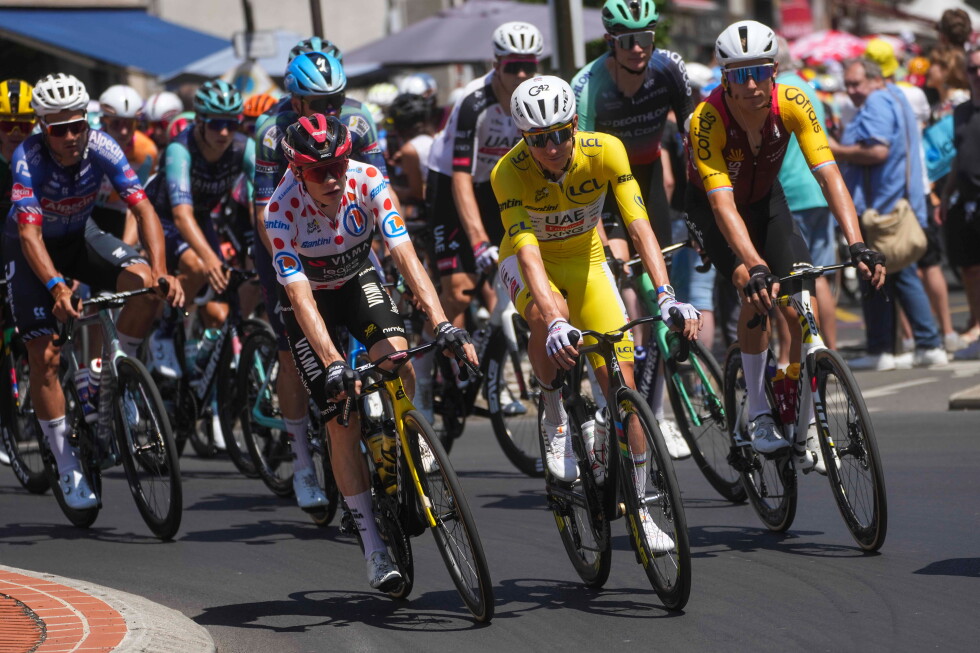
    The three newly revealed stages for the 2027 Tour de France Femmes Avec Swift bring a mix of sprint opportunities, high-altitude drama, and a groundbreaking first for the women’s event. The opening 85.7km stage will kick off in Leeds and finish with a likely sprint finish in Manchester, setting the tone for a race that will push even the most elite riders to their limits. The most anticipated test comes in the second stage: a gruelling 154km route from Manchester to Sheffield that packs nearly 3,000 metres of climbing, including the iconic Winnats Pass in the Peak District. Race organiser ASO calls this leg “one of the hardest Grand Depart stages we’ve ever seen before”, a description echoed by rising British cycling star Cat Ferguson. The third and final opening stage will be an approximately 18km team time trial finishing at London’s Mall, a first for any edition of the women’s Tour de France; full route details for the time trial are set to be announced this coming October.

    For Ferguson, a 19-year-old rider with Movistar who was born in the Yorkshire town of Skipton, the opportunity to race on home roads feels like a full-circle moment. As a young child, she watched the 2014 men’s Grand Depart in Yorkshire from the side of local roads, and now she is gearing up to compete in the 2027 edition. “I trained on those roads and I know they’re going to be super brutal stages. Stage two in particular – always up and down. It’s really going to be one [stage] that can change the Tour. The GC [general classification] leaders can lose a lot,” Ferguson explained.

    The 2027 event will see the opening three stages of both the men’s and women’s races held across the UK, with the men’s race kicking off on 2 July and the women’s race starting on 30 July. Men’s route details for stages starting in Edinburgh, Keswick and Welshpool were first unveiled back in January 2026. UK government’s Department for Culture, Media and Sport (DCMS) has billed the combined event as “the most accessible major sporting spectacle ever held in Britain”: organisers estimate the combined Grand Departs will pass within an hour’s drive of 60% of the UK population, with free public access to spectating along more than 900km of public roads.

    Tour de France Femmes race director Marion Rousse highlighted the broader significance of the UK hosting the women’s race, saying: “The United Kingdom has already shown its passion for the Tour, and these stages will once again showcase the energy of the crowds, the beauty of the landscapes and the growing importance of women’s cycling on the world stage.” The official route announcement included a focus on growing grassroots participation, with seven young girls joining race leaders and professional riders as part of the JOY programme, an initiative designed to reduce physical inactivity and improve mental wellbeing among girls in the UK.

    The 2027 event comes as the UK is poised to reap the benefits of a previous golden age of British cycling sparked by the 2014 Tour Grand Depart. After British riders Bradley Wiggins claimed the 2012 Tour title and Chris Froome won in 2013, the 2014 event cemented the UK’s status as a global cycling powerhouse. Today, that legacy has grown: the UCI World Tour now counts a combined record 49 British male and female riders, with many ranked among the top contenders to win the sport’s biggest events. The combined six stages of the men’s and women’s races in 2027 draw a global audience of over one billion viewing hours across 190 countries, making it an unprecedented moment for UK cycling.

    Even with this momentum, the event faces notable challenges. British Cycling, the national governing body for the sport, has seen declining membership numbers in recent years, and only stepped in to rescue the men’s and women’s Tours of Britain from collapse in 2024. Hosting major pro cycling races on closed public roads in the UK is far more expensive than it is on the European continent, driven largely by exorbitant policing costs for high-speed events that require a full race cavalcade of 40 cars and dozens of motorbikes. While no official cost figures have been released, unofficial estimates place the total cost of hosting all six 2027 stages at over £50 million, with the majority of funding coming from central government and local councils.

  • Migrants rush to apply under Spain’s new mass legalization program

    Migrants rush to apply under Spain’s new mass legalization program

    MADRID – Starting Monday, undocumented migrants living across Spain gained the opportunity to formalize their residency, after the Spanish government rolled out one of the most ambitious mass legalization initiatives in recent European history. The program, which could regularize the status of between 500,000 and 840,000 unauthorized foreign residents already living and working in the country, marks a sharp break from restrictive migration policies adopted by many other European governments in recent years.

    First announced back in January and finalized earlier this month, the amnesty scheme offers eligible applicants a one-year renewable residence permit. To qualify, migrants must prove they have resided in Spain for a minimum of five months and hold a clean criminal record. The application window closes at the end of June, a tight timeline that has sparked questions about whether authorities can process the expected volume of submissions in time.

    To accommodate applicants, the government has expanded access across multiple public service points: more than 370 post offices nationwide are accepting in-person submissions, alongside 60 social security offices and a small network of dedicated migration centers. Online applications launched earlier, on Friday, to streamline the process for tech-accessible applicants.

    Early reports from application sites in major urban centers including Madrid and Barcelona confirm the process proceeded without major incidents, though many migrants reported extended wait times even for those who booked scheduled appointments in advance.

    Nubia Rivas, a 47-year-old migrant from Venezuela who submitted her application at a central Madrid post office, noted that while the process moved slowly, it remained steady and straightforward. “It’s pretty simple since I made an appointment online and I was given one for this morning,” Rivas explained. “The process here is a little slow, but it’s fluid.”

    Johana Moreno, another Venezuelan migrant who applied alongside her husband at the same Madrid location, shared her optimism about what legal status would mean for her future. Once a professional archivist in her home country, Moreno now works as a house cleaner to support herself in Spain. “It’s what we want,” she said of the regularization effort. “To be well, to work, to contribute, all those things. To pay our taxes. We know that we’ll have rights, but also we’ll have obligations.”

    Spanish Prime Minister Pedro Sanchez, leader of the country’s progressive government, has framed the initiative as both a matter of fundamental justice and an economic necessity. Sanchez argues that migrants already integrated into Spanish communities and workforce should be permitted to participate in society on equal footing, contribute to public finances through taxes, and access the same rights as documented residents.

    With one of the fastest aging populations in the European Union, Spain’s government says the program directly addresses a critical labor shortage that threatens the country’s ongoing economic growth. Undocumented migrants already fill critical roles across Spain’s core economic sectors, including commercial agriculture, tourism, and domestic and hospitality services, accounting for a large share of the workforce in these industries.

    This departure from Europe’s broader restrictive migration trend has won the backing of both Spanish business associations and major trade unions. The contrast with other European nations, where many governments have prioritized curbing new migrant arrivals and ramping up deportations of undocumented residents, could position Spain as a test case for a more permissive approach to integrated unauthorized migrant populations.

    Currently, foreign-born residents account for roughly one in five people living in Spain, a share that has grown dramatically over the past two decades as migration flows from Latin America and North Africa have increased. Most of the migrants eligible for the current amnesty come from Venezuela, Colombia, and Morocco, having fled political instability, widespread violence, and deep poverty in their home countries.

    This legalization effort is not without precedent in Spanish policy: the country has launched six previous amnesty programs for undocumented migrants between 1986 and 2005, with some of those initiatives even implemented by past conservative governments.

    For many migrants, the program represents a lifelong chance to escape the uncertainty of undocumented life. Mourad El-Shaky, a 25-year-old Moroccan migrant who waited four hours outside Barcelona’s city hall last Friday to collect required paperwork for his application, described what legal status would change. El-Shaky made the dangerous journey to Spain via Turkey, traveling overland west despite the short maritime distance between Morocco and Spain. “Without papers (work and residency permits), your hands are tied,” he said. “You’re like a bird that can’t fly, with broken wings. This legalization will solve many things.”

  • Switzerland great Marcel Hug claims his ninth Boston Marathon wheelchair title and fourth straight

    Switzerland great Marcel Hug claims his ninth Boston Marathon wheelchair title and fourth straight

    On a crisp, sunlit Monday morning at the 130th running of the Boston Marathon, Swiss wheelchair racer Marcel Hug delivered yet another masterclass in endurance and competitive dominance, securing his ninth career title in the event and extending his consecutive winning streak to four straight victories.

    Starting temperatures hovering in the low 40s Fahrenheit created ideal racing conditions for the elite wheelchair field, and Hug wasted no time stamping his authority on the 26.2-mile course. Within just three miles of the starting gun, he had broken away from the pack, opening a 13-second gap over British veteran David Weir. By the race’s halfway mark, that advantage had ballooned to 55 seconds, leaving his closest competitors struggling to match his blistering pace.

    When he crossed the finish line, Hug’s unofficial time clocked in at 1 hour, 16 minutes and 6 seconds — a result that cements his standing as one of the most decorated athletes in Boston Marathon history. With nine titles to his name, he now sits alone in second place on the all-time men’s wheelchair leaderboard, trailing only South African icon Ernst van Dyk, who set the current record of 10 titles over a 13-year stretch between 2001 and 2014.

    American top contender Daniel Romanchuk crossed second with a time of 1:22:44, while Jetze Plat of the Netherlands rounded out the top three with a finish time of 1:24:13. In the women’s wheelchair division, Britain’s Eden Rainbow-Cooper claimed the top spot on the podium.

    Hug’s historic win in Boston extends an extraordinary run of form for the Swiss athlete that dates back to his 2022 victory at the Berlin Marathon. Across seven World Marathon Major events since that win, Hug has finished outside the top spot just once: he took second place at the 2024 New York City Marathon earlier this year, a rare blemish on an otherwise perfect stretch of elite competition.

  • Here’s what to know about Timmy, the humpback whale that’s sick and stranded in the Baltic Sea

    Here’s what to know about Timmy, the humpback whale that’s sick and stranded in the Baltic Sea

    BERLIN – A global audience has watched the likely final days of a lost humpback whale, nicknamed Timmy by local media, via continuous livestream after repeated attempts to guide it back to open ocean have failed, leaving the disoriented marine mammal growing increasingly frail and ill in the shallow Baltic Sea off Germany’s northern coast.

    The endangered animal, which naturally inhabits the nutrient-rich waters of the Atlantic Ocean, was first spotted wandering the Baltic on March 3. To date, researchers have not reached a consensus on what drove the 12 to 15-meter, 12-metric ton whale hundreds of kilometers off its intended migration path. The most common working theory among marine specialists is that Timmy lost its bearings while chasing a school of herring or veered off course during its annual seasonal migration.

    Since its initial sighting near the eastern German town of Wismar, Timmy has repeatedly become stuck in shallow coastal waters, showing clear signs of severe distress. For days, the giant mammal has barely moved, breathing in irregular patterns that have alarmed observers. The Baltic Sea’s far lower salt concentration compared to the whale’s natural Atlantic habitat has also caused a painful, progressive skin condition, which rescue teams have attempted to treat by applying multiple kilograms of medicinal zinc ointment. Compounding its dangerous disorientation, every time Timmy does move, it consistently swims further inland, farther from the open North Sea passage that would lead it home.

    Timmy’s plight has gripped the German public, sparking round-the-clock media coverage and fierce public debate over how to respond to the stranded whale. Local news outlets have streamed footage of the animal 24/7 to meet overwhelming public demand, while major national online publications send push notifications for even the smallest updates on Timmy’s changing condition. Environmental activists have organized peaceful protests on Wismar’s beaches calling for urgent action to save the mammal, and social media influencers have clashed over whether continued interventions do more harm than good, with some arguing the whale should be allowed to die peacefully in its current location rather than endure further stress from rescue attempts.

    Public curiosity grew so intense that local law enforcement was forced to establish a 500-meter exclusion zone around the whale’s location to prevent overcrowding that would add to the animal’s stress. Even with this restriction in place, a 67-year-old woman made headlines over the weekend when she jumped from a private boat in an attempt to get closer to Timmy before authorities intercepted her.

    Early rescue attempts, which mobilized police boats, inflatable craft and even heavy excavators, managed to temporarily refloat the whale after it became stranded on sandbars. But each time, the disoriented mammal failed to find the route to the North Sea and eventually returned to shallow coastal waters off Wismar.

    Rescue teams later developed a complex, large-scale intervention plan: inflatable air cushions would lift the whale onto a reinforced tarp, which would then be secured to two large pontoons and towed out to open ocean by a tugboat. German state officials approved the privately funded initiative, but the plan was thrown off schedule when the whale began moving again as high tide rose on Monday. Vessels were immediately deployed to guide Timmy toward the exit route, but many involved in the operation have already abandoned all hope of a successful rescue.

    Opinions among marine experts remain deeply divided over the ethics and effectiveness of continued intervention. Thilo Maack, a marine biologist with the environmental organization Greenpeace, told the Associated Press that repeated attempts to move and guide the whale are only causing it additional, severe stress that accelerates its decline. “I believe the whale will die very soon now. And I would also like to raise the question: What is actually so bad about that?” Maack said. “Yes, animals live, animals die. This animal is really, really very, very, very sick. And it has decided to seek rest.”

  • Elon Musk summoned by French prosecutors amid ongoing X probe

    Elon Musk summoned by French prosecutors amid ongoing X probe

    A high-stakes legal and regulatory clash over Elon Musk’s social media platform X has entered a new phase, with French authorities calling both the tech billionaire and X’s former CEO Linda Yaccarino to appear for a voluntary interview in Paris this Monday. As the investigation into alleged criminal activity on the platform stretches into its second year, uncertainty lingers over whether Musk will comply with the summons, following a well-documented pattern of him declining to appear for official questioning in the past.

    The probe first launched in January 2025, after French prosecutors received multiple formal reports flagging harmful content circulating on X’s recommendation algorithm. Just one month later, in February 2026, cybercrime units from the Paris prosecutor’s office executed raids on X’s French offices as the scope of the inquiry expanded. The investigation now encompasses serious new allegations tied to Grok, X’s controversial in-house AI chatbot. Prosecutors suspect Grok has been leveraged to generate non-consensual sexual deepfake imagery, including manipulated content targeting women and reportedly even underage individuals.

    The list of suspected offences being probed extends far beyond deepfake misuse. French investigators are also examining claims that X facilitated complicity in the possession and organized distribution of child sexual abuse material (CSAM), violated personal image rights through non-consensual explicit synthetic content, and carried out fraudulent large-scale data extraction via an organized criminal network.

    This latest summons follows a reported diplomatic rift between French and U.S. justice authorities. The Wall Street Journal revealed over the weekend that the U.S. Department of Justice sent an official letter to French prosecutors declining to assist with the X investigation, and accusing French officials of misusing the U.S. legal system to advance their inquiry. Musk quickly weighed in on the report via a post on his own platform, writing simply, “indeed, this needs to stop.”

    Musk and X’s leadership have repeatedly framed the entire investigation as a politically motivated attack rather than a legitimate legal inquiry. Following the February office raids, X issued a formal statement denying all wrongdoing, dismissing the allegations as entirely baseless. The company argued that the raids amounted to a “staged” action that distorted French law, bypassed standard due process, and threatened protections for free speech. “X is committed to defending its fundamental rights and the rights of its users,” the company added in that statement.

    Yaccarino, who led X through the period when the alleged offences occurred, has echoed this hardline stance. She previously took to X to accuse French prosecutors of waging “a political vendetta against Americans.” Now, she joins Musk in being called to appear for voluntary questioning this month.

    A history of non-compliance has fueled speculation that Musk may skip the scheduled Monday interview, which was initially set by prosecutors back in February. In September 2024, the billionaire failed to appear for a court-ordered questioning as part of a U.S. Securities and Exchange Commission investigation into his 2022 takeover of the platform, then known as Twitter.

    The French investigation has already triggered a wave of additional legal and regulatory action against X and its parent AI firm xAI across the globe, including multiple probes launched by regulators in the United Kingdom and throughout the European Union. As of Monday morning, neither the Paris prosecutor’s office nor the U.S. Department of Justice has issued an updated comment on the case in response to requests from the BBC.