标签: Europe

欧洲

  • Pope Leo XIV’s visit highlights Christian resilience in Lebanon despite regional turmoil

    Pope Leo XIV’s visit highlights Christian resilience in Lebanon despite regional turmoil

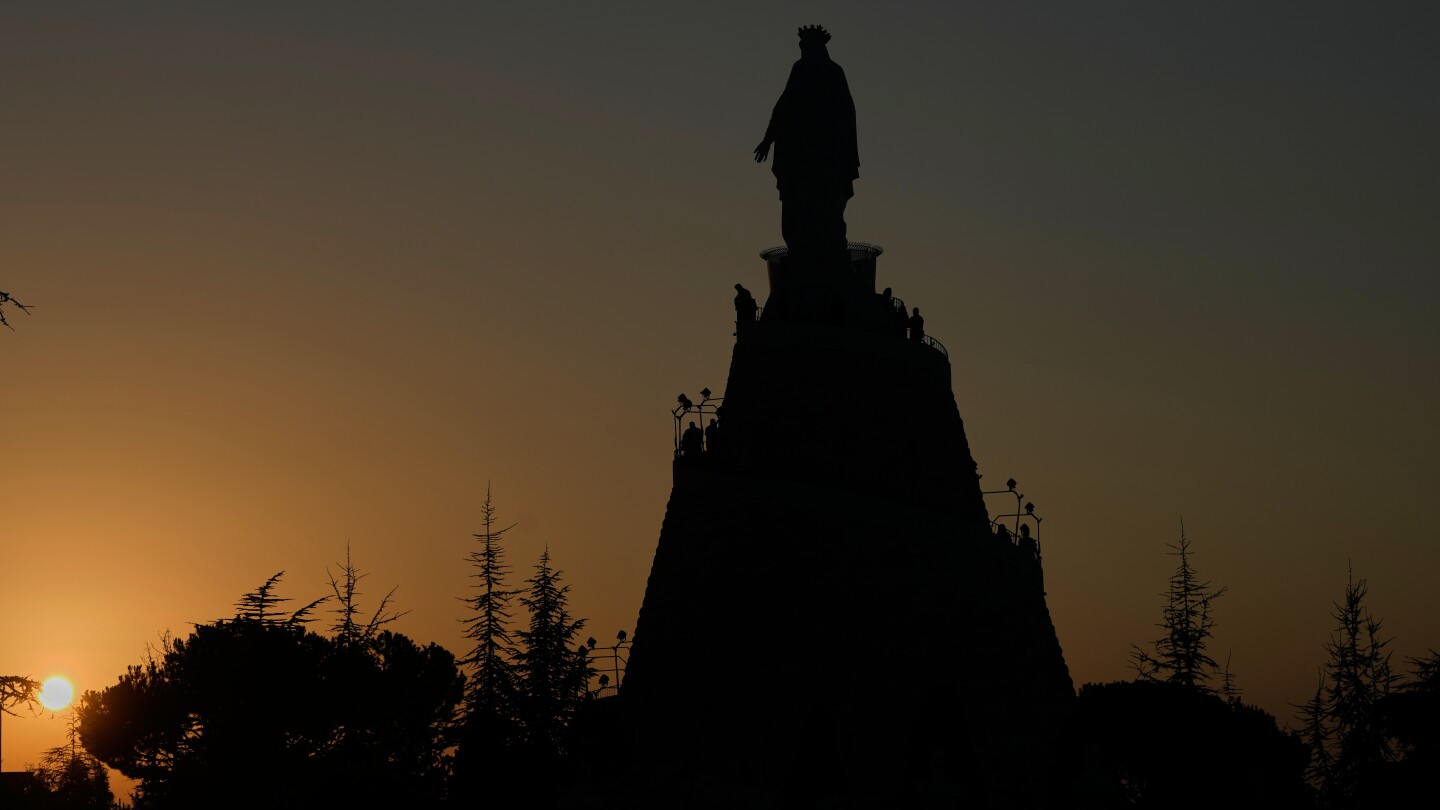
    BEIRUT — While Christian populations across the Middle East have faced significant decline due to conflict and extremist violence, Lebanon presents a striking exception to this regional trend. Despite enduring numerous national crises, Lebanon’s Christian community continues to maintain substantial political influence and religious freedom, creating a unique sanctuary in a region where Christian populations have dwindled dramatically.

    The recent visit of Pope Leo XIV to Lebanon underscores the Vatican’s recognition of Lebanon’s distinctive religious pluralism and serves as an encouragement for Christians to remain in the region. This stands in stark contrast to neighboring countries like Iraq and Syria, where Christian communities faced devastating persecution following the U.S.-led invasion of 2003 and the subsequent rise of the Islamic State group. IS forces systematically destroyed churches, confiscated properties, and declared caliphates across Iraq and Syria, triggering massive Christian emigration.

    In Syria, recent church bombings in Damascus and concerns about the Islamist-led government under interim President Ahmad al-Sharaa have prompted many remaining Christians to consider leaving. Yet in Lebanon, Christians demonstrate remarkable resilience, clinging to their ancestral homeland despite economic and political challenges.

    Lebanon’s sectarian power-sharing system, while frequently criticized for political deadlock, has effectively protected minority rights. The country’s political structure mandates that the president be a Maronite Christian, making Lebanon the only Arab nation with a Christian head of state. Christians also hold key positions including army command, central bank leadership, and senior security agency roles.

    “More than half the advantage comes from Lebanon’s political system when it comes to Christians,” noted Monsignor Abdo Abou Kassm, director of the Catholic Center for Information. “There is a democratic system where people can express their opinions freely without getting killed, oppressed or sent to exile.”

    Christian roots in Lebanon trace back to the faith’s earliest days, with monastic communities historically seeking refuge in mountain caves to avoid persecution. Today, Christians constitute approximately one-third of Lebanon’s 5 million people, representing the highest percentage of Christians in any Middle Eastern nation. The country recognizes 18 religious sects, with Maronite Catholics forming the largest Christian group followed by Greek Orthodox.

    The historical ties between Lebanon and the Vatican run deep, with tradition holding that St. Peter established churches along Lebanon’s coast. Two men of Phoenician origin from Tyre were elected popes in the 8th century, and uninterrupted correspondence between the Maronite Church and the papacy dates back to 1215.

    Despite Lebanon’s 1975-90 civil war that largely pitted Christians against Muslims, the Taif Agreement established equal parliamentary and cabinet representation between Christians and Muslims. Today, Muslims and Christians largely coexist peacefully, with Sunni Muslim cleric Khaldoun Oreimet acknowledging, “Christians are not only a community but an integral part of this land.”

    The papal visit occurs amid ongoing regional tensions, including regular Israeli airstrikes and criticism from Christian politicians toward Hezbollah’s military actions. Many Christian leaders, including Maronite Church head Cardinal Bechara Rai, advocate for Lebanese neutrality in regional conflicts, emphasizing the devastating impact of foreign wars on Lebanese soil.

    As Christian legislator Camille Dory Chamoun stated, “Our Lebanese identity is as important as our Christian identity. We have seen that we are paying a very high price for other people’s wars on our land.”
  • What to know about this week’s diplomatic efforts to end the war in Ukraine

    What to know about this week’s diplomatic efforts to end the war in Ukraine

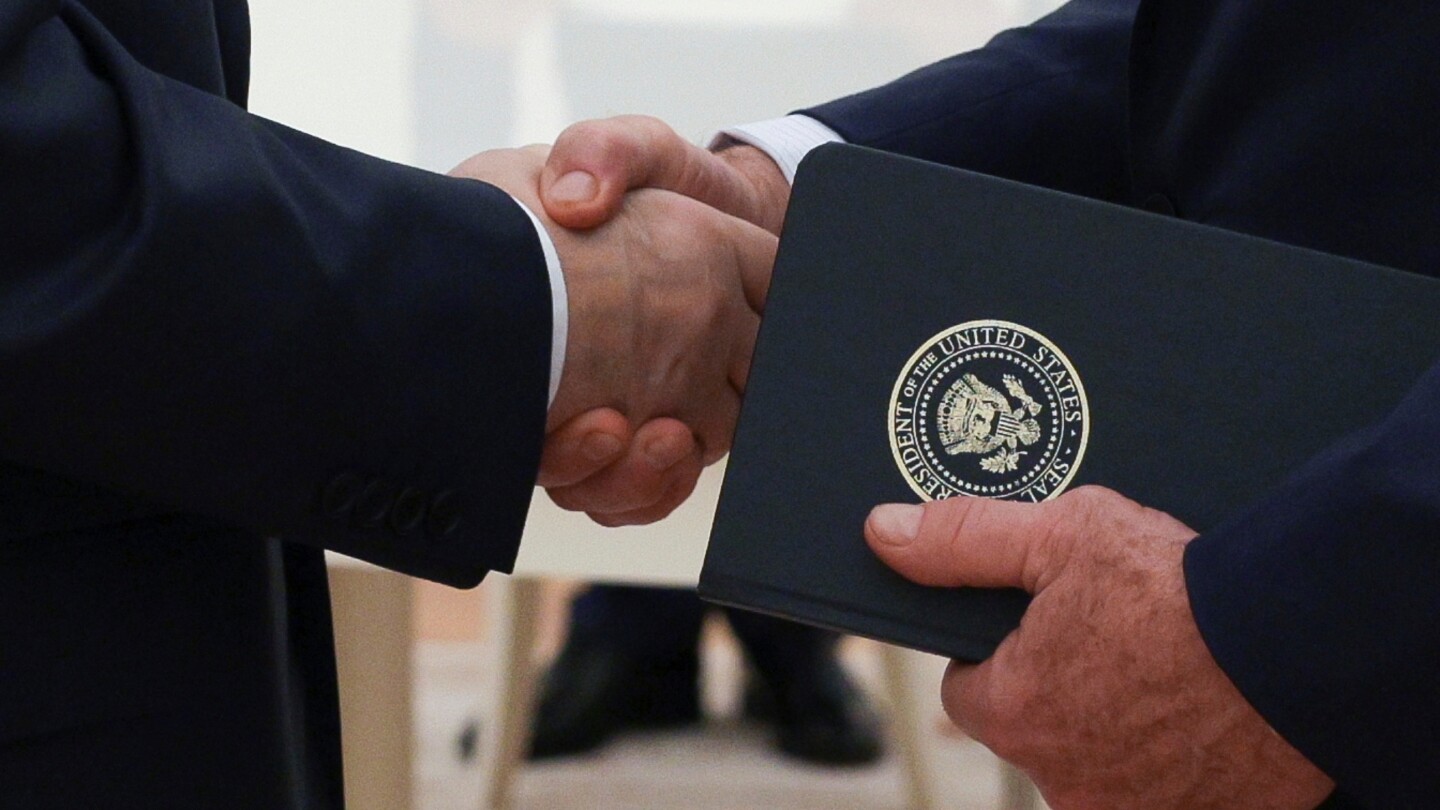
    Diplomatic efforts to broker a peace agreement between Russia and Ukraine are intensifying this week as U.S. representatives engage in high-stakes shuttle diplomacy. The renewed push comes after President Donald Trump’s revised peace proposal, which has received cautious optimism from both Ukrainian President Volodymyr Zelenskyy and Russian President Vladimir Putin, though significant obstacles remain.

    The diplomatic sequence began with extensive four-hour discussions between Ukrainian officials—including National Security Council head Rustem Umerov and presidential adviser Oleksandr Bevz—and U.S. representatives on Sunday. Secretary of State Marco Rubio characterized the talks as productive while acknowledging substantial work ahead. This week, Trump’s envoy Steve Witkoff is scheduled to meet with Russian leadership in Moscow, with Kremlin spokesman Dmitry Peskov confirming discussions would occur in the week’s first half.

    Despite surface-level agreement that Trump’s proposal could form a negotiating basis, fundamental disagreements persist. Russia maintains its maximalist demands for Ukrainian territorial concessions in four illegally annexed regions and permanent exclusion from NATO membership. Ukraine remains adamant against ceding sovereign territory and continues to pursue NATO integration as a security guarantee.

    The political landscape shifted notably with Friday’s resignation of Andrii Yermak, Zelenskyy’s former chief of staff and lead negotiator, amid corruption allegations. While neither Zelenskyy nor Yermak face direct accusations, the departure removes a key experienced diplomat from negotiations.

    European powers face their own dilemmas as NATO and EU meetings convene this week to discuss military support for Ukraine and address the contentious issue of utilizing frozen Russian assets for Ukrainian reconstruction. The situation highlights Europe’s precarious position—being Ukraine’s primary supporter while remaining peripheral to U.S.-led diplomatic initiatives.

    Analysts note Putin’s strategic patience, believing time favors Russian objectives through military pressure. Meanwhile, Zelenskyy faces domestic challenges while maintaining Ukraine’s defensive stance, asserting that Ukraine “doesn’t have a right not to push it to the end.”

  • WW1 toxic compound sprayed on Georgian protesters, BBC evidence suggests

    WW1 toxic compound sprayed on Georgian protesters, BBC evidence suggests

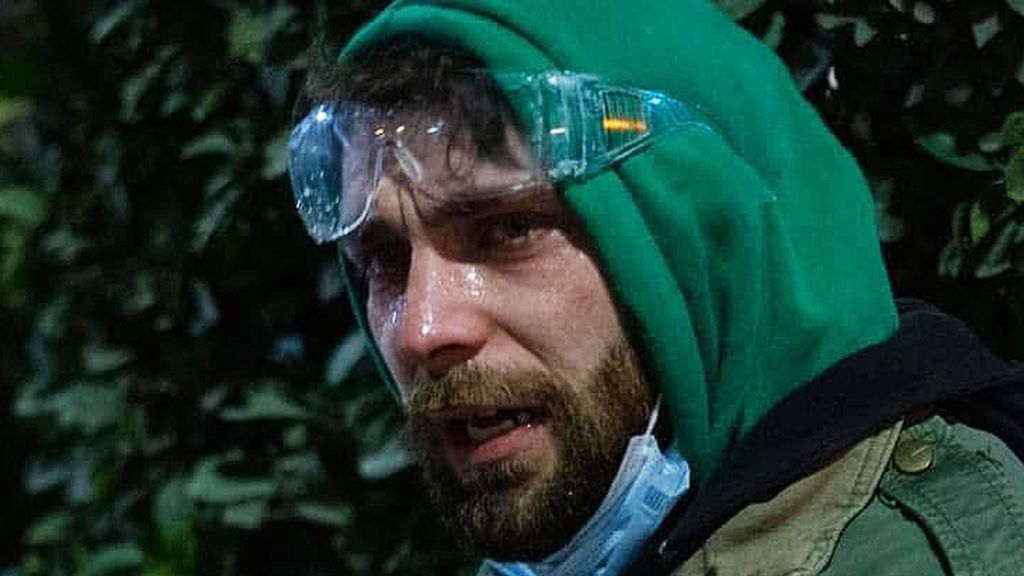
    A comprehensive BBC investigation has uncovered evidence suggesting Georgian authorities deployed a World War One-era chemical weapon against anti-government demonstrators in late 2024. The findings point to the use of bromobenzyl cyanide, known by its French military designation “camite,” which was allegedly mixed into water cannon systems used to disperse crowds protesting the government’s suspension of EU accession talks.

    Victims reported severe and persistent symptoms including chemical burns that couldn’t be washed away, respiratory distress, prolonged coughing, vomiting, and cardiac abnormalities that lasted for weeks. Dr. Konstantine Chakhashvili, a pediatrician who participated in the protests and subsequently conducted a peer-reviewed study, documented these effects in nearly 350 respondents, with almost half reporting symptoms persisting beyond 30 days.

    The investigation drew upon multiple sources including whistleblowers from Georgia’s Special Tasks Department (riot police), chemical weapons experts, medical professionals, and internal police inventories. Lasha Shergelashvili, former head of weaponry for the department, revealed he had tested a similarly potent chemical in 2009 and recommended against its use due to its dangerous and persistent effects.

    International experts including Professor Christopher Holstege, a leading toxicology and chemical weapons specialist, concluded that the clinical findings were consistent with bromobenzyl cyanide exposure rather than conventional riot control agents like CS gas. UN Special Rapporteur on Torture Alice Edwards expressed serious concerns, stating that such practices could violate human rights law if the effects were not temporary as required by international standards.

    Georgian authorities dismissed the findings as “absurd” and “deeply frivolous,” maintaining that police acted legally against what they described as “illegal actions of brutal criminals.” The protests, which began on November 28, 2024, have continued regularly despite increased government penalties, with demonstrators accusing the government of election rigging and aligning with Russian interests.

  • Greek sheep and goat cull raises fears of feta cheese shortage

    Greek sheep and goat cull raises fears of feta cheese shortage

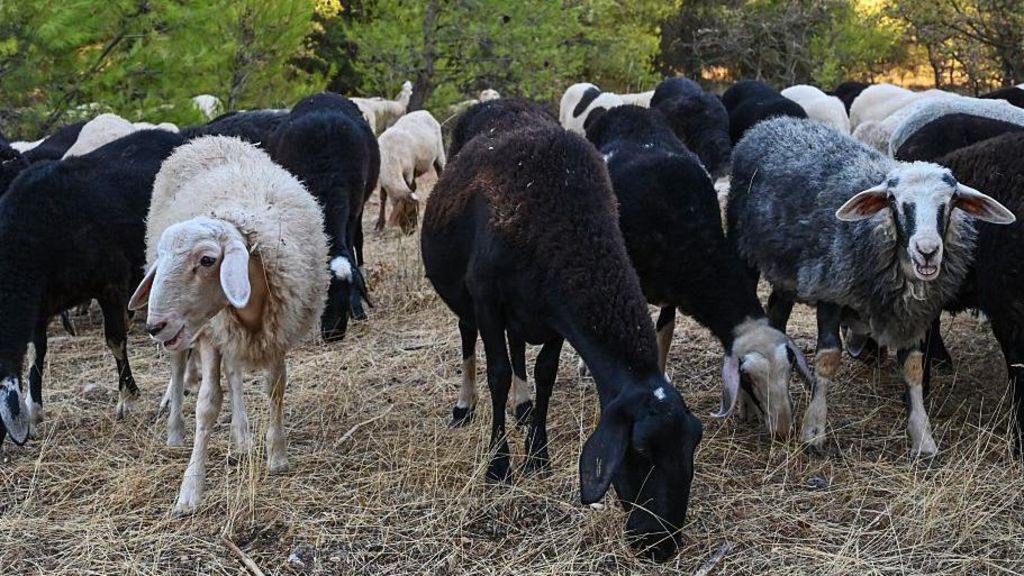
    Greece’s prestigious feta cheese industry is confronting a severe crisis as a devastating sheep and goat pox outbreak forces the mass culling of hundreds of thousands of animals across the country. The viral disease, first detected in northern Greece in August 2024, has rapidly spread through multiple regions, resulting in the preventive slaughter of approximately 417,000 sheep and goats—representing 4-5% of the nation’s total flock.

    The economic impact extends far beyond livestock losses, threatening the core of Greece’s iconic dairy export. With 80% of Greek sheep and goat milk dedicated to feta production—a Protected Designation of Origin product within the EU—the shortage is already affecting small dairies’ ability to source milk. While consumer prices remain stable for now, experts warn that market shortages and increased production costs are imminent if the outbreak persists.

    Farmers like Anastasia Siourtou of Karditsa describe both financial devastation and emotional trauma after veterinary officials culled her entire flock of 650 sheep. ‘I felt that I failed to protect them,’ she recounts, highlighting the personal toll beyond economic ruin. Similarly, Tassos Manakas, who lost 873 animals, describes the profound emptiness of his now-silent farm.

    The government response has faced significant criticism for delayed action and inadequate compensation. A National Scientific Committee for disease management wasn’t established until October 2025—fourteen months after the initial detection—while the state veterinary service remains severely understaffed. Affected farmers receive between €132-220 per animal, amounts they claim fall far short of actual losses.

    The crisis has sparked debate about vaccination strategies, with farmers demanding mass immunization similar to approaches in Bulgaria and Turkey. However, Greek authorities resist this solution, fearing that vaccination could lead to Greece being classified as endemic for the disease, potentially triggering export restrictions on dairy products. Complicating matters, officials suspect up to one million illegal vaccinations may have been administered, distorting the epidemiological picture.

    With feta exports valued at €785 million annually—including €520 million to EU nations and €90 million to the UK—the stakes for Greece’s agricultural economy couldn’t be higher. As the industry grapples with this unprecedented challenge, farmers face the difficult choice between implementing emergency measures or risking permanent damage to Greece’s culinary heritage.

  • Pope Leo finds his voice on first foreign trip

    Pope Leo finds his voice on first foreign trip

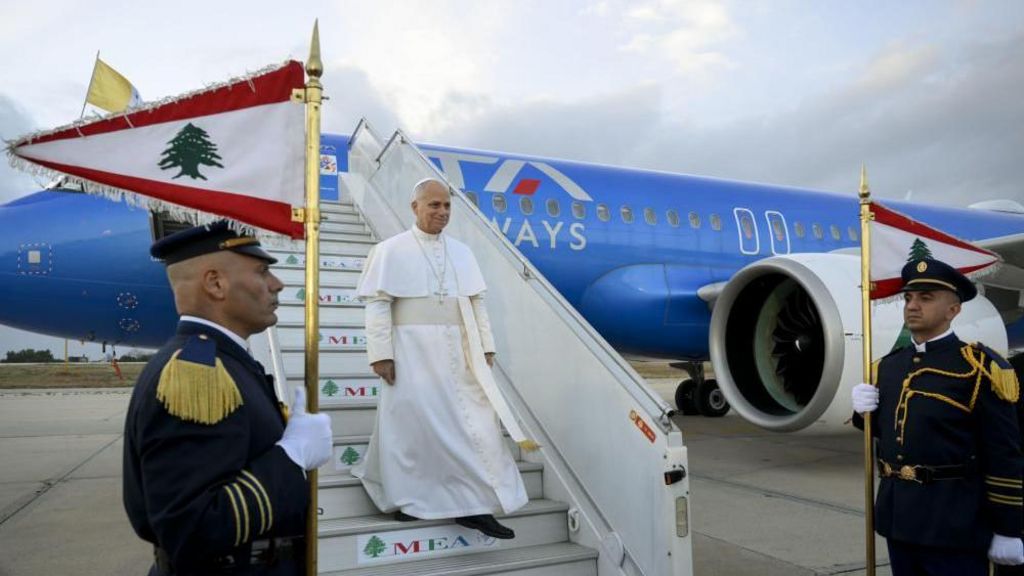
    Pope Leo XIV has commenced his inaugural international journey with a strategically significant visit to Beirut, arriving precisely one week following Israeli airstrikes that targeted the Lebanese capital. This carefully orchestrated diplomatic mission underscores the Pontiff’s deliberate approach to global leadership during his initial six months in office.

    The Pontiff’s itinerary commenced with a three-day engagement in Turkey, where observers noted his characteristically measured diplomatic style. Unlike his predecessor Pope Francis—known for passionate, extemporaneous remarks that occasionally required clarification from aides—Leo XIV demonstrates methodical precision in both speech and action. His interactions with journalists reflect thoughtful consideration, with each statement appearing deliberately crafted.

    During his Turkish leg, the Pope delivered substantive addresses on global conflicts. Alongside President Recep Tayyip Erdogan, he criticized powerful nations for leveraging economic and military dominance, warning that such actions jeopardize humanity’s future. At a historic commemoration in Iznik marking 1,700 years since a pivotal Christian council, he unequivocally condemned weaponizing religion to justify violence or fundamentalism.

    The Pontiff’s emotional depth surfaced during a profoundly moving moment at Istanbul’s Cathedral of the Holy Spirit. As he stood before Turkey’s diminutive Christian minority—who welcomed him with exceptional warmth—visible emotion overcame him, reminiscent of his overwhelmed reaction upon first appearing on St. Peter’s Basilica balcony last May.

    In Lebanon, a nation grappling with severe governance challenges, Pope Leo immediately addressed political leaders, urging dedication to public service. His visit carries profound symbolism for Lebanon’s Christian community, which comprises approximately one-third of the population. Patriarch Bechara al-Rahi, leader of the Maronite Catholic Church, expressed profound gratitude, noting the Pontiff’s choice to prioritize a nation ‘still at war’ provides hope to citizens feeling abandoned.

    Remarkably, even Hezbollah—the Shia Muslim political-military organization designated as terrorist by several Western nations—extended formal greetings through an open letter expressing ‘deep appreciation’ for the papal visit. Their supporters prominently displayed flags alongside Vatican and Lebanese banners during the Pope’s motorcade procession.

    Despite these bridge-building efforts, limitations persist. The Russian Orthodox Church declined participation in ecumenical events in Turkey, while some critics expressed disappointment that the Pope didn’t more forcefully address Turkey’s suppression of opposition voices. In Lebanon, residents from conflict-ravaged southern villages voiced frustration over not being included in the papal itinerary.

    As a South Side Chicago native unexpectedly elevated to one of the world’s most influential moral platforms, Pope Leo continues evolving into his dual role as spiritual leader and head of state. While lacking his predecessor’s disruptive urgency, he has demonstrably begun forging his distinctive voice in international diplomacy during this inaugural overseas mission.

  • Dignitas founder dies by assisted suicide aged 92, group says

    Dignitas founder dies by assisted suicide aged 92, group says

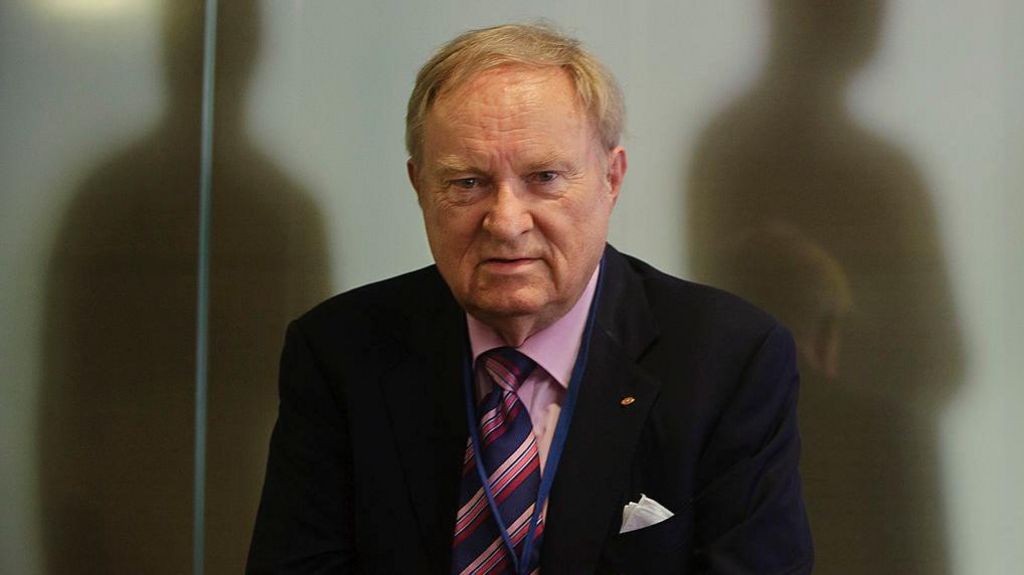
    Ludwig Minelli, the pioneering founder of Switzerland’s renowned right-to-die organization Dignitas, has passed away through assisted suicide just days before his 93rd birthday. The organization confirmed his Saturday death while celebrating his lifelong advocacy for “freedom of choice, self-determination, and human rights.”

    Minelli established Dignitas in 1998, creating what would become one of the world’s most prominent assisted dying organizations. Under his leadership, the organization has facilitated end-of-life choices for thousands of individuals, many traveling to Switzerland from countries where assisted dying remains prohibited.

    The legal landscape surrounding assisted dying has evolved significantly during Minelli’s advocacy career. Several nations including Australia, Canada and New Zealand have implemented legislation permitting various forms of assisted dying, while the UK House of Lords continues to debate proposed legislation.

    Minelli’s journey to becoming a right-to-die advocate began with a career in journalism, serving as a correspondent for German news magazine Der Spiegel before studying law and developing his human rights focus. His work faced numerous legal challenges, though he successfully defended his organization through multiple appeals to the Swiss supreme court.

    In a 2010 BBC interview, Minelli articulated his philosophy: “I am persuaded that we must struggle to implement the last human right in our societies—the right to make a decision on one’s own end, and the possibility to have this end without risk and without pain.”

    Dignitas emphasized that Minelli’s legacy includes influencing significant legal precedents, notably a 2011 European Court of Human Rights ruling affirming an individual’s right to determine the manner and timing of their death. The organization pledged to continue operating according to Minelli’s vision as “a professional and combative international organization for self-determination and freedom of choice.”

    While euthanasia remains illegal in Switzerland, assisted dying—where medical practitioners provide lethal drugs that individuals self-administer—has been legal for decades. Critics of assisted dying legislation maintain concerns about potential coercion of vulnerable individuals, though safeguards remain central to ongoing debates worldwide.

  • Long-lost Rubens painting depicting crucifixion sells for $2.7M

    Long-lost Rubens painting depicting crucifixion sells for $2.7M

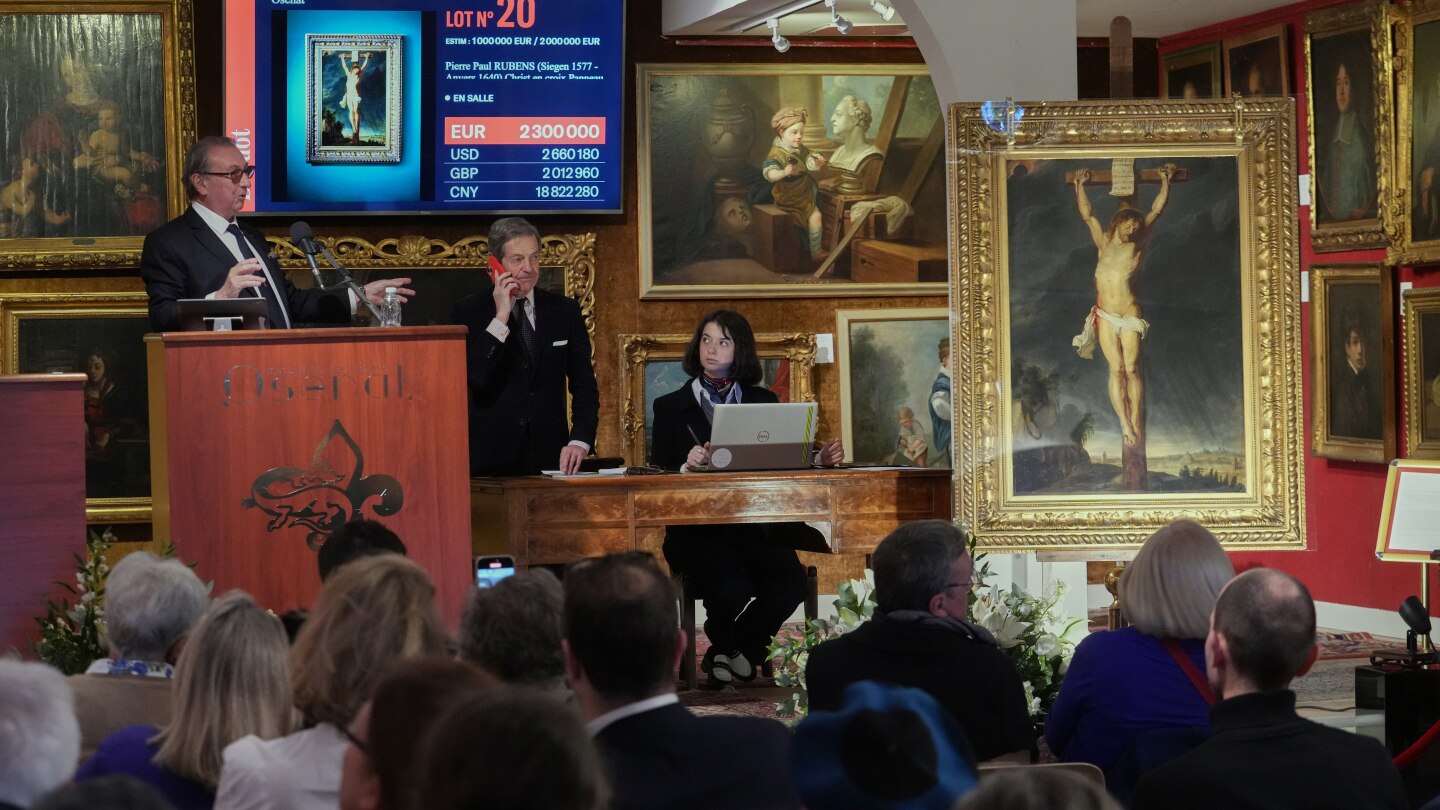
    A previously unknown masterpiece by Baroque legend Peter Paul Rubens, discovered after being concealed for over 400 years, achieved a remarkable €2.3 million ($2.7 million) sale at a Versailles auction this Sunday. The artwork, portraying the crucifixion of Jesus Christ, was unexpectedly located within a private Parisian townhouse.

    Initially dismissed as a workshop production and valued below €10,000, the painting’s fortunes changed dramatically when auctioneer Jean-Pierre Osenat pursued authentication. His persistence led to formal recognition by the Rubenianum, the official Rubens advisory committee in Antwerp.

    Art historian Nils Büttner highlighted the work’s exceptional nature, noting that while Rubens frequently depicted crucifixions, this particular representation uniquely shows “the crucified Christ as a dead body on the cross.” Büttner emphasized its singular status as “the one and only painting showing blood and water coming out of the side wound of Christ” in Rubens’ entire oeuvre.

    The auction house Osenat confirmed the painting’s authenticity through rigorous scientific examination. Microscopic analysis revealed complex pigment layers including white, black, red, plus distinctive blue and green pigments characteristic of Rubens’ skin tone techniques.

    Art specialist Eric Turquin revealed to a captivated audience that the work had virtually vanished from historical records in the early 17th century. Its provenance traces back to 19th-century French classical painter William Bouguereau, remaining within his familial lineage until its recent rediscovery.

  • Pope Leo XIV doubles down on insistence for 2-state solution to resolve Israeli-Palestinian conflict

    Pope Leo XIV doubles down on insistence for 2-state solution to resolve Israeli-Palestinian conflict

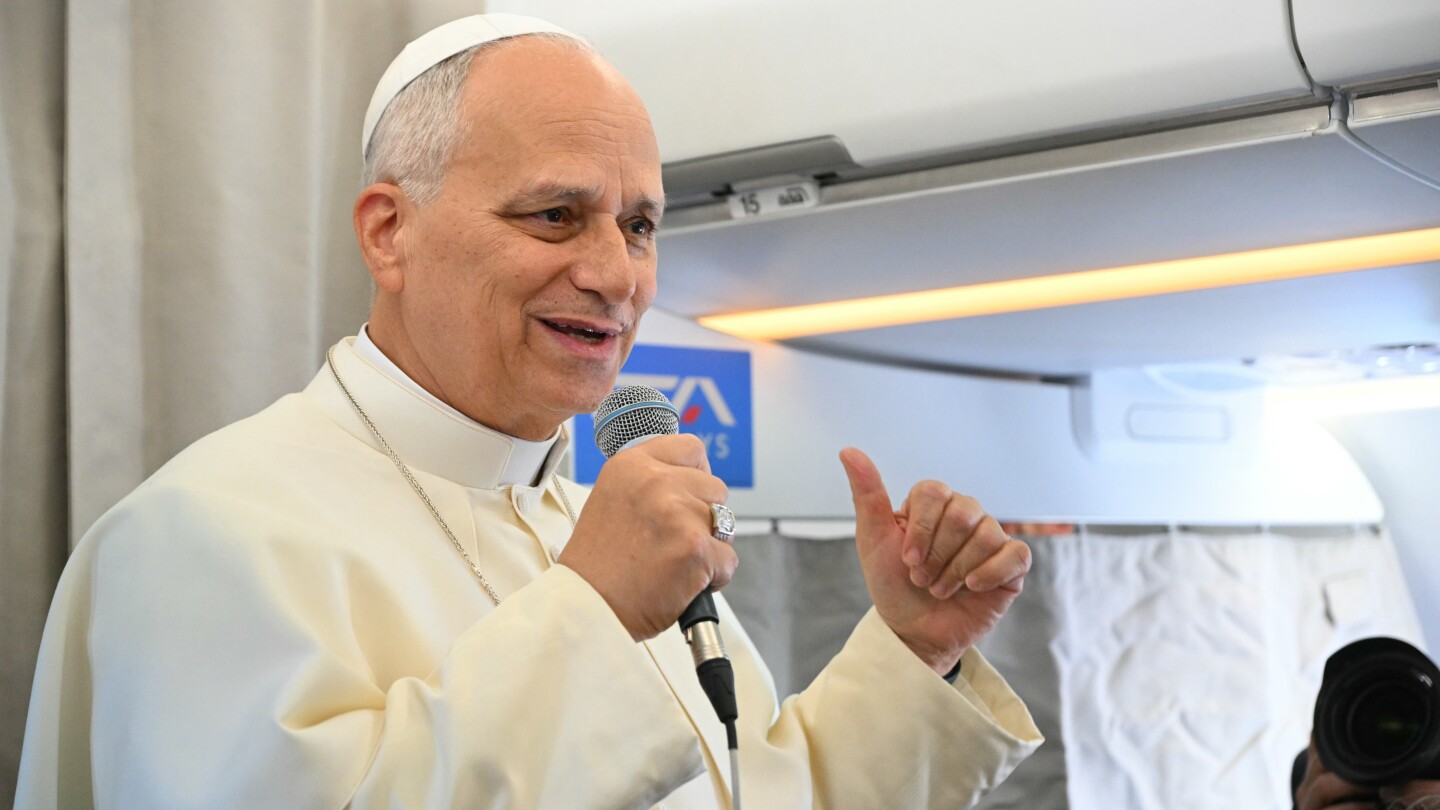
    Aboard the Papal Plane — During his inaugural airborne press conference en route to Beirut, Pope Leo XIV emphatically reinforced the Vatican’s diplomatic stance regarding the Israeli-Palestinian conflict, declaring a two-state solution as the singular viable path toward achieving lasting justice for both nations. The pontiff’s remarks came during the concluding segment of his first international journey as head of the Catholic Church.

    While responding to limited questions from Turkish journalists during the brief flight from Istanbul, Pope Leo revealed details of his private discussions with Turkish President Recep Tayyip Erdogan in Ankara. Their dialogue encompassed both the Gaza and Ukraine conflicts, with the Pope acknowledging Turkey’s “significant role” in facilitating preliminary negotiations between Russia and Ukraine. “Although resolution remains elusive,” he noted, “recent developments include fresh, substantive peace proposals.”

    Regarding the Middle East, the American-born Pope reiterated the Holy See’s consistent position supporting Palestinian statehood in East Jerusalem, the West Bank, and Gaza—a framework internationally regarded as the fundamental compromise for regional stability. The Vatican originally extended recognition to Palestine in 2015, but the current Israel-Hamas war has revitalized global momentum for this approach, evidenced by additional countries formalizing recognition during the latest UN General Assembly.

    “We acknowledge Israel’s present opposition to this solution,” Pope Leo stated, “yet we perceive it as the exclusive mechanism capable of resolving the enduring conflict. As friends to both parties, the Holy See strives to serve as a mediating voice that fosters mutual understanding and equitable justice.”

    The Pope’s commentary contrasted sharply with Israeli Prime Minister Benjamin Netanyahu’s persistent rejection of Palestinian statehood, which his administration believes would effectively reward Hamas and potentially establish an expanded threat along Israel’s borders. Netanyahu recently emphasized that no external pressure would alter Israel’s position.

    Notably absent from the Pope’s travel summary was any reference to his visit to Istanbul’s Blue Mosque, his most visible interaction with Turkey’s Muslim community. Instead, he focused on the primary purpose of his Turkish visit: commemorating the 1,700th anniversary of the Council of Nicaea. This historic gathering of bishops in AD 325 produced the Nicaean Creed, which remains a unifying theological foundation for Catholic, Orthodox, and Protestant denominations worldwide.

    Looking toward future ecumenical collaboration, Pope Leo proposed an unprecedented joint commemoration in Jerusalem for 2033—marking the 2,000th anniversary of Christ’s crucifixion and resurrection. This initiative, welcomed by Orthodox patriarchs, aims to demonstrate renewed Christian unity after centuries of division.

  • Thousands protest far-right surge in Croatia following incidents

    Thousands protest far-right surge in Croatia following incidents

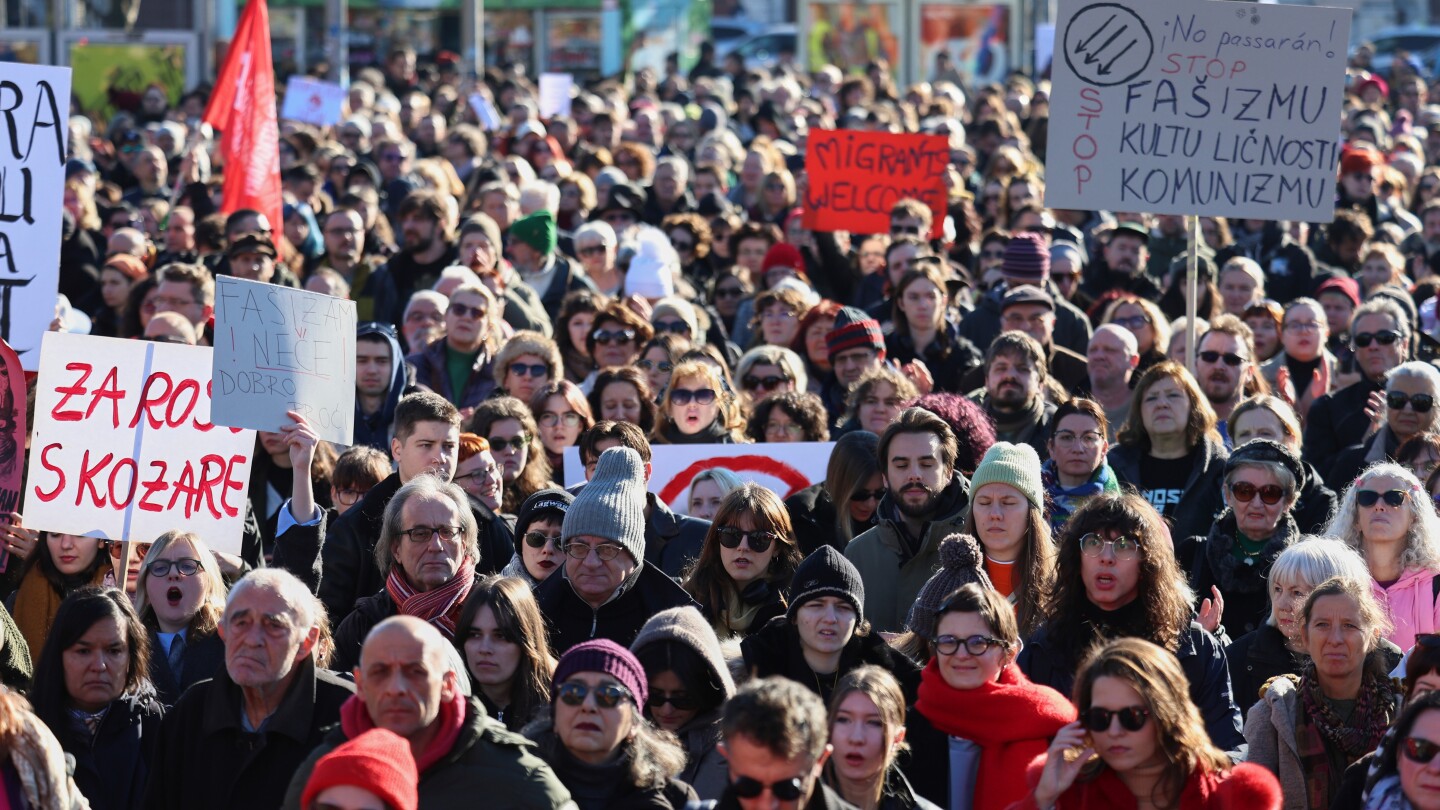
    Thousands of Croatians took to the streets across multiple cities on Sunday in a powerful display of opposition against escalating far-right activities that have heightened ethnic and political tensions within the European Union nation. Organized under the banner “United against fascism,” the demonstrations saw participants in Zagreb, Rijeka, Zadar, and other urban centers chanting “we are all antifascists!” while condemning right-wing groups’ attempts to spread fear and suppress dissent.

    The protests emerged in response to a series of extremist incidents, including November’s targeting of ethnic Serb cultural events in Zagreb and Split, where groups of young men dressed in black chanted pro-fascist slogans and nationalist rhetoric. Participants demanded authorities take decisive action against hard-right groups that frequently employ symbols from Croatia’s World War II pro-Nazi puppet state, the Ustasha regime, which operated concentration camps responsible for executing tens of thousands of ethnic Serbs, Jews, Roma, and antifascist Croats.

    Journalist Maja Sever addressed the Zagreb rally, warning that recent developments represent “very dangerous” trends and praising demonstrators for their commitment to defending democratic values. Meanwhile, counter-gatherings organized by right-wing supporters resulted in minor scuffles with police, leading to at least one detention according to local media reports.

    This surge in far-right activity traces its political roots to last year’s parliamentary election, when Prime Minister Andrej Plenkovic’s conservative party formed a coalition with a far-right faction, excluding an ethnic Serb party from government for the first time in years. The trend reached a cultural climax with a mass concert in July featuring controversial right-wing singer Marko Perkovic (known as Thompson), whose use of the Ustasha-era slogan “For the homeland — Ready!” in his music has long been a source of national division.

    Prime Minister Plenkovic has rejected accusations that his administration turns a blind eye to neo-fascist hate speech, instead blaming leftist opponents for exaggerating the problem and deepening societal divisions. The current tensions evoke painful memories of Croatia’s 1991-95 war with ethnic Serbs, which claimed over 10,000 lives following the breakup of Yugoslavia. Despite joining NATO in 2009 and the EU in 2013, Croatia continues to grapple with the legacy of its wartime past and the resurgence of extremist ideologies.

  • Taoiseach calls for Herzog Park renaming plan to be withdrawn

    Taoiseach calls for Herzog Park renaming plan to be withdrawn

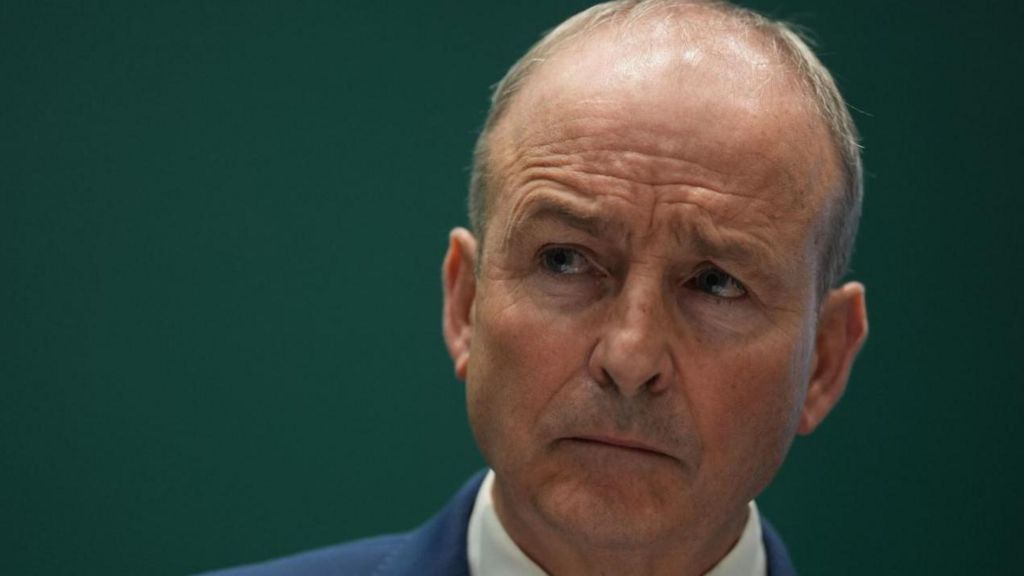
    Irish Taoiseach Micheál Martin has issued a forceful condemnation of Dublin City Council’s proposal to remove the Herzog name from a public park, calling the motion “overtly divisive and wrong” and demanding its immediate withdrawal. The controversial proposal has drawn international concern from Israel’s presidential office and sparked a unified response from Ireland’s highest government officials.

    The park in question, located in Dublin’s Rathgar area, was named in 1995 to honor Chaim Herzog, the Belfast-born sixth president of Israel who spent his formative years in Dublin. The current Israeli President Isaac Herzog, son of the late statesman, has expressed serious concern about the potential renaming, characterizing such action as “shameful and disgraceful” in an official statement released on social media platform X.

    Prime Minister Martin emphasized that the proposal represents a denial of Ireland’s complex history and would unequivocally be perceived as anti-Semitic. “Our Irish Jewish community’s contribution to our country’s evolution in its many forms should always be cherished and generously acknowledged,” Martin stated, referencing the Jewish community’s participation in both the Irish War of Independence and the establishment of the emerging Irish State.

    The political backlash has been swift and comprehensive. Tánaiste (Deputy Prime Minister) Simon Harris declared his complete opposition, asserting that “We are an inclusive republic” and that the proposal violates this fundamental principle. Foreign Affairs Minister Helen McEntee and Justice Minister Jim O’Callaghan similarly condemned the motion, with O’Callaghan noting that renaming the park because of current Middle East conflicts “unfairly suggests Irish Jews are responsible for the appalling actions of the current Israeli Government.”

    The Jewish Representative Council of Ireland has described the move as “deeply concerning,” with Chair Maurice Cohen urging councillors to reject what he characterized as “an attempt to erase our Irish Jewish history.”

    The controversy emerges against a backdrop of deteriorating relations between Ireland and Israel, including last year’s closure of Israel’s Dublin embassy following accusations of “extreme anti-Israel policies” by the Irish government. This historical context includes the 2014 removal of a blue plaque marking Herzog’s Belfast birthplace after repeated vandalism and security concerns.

    Council members Fiona Connelly (Labour Party) and Conor Reddy (People Before Profit) initially raised questions about the naming procedures in late 2024 and early 2025, respectively. The council’s Commemorations and Naming Committee had previously recommended the name removal in July with only one objection.

    The park’s namesake, Chaim Herzog, was born in Belfast in 1918 and eventually emigrated to Israel, where he served as ambassador to the United Nations and president from 1983 to 1993. His father, Rabbi Isaac HaLevi Herzog, served as the first chief rabbi of the Irish Free State, establishing a deep historical connection between the Herzog family and Irish society.