标签: Europe

欧洲

  • Senior Irish government figures briefed on drone presence during Zelensky visit

    Senior Irish government figures briefed on drone presence during Zelensky visit

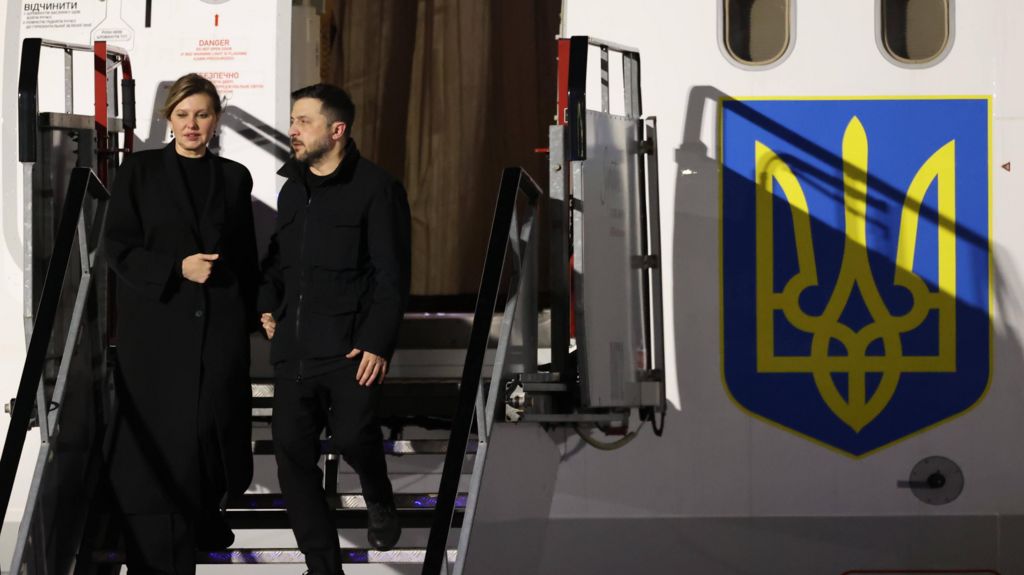
    DUBLIN — Ukrainian President Volodymyr Zelensky and First Lady Olena Zelenska concluded a high-profile official visit to Ireland on Monday amid reports of unauthorized drone activity in Irish airspace during their stay. The couple arrived in Dublin late Monday for a tightly scheduled one-day diplomatic engagement.

    BBC News NI has learned that senior Irish government officials received briefings concerning the presence of drones detected over Irish skies coinciding with President Zelensky’s arrival. While specifics of the incident remain undisclosed, the revelation points to potential security challenges during the visit of the wartime leader.

    The Irish Defence Forces, when contacted for commentary, declined to elaborate on operational details. A military spokesperson stated: ‘Defence Forces support to the security operation, led by An Garda Síochána, was successfully deployed in multiple means ultimately leading to a safe and successful visit by President Zelensky to Ireland.’

    In a parallel statement, a representative for An Garda Síochána, Ireland’s national police service, indicated that no formal investigation into the drone incident is currently underway. The spokesperson clarified jurisdictional protocols, noting that ‘any such incident occurring on Irish waters is a matter for the Defence Forces.’

    The visit underscores Ireland’s ongoing diplomatic support for Ukraine amid continued regional tensions, while the reported aerial activity highlights evolving security concerns for European leaders. The successful execution of the security operation demonstrates strengthened interagency coordination in handling high-risk diplomatic events.

  • German president compares UK ties post-Brexit to Oasis

    German president compares UK ties post-Brexit to Oasis

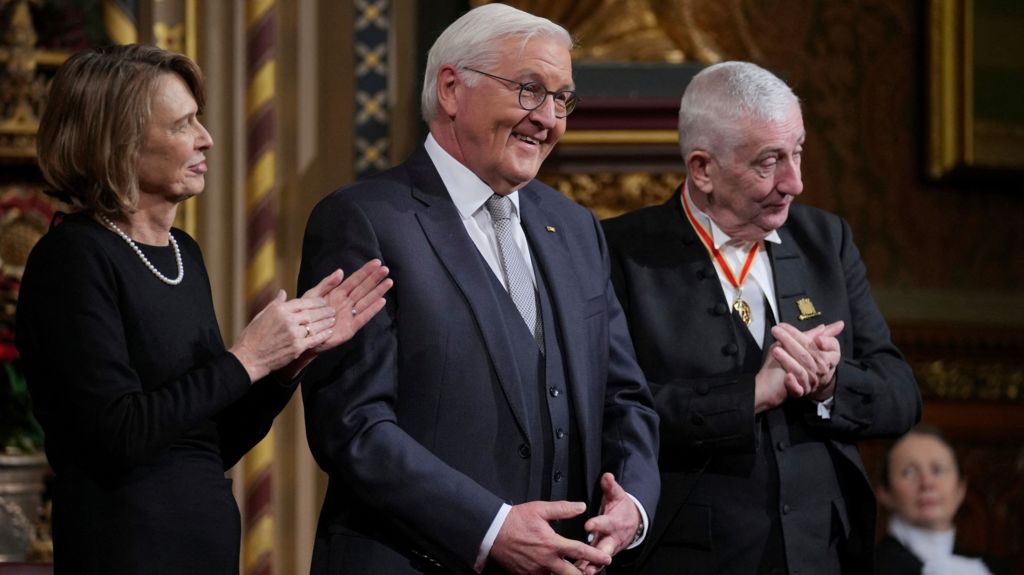
    In a landmark address to Parliament during the first German head of state visit in 27 years, President Frank-Walter Steinmeier masterfully blended diplomatic messaging with British pop culture references. Drawing parallels to Oasis’s recent reconciliation after years of fraternal discord, Steinmeier declared that Germany and the UK have moved beyond the initial “disappointment and uncertainty” of Brexit.

    Addressing MPs and peers in the Royal Gallery on Thursday, the German leader quoted the Manchester band’s anthem ‘Don’t Look Back in Anger’ to underscore his message of forward-looking cooperation. “I think that is typically British, keep calm and carry on – look ahead pragmatically, move on,” Steinmeier remarked, praising Britain’s pragmatic approach to post-EU relations.

    The presidential visit, which began with a ceremonial welcome by King Charles III and Queen Camilla at Windsor Castle, has been carefully choreographed to highlight evolving bilateral ties. Historical symbolism permeated the itinerary, from viewing Queen Victoria’s sleigh (designed by her German-born husband Prince Albert) to laying a wreath at Westminster Abbey’s Grave of the Unknown Warrior.

    Cultural diplomacy featured prominently as Steinmeier and his wife Elke Budenbender toured the V&A Museum’s archives, including David Bowie’s costumes—a nod to the musician’s deep connections with Berlin. The President’s schedule also included meetings with German footballers in the Premier League and plans to receive an honorary degree from Oxford University.

    The visit culminates symbolically on Friday with a trip to Coventry Cathedral, bombed by the Luftwaffe during World War II, mirroring King Charles’s earlier wreath-laying in Hamburg for civilian bombing victims. This reciprocal acknowledgment of historical wounds underscores both nations’ commitment to what Steinmeier called enduring affection: “Our relations may have changed, but, my dear Britons, our love remains.”

  • US push for an end to the war in Ukraine sets off a flurry of shuttle diplomacy

    US push for an end to the war in Ukraine sets off a flurry of shuttle diplomacy

    A renewed American diplomatic initiative to resolve the prolonged conflict between Ukraine and Russia has triggered an intensive global negotiation effort. Key representatives from the United States, Ukraine, and Russia have engaged in a series of high-level meetings across multiple international venues to discuss potential pathways to peace.

    The diplomatic movement commenced on November 19 when Ukrainian President Volodymyr Zelenskyy visited Turkey to revitalize peace discussions. This was followed by revelations of a 28-point peace framework jointly prepared by U.S. and Russian officials, which immediately drew criticism for its perceived alignment with Moscow’s interests.

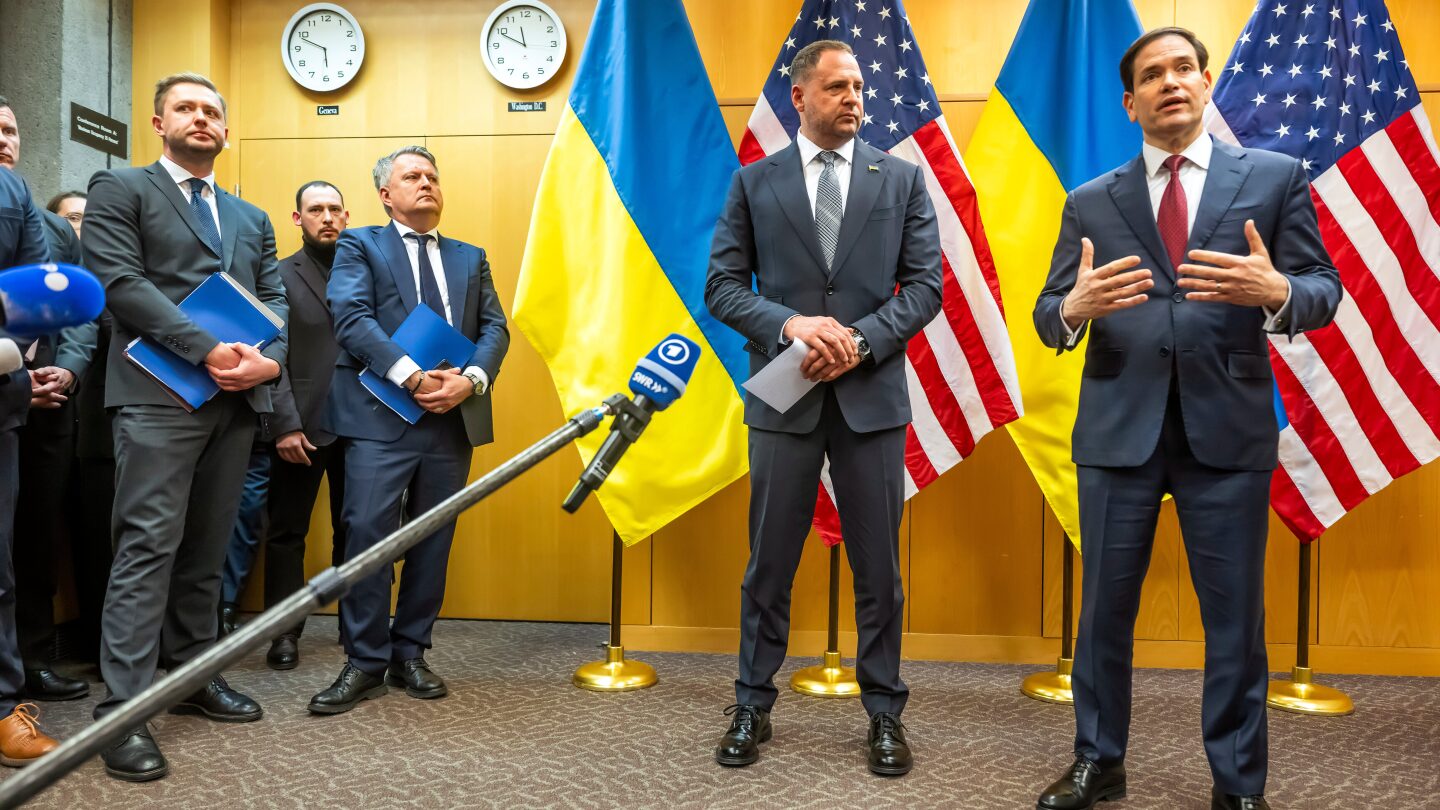
    Subsequent developments included U.S. Army Secretary Dan Driscoll’s briefing of Zelenskyy in Kyiv regarding Washington’s peace proposal on November 20. Three days later, Secretary of State Marco Rubio conducted negotiations in Geneva with a Ukrainian delegation led by presidential chief of staff Andrii Yermak, with both sides reporting substantive progress.

    Parallel diplomatic channels saw Driscoll meeting Russian officials in Abu Dhabi on November 24-25, though Russian President Vladimir Putin’s foreign policy adviser Yuri Ushakov indicated the new peace plan wasn’t thoroughly examined.

    The negotiation landscape shifted on November 30 when a reconfigured Ukrainian delegation under Rustem Umerov (following Yermak’s resignation amid corruption allegations) met with U.S. officials in Florida. This meeting preceded Zelenskyy’s December 1 briefing of French President Emmanuel Macron in Paris regarding the Florida discussions.

    The diplomatic momentum culminated on December 2 with an extensive five-hour meeting at the Kremlin between Putin and key American figures including Jared Kushner, alongside Russian envoys Kirill Dmitriev and Ushakov. While characterized as constructive, Ushakov emphasized significant work remained. Concurrently, Zelenskyy consulted with returning delegates in Ireland, acknowledging Ukraine’s anticipation of signals from American diplomats following their Moscow engagements. The diplomatic circuit concluded on December 4 with Ukrainian representatives returning to Florida for further consultations with the U.S. team recently returned from Russia.

  • Ireland among countries boycotting Eurovision after Israel allowed to compete

    Ireland among countries boycotting Eurovision after Israel allowed to compete

    The European Broadcasting Union (EBU) faces mounting diplomatic pressure as four European nations announced their withdrawal from the 2026 Eurovision Song Contest following the decision to permit Israel’s continued participation. Ireland, Spain, the Netherlands, and Slovenia have formally declared their boycott, citing ethical concerns regarding the humanitarian situation in Gaza and allegations of compromised voting integrity.

    Ireland’s national broadcaster RTE issued a statement emphasizing that participation remains “unconscionable given the appalling loss of lives in Gaza and the ongoing humanitarian crisis.” The Dutch broadcaster Avrotros similarly stated that competing under current circumstances contradicts their essential public values.

    Spanish broadcaster RTVE revealed that its board had predetermined withdrawal should Israel participate, a decision that extends to non-broadcast of both the finals and semi-finals. RTVE had previously advocated for Israel’s exclusion and requested a secret ballot on the matter, which organizers denied—a move the broadcaster claims confirms “political pressure surrounding the festival.”

    Slovenia’s RTV maintained its unchanged position, asserting that recent rule modifications fail to address fundamental ethical concerns. The broadcaster emphasized its commitment to equal standards for all EBU members and participating nations.

    In contrast, Israeli President Isaac Herzog celebrated the EBU’s decision as “an appreciated gesture of solidarity, brotherhood, and cooperation,” characterizing it as a victory over attempts to silence Israel. He expressed hope that the competition would continue to promote cultural understanding and friendship between nations.

    The controversy emerges amidst ongoing debates about the politicization of the world’s largest music competition. While Iceland is reportedly considering similar action, no official announcement has been made. The EBU has responded by implementing new rules designed to protect the contest’s integrity, though these measures have failed to appease the boycotting nations.

  • The Skripal poisonings – have British spies learned the lessons?

    The Skripal poisonings – have British spies learned the lessons?

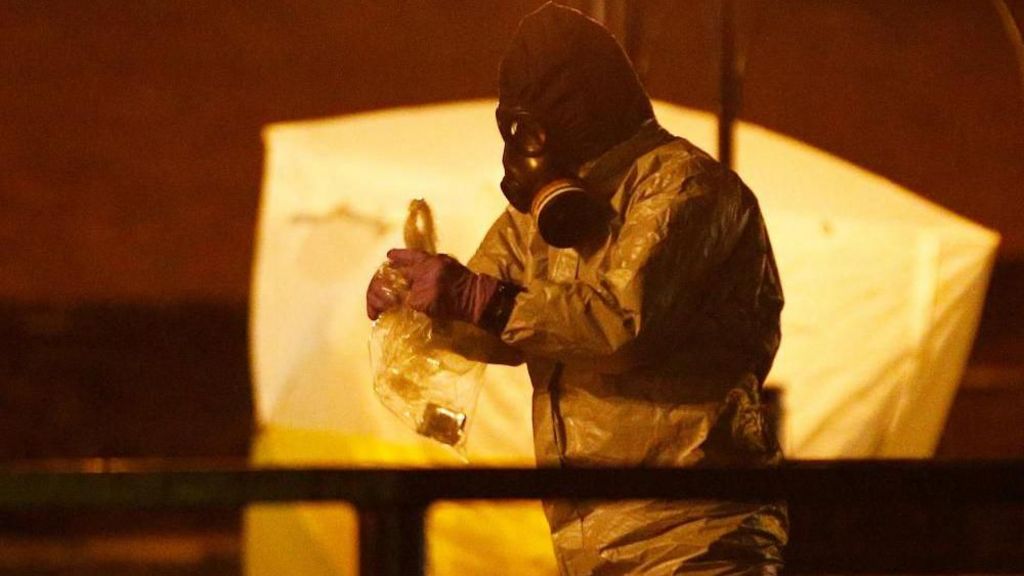
    A startling emergency call received by MI6 headquarters on March 4, 2018, triggered one of Britain’s most significant intelligence crises in recent history. The notification that former Russian double agent Sergei Skripal had been poisoned on UK soil sent shockwaves through British intelligence agencies, raising profound questions about security protocols for defectors that continue to resonate today.

    Skripal’s complex history reveals why his case presented particular challenges. Recruited by MI6 during the 1990s, he was eventually captured by Russian authorities before being exchanged in a 2010 spy swap. Upon his arrival in Britain, intelligence assessments deemed his ongoing risk level relatively low—a judgment senior officials later acknowledged as gravely mistaken. As a ‘settled defector,’ Skripal maintained autonomy over his security arrangements, explicitly rejecting offers of a new identity and life reconstruction that might have prevented the attack.

    The recently published report indicates that while no specific intelligence predicted the nerve agent assault, authorities failed to conduct updated, regular risk evaluations despite escalating tensions with Russia. The 2014 Ukraine crisis significantly darkened UK-Russia relations, and Skripal’s continued consultations with European intelligence services potentially elevated his visibility as a target. Russian President Vladimir Putin, himself a former intelligence officer with frequently expressed animosity toward traitors, was unlikely to forget such betrayals—nor was the GRU, Russia’s military intelligence agency where Skripal had previously served.

    The deployment of Novichok nerve agent represented more than mere assassination attempt; it constituted a deliberate demonstration of state power. Intelligence experts widely interpret the attack as a calculated message to potential defectors: betrayal of Russian secrets to Western agencies would result in relentless pursuit, regardless of time elapsed or collateral damage to family members.

    British intelligence responded rapidly to the incident, immediately enhancing protective measures for at-risk defectors nationwide. Investigation confirmed that a GRU unit executed the poisoning through a short-term mission team that entered Britain, deployed the toxin via a modified perfume bottle (which subsequently caused the death of Dawn Sturgess), and exfiltrated successfully. While many operatives were identified within months—with Bellingcat and other investigative outlets exposing numerous GRU operations and false identities—the fundamental question remains: could such an operation recur?

    Post-Salisbury security improvements, compounded by responses to Russia’s 2022 Ukraine invasion, have substantially pressured Russian intelligence operations across Europe. Mass diplomatic expulsions and enhanced information-sharing have complicated traditional spycraft. In adaptation, Russian agencies increasingly employ proxy operatives—as evidenced by the recent conviction of Bulgaria-based individuals hired from Moscow to conduct surveillance and discuss kidnappings of Russian exiles in Britain.

    This new model utilizes disposable, deniable agents who may fail frequently but require different detection methodologies than traditional espionage. Counter Terrorism Police report a fivefold increase in hostile state threat mitigation since Salisbury, noting Russia’s expanded use of low-level criminals for arson and other attacks.

    Contemporary Russian intelligence operations now engage in persistent low-level conflict with Britain and European nations, emphasizing surveillance and sabotage despite reduced capability for high-profile nerve agent attacks. While improved awareness and defenses have diminished certain risks, the evolving proxy-based threat paradigm presents novel challenges that demand continuous intelligence adaptation.

  • Putin says Russia disagrees with parts of US plan to end Ukraine war

    Putin says Russia disagrees with parts of US plan to end Ukraine war

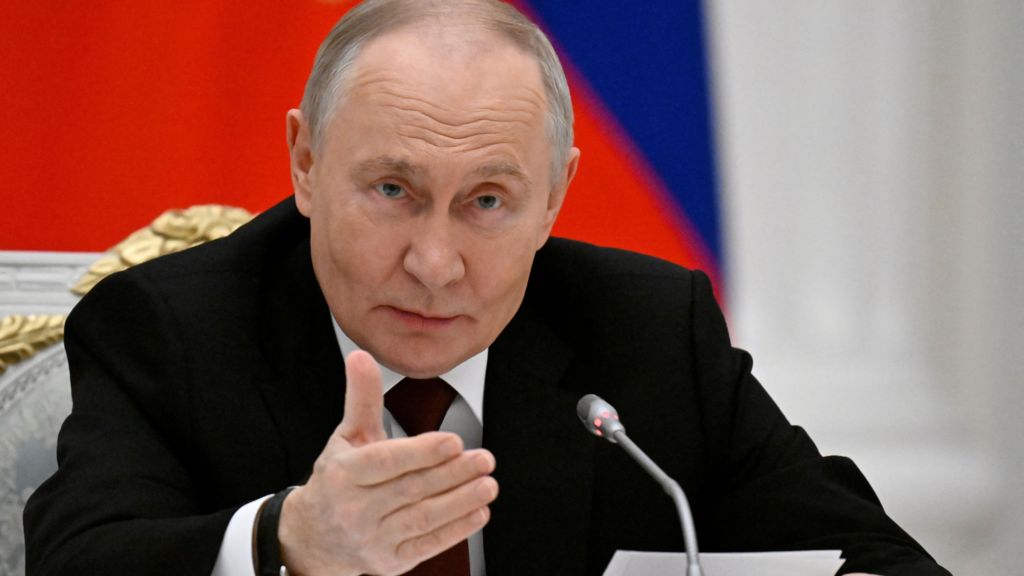
    Russian President Vladimir Putin has publicly expressed disagreement with significant components of a United States-proposed framework to resolve the ongoing Russia-Ukraine conflict. The declaration followed extensive negotiations lasting nearly five hours between Russian officials and a US delegation led by President Donald Trump’s envoy Steve Witkoff, accompanied by Jared Kushner, Trump’s son-in-law.

    In an exclusive interview with India Today preceding his state visit to Delhi, Putin revealed that Moscow had not received a modified version of the peace proposal prior to the Kremlin discussions. “At times we said that yes, we can discuss this, but to that we can’t agree,” Putin stated, without specifying the exact points of contention. Two primary obstacles remain unresolved: the status of Ukrainian territories currently under Russian occupation and the nature of security guarantees for Ukraine.

    President Putin reiterated Moscow’s firm demand for complete Ukrainian military withdrawal from the Donbas region, including areas still under Kyiv’s control. Russian forces currently administer approximately 85% of this eastern territory. “Either we take back these territories by force, or eventually Ukrainian troops withdraw,” the Russian leader asserted.

    Yuri Ushakov, Putin’s senior foreign policy adviser and principal negotiator, characterized the talks as producing “no compromise” on terminating hostilities. Ushakov further indicated that Russia’s diplomatic stance has been reinforced by recent battlefield advancements.

    Meanwhile, US and Ukrainian diplomatic teams are preparing for subsequent discussions in Florida. President Trump characterized the initial negotiations as “reasonably good” while acknowledging the complexity of the process, noting that “it does take two to tango.”

    Ukrainian leadership maintains a contrasting perspective on the negotiations. Foreign Minister Andrii Sybhia accused Putin of “wasting the world’s time,” while Ukraine’s ambassador to the US emphasized that they do not “need to wait for promises from Russia.” President Volodymyr Zelensky has consistently rejected any territorial concessions and insists on robust security assurances for Ukraine in any settlement.

    Zelensky acknowledged that “the world clearly feels that there is a real opportunity to end the war,” but stressed that negotiations must be “backed by pressure on Russia.” Ukrainian officials and European allies accuse Moscow of intentionally prolonging ceasefire discussions.

    In a significant development, German publication Der Spiegel reported obtaining a confidential transcript from a European leadership conference call expressing profound concerns about US negotiation tactics. According to an English transcript, French President Emmanuel Macron reportedly cautioned that “there is a possibility that the US will betray Ukraine on the issue of territory without clarity on security guarantees.” German Chancellor Friedrich Merz allegedly warned Zelensky to remain “extremely careful in the coming days,” suggesting that “they are playing games, both with you and with us.” Finnish President Alexander Stubb reportedly emphasized that “we mustn’t leave Ukraine and Volodymyr alone with these guys.”

    The Élysée Palace subsequently denied that President Macron “expressed himself in those terms” while declining to provide specific details citing confidentiality. Stubb declined to comment on the report, and Merz has not publicly addressed the allegations.

    The geopolitical maneuvering occurs against the backdrop of continued military operations, with Russian forces gradually advancing in southeastern Ukraine despite substantial combat casualties. Moscow currently controls approximately 20% of Ukrainian territory since initiating full-scale invasion in February 2022.
  • EU’s former top diplomat Mogherini resigns from post after fraud accusation

    EU’s former top diplomat Mogherini resigns from post after fraud accusation

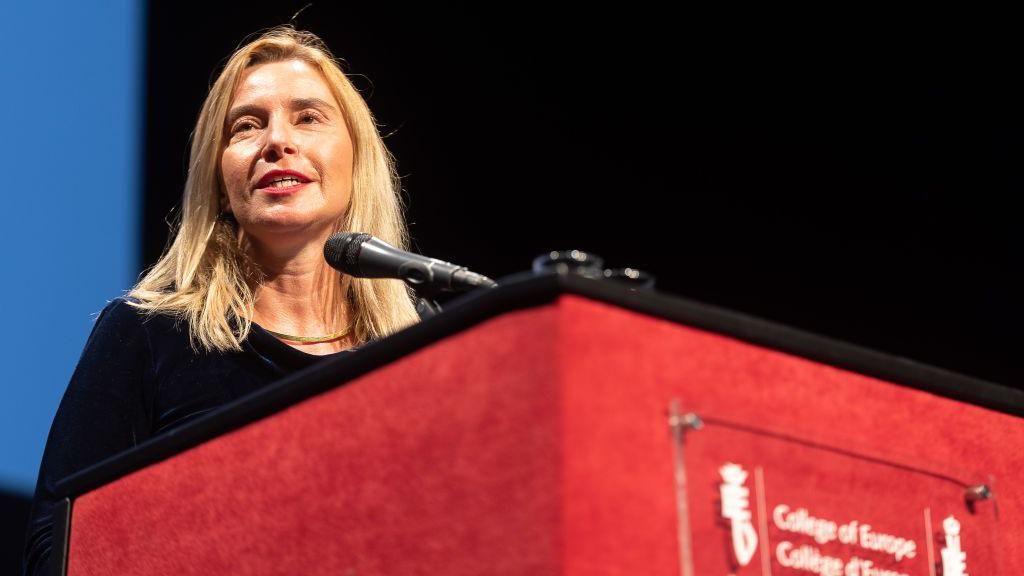
    Federica Mogherini, the European Union’s former Foreign Policy Chief, has stepped down from her position as Rector of Belgium’s prestigious College of Europe following her detention for questioning in a corruption investigation. The probe, initiated by the European Public Prosecutor’s Office (EPPO), centers on alleged irregularities in the awarding of an EU-funded training contract for junior diplomats to the institution.

    Ms. Mogherini, 52, who led the esteemed Bruges-based college since 2020, was interrogated for approximately ten hours alongside another college staff member and a senior European Commission official. Although released without formal charges, the investigation specifically examines whether competitive bidding procedures were properly followed when the EU’s European External Action Service contracted the college for a nine-month diplomatic training program.

    The high-profile case emerges at a politically sensitive moment for the European Union, which has recently intensified its anti-corruption stance, particularly regarding Ukraine’s governance challenges. Mogherini, who helped establish the EU’s fledgling Diplomatic Academy in partnership with the college in 2022, maintained her innocence in subsequent statements.

    In her resignation announcement, the former diplomat emphasized her ‘full confidence in the justice system’ and stated her decision aligned with ‘the utmost rigor and fairness’ that characterized her tenure. She further affirmed the college’s continued adherence to ‘the highest standards of integrity’ while pledging full cooperation with investigating authorities.

    The case represents a significant test for the relatively new EPPO, which gained authority to investigate EU fund-related crimes across member states, highlighting the bloc’s ongoing efforts to combat corruption within its institutions.

  • Luxury fashion firms asked for documents as part of Italian labor abuse probe

    Luxury fashion firms asked for documents as part of Italian labor abuse probe

    Italian judicial authorities have launched a significant investigation into labor practices within the luxury fashion sector, with Milan prosecutors formally requesting comprehensive documentation from 13 prestigious fashion houses. The probe centers on allegations of severe worker exploitation at Chinese-operated subcontractor workshops that manufacture products for these luxury brands.

    According to judicial documents obtained by The Associated Press, prosecutors are examining instances of what they describe as “heavy exploitations” of Chinese workers within the supply chain. The investigation seeks to determine the extent of the brands’ awareness and involvement in these alleged labor violations through detailed analysis of corporate governance structures, internal control mechanisms, and audit procedures.

    The prominent fashion companies under scrutiny include Dolce & Gabbana, Versace, Prada, Adidas Italy, Missoni, Ferragamo, Givenchy Italia, Alexander McQueen Italia, Gucci, Yves Saint Laurent Manifatture, Pinko, Coccinelle, and Off-White Operating. None of these firms have issued immediate public statements regarding the prosecutors’ requests or the underlying allegations.

    This investigation represents the latest development in an ongoing series of law enforcement actions targeting labor abuses within Italy’s high-end fashion manufacturing sector. The Milan prosecutor’s office will utilize the collected documentation to assess corporate accountability and determine appropriate legal measures regarding the alleged worker exploitation.

    The fashion industry probe follows similar recent actions, including last month’s investigation into luxury group Tod’s and three executives for suspected labor violations, which prompted prosecutors to request a six-month advertising ban. Additionally, April revelations showed Chinese workers at an unauthorized subcontractor producing accessories for Giorgio Armani, further highlighting systemic supply chain concerns within the industry.

  • Theodor Pištěk, Czech Oscar-winning costume designer, dies at 93

    Theodor Pištěk, Czech Oscar-winning costume designer, dies at 93

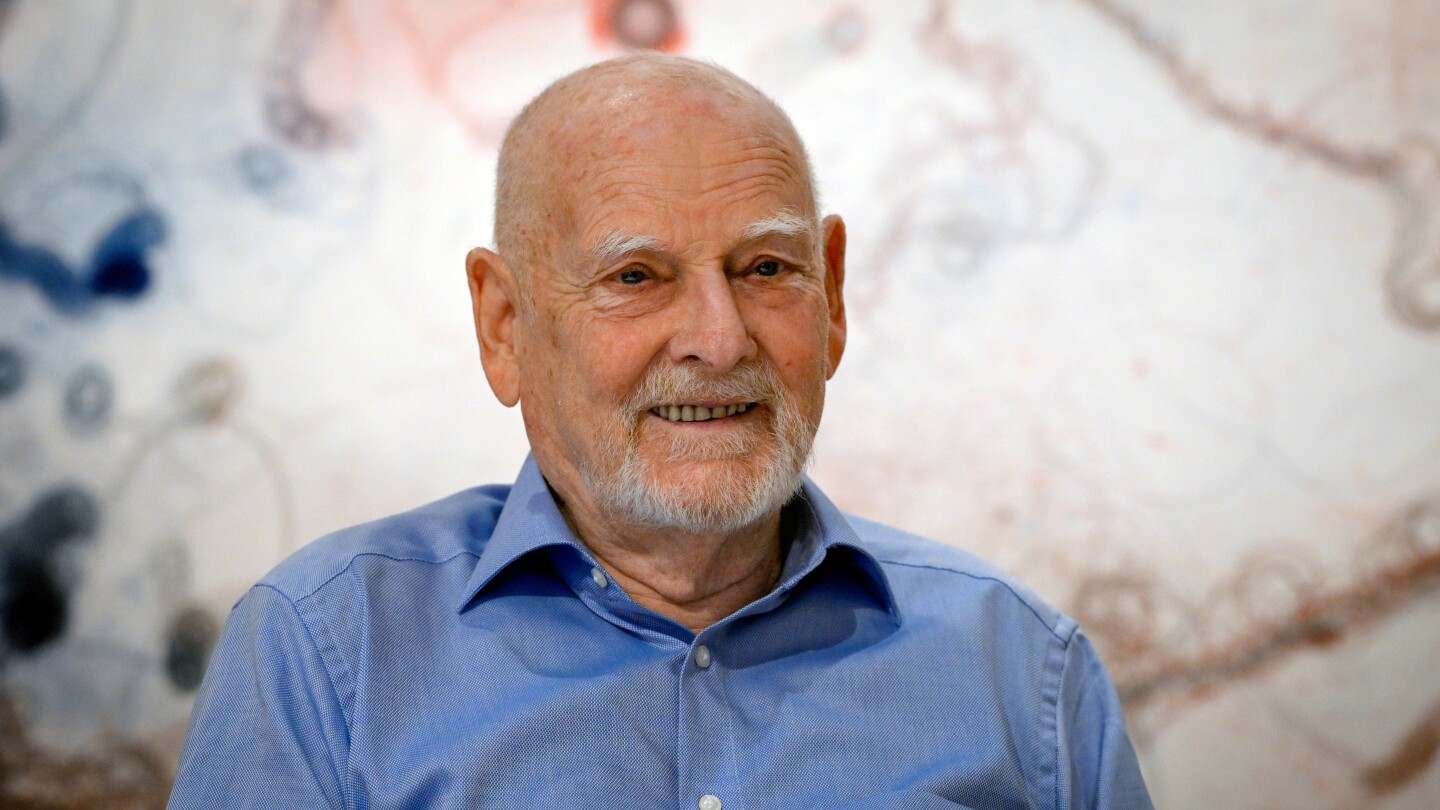
    Theodor Pištěk, the renowned Czech artist whose costume designs for Milos Forman’s ‘Amadeus’ earned him an Academy Award, has passed away at age 93. The town of Mukařov, his place of residence just east of Prague, announced his death on Thursday, which was subsequently confirmed by his family to the CTK news agency. He died on Wednesday, though specific details regarding the cause were not disclosed.

    Pištěk’s extraordinary career spanned decades, beginning with collaborations on director František Vláčil’s films in the late 1950s, including the critically acclaimed ‘Marketa Lazarová’ and ‘The Valley of the Bees.’ His most celebrated partnership, however, was with the late director Milos Forman. The two met during their compulsory military service in communist Czechoslovakia and maintained a profound professional bond despite the geopolitical upheavals of their time. While Forman emigrated to the United States after the 1968 Soviet invasion, Pištěk remained in their homeland, yet they continued their cinematic collaboration across continents.

    The pinnacle of Pištěk’s career came in 1985 when he won the Oscar for Best Costume Design for ‘Amadeus,’ a film shot in Czechoslovakia that went on to win multiple Academy Awards. Upon accepting the honor, he declared it ‘the biggest and happiest day of my film career.’ His talent was further recognized with an Academy Award nomination for Forman’s 1989 film ‘Valmont,’ for which he also received the French Cesar award. Their creative partnership extended to the 1996 film ‘The People vs. Larry Flynt.’

    Born into an artistic family in Prague on October 25, 1932, with both parents being actors, Pištěk graduated from the Academy of Fine Arts in Prague in 1958. Beyond his film work, he had a notable passion for motor racing, competing as a driver until the mid-1970s. This fascination with automobiles later became a central theme in his paintings, which were exhibited internationally, including in the United States.

    Following the 1989 Velvet Revolution that dismantled Czechoslovakia’s communist regime, Pištěk contributed to the nation’s new identity by designing the official uniforms for the guards at Prague Castle, the presidential seat. In recognition of his immense cultural contributions, the late President Václav Havel awarded him a state decoration in 2000.

  • Russia restricts FaceTime, its latest step in controlling online communications

    Russia restricts FaceTime, its latest step in controlling online communications

    In a significant escalation of Russia’s digital sovereignty campaign, authorities have imposed sweeping restrictions on Apple’s FaceTime video calling service and completely blocked Snapchat’s messaging platform. The move, announced Thursday by state internet regulator Roskomnadzor, represents the latest phase in Moscow’s systematic effort to control online communications.

    Roskomnadzor justified these measures by alleging both platforms have been ‘utilized to orchestrate terrorist operations within national territory, recruit perpetrators, execute fraudulent schemes, and commit various crimes targeting Russian citizens.’ Apple maintained its silence regarding the restrictions, not responding to requests for commentary.

    This development continues a pattern of digital repression that has intensified dramatically since Russia’s full-scale invasion of Ukraine in 2022. The Kremlin has methodically eliminated major Western social media platforms including Twitter, Facebook, and Instagram while simultaneously developing domestic alternatives that prioritize state surveillance capabilities.

    The technological crackdown extends beyond social media to essential communication tools. Throughout 2024, Russian authorities have progressively restricted encrypted messaging platforms including Signal, Viber, WhatsApp, and Telegram—previously among the most widely used communication applications in the country.

    Parallel to these restrictions, the government has aggressively promoted MAX, a state-endorsed ‘national’ messenger application that critics characterize as a sophisticated surveillance mechanism. Unlike international platforms employing end-to-end encryption, MAX openly declares its compliance with government data requests and facilitates integration with state services and payment systems.

    Earlier this week, the censorship apparatus expanded to include Roblox, a popular gaming platform with approximately 8 million monthly Russian users. Officials justified this blockade as necessary to protect minors from predatory behavior and inappropriate content.

    Legal expert Stanislav Seleznev of digital rights organization Net Freedom explained that Russian legislation categorizes any platform enabling user messaging as ‘organizers of information dissemination.’ This classification mandates compliance with Roskomnadzor registration requirements and grants the FSB security service unrestricted access to user communications. Platforms refusing cooperation face inevitable blocking, Seleznev confirmed.

    The digital landscape in Russia has transformed into a tightly controlled ecosystem where VPN services struggle against sophisticated blocking mechanisms, regional internet shutdowns occur routinely, and government-approved ‘white lists’ determine accessible online content. While officials claim these measures counter security threats, digital rights advocates recognize them as components of an comprehensive internet control strategy.