标签: Asia

亚洲

  • Iranian missiles might be testing Nato air defences in Turkey to target crucial radar base

    Iranian missiles might be testing Nato air defences in Turkey to target crucial radar base

    NATO air defense systems have successfully intercepted multiple Iranian ballistic missiles entering Turkish airspace over the past week, according to Middle East Eye analysis. The incidents have raised serious concerns about potential targeting of critical NATO infrastructure in the region.

    The first interception occurred near Hatay, approximately 100 kilometers east of Incirlik Air Base, a facility previously hosting U.S. military personnel. A second missile launched toward Turkey on Tuesday was neutralized by U.S. destroyers using RIM-161 Standard Missile-3 (SM-3) interceptors. NATO analysis indicates the missiles originated from east of Tehran, with open-source reports suggesting possible launches from the Revolutionary Guard’s Damghan missile base in Semnan province.

    Turkish Foreign Minister Hakan Fidan conveyed strong objections to Iranian counterpart Abbas Araghchi, declaring ballistic missile incursions into Turkish territory ‘unacceptable.’ While Iranian leadership denied responsibility and suggested possible Israeli false-flag operations, Turkish experts point to Iran’s decentralized command structure following recent high-ranking official casualties as a potential factor in these unauthorized launches.

    Strategic analysts believe the missiles may have been testing NATO’s air defense capabilities to assess vulnerabilities in the Kurecik radar base in Malatya. This facility hosts a TPY-2 X-band radar critical to NATO’s European Phased Adaptive Approach (EPAA) missile defense system. According to Center for Strategic and International Studies (CSIS) analysis, this radar represents the cornerstone of NATO’s air defense architecture, providing essential tracking data for Iranian missiles bound for Europe.

    In response to these developments, NATO has deployed advanced PAC-3 Patriot missile systems from Germany’s Ramstein base to Malatya, upgrading from the insufficient PAC-2 models previously stationed in southern Turkey since 2015. These new systems will provide comprehensive coverage for eastern Turkey and the eastern Mediterranean, integrating with regional NATO assets for autonomous interception capabilities.

    Defense experts note that Iran has previously targeted radar systems across the Gulf region, including facilities in Qatar, UAE, Jordan, Bahrain, Kuwait, and Saudi Arabia. The strategic positioning of Turkey’s TPY-2 radar makes it particularly vulnerable, as its failure would critically degrade NATO’s early warning capabilities against Iranian missile threats to Europe.

  • China’s first domestically bred meat goat breed becomes key engine of prosperity

    China’s first domestically bred meat goat breed becomes key engine of prosperity

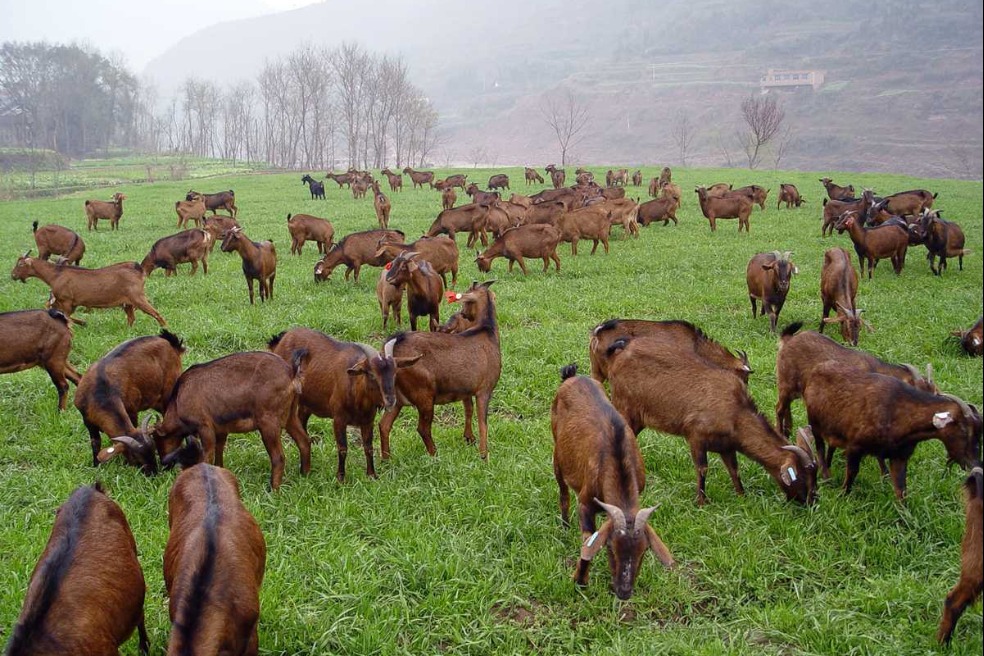
    The Nanjiang yellow goat, China’s inaugural domestically developed meat goat breed, has emerged as a powerful economic catalyst, transforming from a struggling local specialty into a prosperity engine for Bazhong, Sichuan province, over the past twenty years. This remarkable transition stems from the visionary efforts of Wang Qide, a deputy to the 14th National People’s Congress and chairman of the Wulang Yellow Goat Breeding Cooperative. Wang made a pivotal decision in 2006 to abandon his successful catering enterprise in Fujian province upon discovering a significant price discrepancy for Nanjiang yellow goats during Spring Festival celebrations. Despite commanding premium prices in distant markets, the local farmers raising these goats remained trapped in poverty. Upon returning to his hometown, Wang encountered a critical challenge: years of unregulated crossbreeding had severely depleted the purebred goat population, pushing the distinctive genetic lineage to the brink of disappearance. In collaboration with the Nanjiang Yellow Goat Research Institute, Wang established a comprehensive breeding facility and a scientific innovation center. This initiative created a dual conservation framework that has successfully preserved 5,000 core breeding goats alongside 3,000 superior genetic samples, ensuring the breed’s long-term viability and genetic diversity. The project has fundamentally revolutionized local agricultural practices, providing sustainable livelihoods for regional farmers while establishing a model for rural economic development through specialized animal husbandry and genetic preservation.

  • Zhou Guanyu: I hope to return to full-time seat soon

    Zhou Guanyu: I hope to return to full-time seat soon

    Shanghai welcomed home its racing pioneer Zhou Guanyu on March 10th as China’s first Formula 1 driver made a triumphant appearance at the Checkered Flag Carnival ahead of the 2026 Formula One Chinese Grand Prix. The hometown hero engaged enthusiastically with fans, creating an electric atmosphere at the pre-race festivities.

    During his homecoming event, Zhou reflected candidly on his current career trajectory and future aspirations. The Shanghai-native driver revealed he has established a clear personal objective: to secure a permanent racing position and make his competitive return to the Formula 1 circuit in the near future.

    Zhou’s appearance marks a significant moment for Chinese motorsports, demonstrating the growing global influence of China’s racing talent. His journey from Shanghai to the pinnacle of international motorsport has inspired a new generation of Chinese racing enthusiasts and professionals alike.

    The 2026 Chinese Grand Prix represents more than just another race on the calendar—it symbolizes China’s expanding presence in global motorsport and provides Zhou with an ideal platform to showcase his determination to reclaim his position among Formula 1’s elite drivers.

  • ‘Realities of war’: UK minister refuses to call US massacre at Iranian school a war crime

    ‘Realities of war’: UK minister refuses to call US massacre at Iranian school a war crime

    A British government official has sparked international controversy by declining to characterize the bombing of an Iranian girls’ school that killed 165 people, predominantly children, as a war crime, instead describing it as the “realities of war.

    Courts Minister Sarah Sackman made the contentious remarks during a Sky News interview on Tuesday when confronted with emerging evidence about the February 28th attack on Shajareh Tayyebeh Primary School in Minab. The assault occurred during coordinated US-Israeli military operations against Iranian targets.

    Recent investigative findings and newly released footage strongly indicate that a US Tomahawk missile struck the educational facility. When pressed for her assessment of the evidence, Minister Sackman responded: “You watch footage like that and what you see is the realities of war, and in particular the way that civilians right across the region are caught up in military conflict.”

    The minister explicitly avoided legal classification of the incident, stating: “I’m not going to speculate on whether this is a war crime, but what it is is a war, and in that context devastating things can happen.” She did, however, criticize Iranian military actions while emphasizing the necessity for evidence-based judgments regarding international law violations.

    Sackman’s comments have ignited fierce criticism from political figures and commentators. Liberal Democrat peer Baroness Meral Hussein-Ece asserted that the US and Israel were “in clear violation of international law,” while journalist Mehdi Hasan condemned the minister’s apparent double standard in exclusively criticizing Iran.

    The diplomatic fallout occurs amid revelations that the United States has been utilizing British military installations, including RAF Fairford in Gloucestershire, to launch bomber missions targeting Iranian positions. Prime Minister Keir Starmer has thus far resisted opposition calls for direct RAF involvement in strikes against Iran while refraining from condemning the US-Israeli offensive.

    Tensions in the UK-US security partnership have further intensified due to Britain’s initial refusal to permit American forces to use the joint UK-US base on Diego Garcia for operations against Iran. This diplomatic strain was reportedly discussed during a Sunday phone conversation between Starmer and US President Donald Trump, who has previously criticized the British leader as “unhelpful” and inadequate in comparison to Winston Churchill.

  • New quality productive forces fuel industrial upgrade in Binzhou, Shandong

    New quality productive forces fuel industrial upgrade in Binzhou, Shandong

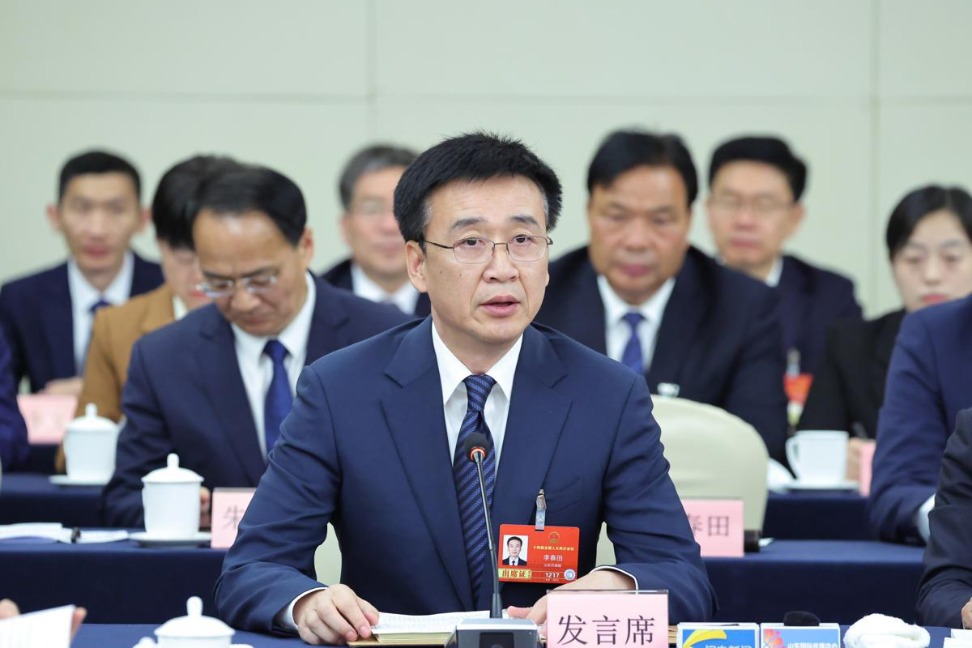
    The industrial city of Binzhou in Shandong Province is undergoing a remarkable transformation, leveraging technological innovation to develop new quality productive forces and accelerate its industrial modernization. This strategic shift was highlighted by Li Chuntian, Mayor of Binzhou and deputy to the 14th National People’s Congress, during the ongoing two sessions.

    Binzhou’s manufacturing sector demonstrates impressive credentials, hosting 91 national and provincial champion enterprises and 82 products that dominate both global and domestic markets. Contrary to conventional wisdom, Mayor Li emphasizes that traditional industries aren’t inherently backward—their potential can be unlocked through strategic technological application.

    A prime example of this transformation is Binzhou’s aluminum advanced manufacturing laboratory, Shandong’s first provincial-level lab established by a private enterprise. This facility has been instrumental in transitioning the aluminum industry from resource-intensive operations toward a circular, recycling-based economic model.

    The city has cultivated a vibrant innovation ecosystem that continues to yield substantial results. Binzhou’s new energy and new materials cluster has surpassed 100 billion yuan in revenue, marking the city’s sixth industry to achieve this significant milestone.

    During the legislative sessions, Mayor Li advocated for enhanced government support for local platforms that facilitate the commercialization of research成果. He stressed the importance of refining pilot testing policies and streamlining the transition from laboratory research to industrial application. As part of its innovation agenda, Binzhou plans to establish more than five additional provincial-level innovation platforms within the year.

  • China steps up public interest litigation to boost green development

    China steps up public interest litigation to boost green development

    China’s judicial authorities have significantly amplified their deployment of public interest litigation as a strategic mechanism to advance the nation’s green and low-carbon development objectives. This policy direction was formally outlined in a comprehensive white paper released by the Supreme People’s Procuratorate (SPP) on Tuesday, detailing a systematic nationwide campaign that has yielded substantial environmental remediation outcomes.

    The initiative, launched in March 2025 as a year-long specialized supervisory program, directed prosecutorial departments across China to concentrate on public interest violations intersecting with industrial restructuring, urban-rural development patterns, transportation systems, and energy consumption practices. By February 2026, judicial authorities had processed approximately 44,000 environmental cases, with over 13,000 specifically addressing pollution control and carbon emission management challenges.

    Geographically, the campaign demonstrated particular effectiveness in Shanghai, Hebei, Jiangsu, and Hunan provinces, alongside the Inner Mongolia and Xizang autonomous regions, where environmental litigation volumes showed consistent growth. The operational results have been quantitatively significant: authorities supervised the remediation of more than 4,000 enterprises engaged in illegal pollutant discharge, restored over 2,000 kilometers of compromised river channels, and rehabilitated approximately 1,933 hectares of degraded water areas.

    Financially, the litigation drive enabled the recovery of 1.05 billion yuan (approximately $153 million) in ecological restoration compensation, directly addressing numerous persistent environmental problems. According to Xu Xiangchun, head of the SPP’s public interest litigation procuratorial department, the campaign has substantially improved the regulatory architecture governing environmental litigation. The SPP has consequently issued specialized guidelines covering soil pollution mitigation, solid-waste management protocols, air-pollution prevention measures, and standardized procedures for case filing and judicial review.

    Statistical analysis reveals that prosecutors filed 47,228 cases related to ecological protection and natural resource conservation, representing 34.8 percent of all public interest litigation cases handled during the period. Concurrently, China has actively expanded international exchanges in environmental jurisprudence, with its innovative practices gaining increasing global recognition. The SPP introduced its litigation framework during judicial exchanges with Vietnam, shared watershed governance expertise at a United Nations climate conference side event in Brazil, and presented marine protection methodologies at a UN ocean conference in France.

    Further international engagement included knowledge-sharing at an International seminar on migratory bird protection convened by BirdLife International, reaching 123 member countries, and hosting delegations from Egypt, Singapore, and Vietnam. These diplomatic efforts have collectively enhanced the global influence of China’s distinctive public interest litigation system within environmental governance circles.

  • China’s ‘super microscope’ achieves milestone with first neutron beam output

    China’s ‘super microscope’ achieves milestone with first neutron beam output

    China’s ambitious Phase II expansion of its premier scientific facility, the China Spallation Neutron Source (CSNS), has achieved a groundbreaking milestone with the successful generation of its first neutron beam. This achievement marks a pivotal moment in the project’s development timeline, demonstrating significant progress in China’s advanced scientific infrastructure capabilities.

    Situated in Dongguan, Guangdong province, the CSNS represents China’s inaugural pulsed spallation neutron source and ranks as the world’s fourth such facility. Operated under the auspices of the Institute of High Energy Physics within the Chinese Academy of Sciences, this sophisticated installation functions as an ultra-precise microscopic observatory. By employing neutron scattering techniques, scientists can examine materials at unprecedented resolutions, revealing critical structural information about metal fatigue, battery performance characteristics, and numerous other material properties that remain invisible to conventional imaging methods.

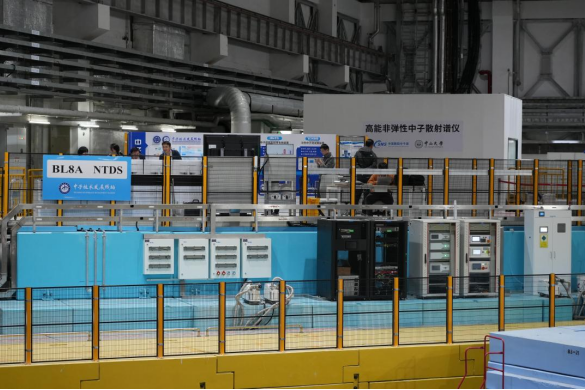
    The newly operational neutron technology development station serves as a specialized testing platform for advancing detection methodologies. Featuring an ultra-clean environment with minimal interference, this station enables researchers to capture extremely faint neutron signals with remarkable efficiency. The successful beam output follows five years of intensive interdisciplinary collaboration addressing complex engineering challenges including precise neutron beam control, dynamic equipment switching mechanisms, and the relocation of heavy components.

    Concurrently, CSNS has demonstrated remarkable operational stability, achieving a record-breaking 185 kilowatts beam power on target during a 72-hour continuous operation period. This performance builds upon previous milestones of 160 and 170 kilowatts reached in 2024. The enhanced power output significantly reduces experiment durations while optimizing facility utilization, providing stronger technical support for cutting-edge scientific investigations.

    The Phase II project, initiated in 2024 with anticipated completion by 2029, will elevate the facility’s proton accelerator target power to 500 kilowatts. This substantial enhancement will increase the neutron beam’s intensity, enabling scientists to detect fainter structural signals and achieve nanoscale precision in material analysis. The advancements will significantly bolster China’s research capabilities across multiple disciplines including renewable energy development, aerospace engineering, and bioscience innovation.

  • Reuniting for spring: Two sessions Q&A with an old friend

    Reuniting for spring: Two sessions Q&A with an old friend

    As China’s annual Two Sessions convene in Beijing, National People’s Congress deputy Xia Hua has emerged as a prominent voice advocating for technological integration in traditional industries. The representative detailed her groundbreaking work combining artificial intelligence with cultural preservation to drive rural economic development.

    Over the past year, Deputy Xia has pioneered innovative approaches to rural revitalization by transforming traditional craftsmanship into sustainable income streams for village communities. Her initiatives have successfully created new economic models that merge agricultural production with cultural tourism and technological advancement.

    One of the most significant breakthroughs involves the implementation of AI-assisted design platforms that enable collaborative creation between skilled embroiderers and consumers. These digital tools not only facilitate product co-creation but also serve as vital preservation mechanisms for traditional patterns and artisanal techniques that might otherwise face extinction.

    Looking toward future development, Xia emphasized her continued commitment to three core priorities: stimulating integrated consumption patterns, cultivating robust rural industries, and accelerating the digital transformation of conventional sectors. Her work represents a microcosm of China’s broader strategy to modernize traditional industries while maintaining cultural heritage.

    The Two Sessions, comprising the National People’s Congress and the Chinese People’s Political Consultative Conference, provide a crucial platform for representatives like Xia to share successful regional models that could inform national policy decisions regarding rural development and technological innovation.

  • Tianjin wellness center blends TCM services with herbal bread, coffee culture

    Tianjin wellness center blends TCM services with herbal bread, coffee culture

    Tianjin has become home to an innovative wellness destination that seamlessly merges traditional Chinese medicine with contemporary consumer culture. Da Ren Tang, a century-old TCM establishment, has launched a groundbreaking wellness center that integrates medical services with retail offerings, featuring an array of TCM-infused food and beverage products that are capturing public imagination.

    The facility represents a strategic evolution in traditional medicine presentation, offering patrons both healthcare consultations and unique culinary experiences. Among the most popular items are herbal breads incorporating astragalus root and specially formulated coffee beverages enhanced with ginseng extracts. The center also markets wellness accessories including medicinal bracelets and aromatic sachets designed for modern lifestyles.

    This novel approach has particularly resonated with younger demographics who are discovering TCM through social media platforms. Egyptian student Hassan Sameh Hassan Elsayed from Tianjin University visited after encountering online content about Chinese wellness practices. His experience transformed his perception of TCM from something ‘ancient and mysterious’ to a dynamic field embracing modern applications beyond traditional acupuncture and herbal decoctions.

    Center management notes that while older generations remain core clients, youth engagement has surged dramatically. Many young visitors specifically seek out TCM accessories they’ve discovered through digital channels, frequently documenting and sharing their experiences online. This organic social media presence has established the venue as a popular destination within Tianjin’s wellness tourism circuit.

    Local resident Cheng, who frequents the establishment, confirms that these TCM-infused products have integrated into daily routines for community members. The center’s strategic placement adjacent to a traditional Chinese medicine hospital further enhances its credibility, allowing visitors to transition seamlessly between retail experiences and professional medical consultations.

    This innovative model demonstrates how traditional healing practices can adapt to contemporary consumer preferences while maintaining therapeutic integrity, potentially setting a new standard for wellness tourism nationwide.

  • Video captures Guizhou’s transition from winter to spring

    Video captures Guizhou’s transition from winter to spring

    A visually captivating video showcasing Guizhou province’s remarkable transition from winter dormancy to spring vitality has taken social media by storm, demonstrating the region’s breathtaking natural beauty and cultural richness through innovative digital presentation techniques.

    The trending content employs a sophisticated palette-transition effect that artistically documents the seasonal metamorphosis occurring across southwestern China’s mountainous landscapes. This technological approach highlights the dramatic visual contrast between winter’s monochromatic scenery and spring’s vibrant explosion of color across Guizhou’s diverse terrain.

    Among the most striking transformations featured are the vast expanses of golden rapeseed flowers that now blanket previously barren fields, creating spectacular seas of yellow that attract photographers and nature enthusiasts alike. Equally impressive is the resurgence of Huangguoshu Waterfall, Asia’s largest waterfall, which now demonstrates its full power with surging white cascades as winter ice melts and spring runoff intensifies.

    The viral phenomenon coincides with the beginning of the tourism season, with the province’s renowned attractions experiencing significant visitor influxes. Local tourism authorities note that such digital content has substantially increased interest in Guizhou’s natural wonders, potentially boosting regional tourism following the winter months.

    This social media trend represents a growing intersection of technology, nature appreciation, and cultural promotion, demonstrating how digital innovation can enhance public engagement with environmental transformations and regional tourism development.