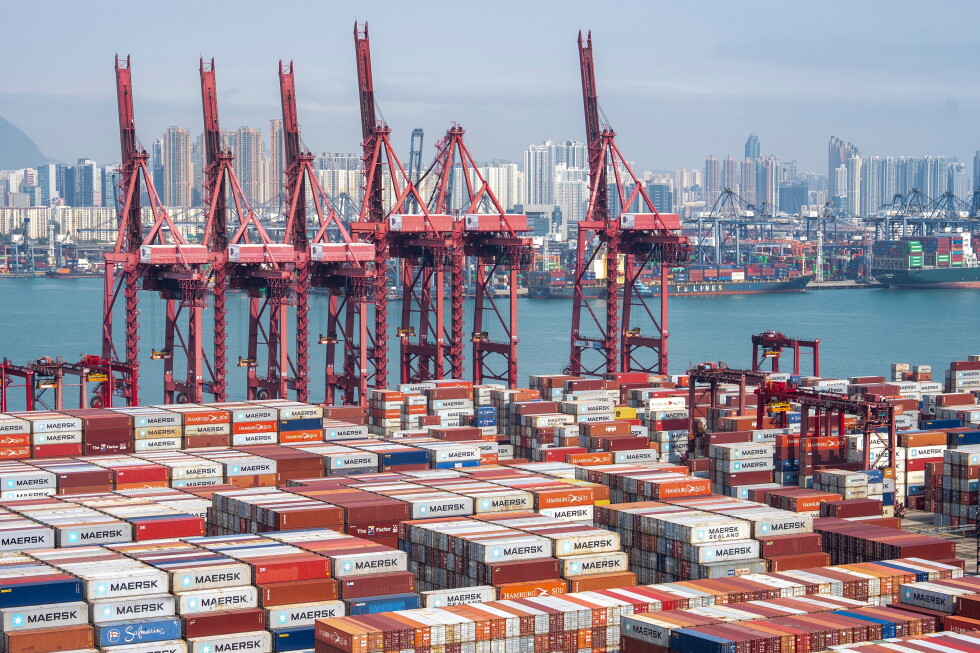
In a development that has stirred mixed interpretations across Beijing and Washington, the United States has allowed a 2020 national emergency declaration tied to Hong Kong to expire, resulting in the partial lifting of targeted sanctions — but the core executive order that stripped the semi-autonomous city of its preferential US trading status remains fully in effect.
The sequence of moves unfolded over the weekend, with China’s foreign ministry first announcing that Washington had confirmed it would end the 2020 President’s Executive Order on Hong Kong Normalization, a statement that initially fueled speculation that Hong Kong’s lost trade privileges could be restored. That reading was quickly clarified by a US State Department spokesperson, who told the Associated Press that while former President Donald Trump allowed the attached national emergency declaration to expire, Executive Order 13936 — the policy that revoked Hong Kong’s special trade status — remains active. The order explicitly states that Hong Kong no longer maintains sufficient autonomy from Beijing to justify differential trade and legal treatment separate from mainland China.
The US Office of Foreign Assets Control confirmed Friday that the expiration of the national emergency prompted it to delist individuals sanctioned under the declaration. However, most of those affected will remain subject to penalties: a senior anonymous Treasury Department spokesperson confirmed that 39 out of the 48 individuals removed from the emergency declaration sanction list have been moved to a separate sanction roster maintained under the 2020 Hong Kong Autonomy Act. High-profile figures including current Hong Kong Chief Executive John Lee and former leader Carrie Lam were among those transferred, the spokesperson confirmed. The Treasury spokesperson framed the non-renewal of the national emergency as part of broader US sanctions modernization efforts, designed to eliminate duplicate penalties and streamline enforcement for greater effectiveness.
Executive Order 13936 was originally signed by Trump during his first presidential term in July 2020, a response to Beijing’s implementation of a sweeping national security law for Hong Kong. Beijing has repeatedly defended the law as a critical measure to restore stability after months of large-scale anti-government pro-democracy protests in 2019, which represented the most significant challenge to Sino-Hong Kong governance since the 1997 handover of the former British colony to Chinese rule. The order revoked all preferential trade and travel treatment for Hong Kong that had been in place for decades, aligned with US national security, foreign policy, and economic interests at the time.
Full ramifications of the US policy adjustment are still coming into focus, with the White House directing all media inquiries on the lapse of the national emergency to the Treasury Department. Early official reactions from Chinese officials have leaned positive: China’s Commerce Ministry noted Friday that the US move fulfills commitments made on Hong Kong during bilateral trade talks held in Madrid last year. “The U.S. side’s actions represent an important step in fulfilling the consensus reached during the bilateral economic and trade talks. China appreciates it,” the ministry said in an official statement.
Hong Kong’s local government also framed the shift as a positive development. “Safeguarding Hong Kong’s prosperity and stability serves the common interests of China and the U.S. and also aligns with the general expectation of the international community,” the government said in a statement, adding that it hopes Washington will continue to respect China’s sovereignty over Hong Kong and the city’s rule of law, eventually leading to a full resumption of normal economic and trade ties.
The policy shift comes two months after a face-to-face meeting between Trump and Chinese President Xi Jinping in Beijing, and is being widely interpreted as a small signal of warming bilateral relations ahead of Xi’s planned visit to the US later this year. The move follows another recent goodwill gesture: earlier this month, a high-profile pastor from China’s underground Christian community who had been detained since October was released from custody after Trump raised his case directly with Xi during their Beijing meeting.
However, conflicting initial interpretations of the policy change between Beijing and Washington have left uncertainty about the long-term trajectory of ties on Hong Kong. Six years after the national security law was enacted, dozens of leading pro-democracy activists remain imprisoned, including former media tycoon Jimmy Lai. International critics of the law argue that the civil liberties and independent judicial system Beijing pledged to preserve for 50 years following the 1997 handover have eroded sharply in recent years.
This report includes contributing reporting from Associated Press writer Joshua Boak in Washington, and has been updated to correct earlier misreporting that incorrectly stated the entire executive order would not be renewed.