标签: Asia

亚洲

  • Shanghai researchers unveil promising clinical trial results in glioblastoma treatment

    Shanghai researchers unveil promising clinical trial results in glioblastoma treatment

    In a significant medical advancement, researchers from Fudan University and Huashan Hospital in Shanghai have announced groundbreaking clinical trial results for glioblastoma treatment using the domestically developed ‘UltraBrainPad’ device. The innovative ultrasound-based technology has demonstrated remarkable success in temporarily opening the blood-brain barrier—a protective mechanism that typically prevents most medications from reaching brain tissue—thereby dramatically enhancing drug delivery to cancerous cells.

    The breakthrough represents China’s first clinically proven ultrasound diagnostic and therapeutic tool with clear efficacy against glioblastoma, one of the most aggressive and treatment-resistant forms of brain cancer. According to Dr. Shi Zhifeng, a leading researcher from Huashan Hospital, the technique achieves rapid blood-brain barrier opening within just three minutes, resulting in an average eightfold increase in drug concentration compared to untreated brain tissue.

    The UltraBrainPad system employs a semi-invasive approach utilizing a handheld ultrasound probe that provides real-time imaging of the patient’s brain. Physicians can select multiple treatment targets through touch interface, with ultrasound waves simultaneously opening the barrier in all designated areas. Artificial intelligence integration further enhances safety by visually monitoring the degree of barrier opening during the procedure.

    Notably, the blood-brain barrier naturally restores itself approximately six hours after treatment, with reported efficacy and safety parameters surpassing international standards. The research team has established optimized ultrasound parameters through extensive preliminary in vitro and animal experiments before progressing to human trials.

    Looking forward, researchers plan to initiate clinical studies for recurrent glioblastoma patients while exploring the broader potential of ultrasound brain-machine interfaces. This technology may revolutionize treatments for other neurological disorders including Alzheimer’s disease, opening new therapeutic possibilities in neuroregulation and brain-machine integration that could benefit millions worldwide.

  • CCG organizes 134 patrols around the Diaoyu Islands since 2021

    CCG organizes 134 patrols around the Diaoyu Islands since 2021

    The China Coast Guard (CCG) has significantly escalated its maritime presence around the Diaoyu Islands, conducting 134 patrol missions within the territorial waters since 2021. Recent operational data reveals an exceptionally high tempo of patrol activities throughout 2025, with vessels deployed for rights protection and sovereignty enforcement missions on 357 days during the year.

    Over the past five years, the coast guard has demonstrated substantial operational capability through the deployment of approximately 550,000 ship sorties and 6,000 aircraft missions dedicated to maritime rights protection. These persistent patrol operations represent China’s determined efforts to reinforce its territorial claims and maintain constant presence in the contested waters.

    The intensified patrol schedule coincides with ongoing regional tensions regarding maritime sovereignty in the East China Sea. The Diaoyu Islands, known as the Senkaku Islands in Japan, have been subject to longstanding territorial disputes between China and Japan, with both nations asserting historical claims to the strategically significant archipelago.

    China’s coast guard operations have evolved significantly in recent years, with enhanced vessel capabilities and increased operational range enabling more sustained presence missions. The reported patrol statistics demonstrate Beijing’s commitment to advancing its maritime interests through continuous law enforcement presence rather than intermittent demonstrations of sovereignty.

  • Worried families in India urge return of crew on ship seized by Iran

    Worried families in India urge return of crew on ship seized by Iran

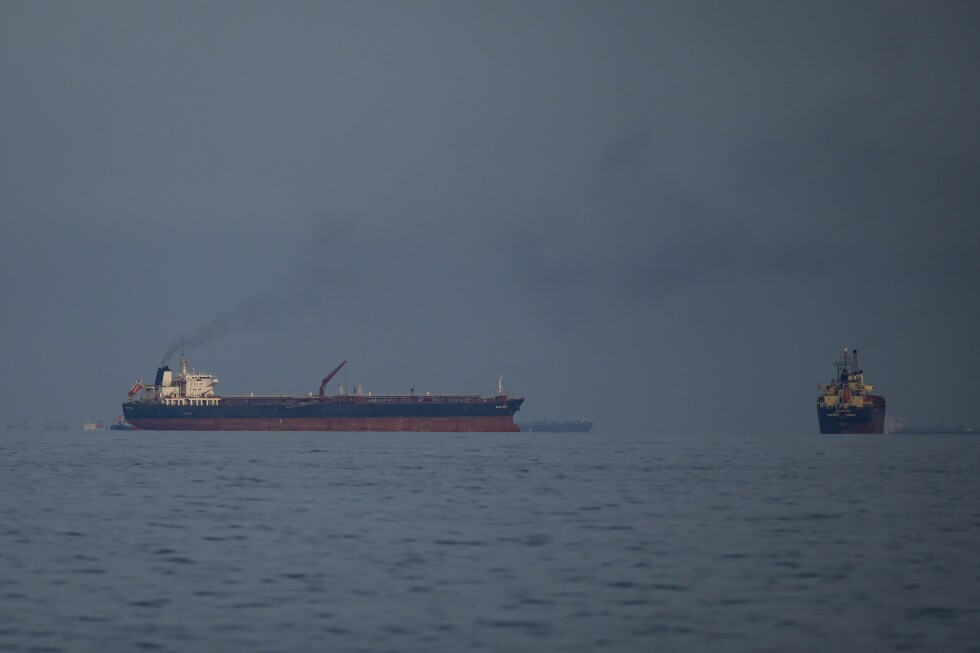
    Sixteen Indian nationals remain detained in Iran following the controversial seizure of oil tanker MT Valiant Roar in international waters on December 8th. The vessel, operated by Dubai-based Prime Tankers LLC, was apprehended by Iranian authorities alleging transportation of 6,000 metric tonnes of illegal diesel—a claim vehemently denied by the shipping company.

    The geopolitical landscape has complicated resolution efforts, with Iran experiencing significant domestic unrest since late December and increased US military presence in the region creating additional tensions. According to documents filed by India’s foreign ministry in Delhi High Court, ten Indian crew members have been formally arrested and transferred to Bandar Abbas prison, while six remain confined aboard the vessel under deteriorating conditions.

    Families report severe humanitarian concerns, citing inadequate food supplies, limited potable water, and unsanitary living conditions as generators fail and waste disposal systems malfunction. Most personal communication devices have been confiscated, though one phone permits intermittent contact with relatives.

    Diplomatic channels have achieved partial success, with consular access secured for the imprisoned seafarers though not yet for those remaining onboard. The Indian embassy indicates Iranian authorities will facilitate access pending clearances from naval and prosecutorial offices.

    The vessel’s owner, Jugwinder Brar—currently under US sanctions—maintains the ship carried legitimate Very Low Sulphur Fuel Oil (VLSFO) for company operations. Brar alleges Iran previously seized another Prime Tankers vessel under similar pretenses in December 2023, with three crew members still imprisoned after nine months.

    Maritime unions and families condemn the detention of crew members as fundamentally unjust. ‘Cargo disputes should be settled with companies, not workers,’ stated Gayatri Singh, wife of detained Chief Officer Anil Kumar Singh, echoing sentiments that seafarers are being used as ‘human shields’ in broader geopolitical conflicts.

    The situation remains critical for families awaiting reunification, particularly with contractual end dates having passed in January and personal milestones like planned weddings now in jeopardy.

  • Panama voids Hong Kong-based firm’s canal port contracts

    Panama voids Hong Kong-based firm’s canal port contracts

    In a landmark ruling with significant geopolitical implications, Panama’s Supreme Court has declared unconstitutional the contracts permitting Hong Kong-based CK Hutchison Holdings to operate critical container ports along the Panama Canal. The decision invalidates the legal framework under which subsidiary Panama Ports Company (PPC) has managed Balboa and Cristobal terminals since the 1990s.

    The judicial verdict arrives amid escalating tensions between the United States and China regarding influence over global trade corridors. Former US President Donald Trump repeatedly asserted Chinese control over the strategic waterway, with his administration pressuring Panama to address perceived Chinese dominance. Secretary of State Marco Rubio previously demanded ‘immediate changes’ to China’s influence over canal operations.

    Panamanian President José Raúl Mulino has consistently maintained national sovereignty over the canal, rejecting US claims of foreign control. The court’s determination followed extensive deliberation but was immediately challenged by PPC as legally unfounded. The company warned the decision jeopardizes stability for thousands of Panamanian families dependent on port operations and disregards over $1.8 billion in infrastructure investments.

    The ruling potentially disrupts CK Hutchison’s planned $22.8 billion global port divestiture to a consortium led by US investment firm BlackRock and shipping group MSC. This sale, previously praised by Trump as restoring US ownership while criticized by China, represented a strategic effort to reduce political exposure in sensitive regions.

    Financial markets responded swiftly, with CK Hutchison shares dropping 4.6% in Hong Kong trading, dragging the Hang Seng Index down over 2%. The reaction underscores both the company’s market significance and growing investor apprehension regarding geopolitical risk.

    Despite Chinese companies representing substantial canal users (21.4% of cargo volume), no public evidence suggests direct Chinese government control over waterway operations. The Panama Canal Authority, a government agency, maintains full operational control of the vital shipping corridor that accommodates approximately 14,000 annual transits and handles 5% of global maritime trade.

  • Yangtze finless porpoise population increases in China

    Yangtze finless porpoise population increases in China

    China’s landmark conservation efforts have yielded unprecedented success with the Yangtze finless porpoise population reaching 1,426 individuals according to the latest survey data released at a Friday press conference. This represents a significant increase of 177 porpoises since the previous census in 2022, marking a dramatic reversal for the critically endangered species.

    The population recovery is directly attributed to the comprehensive 10-year fishing ban implemented across the Yangtze River basin effective January 1, 2021. This ambitious ecological restoration initiative has created optimal conditions for the species’ natural habitat regeneration and prey population recovery.

    As a national first-class protected wild animal and the only freshwater subspecies within the finless porpoise family, this ancient species has inhabited the middle and lower reaches of the Yangtze River for approximately 25 million years. Conservation biologists consider the porpoise’s population status the most accurate barometer for assessing the overall health of the Yangtze River ecosystem.

    The latest population figures demonstrate the effectiveness of China’s coordinated environmental protection policies and provide encouraging evidence that targeted conservation measures can successfully reverse species decline. Wildlife experts emphasize that continued habitat protection and monitoring will be essential to sustain this positive trajectory for the iconic freshwater cetacean.

  • Trains undergo inspections ahead of Spring Festival travel rush

    Trains undergo inspections ahead of Spring Festival travel rush

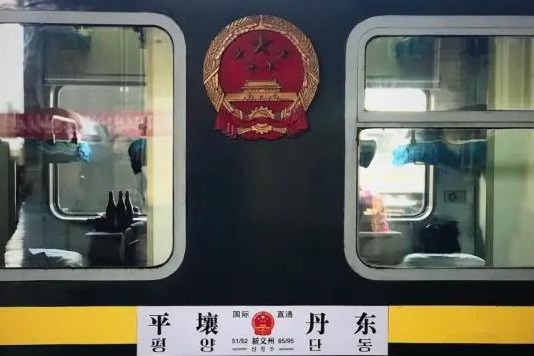
    Chinese railway operators have launched extensive safety inspection campaigns in preparation for the upcoming Spring Festival travel peak, implementing rigorous maintenance protocols to ensure transportation safety during the country’s largest annual human migration event.

    At the forefront of these preparations, the Chongqing North EMU Depot and Chongqing North Depot under China Railway Chengdu Group have deployed specialized maintenance teams to conduct comprehensive examinations of their rolling stock. These inspections focus specifically on CR200J bullet trains and conventional-speed trains that will serve millions of passengers during the holiday period.

    The meticulous verification process encompasses multiple critical systems including upper service facilities, lower suspension mechanisms, running gear components, coupler-buffer apparatus, and passenger carriage electrical equipment. Each system undergoes thorough testing to identify potential issues before they can affect operational safety.

    This year’s Spring Festival travel rush, officially scheduled from February 2 to March 13, 2026, will span 40 days of intensified railway operations. The extended duration reflects both the traditional holiday travel patterns and the continued expansion of China’s railway network capacity.

    Maintenance personnel at the Chongqing facilities have been working extended shifts to complete inspections ahead of the February 2 commencement date. Their efforts represent a critical component of China’s broader transportation strategy to accommodate what authorities predict will be record-breaking passenger volumes during the 2026 holiday season.

    The preventive maintenance initiative demonstrates the railway operator’s commitment to implementing proactive safety measures rather than reactive responses. This approach aligns with China’s ongoing improvements in transportation infrastructure management and passenger safety protocols.

  • Australian base in Italy gives athletes from Down Under a home edge at the Winter Olympics

    Australian base in Italy gives athletes from Down Under a home edge at the Winter Olympics

    In the picturesque lakeside town of Gavirate, northern Italy, Australia has established an unprecedented strategic advantage for winter sports excellence. The Australian Institute of Sport’s European Training Centre, operational for nearly 15 years, has evolved into a comprehensive preparation hub for approximately 3,000 athletes annually traveling through Europe.

    The facility addresses what director Fiona de Jong describes as ‘the tyranny of distance’ – the challenging 24-hour flight from Australia to Europe that previously hindered consistent high-level competition preparation. The center features state-of-the-art training facilities including a fully equipped gymnasium, recovery areas, and recreational spaces with pool tables, creating an optimal environment for both physical preparation and mental relaxation.

    Upon arrival, athletes encounter unmistakable Australian symbolism: statues of kangaroos and emus adorned with national scarves greet visitors at the entrance, while interior spaces showcase abundant imagery of Australian landscapes alongside the nation’s signature green and gold colors. The culinary experience blends Italian cuisine with home comforts, featuring beloved Australian staples like Vegemite and specially imported coffee from Melbourne roasters – a particularly notable detail in the birthplace of espresso.

    Alisa Camplin, Australia’s Olympic team chef de mission and dual Winter Olympic medalist, emphasizes the center’s significance: ‘This place is a haven on the other side of the world for us as Aussies. It’s like we’ve got a home away from home, a little sanctuary where we can prepare to be excellent.’

    The location selection, made years before Milan-Cortina secured the 2026 Winter Olympics, has proven remarkably fortuitous. De Jong notes they evaluated sites in Spain and France before choosing Gavirate for its ideal climate, welcoming community, and exceptional cuisine. The town’s proximity to Milan’s international airports and its lakeside location provide particular benefits for equipment-intensive sports like rowing and canoeing.

    Local integration has been remarkably successful, with Gavirate’s residents enthusiastically embracing their Australian guests. The town’s ice cream shop displays signed athletic jerseys, while pizzerias showcase Australian memorabilia. Mayor Massimo Parola proudly declares Gavirate can now ‘call itself an Olympic city.’

    For athletes like aerial skier Danielle Scott, competing in her fourth Olympics, the center represents ‘the best of both worlds’ – offering both high-performance training facilities and the comforting familiarity of home amidst the pressures of elite international competition.

  • Gaza plan a potential turning point, says UN official

    Gaza plan a potential turning point, says UN official

    A senior United Nations official has characterized the Gaza stabilization initiative as a potential watershed moment for the region, even as humanitarian crises and military operations persist. Ramiz Alakbarov, UN Deputy Special Coordinator for the Middle East peace process, addressed the Security Council on Wednesday, emphasizing that the commencement of the second phase of the Gaza ceasefire agreement represents a crucial advancement in cementing the truce.

    The statement comes alongside Israel’s burial of Ran Gvili, an off-duty police officer killed while combating Hamas militants, whose remains were recently recovered in Gaza. Israeli Prime Minister Benjamin Netanyahu noted that Gvili’s burial “seals the painful reality of the presence of Israeli hostages in the Gaza Strip.”

    Despite these developments, Alakbarov highlighted that nearly Gaza’s entire population requires humanitarian assistance, with Israeli military operations continuing and tensions escalating in the occupied West Bank.

    Palestine’s permanent observer to the UN, Riyad Mansour, asserted that the ceasefire’s success depends entirely on Israel’s complete withdrawal from Palestinian territories and cessation of dictating Gaza’s future. While acknowledging the release of all Israeli hostages and prisoners, Mansour drew attention to the thousands of Palestinian families awaiting the retrieval, identification, and dignified burial of their loved ones killed and buried under rubble.

    Academic experts express skepticism regarding the truce’s prospects. Mehmet Rakipoglu, a researcher at Mardin Artuklu University and the University of Exeter, cited Israel’s repeated violations as evidence that its strategy prioritizes sustained military engagement over genuine political resolution. He further noted that U.S.-led peace frameworks appear to favor Israel due to the absence of penalties for systematic violations.

    Regional dynamics are also shifting, with Gulf states strengthening cooperation with nations like Türkiye in response to Israel’s escalating aggression, which has transformed Gaza from a localized conflict into a catalyst for regional instability.

  • China to foster new quality productive forces in water conservancy sector

    China to foster new quality productive forces in water conservancy sector

    China is embarking on an ambitious technological transformation of its water conservancy infrastructure, positioning advanced innovation as the cornerstone of modern reservoir management. The Ministry of Water Resources announced Thursday a comprehensive initiative to develop new quality productive forces throughout the nation’s water management sector.

    The strategic plan centers on creating an all-weather intelligent monitoring system that integrates surveillance capabilities across multiple domains: sky, space, land, water, and engineering infrastructure. This sophisticated network will employ an array of cutting-edge technologies including satellite remote sensing, ground-penetrating radar, unmanned aerial vehicles, autonomous marine vessels, and subaquatic robotics.

    Zhang Wenjie, a ministry official, emphasized that these technological advancements will significantly enhance hidden danger detection capabilities while advancing intelligent patrol operations. The integration of these systems represents a fundamental shift toward data-driven water management and disaster prevention.

    The initiative builds on successful technological implementations demonstrated during recent flood seasons. During the 2025 autumn floods along the Hanjiang River, authorities effectively monitored the Danjiangkou Reservoir’s structural integrity in real-time using Global Navigation Satellite Systems and automated surveying robots. This technological support enabled precise, science-based reservoir regulation during critical high-water conditions.

    According to Wang Bao’en, Deputy Head of the Ministry, current efforts are accelerating the development of next-generation infrastructure characterized by enhanced safety, ecological sustainability, and intelligent operation. The ministry will intensify research, development, and deployment of innovative technologies while selecting representative dams with strong foundational conditions for pilot projects.

    This technological push aims to elevate reservoir management standards to unprecedented levels, establishing new benchmarks for modern water conservancy operations worldwide. The initiative represents China’s commitment to leveraging technological innovation for critical infrastructure management and environmental sustainability.

  • New Zealand not to join Board of Peace: PM

    New Zealand not to join Board of Peace: PM

    In a significant diplomatic development, New Zealand Prime Minister Christopher Luxon announced on Friday that his nation would not participate in the newly proposed ‘Board of Peace’ initiative spearheaded by former US President Donald Trump. The decision follows careful governmental consideration of the invitation extended by the Trump administration.

    Prime Minister Luxon’s official statement clarified that while New Zealand appreciated the invitation, the current framework of the proposed board did not align with the country’s international governance principles. ‘After thorough deliberation,’ Luxon stated, ‘our government has determined that we cannot accept membership in the Board of Peace in its present configuration.’

    This position was further elaborated by Foreign Minister Winston Peters through a social media post on platform X. Peters emphasized New Zealand’s historical role as a founding member and consistent supporter of the United Nations, noting that any parallel international governance structure must operate in complete harmony with the UN Charter. ‘For New Zealand, it remains imperative that any new international body’s work complements and reinforces the established principles of the United Nations,’ Peters wrote.

    The Board of Peace was formally established by former President Trump on January 22 during the World Economic Forum in Davos, Switzerland. The initiative represents one of Trump’s most significant foreign policy proposals since leaving office, though specific operational details and membership criteria remain unclear. New Zealand’s decision marks one of the first public rejections by a Western-aligned nation, potentially influencing how other countries approach the controversial initiative.

    Analysts suggest New Zealand’s refusal reflects broader concerns about the board’s potential to undermine existing international institutions and create parallel governance structures that might conflict with established multilateral agreements. The decision also demonstrates New Zealand’s independent foreign policy stance, balancing its traditional alliances with its commitment to multilateral governance through the United Nations system.