标签: Asia

亚洲

  • Bangladesh wins toss, elects to field against Pakistan in 2nd one-day cricket international

    Bangladesh wins toss, elects to field against Pakistan in 2nd one-day cricket international

    DHAKA, Bangladesh — In a strategic move at the toss, Bangladesh captain Mehidy Hasan Miraz opted to field first against Pakistan in the pivotal second One-Day International on Friday. This decision comes on the heels of a dominant performance that has the home team leading the three-match series 1-0.

    The opening game witnessed a spectacular bowling display from Bangladeshi fast bowler Nahid Rana, who dismantled the Pakistani batting order. Rana’s career-best figures of 5-24 bundled out the visitors for a meager 114 runs, paving the way for a comprehensive eight-wicket victory last Wednesday.

    Demonstrating confidence in a winning combination, Bangladesh has retained the exact same playing XI. In contrast, Pakistan has been forced into a tactical adjustment following their batting collapse. Despite a collective failure from their debutant quartet—Sahibzada Farhan, Shamyl Hussain, Maaz Sadaqat, and Abdul Samad—who struggled against the pace of Rana and the off-spin of Captain Miraz, the team management has persisted with its inexperienced top order.

    Pakistan’s sole change comes in the bowling department. Seeking to exploit what is anticipated to be a pace-friendly wicket, they have recalled express fast bowler Haris Rauf, replacing leg-spinner Abrar Ahmed.

    The lineups for the crucial encounter are:

    **Pakistan:** Sahibzada Farhan, Maaz Sadaqat, Shamyl Hussain, Mohammad Rizwan, Salman Ali Agha, Hussain Talat, Abdul Samad, Faheem Ashraf, Shaheen Shah Afridi (captain), Mohammad Wasim, Haris Rauf.

    **Bangladesh:** Saif Hassan, Tanzid Hasan, Towhid Hridoy, Najmul Hossain Shanto, Litton Das, Afif Hossain, Mehidy Hasan Miraz (captain), Rishad Hossain, Taskin Ahmed, Nahid Rana, Mustafizur Rahman.

  • Connecting labs and industry in new era

    Connecting labs and industry in new era

    The convergence of neuroscience and technology is accelerating at an unprecedented pace as brain-computer interfaces (BCIs) transition from laboratory curiosities to industrial realities. When patients can control robotic limbs through mere thought, and immersive human-machine interaction systems become operational, it becomes evident that a technological revolution is underway. China has emerged as a significant catalyst in this transformation, leveraging policy coordination, clinical advancements, and substantial industrial investment to propel BCIs into the mainstream.

    This rapid evolution raises a critical question: Does the current talent pool match the demands of this emerging industry? BCIs represent a fundamentally interdisciplinary field, integrating neuroscience, electrical engineering, artificial intelligence, biomedical engineering, clinical medicine, and materials science. The sector requires what experts term ‘boundary-spanners’—professionals capable of navigating multiple domains and synthesizing knowledge across traditional disciplinary lines.

    The talent challenge necessitates a comprehensive rethinking of educational and professional development systems. Higher education institutions must abandon rigid disciplinary silos in favor of integrated degree programs that combine neuroscience, computing, materials science, and clinical practice. Such long-cycle training, from undergraduate through doctoral levels, cultivates researchers who can both innovate and translate discoveries into tangible products.

    Industry-academia collaboration must evolve beyond occasional internships into deep, structural partnerships. Joint research centers, shared testing facilities, and co-supervised doctoral projects provide essential platforms for addressing real-world challenges. By embedding students in product development cycles, educational institutions can accelerate learning curves and produce graduates equipped to tackle commercialization barriers including manufacturability, clinical safety, and scalability.

    Equally crucial is reforming talent evaluation systems that currently prioritize single-discipline publications over translational, cross-disciplinary work. Recognition must expand to include team science, regulatory milestones, and successful industry collaborations. Funding and promotion mechanisms should incentivize integrative projects and support early-career researchers engaged in high-risk translational work.

    As an inherently international field, BCI development demands global engagement strategies. China must both attract leading international scientists and facilitate outward mobility for domestic researchers through joint PhD programs, multicenter clinical trials, and scholar exchanges. Such initiatives build not only expertise but also credibility within global standard-setting bodies.

    Throughout this transformation, ethical considerations remain paramount. Training programs must incorporate rigorous coursework on medical ethics, data protection, informed consent, and societal implications of cognitive interfaces. Engineers and clinicians require shared fluency to embed safety, privacy, and social responsibility into system designs from inception.

    The BCI revolution represents more than technological innovation—it tests a nation’s ability to reconfigure its talent ecosystem to meet complex, interdisciplinary challenges. Success demands educational innovation, deeper industry collaboration, reformed incentives, and international engagement. The foundation for an industrial BCI ecosystem exists; now the imperative is developing the human infrastructure to translate promise into reality across clinics, factories, and services worldwide.


  • Stepping on the gas necessary to realize carbon-peaking goal

    Stepping on the gas necessary to realize carbon-peaking goal

    As China advances toward its ambitious carbon emissions peak target set for 2030, the nation is implementing comprehensive strategies to overcome remaining challenges in its green energy transition. Despite remarkable progress in renewable energy deployment—with installed capacity reaching 2.34 billion kilowatts in 2025, accounting for approximately 60% of total power capacity—systemic hurdles require innovative solutions.

    The intermittent nature of renewable energy sources presents significant grid integration challenges. To address this, China is developing virtual power plants and smart management systems that coordinate supply, demand, storage, and grid operations. Energy storage infrastructure, including pumped hydro and electrochemical facilities, is being expanded to manage surplus green electricity.

    A key innovation involves converting excess renewable energy into ‘green hydrogen’ through water electrolysis, creating a carbon-free energy carrier that can replace coal in metallurgical processes and enable production of green ammonia, methanol, and sustainable aviation fuels. Technological advancements are needed to improve safety and reduce costs in this emerging sector.

    Recognizing coal’s continued role in China’s energy landscape, the country is advancing carbon capture technologies while promoting circular economy principles. The National Development and Reform Commission is formulating the 15th Five-Year Plan for circular economy development, emphasizing resource recovery from electronic waste—a approach that reduces emissions significantly compared to traditional metal production.

    Financial mechanisms are being strengthened through carbon market expansion, including new sectors and derivative products. Transition finance supports emissions-intensive industries, while comprehensive carbon footprint accounting systems cover product life cycles. Public participation remains crucial, with initiatives promoting green lifestyles, low-carbon transportation, and sustainable consumption patterns to ensure national targets are met.

  • China intensifies efforts to combat domestic violence

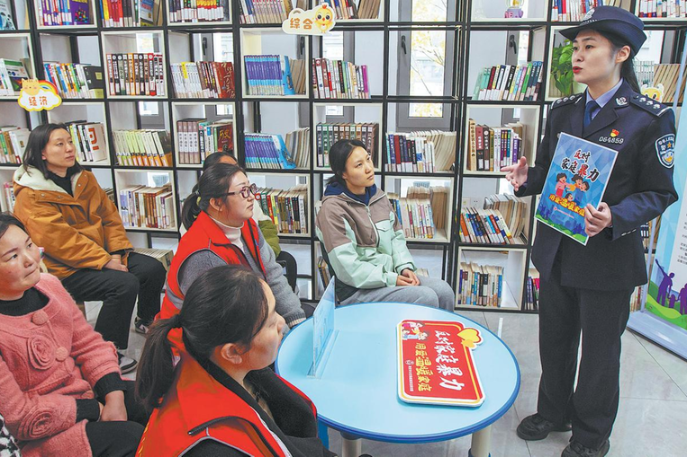
    China intensifies efforts to combat domestic violence

    China’s judicial authorities have significantly intensified their nationwide campaign against domestic violence through a multi-faceted approach emphasizing prevention, intervention, and comprehensive victim protection. According to Supreme People’s Procuratorate officials speaking during the recent Two Sessions, this enhanced judicial focus has produced measurable declines in domestic violence cases across the country.

    Hou Yahui, head of the Supreme People’s Procuratorate’s general crimes department, revealed that domestic violence prosecutions have dropped below 1,000 cases annually since 2022, representing a substantial decrease from the 1,200+ cases prosecuted in 2021. This downward trend demonstrates the increasing effectiveness of China’s legal framework and enforcement mechanisms against household violence.

    The judicial strategy has evolved beyond traditional criminal prosecution to incorporate integrated functions including civil litigation support, administrative oversight, and public interest litigation. Prosecutors now actively identify cases where victims cannot pursue legal action independently due to intimidation, coercion, or limited capacity, converting these into public prosecutions to ensure accountability.

    Notably, China’s legal recognition of domestic violence has expanded significantly beyond physical harm to encompass psychological abuse, emotional manipulation, and sustained verbal humiliation. This broader understanding reflects evolving social conditions and more comprehensive legal interpretations. In one landmark case from Shandong province, a perpetrator received a three-year prison sentence for psychological abuse that led to his partner’s suicide, establishing important precedent for prosecuting non-physical violence.

    Judicial authorities have strengthened coordination across multiple institutions including public security agencies, women’s federations, and community organizations. This collaborative approach has improved information sharing, rapid response protocols, and victim assistance mechanisms. Additionally, nationwide legal education campaigns are reshaping public perception that domestic violence constitutes a criminal offense rather than a private family matter.

    The procuratorate’s work report approved by the National People’s Congress documented 43,000 prosecutions for crimes against women’s personal rights and dignity, alongside 2,259 public interest litigations. These efforts form part of a broader integration of China’s Anti-Domestic Violence Law, Civil Code, and Law on the Protection of Women’s Rights and Interests into a cohesive protection framework that addresses both visible and concealed forms of abuse.

  • Environmental code unveiled

    Environmental code unveiled

    China has ushered in a new era of environmental governance with the formal adoption of the groundbreaking Ecological and Environmental Code by the National People’s Congress on March 12, 2026. This comprehensive legislation represents the culmination of a systematic compilation process initiated in November 2023, involving three rigorous deliberations by the NPC Standing Committee before reaching final approval.

    The code marks a revolutionary departure from previous fragmented environmental regulations by integrating disparate statutes into a unified legal framework. Professor Wang Canfa of China University of Political Science and Law hailed the legislation as “a significant event” in China’s ecological civilization advancement, noting that it effectively resolves conflicting rules and eliminates redundant legislation while establishing consistent environmental principles and core institutions.

    A pioneering aspect of the code is its dedicated section on green and low-carbon development—a global first among approximately 20 existing environmental codes worldwide. This innovative approach transforms climate objectives from policy goals into binding legal requirements, providing the foundation for China’s systematic transition toward carbon neutrality.

    Environmental Minister Huang Runqiu highlighted the legislation’s timing with China’s carbon peak targets, emphasizing how the code will accelerate the green transformation of industrial, energy, and transportation sectors while developing new quality productive forces. The minister noted significant progress already achieved, with heavy pollution days decreasing by 25% to just 1% nationally between 2021-2025, though some regions including Beijing-Tianjin-Hebei still experience 3% pollution days.

    Natural Resources Minister Guan Zhi’ou emphasized the code’s marine protection provisions, highlighting China’s success in maintaining over 35% natural coastline retention through strict control of land reclamation projects. Guan noted that numerous restored blue bays, beaches, and islands have become popular leisure destinations, demonstrating the tangible benefits of systematic environmental management.

  • ‘Fan’ transforming farming in Sanya

    ‘Fan’ transforming farming in Sanya

    At the Yazhouwan experimental fields in Sanya, Hainan province, artificial intelligence is fundamentally transforming agricultural practices that have remained largely unchanged for centuries. The traditional art of crop breeding, which typically required a decade of meticulous work guided by human intuition, is being reimagined as a data-driven precision science.

    The catalyst for this agricultural revolution is the ‘Future Agriculture Nexus’ (Fan), an innovative AI platform developed through a collaboration between the Yazhouwan National Laboratory and technology giant Huawei. Launched in November 2025, this sophisticated system functions as a centralized neural network for agricultural data, specifically designed to overcome the critical challenge of fragmented information in seed development.

    Chen Fan, deputy director of the Yazhouwan National Laboratory and National People’s Congress deputy, emphasized the laboratory’s strategic mission: ‘As China’s sole national-level agricultural laboratory, our objective is to develop major strategic crop varieties that address real-world demands.’

    The platform represents a paradigm shift from experience-dependent traditional breeding to data-powered precision agriculture. By aggregating and standardizing disparate datasets on genotype, phenotype, and environmental factors—previously isolated in what experts term ‘data silos’—Fan creates a unified analytical framework. Leveraging Huawei’s advanced AI data lake technology, the platform automates complex analytical workflows and screens information with unprecedented efficiency.

    The operational benefits are substantial. According to Yuan Yuan, president of Huawei’s data storage product line, the system can compress the breeding cycle for crops like rice from the conventional 8-10 years to just 3-4 years—achieving a 50% reduction in time requirements and a 30% improvement in overall efficiency.

    ‘We are deploying AI to enhance productivity across the entire breeding pipeline,’ Chen explained. ‘The Fan initiative establishes a foundational platform enabling the development of specialized vertical models and AI agents tailored to specific agricultural challenges.’

    This technological advancement aligns with China’s strategic emphasis on seed security, often described as the ‘semiconductor equivalent’ in global agriculture. The laboratory is constructing China’s most comprehensive biological breeding innovation platform, featuring unprecedented scale, scope, and infrastructure integration.

    Concurrently, the laboratory is expanding its international footprint through strategic partnerships with Global South nations. The China-LAC Sustainable Food Innovation Center, established with Yazhouwan’s support, inaugurated key branches in Brazil, Argentina, and Uruguay in August 2025. The Brazil division serves as a pivotal collaboration hub, leveraging geographical symmetries between Hainan’s position at 18 degrees north latitude and Brazil’s location at 18 degrees south—creating nearly identical sunshine and temperature conditions ideal for joint crop research.

    This geographical advantage enables the cooperative development of soybean varieties in Sanya that demonstrate direct applicability to Brazilian farm conditions. Additionally, the favorable policies of the Hainan Free Trade Port may facilitate future imports of these collaboratively developed soybeans into China.

  • Deliveries in Xizang are now faster and cheaper

    Deliveries in Xizang are now faster and cheaper

    A transformative logistics overhaul is sweeping across the Xizang Autonomous Region, fundamentally reshaping e-commerce accessibility for remote communities. This breakthrough follows strategic policy interventions that have dramatically reduced delivery times and eliminated prohibitive shipping costs that long plagued the region’s online shoppers.

    The catalyst for change emerged from NPC deputy Norbu Yangzom’s 2025 proposal addressing the logistical challenges facing Tibet’s rural populations. Her advocacy triggered a coordinated national response involving the State Post Bureau, Ministry of Finance, State Taxation Administration, and Ministry of Commerce, culminating in comprehensive infrastructure upgrades and subsidy mechanisms specifically designed for high-altitude delivery networks.

    Previously, Tibet’s formidable geography and sparse population density created near-insurmountable barriers for parcel services. Residents outside urban centers typically faced weeks-long wait times and exorbitant fees—often seeing symbolic 999 yuan ($138) shipping charges that effectively barred online purchases. Many communities lacked any delivery options beyond China Post services, forcing arduous journeys to county seats for parcel retrieval.

    The implementation strategy featured dual approaches: physical infrastructure expansion and economic incentivization. By February 2026, over 2,400 village-level postal and logistics stations had been modernized across Tibet, creating last-mile delivery capabilities comparable to urban standards. Simultaneously, regional authorities established targeted subsidies for agricultural and pastoral area deliveries, rapidly driving down consumer costs.

    The results have been transformative. Delivery times from southeastern China to Tibetan villages have compressed from three weeks to approximately ten days, with some shipments now arriving in just four days—even to historically isolated regions like Metog county, which lacked road access until 2013. The number of products eligible for free shipping to Tibet has surged to 1.7 billion items, representing a 119% year-on-year increase.

    Beyond consumer benefits, the logistics revolution has activated new economic channels for Tibetan producers. Improved outward delivery capabilities have enabled villagers to effectively market local specialties to national marketplaces, creating substantial income generation opportunities. With plans to upgrade 60 county-level logistics centers and 4,000 additional village stations in 2026, Tibet’s connectivity transformation continues accelerating, effectively dismantling the region’s historical isolation through logistical innovation.

  • Hegseth pressed on use of AI targeting in bombing of Iran school

    Hegseth pressed on use of AI targeting in bombing of Iran school

    A coalition of over 120 Democratic representatives in the US House has launched a formal inquiry into the Pentagon’s potential deployment of artificial intelligence systems during a controversial airstrike that destroyed an elementary school in southern Iran. The bipartisan group, spearheaded by Congresswoman Sara Jacobs (D-Calif.), submitted a detailed letter to Defense Secretary Pete Hegseth demanding transparency regarding AI’s involvement in target selection, intelligence assessment, and legal determinations during Operation Epic Fury.

    The congressional inquiry follows a New York Times investigation revealing Pentagon investigators had preliminarily concluded US forces were responsible for the Minab school bombing that killed at least 175 people, predominantly children. The lawmakers specifically questioned whether the Maven Smart System—an AI targeting platform—identified the Shajareh Tayyebeh girls’ school as a potential target, and if so, whether human operators verified its accuracy before authorization.

    This development occurs amid confirmed US military utilization of advanced AI tools in its operations against Iran, conducted in coordination with Israeli forces who have extensively employed artificial intelligence in Gaza conflict zones. Admiral Brad Cooper, head of US Central Command, recently publicly acknowledged that warfighters are ‘leveraging a variety of advanced AI tools’ to process vast data streams rapidly, enabling faster decision-making than adversarial capabilities.

    NBC News corroborated these developments, reporting the Pentagon’s operational use of Palantir’s AI systems—partially powered by Anthropic’s Claude AI—to identify potential targets. Secretary Hegseth has consistently advocated for integrating artificial intelligence as the cornerstone of American combat operations, while simultaneously dismantling initiatives aimed at reducing civilian casualties and publicly dismissing established rules of engagement as ‘stupid’ constraints.

    The Democratic legislators characterized the mass civilian deaths as ‘alarming yet unsurprising’ given the current administration’s demonstrated disregard for legal frameworks governing military engagements. They emphasized that under international humanitarian law, civilian infrastructure including schools and hospitals ‘may under no circumstances be the object of attack’ and must remain protected domains throughout conflicts.

  • A US military refueling plane crashed in Iraq, killing 4. Here’s what to know

    A US military refueling plane crashed in Iraq, killing 4. Here’s what to know

    A United States Air Force KC-135 Stratotanker aircraft crashed during operations in western Iraq, resulting in the tragic deaths of four crew members while two others’ conditions remain under assessment. The incident occurred during refueling operations in what U.S. Central Command has confirmed as “friendly airspace,” with preliminary reports indicating no hostile fire involvement.

    The KC-135 Stratotanker, a veteran aerial refueling platform based on the Boeing 707 airframe, has served as the backbone of U.S. Air Force, Navy, and Marine Corps refueling operations for over six decades. The aircraft’s multifaceted role extends beyond fuel transfer to include medical evacuation capabilities and surveillance missions, though its advanced age has raised concerns regarding operational reliability.

    Military analysts note that the aging KC-135 fleet, with the last units manufactured in the 1960s, faces gradual replacement by next-generation KC-46A Pegasus tankers—a transition progressing slower than anticipated. According to Congressional Research Service data, the Air Force currently maintains 376 KC-135s across active duty, Air National Guard, and Reserve units.

    The crash investigation follows recent friendly fire incidents involving U.S. aircraft, including three F-15E fighter jets mistakenly downed by Kuwaiti forces last week. Historical records reveal previous KC-135 accidents, including a 2013 crash in Kyrgyzstan that claimed three lives and a notorious 1966 nuclear incident near Palomares, Spain.

    As operations against Iranian forces continue, aerial refueling capabilities remain strategically critical for extended mission endurance. The ongoing investigation seeks to determine whether mechanical failure or operational factors contributed to this latest tragedy in America’s longest-serving tanker fleet.

  • Australian jury convicts Sydney business consultant over deals with suspected Chinese spies

    Australian jury convicts Sydney business consultant over deals with suspected Chinese spies

    In a landmark legal decision underscoring Australia’s heightened vigilance against foreign espionage, Sydney-based business consultant Alexander Csergo has been found guilty of violating the nation’s foreign interference statutes. The 59-year-old professional was convicted on Friday for supplying intelligence reports to individuals he reasonably should have identified as operatives for China’s Ministry of State Security.

    Operating under the pseudonyms ‘Ken’ and ‘Evelyn,’ the suspected intelligence officers established contact with Csergo through LinkedIn in 2021 while he was working in Shanghai as a communications and technology consultant. Posing as representatives of a Chinese think tank, the pair engaged Csergo to produce detailed handwritten analyses on sensitive topics including national defense strategies, security protocols, political developments, and mining sector intelligence.

    The prosecution successfully demonstrated that Csergo accepted monetary compensation in exchange for these reports, which encompassed discussions about the strategically significant AUKUS trilateral security partnership between Australia, the United Kingdom, and the United States. This defense agreement involves the provision of nuclear-powered submarine technology to Australia, representing a cornerstone of regional security architecture.

    Despite defense arguments claiming Csergo utilized exclusively open-source information and fabricated claims about interviewing high-profile figures including Kevin Rudd (Australia’s former Prime Minister and current U.S. Ambassador), the jury determined the consultant had acted with reckless disregard for national security. Csergo has been released on temporary bail pending sentencing deliberations scheduled for Monday, where prosecutors will seek his immediate detention. The conviction carries a maximum penalty of 15 years imprisonment.

    This case represents only the second successful prosecution under Australia’s 2018 foreign interference legislation, which initially drew diplomatic condemnation from China when enacted. The laws were specifically designed to counter covert influence operations and espionage activities targeting Australian interests.