标签: Asia

亚洲

  • Shooter of former Japanese PM Abe to appeal life sentence

    Shooter of former Japanese PM Abe to appeal life sentence

    The legal defense team representing Tetsuya Yamagami, convicted for the assassination of former Japanese Prime Minister Shinzo Abe, has formally initiated an appeal process against his life imprisonment verdict. Japan’s national broadcaster NHK confirmed the development on Tuesday, citing informed sources within the judicial system.

    This legal maneuver comes precisely as the February 5 deadline for appeals approaches. The Nara District Court had delivered its ruling on January 21, sentencing the 45-year-old defendant to life incarceration after finding him guilty of murder and firearms violations. The conviction stemmed from the July 2022 assassination where Yamagami fired a custom-built weapon at Abe during a campaign address in Nara.

    Throughout the judicial proceedings, Yamagami acknowledged his responsibility for the former premier’s death while presenting a complex motivational background. His testimony revealed a deeply personal grievance against the Unification Church, alleging his family’s financial devastation resulted from his mother’s excessive donations to the religious organization. The defendant maintained that his actions were driven by perceived connections between Abe and the religious group.

    The defense counsel had previously advocated for a reduced sentence not exceeding two decades, framing their client as a victim of religious exploitation whose tragic life circumstances contributed to the violent act. However, the court’s determination emphasized that while Yamagami’s background presented mitigating factors, these elements did not constitute definitive justification for the severity of his crimes.

    The appellate process is expected to reexamine both the sentencing parameters and the contextual considerations surrounding one of Japan’s most significant political assassinations in modern history.

  • US in talks with Turkey to boost naval shipbuilding amid China rivalry

    US in talks with Turkey to boost naval shipbuilding amid China rivalry

    In a strategic shift reflecting the severity of America’s naval industrial challenges, the United States has initiated confidential talks with Turkey regarding potential collaboration in warship construction. These discussions, confirmed by officials to Middle East Eye, represent a remarkable diplomatic overture given the recent tensions between the NATO allies over Turkey’s acquisition of Russian defense systems.

    The dialogue emerges as the U.S. Navy confronts a critical shortage of shipbuilding capacity while attempting to expand its fleet to counter China’s growing naval power. American representatives have reportedly explored whether Turkish shipyards could supply vital vessel components or even assist in constructing additional frigates for the U.S. fleet.

    Turkey has transformed into a naval manufacturing powerhouse in recent years, with its advanced shipyards capable of simultaneously producing over 30 vessels for both domestic and international clients, including Pakistan. Through its indigenous Milgem warship program, Turkish defense firms have developed sophisticated domestic designs across multiple vessel categories.

    The Trump administration’s pursuit of foreign shipbuilding expertise marks a dramatic reversal from decades of U.S. naval supremacy. Previous efforts have focused on Asian allies, exemplified by South Korea’s Hanwha Group acquiring Philadelphia’s Philly Shipyard in 2024. However, the recent cancellation of the Constellation-class frigate program with Italian builder Fincantieri has intensified the urgency for alternative solutions.

    Despite legal prohibitions against building warships overseas, President Trump has signaled openness to utilizing allied nations’ capabilities, stating in January: ‘We used to build a ship a day. We don’t build ships anymore. We want to get that started. And maybe we’ll use allies also in terms of building ships.’

    Defense experts highlight Turkey’s distinct advantages, including geographically concentrated shipyards around Istanbul and Yalova that enable rapid adaptation to new projects. Kubilay Yildirim, a Turkish defense industry expert, noted: ‘The US lacks sufficient manpower, shipyards and dry docks. Turkey can help in terms of production volume, timelines, risk sharing and workload distribution.’

    Turkish shipyards boast innovative automated production processes, skilled welders, multiple steel suppliers, and a strong collaborative culture between military and civilian facilities. The Istanbul Naval Shipyard reportedly possesses spare capacity that could accommodate U.S. construction needs.

    However, any substantial defense cooperation faces significant political hurdles in Congress, which previously sanctioned Turkey over its Russian S-400 acquisition. Administration officials view shipbuilding collaboration as a potential pathway to strengthen ties while circumventing these sanctions.

    The recent visit of a U.S. Naval Sea Systems Command delegation to Istanbul Naval Shipyard Command underscores the seriousness of these exploratory talks, though both nations emphasize their longstanding NATO partnership rather than immediate contractual agreements.

  • Former Chinese advisory body official sentenced to life for bribery

    Former Chinese advisory body official sentenced to life for bribery

    In a landmark ruling demonstrating China’s intensified anti-corruption campaign, the First Intermediate People’s Court of Hainan Province has sentenced Li Weiwei, a former high-ranking official within China’s political advisory system, to life imprisonment for extensive bribery offenses. The court established that Li abused multiple official positions over a sixteen-year period from 2008 to 2024, amassing illicit gains exceeding 117 million yuan (approximately $16.87 million).

    During her extensive career, Li held several influential positions including membership on the Standing Committee of the Communist Party of China Hunan Provincial Committee, head of the United Front Work Department, and secretary of the Political and Legal Affairs Commission of the CPC Hunan Provincial Committee. Most recently, she served as deputy head of the Committee on Population, Resources and Environment under the 14th National Committee of the Chinese People’s Political Consultative Conference (CPPCC).

    The judicial investigation revealed that Li systematically exploited her authority to provide unlawful advantages to various entities in project contracting and business operations. The court characterized her actions as constituting particularly severe instances of bribery that inflicted substantial damage to national and public interests.

    In addition to the life sentence, the court imposed supplementary penalties including lifelong deprivation of political rights and comprehensive confiscation of all personal assets. All recovered illicit gains will be transferred to the state treasury, with ongoing efforts to reclaim any outstanding amounts.

    The sentencing acknowledged mitigating factors, including Li’s cooperation with investigators through truthful confession of previously unknown offenses, active return of illegal proceeds, and demonstrated remorse during judicial proceedings. These considerations contributed to the court’s decision to render a comparatively lighter punishment within statutory guidelines.

    Li’s case progressed through China’s legal system following her investigation initiation in July 2024 while still holding office, subsequent arrest in February 2025, and formal indictment in June 2025. The trial concluded on November 6, 2025, featuring comprehensive evidence presentation, cross-examinations by defense counsel, and final statements from the defendant.

  • Epstein told Ehud Barak to give Mandelson Israeli energy company role

    Epstein told Ehud Barak to give Mandelson Israeli energy company role

    Newly disclosed court documents have exposed extensive business communications between convicted sex offender Jeffrey Epstein and high-profile political figures, including former Israeli Prime Minister Ehud Barak and British politician Lord Peter Mandelson. The revelations detail Epstein’s involvement in attempted Middle Eastern energy deals and raise serious questions about inappropriate access to government information.

    According to the released correspondence, Epstein emailed Mandelson on August 2, 2013, stating he had instructed Barak to contact the British politician regarding the potential sale of Paz Oil Company, Israel’s largest fuel provider. At the time, Paz controlled approximately 30% of the Israeli fuel market and would later appear on a UN list of companies operating in illegal Israeli settlements.

    The email exchange occurred shortly after Barak concluded his term as Israel’s defense minister in March 2013. Epstein described Paz as “an Israeli oil business that will need to be sold” and explicitly told Mandelson “I told him to give you the task.” Mandelson expressed interest not only in Paz but also in Israel’s plans for transporting offshore gas to European markets.

    While the sale of Paz Oil didn’t materialize in 2013, controlling shareholder Zadik Bino did sell shares worth approximately $97 million that year due to regulatory requirements. The documents don’t clarify whether Barak ultimately contacted Mandelson about the potential deal.

    The correspondence further reveals that Mandelson, then chairman of lobbying firm Global Counsel, sought Epstein’s consultation in September 2013 regarding Israeli political consultant Asaf Eisin. Additional disclosures show that during his tenure as UK Business Secretary, Mandelson suggested to Epstein that JP Morgan’s head should “mildly threaten” the British chancellor regarding financial sector concerns.

    These revelations have prompted former Prime Minister Gordon Brown to call for an investigation into Mandelson’s apparent sharing of sensitive government information with Epstein. The controversy intensified with the release of a photograph allegedly showing Mandelson in his underwear at one of Epstein’s residences.

    Regarding his Israeli connections, the documents indicate Barak sought Epstein’s financial advisory services on multiple occasions. An FBI memo describes Epstein as “close to the former Prime Minister of Israel” and even suggests he “trained as a spy under him.” Barak visited Epstein’s New York townhouse more than 30 times between 2013 and 2017, and Epstein reportedly advised Barak on working with controversial technology company Palantir, which specializes in AI-powered military and surveillance technology.

    The ongoing release of Epstein-related documents continues to expose the extensive network of political and business connections maintained by the convicted financier, raising questions about the intersection of private business interests and government affairs.

  • Israeli forces abuse Palestinians returning to Gaza at Rafah checkpoint

    Israeli forces abuse Palestinians returning to Gaza at Rafah checkpoint

    Palestinian civilians attempting to return to Gaza through the Rafah border crossing have reported systematic abuse and psychological torture by Israeli security forces. The allegations emerge as the crossing partially reopens after nearly two years of closure following Israel’s military occupation and destruction of the transit point in May 2024.

    Rotana al-Raqab, among the first group of returnees, provided a detailed account of her ordeal to local media. After entering via the Egyptian border, she and eleven others—including nine women and three children—were apprehended by Israeli-backed armed groups. The detainees were transported approximately half a kilometer inside Rafah to an Israeli military checkpoint.

    According to Raqab’s testimony, she, her mother, and another woman were separated from the group and held in custody from sunset until approximately 11 PM. During this detention, the women were blindfolded, handcuffed, and subjected to intense interrogation about matters they claimed to have no knowledge of or connection to.

    The psychological pressure included explicit threats against their families. One soldier threatened to remove Raqab’s children from Gaza and detain her indefinitely, while another urged her to permanently abandon the territory with her children. Raqab interpreted these tactics as deliberate intimidation, stating: ‘They want to deprive us of our children. They don’t want us to return to Gaza. They don’t want large numbers to return; they want large numbers to leave.’

    More disturbingly, Raqab reported that an Israeli officer attempted to recruit the women as intelligence assets within Gaza, while another soldier made threats of ‘improper things’ against another detainee. Israeli forces also confiscated all personal belongings except one bag of clothing, prohibiting essential items including food, children’s toys, and phone chargers.

    An elderly woman returning on Monday described similar treatment, detailing a three-hour interrogation despite her medical condition and characterizing the experience as ‘bad treatment.’

    The border reopening has been severely restricted, with Israeli authorities implementing strict limitations on both the identity and number of permitted travelers. Of the 42 Palestinians scheduled to return on Monday, 30 were turned away. Meanwhile, only five patients accompanied by 15 companions were allowed to exit Gaza for medical treatment—significantly fewer than the agreed daily quota of 150 departures.

    Hamas has condemned Israel’s actions at the crossing, calling on ceasefire mediators to ‘take immediate action to stop these fascist practices.’ The Palestinian faction described the alleged abuse as part of a systematic policy of collective punishment and intimidation designed to deter Palestinians from returning to Gaza.

  • Exclusive: UK counter-terror police asked to investigate RSF-linked Sudanese

    Exclusive: UK counter-terror police asked to investigate RSF-linked Sudanese

    A Sudanese-Dutch survivor of torture by Sudan’s Rapid Support Forces (RSF) has formally submitted evidence to British counter-terrorism police requesting investigations into three UK-based Sudanese nationals for their alleged connections to the paramilitary organization. Yaslam Altayeb, a businessman and UK resident, endured 15 days of captivity and abuse by RSF forces in Khartoum following the outbreak of Sudan’s civil conflict in April 2023. His legal representatives have now filed a comprehensive submission with London’s Metropolitan Police Counter Terrorism Command (SO15).

    The complaint identifies Faris al-Nour, previously a media advisor to RSF commander Mohammed Hamdan Dagalo (Hemedti) and currently appointed as the RSF’s governor of Khartoum state. Altayeb asserts that al-Nour communicated with him during his detention and participated in the events surrounding his captivity. Also named are Abdelmonem al-Rabee, a British citizen and taxi driver from Sheffield who allegedly produced propagandist content supporting RSF atrocities, and Omran Abdallah, who has represented the RSF in media appearances.

    Altayeb’s submission contends that these individuals could face prosecution under UK legislation including the International Criminal Court Act 2001 and Criminal Justice Act 1988 for their purported involvement in torture and incitement to violence. The complaint highlights Rabee’s documented encouragement of RSF fighters during their takeover of el-Fasher in October, where tens of thousands of civilians were reportedly massacred. Abdallah is cited for publicly minimizing reports of sexual violence committed by RSF personnel.

    Having established charitable initiatives supporting war-affected Sudanese communities, Altayeb continues to suffer chronic physical and psychological effects from his detention. His legal team, led by Rodney Dixon KC, has urged immediate police action, emphasizing that allowing alleged war criminals to operate freely in Britain constitutes both an affront to justice and ongoing cruelty to their victims. This filing follows Altayeb’s previous campaign that resulted in UK sanctions against four senior RSF commanders in December 2023.

  • Filipino women lawmakers observe World Hijab Day ahead of Ramadan

    Filipino women lawmakers observe World Hijab Day ahead of Ramadan

    In an unprecedented display of cross-cultural solidarity, the Philippine House of Representatives witnessed a vibrant celebration as female Muslim legislators distributed colorful head veils to their colleagues during the country’s inaugural observance of World Hijab Day on Monday. The main gallery of the congressional chamber transformed into a tapestry of cultural exchange, creating one of the most distinctive expressions of unity in an institution typically characterized by political divisions.

    The event marked the Philippines’ first official recognition of World Hijab Day following the passage of Republic Act No. 12224 on June 18, 2025, which designates February 1 annually as the ‘National Day of Awareness on Hijab and Other Traditional Garments and Attire.’ The observance was moved to February 2 this year as February 1 fell on a Sunday, a non-working day.

    World Hijab Day, initiated in 2013 by Bangladeshi-New Yorker Nazma Khan, serves as a global movement to promote religious freedom and cultural understanding by inviting women worldwide to experience wearing the hijab for one day. The Philippine celebration saw enthusiastic participation across party lines, with Gabriela Women’s Party Representative Sarah Elago and Makabayan coalition member Renee Co among those who joined in solidarity with Muslim women.

    Maguindanao del Norte Representative Sittie Shahara Bai Dimple Mastura, chairperson of the Committee on Muslim Affairs, emphasized the hijab’s significance as an expression of faith, modesty, and cultural identity rather than a basis for discrimination. She highlighted ongoing concerns about discrimination against hijab-wearing women, particularly in educational institutions where some students face restrictions.

    Speaker Faustino Dy III underscored the importance of such initiatives, stating, ‘When women are empowered to be fully themselves—without fear of discrimination or misunderstanding—our communities become stronger, more compassionate, and more fair.’ The event represented a significant step toward fostering greater religious understanding in a nation where approximately 80% of the population identifies as Catholic and 6% as Muslim.

  • Ningbo village welcomes expats for festive fun

    Ningbo village welcomes expats for festive fun

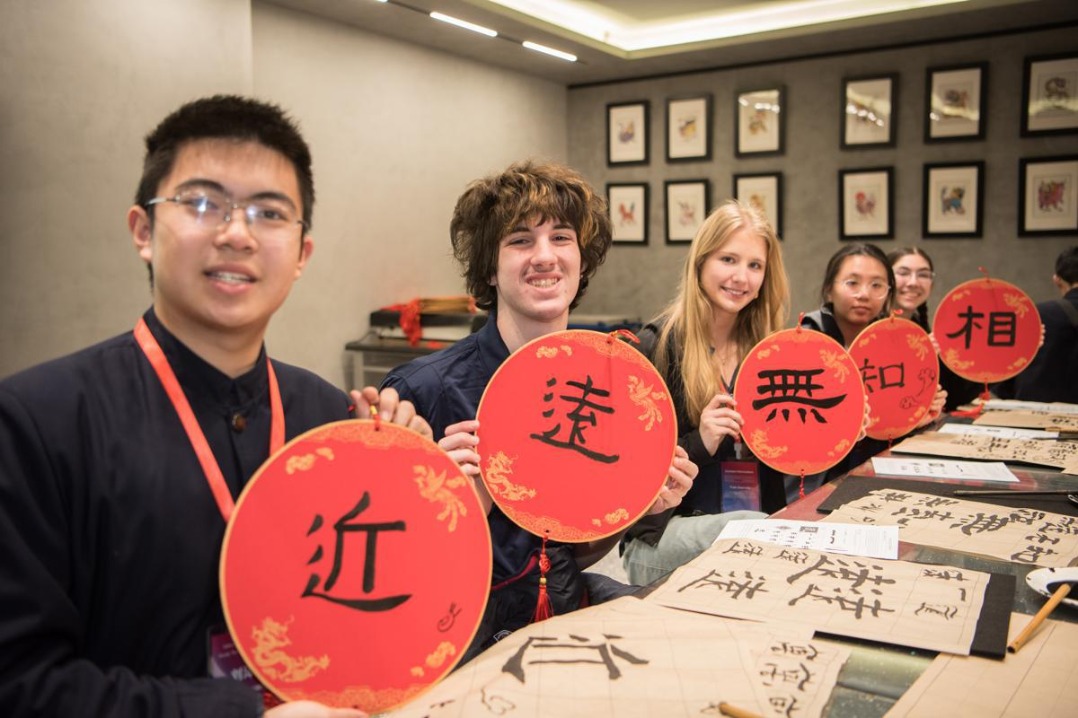
    The historic Banpu village in Ningbo, Zhejiang province, transformed into a vibrant hub of cross-cultural celebration on February 1st as it welcomed approximately 100 expatriates from nearly 30 countries. The 800-year-old settlement, renowned for its 24 preserved cultural heritage sites from the Ming and Qing dynasties, organized special festivities ahead of the Lunar New Year commencing February 17th.

    Participants, primarily comprising faculty, students, and their families from the University of Nottingham Ningbo China (UNNC), were greeted with traditional drum performances and folk dances by local residents. The visitors immersed themselves in the village’s rich history as a former center of water transport while exploring ancient architectural treasures.

    The cultural exchange flourished through hands-on culinary experiences where international guests collaborated with villagers in preparing traditional New Year delicacies. Activities included dumpling making, spring roll preparation, and rice cake pounding using traditional techniques. British educator John Burrows, a Ningbo resident since 2016, expressed enthusiasm for the opportunity to engage with local traditions and strengthen community bonds.

    Professor Derek Irwin of applied linguistics at UNNC attempted rice cake pounding and marveled at the villagers’ expertise, noting their remarkable skill and endurance. Following the culinary activities, the expatriates visited residents’ homes to decorate courtyards with festive couplets, red lanterns, and exchange gifts. Burrows shared homemade cookies with hosts, who reciprocated with local snacks and symbolic red envelopes, embodying the spirit of mutual cultural appreciation and friendship.

  • Malatang, leafy greens: Chinese flavor wins taste buds of Dubai

    Malatang, leafy greens: Chinese flavor wins taste buds of Dubai

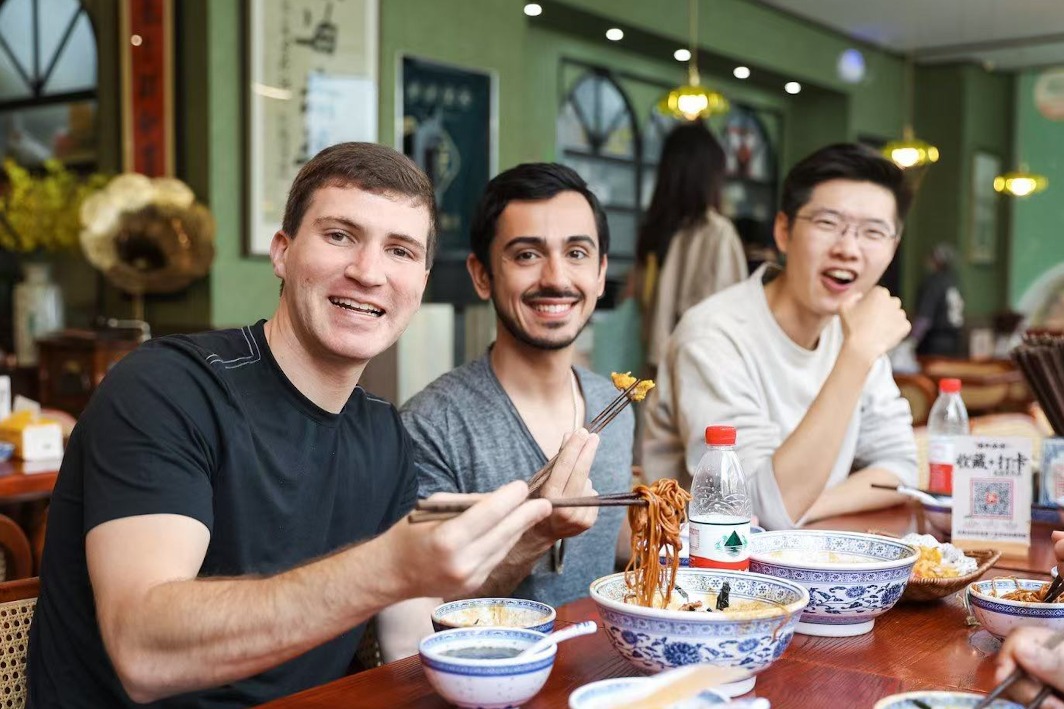
    The aromatic steam of Sichuan peppercorns and simmering meat broths now permeates the air across Dubai’s diverse culinary landscape. Malatang, the customizable Chinese hot pot dish, has transcended its cultural origins to become a gastronomic phenomenon embraced by the city’s multicultural population.

    At bustling malatang restaurants throughout Dubai, stainless steel baskets overflow with fresh leafy greens, premium meats, and an assortment of noodles while patrons of Asian, Arab, African, and European backgrounds sit side-by-side. The distinctive sound of clinking chopsticks and forks accompanies lively conversations, creating a unique cross-cultural dining experience that bridges culinary traditions.

    This culinary migration represents more than just food trend adoption—it signifies Dubai’s evolving identity as a global gastronomic hub where Eastern and Western flavors converge. The malatang experience, traditionally characterized by its build-your-own bowl concept and numbing-spicy flavor profile, has been adapted to accommodate local tastes while maintaining its authentic Chinese character.

    Restaurant owners report consistently growing demand across all demographic groups, with particular popularity among young professionals and families seeking both flavorful and customizable dining options. The dish’s interactive nature and health-conscious preparation—with customers selecting fresh ingredients cooked to order—align perfectly with contemporary dining preferences.

    The successful integration of malatang into Dubai’s food scene demonstrates how culinary diplomacy can foster cross-cultural understanding and appreciation. As Chinese cuisine continues to gain international recognition, malatang stands out as a particularly successful ambassador of China’s rich culinary heritage, creating new opportunities for cultural exchange through shared dining experiences.

  • Pop Mart New Year’s Garden Fair opens in Shanghai

    Pop Mart New Year’s Garden Fair opens in Shanghai

    Shanghai’s iconic Bund Finance Center has undergone a spectacular transformation through an innovative collaboration with Chinese creative toy giant Pop Mart. Since February 1st, the historic waterfront district has become home to an elaborate New Year’s Garden Fair featuring fantastical installations that blend traditional Chinese elements with contemporary pop culture aesthetics.

    The centerpiece of the exhibition is the stunning Palace Lantern Carousel, an elaborate structure that reimagines traditional lantern festival designs through a modern artistic lens. Joining this centerpiece are illuminated displays featuring Pop Mart’s most beloved characters, including the wildly popular Labubu and Twinkle Twinkle figures, all creatively reimagined as part of the Lunar New Year celebrations.

    In a synchronized celebration of light and culture, all six distinct zones of the nearby Yuyuan Garden Lantern Festival were simultaneously illuminated for the first time, creating a coordinated visual spectacle across multiple Shanghai landmarks. This coordinated lighting ceremony represents a significant expansion of the traditional lantern festival format, merging commercial innovation with cultural preservation.

    The collaboration marks a significant moment in the evolution of Chinese festival celebrations, demonstrating how traditional customs can be reinterpreted through contemporary commercial creativity. The exhibition runs throughout the Lunar New Year period, offering both residents and visitors an immersive experience that bridges historical Chinese traditions with modern entertainment concepts.